I started growing tomatoes indoors after realizing my outdoor garden couldn’t keep up year-round. The idea seemed simple: pot, soil, light, done.
But growing tomatoes indoors turned out far more demanding than expected. Most guides make it sound effortless, glossing over real challenges beginners face.
This post walks through what actually works, based on trial, error, and lessons from experienced growers. You’ll learn about light requirements, variety selection, pollination methods, and realistic yields.
If you’re considering growing tomatoes indoors, here’s what to expect before investing time and money into a setup that might not deliver.
What Growing Tomatoes Indoors Really Involves
Growing tomatoes indoors isn’t outdoor gardening moved inside. The controlled environment changes everything, light intensity drops significantly, air circulation becomes manual, and pollination requires your intervention.
Three factors determine success: adequate light (the biggest challenge), sufficient space for root development, and patience with slower growth cycles.
Most beginners underestimate how much light tomatoes need for growing tomatoes indoors successfully, leading to tall, weak plants that never fruit.
Indoor setups also demand consistent attention to watering and feeding schedules since containers dry out differently than garden soil.
Understanding these differences upfront prevents the disappointment of investing time and money into plants that struggle from day one.
DIY Steps to Grow Tomatoes Indoors
Follow these practical steps to set up an indoor tomato garden that produces fruit, not just foliage. (20 words)
Tools and Materials You’ll Need
Gather these essential items before starting to avoid interruptions mid-project while growing tomatoes indoors successfully.
| Item | Purpose | Notes |
|---|---|---|
| Dwarf or cherry tomato seeds | Compact varieties suited for indoor spaces | Avoid indeterminate types that grow over six feet tall |
| Four to six-gallon containers | Adequate root space for healthy plant growth | Must have multiple drainage holes at the bottom |
| Quality potting mix | Well-draining medium specifically for container growing | The garden soil is too heavy and causes serious root problems |
| Full-spectrum grow lights | Provides the necessary light intensity that tomatoes require | LED panels work much better than bare bulbs |
| Small oscillating fan | Air circulation and stem strengthening | Prevents fungal issues and weak, spindly growth |
| Liquid fertilizer balanced NPK | Nutrient supply for fruiting plants | Tomato-specific formulas include all needed micronutrients |
| Paintbrush or cotton swab | Manual pollination tool | Essential since no bees exist indoors |
Step 1: Choosing a Tomato Variety That Works Indoors
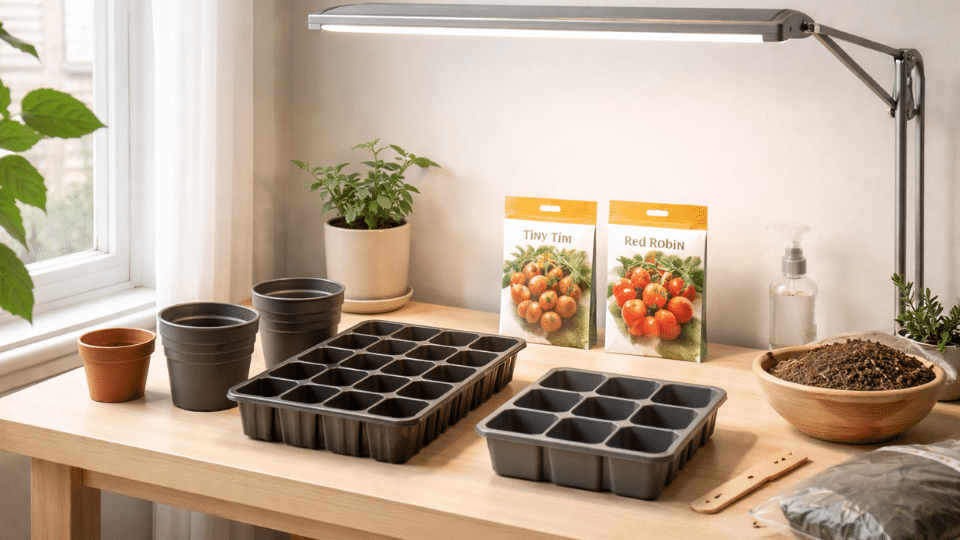
Select compact determinate varieties like Tiny Tim, Red Robin, or any dwarf cherry tomato designed for container growing.
These stay under three feet tall and produce well in limited indoor spaces. Large indeterminate varieties can reach six to seven feet, quickly outgrowing most indoor setups and demanding excessive light coverage.
The most common beginner mistake is choosing standard garden varieties, expecting them to adapt indoors; they absolutely won’t perform well.
Step 2: Setting Up Light (The Real Make-or-Break Factor)
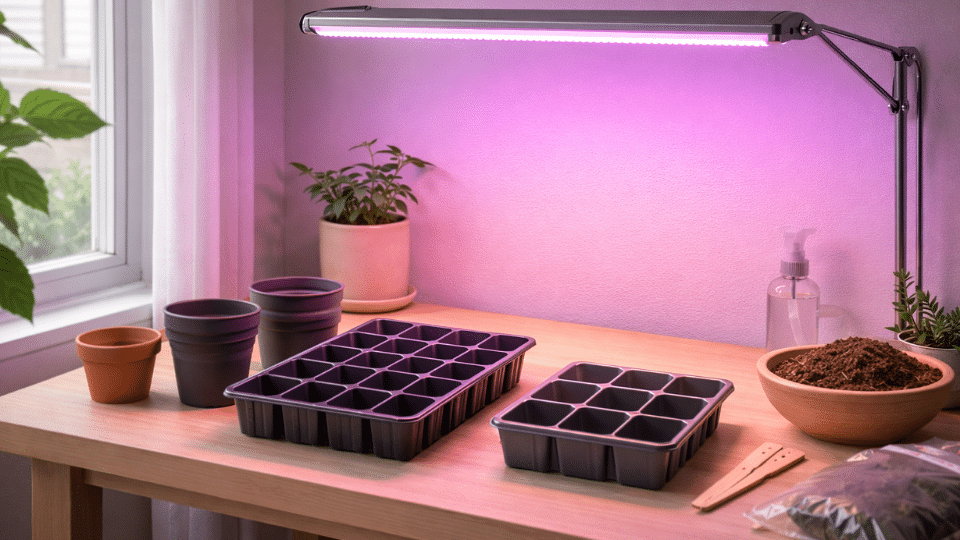
Position full-spectrum LED grow lights six to twelve inches above plants, providing fourteen to sixteen hours of light daily for optimal growth.
Window light alone rarely works for growing tomatoes indoors successfully; even bright south-facing windows deliver only twenty-five to fifty percent of what tomatoes actually need.
Insufficient lighting causes more indoor tomato failures than all other factors combined, resulting in tall, spindly plants without flowers.
Step 3: Container and Soil Setup
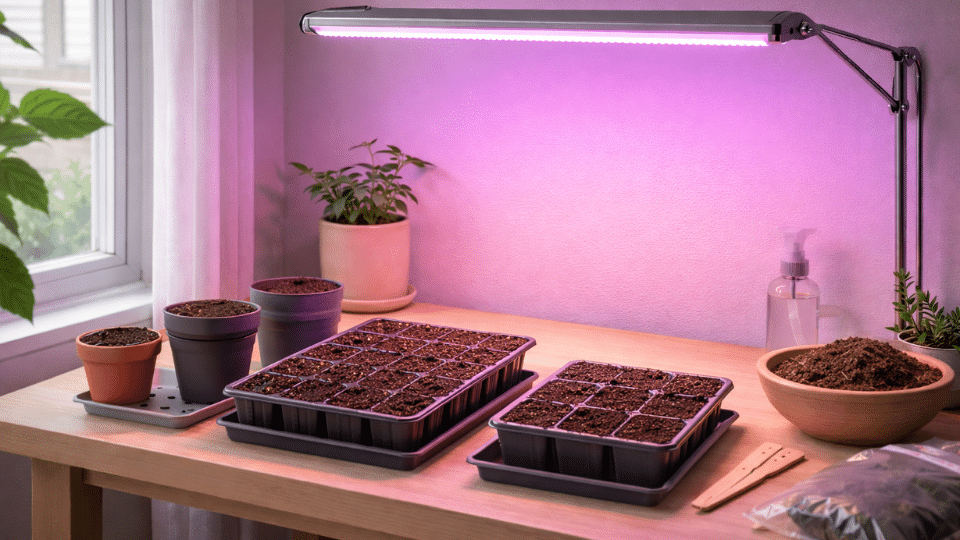
Use containers holding at least four gallons of soil; smaller pots restrict root growth and dry out too quickly between waterings. Ensure multiple drainage holes at the bottom; trapped water causes root rot within days of oversaturation.
Fill with quality potting mix specifically formulated for containers, never garden soil, which compacts badly and prevents proper drainage.
Beginners often use inadequate container sizes, resulting in stunted plants that struggle to reach maturity.
Step 4: Watering and Feeding Indoors
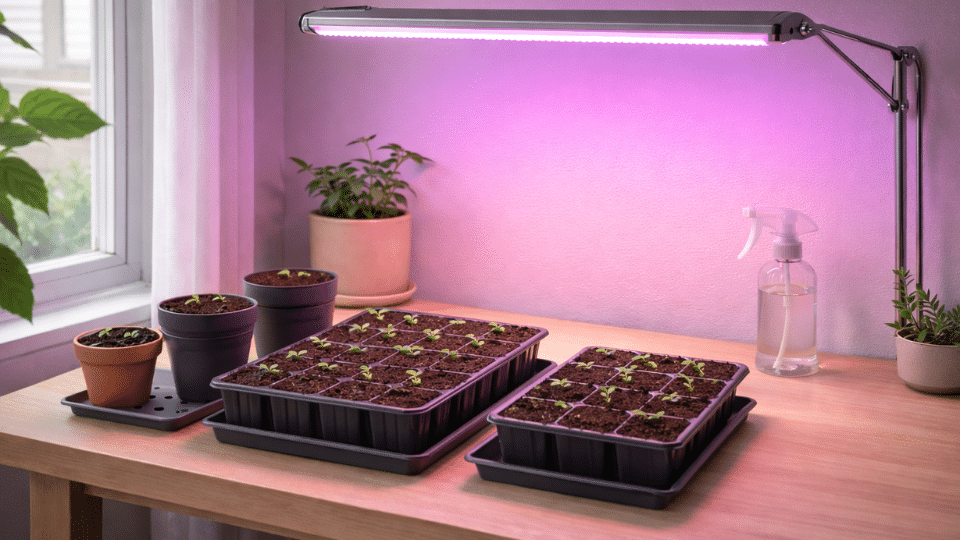
Water only when the top inch of soil feels dry to touch, not on rigid fixed schedules; indoor conditions vary daily. Overwatering kills far more indoor tomatoes than underwatering ever does.
Feed with diluted liquid fertilizer every ten to fourteen days once flowering begins for best fruit development. Many beginners water too frequently or misread wilting as drought stress when it’s actually overwatering damage or inadequate light exposure.
Step 5: Pollination Indoors
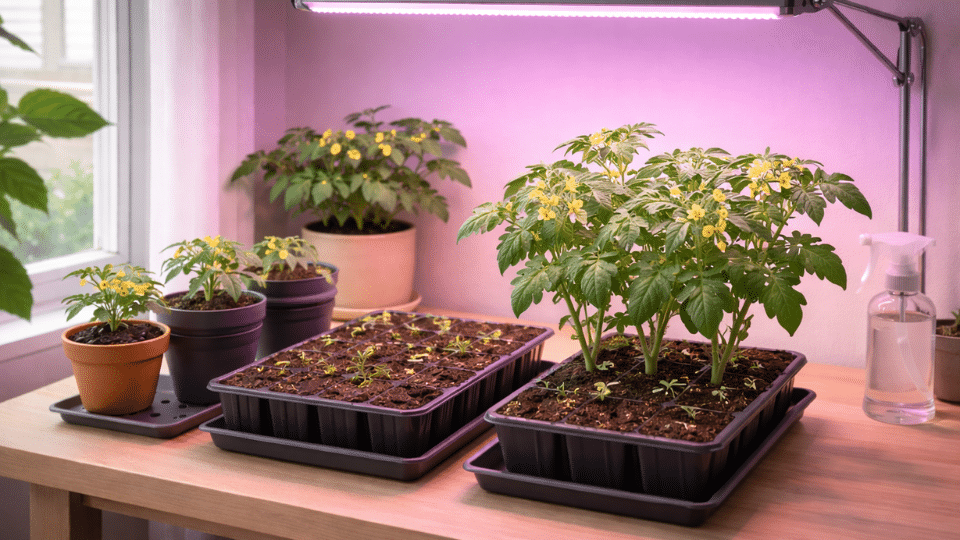
Gently shake flowering plants daily or brush inside open flowers with a small paintbrush to manually transfer pollen between blooms.
Without natural wind or pollinating insects, flowers often drop without forming any fruit behind them. Pollination works best during mid-morning hours when pollen releases most naturally and effectively.
If flowers consistently fall off without tiny tomatoes forming, pollination isn’t happening successfully and needs more attention.
Step 6: Growth Timeline and What to Expect
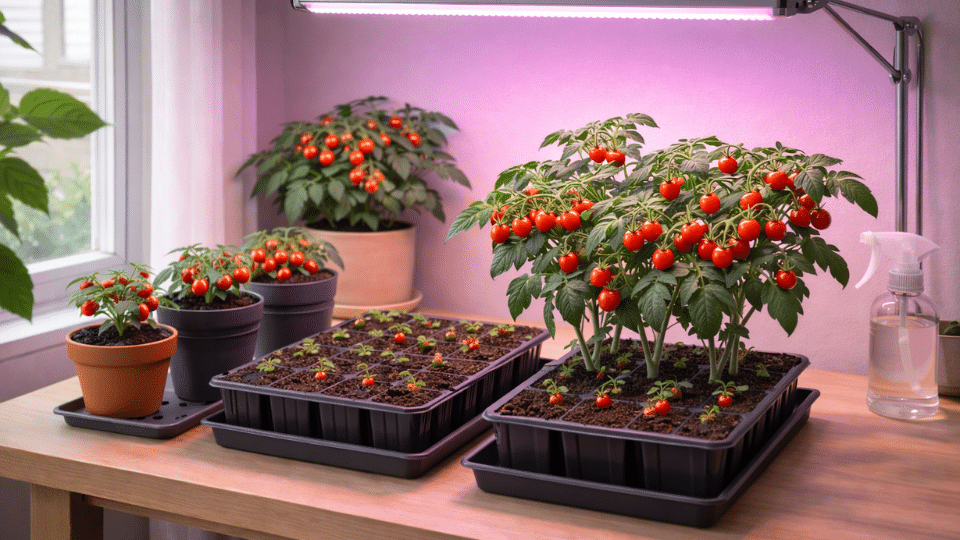
Expect sixty to eighty days from transplant to first ripe fruit for dwarf varieties under optimal indoor conditions. Indoor growth consistently feels slower than outdoor gardens due to controlled artificial environments.
Yields typically range from ten to thirty tomatoes per plant for compact varieties grown indoors, nowhere near outdoor production levels.
Managing these expectations upfront prevents disappointment when your indoor plant doesn’t match summer garden abundance.
Tips and Tricks for Growing Tomotoes Indoors
These practical insights help troubleshoot the most common issues before they completely derail your entire indoor tomato project.
- Keep grow lights on timers to maintain consistent fourteen to sixteen-hour daily photoperiods without any manual monitoring required
- Run a small fan continuously to strengthen stems and prevent fungal diseases that thrive in completely still indoor air
- Start with just one plant before scaling up; indoor tomatoes demand significantly more attention than most typical houseplants require
- Check soil moisture daily with your finger rather than trusting only visual cues or rigid watering schedules
- Hand-pollinate during peak flowering by tapping stems sharply or using a small brush every single morning consistently
These simple practices address the most common pain points that indoor growers face throughout the entire growing cycle successfully.
Community Discussion on How to Grow Tomatoes Indoors?
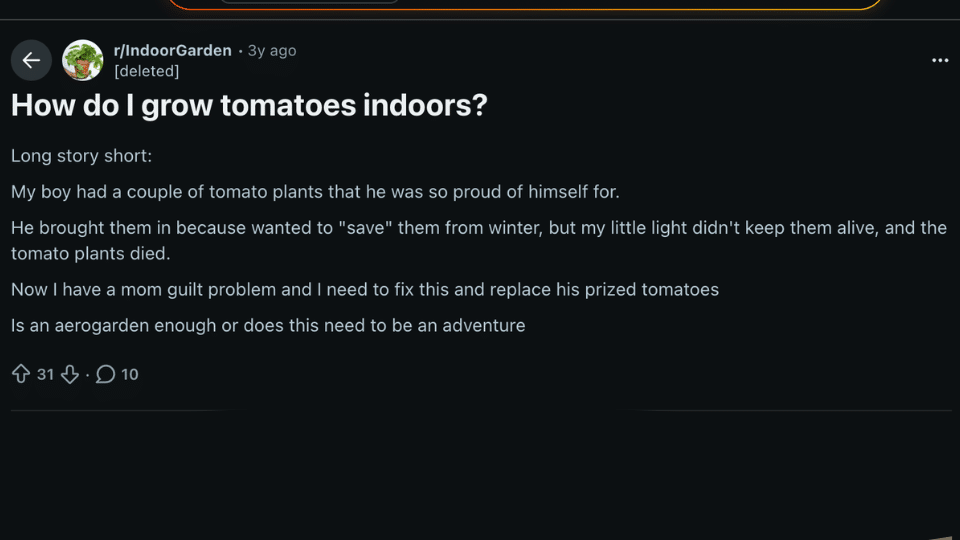
A Reddit discussion in r/IndoorGarden captured a parent’s dilemma: their child’s prized tomato plants died after being brought indoors for winter using inadequate lighting.
The mother needed to replace them. Experienced growers responded with practical advic, stick to dwarf varieties like Red Robin or Siam that thrive in eight-inch pots on windowsills.
Several recommended AeroGardens or the Twelve system for beginner-friendly setups. The consensus emphasized that realistic success requires compact varieties with supplemental grow lights or complete hydroponic systems.
This discussion reinforces what this “how to grow tomatoes indoors” guide covers: indoor tomato growing demands realistic expectations and proper equipment.
The parents’ story shows how many start with good intentions but inadequate setups, making success nearly impossible from day one.
The Bottom Line
Growing tomatoes indoors works best for people with realistic expectations, adequate budget for proper lighting, and genuine interest in the process itself.
If hoping to replace grocery store tomatoes year-round or match outdoor garden yields, growing tomatoes indoors will likely disappoint.
However, if you enjoy nurturing plants, want fresh cherry tomatoes during winter months, and don’t mind investing one hundred to two hundred dollars in basic equipment, it becomes rewarding.
Compact varieties under good grow lights produce enough tomatoes to feel worthwhile, though never abundantly. Start small, expect slower growth, and celebrate modest harvests.
Have you tried this? Comment below with your experiences!