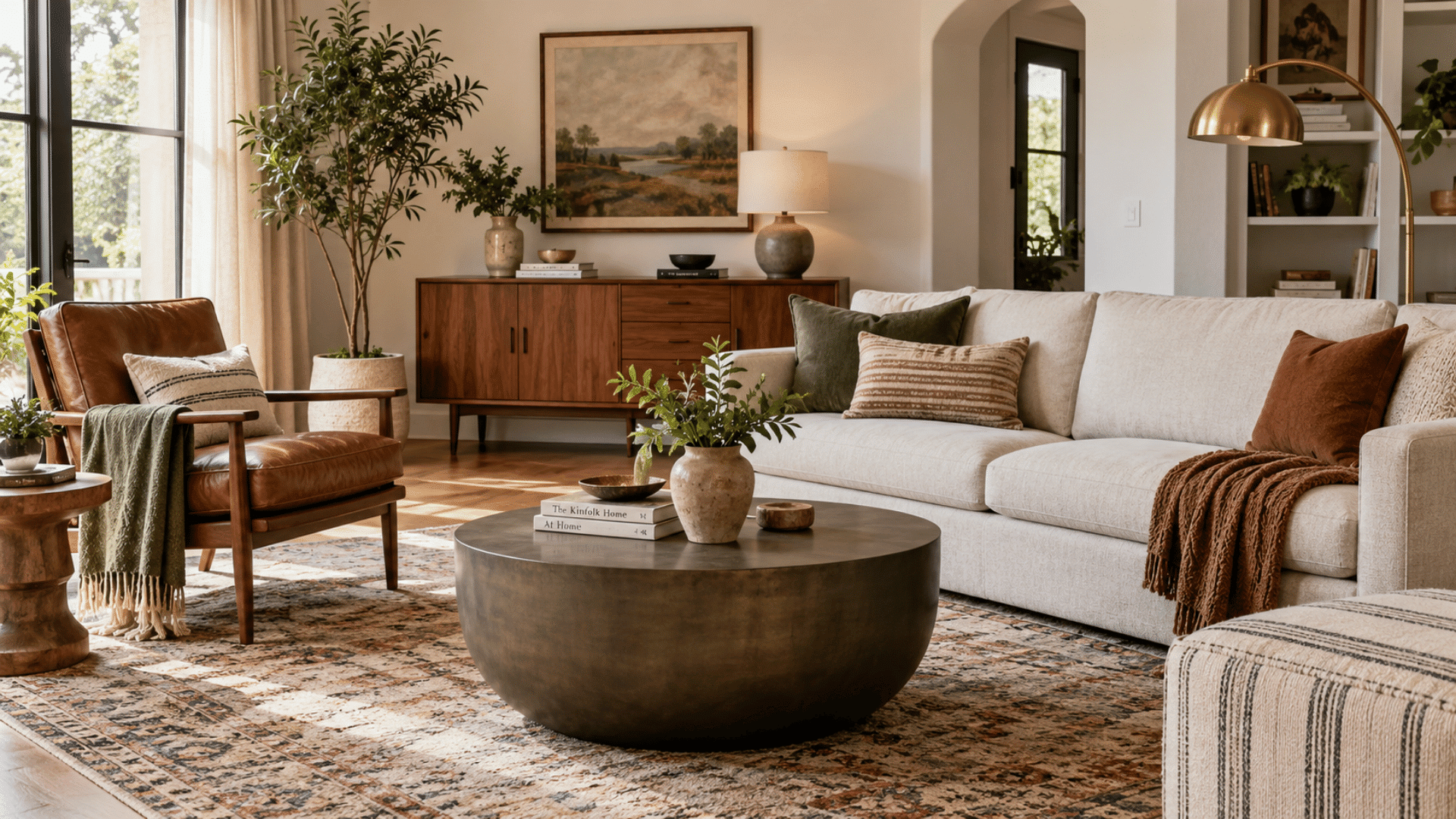
Sometimes the furniture you love does not seem like it belongs in the same room. You may have a modern sofa, a vintage side table, and a chair with a completely different look.
That’s what can make decorating feel both exciting and a little confusing. You want to keep the pieces you love without ending up with a room that feels random or overly busy.
When thinking about how to mix furniture styles, there is plenty of room to play with different looks. With a thoughtful approach, your space can feel personal, interesting, and collected rather than perfectly matched.
How to Mix Furniture Styles Without Clashing
A simple way to mix furniture styles is to follow the 80/20 rule: let about 80% of the room reflect one dominant style and use the remaining 20% for a contrasting style. This keeps the space cohesive without making everything look overly matched.
Tie the different styles together through repeated colors, wood tones, materials, shapes, or finishes. Keep furniture scale and visual weight balanced so no piece feels out of place.
The 80/20 split doesn’t have to be exact; use it as a flexible guideline to create a room that feels intentionally mixed rather than randomly furnished.
This approach can also work well with eclectic interior design, where different influences are brought together intentionally rather than matched exactly.
Before Buying a New Furniture Piece
Before bringing another style into the room, check how the piece will work with what you already have.
- Find a connection: Look for a shared color, material, wood tone, finish, or shape.
- Check the scale: Make sure the piece isn’t noticeably too large or small next to nearby furniture.
- Consider visual weight: Balance bulky or dark furniture with lighter, more open designs.
- Watch the focal points: Avoid adding another statement piece if the room already has one or two.
- Measure the space: Leave enough room for comfortable movement and visual breathing space.
- Picture the placement: Know where the piece will go and what furniture will surround it before buying
How to Create Balance Between Different Furniture Styles
Bring contrasting furniture styles together through thoughtful choices in color, materials, scale, and shape for a cohesive look.
1. Start With a Dominant Furniture Style
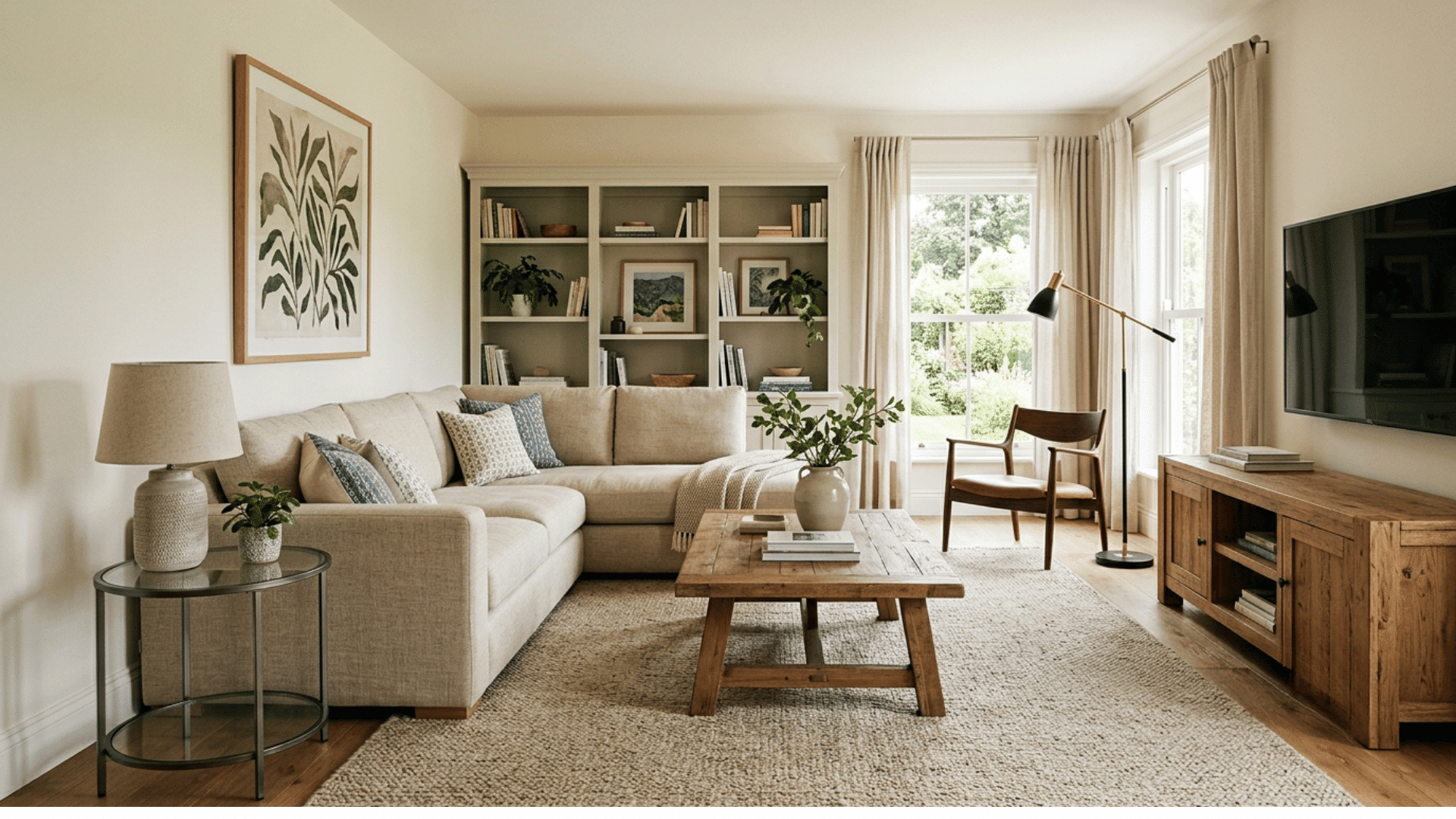
Choose one dominant style to set the room’s overall mood using larger pieces like the sofa bed or dining table.
Add contrast through smaller pieces such as chairs, tables, lamps, and décor to create character while keeping the space cohesive.
2. Find a Common Thread Between Different Pieces
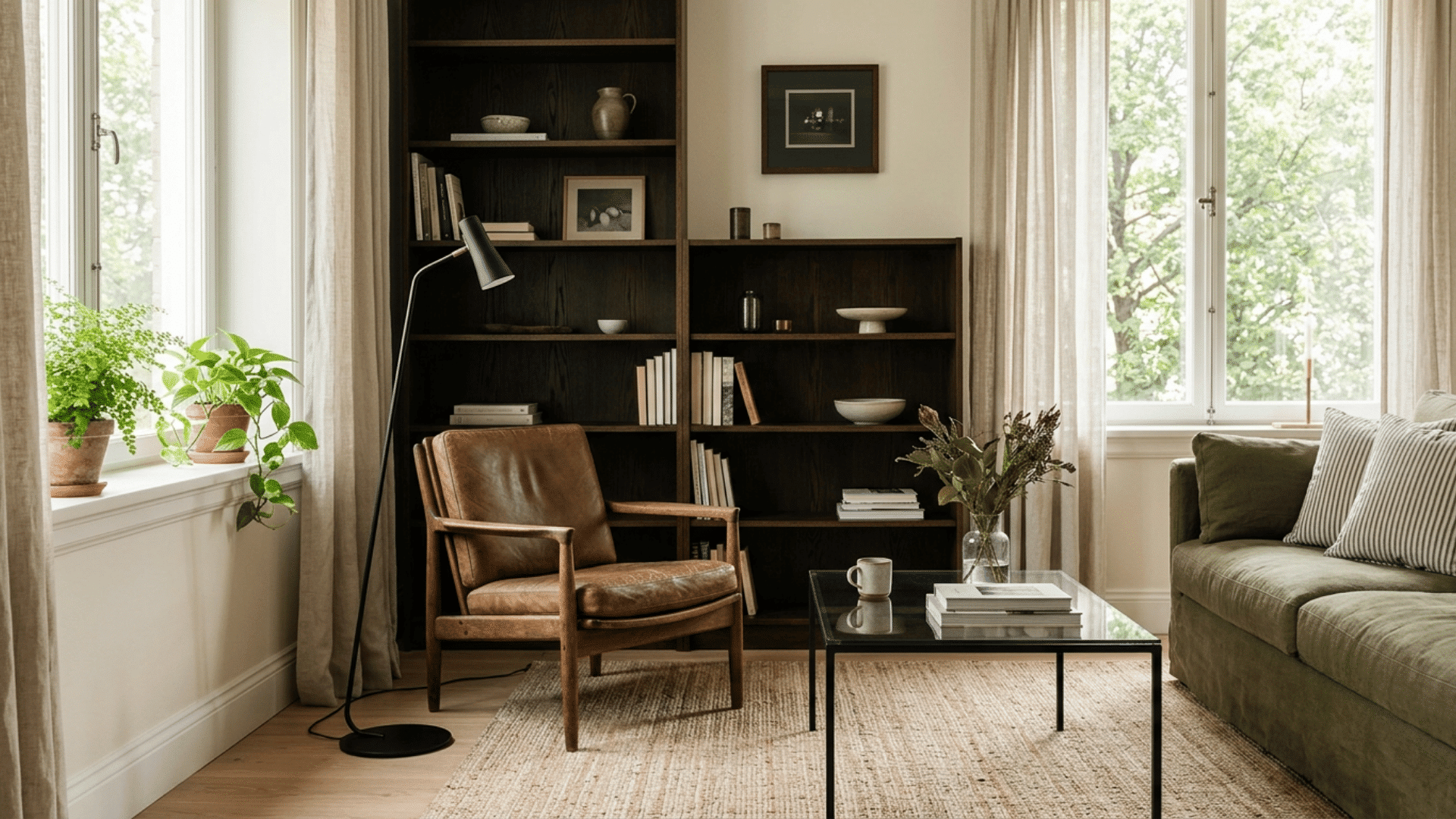
Different furniture styles feel more intentional when they share a visual connection. Repeat a color material finish shape or wood undertone to create cohesion. Even subtle links like brass details or similar curves can tie pieces together.
Lighting can also bridge styles, such as a modern lamp in a traditional room or a vintage fixture in a contemporary space.
3. Keep the Color Palette Cohesive
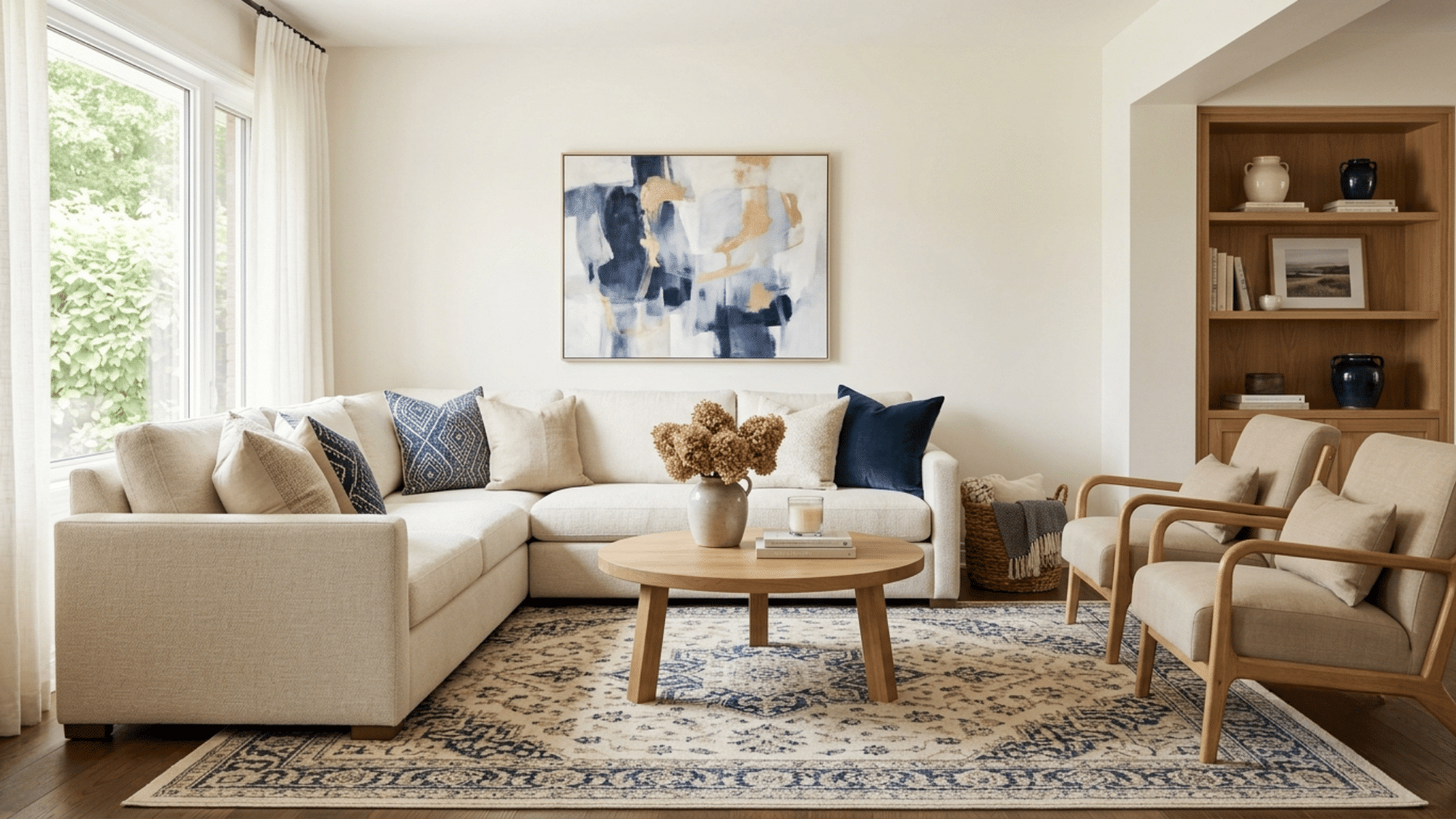
Choose a small group of base colors for the room, then introduce one or two accent shades through upholstery, rugs, artwork, or accessories.
You do not need identical shades throughout. Staying within complementary color families or similar undertones gives you enough variation to keep the room interesting without adding visual clutter.
4. Mix Different Wood Tones Carefully
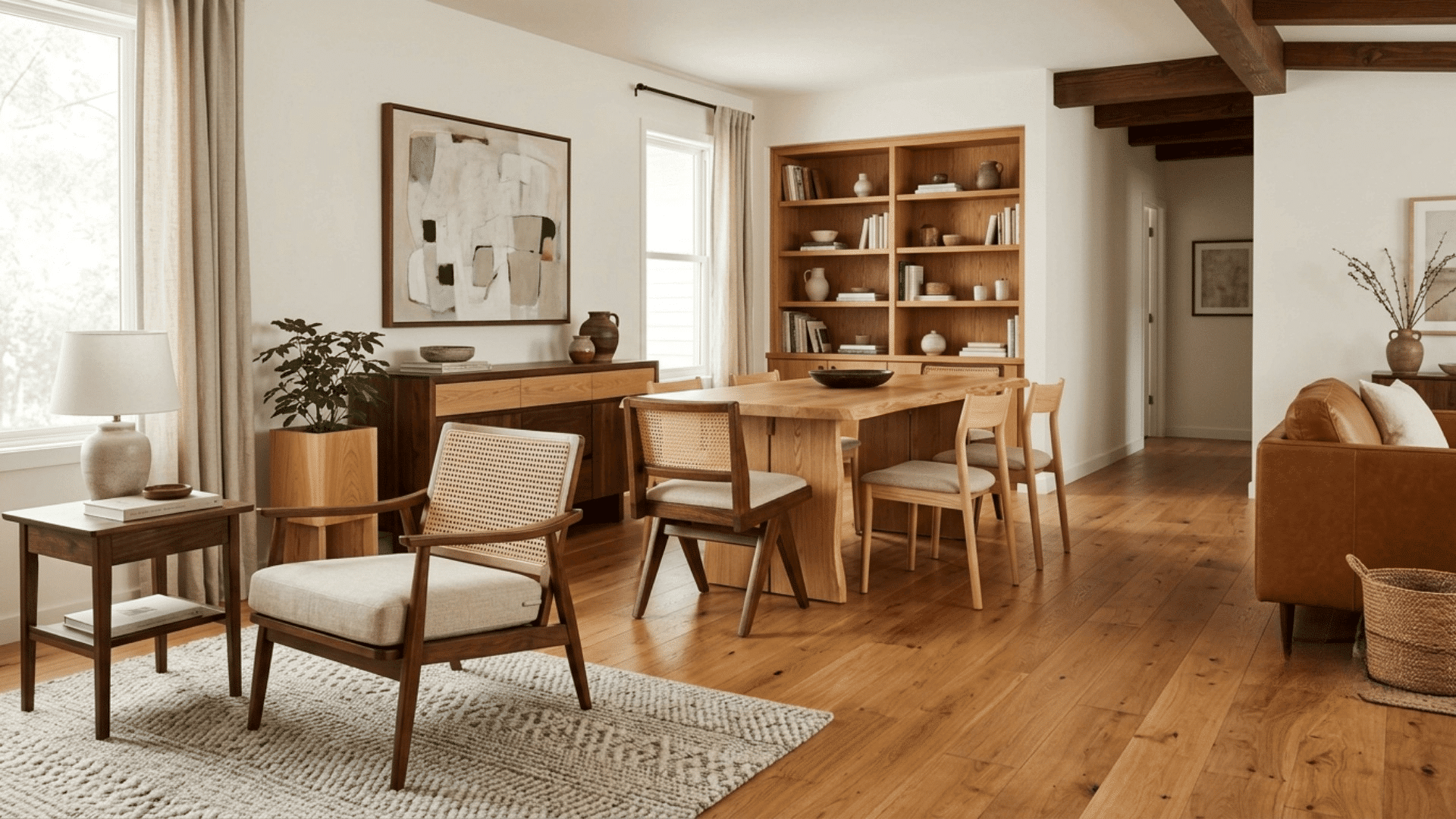
Different wood finishes can work together when their undertones are warm, cool, or neutral. Repeat the main wood tones throughout the room and separate clashing finishes with rugs or upholstered pieces.
Avoid exact stain matches since slight variation creates a natural collected look.
5. Balance the Scale and Proportion of Furniture
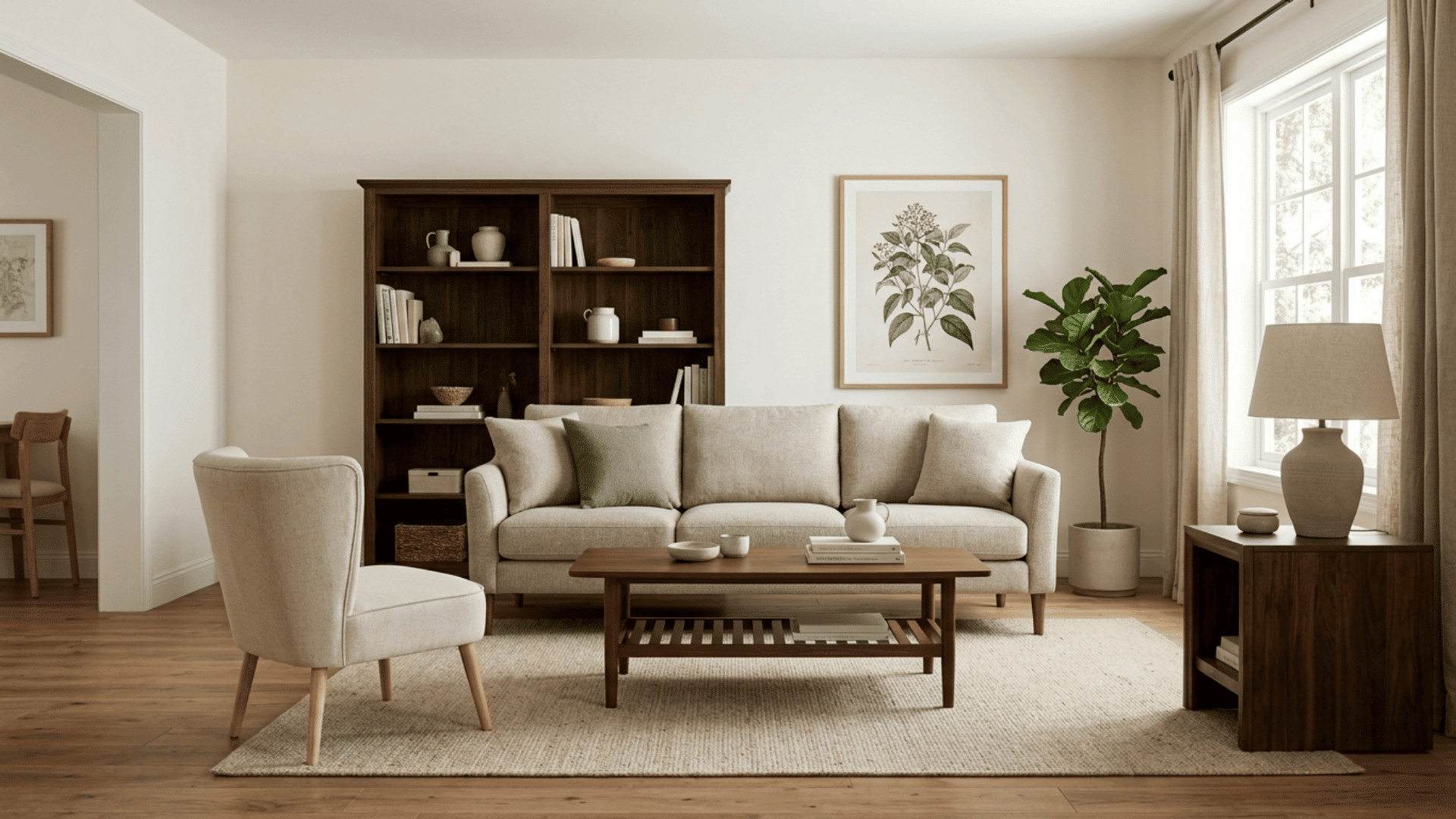
Furniture from different styles works best when the pieces feel proportionate. Balance heavier elements like dark colors, thick frames, and solid bases with lighter designs featuring slim legs and open forms.
Distribute visual weight throughout the room and leave enough open space to avoid a crowded look.
6. Combine Straight Lines and Curved Shapes
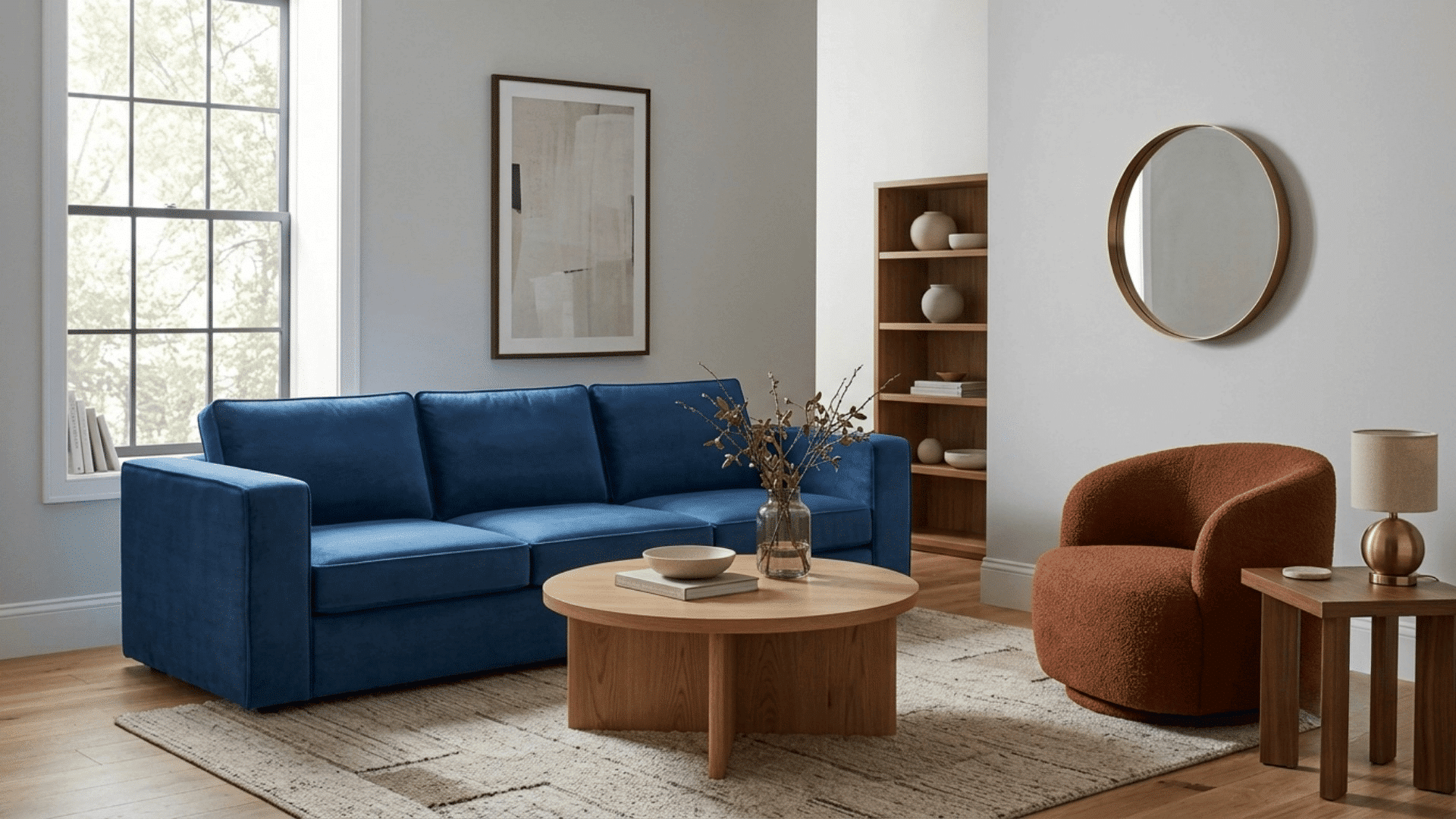
Use curves to soften angular furniture and straight lines to balance rounded forms. Pair a boxy sofa with a round table or a curved chair with a rectangular one.
Keep one shape dominant and echo the contrasting form through smaller details like mirrors or lamps.
7. Layer Different Materials, Textures, and Patterns
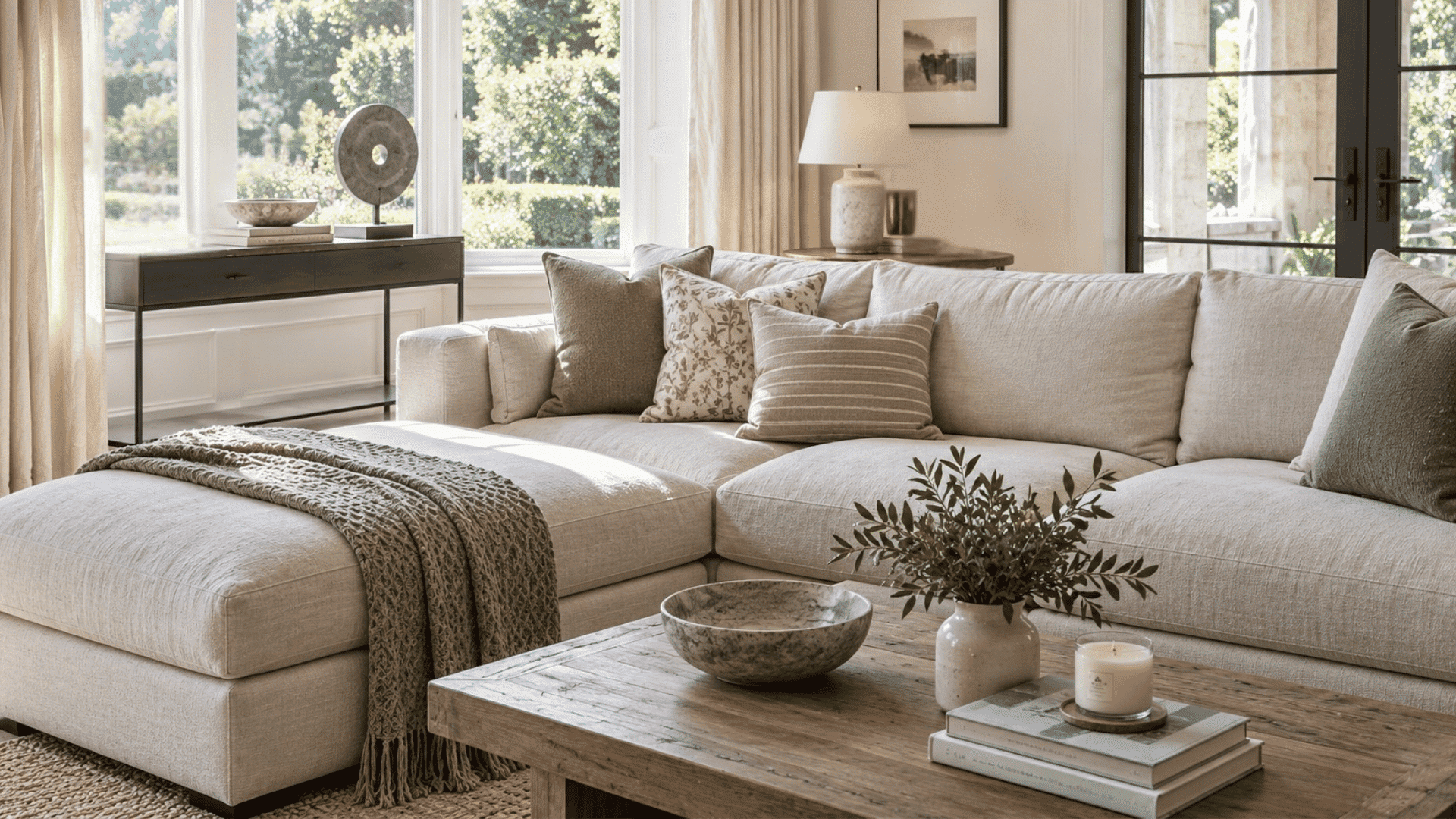
Mix materials, textures, and patterns to add depth and character while keeping the room balanced and visually connected.
- Wood + Metal: Adds warmth alongside a clean, structured finish.
- Leather + Linen: Pairs a rich, smooth surface with a softer texture.
- Glass + Natural Wood: Balances an airy finish with organic warmth.
- Velvet + Sleek Finishes: Adds softness to streamlined contemporary pieces.
- Cane + Modern Upholstery: Brings natural texture to clean silhouettes.
- Florals + Stripes or Geometrics: Mix patterns at different scales and connect them through at least one shared color.
Leave some surrounding upholstery and surfaces solid so the different textures and patterns have enough visual breathing room.
Furniture Style Combinations That Work Well
Some furniture styles naturally work well together because they share similar materials, shapes, or visual details. Use these pairings as inspiration, not strict rules.
|
Style Combination |
Why It Works |
|---|---|
|
Modern + Traditional |
Clean lines balance traditional warmth and detail. |
|
Mid-Century Modern + Scandinavian |
Both use simple forms and natural materials. |
|
Farmhouse + Industrial |
Rustic wood pairs well with metal finishes. |
|
Traditional + Contemporary |
Classic shapes complement streamlined pieces. |
|
Rustic + Modern |
Natural textures contrast with smooth surfaces. |
|
Vintage + Minimalist |
Vintage pieces stand out against simple surroundings. |
|
Coastal + Modern |
Light finishes soften clean modern lines. |
Common Mistakes When Mixing Furniture Styles
A few choices can make an otherwise thoughtful furniture mix feel disconnected:
- Mixing Too Many Styles: Too many strong influences can make the room lose direction.
- Adding Too Many Focal Points: Let one or two standout pieces command attention.
- Forcing a Combination: A piece does not have to stay simply because one detail matches.
- Ignoring the Room Itself: Consider different types of flooring, molding, fireplaces, built-ins, and other permanent features.
- Buying Without a Plan: Think about where a new piece will sit and what surrounds it before bringing it home.
Conclusion
Mixing furniture styles is where a home can start to feel truly personal. It leaves room for the pieces you already love, unexpected finds, and new additions without forcing everything into one design box.
Give yourself time to see how the room comes together and make changes as your taste evolves. A space does not need to look perfectly styled to feel finished; it just needs to feel right when you walk into it.
Which furniture styles are you planning to mix? Share your favorite combination in the comments.
Frequently Asked Questions
Is It Okay to Mix Different Furniture Styles?
Yes. Mixing furniture styles can create a more personal and collected look. Keeping some shared elements between pieces helps different styles feel intentional, not mismatched.
How Many Furniture Styles Can You Mix in One Room?
Two or three furniture styles are usually easier to balance. Let one style dominate and use the others selectively so the room maintains a clear visual direction.
Do I Need to Buy New Furniture to Mix Styles?
No. Most successful mixes start with furniture you already own. Gradually add one or two contrasting pieces, using color, material, or shape to connect them to what’s already in the room.