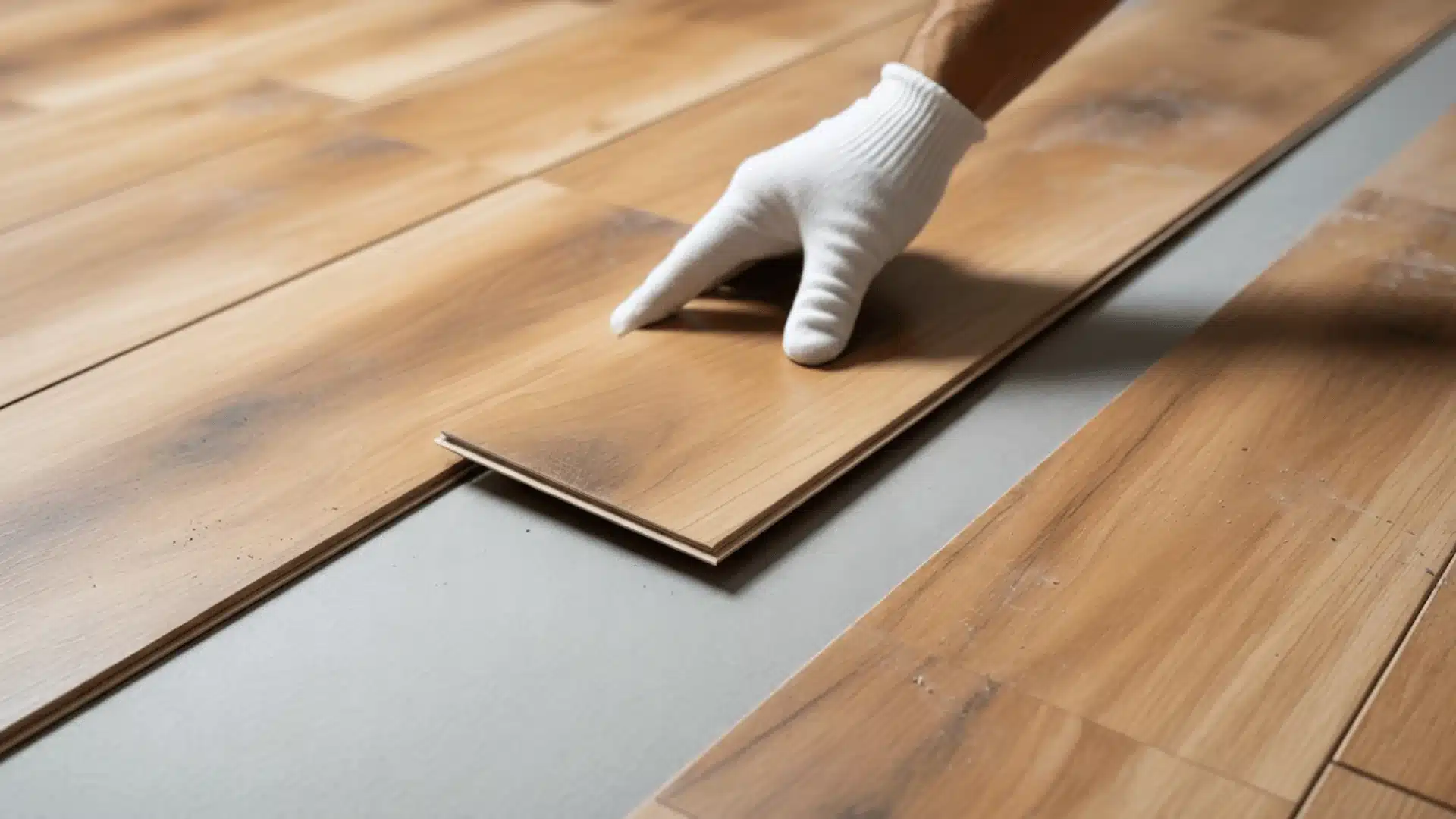
Flooring affects how every room in your home feels and functions underfoot, visually, and acoustically. Before you spend a dollar on materials or installation, understanding what each type actually offers (and where it falls short) makes the difference between a decision you’re happy with for decades and one you regret within a year.
This guide covers every major flooring type in plain language with honest pros, real cons, and clear room-by-room guidance. Whether you’re renovating a kitchen, finishing a basement, or starting from scratch, you’ll find exactly what you need to make a confident, informed choice.
A Simple Breakdown of Flooring Types
When considering flooring options, understanding the basic categories makes the whole process much less overwhelming. Flooring generally falls into three broad groups: hard flooring (wood, tile, and stone); soft flooring (primarily carpet); and flexible flooring (vinyl and laminate).
Beyond material type, it also helps to think in terms of natural versus synthetic materials, since this affects both cost and durability. Another key distinction is soft versus hard surfaces, as each serves different comfort and lifestyle needs. Finally, consider waterproof versus non-waterproof options, especially for moisture-prone areas like bathrooms and kitchens.
These simple distinctions give you a solid foundation before going deeper into specific flooring choices.
Different Types of Flooring
Here are the most common floor types you can choose from today, each with its own strengths, style, and purpose. Pick what fits your space, lifestyle, and budget best.
1. Hardwood Flooring
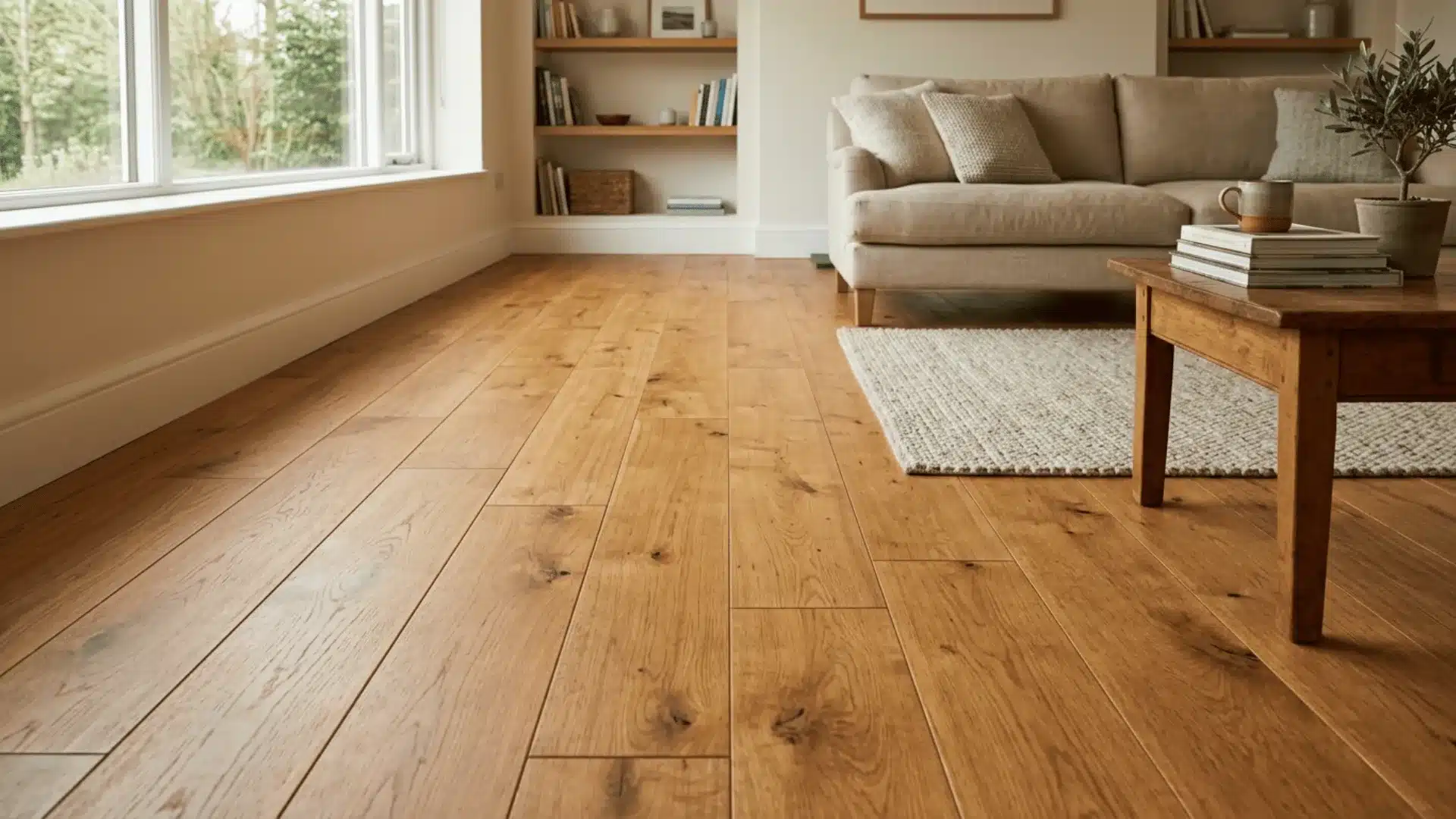
Hardwood flooring is made from solid wood planks, cut directly from timber and finished to bring out their natural grain and texture. It delivers a warm, timeless appearance that instantly elevates any interior.
Available in various species like oak, maple, and walnut, each plank carries a unique character. Best suited for living rooms and bedrooms where foot traffic is moderate and moisture exposure is minimal.
If you’re planning a larger renovation and want to keep costs in check, it helps to read up on how to handle unexpected renovation costs and damage before committing to premium materials like solid hardwood.
| Factor | Pros | Cons |
|---|---|---|
| Cost | Worth long-term investment ($5–$11/sq ft) | Expensive upfront |
| Durability | Lasts decades when maintained | Scratches under heavy use |
| Water Resistance | Handles occasional spills | Warps with prolonged moisture |
| Maintenance | Easy to clean daily | Needs periodic refinishing |
| Installation | Can be refinished multiple times | Requires professional fitting |
| Aesthetics | Rich, natural, timeless look | Limited style in wet areas |
2. Engineered Wood Flooring
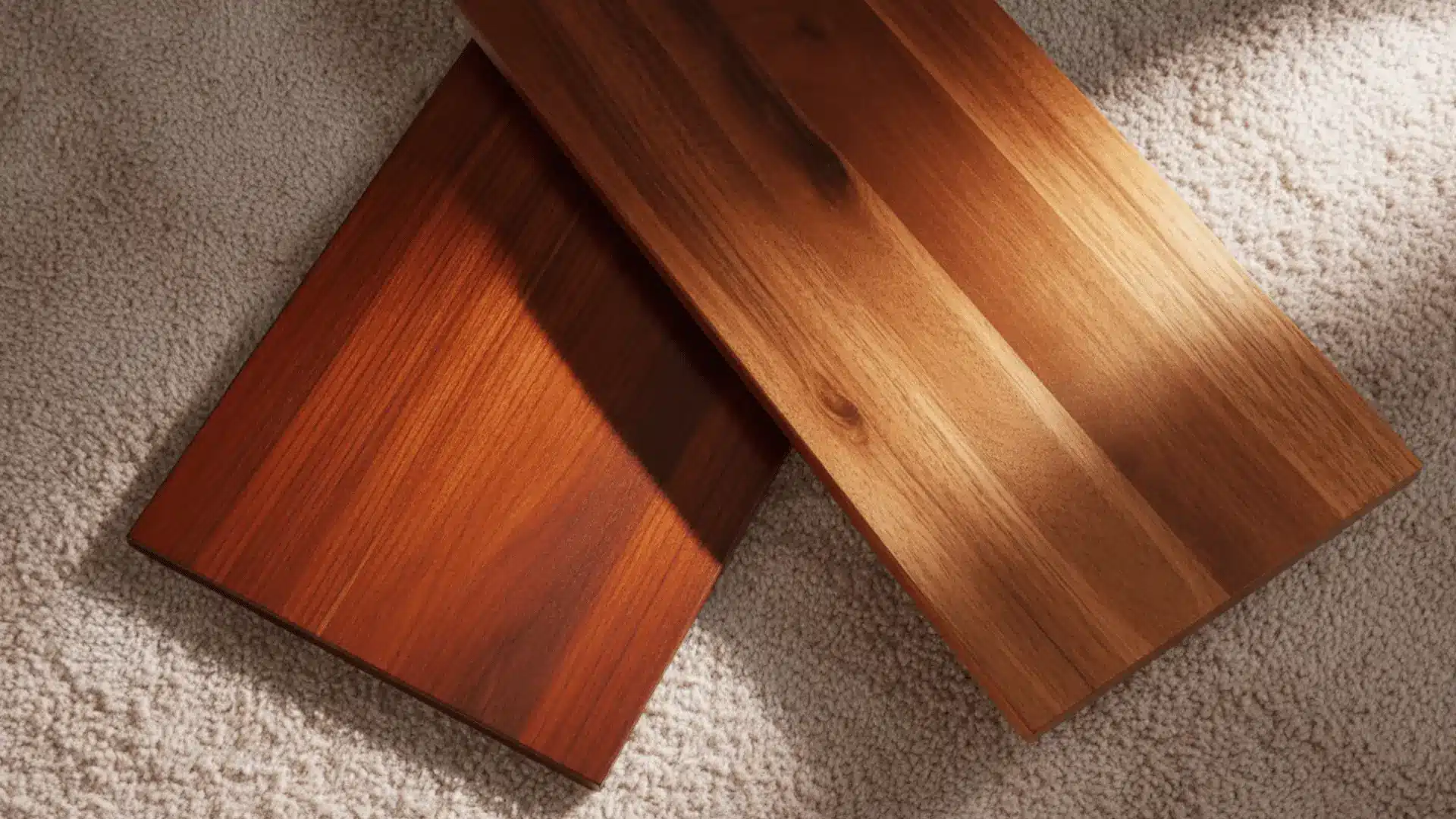
Engineered Wood Flooring features a hardwood veneer on top with layers of plywood or high-density fiberboard beneath, providing greater dimensional stability than solid wood.
It offers the look and warmth of natural timber while handling environmental changes more effectively. Ideal for basements, kitchens, and areas with underfloor heating, engineered wood performs better than solid wood in humidity-prone spaces.
| Factor | Pros | Cons |
|---|---|---|
| Cost | More affordable than solid hardwood | Pricier than laminate or vinyl |
| Durability | Resists warping and shrinking well | Thinner veneer limits refinishing |
| Water Resistance | Handles humidity better than solid wood | Not fully waterproof under standing water |
| Maintenance | Simple routine cleaning required | Veneer damage is harder to repair |
| Installation | Suitable for floating or glue-down methods | Needs acclimatization before fitting |
| Aesthetics | Authentic wood look with natural grain | Fewer refinishing options over time |
3. Laminate Flooring
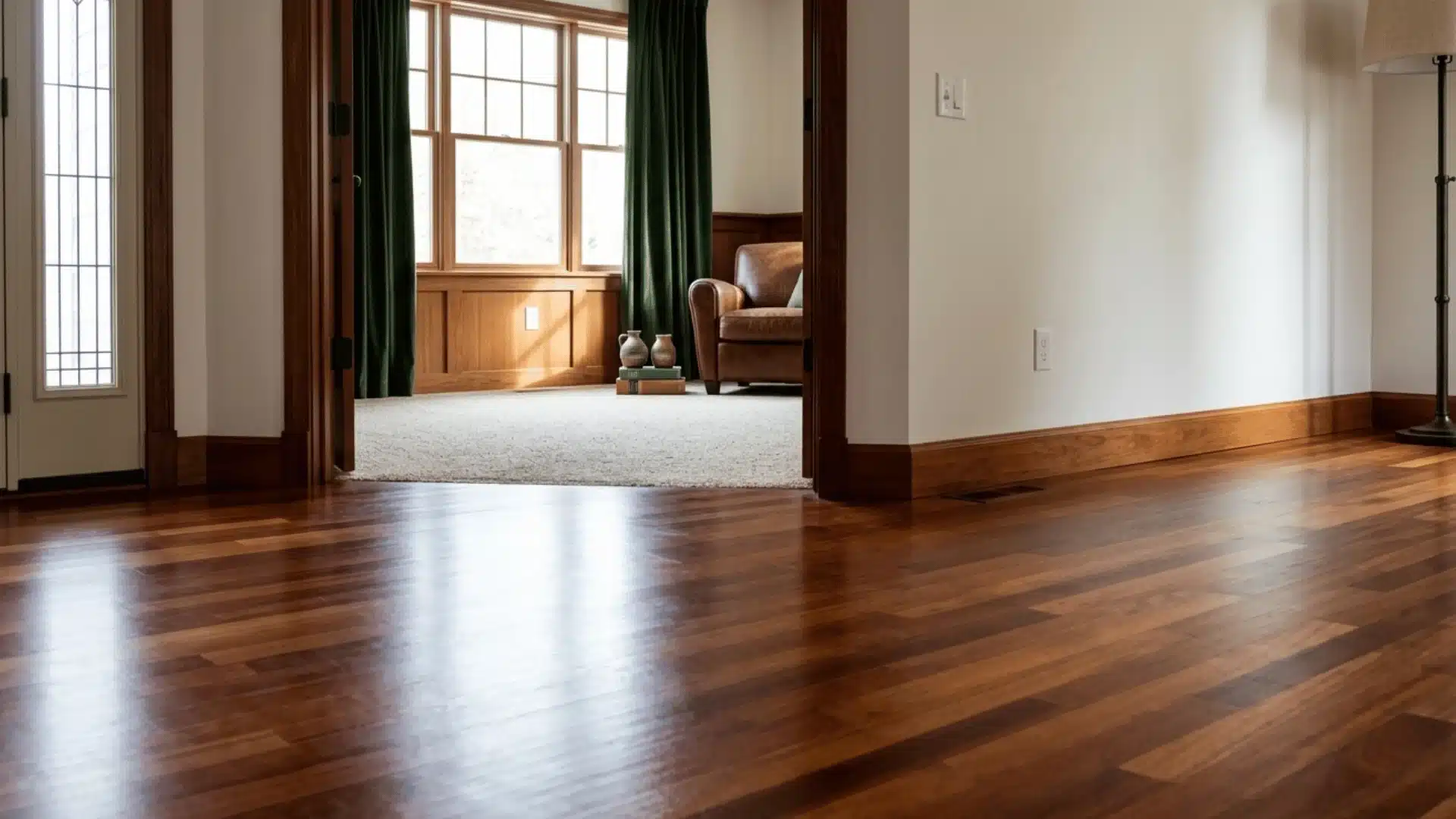
Laminate Flooring is a synthetic, multi-layer product that replicates the look of wood or stone using a high-resolution photo layer, sealed with a tough protective coating. It’s entirely man-made, ensuring a consistent appearance across planks.
Ideal for living rooms, hallways, and bedrooms, laminate offers the look of timber without the cost or maintenance requirements of real wood.
| Factor | Pros | Cons |
|---|---|---|
| Cost | Very budget-friendly (~$2.82/sq ft average) | Cheaper feel compared to real wood |
| Durability | Scratch and dent-resistant surface | Cannot be refinished once worn |
| Water Resistance | Handles light spills adequately | Swells and warps with excess moisture |
| Maintenance | Requires minimal daily upkeep | Difficult to repair individual planks |
| Installation | Simple click-lock DIY fitting | Needs underlayment for best results |
| Aesthetics | Wide range of wood and stone looks | Visible repetition in plank patterns |
4. Vinyl Flooring (LVP & LVT)
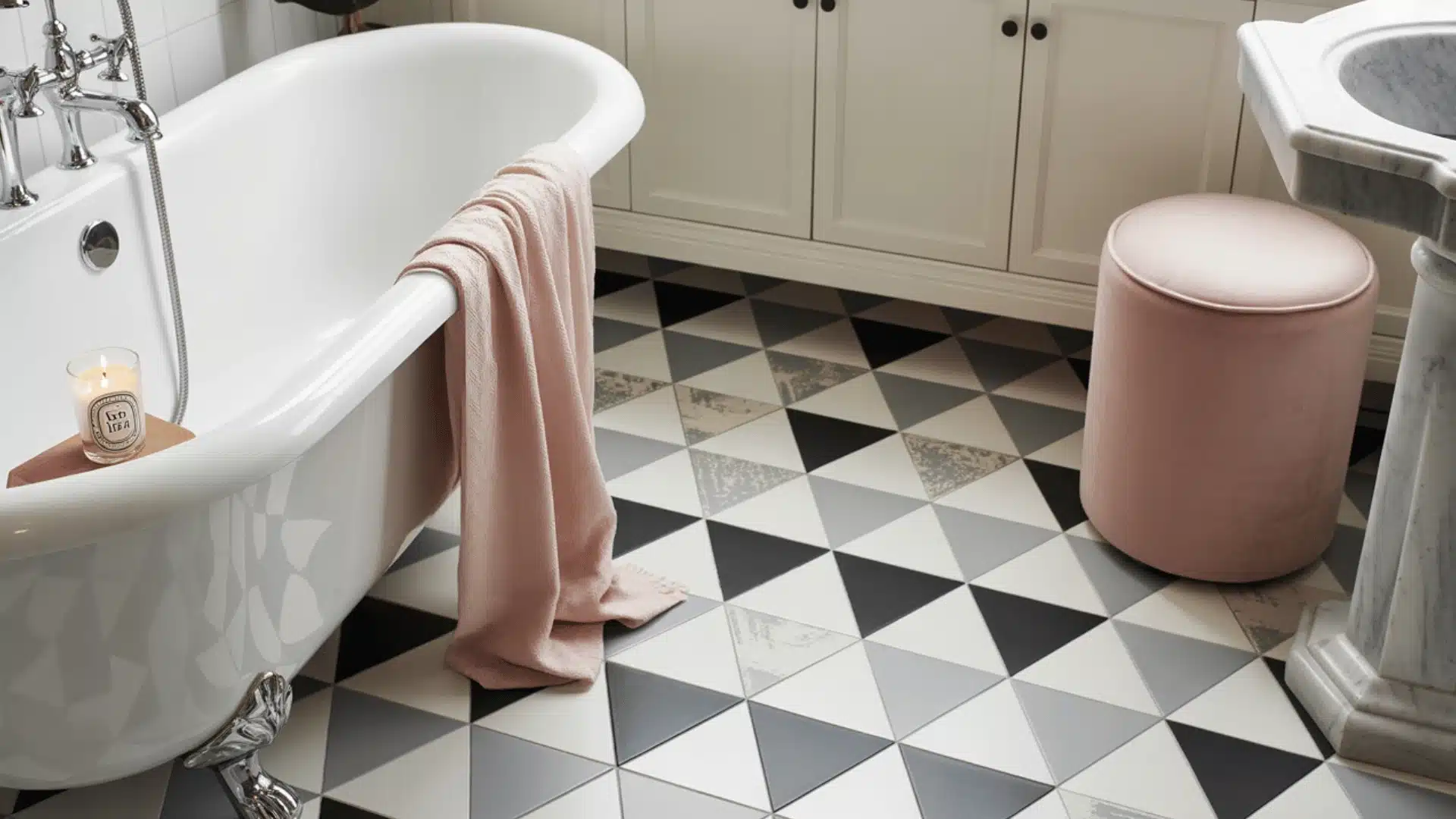
Vinyl Flooring is a synthetic, plastic-based option designed for resilience and durability. Available as Luxury Vinyl Plank (LVP) or Luxury Vinyl Tile (LVT), it features compressed layers for exceptional toughness.
Perfect for bathrooms, kitchens, laundry rooms, and basements, vinyl flooring offers full waterproof performance and stands up to heavy daily use.
It’s a particularly smart pick if your open-concept kitchen and living room share a continuous floor, since LVP handles both foot traffic and the occasional kitchen spill without missing a beat.
| Factor | Pros | Cons |
|---|---|---|
| Cost | Affordable across most budgets (~$3.42/sq ft) | Quality varies widely by price range |
| Durability | Highly resistant to dents and wear | Can tear under sharp or heavy objects |
| Water Resistance | Fully waterproof throughout all layers | Low-grade versions may allow seam leaks |
| Maintenance | Extremely easy to clean and maintain | Difficult to fully repair damaged sections |
| Installation | Flexible floating or glue-down options | Subfloor must be perfectly level first |
| Aesthetics | Realistic wood and tile visual options | Can look less premium in thinner versions |
5. Sheet Vinyl Flooring
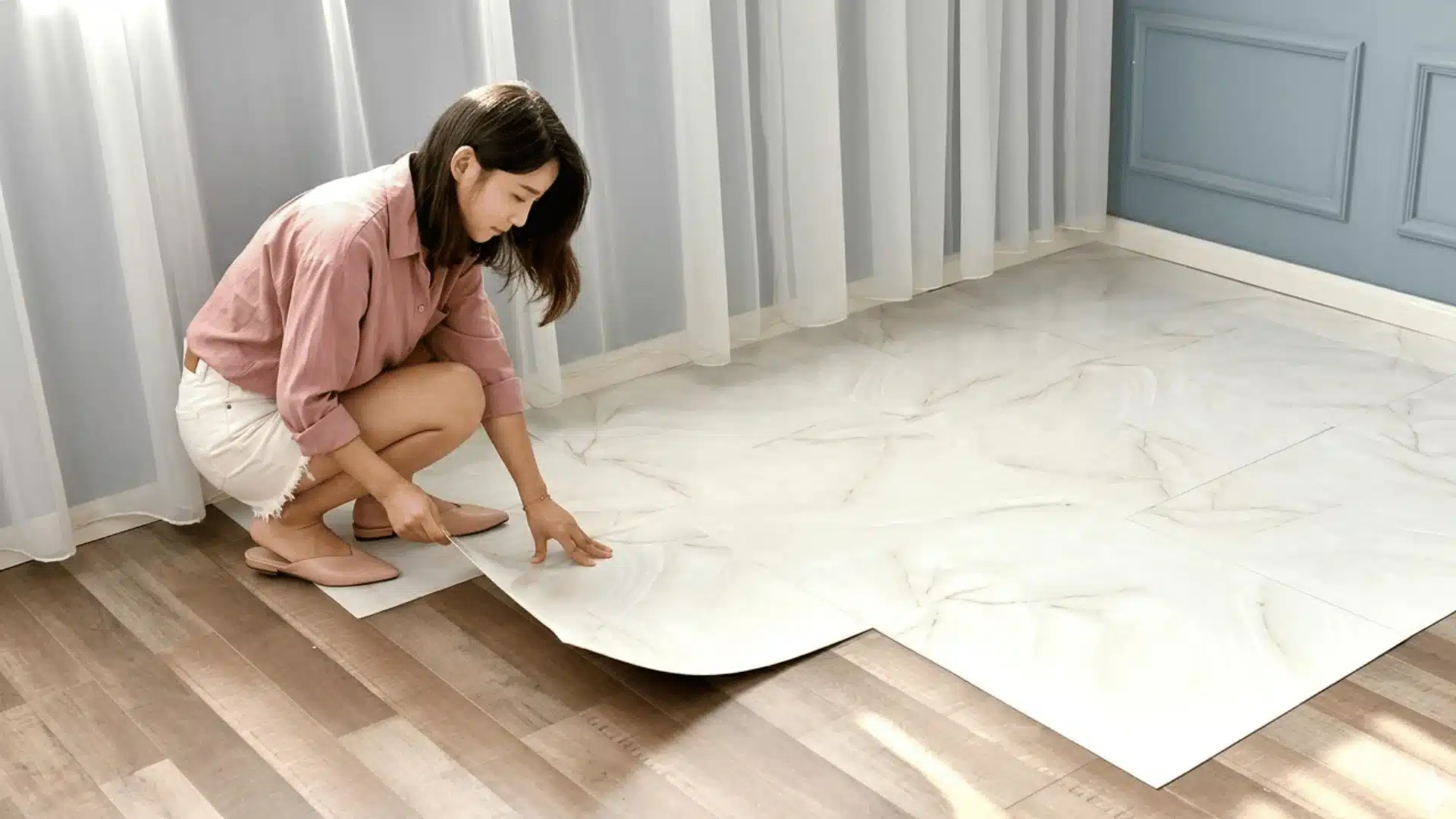
Sheet Vinyl Flooring comes in wide, continuous rolls, covering large floor areas with minimal seams. Made from multiple synthetic layers bonded during production, it creates a flexible, seamless surface.
Ideal for bathrooms, kitchens, utility rooms, and laundry areas, sheet vinyl offers a fully sealed, moisture-resistant surface, ensuring durability and easy maintenance in high-moisture environments.
| Factor | Pros | Cons |
|---|---|---|
| Cost | One of the most affordable options (~$1,000 installed for a standard room) | Very low-cost versions feel thin underfoot |
| Durability | Resistant to everyday scuffs and wear | Vulnerable to tears from sharp objects |
| Water Resistance | Near-seamless surface blocks moisture effectively | Edges can lift and allow water underneath |
| Maintenance | Wipes clean quickly with minimal effort | Stains can set if not cleaned promptly |
| Installation | Covers large areas in a single sheet | Awkward to fit precisely around obstacles |
| Aesthetics | Available in many patterns and designs | Less premium appearance than tile or plank |
6. Ceramic Tile Flooring
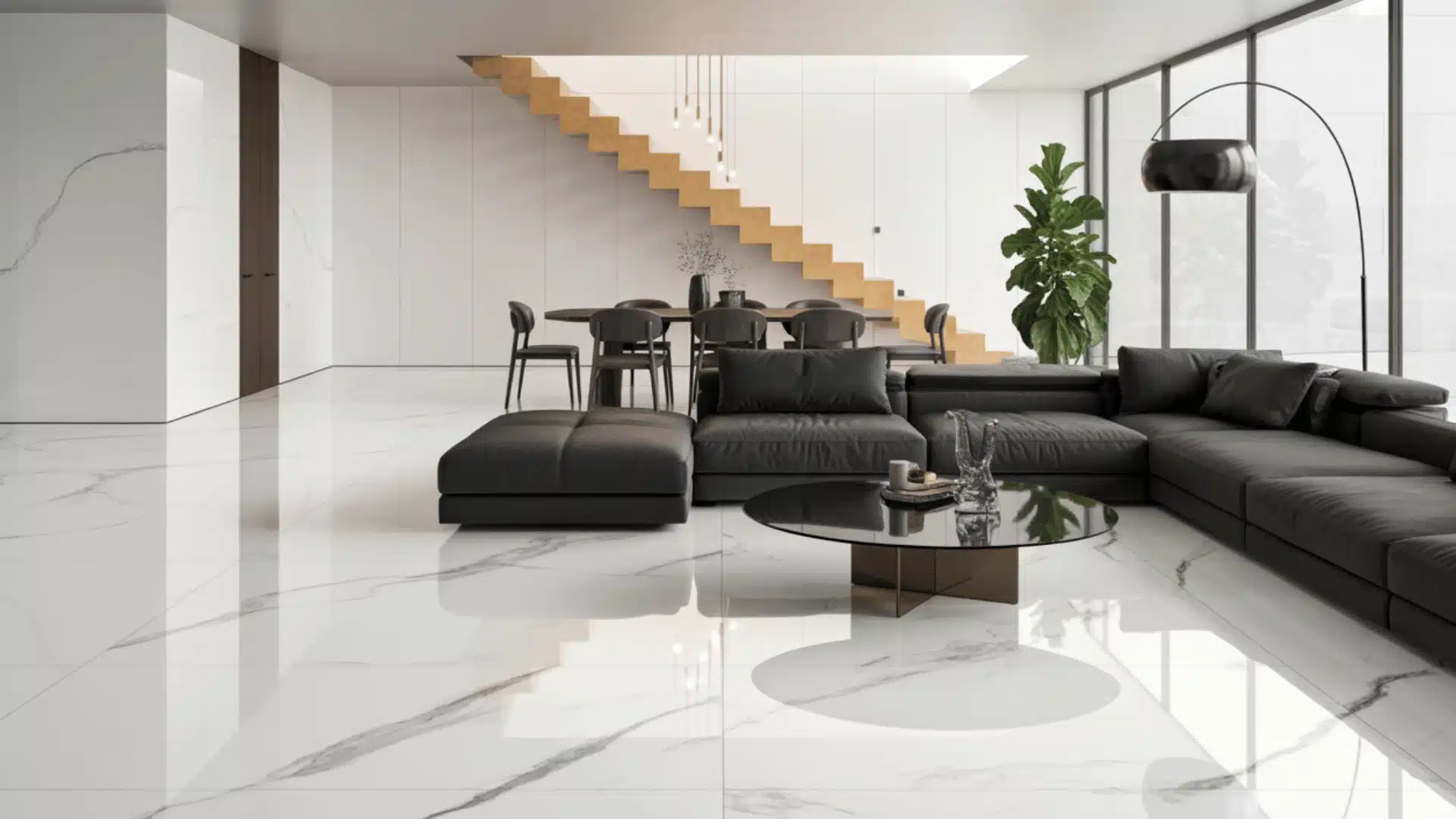
Ceramic Tile is made from natural clay mixed with minerals, shaped into tiles, and fired at high temperatures. The result is a rigid, dense surface that is distinct from wood or synthetic flooring.
Perfect for bathrooms, kitchens, hallways, and entryways, ceramic tiles provide a long-lasting, easy-to-clean surface that is durable and structurally reliable.
| Factor | Pros | Cons |
|---|---|---|
| Cost | Reasonably priced for most budgets | Grout and fitting add to overall cost (up to $7,000 installed) |
| Durability | Extremely hard and long-lasting surface | Brittle under heavy impact, prone to cracking |
| Water Resistance | Naturally resistant to moisture and humidity | Unsealed grout lines can absorb water |
| Maintenance | Simple to clean with standard products | Grout requires periodic sealing and scrubbing |
| Installation | Wide variety of layout patterns possible | Requires skilled fitting for best results |
| Aesthetics | Huge range of colours, sizes, and finishes | Can feel cold and hard underfoot |
7. Porcelain Tile Flooring
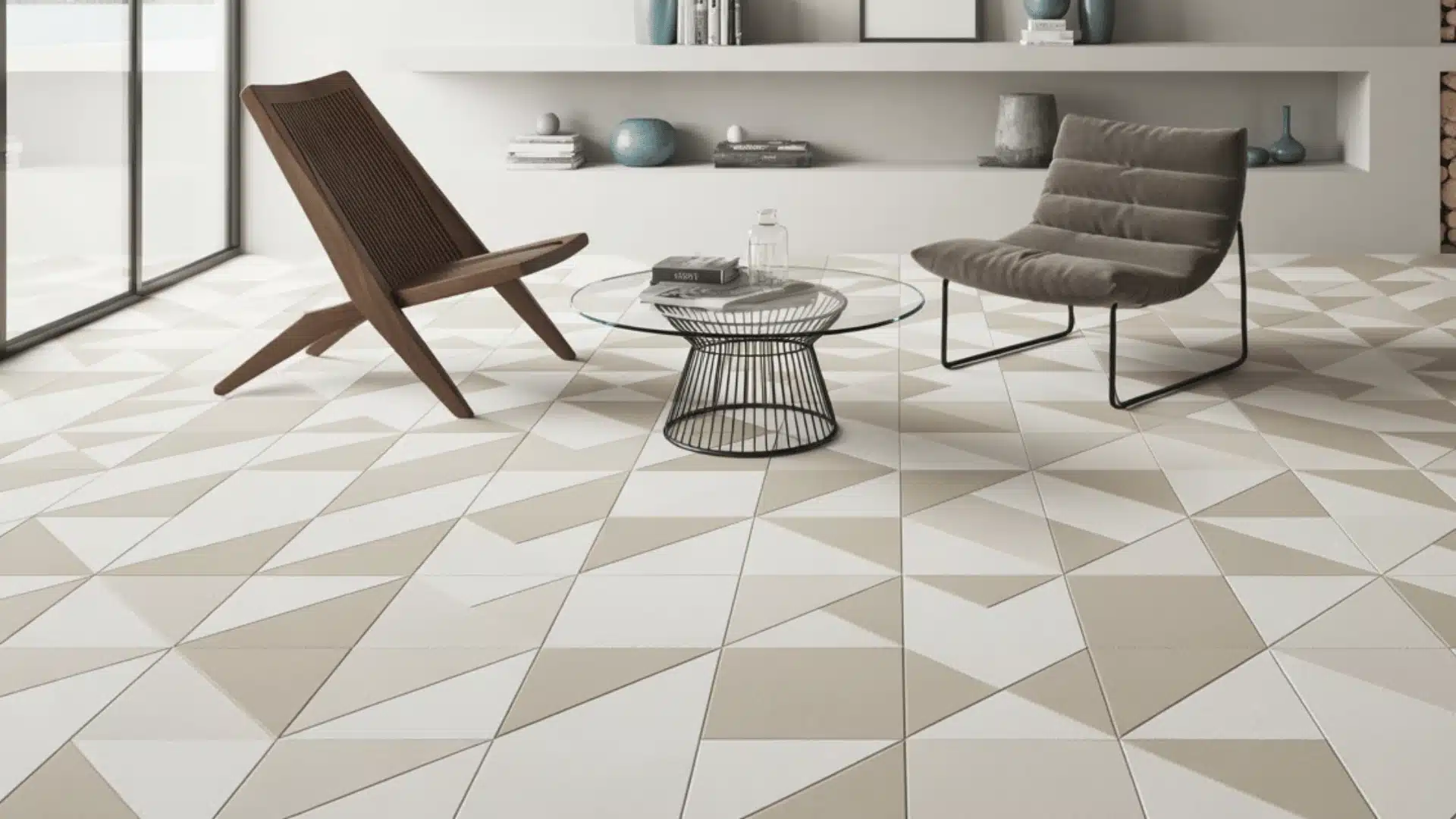
Porcelain Tile is a high-density ceramic made from finer clay and fired at higher temperatures. This process results in a more durable, less porous tile compared to standard ceramic.
Ideal for high-traffic areas, outdoor spaces, wet rooms, and commercial settings, porcelain tile provides excellent long-term performance, resilience, and minimal water absorption, making it a reliable choice for demanding environments.
| Factor | Pros | Cons |
|---|---|---|
| Cost | Justified by superior long-term performance | Higher upfront cost than standard ceramic |
| Durability | Exceptionally hard and resistant to heavy use | Extremely difficult to cut or modify on-site |
| Water Resistance | Very low porosity resists moisture absorption | Grout lines still require sealing over time |
| Maintenance | Resists staining and is simple to clean | Grout upkeep remains an ongoing requirement |
| Installation | Suitable for walls, floors, and outdoor use | Requires professional tools and expertise |
| Aesthetics | Available in large-format and stone-look finishes | Surface can feel slippery without texture finish |
8. Natural Stone Flooring
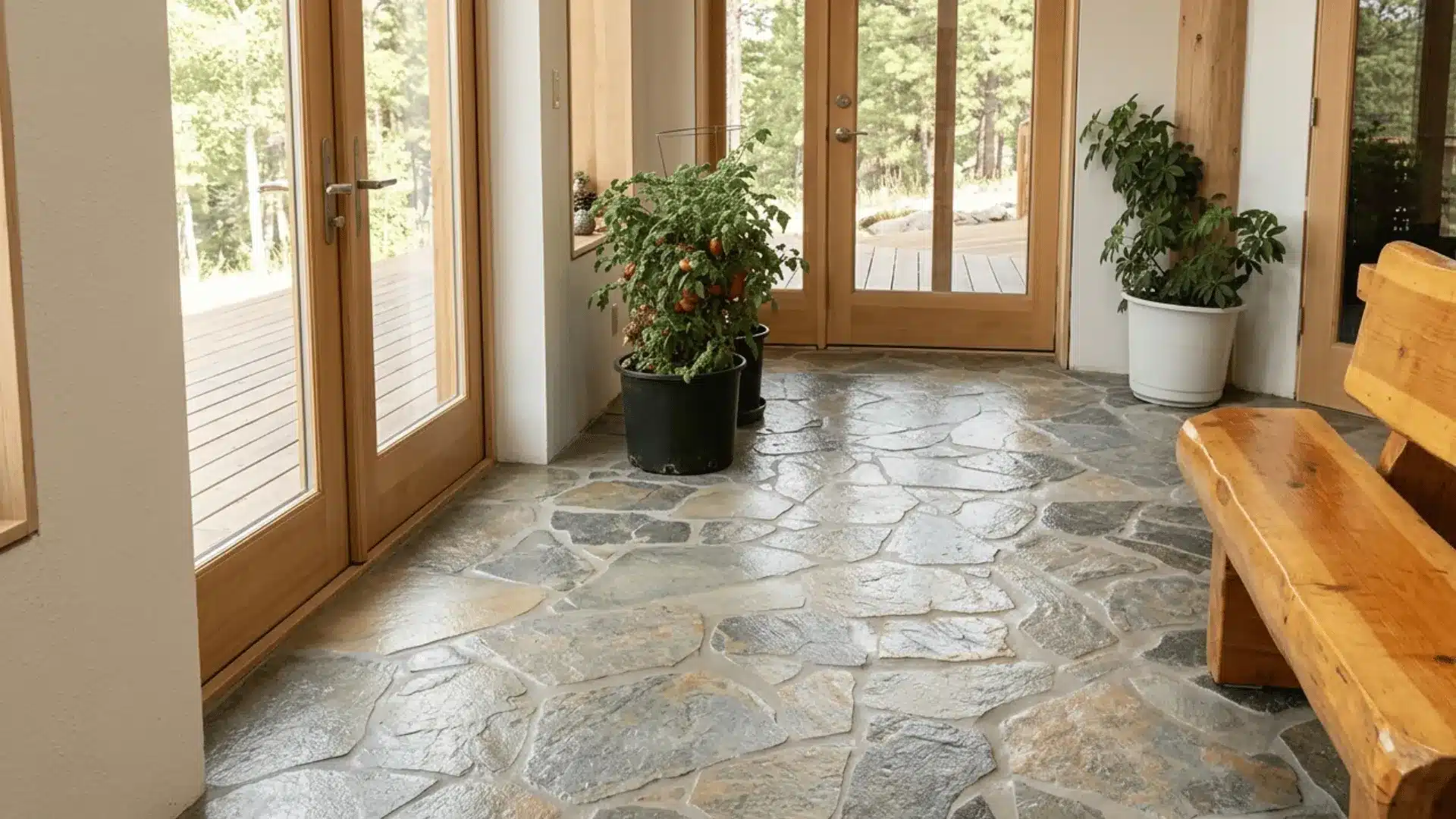
Natural Stone Flooring is quarried from the earth in materials like marble, granite, slate, and limestone, each with unique veining, texture, and color.
No two slabs are the same, making it one of the most distinctive flooring options available. Ideal for entryways, bathrooms, living rooms, and luxury kitchens, natural stone offers a premium, one-of-a-kind look for spaces that demand elegance and individuality.
| Factor | Pros | Cons |
|---|---|---|
| Cost | Adds significant property value long-term | Among the most expensive flooring options |
| Durability | Exceptionally strong and long-lasting | Prone to cracking under sudden heavy impact |
| Water Resistance | Some varieties resist moisture naturally | Porous stones absorb water without sealing |
| Maintenance | Timeless surface ages beautifully | Requires regular sealing and specialist care |
| Installation | Each slab creates a unique finished look | Heavy material demands professional installation |
| Aesthetics | Unmatched natural beauty and luxury appeal | Variations in tone can be hard to match |
9. Carpet Flooring
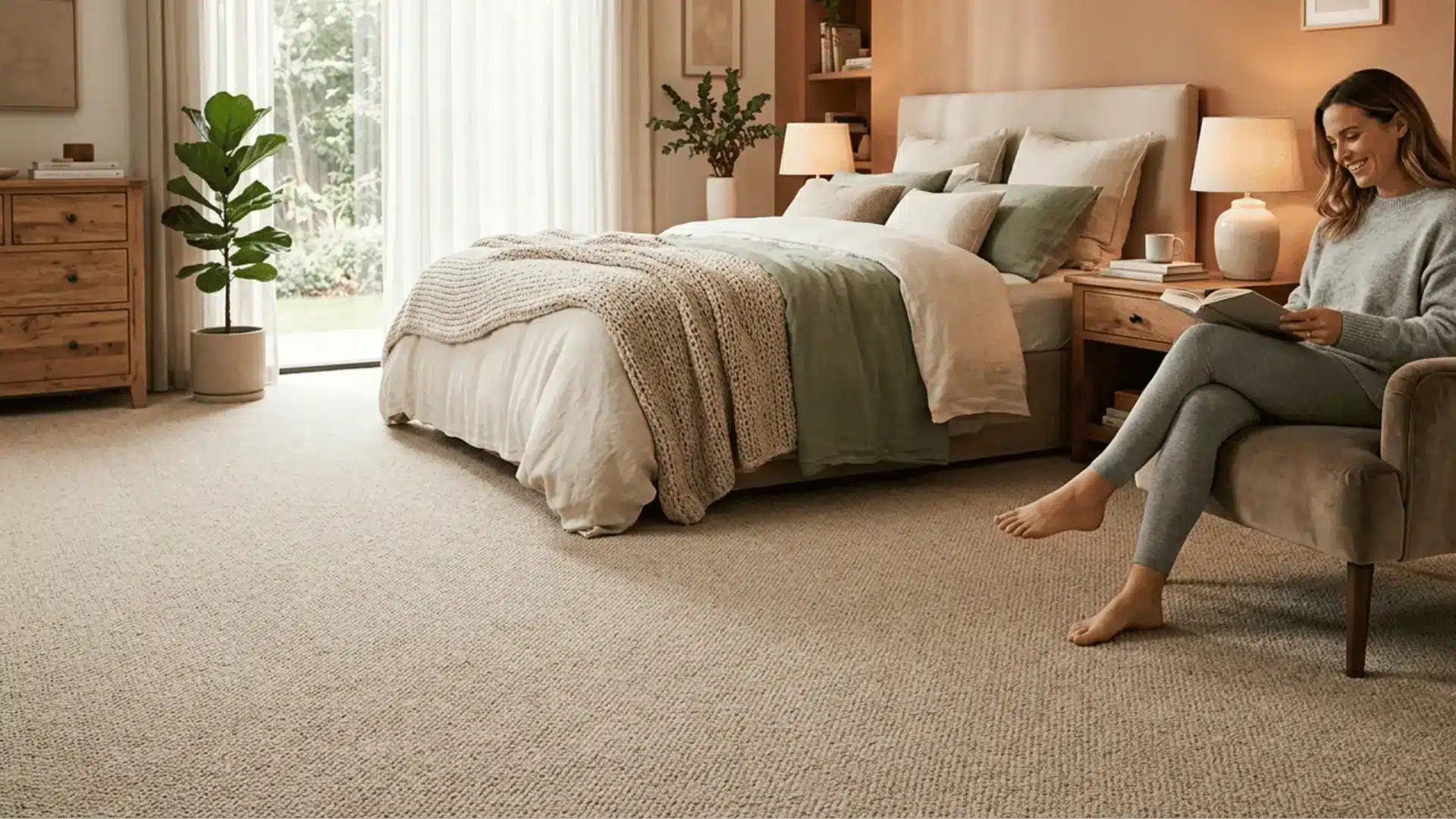
Carpet flooring is a textile-based surface made from woven or tufted fibres, including nylon, polyester, wool, or polypropylene, attached to a backing material for stability.
Its entirely fabric-based construction sets it apart from all hard and rigid flooring categories. Best suited for bedrooms, lounges, children’s rooms, and staircases where comfort underfoot, noise reduction, and a warm atmosphere take priority over waterproofing or heavy-duty durability.
| Factor | Pros | Cons |
|---|---|---|
| Cost | Budget-friendly across a wide range | Needs full replacement when heavily worn |
| Durability | Holds up well in low-traffic rooms | Flattens and wears in high-traffic zones |
| Water Resistance | Not suitable for wet or damp areas | Absorbs spills and moisture quickly |
| Maintenance | Vacuuming keeps it clean day-to-day | Stains are difficult to fully remove |
| Installation | Covers large areas quickly and easily | Requires stretching and professional fitting |
| Aesthetics | Soft, warm, and available in many colours | Can look tired and dated over time |
10. Carpet Tiles
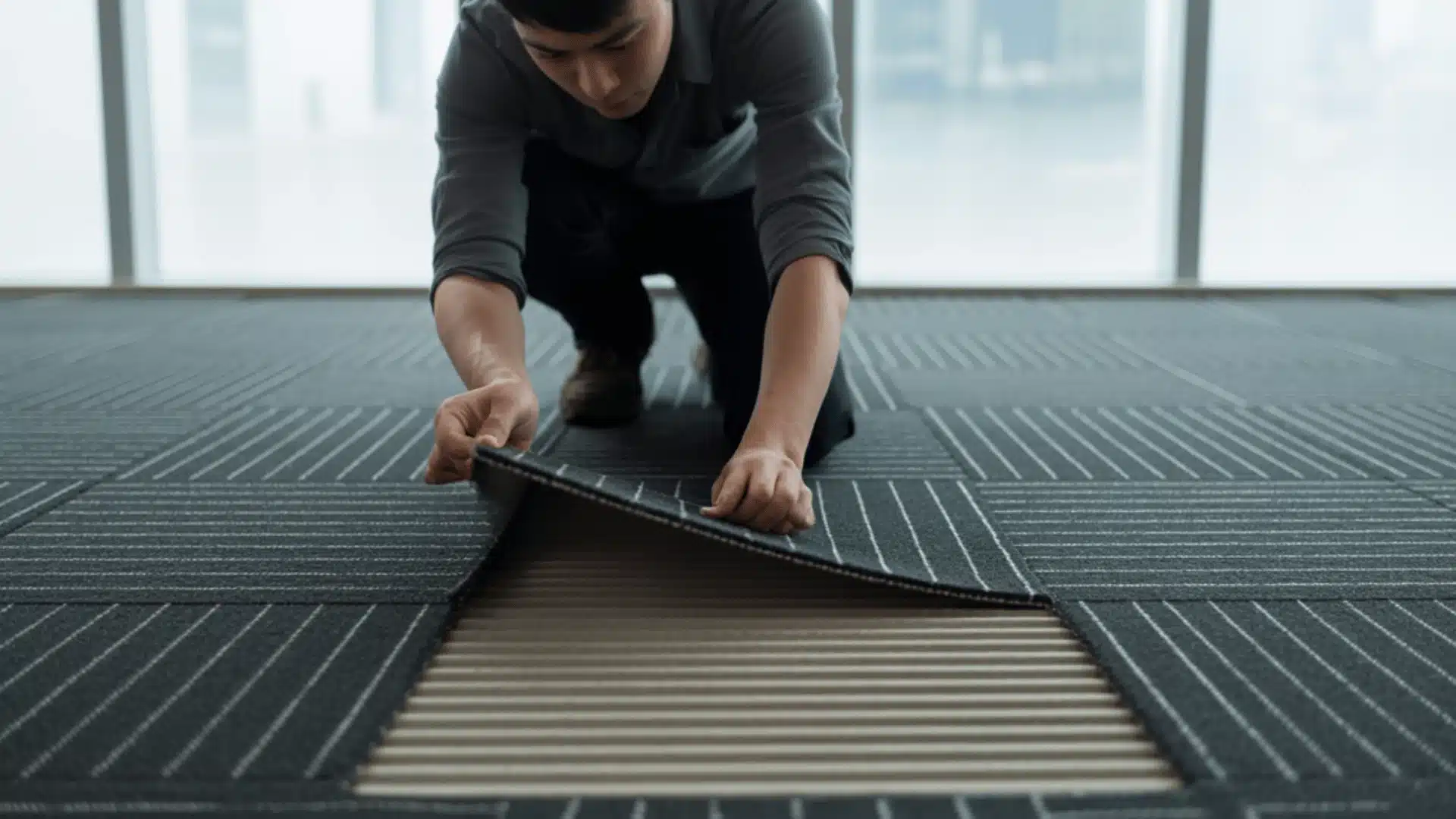
Carpet tiles are modular carpet squares (50–60 cm) laid in a grid pattern, unlike traditional broadloom carpet. Their individual, unit-based design allows for flexible installation and easy replacement.
Perfect for offices, playrooms, commercial spaces, and rental properties, carpet tiles offer practical maintenance and adaptability for high-traffic areas.
| Factor | Pros | Cons |
|---|---|---|
| Cost | Affordable with minimal material waste | Quality tiles can cost more than broadloom |
| Durability | Individual tiles can be swapped when worn | Heavy-use areas wear unevenly over time |
| Water Resistance | No better moisture resistance than carpet | Not suitable for wet or high-humidity spaces |
| Maintenance | Damaged tiles replaced without full refitting | Seams between tiles can trap dirt easily |
| Installation | Simple DIY-friendly grid-based layout | Tiles can shift without proper adhesive |
| Aesthetics | Flexible patterns and layout combinations | Seam lines are visible across large open areas |
11. Bamboo Flooring
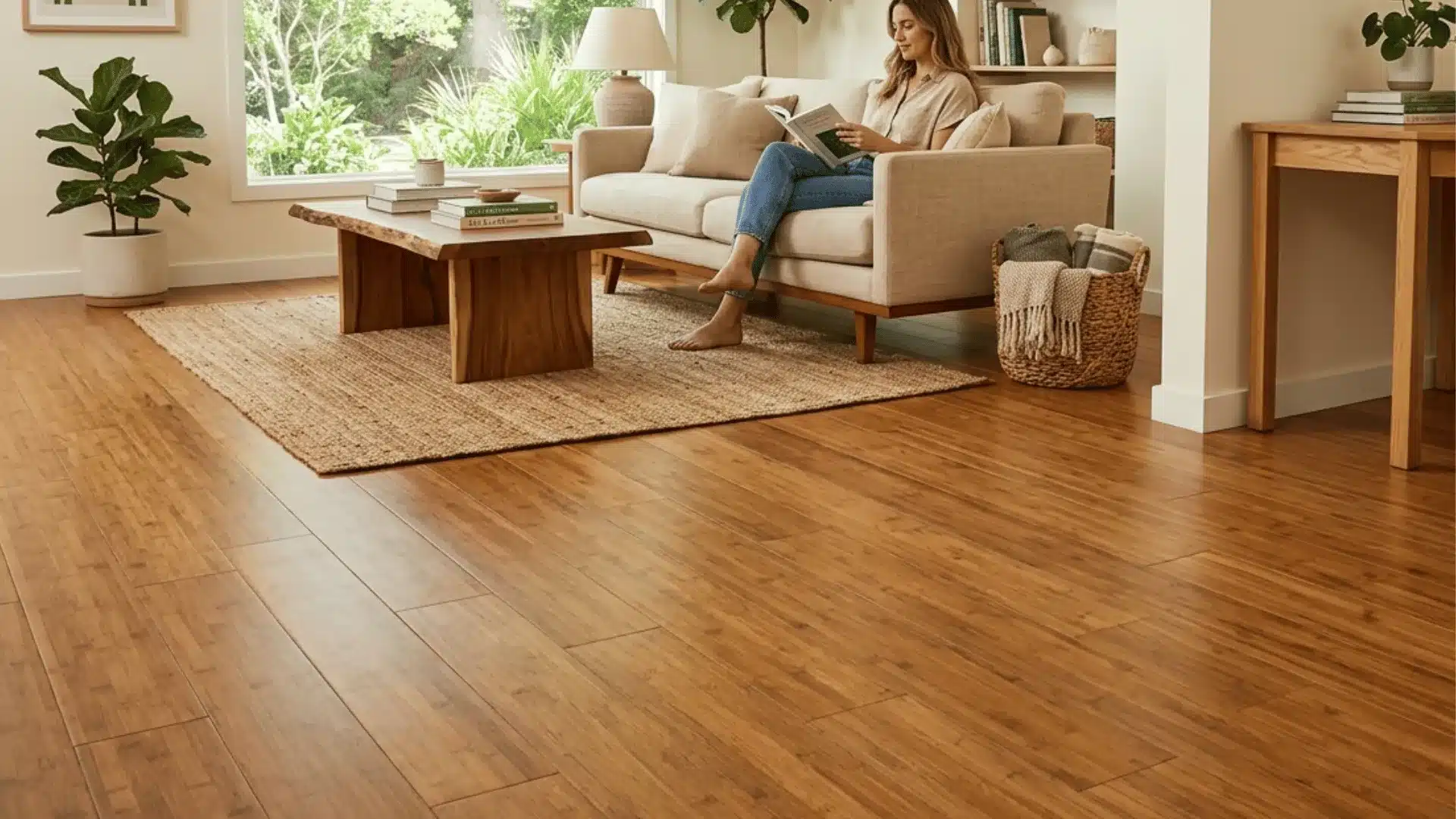
Bamboo flooring is made from fast-growing bamboo grass, which is shredded, sliced, and compressed into solid planks.
Despite its grass origin, it performs like hardwood flooring. Ideal for living rooms, bedrooms, and home offices, bamboo offers an eco-friendly alternative to timber, providing both the warmth of wood and a sustainably sourced, renewable material for environmentally conscious buyers.
| Factor | Pros | Cons |
|---|---|---|
| Cost | Competitively priced against hardwood | Cheaper variants compromise on density |
| Durability | Hard and resilient under normal foot traffic | Susceptible to scratching from sharp objects |
| Water Resistance | Handles moderate humidity reasonably well | Swells and warps with prolonged water contact |
| Maintenance | Straightforward sweeping and damp mopping | Needs refinishing after significant surface wear |
| Installation | Compatible with nail, glue, or float methods | Requires an acclimatisation period before fitting |
| Aesthetics | Clean, contemporary, natural appearance | Limited colour variation compared to hardwood |
12. Cork Flooring
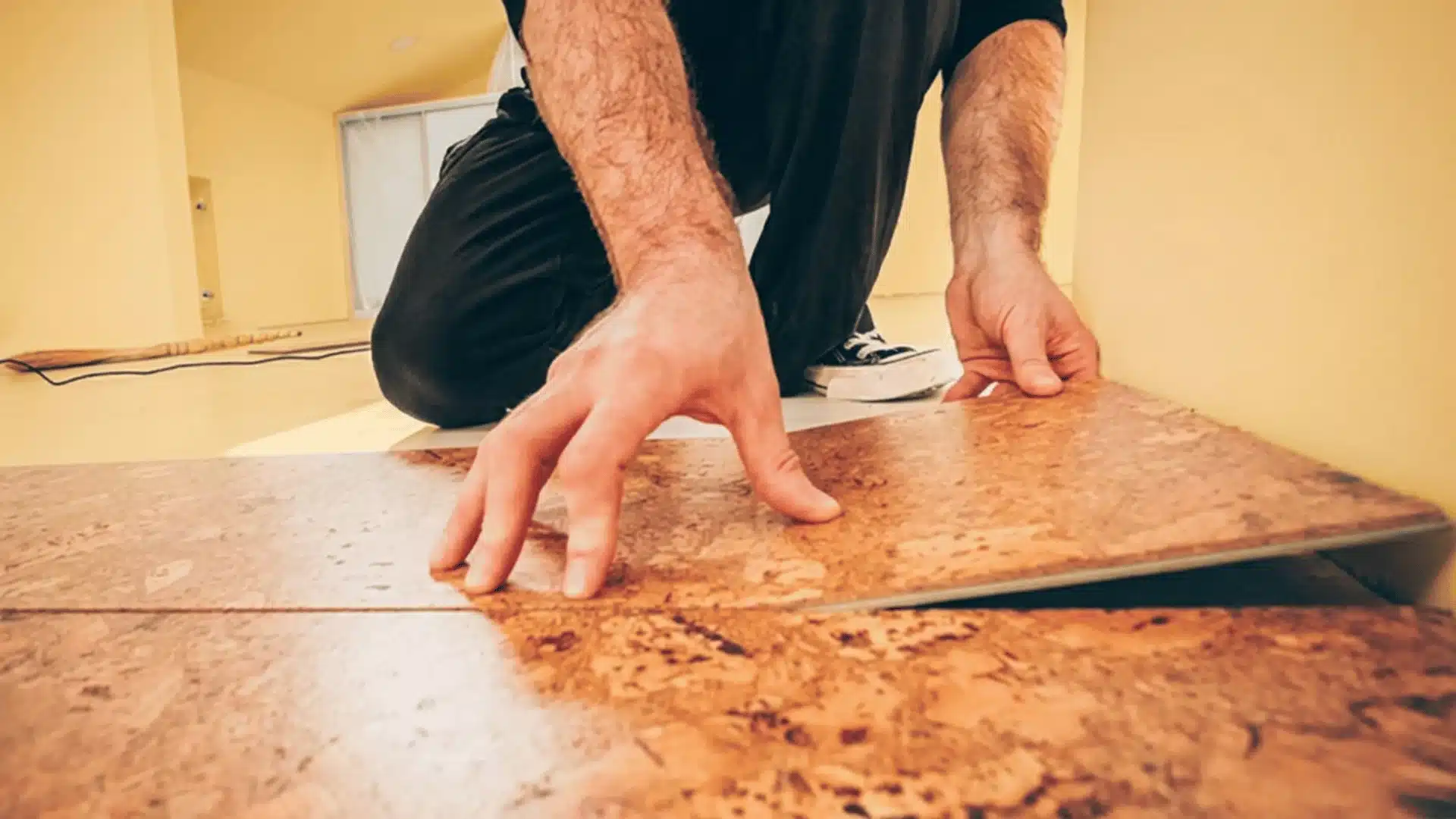
Cork flooring is made from the bark of cork oak trees, which are harvested without harming the tree.
Compressed into tiles or planks, it offers a cushioned, sound-absorbing, and antimicrobial surface. Ideal for kitchens, home offices, playrooms, and bedrooms, cork is an eco-friendly choice that provides comfort and natural durability in residential spaces.
| Factor | Pros | Cons |
|---|---|---|
| Cost | Mid-range price with eco-added value | Costs more than vinyl or laminate alternatives |
| Durability | Resilient and returns to shape under pressure | Gouges easily under heavy furniture legs |
| Water Resistance | Naturally resistant to minor moisture exposure | Swells with prolonged water or steam contact |
| Maintenance | Simple cleaning with pH-neutral products | Requires sealing to preserve surface integrity |
| Installation | Available as tiles or click-lock planks | Subfloor must be smooth and fully level |
| Aesthetics | Warm, organic texture with natural tones | Limited design range compared to tile or vinyl |
13. Concrete Flooring
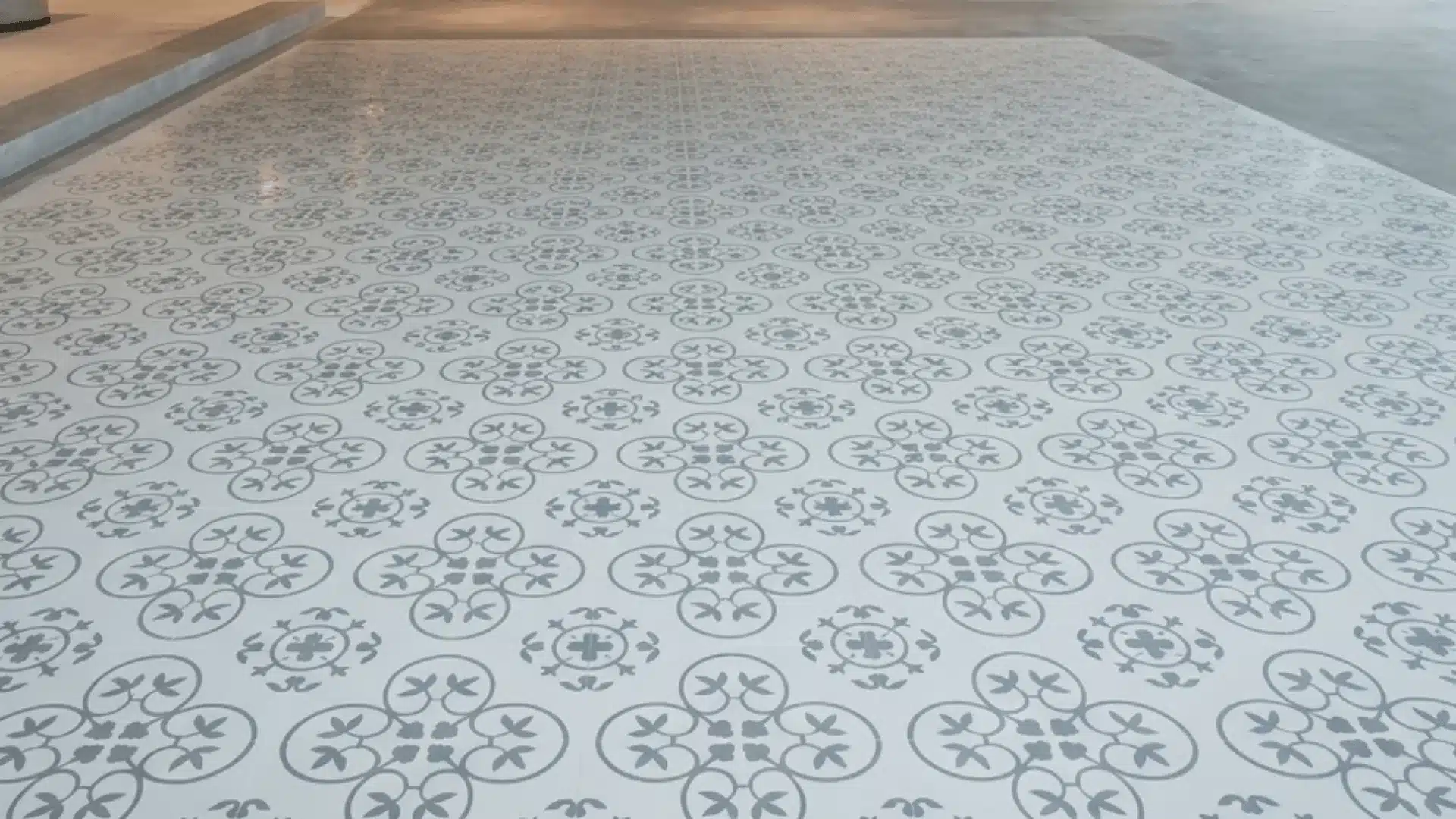
Concrete flooring uses a polished, ground, stained, or sealed concrete slab as the finished surface. It’s a mineral-based material, distinct from wood, textile, or synthetic floors.
Ideal for open-plan living areas, kitchens, commercial spaces, and industrial-style interiors, concrete offers a bold, seamless, low-maintenance surface with a modern look and a strong choice for those who want durability with a minimalist edge.
| Factor | Pros | Cons |
|---|---|---|
| Cost | Very cost-effective if slab already exists | Specialist finishing adds significant labour cost |
| Durability | Extremely hard and virtually indestructible | Surface can crack under ground movement |
| Water Resistance | Sealed concrete resists moisture effectively | Unsealed concrete absorbs stains and water |
| Maintenance | Easy to clean once properly sealed | Sealing must be reapplied periodically |
| Installation | Can utilise existing structural slab | New pours require long curing and drying time |
| Aesthetics | Sleek, minimal, and highly contemporary | Hard and cold underfoot without added matting |
14. Rubber Flooring
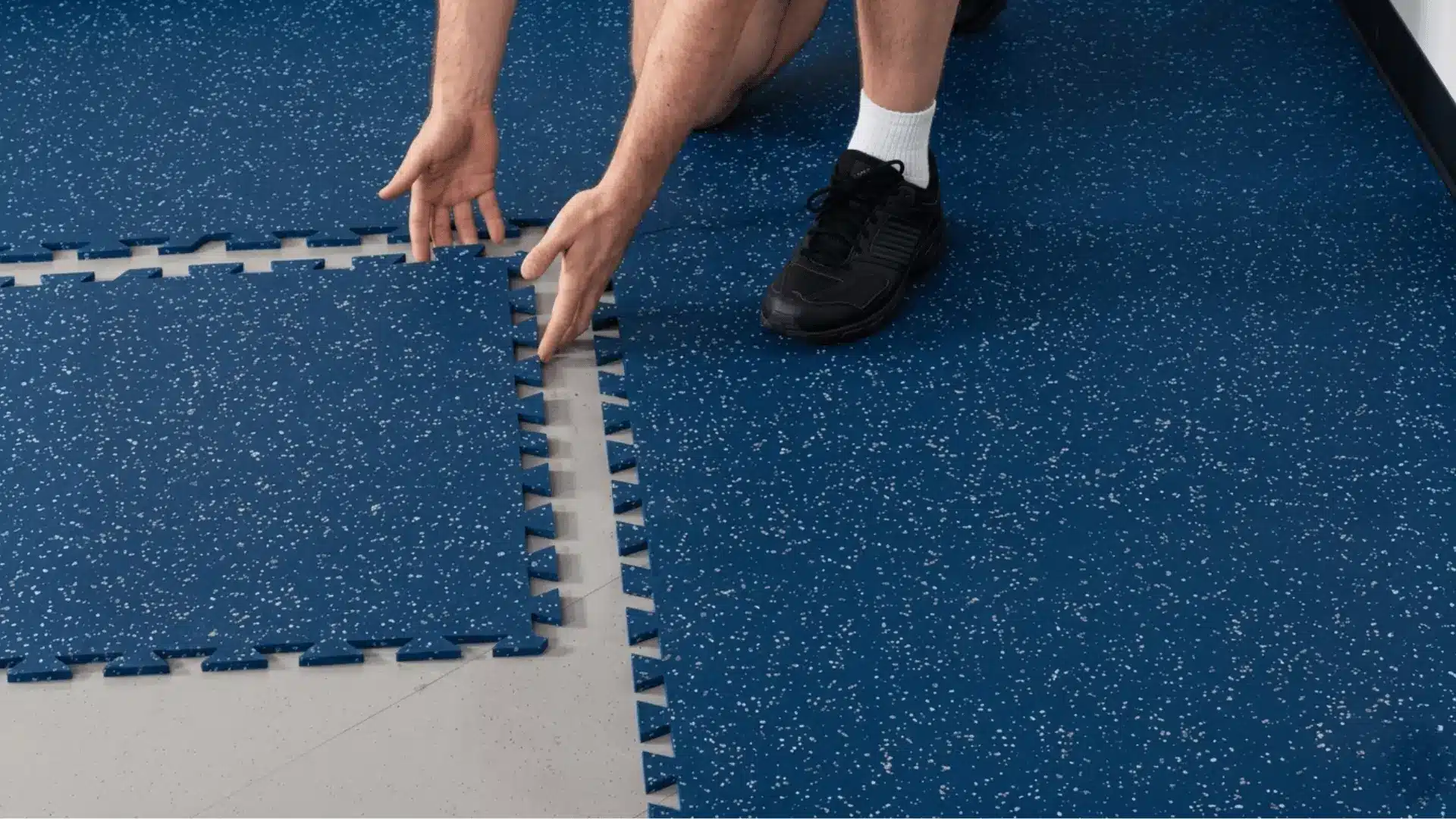
Rubber Flooring is made from natural latex or recycled synthetic rubber, often from reclaimed tires. It comes in rolls, tiles, or interlocking mats and is known for its flexibility and density. Perfect for gyms, playrooms, commercial kitchens, garages, and healthcare spaces, rubber flooring excels in slip resistance, impact absorption, and withstanding high-intensity use.
| Factor | Pros | Cons |
|---|---|---|
| Cost | Reasonable for commercial-grade performance | Premium natural rubber carries a higher price |
| Durability | Withstands heavy impact and intensive use | Can degrade under prolonged UV exposure |
| Water Resistance | Naturally repels moisture and surface water | Seams between tiles can allow water ingress |
| Maintenance | Wipes down quickly and resists bacterial growth | Strong cleaners can degrade the surface over time |
| Installation | Rolls and tiles suit various layout needs | Heavy rolls are difficult to handle solo |
| Aesthetics | Available in bold colors and textures | Limited appeal for residential living spaces |
15. Linoleum Flooring
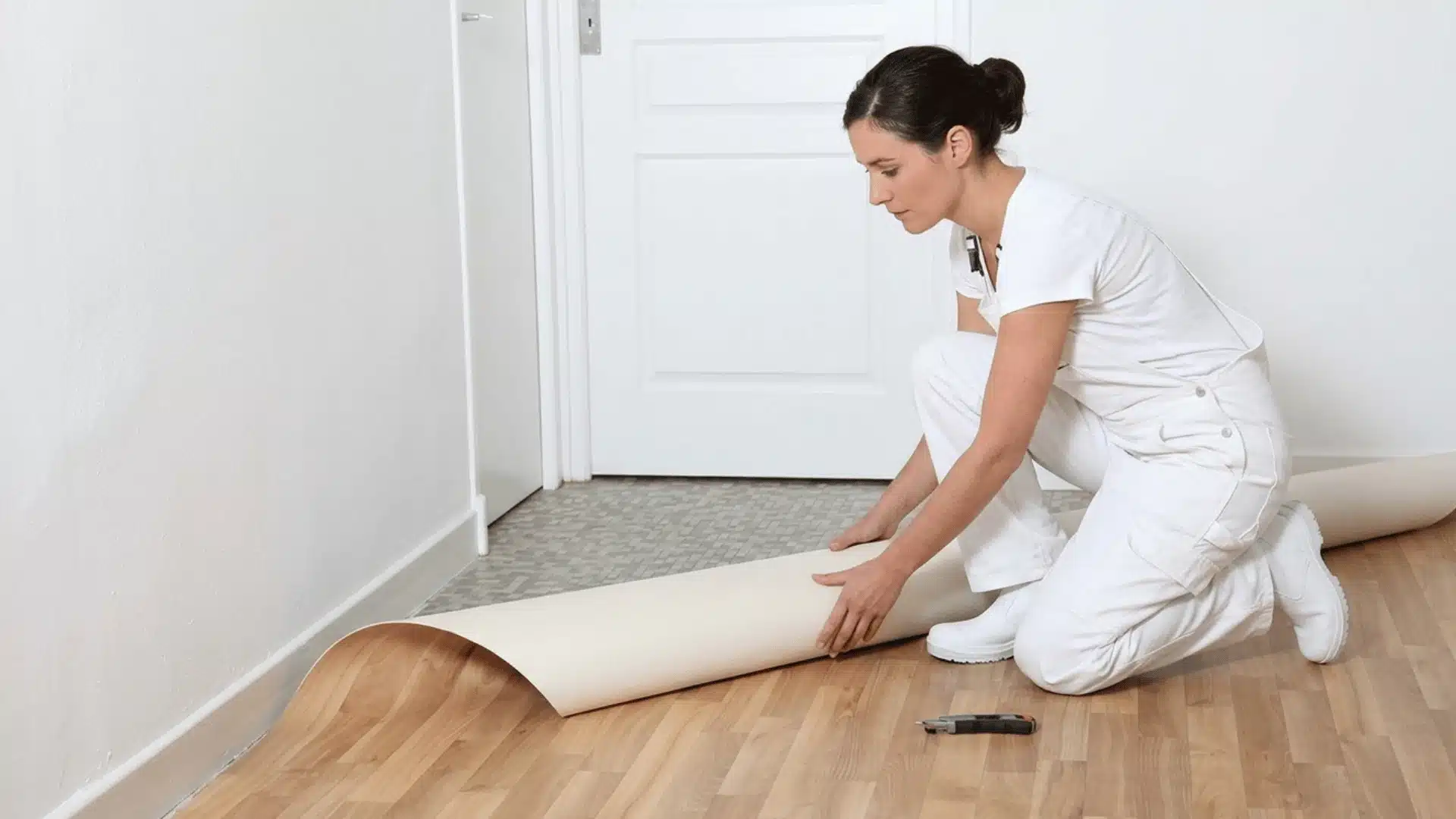
Linoleum is a natural flooring material made from linseed oil, wood flour, cork dust, and resins pressed onto jute backing. Its plant-based composition makes it one of the most biodegradable flooring options available. Ideal for kitchens, bathrooms, schools, and healthcare settings, linoleum offers an eco-friendly, antimicrobial, and durable surface, a solid alternative to petroleum-based synthetic flooring.
| Factor | Pros | Cons |
|---|---|---|
| Cost | Affordable with strong long-term value | Higher upfront cost than basic vinyl |
| Durability | Lasts for decades with proper care | Vulnerable to gouging under heavy furniture |
| Water Resistance | Handles everyday moisture reasonably well | Edges curl and absorb water if unsealed |
| Maintenance | Simple cleaning with pH-neutral products | Requires periodic sealing to stay protected |
| Installation | Available in sheets, tiles, or click planks | The sheet format is difficult to fit precisely |
| Aesthetics | Wide color range with a warm, matte finish | Can look dated compared to modern vinyl |
16. Terrazzo Flooring
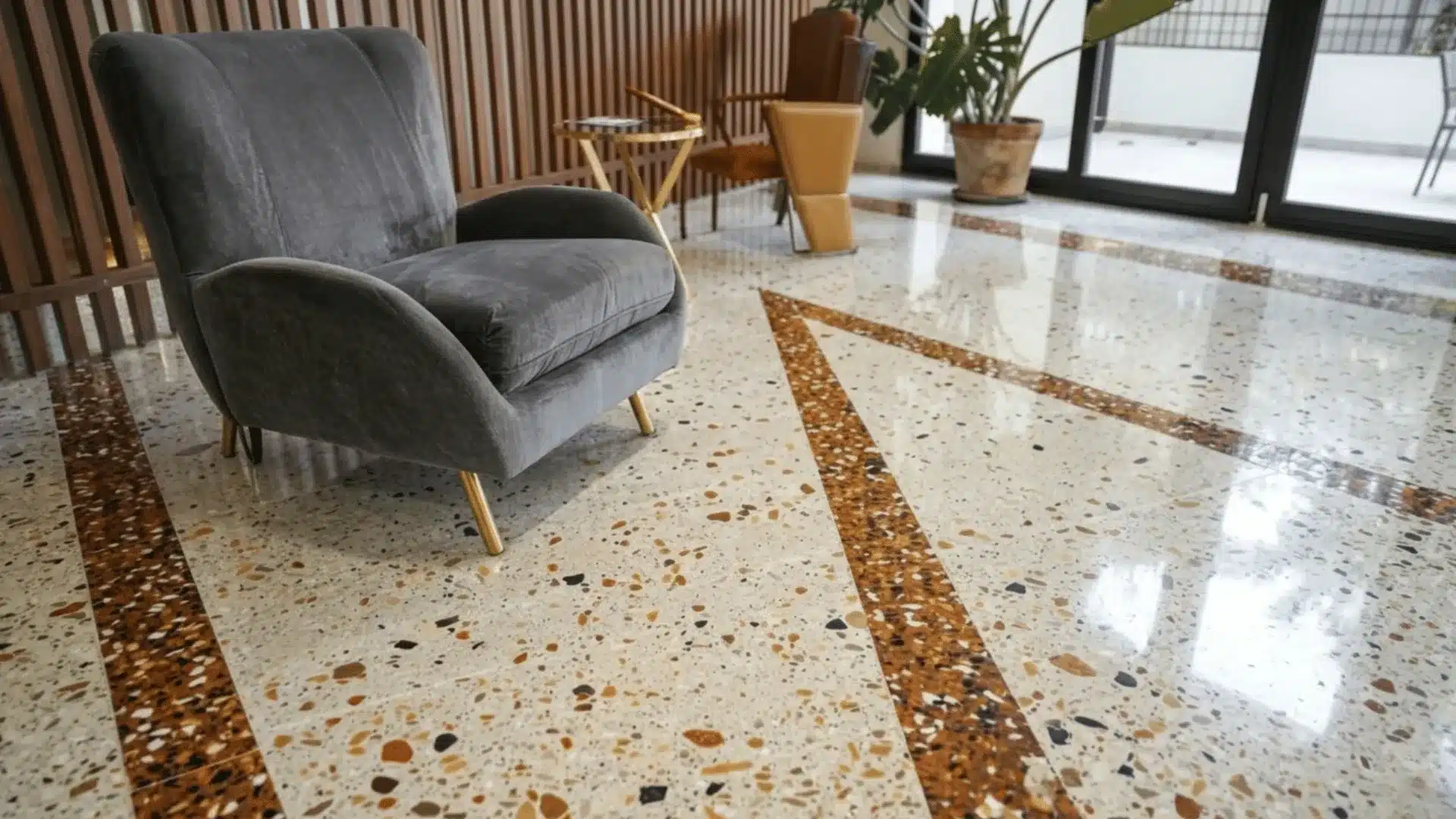
Terrazzo flooring is created by embedding chips of marble, granite, quartz, or glass into a cement or resin binder, which is then poured, cured, ground, and polished to a smooth, reflective finish. The composite nature of its construction makes it entirely distinct from any single-material flooring type. Best suited for lobbies, airports, schools, bathrooms, and upscale commercial interiors.
| Factor | Pros | Cons |
|---|---|---|
| Cost | Exceptional lifespan justifies the investment | One of the most expensive floors to install |
| Durability | Incredibly hard and resistant to heavy traffic | Resin-based versions are less durable than cement |
| Water Resistance | Non-porous polished surface resists moisture well | Cement base can absorb water if left unsealed |
| Maintenance | Easy to clean once fully polished and sealed | Resealing is needed periodically to maintain the finish |
| Installation | Poured seamlessly to fit any shape or layout | Labour-intensive process requiring skilled craftsmen |
| Aesthetics | Unique, highly decorative, and fully customisable | Very heavy and unsuitable for upper-floor use |
17. Epoxy Flooring
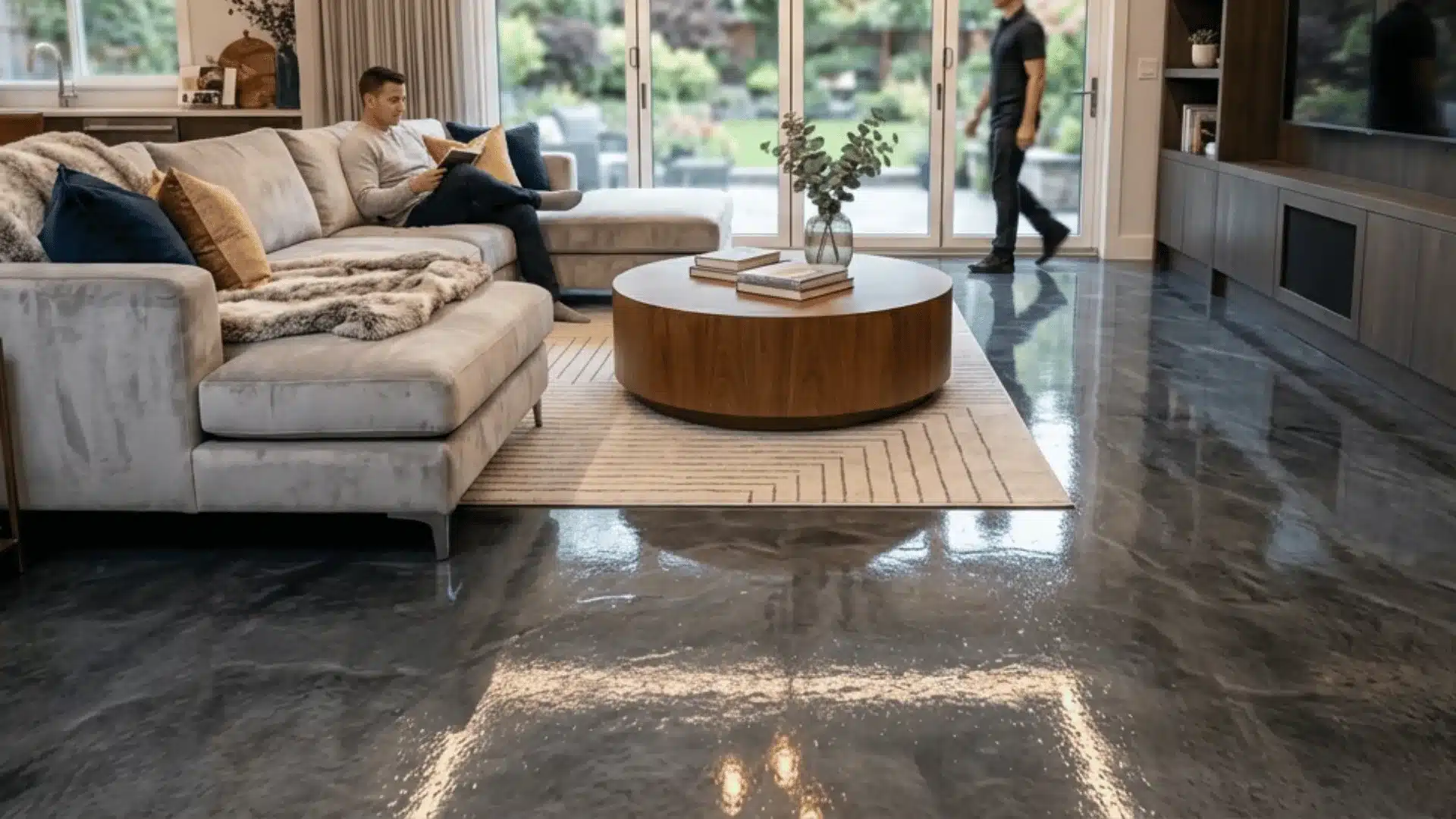
Epoxy Flooring is a surface coating system applied over existing concrete. It involves multiple layers of thermosetting epoxy resin that harden into a seamless, glass-like finish.
This durable, chemical-resistant coating is ideal for garages, warehouses, factories, commercial kitchens, and basements where an impermeable, heavy-duty surface is needed over concrete.
| Factor | Pros | Cons |
|---|---|---|
| Cost | Cost-effective coating over existing concrete | Professional application adds to the overall cost |
| Durability | Extremely tough under heavy loads and traffic | Can peel if the concrete substrate is poorly prepared |
| Water Resistance | Fully seamless surface prevents all moisture ingress | Slippery when wet unless a textured additive is used |
| Maintenance | Wipes clean effortlessly with standard products | Scratches and chips are difficult to spot-repair |
| Installation | Applied directly over the existing concrete slab | Requires thorough surface preparation beforehand |
| Aesthetics | Sleek, high-gloss, professional appearance | Limited warmth and can feel industrial in tone |
How to Choose the Right Flooring for Your Home
Choosing the right flooring doesn’t have to feel overwhelming. Breaking it down into clear steps makes the decision far more manageable:
- Check Your Room Needs: Consider the room’s purpose, foot traffic level, and exposure to moisture before committing to any flooring type.
- Set Your Budget: Decide on a realistic spend that covers not just materials but also fitting, underlayment, and long-term upkeep costs.
- Compare Durability: Match the flooring’s wear resistance to your household’s actual lifestyle, including pets, children, and daily activity levels.
- Think About Cleaning: Choose a surface whose maintenance routine genuinely fits the time and effort you’re willing to commit to regularly.
- Look at Long-Term Value: Prioritize flooring that holds up well over the years and contributes positively to your property’s overall market appeal. If you’re renovating with resale in mind, choosing durable, buyer-friendly kitchen materials is one of the most effective ways to sell faster and at a better price.
Once you weigh each of these factors honestly against your space and lifestyle, the right flooring choice becomes much clearer.
Common Flooring Mistakes to Avoid
Even the most enthusiastic flooring projects can go wrong quickly. Knowing the most common pitfalls in advance saves you significant time, money, and regret.
| Mistake | Why It Happens | What Goes Wrong | How To Avoid It |
|---|---|---|---|
| Choosing Based on Looks Only | Picking flooring solely for appearance without considering practicality | Costly replacements far sooner than expected | Balance looks with durability and room function |
| Ignoring Moisture Levels | Failing to assess humidity and water exposure before choosing | Warping, swelling, and permanent surface damage | Always test moisture levels before installation |
| Not Checking Installation Cost | Overlooking fitting, underlayment, and preparation expenses | Final budget easily exceeds what you planned | Factor in all costs before making a decision |
| Picking High-Maintenance Floors | Selecting surfaces that demand frequent specialist care | Frustration and neglected, deteriorating floors | Match flooring maintenance to your lifestyle |
Avoiding these mistakes doesn’t require expert knowledge. It simply takes honest reflection about your space, habits, and the true total cost involved.
Frequently Asked Questions
What is the most durable type of flooring for a home?
Porcelain tile is widely regarded as the most durable flooring option available for residential use. It’s fired at higher temperatures than standard ceramic, making it denser, harder, and far less porous, and it resists scratches, stains, moisture, and heavy foot traffic better than almost any other material.
For homeowners who want durability with a warmer feel underfoot, luxury vinyl plank (LVP) is a strong alternative: its waterproof core and multi-layer wear surface hold up well in high-traffic areas, including kitchens and entryways. The right choice ultimately depends on your room. Porcelain wins on pure toughness, while LVP wins on comfort and ease of installation.
Which type of flooring adds the most resale value to a home?
Solid hardwood consistently ranks as the top flooring choice for increasing resale value, particularly in living rooms, dining rooms, and bedrooms. Its natural appeal, longevity, and the ability to be refinished multiple times make it a material that buyers actively look for and are willing to pay more for.
Natural stone, particularly marble and slate, also adds strong value in entryways and bathrooms, though the upfront cost is considerably higher. Engineered hardwood offers a practical middle ground, delivering much of the same visual impact as solid wood at a lower price point, which makes it a smart choice for renovation projects aimed at improving market appeal.
What is the best flooring for kitchens and bathrooms?
Porcelain tile is the top recommendation for both kitchens and bathrooms because it’s naturally waterproof, stain-resistant, and handles the humidity and daily spills these rooms produce. Luxury vinyl plank (LVP) is a strong alternative that costs less and feels slightly softer underfoot, while still offering full waterproof performance across all layers.
Sheet vinyl is worth considering for budget-conscious renovations in smaller bathrooms or utility rooms, where its near-seamless surface provides reliable moisture resistance without a high price tag. What to avoid in these rooms entirely: hardwood, laminate, and cork all absorb moisture over time and will eventually warp or swell in high-humidity environments.
What flooring is the easiest to maintain long-term?
Luxury vinyl plank and porcelain tile are the two lowest-maintenance flooring options for everyday living. Both resist stains, clean up with nothing more than a damp mop, and don’t require periodic sealing, refinishing, or specialist products to stay in good condition. Laminate is also simple to maintain day-to-day, though it can’t be refinished if the surface wears through.
Natural stone, hardwood, cork, and linoleum all demand more ongoing attention, sealing schedules, specific cleaning products, and refinishing cycles that add cost and effort over the years. If low maintenance is a priority, lean toward synthetic hard surfaces rather than natural ones.
Is it worth spending more on flooring, or does budget flooring perform just as well?
For high-traffic areas and moisture-prone rooms, spending more typically pays off. Premium LVP, quality porcelain tile, and solid hardwood all outperform budget alternatives in terms of longevity, feel underfoot, and how well they hold their appearance over years of real use. Budget laminate and entry-level vinyl can look convincing at first, but tend to show wear faster and can’t be refinished when they do.
That said, in low-traffic spaces like guest bedrooms or storage rooms, mid-range laminate or carpet tiles deliver genuine value without unnecessary expense. The smarter approach is to allocate more budget to rooms that take the most punishment and save on spaces where it simply won’t show.
Wrap Up
Flooring is one of those decisions that quietly shapes how every room in your home feels and functions each day. This guide has covered all the major types from classic hardwood and natural stone to practical vinyl, cozy carpet, and eco-friendly cork with honest pros, real cons, and clear room-by-room guidance.
Every home has its own needs, every household runs at its own pace, and every budget has its own limits. The right flooring choice is out there, and now you have what you need to find it with confidence.