A steak can look perfect on the grill and still turn out dry once you cut into it. I’ve had that happen, and it usually comes down to heat, timing, or checking doneness too late.
Once I got more comfortable grilling steak, I found that BBQing steak came down to the same basics: good meat, steady heat, and checking doneness at the right time.
A good cut, a dry surface seasoning, and the right grill temperature can change the final result.
You also need to know when to sear, when to move the steak away from direct heat, and when to take it off.
Best Steak Cuts for Grilling
Some steak cuts handle high grill heat better than others. Use this table to compare popular options by texture, flavor, and grilling needs.
|
Steak Cut |
Texture and Flavor |
Best Grilling Approach |
|---|---|---|
|
Ribeye |
Tender and rich with plenty of marbling |
Sear over high heat and finish over lower heat if thick |
|
New York Strip |
Firm and tender with a strong beefy flavor |
Cook over direct heat and monitor the center |
|
Filet Mignon |
Very tender with a mild flavor and little fat |
Sear well and finish gently to prevent overcooking |
|
Sirloin |
Leaner with a balanced beefy flavor |
Grill quickly over medium-high to high heat |
|
T-Bone |
Combines tenderloin and strip steak around a bone |
Use two heat zones for more even cooking |
|
Porterhouse |
Thick and tender with two different steak sections |
Sear first and finish on the cooler side of the grill |
|
Flank Steak |
Lean with a pronounced beef flavor |
Grill quickly and slice thinly against the grain |
What You Need Before Grilling?
Having a few basic tools and ingredients ready makes it easier to cook the steak evenly and check its doneness without guesswork.
- Gas or charcoal grill
- Long-handled tongs
- Meat thermometer
- Paper towels
- Kosher salt and black pepper
- High-heat cooking oil
How to Grill Steak Properly?
Grilling steak well comes down to preparing the meat, controlling the heat, and checking doneness at the right time. Follow these five steps for consistent results.
Step 1: Prepare and Season the Steak
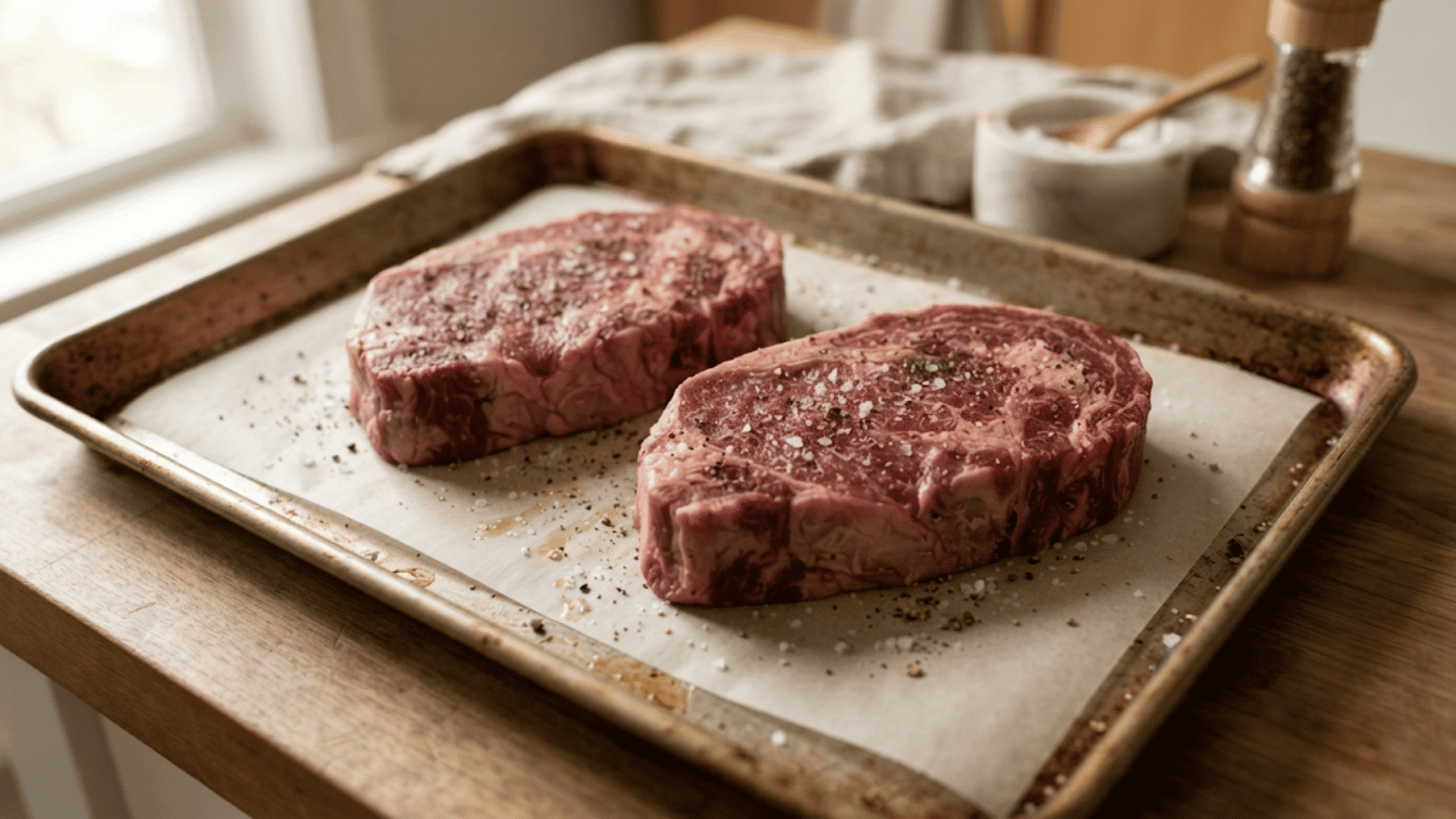
Pull the steak out of the fridge 20 to 30 minutes before you plan to grill it, then pat both sides dry with paper towels.
Season generously with kosher salt and black pepper, including the edges, then rub on a thin coat of a high-heat oil like avocado or canola so the seasoning sticks and the surface sears instead of steams.
A dry, lightly oiled surface browns better than a wet one, and simple seasoning keeps the natural beef flavor front and center.
Seasoning options for your steak:
- Pepper
- Garlic
- Paprika
- Rosemary
- Thyme
- Cayenne
Tip: For thick steaks, salt about 40 minutes before grilling to give the salt time to work into the meat.
Step 2: Preheat and Prepare the Grill
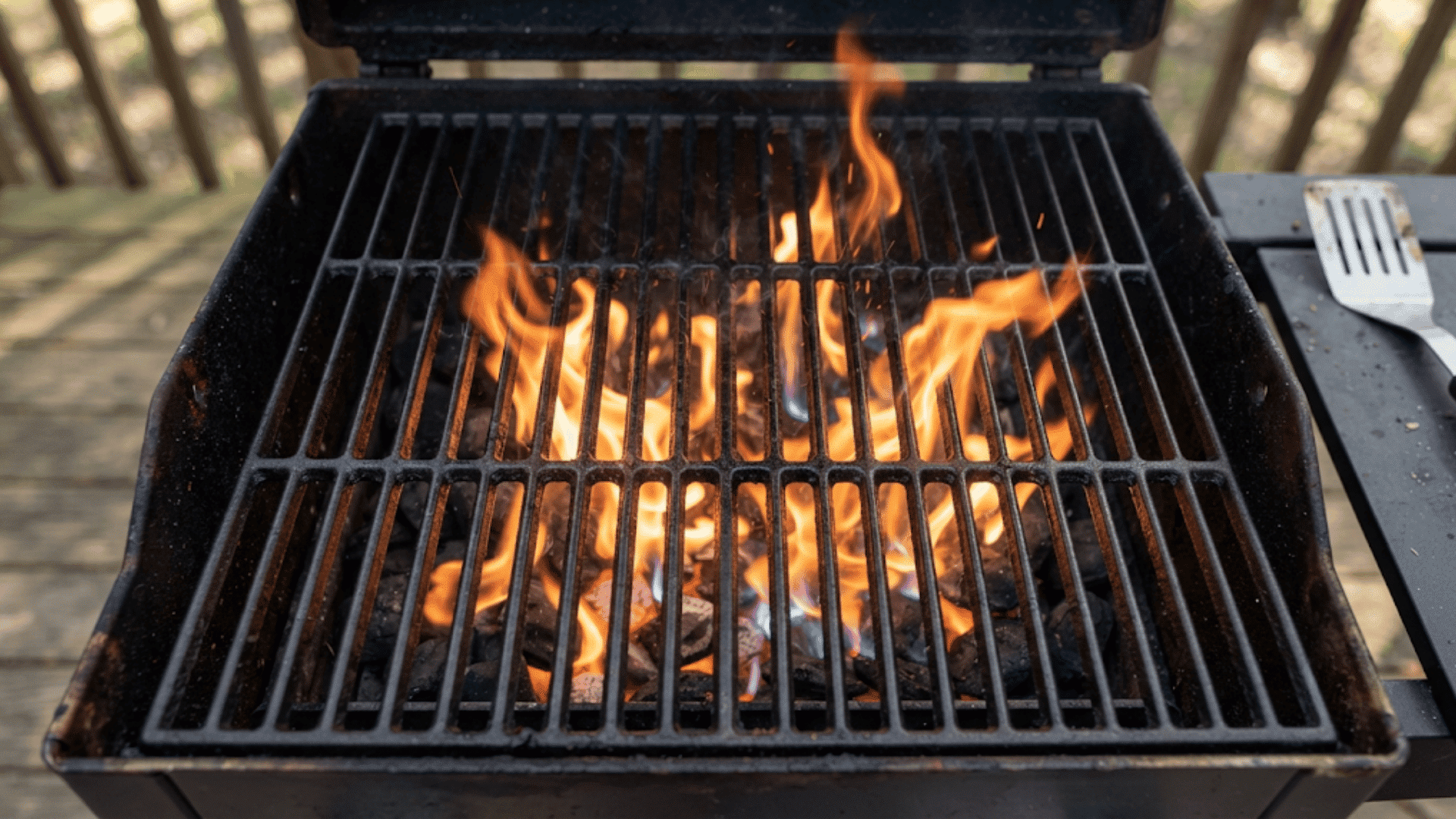
Preheat the grill until the grates are hot, then clean away any stuck-on food with a grill brush or scraper.
(Preheat the grill to around 450–500°F for direct, high heat, then clean away any stuck-on food with a grill brush or scraper.)
Set up a hot direct-heat area for searing and a cooler area for finishing. This setup gives you better control, especially when cooking steaks thicker than an inch.
Tip: Keep the lid closed while preheating so the grill reaches cooking temperature faster.
Step 3: Sear Steak Over Direct Heat
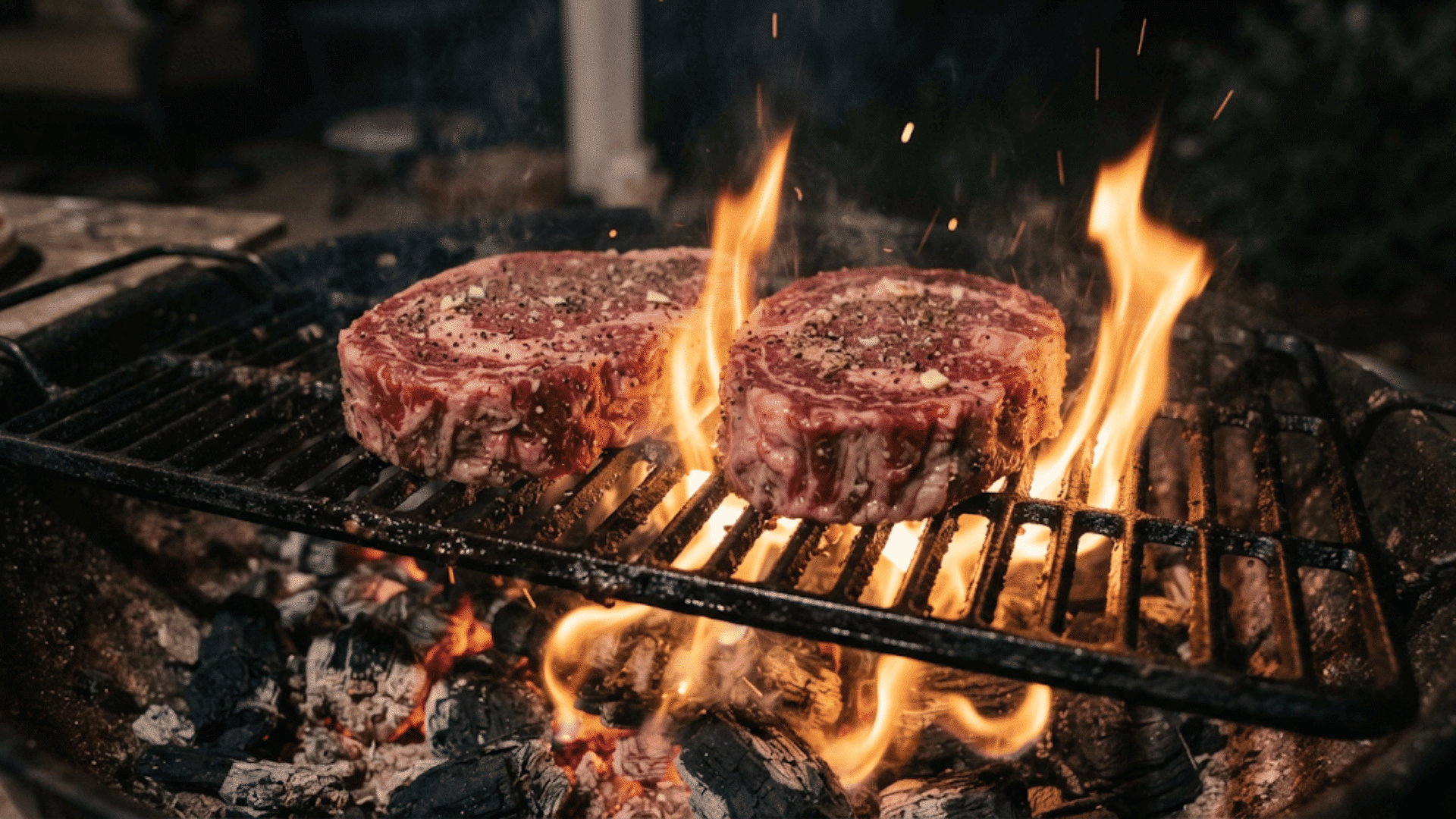
Place the steak over the hottest part of the grill and let the first side cook without moving it repeatedly.
For a 1-inch steak at that heat, this usually takes about 3 to 4 minutes; give thicker cuts closer to 4 to 5 minutes before you check for color.
Flip with long-handled tongs once the surface has browned well. Sear the second side in the same way, watching for flare-ups caused by fat dripping onto the heat below.
Step 4: Finish to Your Preferred Doneness
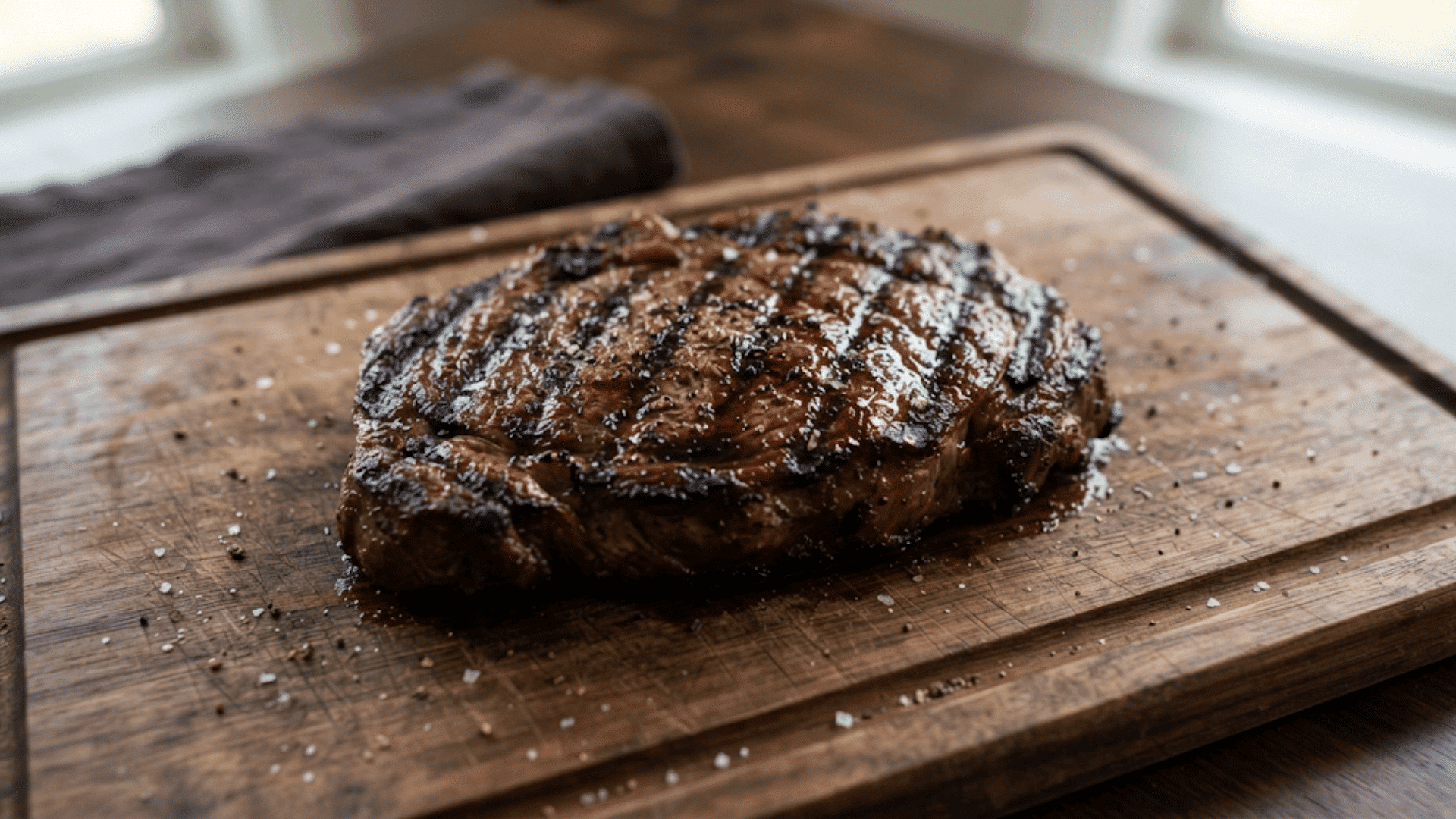
Move a thick steak to the cooler side if the surface browns before the center reaches your preferred doneness.
Check the thickest part with an instant-read thermometer, since the USDA recommends using a food thermometer to check safe internal temperature when grilling meat.
Step 5: Rest and Slice the Steak
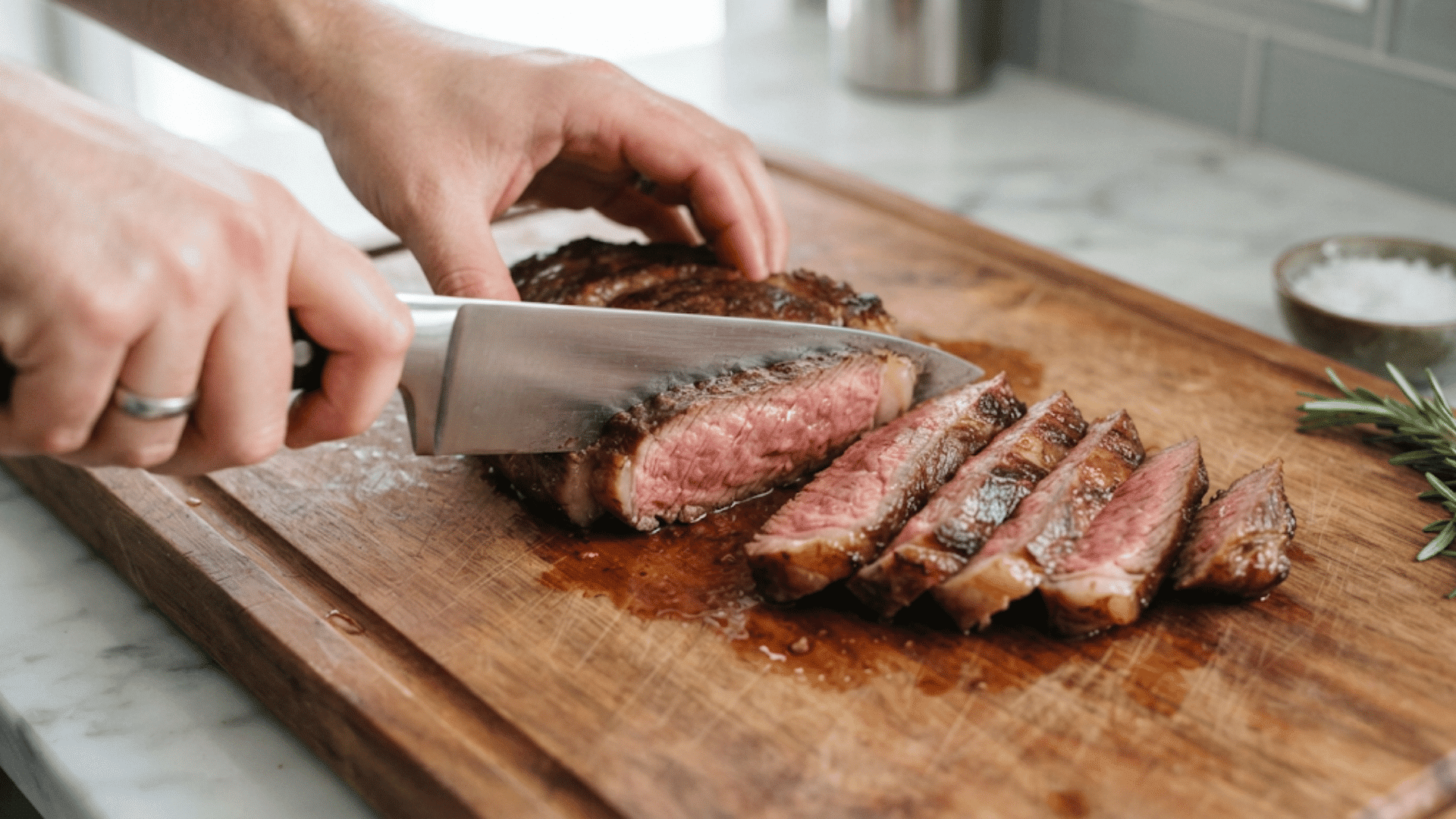
Transfer the cooked steak to a clean plate or cutting board and let it rest undisturbed for 5 to 10 minutes.
Resting gives the juices time to settle within the meat. When ready to serve, look at the direction of the muscle fibers and cut across them rather than along them.
Tip: Slicing against the grain shortens the muscle fibers, making each bite easier to chew.
How to BBQ Steak on a Charcoal Grill
The steps above work whether you’re on gas or charcoal, but a few things shift once you’re building an actual fire.
Light your coals in a chimney starter and let them burn until they’re mostly gray with ash, about 15 to 20 minutes, before dumping them out.
Bank the coals into a mound on one side of the grill to build your direct-heat zone, leaving the other side empty as the cooler zone from Step 2.
Charcoal often runs hotter than a gas grill, sometimes well past 500°F, so watch closely for flare-ups from dripping fat, and don’t hesitate to slide the steak to the empty side if the crust browns faster than the center cooks.
Steak Temperature and Doneness
A meat thermometer gives you a more dependable way to check steak doneness than judging it by color or cooking time alone.
|
Doneness |
Internal Temperature |
Center Appearance |
Texture |
|---|---|---|---|
|
Rare |
120–125°F |
Cool red center |
Very soft |
|
Medium-Rare |
130–135°F |
Warm red to pink center |
Tender and juicy |
|
Medium |
140–145°F |
Warm pink center |
Moderately firm |
|
Medium-Well |
150–155°F |
Slightly pink center |
Firm |
|
Well-Done |
160°F+ |
Little to no pink |
Very firm |
The USDA’s safe minimum internal temperature chart recommends 145°F for beef steaks followed by a minimum 3-minute rest.
Common Steak Grilling Mistakes to Avoid
Small grilling errors can affect the crust, texture, and doneness of your steak. Watch out for these common mistakes.
- Grilling a Wet Steak: Excess surface moisture can slow browning. Pat the steak dry with paper towels before seasoning.
- Using only High Heat: Thick steaks may burn outside before the center cooks. Keep a cooler zone available for finishing.
- Flipping Too Often: Constantly moving the steak can make browning harder. Give each side enough contact time with the hot grates.
- Relying only on Cooking Time: Grill heat and steak thickness differ. Check the internal temperature with a meat thermometer.
- Cutting the Steak Too Soon: Allow the cooked steak to rest for several minutes before slicing and serving.
Conclusion
Grilling a great steak comes down to a handful of habits, not a secret technique: a good cut, a dry, lightly oiled surface, steady heat, and a thermometer instead of guesswork.
Once you’ve got the sequence for how to grill steak down, from resting the meat before it hits the grates to pulling it at the right temperature, you’ll notice it gets easier every time you fire up the grill.
Gas and charcoal grills can both turn out a juicy, well-browned steak once you manage the heat with a two-zone setup and stop relying on cooking time alone.
I still second-guess myself sometimes and pull the thermometer out twice on the same steak, so don’t feel bad if you do the same.
What’s your go-to cut when you’re grilling for a crowd? Drop a comment below and let me know how yours turns out.
Frequently Asked Questions
Should You Marinate Steak Before Grilling?
You can marinate leaner cuts such as flank or skirt steak for added flavor. Well-marbled cuts like ribeye usually need only simple seasoning.
Can You Grill Steak With Butter?
Butter can burn over very high heat. Add it near the end of cooking or after grilling, while the steak rests and you’re serving.
Should You Close the Grill Lid When Cooking Steak?
Close the lid when cooking thicker steaks or using indirect heat. For quick searing, you can keep it open while watching the surface closely.