Most people own forty ornaments and can name three of them. The rest are filler, the gold balls you bought in a panic on December 20th because the tree looked bare and the party was in two hours. I did that for years. Then my mom handed me a box of things she’d saved since the seventies, and I realized the difference between a pile of decorations and a collection is nothing more than intention.
That’s the whole game. You’re not shopping for a tree. You’re building something you’ll unpack every December for the next thirty years, and the pieces you choose now are the ones your kids will argue over later. Whether you’re hunting for your first set of Christmas tree ornaments or finally upgrading the mismatched bin in your garage, the rules are the same.
Here’s what most people get wrong: they buy for the tree they have this year, not the collection they want in ten. Fix that and everything else falls into place.
Why So Many Ornament Boxes Turn Into Clutter
The problem isn’t quantity. It’s that people buy in bulk without a filter. A twelve-pack of plastic snowflakes costs nine dollars, looks fine in the store, and disappears on the tree. You forget it exists by January, and next year you buy another twelve-pack because the first one didn’t leave an impression.
I call this the filler trap. Filler ornaments fill space, not memory. They’re the reason your tree looks busy and still feels empty. Real collections run smaller than you’d think. Twenty to forty pieces with actual history behind them will beat a hundred generic ones every single time.
So the first move is subtraction, not addition. Before you buy anything new, pull everything out and ask one question about each piece: would I notice if this vanished? If the answer is no, it goes in the donate pile.
The Three-Box Sort
This is the part I wish someone had shown me years ago. Grab three boxes and label them Keep, Maybe, and Out.
- Keep: Anything tied to a person, a trip, a milestone, or a year you actually remember. These never get questioned again.
- Maybe: Pretty pieces with no story. Give each one a season to earn its place. If it’s still just floating there next December, it moves to Out.
- Out: Broken, faded, or bought out of panic. Donate anything intact, toss the rest.
Run this every January, not December. You’ll make sharper calls when the tree is already down and the holiday haze has worn off. I do mine on New Year’s weekend with coffee and zero sentimentality, and it takes about twenty minutes.
What Makes an Ornament Worth Keeping
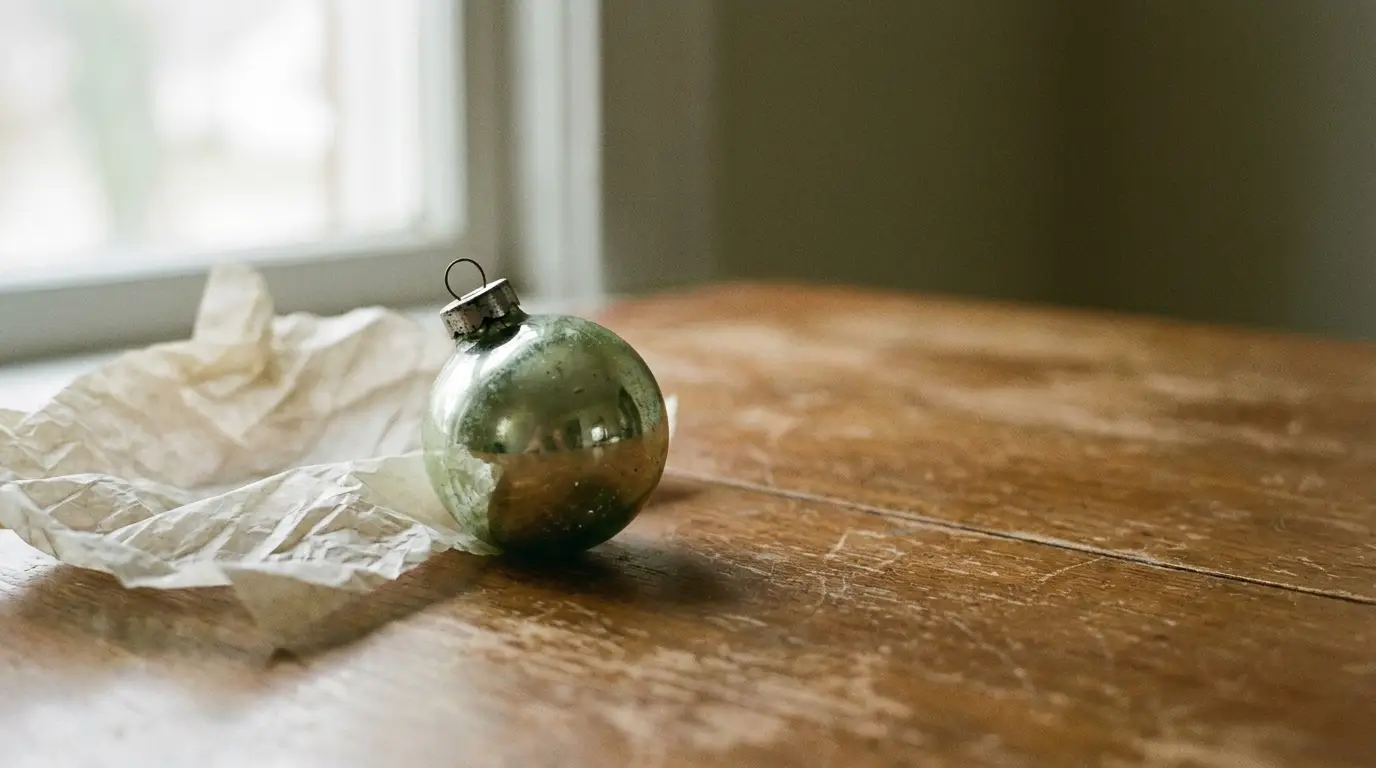
Three things earn a permanent spot. A story, a name, or a date. If a piece has at least one of those, it survives every future sort.
The story is the strongest. The crooked Santa my nephew painted at age four is objectively ugly and completely irreplaceable. Names matter when you’re building a themed set, like the annual pieces that families add year after year. Dates anchor everything, which is why I always write the year on the box or the back of the piece with a fine-tip marker before it goes into storage.
Materials matter too, and this is where I’ll pick a side. Glass and blown pieces hold value and detail in a way that mass-produced resin rarely matches. They cost more up front. They also don’t yellow, don’t crack at the hanger, and photograph beautifully, which matters if you’re the type to document your tree every year. Buy fewer, buy better.
Where to Actually Find Pieces Worth Keeping
Skip the big-box aisle in November. Everything there is designed for volume. The good stuff shows up in four places: estate sales, museum gift shops, artisan markets, and the annual collections that established makers release each fall.
Estate sales are the sleeper. You’ll find full sets from the sixties and seventies for a few dollars a piece, and the quality is usually excellent because people bought less back then and kept what they bought. Museum shops carry reproductions tied to specific exhibitions, which gives you an instant story. And annual releases give your collection a spine, a predictable thing to add every year that ties the whole tree together.
One more tip: check what you’re buying against the maker’s name. According to baseline data from the U.S. Census Bureau, household spending on holiday decorations has shifted noticeably toward fewer, higher-quality purchases over the past decade, which means the resale market is full of good pieces people no longer want and empty of the junk you’d regret.
A Storage Setup That Protects What You Built
You can own beautiful ornaments and ruin them in one bad summer. Heat, moisture, and compression are the three killers, and a cardboard box in the garage delivers all of them.
Get stackable bins with divided trays. Wrap each piece in acid-free tissue, not newspaper, which transfers ink and oils. Keep the whole thing somewhere climate-controlled, ideally a closet shelf rather than an attic. Label every box by category, not by year, so you’re not digging through six bins looking for the family pieces while the tree stands half-decorated.
I separate mine into four bins: family, themed, glass, and filler. The filler bin is the one I’m slowly shrinking. That’s the goal, by the way. Every year your filler bin should get smaller and your family bin should get heavier. If that’s not happening, you’re collecting, not curating.
The Hometown Rule for Travel Pieces
If you travel, buy one ornament per trip instead of a magnet or a keychain. That’s the whole rule, and it’s the single best collection trick I know. A piece from a trip carries more weight than any souvenir because you see it on the tree every year and the memory comes back with it.
Keep it to one per trip. Two turns into a shopping errand, and you’ll start buying things that remind you of nothing. The discipline is what makes the piece mean something. There’s a reason the Library of Congress documents ornament traditions in its collections: they’re treated as folk records, small objects that carry family and regional history forward. The Library of Congress catalogs them because they matter as artifacts, and yours do too.
Your First Season: A Simple Plan
- Sort what you own using the three boxes. Be ruthless with Maybe.
- Pick a theme. Family, travel, a color, a material. One direction beats five.
- Buy three pieces this year, not thirty. Make one of them an annual release so you have a marker for the season.
- Write the year on each new piece before it goes into storage.
- Set up proper bins now so nothing you bought this year gets ruined by spring.
That’s it. Five steps, one afternoon, and a tree that finally means something.
Closing the Loop
You don’t need a bigger box. You need a smaller one with better pieces inside it, and you need to start before December, when every store is selling you filler at a markup. The collection you want in twenty years is built by the decisions you make this fall, not by whatever’s left on the shelf on Christmas Eve.
So here’s the question worth sitting with: if you had to keep only ten ornaments right now, which ten would make the cut? Start there. That answer is your collection.