Whether you manage a residential property or operate a working farm, the doors you choose for vehicle and equipment access affect security, functionality, and daily operations. While residential homes and agricultural operations have different scales and demands, the principles of selecting durable, appropriate door systems apply to both. Understanding your specific needs and the options available helps you invest in systems that provide reliable service for years.
Assessing Your Property and Access Requirements
The first step in selecting any door system is honestly evaluating what access needs your property has and how intensively those systems will be used.
Residential properties typically need a single or double garage door that opens and closes once or twice daily for vehicle storage and access. The door should be attractive, reasonably efficient, and reliable. Residential doors often remain closed except during active use.
Agricultural properties and working farms have more complex access requirements. A farm might need doors for equipment storage, livestock areas, grain storage, workshop access, or vehicle parking. Some of these doors open and close multiple times daily, while others might remain open for extended periods during work. Farm doors often experience harsher conditions including weather exposure, dust, and occasional impacts from equipment.
Different property types also have different budgets for door systems. A residential homeowner typically budgets for a single door. A farmer managing multiple buildings and heavy equipment access might invest in several systems with different specifications for different purposes.
Residential Garage Doors: Design, Material, and Function
Residential garage doors balance appearance with practical function. Since the door typically covers a large portion of a home’s front facade, it contributes significantly to curb appeal.
Material choices for residential doors reflect this balance between aesthetics and durability. Steel doors are the most common choice because they offer a clean appearance, good durability, and reasonable cost. Wood doors provide a traditional or rustic aesthetic but require regular maintenance including painting or staining. Aluminum and vinyl are lightweight alternatives suitable for less demanding climates. Fiberglass and composite materials offer low maintenance in humid environments.
Insulation for attached garages reduces temperature transfer to the home and dampens external noise. An uninsulated door might allow your garage to become as cold as the outside air during winter, then require extra heating. Insulation also provides structural rigidity that makes the door operate more smoothly.
Design and style options range from simple raised-panel designs to elaborate carriage-house styles. Residential homeowners typically choose designs that complement their home’s architectural style. Window inserts, hardware details, and color options allow personalization.
Safety features in residential doors are essential. Photoelectric sensors prevent the door from closing on objects or people. Spring systems provide smooth, balanced operation. Proper installation ensures safe function.
Agricultural and Farm Door Systems: Durability and Functionality
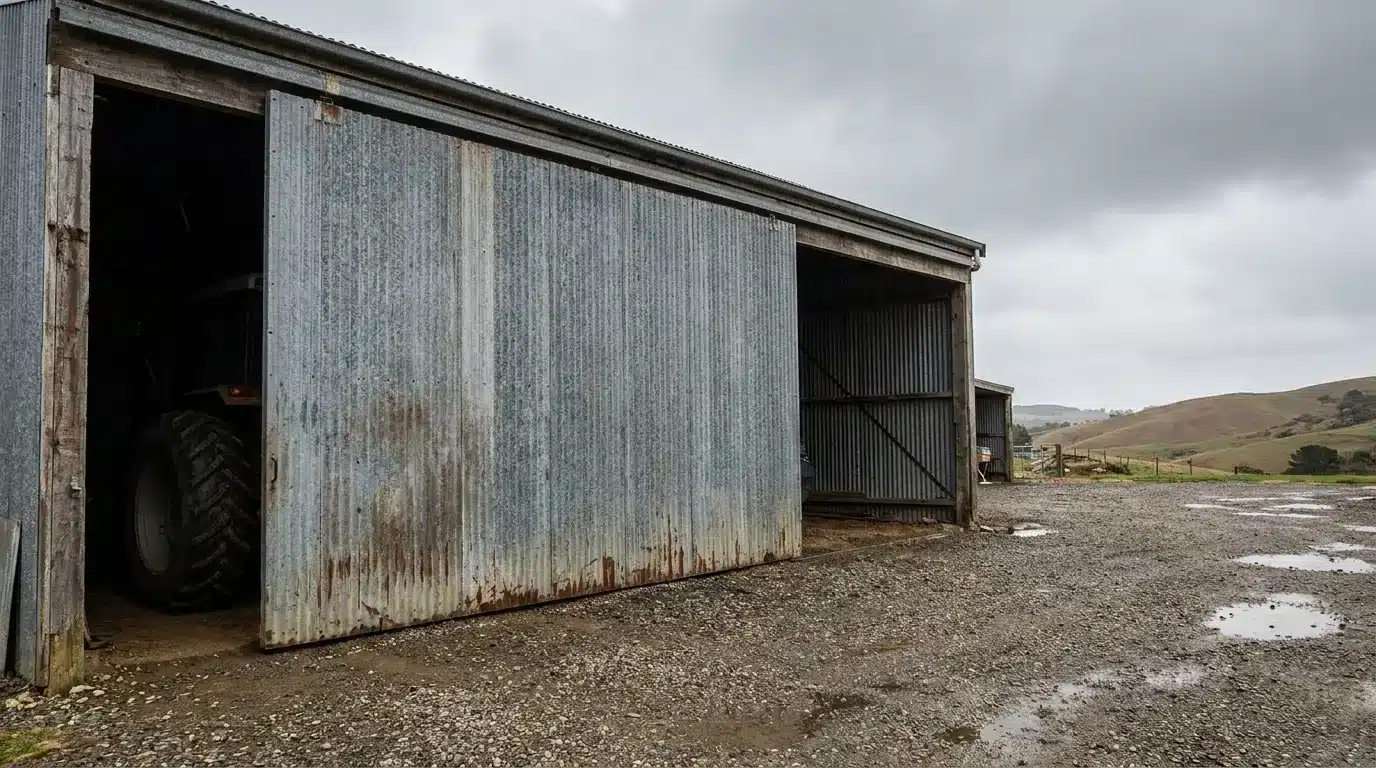
Farm doors operate under completely different conditions than residential garage doors. They’re built for heavier use, harsher weather exposure, larger vehicles and equipment, and often demanding access patterns.
Agricultural door requirements are more specialized. Equipment storage doors need to accommodate tractors, combines, bailers, or other large equipment. These doors are often larger than residential garage doors and support heavier loads. Livestock area doors need durability and sometimes specialized features. Workshop or equipment maintenance areas need reliable access for frequent use.
Weather resistance is critical for farm buildings. Agricultural buildings are often open to weather exposure. A farm door needs to withstand wind, rain, snow, and temperature extremes without deteriorating. Materials must resist rust and corrosion, particularly in areas with salt air or high humidity.
Maintenance in farm settings is more intense. Dust, dirt, and equipment impacts are common. A farm door needs to continue operating reliably despite these harsh conditions. Drainage and ventilation design matter more than in residential applications.
For farms requiring specialized access solutions, agricultural door systems for farms are engineered to handle heavy equipment, weather exposure, and the demanding conditions of agricultural operations.
Cost considerations differ for farm doors. While price per unit matters, a farmer also considers total cost of ownership including maintenance, frequency of repairs, and the impact of door failures on farm operations. A more expensive, highly durable door might provide better value than a cheaper option that deteriorates quickly in harsh conditions.
Choosing Between Standard and Specialized Options
For residential properties, standard residential garage doors work well in most circumstances. They’re readily available, reasonably priced, and manufacturers have refined designs over decades. Most residential needs are adequately served by choosing an appropriate material and style from standard options.
For farm properties, the choice is more nuanced. Some farm buildings can use standard residential-grade doors if use is light and conditions aren’t too harsh. Other applications require specialized agricultural doors that provide greater durability and often larger dimensions.
Consider how intensively a specific door will be used, what weather exposure it faces, and how critical reliable operation is to your farm operations. A door providing vehicle access to a protected equipment shed faces different demands than a door on an open storage structure in a high-wind area.
Installation and Professional Support
Both residential and agricultural doors benefit significantly from professional installation. A door that’s incorrectly installed will operate poorly and wear prematurely.
For residential installations, a professional typically completes the job in a few hours. Springs must be properly tensioned, tracks must be aligned, and the opener must be correctly calibrated.
For agricultural installations, particularly large doors or those in harsh conditions, professional installation is especially important. A large door with improper spring tension or misaligned tracks will operate dangerously and damage itself quickly.
For residential properties in specific areas, Hawthorn Woods garage door experts represent the type of local professional service that understands regional climate conditions and can provide installation suited to your area.
Professional installation also ensures compliance with local building codes and provides warranty coverage on parts and labor.
Maintenance and Long-Term Care
Both residential and farm doors require periodic maintenance to operate reliably.
Residential maintenance typically includes seasonal lubrication of moving parts, inspection of springs and cables, and testing of safety sensors. Homeowners can handle some basic maintenance, but spring service should always be performed by professionals.
Farm door maintenance should follow a more regular schedule due to harsher conditions. Springs need professional inspection and maintenance more frequently. Lubrication needs are greater in dusty environments. Tracks need more frequent alignment checks, and hardware may need replacement due to rust or damage.
Preventive maintenance costs significantly less than emergency repairs that disrupt farm operations.
Planning for Replacement
Most residential garage doors provide 15-20 years of service with proper maintenance. Farm doors, depending on conditions and use intensity, might have a shorter service life if exposed to particularly harsh environments.
Replacement provides an opportunity to upgrade to systems better suited to your current needs. Improved designs, better insulation, stronger materials, and enhanced safety features have developed in recent years.
Planning replacement before failure occurs gives you time to research options and budget appropriately rather than making hurried decisions during an emergency.
Conclusion
Whether you’re selecting a garage door for a residential home or agricultural buildings for a working farm, the fundamentals remain consistent. Choose materials appropriate for your climate and usage intensity. Ensure professional installation from knowledgeable providers. Maintain your systems according to manufacturer recommendations. Plan for replacement before systems fail. While residential and agricultural doors serve different purposes and face different demands, this methodical approach ensures each system provides reliable service for years to come.