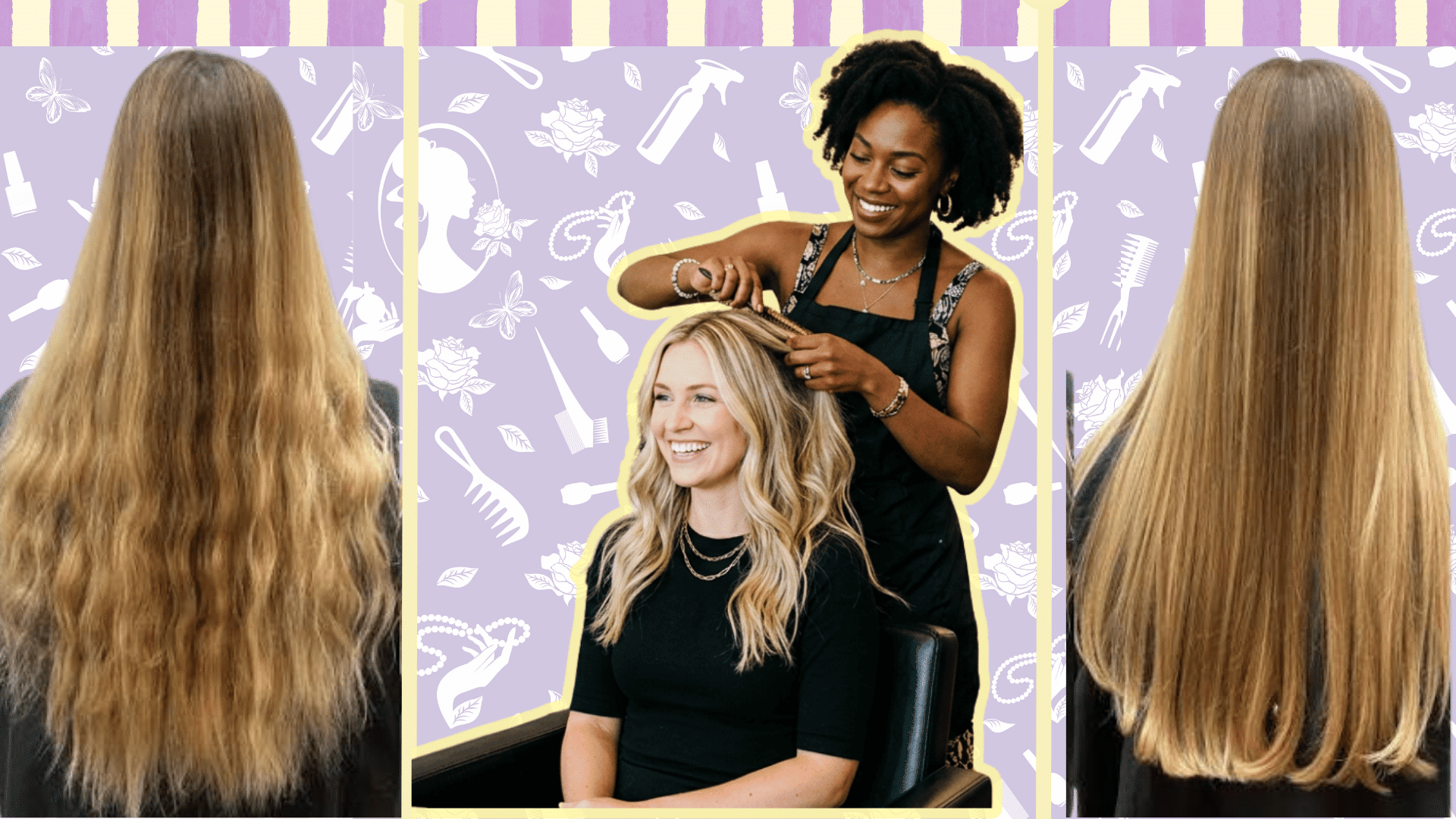
A fresh trim can make your hair feel lighter, smoother, and much easier to style. But after a few weeks, those neat ends may slowly become rough, tangled, thin, or uneven.
I find that relying only on the calendar does not always match what my hair actually needs. Your haircut, texture, styling habits, length goals, and the condition of your ends can all affect the timing.
Knowing how often should you trim your hair makes it easier to maintain your style while keeping unwanted damage under control.
The right schedule comes down to noticing small changes and giving your ends attention when they need it.
How Often Should You Trim Your Hair?
Most people can start with a trim every 6 to 12 weeks, then adjust the timing according to their haircut and length goals.
- Short Hair: Fades, pixies, and bangs may need trimming every 2 to 6 weeks to maintain their shape.
- Medium Hair: Shoulder-length styles usually stay balanced with trims around every 6 to 10 weeks.
- Long Hair: Healthy longer hair can often wait 8 to 12 weeks before the ends need refreshing.
These timelines are useful starting points, but your haircut’s shape and the condition of your ends should guide your final schedule.
Trimming Your Hair Based on Hair Type
Trim schedules vary across different hair types because strand thickness, moisture, styling habits, shrinkage, and breakage also matter.
1. Fine or Thin Hair

Fine hair can lose its full appearance when the ends become worn, wispy, or uneven. Checking the ends every 6 to 8 weeks is a practical starting point.
A light trim can help refresh the perimeter without removing unnecessary length. Focus on how dense and smooth the ends look rather than following the calendar too strictly.
2. Thick or Coarse Hair

Thick or coarse hair often holds its shape well, so trims around every 8 to 12 weeks may be enough.
If your haircut has heavy layers or a defined shape, you may need maintenance sooner. Watch for uneven bulk, rough ends, and changes in how easily the hair falls into place.
3. Curly or Wavy Hair

Curly and wavy hair may benefit from reshaping every 8 to 12 weeks, especially when the haircut depends on balanced layers and curl definition.
You can often wait longer if the curls still sit evenly and the ends feel healthy. Look for changes in shape, excessive knotting, or uneven sections before booking your next trim
4. Coily or 4C Hair
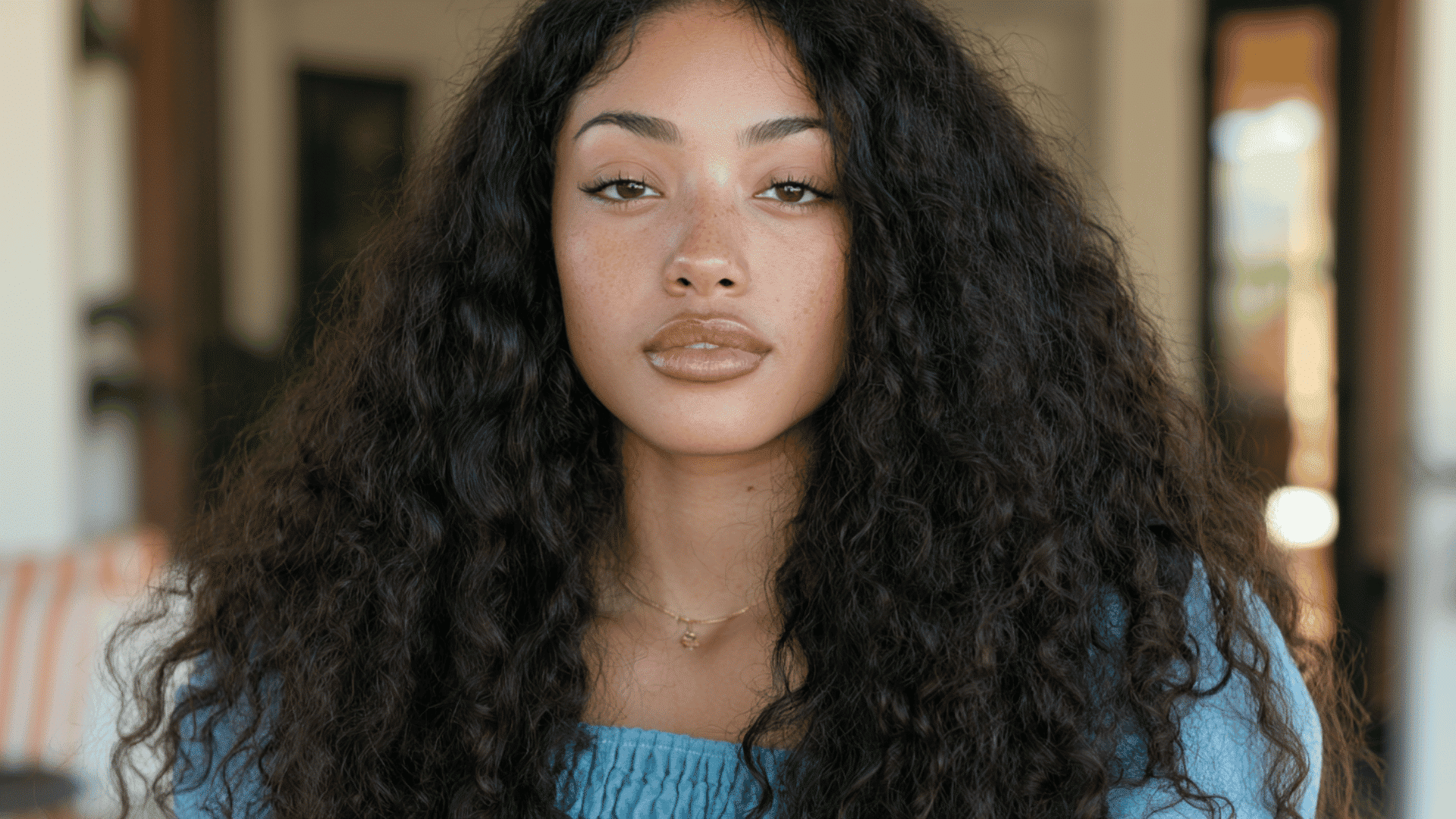
Coily and 4C hair may be checked every 8 to 16 weeks, depending on styling habits and the condition of the ends.
Because shrinkage can make uneven areas harder to notice, gently stretch or detangle sections when checking for wear. Trim when the ends feel rough, look thin, or become difficult to manage.
Signs Your Hair Needs Trimming
Your hair’s condition often reveals when you need a trim, even if your appointment is still weeks away.
- Split ends can make the tips look frayed, dry, or uneven.
- Rough strands may feel dry and less smooth than usual.
- Frequent tangles can occur when damaged ends catch on each other.
- Thin or wispy ends can make the hair look less full.
- Hair that no longer holds its shape may need freshening up.
- Increased breakage can leave uneven lengths and shorter broken strands.
What Reddit Users Say About Hair Trim Schedules?
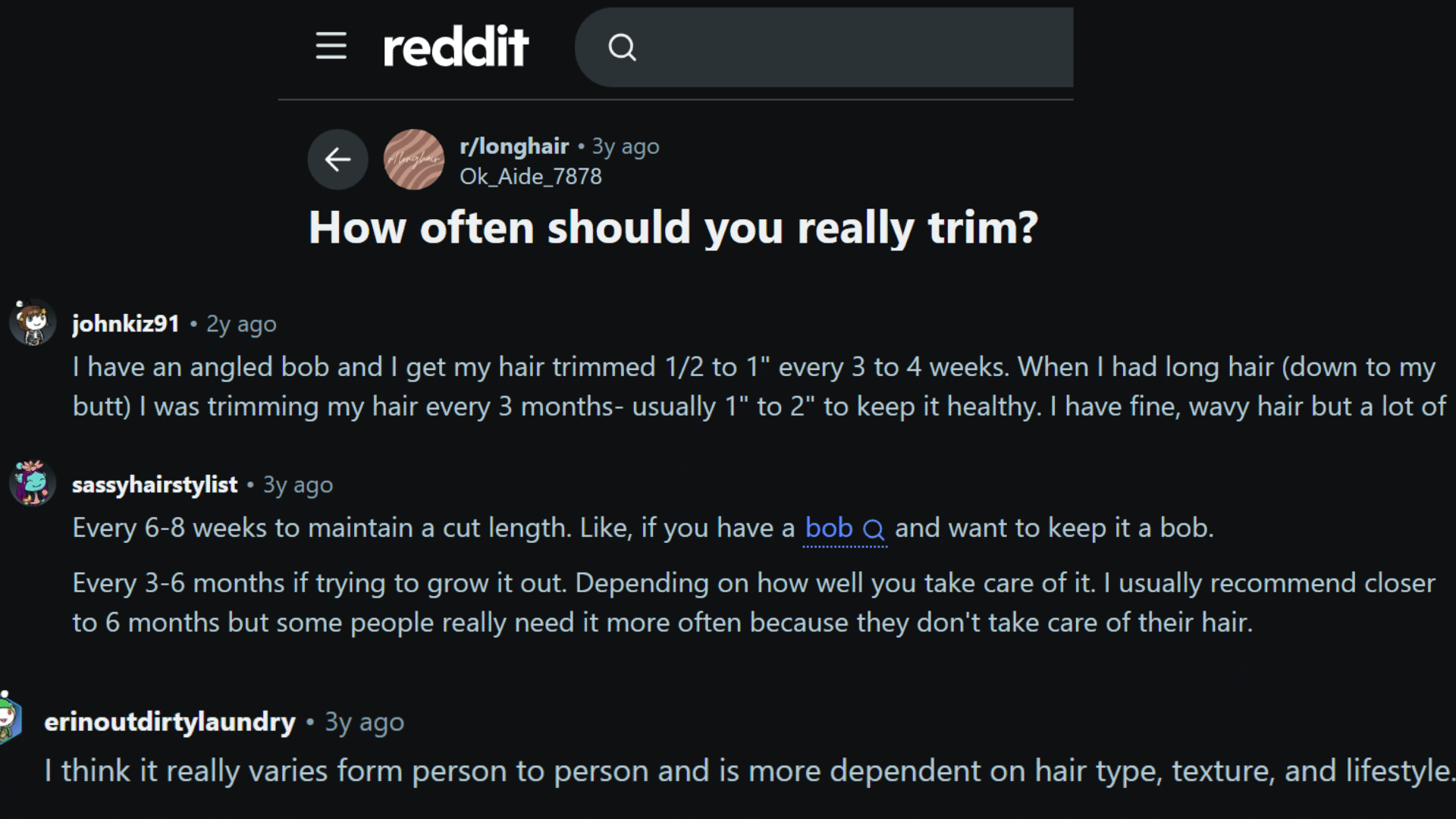
Based on Reddit discussions, users share that trimming routines vary widely, which is why one schedule doesn’t suit everyone.
Some trim every six to eight weeks to maintain a bob or another defined shape. Others wait three to six months while growing their hair longer.
Several commenters suggest letting hair condition guide the decision, especially when the ends begin to tangle, thin, or show damage.
These experiences reinforce that hair type, texture, lifestyle, and length goals should shape your personal trim schedule.
Factors That Change Hair Trim Timing
Several everyday habits can affect how quickly your ends wear out, so your trim schedule should reflect how you style and care for your hair.
- Haircut Shape: Structured styles like fades, bangs, pixies, and defined layers usually need more frequent reshaping to stay neat.
- Heat Styling: Regular use of straighteners, curling irons, and blow-dryers can dry out the ends and shorten the time between trims.
- Chemical Treatments: Bleaching, coloring, relaxing, and perming can weaken the hair shaft, making damaged ends easier to notice.
- Daily Handling: Rough brushing, tight hairstyles, and repeated restyling can create friction that leaves the ends looking worn sooner.
- Length Goals: If you are growing your hair, smaller trims can remove damaged tips while helping you keep more healthy length.
Trim Frequency When Growing Your Hair Longer
Growing your hair out does not mean skipping trims completely. Instead, focus on saving the healthiest part of your length while removing only what is necessary.
Ask your stylist to check the perimeter and identify areas that are uneven, fragile, or noticeably thinner. If most of the ends remain strong, a very small amount may be enough.
Keeping a simple record of your appointments can also help you see how much length you are retaining over time and avoid cutting more frequently than your growth goal requires.
Maintaining Healthy Hair Between Trims
Gentle daily habits reduce heat tension and friction. Also consider using hair cosmetics appropriately to keep hair healthy, as recommended by the National Library of Medicine
- Condition Your Ends: Apply conditioner through mid-lengths and ends after shampooing to improve softness and manageability.
- Detangle Gently: Start at the tips and work upward using a wide-tooth comb or detangling brush.
- Limit Heat Exposure: Apply heat protectant and choose the lowest temperature before blow-drying or using hot tools.
- Reduce Hair Tension: Avoid tight hairstyles and use fabric ties that do not catch or pull strands.
- Prevent Friction: Blot hair with a soft towel and protect longer lengths from rubbing while you sleep.
- Protect Processed Hair: Avoid overlapping bleach or relaxer onto treated sections because processing increases dryness and breakage.
Wrapping Up
Keeping your hair looking fresh does not mean following the same trim schedule as everyone else. Your hair type, haircut, styling habits, and the condition of your ends all play a role.
Once you know how often should you trim your hair, watch for signs like split ends, tangles, thinning tips, breakage, or a style that has lost its shape.
I prefer using these changes as a reminder rather than relying only on a set date. Regular trims can help keep your ends neat while supporting your length goals.
How often do you trim your hair? Share your routine with us in the comments below.
Frequently Asked Questions
How Often Should Colored Hair Be Trimmed?
Colored hair often benefits from trims every six to eight weeks, especially when bleach, frequent coloring, or heat leaves the ends fragile.
What is the Difference Between a Trim and Haircut?
A trim removes a small amount to refresh damaged ends, while a haircut changes the hair’s length, layers, shape, or overall style.
What is Hair Dusting and When is It Needed?
Hair dusting removes only the worn tips and works best when damage is minor and you want to preserve maximum length.