
Yes, reverse osmosis can reduce iron in water. But a kitchen RO system is usually a poor first step if your well water leaves orange stains throughout the house. A sink unit treats water at one faucet, and untreated iron can clog filters or foul the membrane. The better starting point is a water test: find out how much iron is present and in what form, then decide whether it needs to be addressed before water reaches the RO unit.
What Kind of Iron Is in Your Well Water?
Orange marks in a toilet or a metallic taste are clues. They don’t tell you how much iron is present, whether it is dissolved, or whether the well or the plumbing is the source.
Dissolved Iron: Water That Changes Color After Standing
If water comes out clear and turns reddish brown after standing, it may contain dissolved ferrous iron. Exposure to air can convert it into particles. A sediment cartridge cannot catch iron while it is still dissolved, so clear water at the faucet is no reason to skip testing.
Particulate Iron: Rust You Can See Right Away
Water that looks reddish or cloudy as soon as it comes out may contain ferric iron particles. A sediment filter can catch particles within its rated range, but it won’t address any dissolved iron still in the water. If only one fixture is affected, check whether the plumbing is contributing before you buy equipment for the entire house. The
One Fixture or Several?
Where the discoloration appears can help you decide what to investigate first:
- Several cold-water taps: Test the incoming supply before comparing whole-house equipment.
- One fixture or only hot water: Compare other cold-water taps and have the affected fixture or plumbing checked.
If stains appear at several taps, test the incoming water before shopping for a whole house water filter for well water. Match the filter to what the test finds.
What Reverse Osmosis Can Do About Iron
Iron Reduction and Membrane Buildup
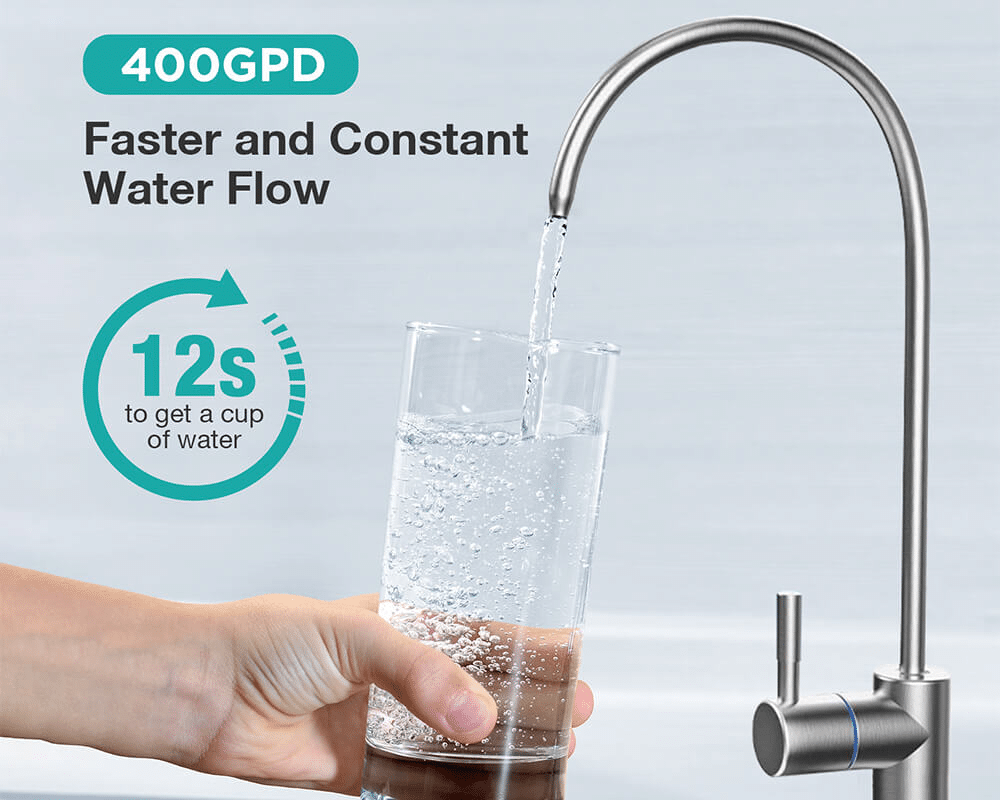
An RO membrane separates many dissolved substances from the water delivered at the faucet. But iron can leave deposits on the membrane, and iron particles can load the cartridges upstream. Either can make the system harder to maintain. A drop in flow is a reason to investigate, though it does not prove iron is the cause.
Check the manufacturer’s incoming water requirements for the exact model. A system that can reduce iron under certain conditions is not necessarily designed to accept untreated, iron-rich well water. And a general claim about dissolved solids tells you nothing about the amount of iron a particular model has been verified to reduce.
When a Kitchen RO Unit Makes Sense
If you’re considering a reverse osmosis system for well water, first decide which tap you want to treat. A kitchen unit cannot address recurring stains in showers, toilets, or laundry.
If upstream treatment has already addressed the iron and your water meets the manufacturer’s feed requirements, a point-of-use RO unit can serve a separate drinking and cooking water goal. The SimPure T1-400 is a tankless under-sink option for a dedicated kitchen faucet. It won’t treat water going to the shower, toilets, or laundry, and it should not replace an upstream iron treatment system.
What to Check Before Choosing an Iron Treatment
1. Sample Before and After Treatment
Start with a laboratory sample taken before any existing treatment. Ask the lab where to collect it and follow its handling instructions. If you already have treatment equipment and want to know whether adding RO makes sense, ask about a second sample downstream. The first sample helps explain what the well or incoming supply is delivering. The second shows the water quality at the point your proposed RO system would actually receive it.
2. Confirm the Amount and Form of Iron
Read the concentration and the form of iron together. A total iron result tells you how much iron the lab found in the sample, but it does not automatically tell you what share was dissolved. Ask the lab or a treatment professional whether you need a separate dissolved iron measurement. That distinction matters because a particle filter can be a useful step for suspended material without doing the work needed for dissolved iron.
3. Bring the Full Report to the Installer
Bring the rest of the report into the conversation. A treatment professional may need pH, hardness, and manganese results to judge whether a proposed process fits. If you compare quotes, give each installer the same report and ask which results their recommendation addresses. Ask how they intend to verify performance after installation, where a follow-up sample should be collected, and what routine service the equipment will need. This gives you a way to compare proposals beyond the number of stages in each system.
When to Treat Iron Before Installing RO
Use the test results to decide where treatment belongs. If staining appears throughout the house, evaluate options for the incoming line. If existing treatment has already addressed iron and you have a separate goal at the kitchen faucet, compare the treated water with the RO model’s feed limits. The same lab result can lead to different equipment choices depending on which fixtures need treatment.
|
What you find |
What to check next |
|
Rust particles or sediment in the incoming water |
A sediment stage may help with the particles. Check whether dissolved iron is also present. |
| Dissolved iron and staining at multiple fixtures |
Compare options for treating the incoming supply. A properly sized oxidation and filtration system may fit, depending on the water chemistry. |
| Existing iron treatment and a separate goal at the kitchen tap |
Test the treated water and check the exact RO model’s feed requirements before adding a sink unit. |
If You Have Both Rust Particles and Dissolved Iron
For example, suppose your incoming water contains visible rust particles, and testing also shows dissolved iron. Adding a sediment stage may reduce the particles you can see, but the clearer appearance does not show that the dissolved portion has been addressed. Ask how the proposed upstream system handles that portion before adding an RO unit. If a contractor proposes oxidation followed by filtration, ask how the equipment will be sized for the household flow and how you will check that the treatment is still working after installation.
If You Already Have an Iron Treatment System
If you already have an iron treatment system, check its performance before buying another device. Use the post-treatment sample and the RO manufacturer’s feed requirements to decide if the two systems can work together. If the treated water still falls outside those requirements, have the existing equipment checked first. Adding a kitchen unit downstream will not solve staining elsewhere in the house.
Before buying an iron filter for well water, ask which form of iron the equipment handles and how its performance will be checked after installation.
Where a Sediment Prefilter Fits
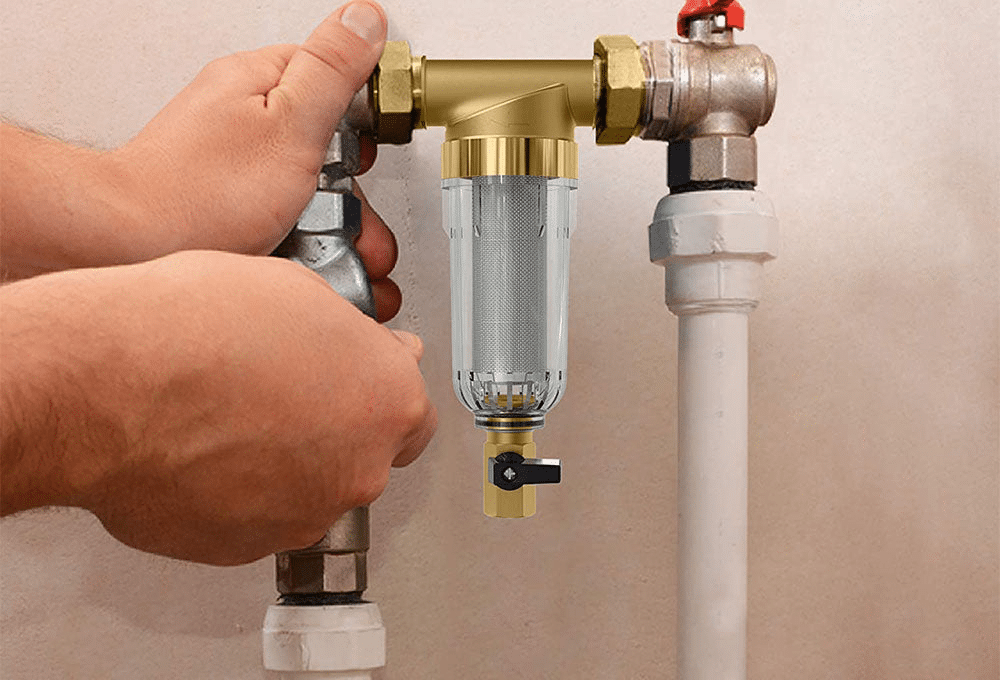
For visible particles, the SimPure DC5P is a spin-down sediment prefilter to consider. Consider it when particulate prefiltration fits the test findings and the installation. It cannot take dissolved iron out of the water.
Conclusion
Reverse osmosis can reduce iron, but a kitchen unit only treats water at its own faucet. If iron is causing stains throughout the house, start with a lab test and address the iron in the incoming supply. Consider kitchen RO once a follow-up test shows that the treated water meets the exact model’s feed requirements and you still have a separate treatment goal at that tap.
Frequently Asked Questions
What Is the Cheapest Way to Remove Iron from Well Water?
Compare the installed price and ongoing service costs of options that match your test results. If testing confirms that the problem is limited to particles, a sediment prefilter such as the SimPure DC5P may be a lower-cost starting point than a dedicated treatment system. If the iron comes from a corroded fixture or pipe, get a repair estimate before spending money on a filter.
What Will Neutralize Iron in Water?
Iron isn’t neutralized the way acidity is. In an oxidation system, oxygen or another oxidant converts dissolved iron into solid particles, and a separate filtration step captures them. If iron is bound to organic material, this conversion can be harder. Ask a treatment professional whether the proposed process fits the lab results.
Will a Brita Filter Remove Iron From Water?
Check the performance data sheet for the exact Brita cartridge. If it does not list a verified iron reduction claim, don’t rely on it for iron. A pitcher also treats only the water poured into it, so it won’t address stains in the shower or laundry.
What Is a Major Downside of Reverse Osmosis Water?
Producing it sends part of the incoming water down the drain. If you are comparing the SimPure T1-400 with another RO system, put both models’ published ratios in the same order: treated water to drain water. Check whether the figures account for flushing before using them to estimate water use.
What Will Reverse Osmosis Not Remove?
A standard RO membrane should not be relied on to remove dissolved hydrogen sulfide, a gas that can give water a rotten-egg odor. If the smell persists after RO, have its source checked instead of assuming the membrane needs replacing.