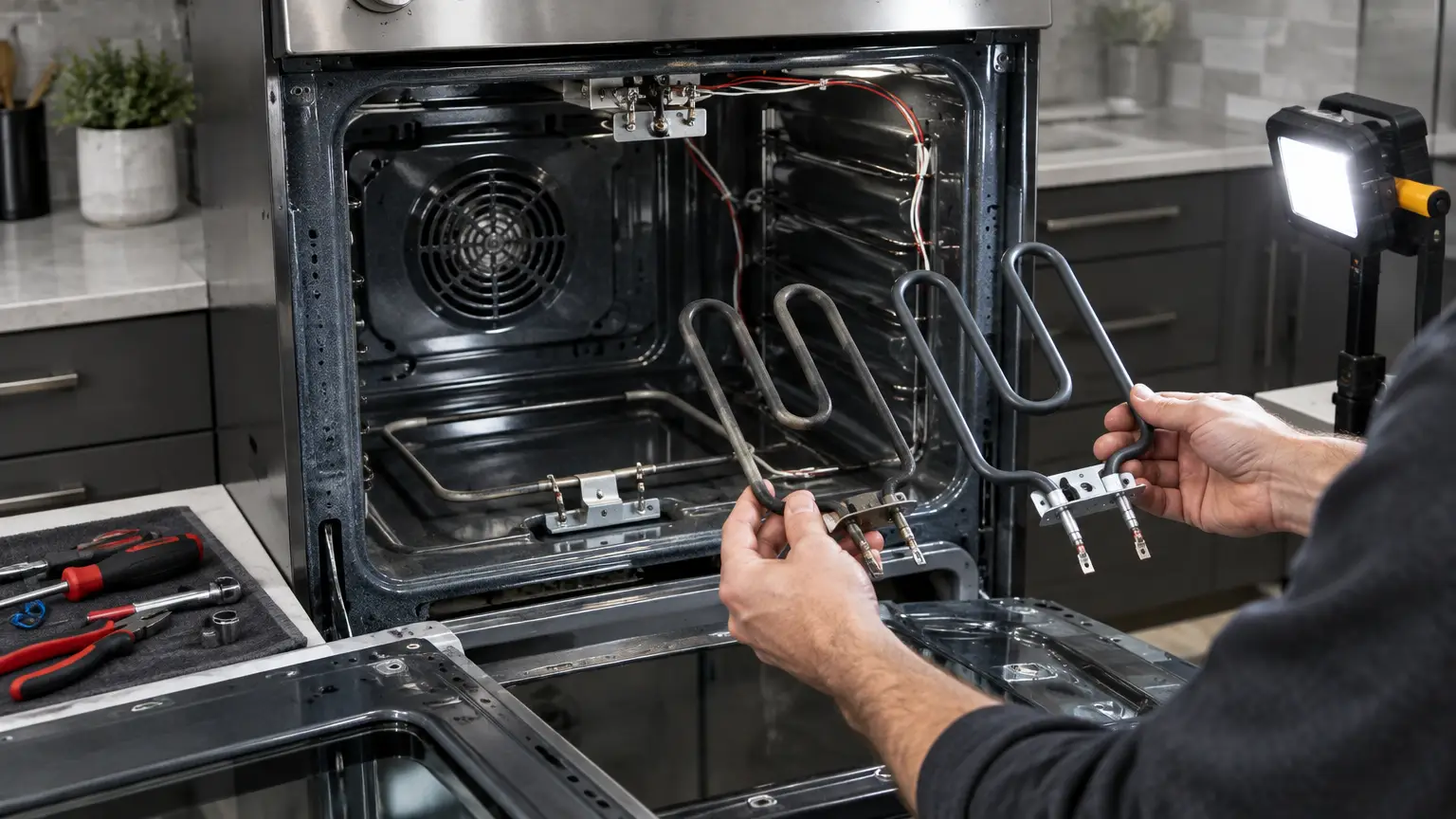
Choosing an electric oven replacement part involves more than finding a familiar shape in a catalog. First identify the appliance and the cause of the problem, then check the replacement’s compatibility. That sequence helps avoid buying a component that fits but doesn’t solve the fault.
Find the Full Model Number First
Brand name alone won’t narrow a parts search enough. Similar-looking ovens can use different elements and boards. The full model number is the starting point for finding the appropriate diagrams and part numbers. Find it on the serial plate, which is often on the oven door frame or behind the storage drawer. Some units place it on the side of the chassis or in the owner’s manual.
Copy the complete string, including suffix letters and digits. Those suffixes often mark production revisions with different wiring or controls. Keep the serial number with it, since it can settle questions about mid-run changes. A clear photo of the plate saves retyping long codes.
Narrow the Problem to a Part Type
Replacement parts shopping goes better with notes on what the oven does and doesn’t do. Note whether the lower element stays dark while the top still heats. Record temperature swings or a failure to reach the set point. Does the display stay dead or show an error code that returns after a reset?
An exposed bake element may show blisters or a visible break once the oven is cool and power is off as directed by the manual. Hidden elements and internal wiring should be left to a qualified technician. Uneven heating can have several causes, including settings, loading, and faulty components; it does not automatically identify a bad sensor or board. Describe the symptom rather than treating a visual observation as a complete diagnosis.
Note when the fault shows up, too. A door that won’t lock for self-clean or an error tied to the latch can involve the door switch or latch assembly. Heat that cuts out and won’t return can involve the thermal fuse or another safety device. Those notes help a technician identify the cause before money is spent.
Match Part Numbers, Revisions, and Fit
Once a technician has identified the faulty component, part numbers guide the purchase. When shopping for parts for a samsung electric oven, have the full model number ready before browsing range and oven listings. Ask the supplier to confirm compatibility with that model rather than choosing between look-alike elements and boards.
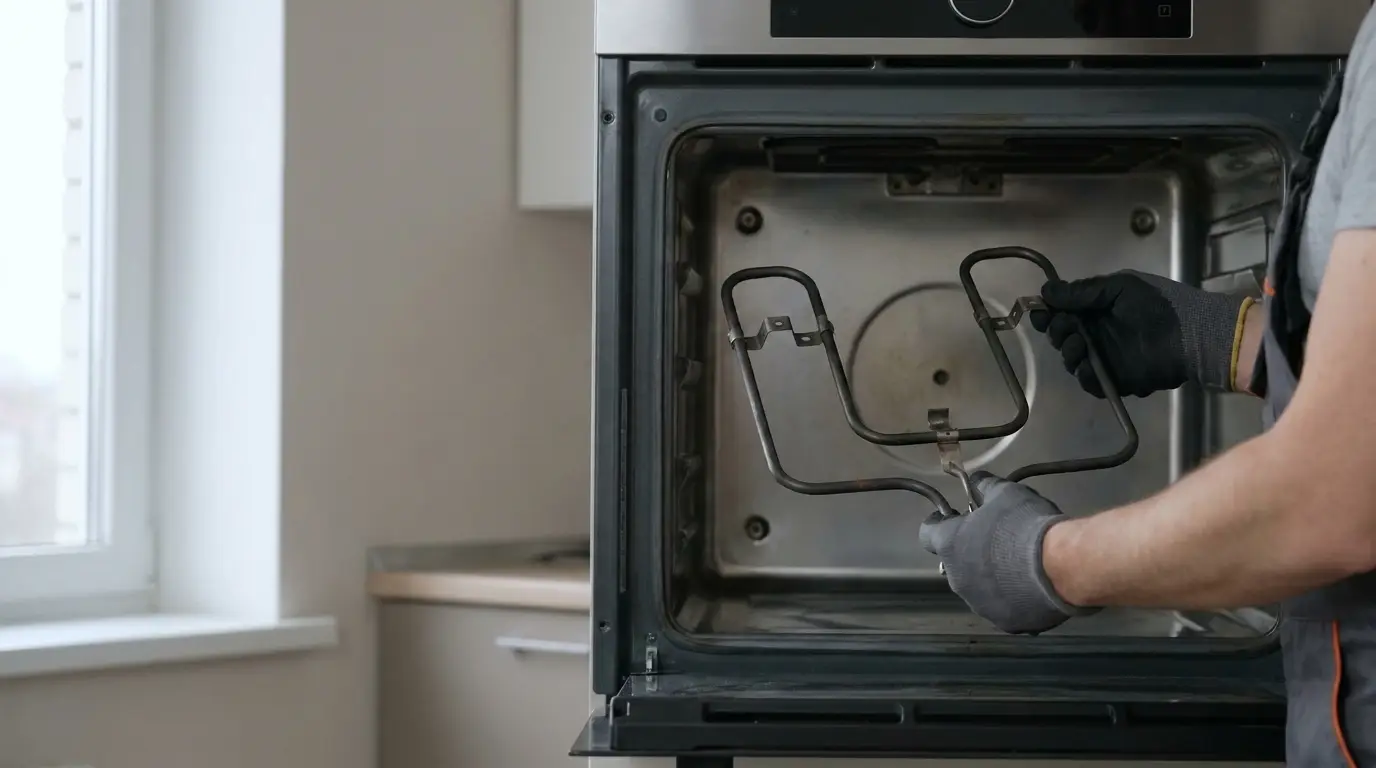
Use the part number and revision from the model’s diagram or the original component label, if a technician has made it available. Manufacturers sometimes supersede a part number with a replacement. The supplier should document that the replacement fits the exact model, rather than offer only a similar photo. If the numbers differ, ask about the substitution before paying.
Compare the replacement’s published dimensions and mounting details with the model’s documentation. Heating elements can differ in length, bend shape, and bracket position. Boards and switches can have different connectors despite looking alike. Ask the technician to compare the components before installation; appearance and measurements alone don’t establish electrical compatibility.
Compare Electrical Specs and Construction
Labels tell the rest of the story. Match supply voltage and wattage on the new part to the old label and the manual. Match terminal style and wire positions, too. A broil element may look like a bake element yet carry a different rating, so the two can’t swap based on shape alone.
On sensors and fuses, ratings matter as much as shape. A temperature sensor with the wrong resistance curve won’t read correctly, even if it screws in cleanly. A thermal fuse with the wrong cutoff won’t protect the circuit as designed. When ratings aren’t printed in the listing, ask for documentation or pick a listing that shows them.
Weigh OEM Against Compatible Options and Plan the Install
OEM means original equipment manufacturer. Whether choosing an OEM part or a compatible alternative, confirm that the listing identifies the exact model and appropriate specifications. Compare documented fit, warranty terms, and total cost rather than assuming either label alone guarantees suitability. Vague fit claims and missing specifications are reasons to ask more questions.
Read the return terms before ordering electrical parts, especially any restrictions once a package is opened or a component is installed. Check who pays return shipping and whether a restocking charge applies. Delivery timing matters when the oven is needed for a holiday or event. Keep the packaging and receipt until the repair is complete.
Use the manual for the installation plan rather than a video for a different model. Let the oven cool fully and keep power off per the manual’s disconnect steps. Simple access panels are one thing, but hardwired connections and control board setup call for a qualified electrician or service technician. Door locks and safety switches also call for care, since they guard high heat and self-clean cycles. If access isn’t clear or wiring looks altered, don’t force it.
The right part needs both a matching number and the correct fit. Matching the model and part revision, comparing ratings, and reading return terms leave less room for surprises. That care keeps a simple repair from turning into repeat orders.