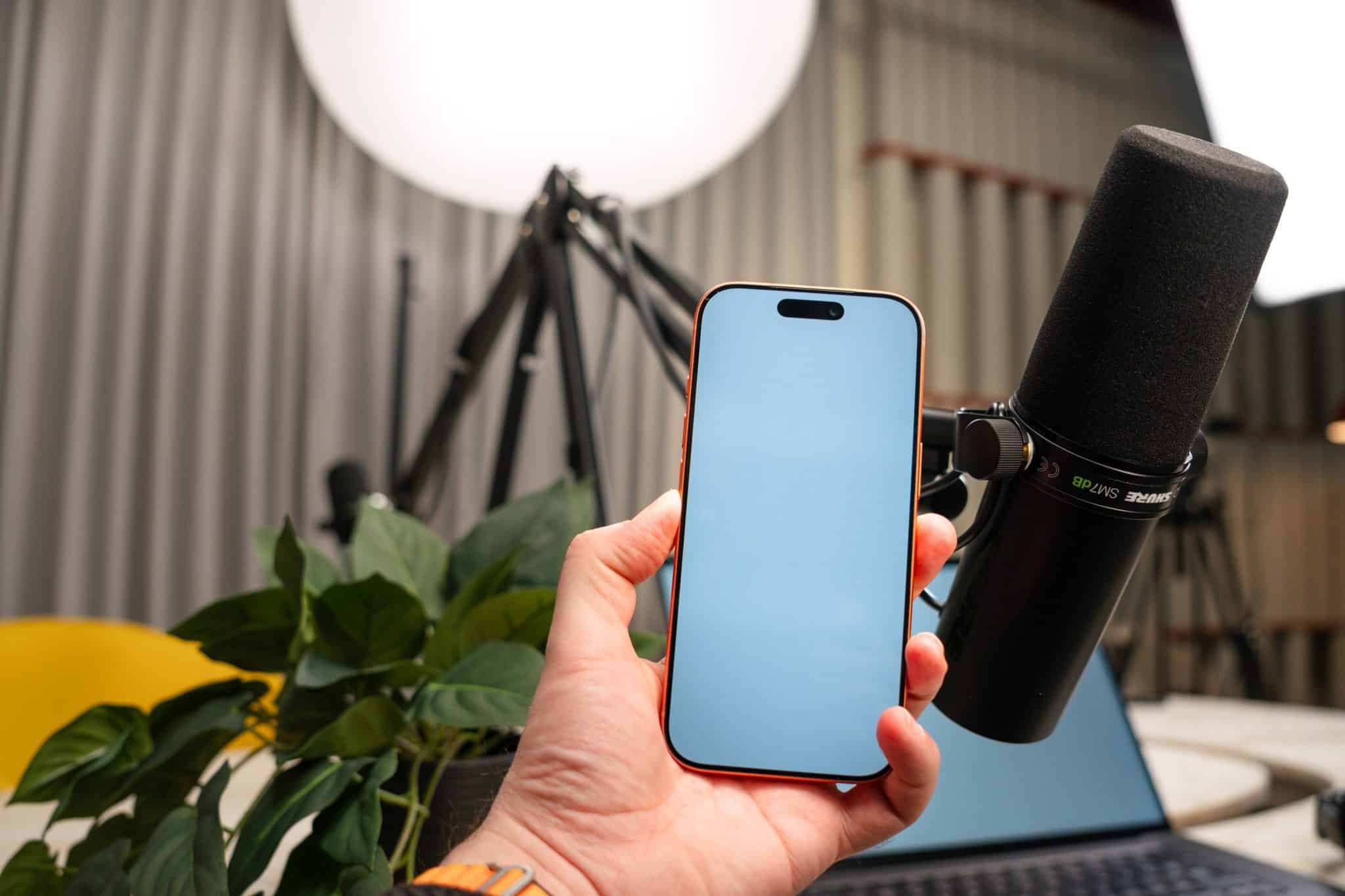
Choosing the best microphone for content creators depends on how and where audio will be captured, and how fast the setup needs to be. Creators who stream from a desk often use a USB desk mic, but creators who film on the move want a clip-on wireless kit for YouTube, TikTok, Reels, vlogging, interviews, and podcasts, with phone and camera support, fast mounting, and a stable link. Some also want onboard backup recording and more advanced controls for higher-stakes shoots.
Below are the best wireless creator microphones, ranked for real-world filming, with features, pros, and cons.
Comparison table:
|
Microphone |
Category |
Transmitters |
Receiver style |
Recording approach |
Strengths |
Built for |
|---|---|---|---|---|---|---|
|
Insta360 Mic |
Clip-on (lavalier) creator wireless mic |
Up to 4 per receiver |
Receiver for cameras (3.5mm), USB-C phones, and computers, or Direct Connect to Insta360 cameras with no receiver |
Wireless plus 32-bit float internal recording to microSD |
400m range, 13-hour transmitter, AI noise canceling |
YouTubers, vloggers, and interviewers, especially Insta360 camera owners |
|
DJI Mic Mini |
Compact clip-on creator wireless mic |
1 or 2 (max 2) |
One receiver for cameras (3.5mm) and phones (USB-C adapter) |
Wireless only, no internal recording |
10g transmitter, 400m range |
Casual creator filming and travel content |
|
RØDE Wireless Micro |
Phone-first clip-on wireless mic |
2 |
Plug-in USB-C or Lightning phone receiver (camera receiver in the Camera Kit) |
Wireless only, no internal recording |
Simple setup with GainAssist |
Quick phone dialogue and street interviews |
|
BOYA Magic |
4-in-1 clip-on wireless mic |
2 |
USB-C, Lightning, or 3.5mm receivers, depending on the kit |
Wireless only, with a −12dB safety track |
Converts to handheld, desktop, and on-camera use |
Entry-level creators who want one flexible kit |
|
Hollyland Lark M2 |
Ultra-compact clip-on wireless mic |
2 |
Camera, USB-C, or Lightning receiver versions |
Wireless only, 48kHz/24-bit |
9g transmitter, up to 40 hours with case |
Lightweight phone filming and casual interviews |
1. Insta360 Mic
Best For: YouTubers, vloggers, and interviewers who want a wireless clip-on (lavalier) mic with 32-bit float backup recording, 13-hour transmitters, and a direct connection to Insta360 cameras with no receiver.
The Insta360 Mic is a wireless clip-on (lavalier) microphone for creators filming vlogs, YouTube videos, short-form social content, interviews, and podcasts. The receiver connects to cameras with the included 3.5mm cable, to USB-C iPhones and Android phones with the included USB-C adapter, and to computers. Prices start at $139.99 for the one-person kit, or $249.99 for the two-person kit with a charging case (Insta360 US store, October 2026).
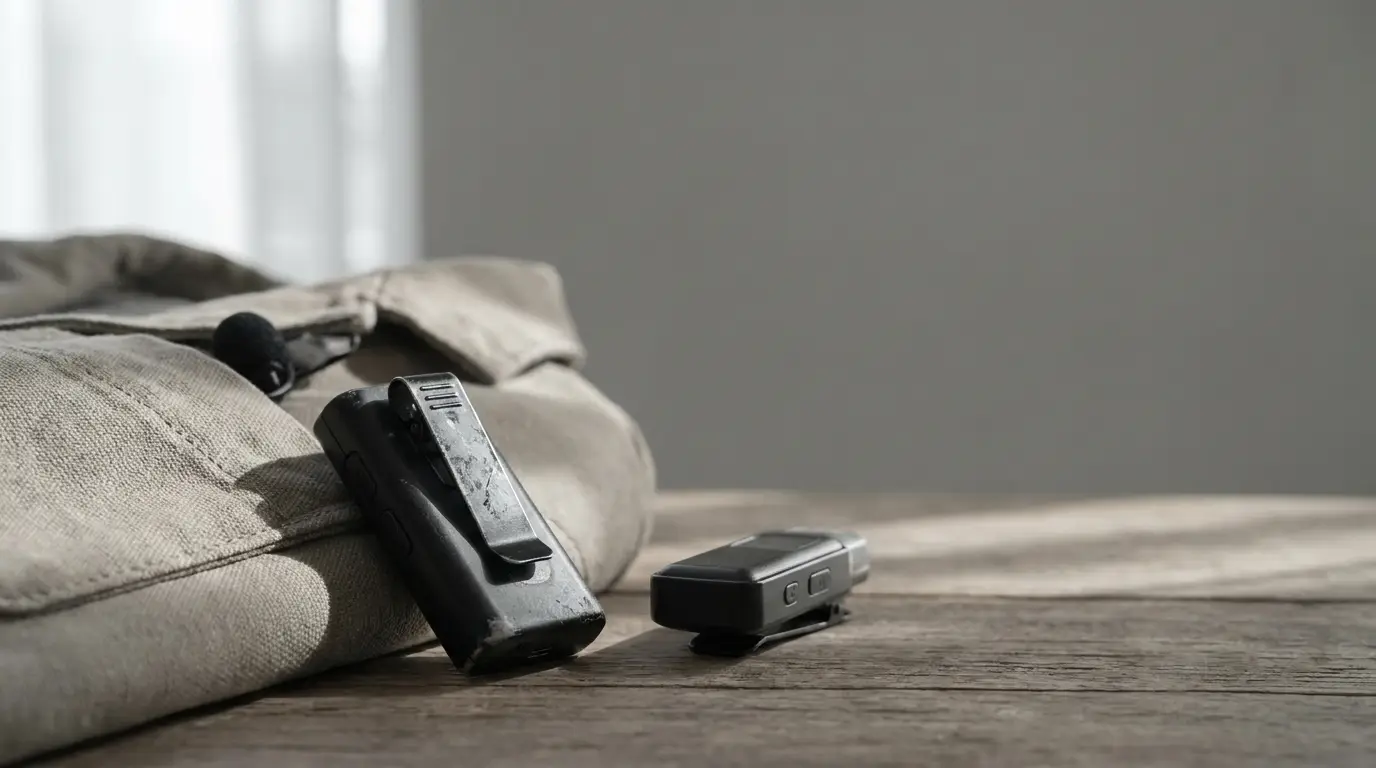
A defining advantage for Insta360 shooters is Insta360 Direct Connect, which pairs a transmitter over Bluetooth straight to the X6, X5, Luna Ultra, Luna Pro, Ace Pro 2, and GO Ultra for 48kHz audio, with no receiver needed. Used this way, the transmitter also acts as a remote, so a single press starts or stops recording.
For voice capture, a dedicated AI audio chip powers two-level AI noise canceling that reduces background noise while keeping speech natural. With a microSD card inserted, each transmitter records a 32-bit float internal backup, a safety net against clipping and level surprises. Auto Gain Control keeps levels usable in changing environments, three voice tone presets shape the sound, and a Safety Track records a backup at −6dB.
The system also scales beyond two-person talking-head shoots. One receiver can capture up to four transmitters, and two transmitters can feed up to four receivers for multi-camera workflows. Each 19.4g transmitter runs for up to 13 hours, reaches up to 400m (1,312ft), and has a customizable E-Ink display.
Features
- 19.4g transmitter with magnetic and clip mounting
- Insta360 Direct Connect to X6, X5, Luna Ultra, Luna Pro, Ace Pro 2, and GO Ultra, with no receiver
- Remote start and stop when connected directly to an Insta360 camera
- 32-bit float or 24-bit internal recording to microSD (card sold separately)
- Two-level AI noise canceling with a dedicated AI audio chip
- Auto Gain Control, three voice tone presets, and a −6dB Safety Track
- Up to 4 transmitters per receiver, or 2 transmitters to 4 receivers
- Up to 400m (1,312ft) range (about 100m on Direct Connect to an X5)
- Up to 13 hours per transmitter, 11 hours per receiver, and 34 hours with the Charging Case in the two-person kit (lab tested, noise canceling and internal recording off)
- A 5-minute charge gives a transmitter about 2 hours 20 minutes of use
- Timecode in and out (not supported in the US)
Pros
- Direct Connect removes the receiver entirely for Insta360 camera owners
- 32-bit float backup recording protects key takes in unpredictable locations
- Long transmitter battery life supports full-day creator schedules
- Scales from solo vlogs to four-person podcasts and multi-camera shoots
Cons
- Internal recording requires a microSD card, as there is no built-in storage
- Connecting a transmitter straight to a phone over Bluetooth records at 16kHz in third-party apps only, so the receiver is the better phone option
2. DJI Mic Mini
The DJI Mic Mini targets creators who want a very small, everyday wireless mic for quick filming days, travel content, and simple two-person dialogue.
Features
- 10g transmitter (without magnet)
- Up to 400m range
- One or two transmitters per receiver
- Receiver with 3.5mm camera output and a USB-C phone adapter (Lightning sold separately)
- Two-level noise cancellation
- 11.5 hours per transmitter and 48 hours total with the charging case (two-person kit)
Pros
- Compact form factor suits casual setups and travel kits
- One receiver works with both cameras and phones
- Transmitter connects directly to phones over Bluetooth and to select DJI Osmo cameras with no receiver
Cons
- No internal backup recording
- Maximum of two transmitters and no timecode
3. RØDE Wireless Micro
The RØDE Wireless Micro is built for phone creators who want a simple, plug-in wireless kit for talking-head content, street interviews, and short-form video.
Features
- 12g transmitter (18g with magnet)
- Up to 100m range
- Plug-in USB-C or Lightning phone receiver, chosen at purchase
- 48kHz/24-bit audio
- GainAssist automatic level control
- About 7 hours per transmitter, and 21 hours with the charging case
Pros
- Very simple setup for run-and-gun phone filming
- Compact kit fits small creator bags
- A separate Camera Kit adds a camera receiver
Cons
- No onboard recording and no noise cancellation
- The standard kit works with phones only, and the connector type is fixed
4. BOYA Magic
The BOYA Magic is a 4-in-1 AI wireless mic for entry-level creators. Each transmitter can be worn as a lavalier, held as a handheld mic, stood on a desk, or mounted on a camera.
Features
- 7g transmitter
- Up to 100m range without obstacles
- USB-C, Lightning, or 3.5mm camera receivers, depending on the kit
- 48kHz/24-bit audio
- AI noise cancellation with two strengths and a −12dB safety track
- About 6 hours per mic and 30 hours with the charging case
Pros
- One kit covers lavalier, handheld, desktop, and on-camera use
- Low price for new creators
- Light transmitters stay close to the voice without being handheld
Cons
- No internal recording
- Shorter 100m range and 6-hour transmitter runtime
5. Hollyland Lark M2
The Hollyland Lark M2 is built around a 9g transmitter that is easy to wear on camera, which suits street content, casual interviews, and phone-first filming.
Features
- 9g transmitter
- Up to 300m line-of-sight range
- Environmental noise cancellation
- 48kHz/24-bit audio
- Camera, USB-C, and Lightning receiver versions
Pros
- Light, discreet transmitters
- Up to 40 hours of total battery life with the charging case (camera version; 30 hours for mobile versions)
- Mobile receivers suit phone-first creators
Cons
- No onboard backup recording
- 10-hour transmitter runtime
Choosing The Right Microphone For Content Creators
When selecting a microphone for content creation, consider:
- Use Case: Clip-on wireless systems suit vlogging, interviews, and social video, while USB desk mics suit seated streaming and podcasts.
- Number of Speakers: Two-person content needs a two-transmitter kit, while group podcasts benefit from four transmitters on one receiver.
- Backup Recording: Onboard 32-bit float recording protects against dropouts and clipping during fast-moving shoots.
- Phone and Camera Compatibility: Check for a 3.5mm camera output, USB-C or Lightning phone options, and whether a system can connect directly to a camera without a receiver.
- Battery Life and Range: Longer transmitter runtime and a charging case matter for travel days, events, and outdoor filming.
Frequently Asked Questions
What Makes A Microphone Good For Content Creators?
A strong creator microphone is fast to set up and records clear speech with little effort, especially for vlogs, interviews, and short-form content. The Insta360 Mic stands out with 32-bit float internal recording (with microSD), AI noise canceling, up to 13 hours of transmitter battery life, and a direct connection to Insta360 cameras without a receiver.
The Best Microphone For Content Creators Depends On Speed, Scalability, and Backup Protection
The best creator microphone matches the way content is filmed most often. Compact clip-on kits support fast vlogs and interviews. More advanced systems add backup recording and expand to more speakers for podcasts and multi-guest shoots.
For creators who want one mic system for solo filming, two-person interviews, and bigger setups, the Insta360 Mic is the most well-rounded choice. With Direct Connect for Insta360 cameras, 32-bit float backup recording, AI noise canceling, up to four transmitters per receiver, and up to 400m range, it captures clean, consistent dialogue across a wide range of creator scenarios.