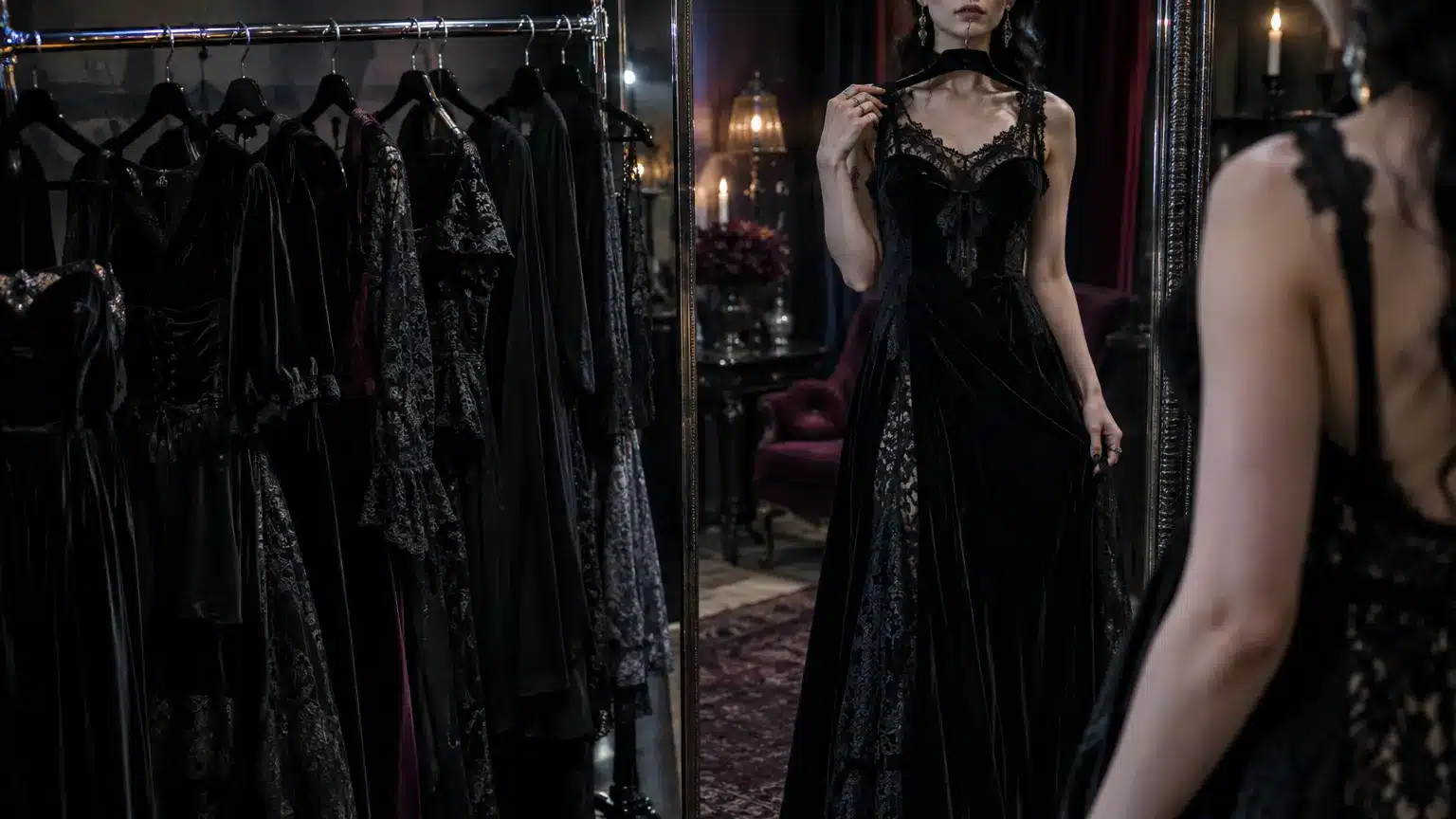
Gothic dresses are among the most versatile pieces in alternative fashion. From romantic lace designs to dramatic velvet maxi dresses, they offer countless styling possibilities for different occasions.
Although gothic fashion is often associated with dark colors and elaborate outfits, gothic dresses can be adapted to everyday wear, formal events, casual outings, and special occasions. The key is choosing the right accessories, footwear, and layers to create a balanced look.
Here are some practical ways to style gothic dresses while maintaining their distinctive aesthetic.
How to Wear a Gothic Dress Casually
A gothic dress doesn’t have to be reserved for special occasions. With the right styling, it can become a practical part of an everyday wardrobe.
For a casual outfit, choose a simple black mini dress or a relaxed midi design. Dresses featuring subtle lace details, asymmetrical hems, or fitted silhouettes work particularly well.
Pair your dress with chunky sneakers or flat ankle boots to create a comfortable daytime look. An oversized cardigan, denim jacket, or simple zip-up hoodie can make the outfit feel more relaxed.
Keep accessories minimal with a silver necklace, small crossbody bag, or understated rings.
The goal is to balance gothic elements with casual clothing rather than making every piece a statement.
Styling Gothic Dresses for Evening Events
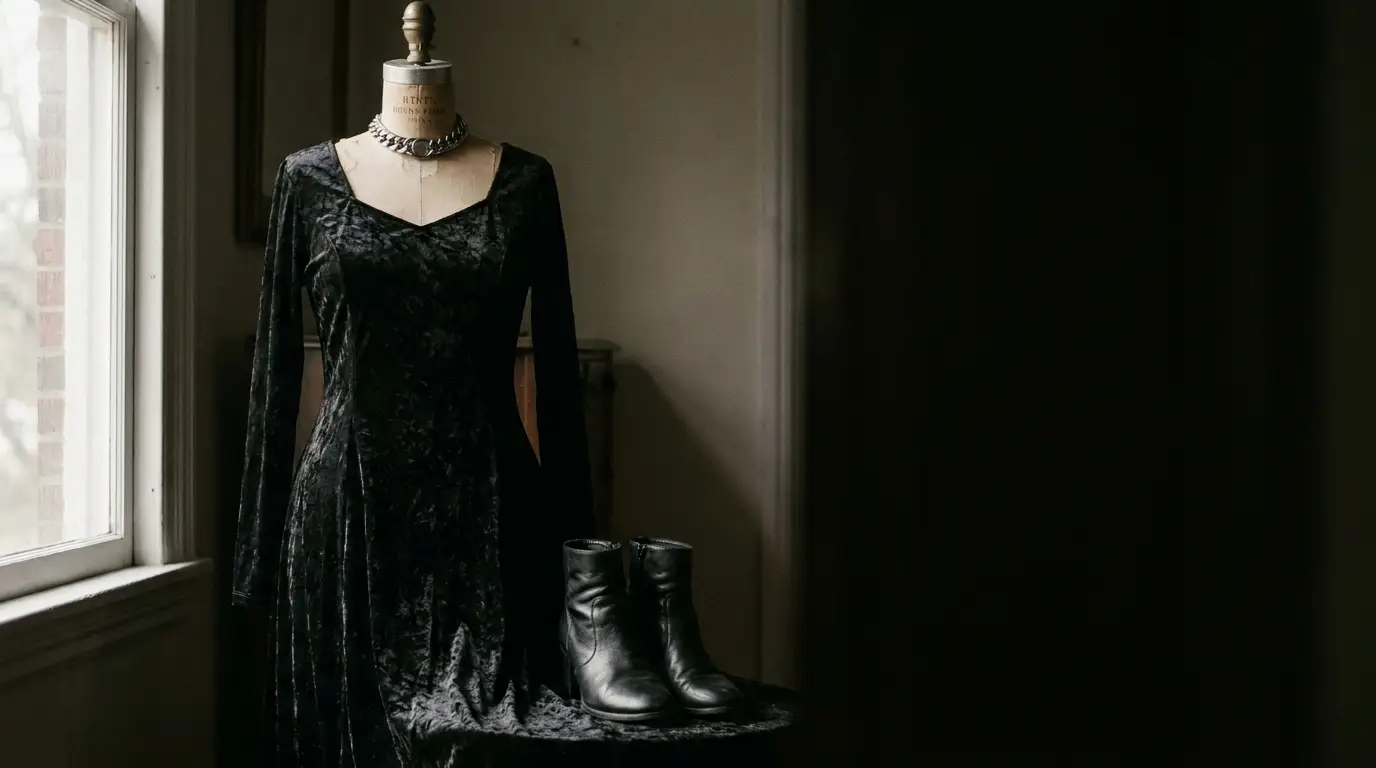
Evening occasions provide an opportunity to experiment with more elaborate gothic outfits.
Velvet dresses, lace maxi dresses, and designs featuring sheer sleeves or corset-inspired bodices are excellent choices for dinners, parties, and nighttime events.
A fitted black velvet dress paired with heeled ankle boots creates an elegant silhouette. Alternatively, a long lace dress combined with platform boots offers a more dramatic interpretation of gothic fashion.
Accessories can help refine the overall appearance. Silver necklaces, ornate chokers, and decorative rings complement darker fabrics particularly well.
For an elegant result, choose one statement accessory rather than combining several elaborate pieces.
Creating a Romantic Gothic Look
Romantic gothic fashion draws inspiration from Victorian clothing, delicate fabrics, and historical silhouettes.
Long flowing dresses, lace trims, puff sleeves, and high necklines are common features of this aesthetic. Black remains the dominant color, although burgundy, deep purple, and dark green can also work beautifully.
A lace maxi dress paired with Victorian-inspired ankle boots creates a classic romantic gothic outfit.
Add a velvet choker, an antique-style pendant, or a small structured handbag to complete the look.
When choosing a goth dress, consider how its neckline, sleeves, and fabric details will work with the accessories you already own.
For a softer appearance, focus on flowing fabrics and delicate jewelry. For something more dramatic, incorporate structured silhouettes and heavier footwear.
How to Style Gothic Dresses for Work
Gothic fashion can also be adapted to professional environments, particularly workplaces with flexible dress codes.
The easiest approach is to choose a relatively simple dress with subtle gothic details.
A black midi dress with long sleeves, a modest neckline, or understated lace accents can create a polished appearance without losing its alternative character.
Layering is particularly useful. A tailored blazer or fitted cardigan adds structure and makes the outfit suitable for more formal settings.
For footwear, choose simple ankle boots, loafers, or low-heeled shoes.
Accessories should remain understated. Small silver earrings, a delicate necklace, or a structured black handbag can introduce gothic influences without overwhelming the outfit.
Gothic Dresses for Concerts and Festivals
Concerts and alternative music festivals are ideal occasions for experimenting with bolder gothic styles.
Mini dresses featuring mesh panels, lace-up details, asymmetrical cuts, or distressed finishes work particularly well with chunky footwear.
Pair a black mini dress with platform boots, fishnet tights, and a studded belt for a classic alternative look.
For outdoor festivals, consider practical layers such as a faux-leather jacket or oversized hoodie.
Comfort is especially important for events involving standing, walking, or dancing. Choose footwear that provides sufficient support and avoid accessories that restrict movement.
A small crossbody bag is also useful for carrying essentials while keeping your hands free.
Choosing the Right Accessories
Accessories can significantly change the appearance of a gothic dress.
Chunky boots create a stronger alternative aesthetic, while elegant ankle boots provide a more refined finish.
Silver jewelry complements black clothing and works particularly well with lace, velvet, and sheer fabrics.
Chokers are a recognizable element of gothic fashion and can emphasize the neckline of a dress.
Belts help define the waist and add structure to loose or flowing silhouettes.
Layering pieces, including cardigans, tailored jackets, and faux-leather coats, make gothic dresses more adaptable to different seasons.
When combining accessories, consider the details already present on the dress. Elaborate lace or decorative hardware often requires fewer additional elements.
Making Gothic Dresses Work for Your Personal Style
The versatility of gothic dresses makes them suitable for far more than themed events or alternative nightlife.
A simple black dress can become casual with sneakers, elegant with refined jewelry, or dramatic with platform boots and statement accessories.
Rather than following a single interpretation of gothic fashion, experiment with different silhouettes, fabrics, and styling combinations.
By choosing versatile dresses and adapting their accessories to each occasion, you can incorporate gothic fashion into your wardrobe while maintaining a look that reflects your personal style.