You have probably seen it happen: a creator shares their skincare routine, starts talking about a product they wish existed, and eventually announces a skincare line of their own. The launch comes with polished product photos, custom packaging, and an online store that looks as if an established cosmetics company has been behind it for years.
What you rarely see is how the products got there.
A new skincare brand does not necessarily need its own laboratory or manufacturing facility. Companies such as Selfnamed offer ready-to-brand skincare products, packaging customization, and fulfillment options that let entrepreneurs sell cosmetics under their own names without managing every stage of production themselves.
That changes what it takes to enter the beauty business. A founder can work with specialists to make and ship the products while concentrating on the audience, the brand, and the reasons someone would choose their skincare line over dozens of alternatives.
But getting a product onto an online store is only the beginning. There are decisions about formulas, pricing, quality, and customer trust that can determine whether a new brand becomes a lasting business or just another account in someone’s Instagram feed.
An Audience Helps, but It Cannot Build the Brand on Its Own
Social media gives aspiring beauty entrepreneurs a useful head start. A creator who regularly discusses skincare may already know which products their followers buy, what concerns come up in comments, and which ingredients or routines attract attention.
That information can help shape a product range before the founder commits money to a launch. It can also provide a direct channel for introducing products and collecting feedback.
Still, a large following does not guarantee sales. People may enjoy watching a creator’s routine without wanting to buy their products. Others may be interested in the brand but unconvinced that its products offer anything different from what they already use.
The first serious decision is therefore not what the packaging should look like. It is what the brand will offer and who is likely to buy it.
A small skincare line might focus on straightforward daily routines, a particular product category, or customers who prefer fragrance-free options. Whatever the direction, the product selection needs to make sense for the intended audience.
A recognizable face can get people to look. A clear product proposition gives them a reason to consider buying.
Who Actually Makes the Products?
The name on a skincare bottle does not necessarily belong to the company that formulated or manufactured what is inside. Many brands work with specialist cosmetics manufacturers rather than producing everything themselves.
One option is private-label manufacturing. The supplier offers existing formulas that a business can select and sell under its own brand. The business develops the product presentation and marketing without having to create every formula from scratch.
Custom formulation works differently. A brand works with a manufacturer to develop a product to its specifications. This can offer more control over the formula, but development may involve additional costs, testing, and time.
Some businesses also invest in their own product development and manufacturing capabilities. That gives them more direct involvement in production but requires appropriate expertise, facilities, and resources.
Selfnamed operates in the private-label skincare market, offering a catalog of more than 200 beauty products that entrepreneurs can select and customize with their own branding. Its model is designed for businesses that want to develop a branded product range without setting up their own cosmetics production facilities.
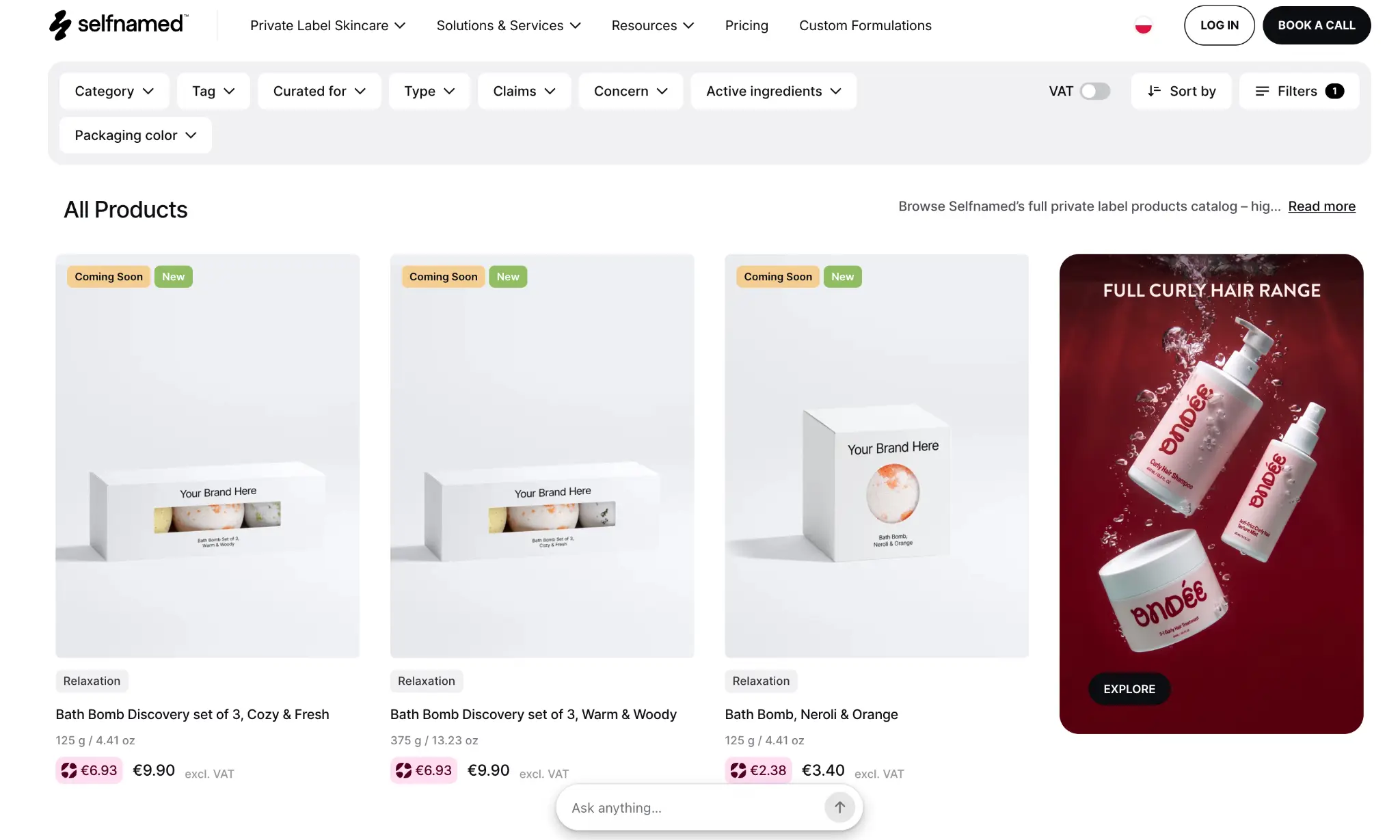
For a new founder, the appeal is practical: the business can start with an existing product rather than take on the full process of developing a formula. That does not mean every product is interchangeable or that the brand has no work to do. Product selection, positioning, packaging, pricing, and quality checks still matter.
Before choosing a supplier, a founder should ask what the catalog includes, which customization options are available, what documentation accompanies the products, and what the supplier expects the brand to handle itself.
From a Product Idea to a Finished Bottle
Once a founder has chosen a product direction, the next challenge is turning it into something customers can buy.
Samples are a sensible starting point. They allow the business to assess the product’s texture, scent, packaging, and suitability for the intended audience before committing to a larger order. A product that looks appealing in a catalog may not feel right for the brand once it arrives.
Packaging comes next, but it needs to do more than look good in photographs. Labels must communicate the required information, containers must suit the product, and the overall presentation should match the brand’s positioning. A premium-looking bottle cannot compensate for a poor product or unclear information.
Pricing requires equally careful thought. The product’s purchase price is only one part of the cost of making a sale. Packaging, shipping, payment processing, marketing, taxes, and customer service can all affect the final margin.
There are also regulatory obligations to consider. In the European Union, cosmetics must meet applicable safety, labeling, and product-information requirements. Working with a manufacturer can help a business obtain relevant documentation, but the founder should establish exactly which responsibilities belong to the supplier and which remain with the brand.
Selfnamed’s ready-to-brand products give entrepreneurs a starting point for this process, with options to customize the product presentation. The business still needs to evaluate samples, understand the requirements of its target market, and decide whether the products fit its customers.
The goal is to make informed choices before launch, not simply to get a bottle with a logo onto a website as quickly as possible.
Who Packs the Orders and Ships Them?
A customer sees a checkout page and a delivery estimate. Behind that transaction, someone must make sure the order is received, processed, packed, and dispatched correctly.
For a founder handling everything alone, fulfillment can become a substantial part of the working day. Stock needs monitoring, shipping arrangements need managing, and customers expect updates when their orders are on the way. Returns and delivery problems create additional work.
There are two common ways to handle these responsibilities.
With a traditional inventory model, the business buys products in advance and stores them itself or through a warehouse partner. This can provide greater control over stock and dispatch, but it ties up money in inventory and introduces storage and fulfillment costs.
Dropshipping offers another option. The business sells products through its own store, while a supplier handles fulfillment and ships orders directly to customers. The seller avoids holding the products itself, although it remains responsible for the customer relationship and the promises made on its website.
Selfnamed supports dropshipping as well as bulk ordering. Its platform integrates with ecommerce systems including Shopify, WooCommerce, Squarespace, and Wix, allowing connected stores to pass orders through for fulfillment.
For a small brand, this can remove the need to pack every parcel or manage a warehouse for products handled through the supplier’s service. It also means the founder needs to understand the supplier’s delivery times, packaging options, stock availability, and returns procedures.
Dropshipping is not automatically cheaper than holding inventory. Per-unit costs can be higher, and the business has less direct control over dispatch. A brand with steady demand may eventually prefer bulk purchasing, while a newer business may value the flexibility of ordering smaller quantities.
The right arrangement depends on sales volume, cash flow, and how much control the founder wants over the customer experience.
Getting the First Sale Is Easier Than Earning the Next One
A successful launch can bring attention to a new skincare brand. Keeping customers interested after that first purchase is a different challenge.
Skincare shoppers want to know what a product contains, what it is designed to do, and how to use it. They also expect the product they receive to match its description. If the information is unclear or the experience falls short of expectations, attractive branding is unlikely to make up the difference.
That is why a brand needs more than a good-looking Instagram profile. Product descriptions should be accurate, ingredient information should be easy to find, and claims should reflect what the product can reasonably deliver. Customer questions need answers, and delivery problems need a clear resolution process.
These details also help shoppers assess unfamiliar brands. A large following is not proof that a product works, and a high price does not automatically mean a formula is better. Look at the ingredients, check the claims, and consider whether the product suits your needs rather than buying solely because a creator recommends it.
For founders, the same principle applies from the other side. A private-label supplier can provide the product and manufacturing infrastructure, but it cannot guarantee customer satisfaction. The brand still needs to select suitable products, communicate honestly, and deliver a reliable experience.
Repeat purchases are built through the product and the service around it—not through packaging alone.
What Makes a Beauty Brand Worth Remembering?
The growth of private-label manufacturing has made it easier for entrepreneurs to enter the skincare market without building their own production facilities. Companies such as Selfnamed provide access to ready-to-brand products and fulfillment options, giving smaller businesses another way to bring a cosmetics range to market.
That infrastructure can remove some of the practical barriers to launching a brand. It does not remove the need to understand customers, choose products carefully, price them realistically, or earn trust.
The skincare brands that stand out are not necessarily the ones with the most elaborate packaging or the largest social media following. They are the ones that give customers a clear reason to buy, deliver what they promise, and make the experience good enough to repeat.
The next skincare brand you discover on Instagram may rely on a specialist manufacturer rather than its own laboratory. There is nothing unusual about that. What matters is how thoughtfully the business chooses its products, how transparently it communicates, and whether customers have a good reason to return.
A logo can make a product recognizable. The business behind it has to give people a reason to believe in it.