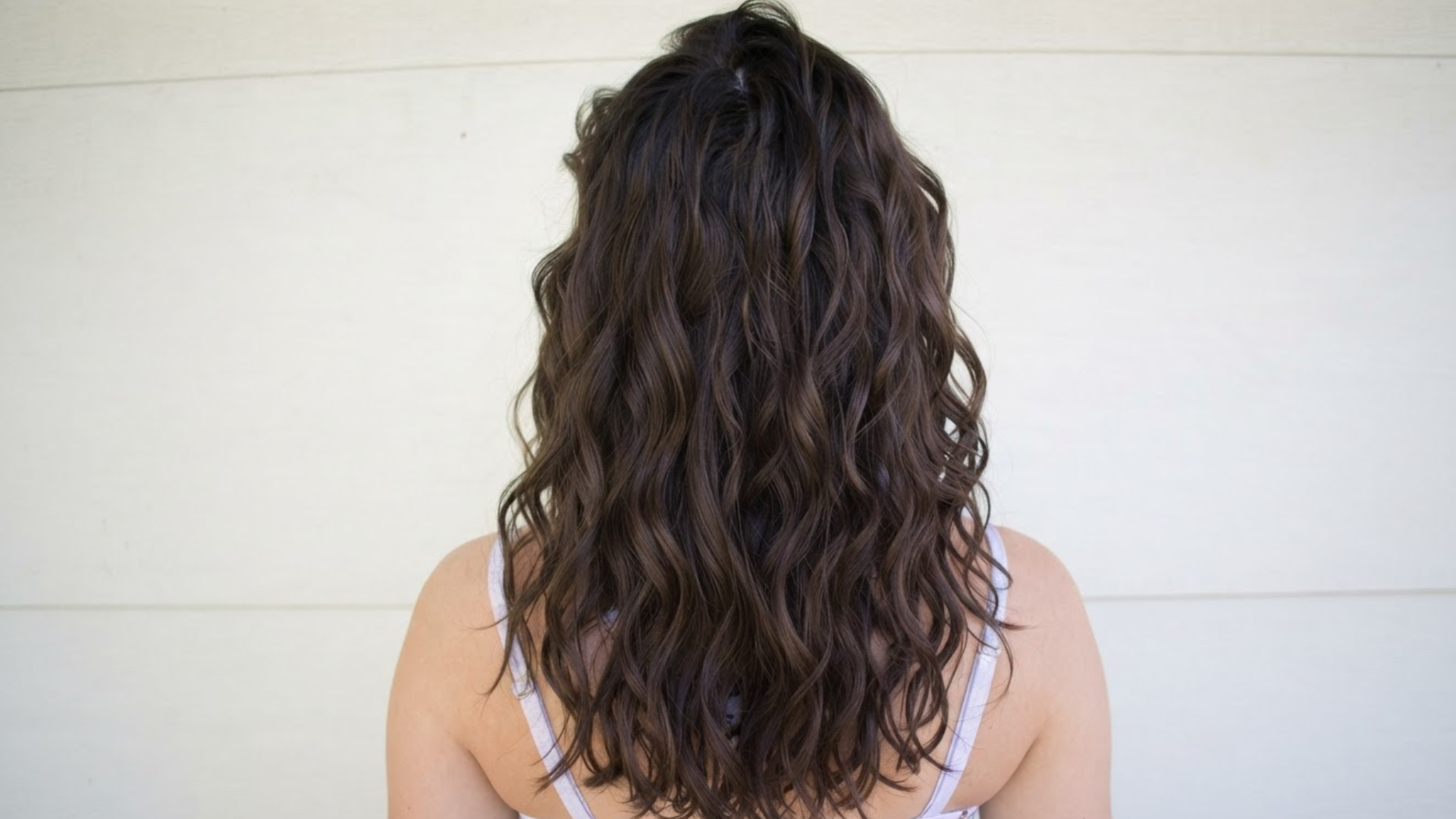
Some mornings, my waves fall into place with barely any effort. Other days, the same routine somehow leaves them flat at the roots, frizzy at the ends, or somewhere between straight and curly.
That unpredictability is part of what makes wavy hair both interesting and a little frustrating.
When figuring out how to style wavy hair, I think it helps to focus less on creating a perfect pattern and more on working with what your hair naturally wants to do.
Small changes in moisture, product amount, application, and drying technique can completely change the final look, making a flexible routine worth building.
Wavy Hair Types and Their Styling Needs
The three main wavy hair types are 2A, 2B, and 2C. Knowing where your hair fits can help you choose the right level of moisture.
|
Wavy Hair Type |
Typical Pattern |
Styling Approach |
What to Watch |
|---|---|---|---|
|
2A |
Loose subtle bends |
Lightweight foam and root volume |
Heavy creams that can weigh waves down |
|
2B |
More defined S-shaped waves |
Mousse or lightweight gel |
Too much product that reduces movement |
|
2C |
Strong deep waves that may approach curls |
Moisture with stronger hold |
Frizz, dryness, and product buildup |
How to Style Wavy Hair?
1. Wash and Keep Hair Damp
Wash your scalp well and apply conditioner mainly to the mid-lengths and ends.
If your hair tangles, gently detangle it while the conditioner is still on.
After rinsing, squeeze out extra water with your hands or a microfiber towel. Keep your hair slightly damp so the waves can form more easily.
2. Use a Lightweight Leave-In Conditioner

Apply a small amount of lightweight leave-in conditioner if your hair feels dry or rough. Focus on the ends and other dry areas instead of coating your whole head. Fine waves may need very little product.
If your hair often feels heavy or flat, use less leave-in or skip it completely.
3. Add Mousse or Gel

Choose a styling product based on the finish you want. Mousse or foam works well for soft volume and light hold, while gel gives stronger definition and helps waves last longer.
Start with a small amount and add more only if needed. Too much product can weigh down wavy hair and make it look flat.
4. Scrunch Your Hair

After applying your styling product, cup the ends of your hair in your hands and gently lift them toward your scalp.
Squeeze lightly, then release. Repeat around your head to encourage your natural wave pattern.
Avoid pulling or stretching the hair downward, as this can make loose waves look flatter and less defined.
5. Air-Dry or Diffuse

You can let your hair air-dry or use a diffuser when you want faster drying and more volume.
Try not to touch your hair too much while it dries, as this can create frizz.
If you use a diffuser, choose gentle airflow and medium heat, then cup small sections toward the scalp.
6. Scrunch Out the Gel Cast
Once your hair is completely dry, gently scrunch your waves with clean, dry hands to soften any stiffness left by the gel. This helps restore natural movement while keeping the wave definition intact.
Avoid brushing or running your fingers through all your hair, as this can separate the wave clumps and create frizz. If needed, gently separate only a few sections for a softer, fuller finish.
Try the Plopping Method for More Definition
Plopping can help encourage more defined waves while removing excess water without roughing up the hair.
After applying your styling product and scrunching, gently lower your waves onto a microfiber towel or soft cotton T-shirt, then wrap the fabric loosely around your head.
Leave your hair wrapped for about 10 to 20 minutes before carefully releasing it.
You can then air-dry or diffuse until completely dry. Plopping may help wave clumps hold their shape and reduce frizz, but results vary by hair type.
If your waves become flat or stretched, a shorter plopping time may work better.
How to Keep Waves Defined and Frizz Controlled
- Trim Split Ends Regularly: Damaged ends can make waves look rough and less defined.
- Avoid Heavy Oils and Creams: Rich products may flatten loose waves and cause buildup.
- Use a Clarifying Shampoo when Needed: Removing buildup can help waves regain bounce and shape.
- Limit Heat Styling: Frequent high heat can dry the hair and increase frizz over time.
- Choose Lightweight Hold Products: A light gel or mousse can support definition without stiffness.
- Adjust for Humidity: Anti-humidity products can help reduce swelling and frizz in damp weather.
How to Refresh Wavy Hair Between Washes?
You do not need to fully restyle your wavy hair every morning. If some sections look flat or frizzy, lightly mist them with water and gently scrunch upward to reactivate the wave pattern.
Add a small amount of mousse or gel if your waves need extra definition or hold, focusing only on the areas that need it.
Avoid soaking your entire head unless your waves have completely lost their shape. Let your hair air-dry after refreshing, or use a diffuser on low airflow for faster drying and a little extra volume.
Products You Can Try for Styling Wavy Hair
The right styling products can define your waves, control frizz, and add hold without weighing your hair down.
- Light leave-in conditioner: Adds moisture and helps keep waves soft and manageable without weighing them down.
- Mousse or foam: Adds lightweight volume, bounce, and definition, especially for fine or loose waves.
- Gel: Provides stronger, longer-lasting hold and helps waves maintain their shape throughout the day.
- Styling cream: Works well for dry or coarse waves that need extra moisture, softness, and frizz control.
- Heat protectant: Helps protect your hair from heat when diffusing, blow-drying, or using other hot styling tools.
What Reddit Users Say About Styling Wavy Hair?

Reddit discussions about styling wavy hair show that technique often matters as much as the products being used.
Many commenters recommend applying gel or mousse evenly through sections, scrunching the hair, and using a diffuser to improve definition and create a stronger cast.
Others prefer air-drying with mousse and twisting sections for more uniform waves. Hair porosity, density, strand thickness, and length can also affect how well different routines work.
Heavy products may weigh down some wave patterns, while stronger-hold products can suit others.
Several commenters suggest avoiding dry brushing, limiting unnecessary heat, and protecting longer hair from tangling and breakage.
Layered cuts are frequently mentioned for reducing weight and adding volume, although commenters note that shorter or layered cuts do not improve wave definition for everyone.
Is It Better to Style Wavy Hair Wet or Damp?
Wet styling usually delivers stronger wave definition and frizz control, while damp styling works well for volume and a softer finish.
The better choice depends on your wave pattern, hair density, and the result you want.
Applying products to soaking-wet hair encourages strands to clump together, which can create more defined, uniform waves and help lock in moisture.
Damp styling gives hair more freedom to expand, making it especially useful for fine hair or loose waves that become weighed down easily. You can also experiment with both methods to find the
Common Wavy Hair Styling Mistakes
- Using Too Much Product: Heavy layers can weigh waves down.
- Brushing Dry Hair: This can break up wave definition and create frizz.
- Touching Hair While Drying: Too much handling can disturb the wave pattern.
- Using Too Much Heat: High heat can dry out and weaken the hair.
- Ignoring Buildup: Product residue can reduce bounce and volume.
Conclusion
Styling wavy hair becomes much easier when you stop expecting every wash day to look exactly the same. Your waves may need more moisture one day, stronger hold another, or simply less product overall.
I like the idea of treating a wavy hair routine as something flexible rather than a long list of rules.
Start with the basics, notice how your hair responds, and adjust one thing at a time.
With a little patience, we can find the combination of products and techniques that brings out natural definition, bounce, and softness without making styling feel complicated.
Have a wavy hair trick that works for you? Share your experience in the comments below.
Frequently Asked Questions
How Often Should You Wash Wavy Hair?
Wash frequency depends on scalp oiliness, activity level, and product use. Some people wash every few days, while others need to wash more often.
Can Wavy Hair Become Curlier Over Time?
Yes. Hormonal changes, aging, hair length, damage, and routine changes can sometimes make your natural wave or curl pattern look different.
Can You Straighten Wavy Hair Without Damaging It?
Occasional straightening can be less damaging when you use heat protectant, moderate temperatures, and fewer passes with the styling tool.