Some fashion eras disappear into history, while others keep finding their way back into our wardrobes. Regency-era fashion is one of those styles that still feels romantic, graceful, and surprisingly familiar today.
I love how the clothing from this period tells a story through its flowing shapes, delicate details, and polished finishing touches.
There’s something captivating about seeing how fashion reflected changing tastes while creating an aesthetic that remains instantly recognizable centuries later.
From distinctive silhouettes to beautiful accessories and menswear, there’s much more behind this period’s style than the looks we often see on screen.
What Is Regency Era Fashion?
Regency era fashion refers to the clothing styles popular in Britain during the early 1800s, particularly from 1810 to 1819, as documented in the Fashion History Timeline.
It represented a major shift from the heavier Georgian styles, replacing structured garments with lighter fabrics and more natural silhouettes.
Women moved away from tight corsets and wide skirts toward flowing empire waist dresses with simpler designs. Men’s fashion also became more refined, with darker colors, tailored coats, and trousers replacing brighter outfits and knee breeches.
I’ve noticed vintage retro styles keep resurfacing in modern closets, and Regency dressing is one of the clearest examples of that cycle.
History of Regency Era Fashion
Regency-era fashion emerged in response to the elaborate styles of the Georgian period, replacing heavy fabrics, wide skirts, and restrictive corsets with lighter materials and graceful silhouettes.
Social and political changes encouraged simpler, more practical clothing, while figures like Empress Josephine and Beau Brummell shaped new ideas of grace.
Royal courts, aristocratic gatherings, and social events such as balls influenced both formal and everyday attire.
Growing admiration for ancient Greek and Roman art also inspired empire waist dresses, flowing fabrics, soft colors, and minimal decoration, creating the signature refined look of the Regency period.
The Evolution of Regency Silhouettes (1800–1825)
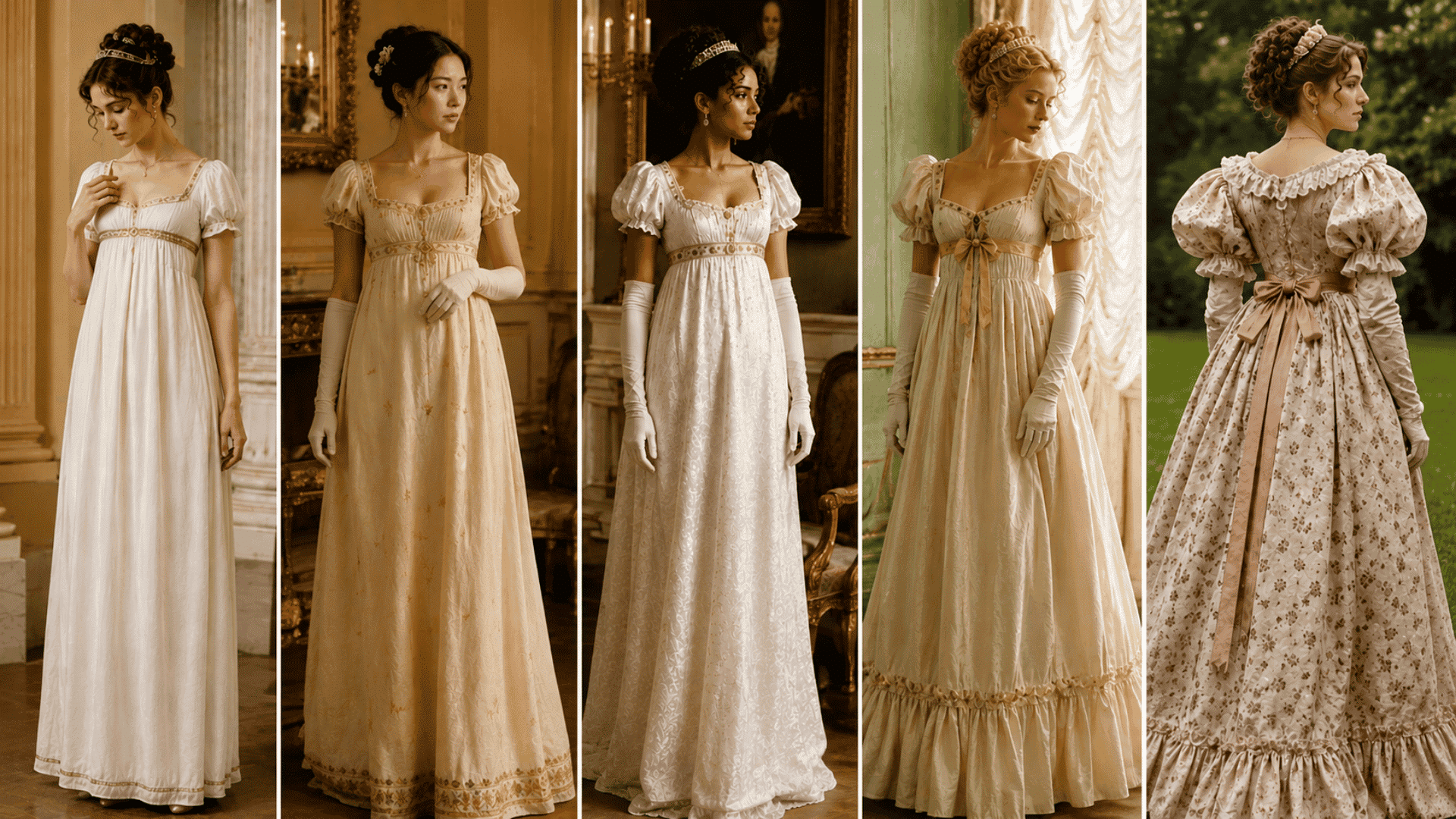
Regency silhouettes changed significantly over 25 years, evolving from simple classical designs into more decorative and structured styles influenced by global events, art, and fashion movements.
- Early Regency / Neoclassical Period (1800–1805): Very high empire waistlines, narrow column-like skirts, short sleeves, and lightweight fabrics reflected strong Greco-Roman influence.
- Empire Period (1806–1810): High waistlines remained dominant, while skirts gained more volume and bodices became increasingly fitted and decorative.
- High Regency Period (1811–1815): Skirts gradually widened, sleeves became fuller, and decorative trims created a more defined silhouette.
- Late Regency Period (1816–1820): Waistlines began to lower slightly, skirts widened toward the hem, and sleeves became more prominent.
- Regency-to-Romantic Transition (1821–1825): Lower waistlines, fuller skirts, larger sleeves, and heavier decoration marked the move toward the Romantic silhouette.
Women’s Regency Era Fashion
Women’s Regency fashion emphasized delicacy, comfort, and graceful proportions through flowing silhouettes, delicate fabrics, and refined details.
1. Empire Waist Dresses
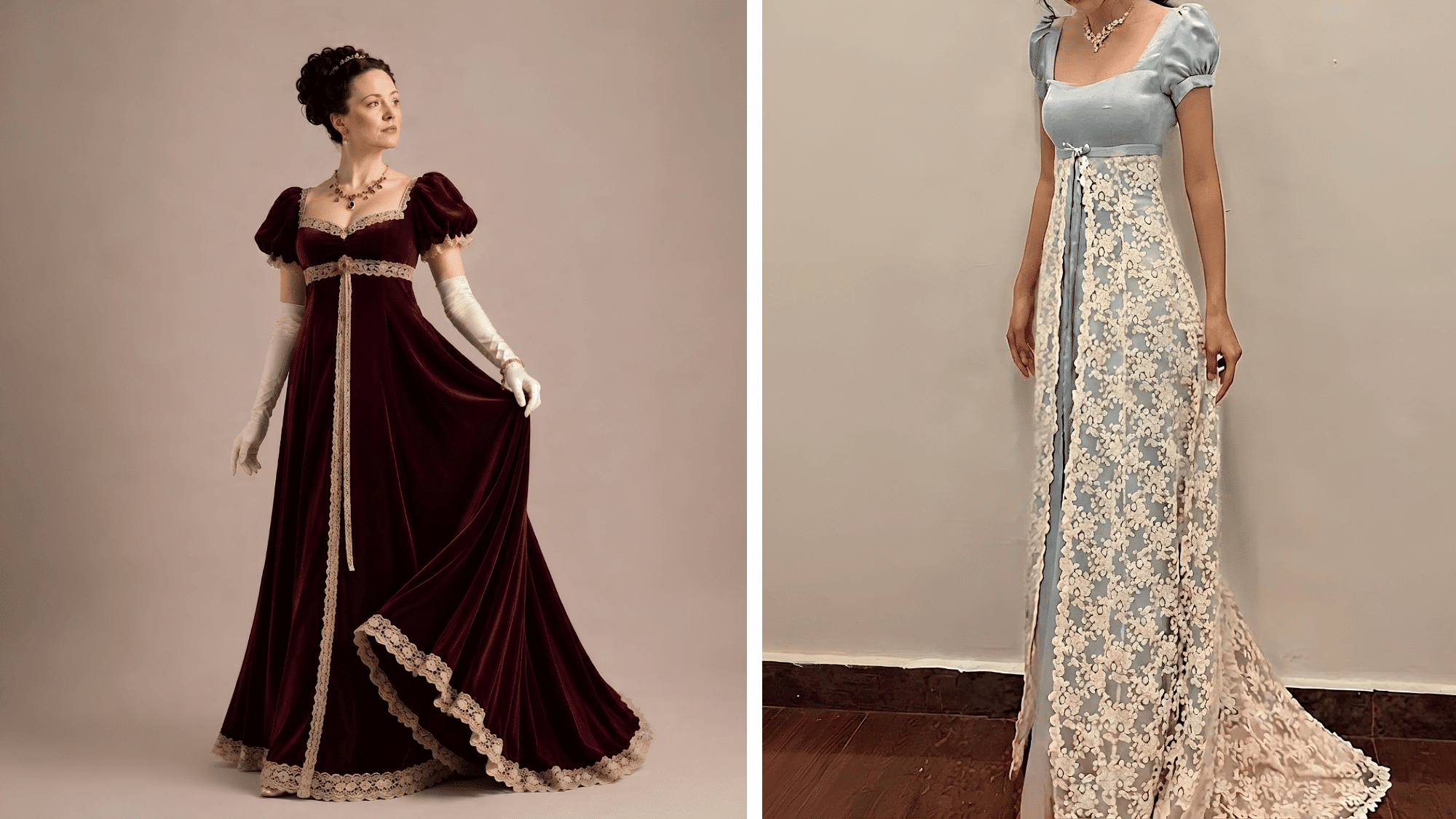
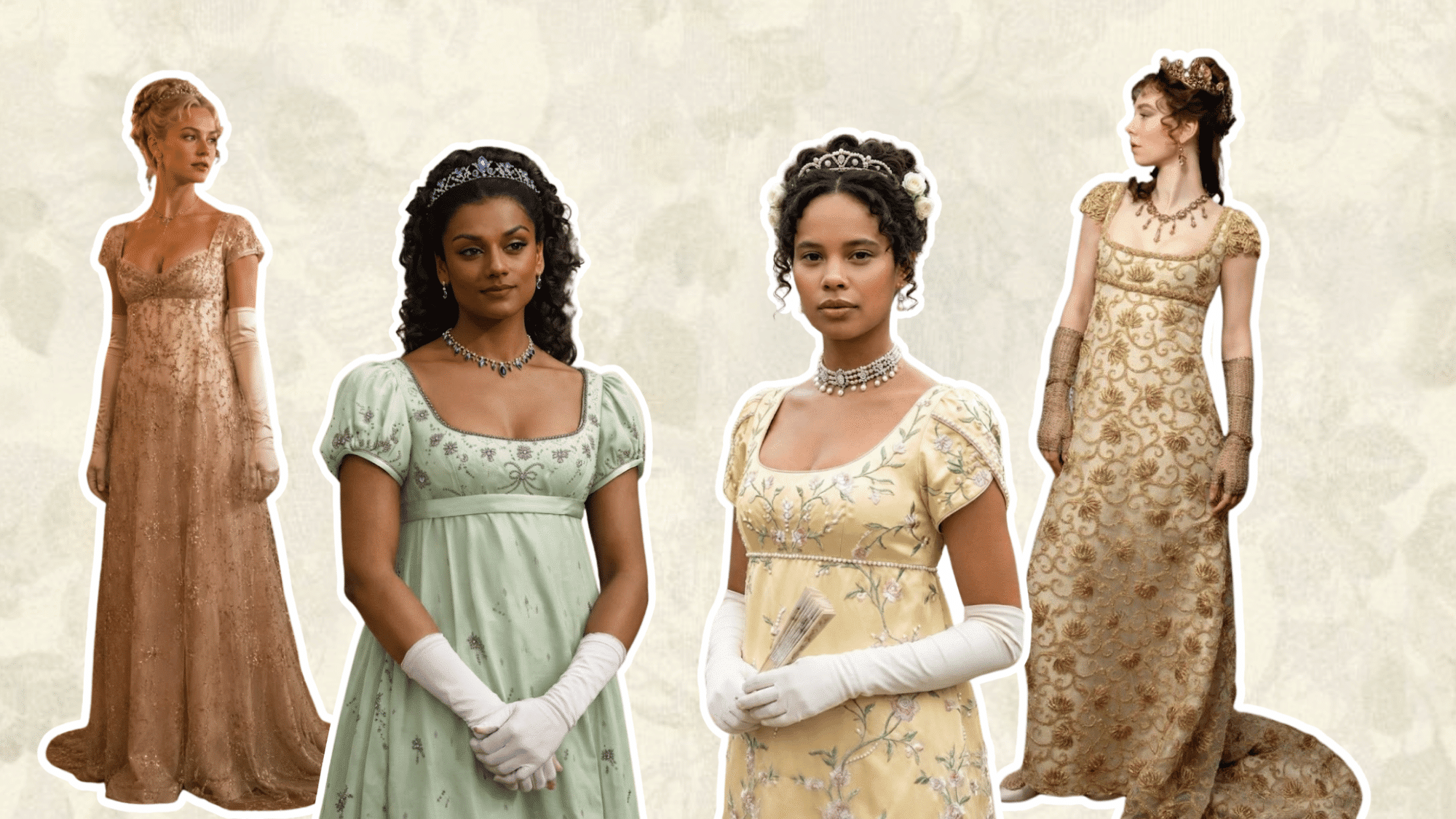
Empire waist dresses defined the Regency silhouette with raised waistlines positioned just below the bust and long, flowing skirts that created an elongated appearance.
Gowns were commonly made from lightweight cotton, linen, or silk and featured short sleeves, square or low necklines, delicate embroidery, and classical motifs.
Sage Journals research on Regency-style gowns also examines the historical knowledge, design skills, and interpretive choices involved in recreating these garments.
2. Sleeves and Decorative Details
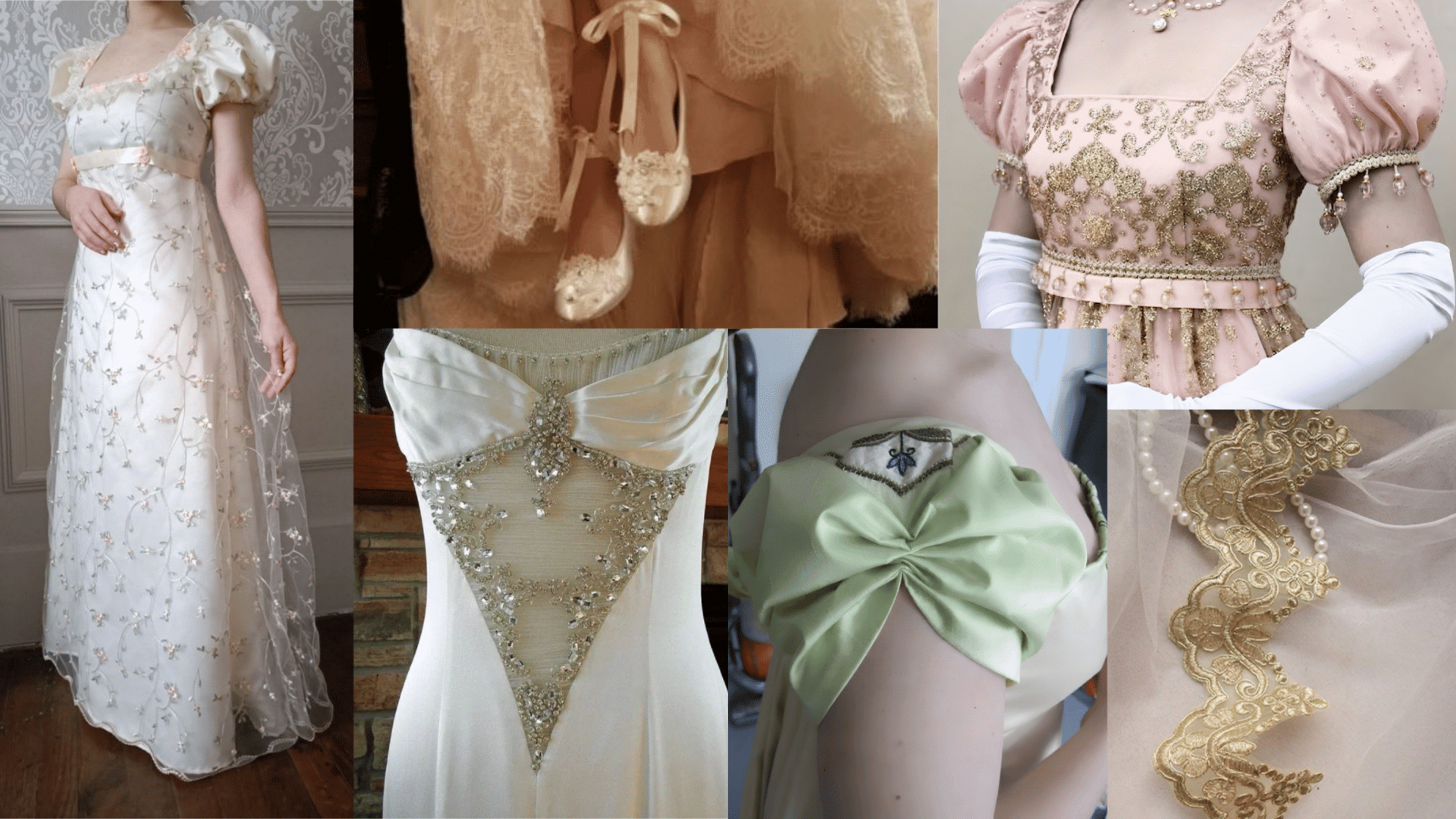
Sleeves and decorative details added visual interest to the relatively simple shapes of Regency gowns. Puff sleeves, lace edging, ribbons, bows, embroidery, and delicate patterns were frequently used around the bodice and arms.
Floral motifs and classical-inspired designs provided decorative contrast without making outfits appear overly elaborate.
These carefully placed details enhanced femininity while preserving the balanced proportions and graceful character of Regency clothing.
3. Regency Outerwear
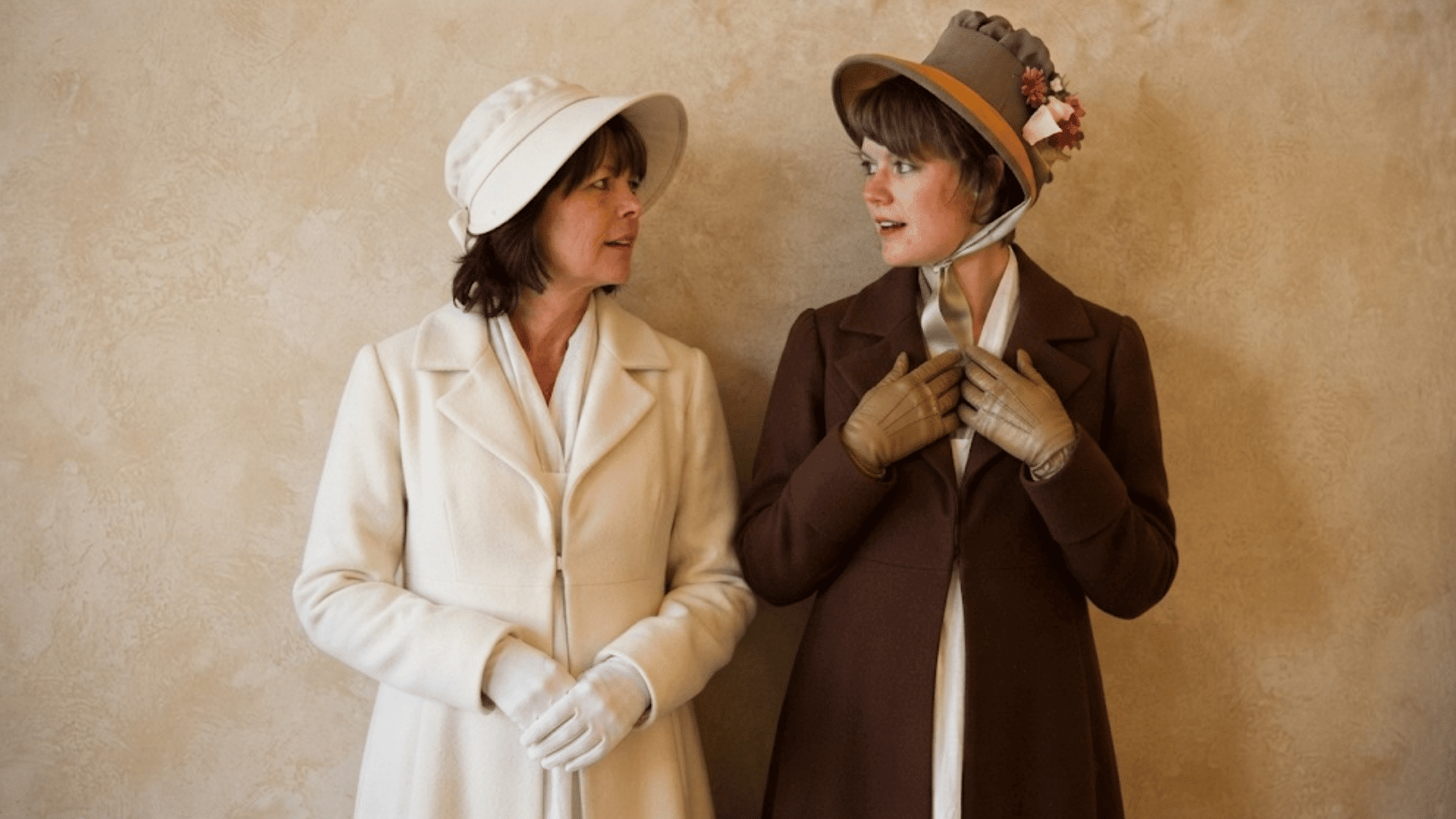
Regency outerwear provided warmth and additional coverage while complementing the distinctive high-waisted shape of women’s gowns.
Spencer jackets were short and fitted, typically ending around the bust and featuring embroidery, ribbons, or decorative trim.
Pelisse coats offered longer coverage with shaped silhouettes, beautiful collars, fitted sleeves, and ornamental fastenings. Military-inspired details also appeared in some designs, adding structure and character to fashionable outer layers.
4. Regency Fashion Accessories
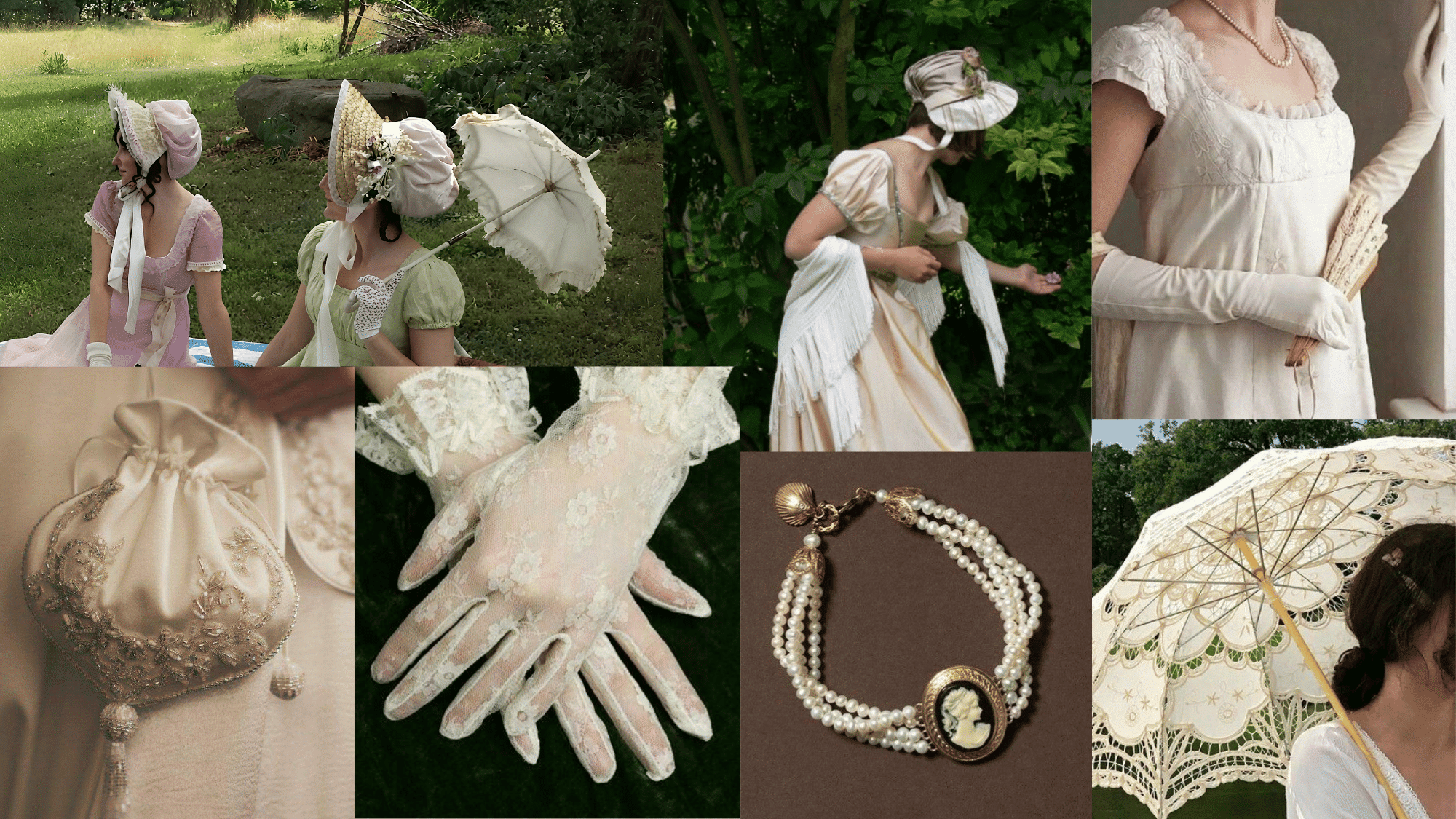
Bonnets offered protection outdoors, while gloves, reticules, fans, shawls, and parasols complemented fashionable ensembles.
Jewelry was generally delicate, with pearls, gemstones, and classical-inspired designs adding subtle poise.
Surviving pieces in the Victoria and Albert Museum’s Regency dress collection show just how much these small accessories, especially reticules and trims, varied from one wardrobe to the next.
5. Regency Hairstyles
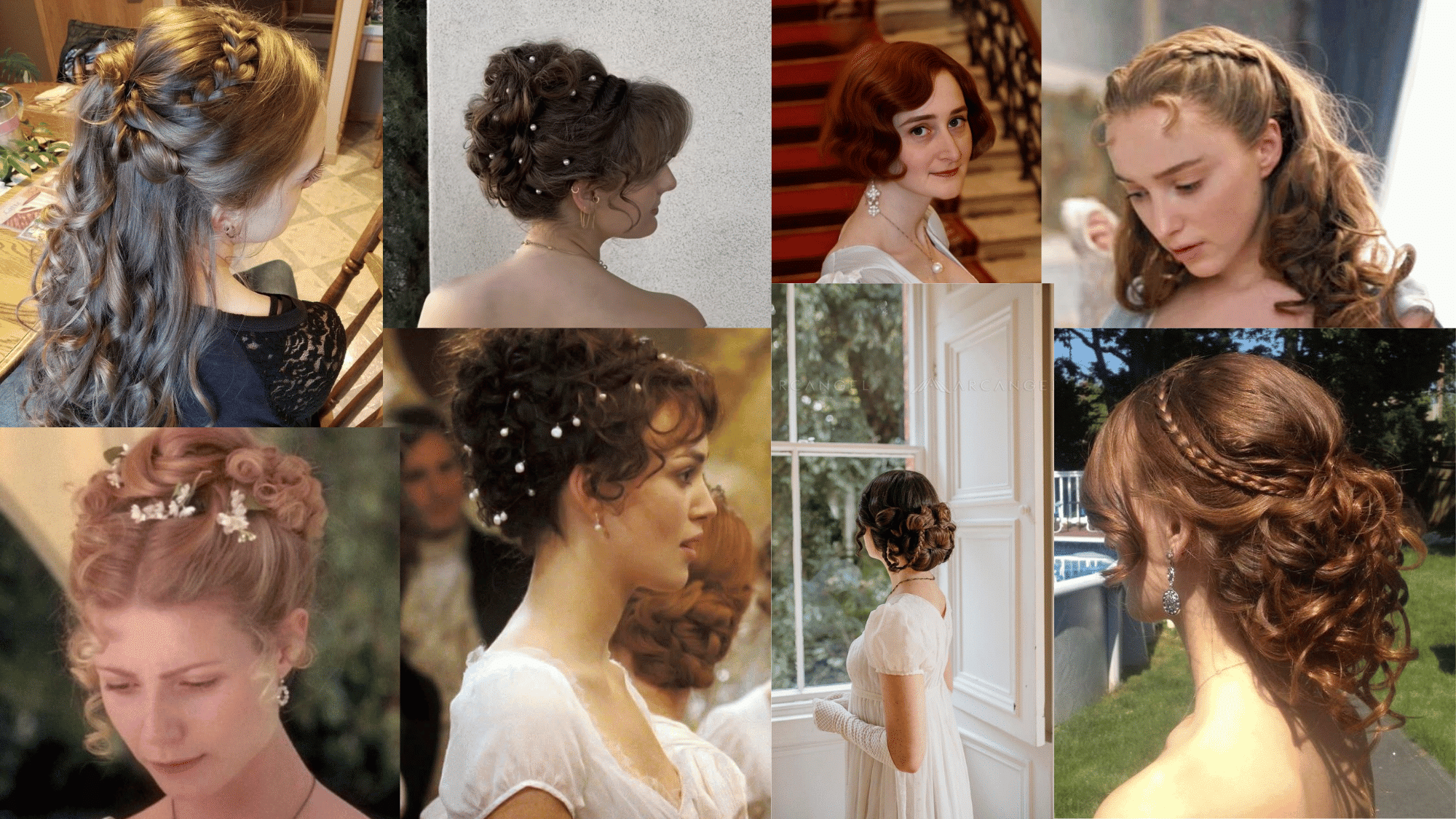
Regency hairstyles reflected the period’s fascination with classical Greek and Roman aesthetics, featuring soft curls, gathered updos, and carefully arranged hair.
Styles were often swept upward or away from the face to complement the high waistlines and open necklines of fashionable gowns.
Ribbons, pearls, jeweled ornaments, decorative combs, and other hair accessories added sophistication, particularly for evening gatherings, balls, and other formal social occasions.
6. Regency Era Footwear
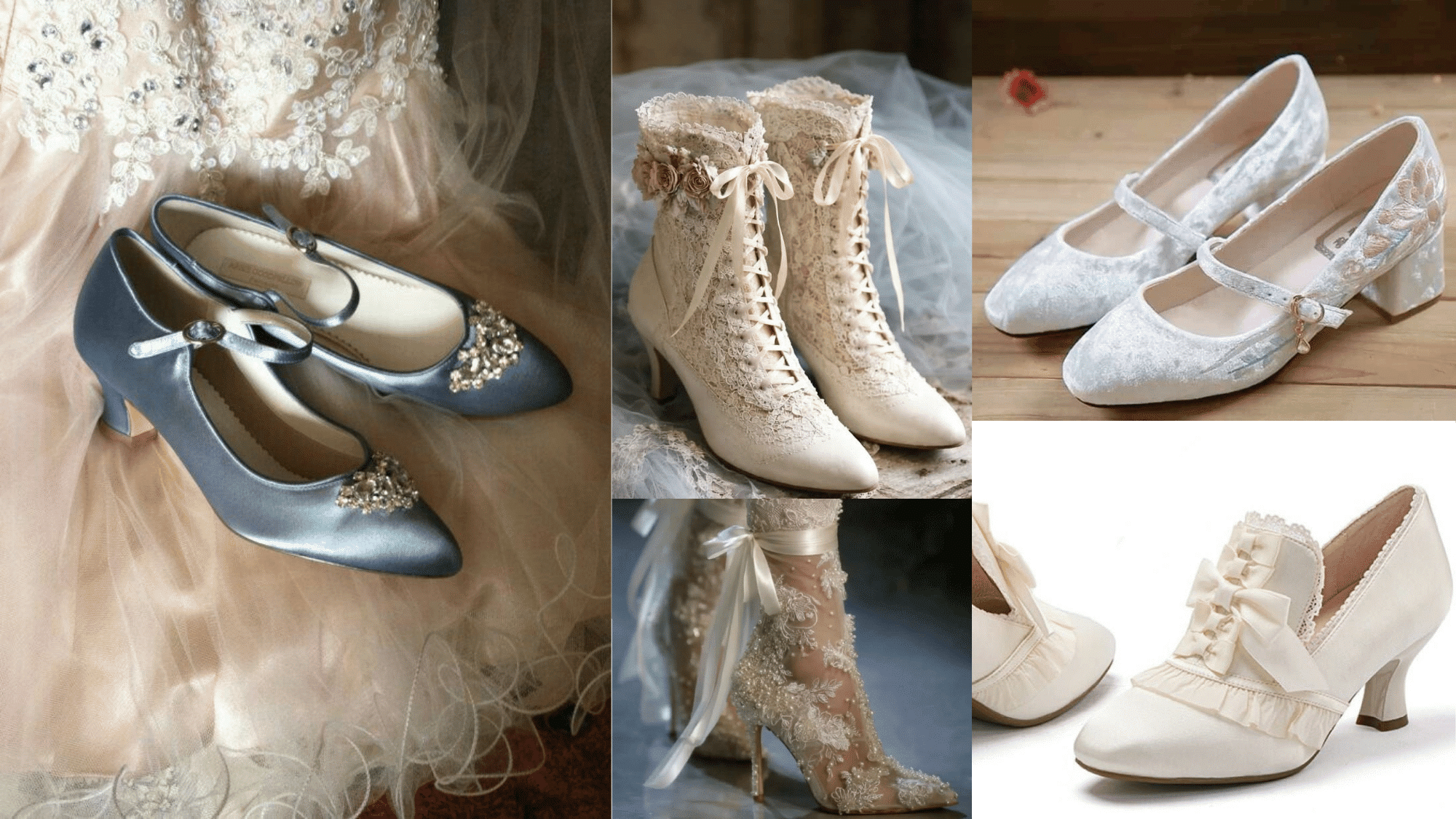
Women typically wore lightweight, delicate shoes such as slippers made from silk, leather, or fabric. These soft, low-profile styles complemented the flowing gowns and high waistlines of the period.
Simple designs were suitable for everyday wear, while embellished slippers could be worn for formal occasions, allowing footwear to complement the regality of the overall ensemble.
Men’s Regency Era Fashion: Key Clothing Trends
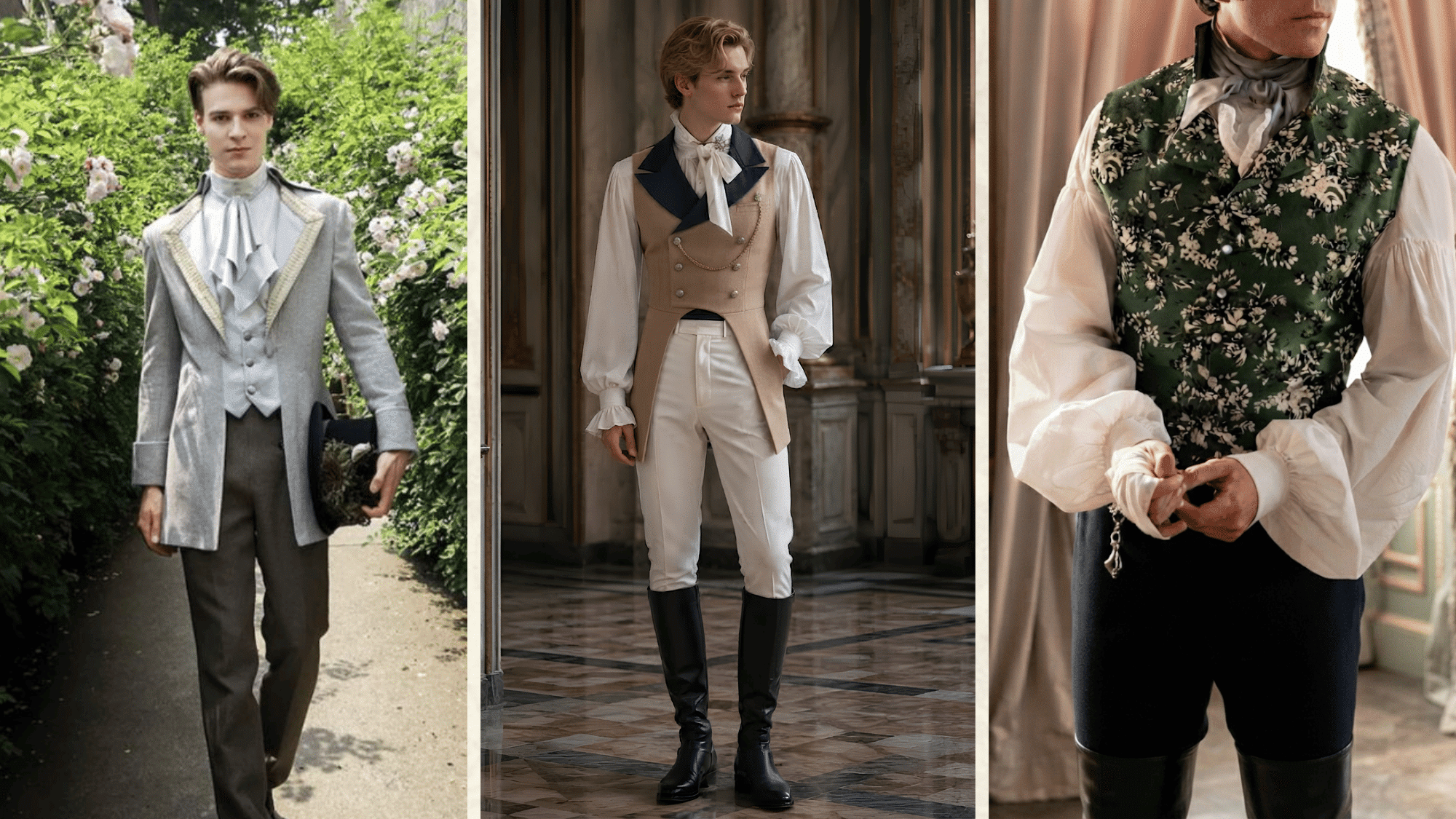
Men’s Regency fashion emphasized refined tailoring, simplicity, and polished details. These key trends shaped the sophisticated gentleman’s wardrobe.
- Tailored Coats and Waistcoats: Fitted tailcoats with high collars and contrasting waistcoats created the structured, polished silhouette associated with Regency menswear.
- Shirts and Cravats: Crisp linen shirts and high collars were paired with carefully tied cravats, making neckwear an important part of a gentleman’s appearance.
- Breeches, Trousers, and Boots: Traditional breeches gradually gave way to fitted trousers and pantaloons, while polished boots completed the structured silhouette and became an important part of men’s attire.
- Dark Colors and Clean Tailoring: Dark shades such as black, navy, and brown paired with precise tailoring emphasized understated sophistication over decoration.
- Beau Brummell’s Influence: Beau Brummell popularized sharp tailoring, understated clothing, and impeccable grooming, helping shape the foundations of modern men’s formal style.
Regency Era Fashion vs Georgian and Victorian Fashion
This comparison shows how Regency fashion transformed Georgian extravagance into a simpler style before Victorian fashion introduced more structured, dramatic designs.
| Feature | Georgian Fashion | Regency Fashion | Victorian Fashion |
|---|---|---|---|
| Silhouette | Structured shapes with wide skirts and fitted bodices | High empire waistlines with flowing, natural silhouettes | Tight corsets with fuller skirts and defined waistlines |
| Fabrics & Details | Heavy fabrics with elaborate decoration | Lightweight muslin, silk, and subtle embellishments | Rich fabrics with dramatic trims and layered details |
| Overall Style | Formal, ornate, and aristocratic | Simple and classical-inspired | Modest, elaborate, and highly structured |
| Fashion Influence | Court traditions and social status | Greek and Roman aesthetics, simplicity, and refinement | Industrial-era values and changing social expectations |
| Transition | Set the foundation for Regency changes | Bridged Georgian beauty and Victorian structure | Moved toward more dramatic and restrictive fashion |
How to Bring Regency-Era Style Into Your Wardrobe Today
Regency fashion continues to influence modern wardrobes through period dramas, literature, bridalwear, and contemporary collections. You can capture its romantic energy with a few wearable details without making your outfit look like a historical costume.
- Start with an empire waistline: Look for dresses with the seam sitting just under the bust rather than at the natural waist, as this instantly creates a Regency-inspired silhouette.
- Choose soft, flowing fabrics: Cotton voile, linen, and lightweight chiffon in pale or jewel tones echo Regency muslin while keeping the look comfortable and contemporary.
- Add a structured layer: A fitted cropped jacket or blazer worn over a flowy dress can reference the Spencer jacket silhouette while adding a modern touch.
- Keep jewelry delicate: Pearl hairpins, a thin ribbon headband, cameo brooches, and simple necklaces can reference Regency accessories without overwhelming the outfit.
- Soften your hair: Loose curls framing the face or a low bun with a few face-framing pieces can recreate the romantic feel of Regency hairstyling.
- Bring in romantic details: Ruffles, lace trims, floral patterns, patterned sleeves, and flowing skirts can add subtle Regency character to everyday, formal, or bridal outfits.
These pieces don’t need to be historically exact to feel Regency-inspired. Some also work well when building an occasion-dress rotation you’ll actually rewear. Aim for the Regency feel, not a museum-perfect look
What Makes Regency Era Timeless?
Regency-era fashion continues to attract attention for its graceful proportions, classical influences, and understated sophistication.
Rather than relying on excessive decoration, the period created visual interest through carefully chosen details, accessories, and well-balanced silhouettes.
Its connection to art, literature, and changing social tastes also gives the style lasting cultural appeal. Today, Regency-inspired elements appear in bridalwear, formal clothing, period dramas, and vintage-inspired collections.
This enduring influence shows how early nineteenth-century fashion can remain relevant while inspiring contemporary personal style.
Conclusion
Regency-era fashion may belong to the early 19th century, but its influence feels surprisingly at home in modern wardrobes.
From flowing empire waistlines and romantic details to refined tailoring and delicate accessories, there’s plenty of inspiration to make your own.
What I love most about Regency style is that you don’t have to recreate it perfectly to appreciate its charm. A soft silhouette, pearl accessory, or beautifully tailored piece can bring just enough historical character to an outfit.
If we embrace the full aesthetic or borrow a single detail, Regency fashion proves that some styles truly stand the test of time.
Which Regency-inspired detail would you wear? Share your favorite in the comments below.
Frequently Asked Questions
What Did People Wear Under Regency Dresses?
Women typically wore a chemise, stays, and sometimes pantaloons beneath their gowns. These undergarments provided support, modesty, and a smooth foundation for the flowing Regency silhouette.
How Did Regency Fashion Reflect Social Status?
Regency clothing reflected social position through fabric quality, garment construction, accessories, and styling; wealthier individuals could afford finer materials and more elaborate pieces.
What Occasions Did People Dress Up For During the Regency Period?
People dressed formally for balls, evening parties, court events, weddings, and social gatherings. Clothing choices varied based on the occasion, season, and social setting.
What Was Regency Fashion Like for Children?
Children’s Regency clothing drew on adult styles but prioritized comfort and movement. Girls often wore simple high-waisted dresses, while boys wore shirts, jackets, and trousers suited for daily activities