
A helix piercing may be small, but it can give your ear a fresh and stylish touch. I love how a simple stud or hoop can make an ear stack feel more personal without looking too bold.
Before getting mine, I’d want to know more than just which jewelry looks good. Placement, pain, healing time, aftercare, and possible problems can all shape the experience.
A little preparation can also help you know what to expect once you leave the piercing studio.
What Is a Helix Piercing?
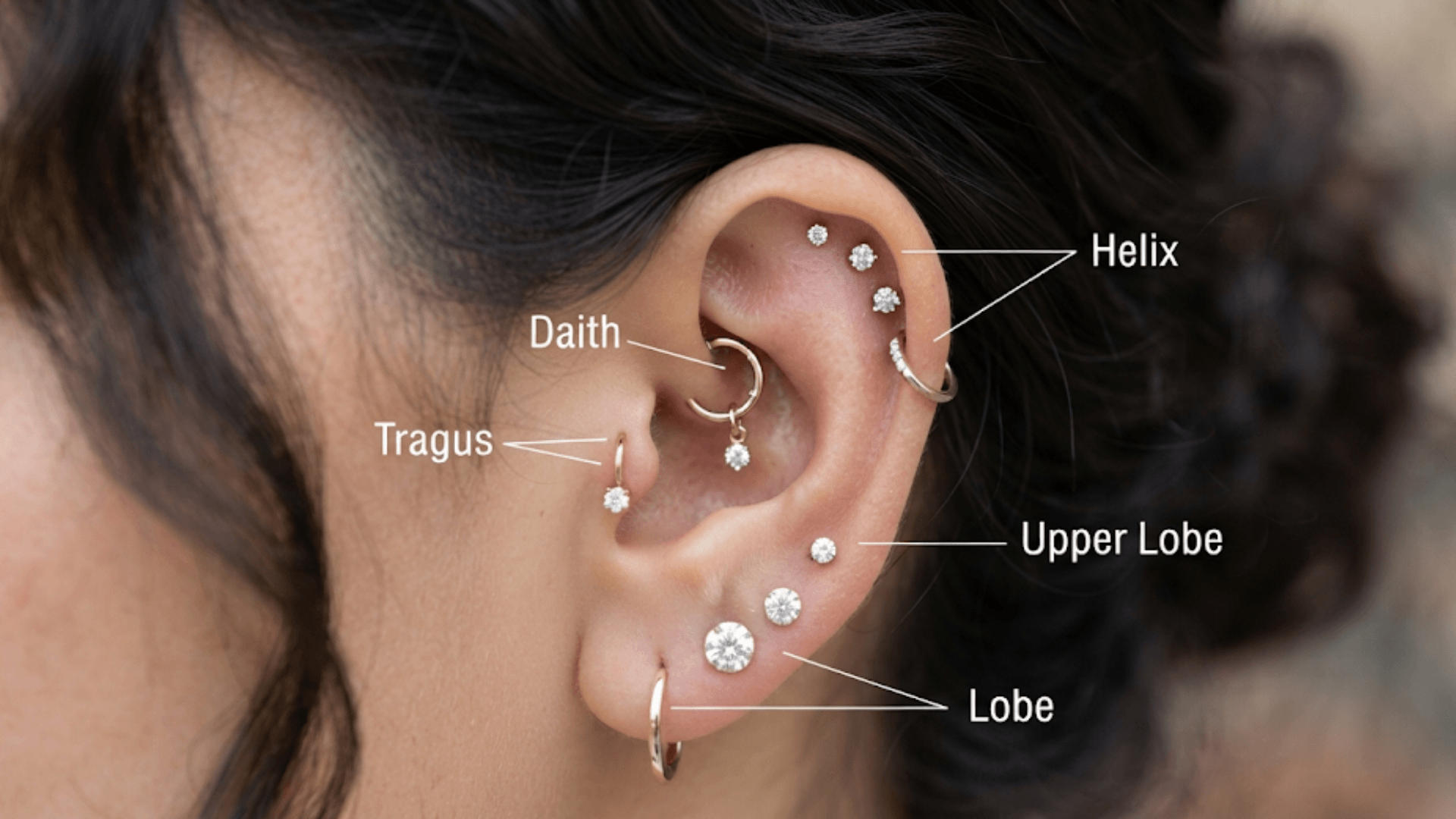
A helix piercing sits along the upper outer rim of the ear, passing through cartilage rather than soft tissue. Because this area is thicker than the lobe, it heals more slowly and needs consistent aftercare.
The helix offers plenty of room for placement, from a single understated stud to several piercings arranged together. This flexibility makes it a favorite for both minimalists and lovers of a layered ear.
Healing typically takes several months, during which you should avoid sleeping on it, twisting the jewelry, or touching it with dirty hands. Gentle saline cleaning keeps irritation and infection at bay.
Your final look depends on placement, jewelry choice, and your ear’s natural shape. Working with a skilled piercer helps ensure the result suits your anatomy beautifully.
How Is a Helix Piercing Done?
When I got my own single helix done, my piercer walked me through each step before the needle ever touched my ear. The process usually goes like this:
Step 1: Examining your ear anatomy and choosing a placement site.
Step 2: Marking the piercing location.
Step 3: Creating the opening with a sterile needle.
Step 4: Inserting the initial jewelry.
The U.S. Centers for Disease Control and Prevention (CDC) states that hepatitis C can spread through body piercings performed in unlicensed facilities, informal settings, or with nonsterile instruments.
So, a professional helix piercing should always use a sterile, single-use needle rather than a piercing gun.
What Are the Different Types of Helix Piercings?
Helix piercings come in five main styles, each using the same upper-ear cartilage but placed or spaced differently. If you’re still weighing this against other ear piercing types, it helps to see how pain and healing time stack up.
1. Single Helix Piercing
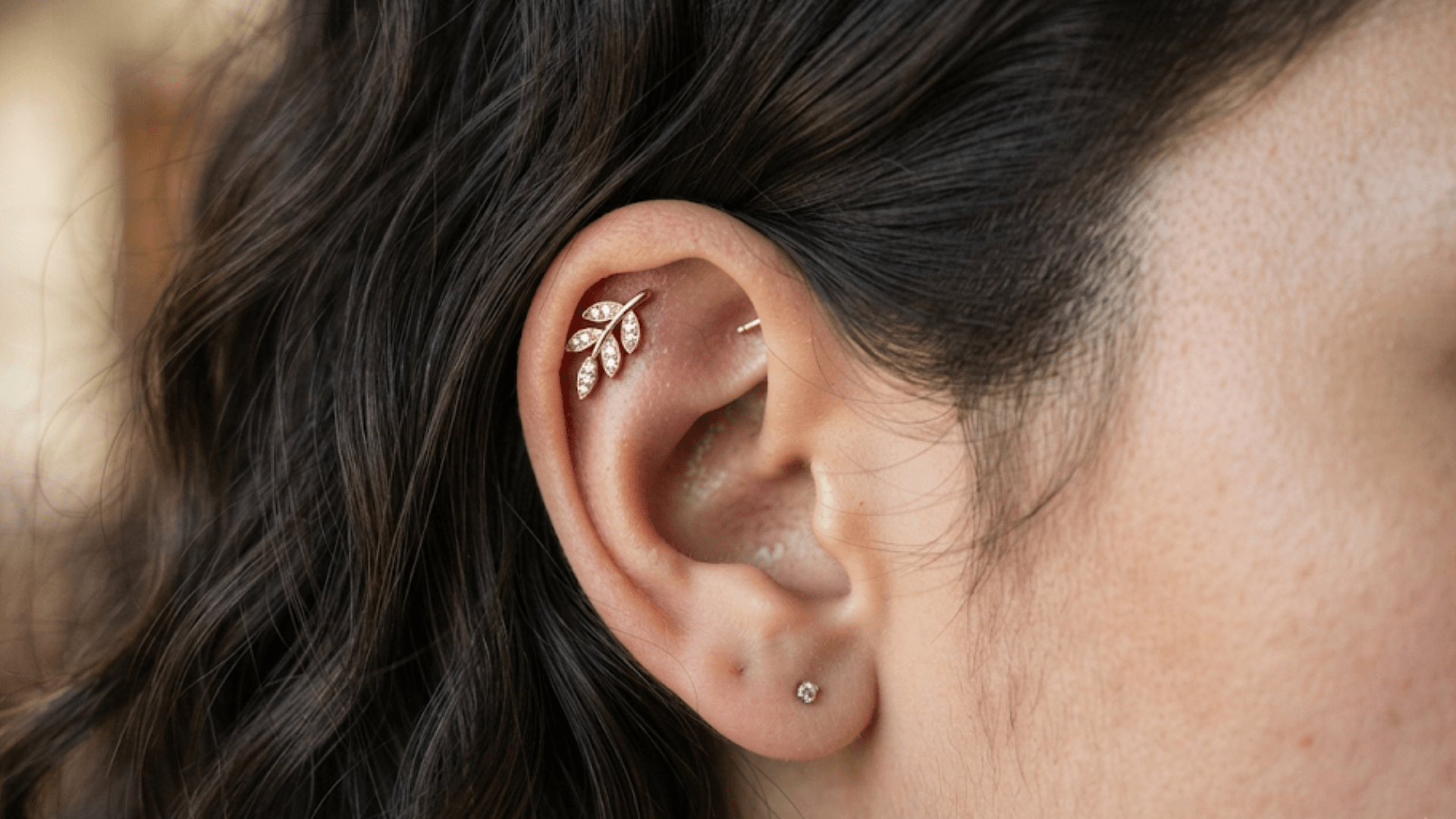
The single helix is the simplest, most beginner-friendly cartilage option, with just one puncture and a single area to heal.
I started my own ear stack here, mostly because it let me see how my ear healed before adding anything else. Once settled, it easily accepts hoops or decorative pieces for a personalized finish.
- Pain level: Mild to moderate
- Healing time: 6–12 months
- Best For: People with enough upper-ear space for a single piercing and those who want flexibility with jewelry placement.
2. Double Helix Piercing
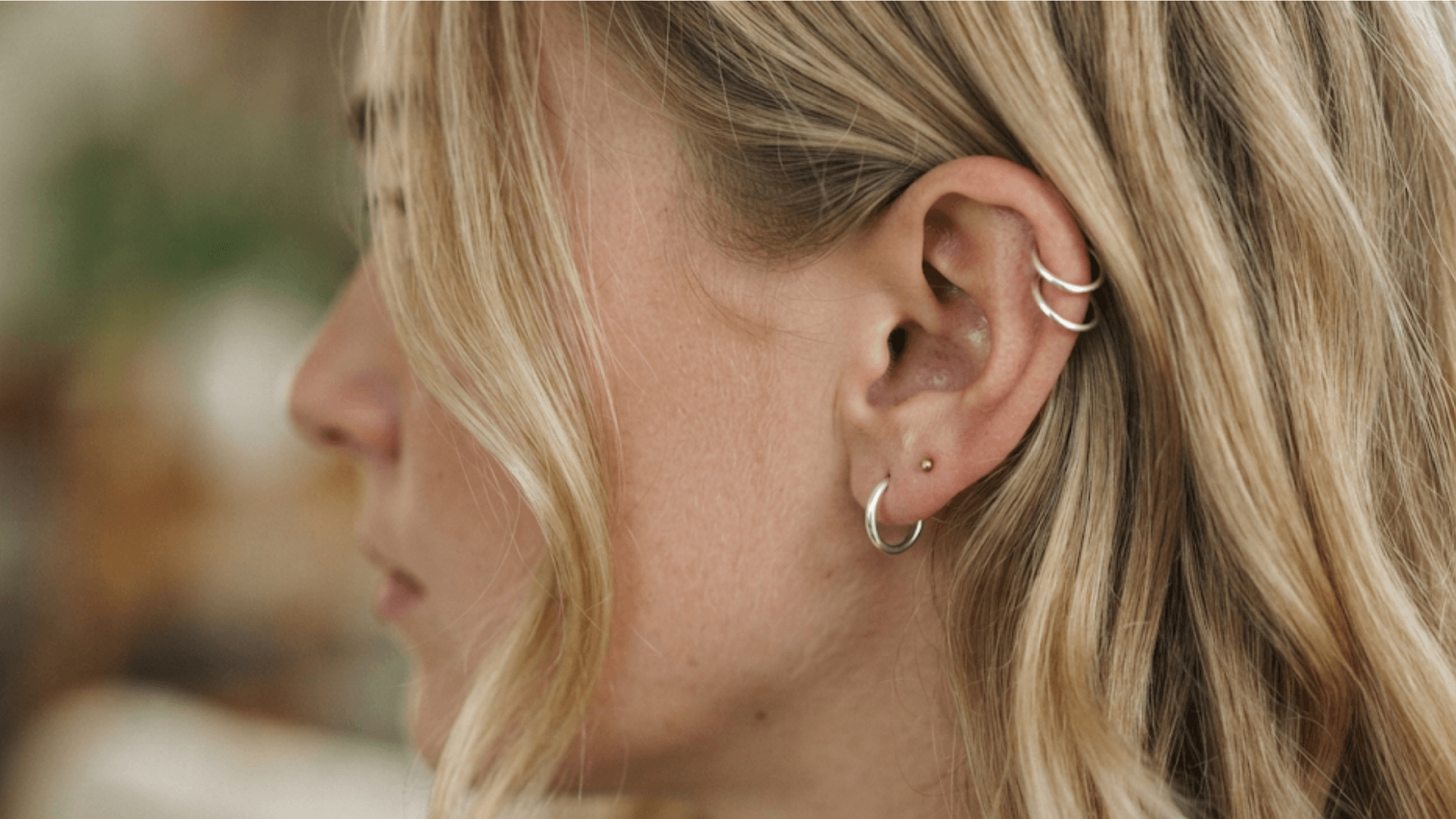
A double helix piercing creates a stacked look with two cartilage openings placed near the ear’s outer rim. Proper care helps reduce irritation, support healing, and maintain healthy skin around both piercing sites.
- Pain level: Moderate
- Healing time: 3–9 months
- Best For: People with a wider upper cartilage area that can comfortably accommodate two piercings with enough space between them.
3. Triple Helix Piercing
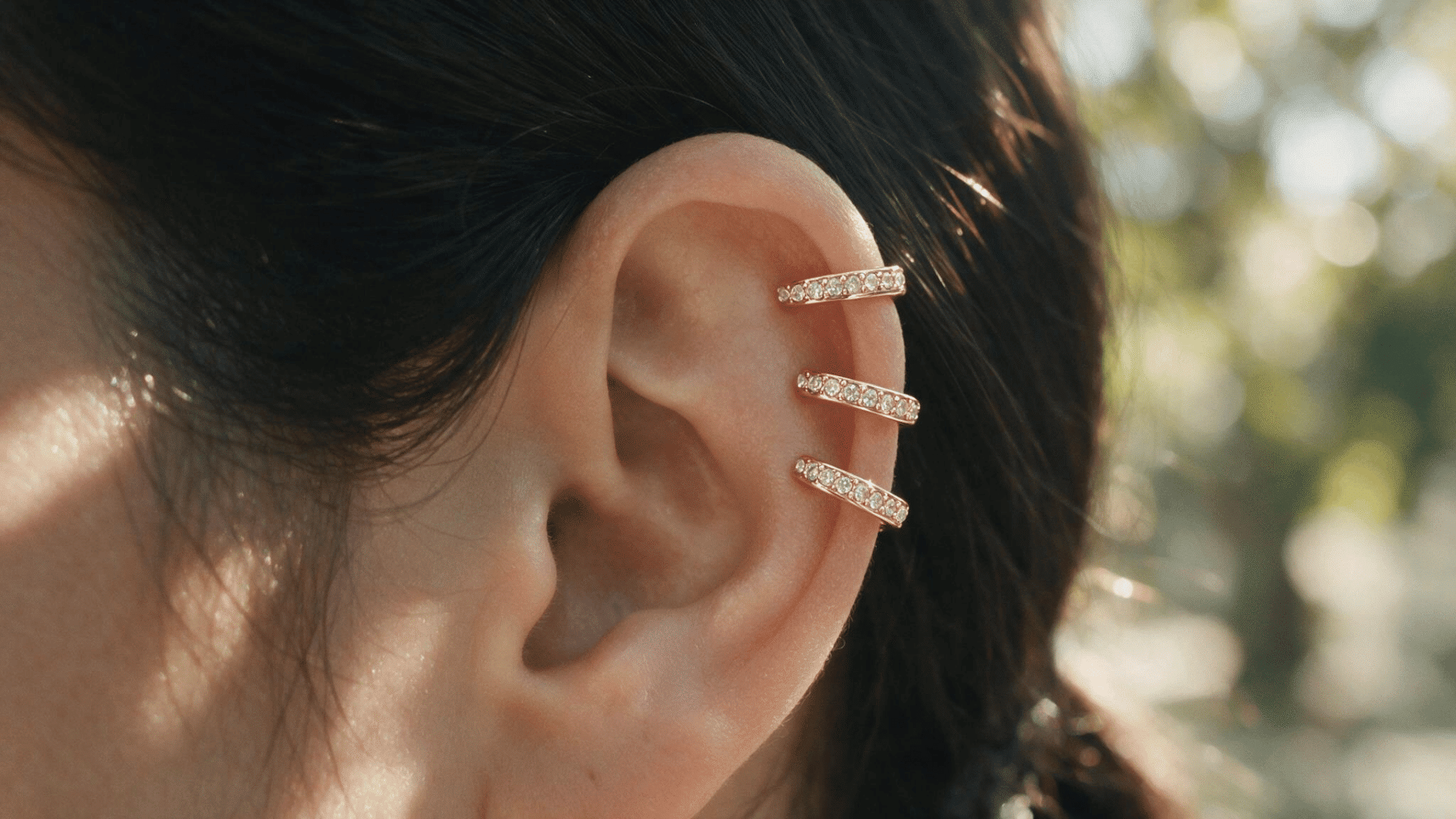
A triple helix piercing adds three aligned cartilage points for a layered ear style. Proper spacing is essential to avoid pressure, while professional placement helps support comfort and balanced healing.
- Pain level: Moderate to high
- Healing time: 6–12 months
- Best For: People with a longer or more spacious upper ear who have enough room to fit three evenly spaced cartilage piercings.
4. Forward Helix Piercing
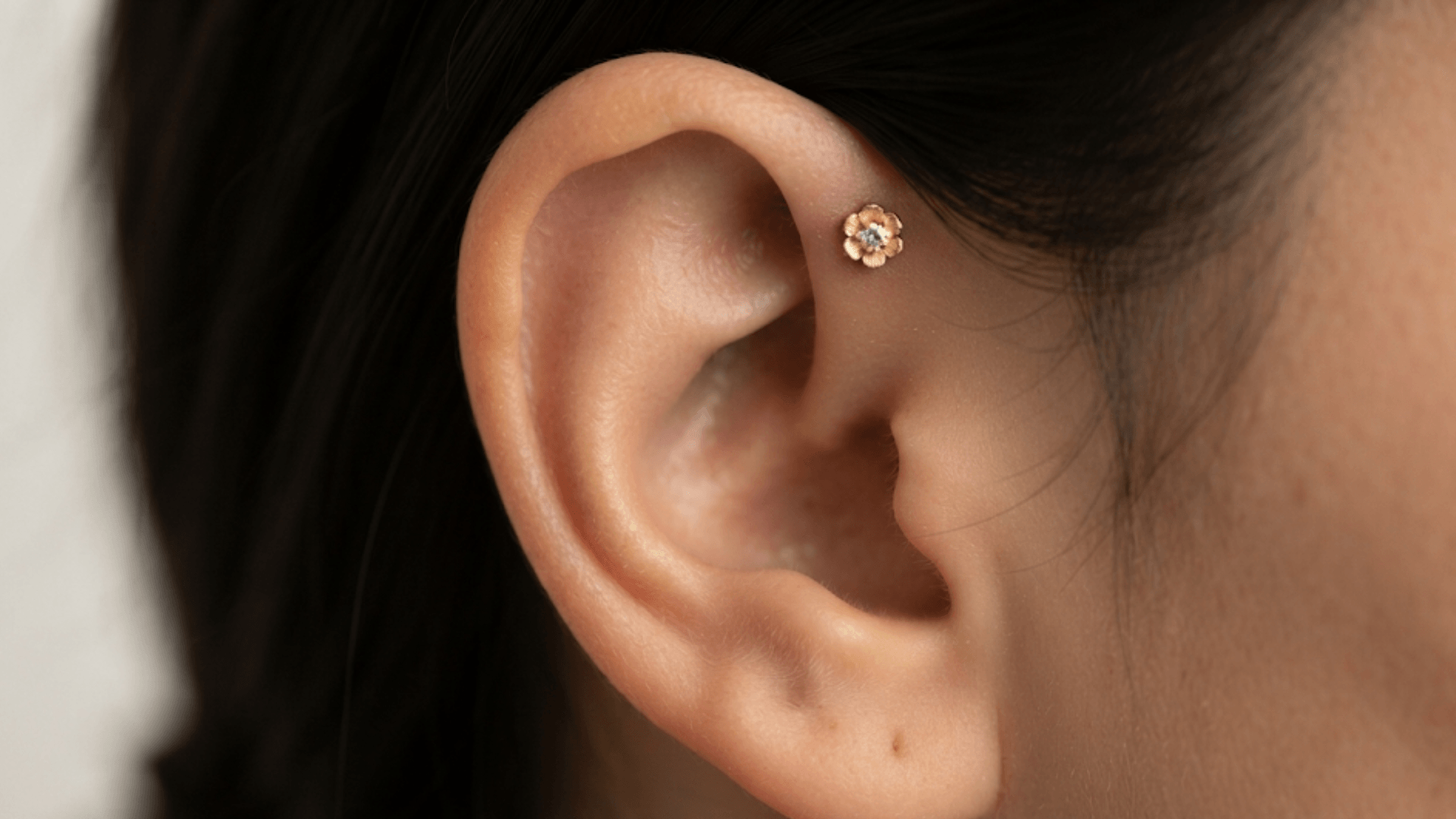
A forward helix piercing sits in a smaller cartilage area near the ear’s front edge. Careful placement helps achieve a balanced appearance, while proper aftercare supports smooth healing.
- Pain level: Moderate
- Healing time: 6–12 months
- Best For: People with a defined fold of cartilage at the front upper ear and enough space for a small stud.
5. Industrial Piercing
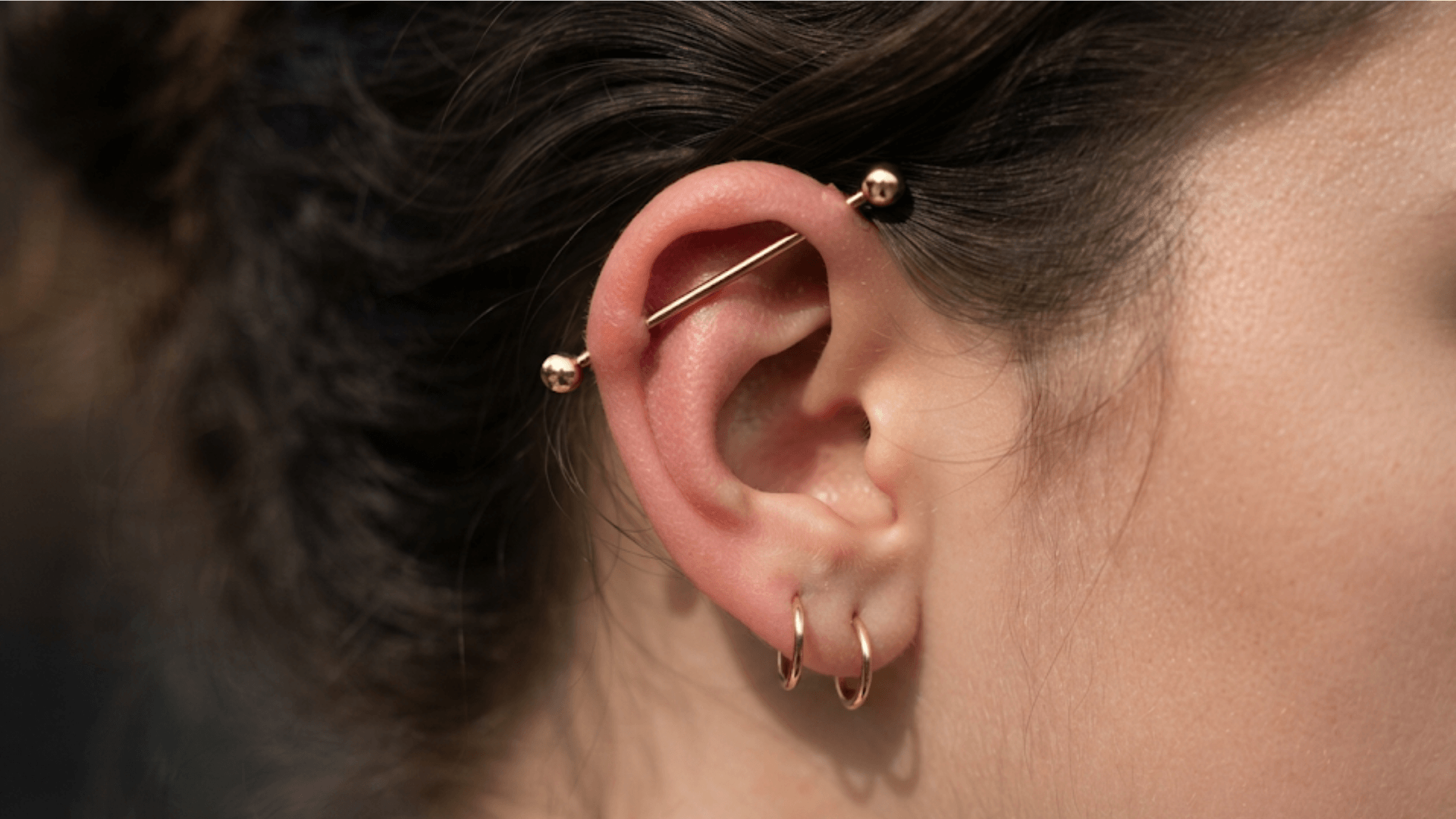
An industrial piercing joins two cartilage openings with one barbell, creating a structured ear style. Proper alignment is essential, as both piercing points heal together and require consistent aftercare.
- Pain level: Moderate to high
- Healing time: 4–9 months
- Best For: People with suitable ear anatomy, including a pronounced outer cartilage ridge and enough distance between the two piercing points for a straight barbell.
How to Do Aftercare for a Helix Piercing?
Clean the piercing regularly with sterile saline solution or a recommended piercing cleanser, but avoid over-cleaning, as this can irritate healing skin.
Avoid touching or twisting the jewelry unnecessarily, and always wash your hands before touching the area.
Protect the piercing while sleeping by avoiding direct pressure for at least 6 to 12 months, which is typical for cartilage piercings. Sleeping on the opposite side or using a pillow that reduces pressure around the ear can help.
Also, keep hair, perfumes, makeup, and other products away from the piercing to prevent irritation and buildup.
Advantages and Disadvantages of Helix Piercing
A helix piercing offers a stylish way to customize the ear, but it also comes with healing considerations. Here are the main advantages and disadvantages:
| Advantages | Disadvantages |
|---|---|
| Stylish and versatile look | Longer healing period |
| Many jewelry options | Can become irritated easily |
| Suitable for ear stacking | Sleeping pressure can cause discomfort |
| Works with different ear styles | Higher risk of cartilage bumps |
| Adds personality to your look | Requires consistent aftercare |
Choosing earrings that complement clothing is another part of accessorizing outfits, especially when a helix piercing becomes part of an everyday jewelry stack.
How Much Does a Helix Piercing Cost?
The cost of a helix piercing usually ranges from $30 to $100 for the piercing service alone, while initial jewelry may add another $20 to $150, depending on the material and style.
Simple surgical steel or titanium options are often more affordable, while premium choices such as solid gold can increase the total price to $200 or more.
The final cost depends on the studio, piercer’s experience, location, and jewelry selection.
Signs of a Helix Piercing Infection
Some redness, mild swelling, and clear discharge in the first couple of weeks are a normal part of healing, not infection.
- Thick yellow or green discharge, rather than the clear or slightly white fluid that’s common early on
- Redness or swelling that spreads outward instead of staying close to the piercing
- Heat coming from the area, or pain that gets sharper instead of easing over time
- A fever, which can point to something affecting more than just the piercing site
- Jewelry that seems to be sinking into the skin rather than sitting in place
If you notice any of these, contact your piercer or a doctor rather than waiting it out. Cartilage infections can move faster than lobe infections, so it’s better to check early than to guess.
Final Thoughts
A helix piercing is a stylish way to personalize your ear while offering endless options for jewelry, placement, and styling.
From a simple stud to a layered ear stack, this cartilage piercing can match different aesthetics when chosen and cared for properly.
Understanding the healing process, selecting quality jewelry, and following aftercare advice can help you enjoy better results and avoid common issues.
A professional piercer can also guide you toward the best placement for your ear shape and lifestyle.
Book your helix piercing appointment with a trusted studio and take the first step toward a safe, personalized ear style.
Frequently Asked Questions
Can I Wear Glasses or Use Earbuds with A New Helix Piercing?
It’s best to avoid earbuds on that ear, as pressure can irritate healing cartilage. Glasses can rub against a forward helix, so choose placement carefully if you wear them daily.
Can Guys Get Helix Piercings?
Yes, men can get helix piercings, as this ear piercing style works well for anyone. Placement, jewelry choice, size, and overall appearance can be customized to suit individual personal preferences.
Will My Helix Piercing Close Up If I Stop Wearing Jewelry?
Cartilage piercings can close quickly, sometimes within hours if new and within days even when older. If you want to keep it, leave jewelry in or use a retainer during breaks.