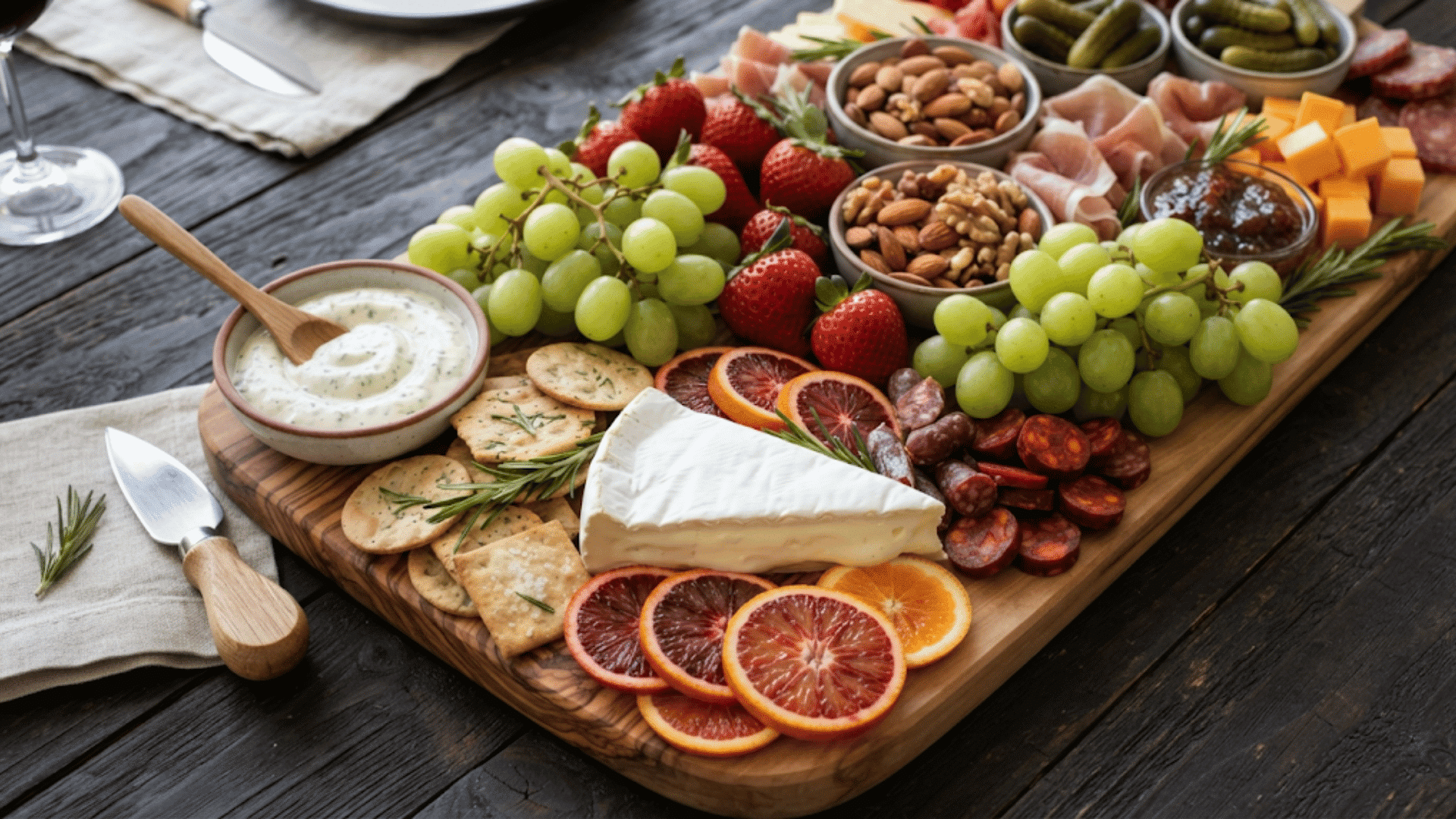
I used to panic every time I got asked to bring “the cheese board” to a party, piling everything on with no real plan and hoping it looked decent by the time guests showed up.
After hosting enough gatherings to lose count, I realized a good spread comes down to a few smart choices, not natural talent.
Learning how to make a charcuterie board really just means picking a balanced mix of meats, cheeses, crackers, fruit, spreads, and a few small extras, then giving each one room to shine.
The right board size, portions, placement, and food pairings can make serving easier and help avoid waste.
Jump to Recipe
What Is a Charcuterie Board?
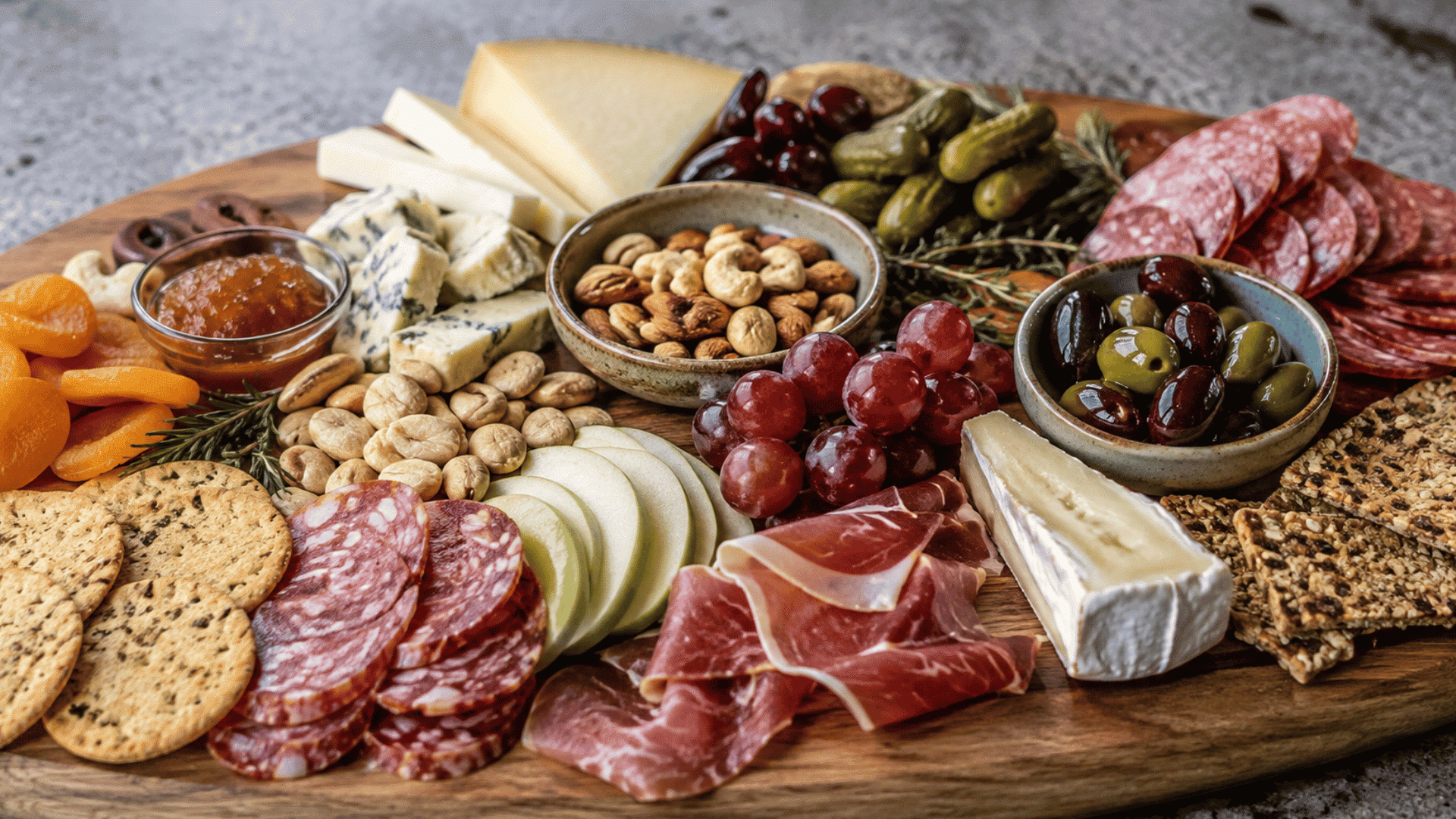
A charcuterie board (pronounced shar-koo-tuh-ree) is a serving platter inspired by French culinary tradition, featuring cured meats, cheeses, fruits, nuts, crackers, spreads, and other small bites.
The word charcuterie comes from French and traditionally refers to the preparation of preserved meats.
Modern boards combine sweet and savory foods, making them popular for parties, gatherings, appetizers, and casual snacking.
How to Make a Charcuterie Board?
Start with the larger items, then add meats, crackers, fruit, and smaller foods until the board looks full without making it difficult for guests to serve themselves.
| Serve: 6 – 8 | Prep: 20 minutes | Chill: 30 minutes | Total time: 50 minutes |
1. Place Small Bowls First
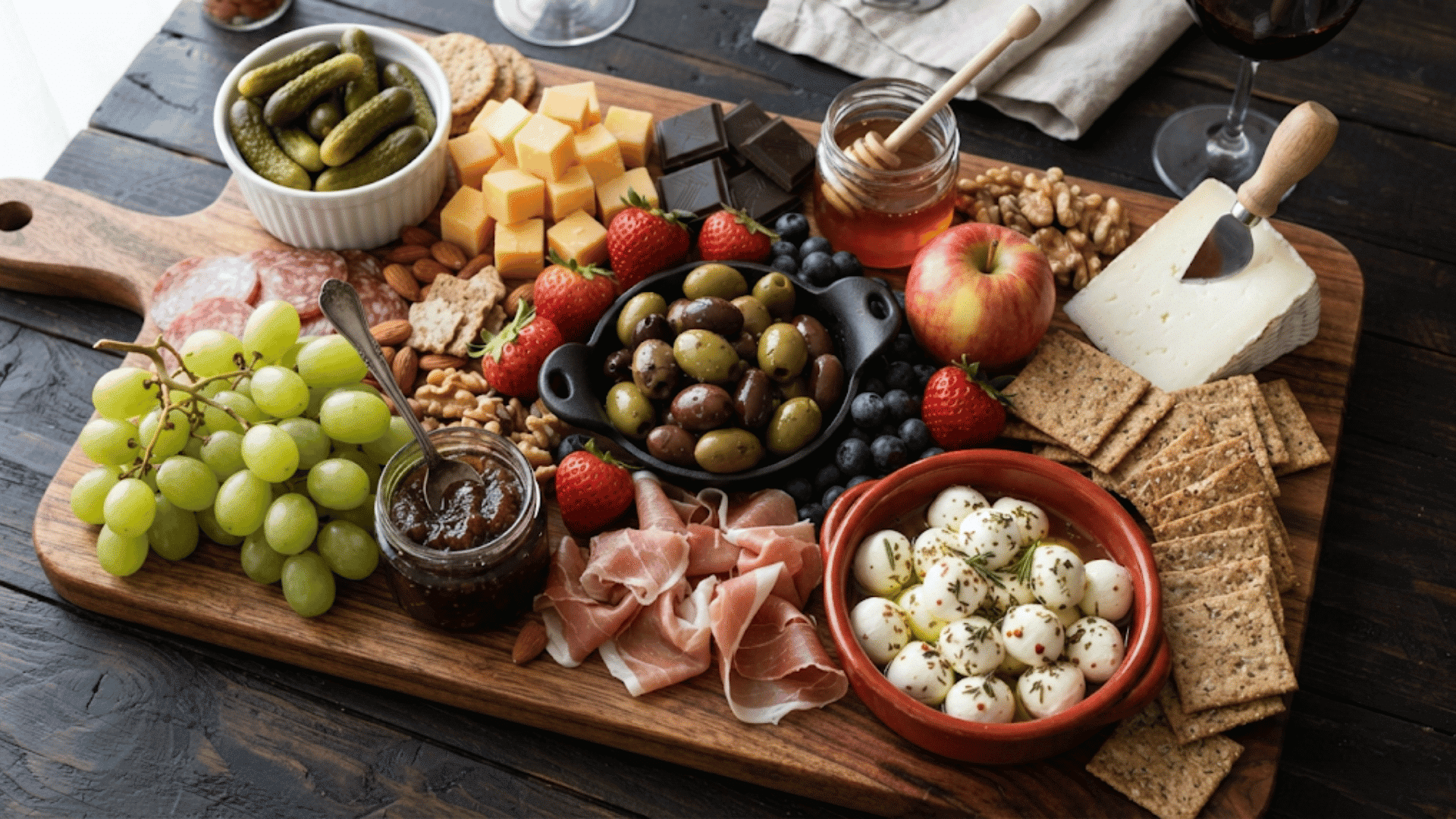
Set small bowls around the board before adding the larger foods. Use them for olives, pickles, honey, jam, mustard, or other spreads.
Keeping wet foods inside bowls prevents crackers and bread from becoming soggy.
Space the bowls apart so they also help divide the board into easy serving areas.
2. Add Cheeses Around the Board
Place cheeses in different areas so guests can easily reach each option. Use a mix of soft, firm, mild, and stronger cheeses for better variety.
- Soft Cheeses: Brie, camembert, goat cheese
- Semi-soft Cheeses: Gouda, havarti, fontina
- Firm Cheeses: Cheddar, manchego, parmesan
- Stronger Cheeses: Blue cheese, gorgonzola
3. Arrange the Cured Meats
Place cured meats near cheeses that pair well with them. Fold, roll, or fan the slices to create different shapes across the board.
- Mild Meats: Prosciutto, mortadella
- Classic Savory Meats: Genoa salami, capicola
- Spicy Meats: Soppressata, chorizo, pepperoni
- Thin-Sliced Options: Prosciutto, bresaola
Keep portions small enough for guests to pick up easily without pulling apart large stacks of meat.
4. Add Crackers and Bread
Place crackers and bread in small groups around the board so guests can reach them from different sides. Keep them away from juicy fruit and wet foods.
- Neutral Flavored: Water crackers, baguette slices, pretzels, breadsticks, classic Triscuits, Wheat Thins
- Herb-Flavored: Rosemary crackers, garlic crackers, herb crostini
Tip: Add crackers near serving time. This helps them stay crisp, especially if the board includes juicy fruit, pickles, or soft cheeses.
5. Add Fresh and Dried Fruit
Use fruit to add sweetness and contrast to salty meats and rich cheeses. Cut larger fruit into small portions before placing it on the board.
- Fresh berries: Strawberries, blueberries, raspberries
- Fresh sliced fruit: Apples, pears, peaches
- Small whole fruit: Grapes, cherries, figs
- Dried fruit: Apricots, dates, cranberries, dried figs
Figs are one of my favorite additions here since they pair so well with soft cheese and a drizzle of honey, and the variety you choose changes the sweetness and texture quite a bit, so it’s worth getting familiar with the different fig varieties before you shop.
6. Fill Gaps with Small Extras
Use nuts, olives, dried fruit, pickles, and small vegetables to fill open spaces between the main ingredients. Almonds, pistachios, walnuts, and cornichons work particularly well because they fit into narrow areas.
Add these foods gradually so the board feels full while each item remains easy to see and reach.
7. Finish with Serving Utensils
Add cheese knives, small spoons, cocktail forks, or tongs wherever guests may need them. Place a separate utensil beside sticky spreads, soft cheeses, and pickled foods to keep serving neat.
How to Choose the Right Board Size?
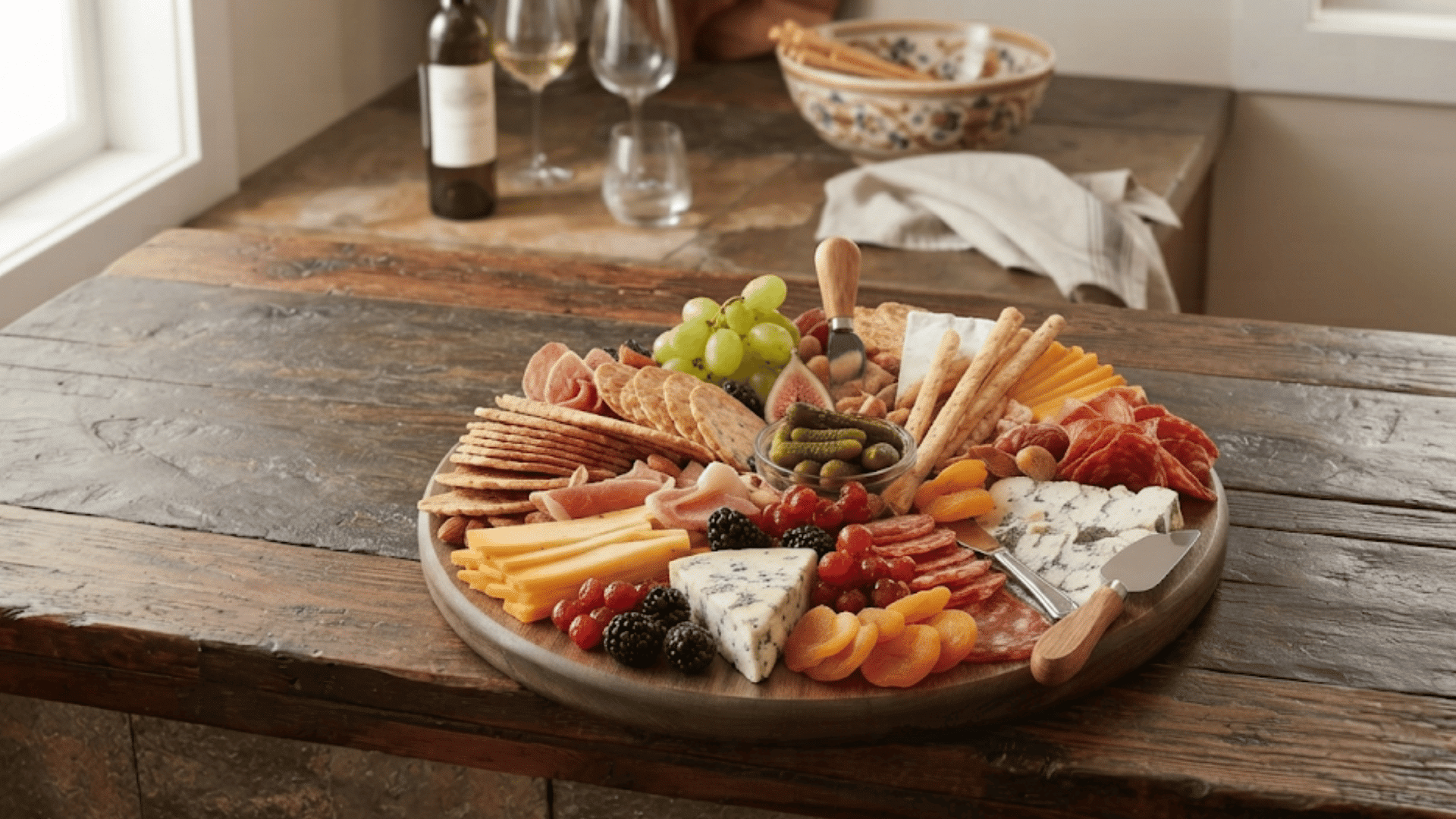
A small board works well for 2 to 4 people, while a medium board suits about 4 to 6 guests.
For larger groups, use a wide platter or two smaller boards so everyone can easily reach the food.
Material matters almost as much as size. Wood and bamboo look warm and rustic, marble or slate keeps cheese cooler for longer, and a good food-safe cutting board you already own will usually do the job without buying anything new.
You can buy your desired size of a charcuterie board from Totally Bamboo, or also look for a variety of options from Amazon.
How Much to Serve on a Charcuterie Board?
For a charcuterie board, the amount you serve depends on whether it is an appetizer or the main food:
- As an appetizer: Plan about 2–3 ounces of meat and cheese per person combined.
- As a light meal: Plan about 4–6 ounces of meat and cheese per person combined.
- For a larger gathering: Add plenty of crackers, fruits, nuts, spreads, and other accompaniments so guests have enough variety.
Tip: If you’re unsure how to balance your board, try the 3-3-3-3 rule: choose 3 meats, 3 cheeses, 3 accompaniments, and 3 crackers or breads.
Easy Charcuterie Board Pairing Ideas
Match meats, cheeses, fruit, and spreads that complement each other without making the board feel too busy.
| Cheese | Meat | Extra Pairing |
|---|---|---|
| Brie | Prosciutto | Fig jam and baguette slices |
| Cheddar | Genoa salami | Apple slices and mustard |
| Manchego | Chorizo | Almonds and olives |
| Goat cheese | Capicola | Pear slices and honey |
| Gouda | Soppressata | Grapes and crackers |
| Blue cheese | Prosciutto | Dried figs and walnuts |
| Parmesan | Mortadella | Crostini and green olives |
Some Mistakes I’ve Avoided While Making a Charcuterie Board
When making a charcuterie board, I avoid overcrowding it with too many ingredients, as this can make the arrangement look messy and difficult to serve.
It also helps to mix creamy, crunchy, sweet, salty, and tangy options instead of choosing similar flavors and textures.
Too many strong flavors can overwhelm the palate, while skipping fresh fruits or colorful garnishes can make the board look dull.
Keeping perishable foods at safe temperatures also helps maintain freshness and food safety.
How Long Can a Charcuterie Board Sit Out?
A charcuterie board should not sit out at room temperature for more than two hours, based on USDA food safety guidance on the temperature “danger zone,” since sliced meats, soft cheeses, and cut fruit fall right into the range where bacteria multiply fastest. If the room is warmer than 90°F, cut that window down to one hour.
Keep these time limits in mind to keep your charcuterie board safe:
- Cured meats: 1–2 hours
- Soft cheeses: 1–2 hours
- Hard aged cheeses: 2–4 hours
- Cut fruits: Up to 2 hours
- Dips: Up to 2 hours
- Hot outdoor conditions: 1 hour
If your gathering runs long, I suggest keeping a second batch of meat and cheese chilled and swapping it in every couple of hours instead of leaving one board out the whole time. Small refills protect both the flavor and the food safety.
Missed something? Check out the steps again.
Conclusion
Making a charcuterie board is easier when you plan the board, portions, meats, cheeses, and layout.
Small details such as keeping wet foods in bowls, adding crackers near serving time, and leaving enough space between items can make serving go more smoothly.
You can also save time by preparing meats, cheeses, fruit, and small bowls in advance.
Simple pairings, balanced portions, and a few beginner-friendly tips can help the board look inviting without feeling crowded.
Now choose a board, gather your favorite ingredients, and start putting everything together for your next gathering, party, or relaxed evening at home.
Frequently Asked Questions
How Early Can You Prepare a Charcuterie Board?
You can prepare most of a charcuterie board a few hours ahead, then add crackers, bread, and freshly cut fruit just before serving.
Can I Make a Charcuterie Board without Meat?
Yes. Use cheeses, crackers, fruit, nuts, olives, vegetables, hummus, dips, and spreads. A meat-free board still offers plenty of flavor, texture, and variety.
Should Cheese be Served Cold?
Cheese usually tastes better when left at room temperature briefly before serving. Take it from the refrigerator about 30 minutes before guests begin eating.
Can I Use a Cutting Board?
Yes, a clean wooden or food-safe cutting board works well. Choose one large enough to hold the ingredients comfortably and free of strong odors or deep stains.
What Drinks Pair with Charcuterie Boards?
Wine, sparkling water, cider, iced tea, and fruit-based drinks work well. Pick beverages that pair well with the meats, cheeses, fruit, and spreads on your board.