Engagement ring shopping used to follow a fairly predictable formula. Buyers determined what they could spend, looked at natural diamonds within that range and often made compromises among carat weight, cut, clarity and setting. Lab-grown diamonds have disrupted that familiar process.
Because they have the same crystal structure and chemical composition as mined diamonds, they give couples another option when deciding how to allocate their ring budget. The change goes beyond price. Shoppers now have greater freedom to consider larger stones, unusual shapes, elaborate settings and coordinated wedding jewelry without treating old engagement ring conventions as firm rules.
More Choice Changes Shopping
For generations, choosing an engagement ring often meant deciding which diamond characteristics mattered enough to prioritize and which ones could be sacrificed to stay within budget. A shopper who wanted a larger natural diamond might accept a lower clarity or color grade, while someone focused on quality might choose a smaller stone. Lab-grown diamonds can change that calculation because comparable stones typically cost less than natural diamonds.
That difference can give shoppers room to focus on what they actually like when they look at the ring on a hand. Someone who loves the visual impact of a two-carat oval may be able to consider it without abandoning a preferred setting. Another buyer might keep the center stone modest and use the remaining budget for a designer setting, wedding jewelry or the honeymoon.
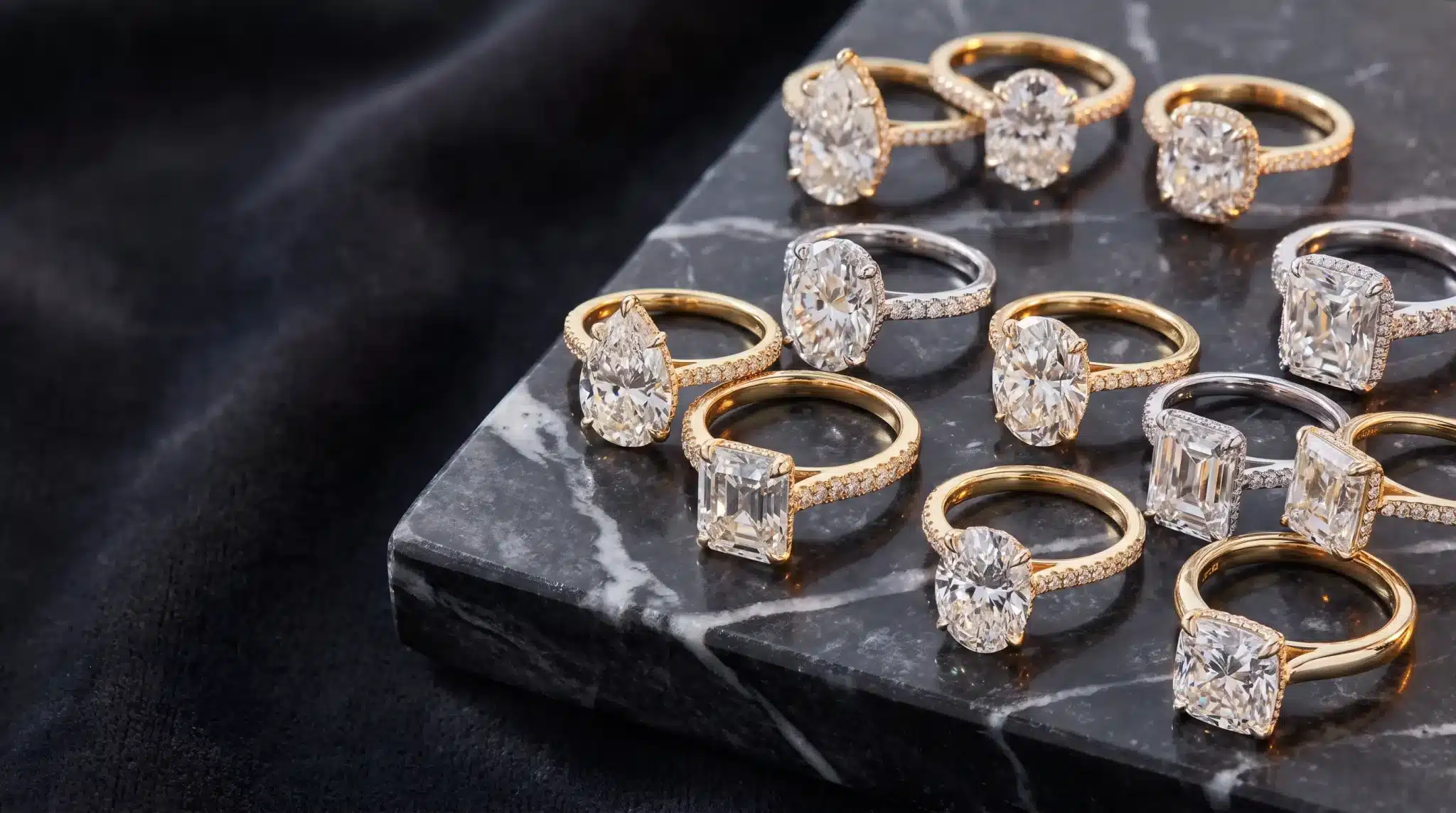
This freedom has also made experimentation easier. Emerald, pear, radiant, cushion and marquise cuts become realistic possibilities for shoppers who previously assumed a traditional round stone was the safest use of their money.
Wedding Sets Get an Update
The engagement ring is only one piece of the bridal jewelry picture. Couples are increasingly considering how the engagement ring and wedding band will look together from the beginning, rather than choosing the band months later and hoping it works with the original design. That makes lab-grown diamond bridal ring sets particularly relevant for shoppers who want a coordinated look without limiting themselves to a simple center stone and plain band.
A bridal set can incorporate pavé diamonds, contoured bands, halos or multiple diamond shapes while maintaining a cohesive appearance. Some shoppers prefer a perfectly matched set, while others deliberately choose contrasting bands that create a stacked effect.
Lab-grown diamonds can also make diamond-intensive wedding bands more attainable. Instead of reserving most of the jewelry budget for the engagement ring, couples can consider eternity bands, multiple stacked bands or designs with substantial diamond coverage. The finished set can feel more personalized because buyers have room to think about the entire look rather than concentrating almost exclusively on the center stone.
Bigger Is Now Different
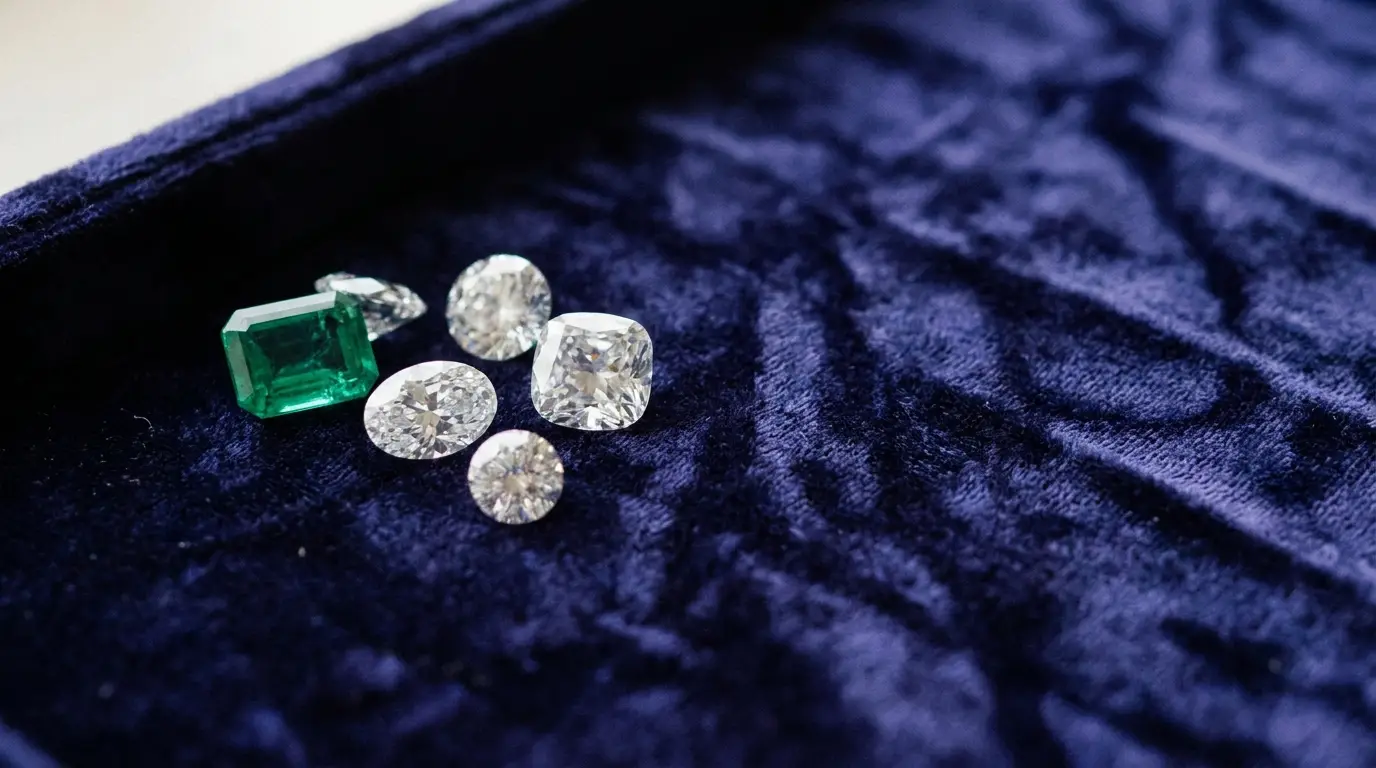
Carat weight has always attracted attention, but lab-grown diamonds have changed what a “large” engagement ring means from a shopping perspective. When bigger stones become available at lower prices than comparable natural diamonds, couples may feel less pressure to treat carat weight as the ultimate measure of a ring’s value.
That can actually make shopping more style driven. A larger diamond is not automatically the best choice for every hand or setting. Some people prefer a substantial oval solitaire, while others find that a smaller emerald cut surrounded by distinctive side stones feels more sophisticated. Proportion matters, especially when a diamond will be worn every day.
The increased accessibility of larger stones also makes cut quality harder to ignore. A poorly proportioned diamond does not become beautiful simply because it has an impressive carat weight. Buyers can compare how stones reflect light, how their shapes sit on the finger and whether their dimensions work with the intended setting. The goal becomes finding the right presence rather than chasing a number.
Personal Style Leads
Engagement rings have become much less uniform. Yellow gold has returned as a major choice, while platinum and white gold remain classics. Bezel settings offer a clean alternative to traditional prongs. East-west settings turn elongated diamonds sideways, and three-stone designs can combine contrasting shapes for a more distinctive profile.
Lab-grown diamonds suit this increasingly personal approach because shoppers may have more room in their budgets to invest in the design surrounding the stone. Hidden halos, pavé bands, side diamonds and custom details can transform a relatively familiar shape into a ring that feels individual.
Practicality matters too. Someone who travels frequently, works with their hands or rarely removes jewelry may favor a lower-profile setting that feels comfortable during a full day. Fashion does not need to make daily life harder. An engagement ring should look beautiful at dinner, but it also has to survive airports, grocery runs, workdays and everything else a person actually does.
Old Rules Matter Less
Lab-grown diamonds have not eliminated natural diamonds, nor do they need to. Instead, they have expanded the choices available to modern couples. Shoppers can decide whether origin, rarity, size, design, price or another factor matters most to them and spend accordingly.
That flexibility may be the biggest change of all. Engagement ring shopping no longer has to revolve around getting the largest traditional diamond a particular budget allows. Couples can put more thought into shape, setting, comfort and how the ring fits their broader style. The old rules were built around limited options. Lab-grown diamonds have given shoppers more of them, and engagement rings are becoming far more personal as a result.