Some changes in a bathroom happen slowly.
They are not like a light bulb suddenly going out or a tap starting to drip. More often, something that once felt automatic begins to need a little more attention.
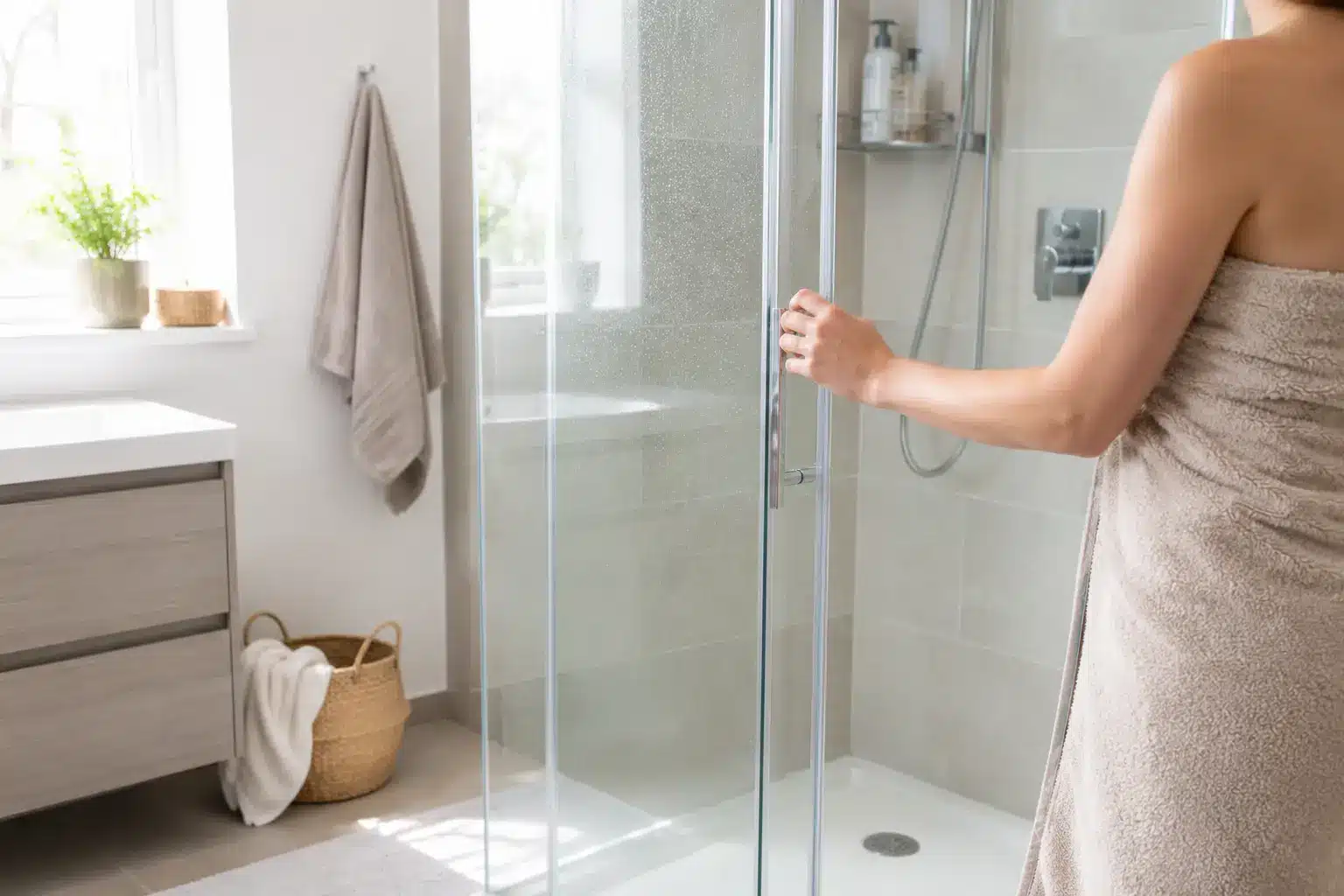
After a shower, you push the glass door closed. It has already reached the other side, but you give it one more nudge. Sometimes the top makes contact first while a narrow gap remains at the bottom. Sometimes the door moves back slightly as soon as you let go.
These changes only take up a second or two each day, so the bathroom remains usable. After a while, you may stop noticing that anything feels different.
Then you stay in a hotel or use a friend’s bathroom. The glass door follows your hand, the two sides meet gently, and you turn to reach for a towel. That is when you remember that the door at home does not quite behave like this.
How comfortable a bathroom feels is not only about tiles, lighting and storage. The smaller details that never appear in renovation photos also shape how the room works each day.
We Usually Change Our Habits First
Most people will not inspect the glass, hinges or seals just because a shower door has become slightly awkward to close.
It is easier to work around it.
You give the door another push near the end, lift the handle slightly as you open it, or glance back before leaving the bathroom. Some people even learn the exact spot to press so the door closes more easily.
Over time, those movements become part of the routine.
A shower door that closes properly rarely draws attention to itself. It follows its usual path, the two sides meet, and the moment is over.
Once it becomes less reliable, everyone in the house may quietly develop their own way of closing it.
Try Closing the Door More Slowly
When a shower door starts to feel wrong, the first thought is often: “Has the door dropped?”
Before adjusting the hinges or looking for a replacement part, try closing it slowly once.
Notice whether it becomes tight during the final few centimetres, or whether it moves back just before reaching the other side. Do the top and bottom meet at the same time? Is the door harder to pull open than it used to be?
Some doors appear to be closed when only the upper section is making contact. Others show no obvious resistance but still need an extra push before they stay in place.
The glass itself may be fine, and the hinges may not be loose. Sometimes the change is happening along the closing edge.
This can happen with shower doors that use magnetic seals. A magnetic shower screen seal relies on meeting the opposite edge in the right position. If the height, direction or closing angle changes, the door may still shut, but it will no longer pull together as naturally as it once did.
The first thing people notice is often not leaking water, but that hard-to-describe awkwardness when the door closes.
Why a Similar-Looking Seal May Still Be Wrong
Replacing a shower seal can look simple at first.
You remove the old one, find a profile that looks close, trim it to length and press it onto the glass. If it grips firmly, it can seem as though the job is done.
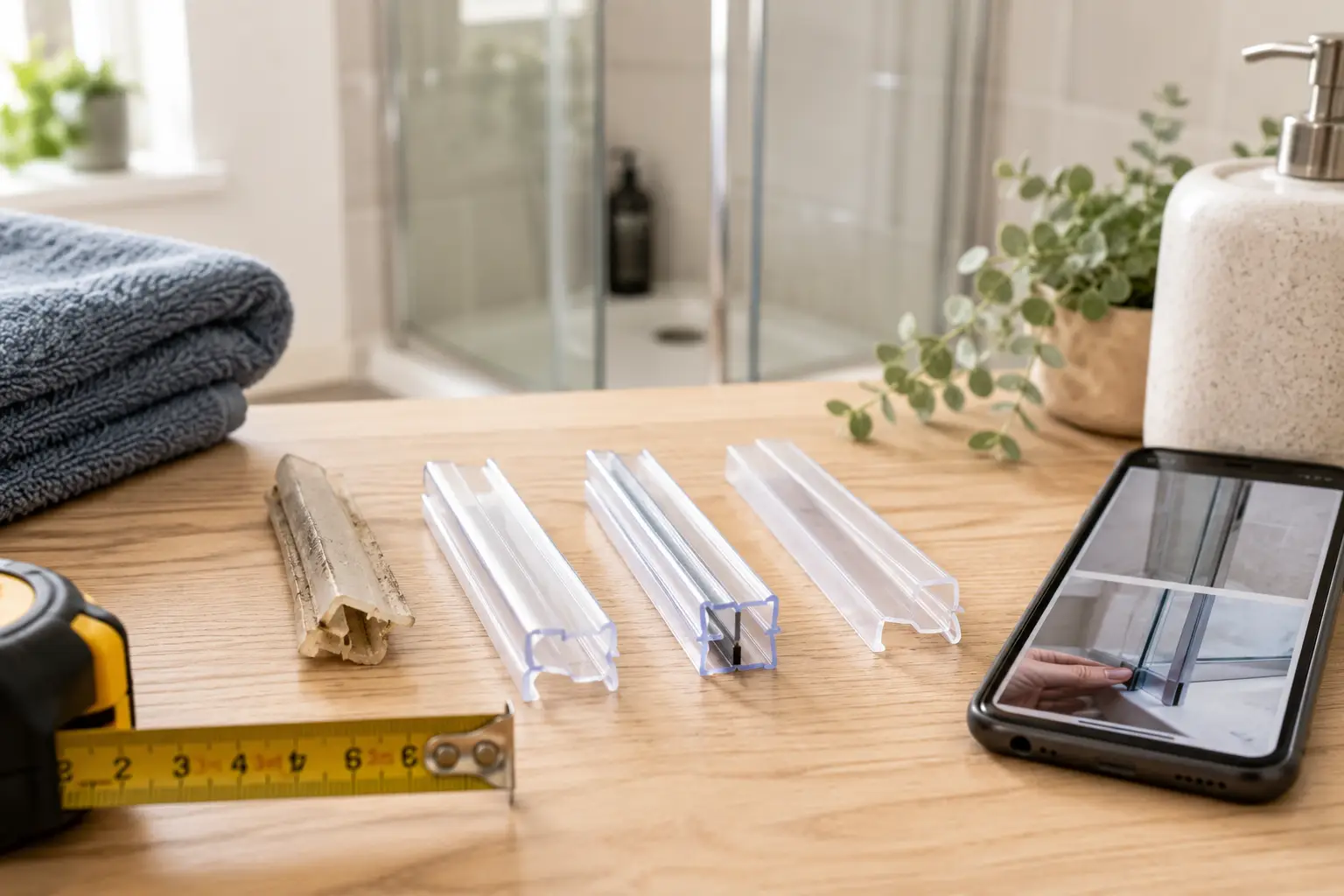
Place a few seals side by side, however, and the differences become easier to see. They are not as interchangeable as they first appear.
This is something SIMBA Seals UK often has to explain when helping customers identify replacement glass door seals. Glass thickness matters, but it is only part of the picture. A seal fitted along the bottom of a door does a different job from one used on the side or between two glass panels.
The size of the gap, the direction of the flexible edge and the shape visible at the end of the old seal can all affect how the replacement works. Two profiles may look almost identical from the front, yet their channels, magnetic inserts or water-deflecting sections may sit in completely different positions.
Magnetic versions also need to be checked against the seal on the other side.
The two edges must meet, and the magnets must face the correct way. Otherwise, a new seal may grip the glass securely while the door only catches at the top, or needs to be pushed further than before.
A seal fitting onto the glass only shows that the size is reasonably close. It does not mean it will work in the same way as the original.
A Replacement Does Not Have to Be Identical
Shower seals are not fully universal, but that does not mean the replacement must be an exact copy of the old one.
Some shower enclosures have been in use for many years. The original seal may no longer be made, and any packaging or model number may have disappeared long ago. What needs to be preserved is not the exact old shape, but the job it performed on that particular door.
The channel must suit the existing glass. The magnetic edge must meet the opposite side correctly, and any water-deflecting section must not interfere with the movement of the door. If those parts line up, a profile with a slightly different cross-section may still be a suitable replacement.
The reverse is also true. A seal that looks almost identical may still be wrong if the magnet sits on the other side or the profile was designed for a different position.
When removing the old seal, keep a short section if possible. Take one photo showing how it was fitted, then another showing the end profile clearly. Those details are often more useful than a full front-facing photo of the shower door.
If the old model cannot be identified by appearance alone, these photos make it much easier to narrow down the options by glass thickness, fitting position, cross-section and the way both sides meet, rather than relying on something that merely looks close.
A Good Space Should Not Need Constant Adjusting
When planning a bathroom, people naturally focus on the most visible parts.
They think about whether the tile colour will date, whether the mirrored cabinet will hold everything, and whether the taps and handles work well together. These are also the details that stand out most in photographs.
Daily comfort often sits elsewhere.
A drawer slides back into place with a light push. A cabinet door closes without a sudden knock. The shower door follows the movement of your hand and settles where it should. None of these things demands attention, but they remove the small pauses that had gradually become part of the day.
After a while, you may realise that you have not turned back after a shower to check the door for quite some time.