Orange County does not need to try hard to be beautiful. The Pacific sits at its western edge, the Santa Ana Mountains rise to the east, and somewhere in between, the coastline, canyons, and manicured estates have been hosting California’s most stunning weddings for decades.
But a beautiful backdrop does not automatically produce a chic wedding. Plenty of gorgeous venues host forgettable celebrations. What separates a wedding that guests still talk about two years later from one they forget? A handful of specific decisions that most couples either overlook or underestimate.
The Venue Does Half the Work. Choose One That Earns Its Place.
The mistake most couples make is choosing a setting based on how it looks in photos rather than on how it actually feels to be inside for five hours. Orange County hands you options that are genuinely excellent across a wide range of aesthetics:
- The Resort at Pelican Hill, Newport Beach – Tuscan-inspired architecture, an iconic Rotunda, and Pacific Ocean views that make the physical environment do the heavy lifting. Here, the setting does most of the work; the couple just needs to stay aligned with it.
- Franciscan Gardens, San Juan Capistrano – Courtyard setting wrapped in ivy, Spanish tilework, and the kind of ambient string light that makes every photograph look like it was taken on film. The proximity to the San Juan Capistrano Mission adds a layer of history that no interior designer can manufacture.
- The Ritz-Carlton, Laguna Niguel – Situated on a bluff above the Pacific, one of the few places in Southern California where the ceremony view genuinely competes with the couple for attention.
The through-line across all three is character. A chic wedding works with its setting, not against it.
Flowers Are Not Decorations. They Are Architecture.
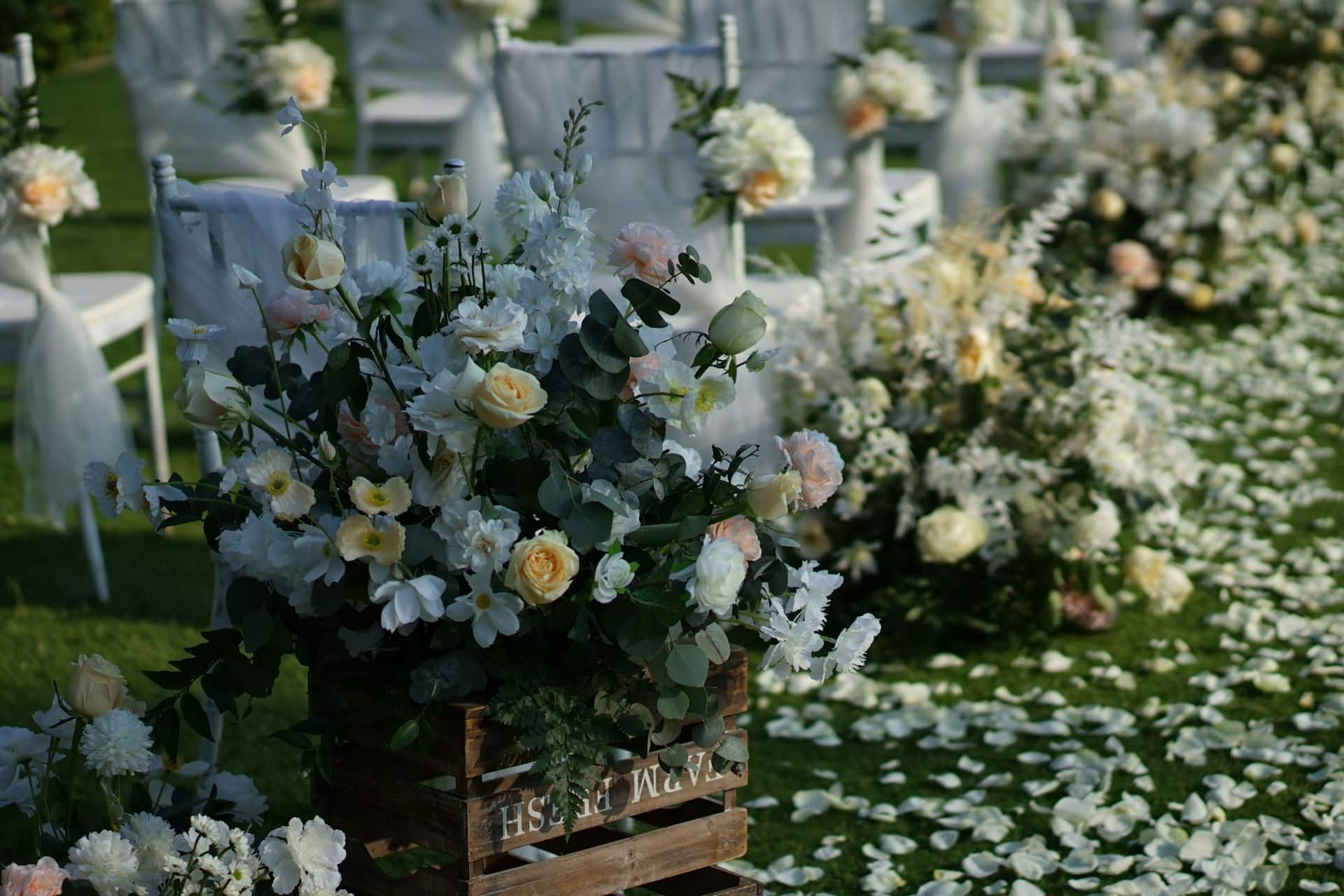
The difference between a wedding that feels considered and one that simply looks expensive often comes down to how floral design functions within the space.
Standard arrangements placed evenly around a reception act as decoration. They fill space but do not shape it. Thoughtful floral design works differently. It responds to the venue’s architecture, the direction and quality of natural light, and the overall color story of the day. It becomes part of the environment, not just an addition.
In Orange County, where outdoor ceremonies extend well into November, this distinction becomes even more noticeable. Couples who brief their florists with venue details see stronger results. When they describe how the light shifts in the afternoon, where shade falls, and how the setting changes over time, the final design feels far more distinctive than anything made from reference images alone.
Blush and ivory, for example, can feel soft and luminous on a coastal terrace. The same tones can appear muted and flat under canyon shade. The flowers stay the same. The context changes everything.
The Guest Experience Is the Wedding
Here is the part that most planning guides miss in the final chapter: a chic wedding is one where guests feel genuinely considered at every point of the day, not just during the ceremony and the first dance.
In practice, that looks like:
- Cocktail hour food that is actually good rather than merely presentable
- A bar program that reflects the couple’s real taste, not a default open bar package
- Seating that prioritizes conversation over headcount management
- A good DJ notices when guests drift toward conversation, and adjusts before the dance floor empties
- A reception flow that gives people space to be present without constant programmatic interruption
The couples who nail this understand something fundamental: they are hosting, not performing. That distinction changes every decision that follows.
How the Day Moves Between Moments
One detail that separates a cohesive wedding from a disjointed one is how the couple and wedding party physically move through the day. The ceremony, cocktail hour, reception—each location is either part of a continuous story or an awkward reset that pulls people out of the feeling the previous hour had created.
Couples who think about this deliberately find that even a short transfer carries its own emotional weight when managed well. Many book a wedding limo service in Orange County for exactly this reason; not for show, but because the time between moments deserves the same attention as the moments themselves.
The Food Has to Be Memorable
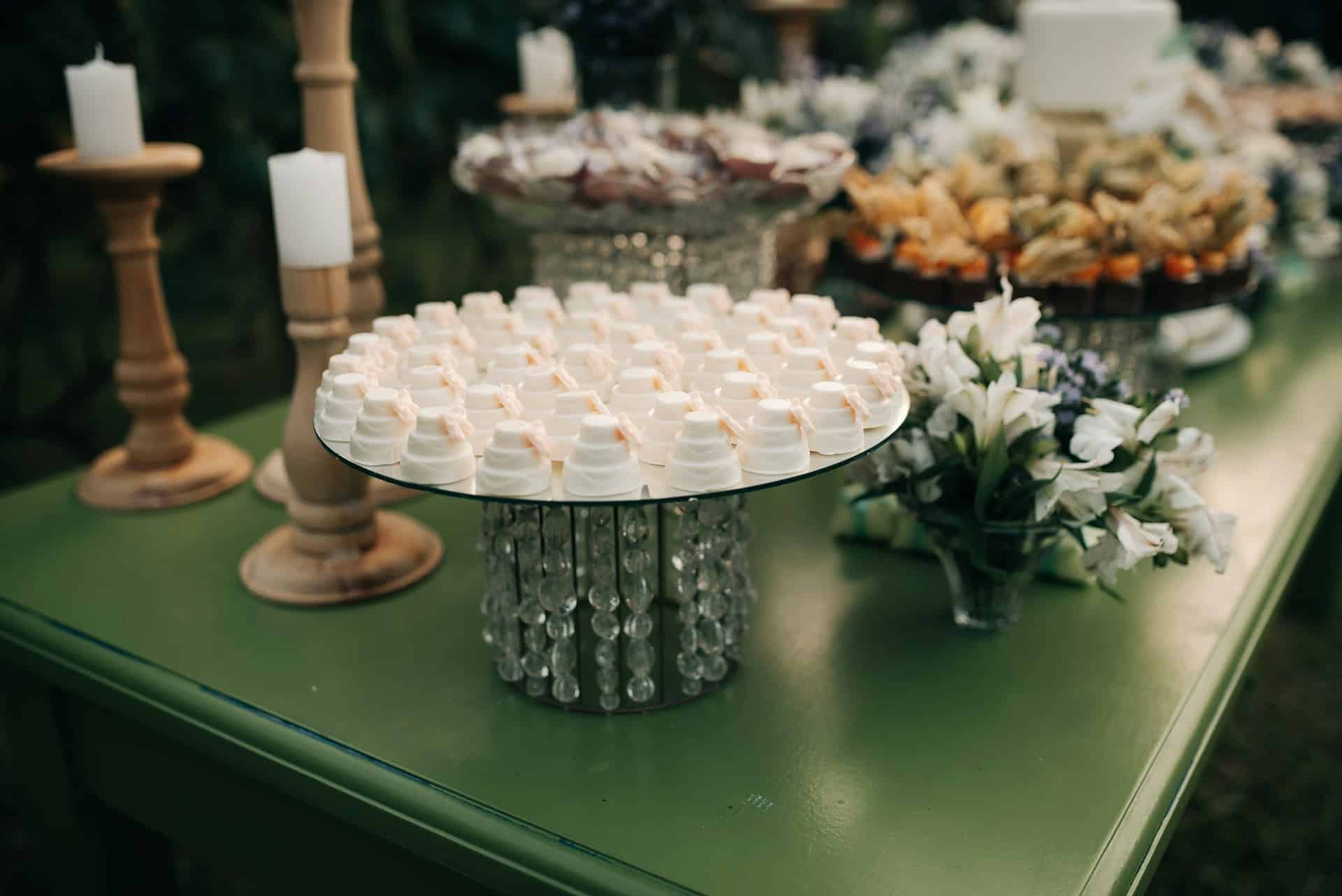
Orange County has a serious restaurant culture. Wedding guests here arrive with a calibrated palate, and a standard catered reception menu does not impress a crowd that regularly eats at the level this county offers.
The weddings that earn genuine compliments on the food share one quality: the catering choice received the same level of scrutiny as the venue choice. That sometimes means working with a restaurant that does private events. It sometimes means a single, deeply considered menu centered on one cuisine, done exceptionally well, rather than a broad selection executed at an average level.
For example, the Estate on Second in Santa Ana combines exposed brick, chandeliers, and historic architecture with a menu that matches the setting. That alignment is what makes a wedding feel intentional rather than pieced together.
The Details Nobody Notices Until They Are Missing
Chic weddings are defined as much by what they leave out as what they include. A few things that quietly ruin an otherwise beautiful day:
- Overcrowded tablescapes that leave no room to breathe
- Speeches from people who did not prepare
- Lighting that flattens a room designed to be beautiful
- A DJ who cannot distinguish between a crowd that wants to dance and one that wants to talk
The editing process—deciding what the day does not need—often leads couples to second-guess themselves, especially when vendors suggest adding more rather than refining what’s already planned. A wedding with fewer elements, each executed at a high level, reads as more sophisticated than one packed with good intentions and inconsistent execution. In Orange County, where the natural environment already contributes so much to the aesthetic baseline, restraint is often the most powerful design decision a couple can make.
What Chic Actually Means
Chic is not a budget. It is not a style or a venue category. It is the quality of decision-making applied throughout the day, the coherence among the setting, food, flowers, music, and the way a couple moves through it all.
Orange County hands couples a remarkable set of raw materials. The ones who use those materials thoughtfully, who resist excess and instead invest in depth, end up with weddings that feel genuinely rare. Not because they spent more. Because they chose more carefully.