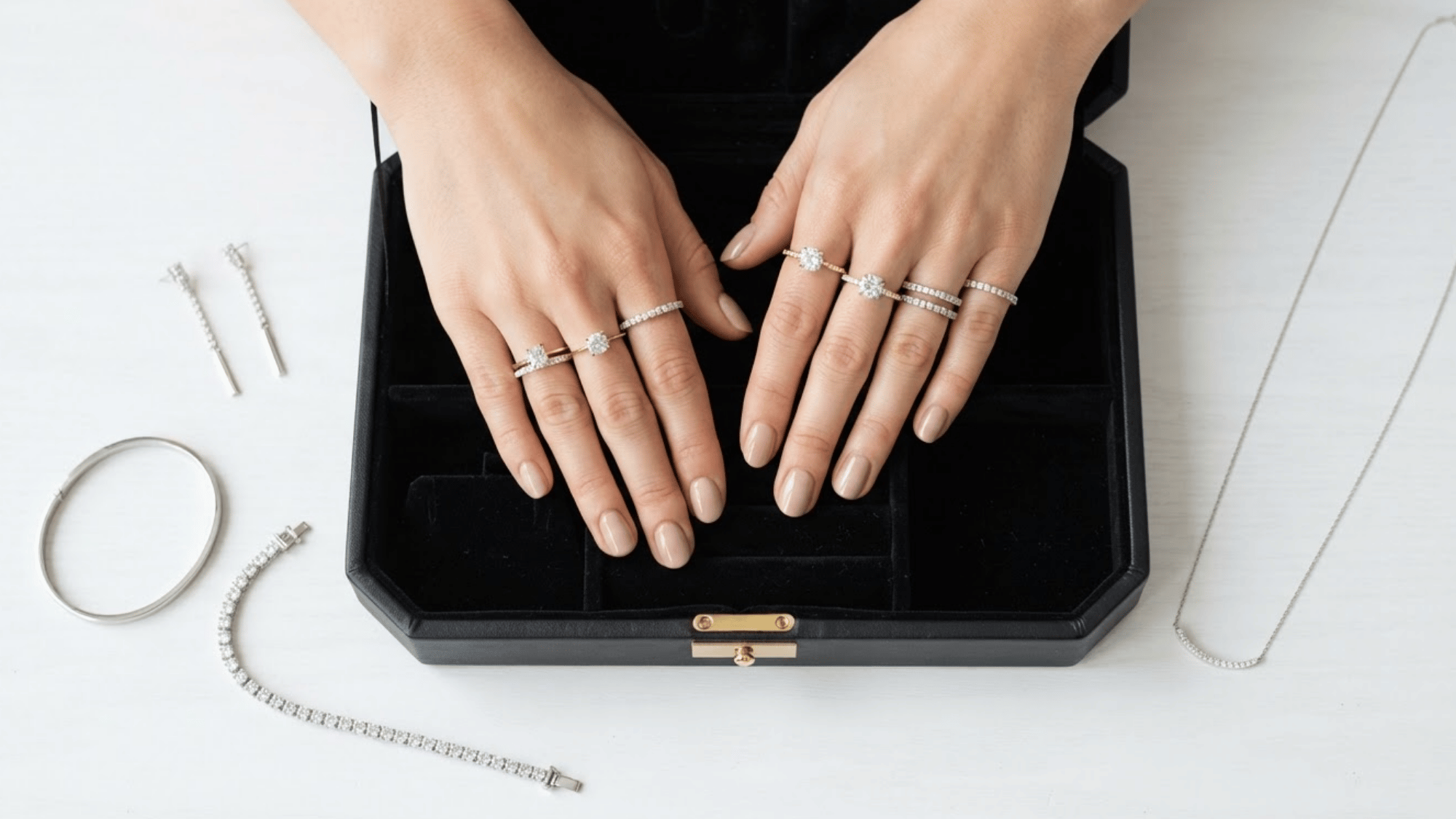
Some jewelry pieces become everyday favorites without much effort. I’ve always liked how sterling silver adds a soft shine to an outfit when I’m wearing a simple ring, a delicate necklace, or small earrings.
It feels easy to style, but I’ve also learned that keeping silver jewelry looking its best takes a little care.
If you’re asking what sterling silver jewelry is, the answer starts with understanding the metal, the meaning of 925, and how it compares with pure silver.
A few simple facts can also help you choose pieces that suit your everyday style.
What Is Sterling Silver Jewelry?

Sterling silver is a silver alloy made with 92.5% pure silver and 7.5% other metals, usually copper.
Pure silver is naturally soft, so adding other metals gives the alloy greater strength and helps it hold its shape when crafted into jewelry.
The U.S. Geological Survey’s National Minerals Information Center describes silver as highly malleable and reflective and notes its long history of use in ornaments and jewelry. The term 925 refers to 925 parts pure silver per 1,000 parts of the alloy.
Sterling silver is commonly used for rings, earrings, necklaces, bracelets, and other jewelry because it combines silver’s appearance with greater practicality for everyday designs.
Is Sterling Silver the Same as 925 Silver?
Yes, sterling silver and 925 silver are the same type of silver alloy. Both contain 92.5% pure silver, while the remaining 7.5% is made from other metals, most commonly copper.
The added metal gives silver more strength because pure silver is too soft for many everyday jewelry pieces.
When you see 925 or .925 stamped on a ring, necklace, bracelet, or earrings, it refers to the silver purity. So, 925 silver is not a lower or different grade of sterling silver; the terms simply describe the same composition.
How to Tell if Sterling Silver Is Real
Simple checks can help you assess sterling silver jewelry, but home tests cannot guarantee authenticity. Look for recognized markings and consider professional testing for greater confidence.
- Check the hallmark: Look for marks such as 925, .925, STERLING, or STER, which indicate the standard sterling silver composition.
- Inspect worn areas: If another metal color appears beneath the surface, the piece may be silver-plated rather than solid sterling silver.
- Try a magnet test: Sterling silver itself is not magnetic, although clasps or other small components may react to a magnet.
- Check the seller details: Reliable sellers should clearly state the metal composition, silver purity, and whether the piece is sterling or plated.
- Ask a professional jeweler: A jeweler can perform proper metal testing when you need clear confirmation of the jewelry’s silver content.
Note: A magnet test can be a useful screening step because sterling silver itself is not magnetic. However, magnetic components in clasps or other parts can affect the result, so a magnet test alone cannot confirm or rule out authenticity.
How Is Sterling Silver Different from Pure Silver?
Sterling silver and pure silver differ in silver content, hardness, and everyday practicality. Sterling silver is generally better suited to regular jewelry use, while pure silver is softer and more prone to scratches.
|
Feature |
Sterling Silver |
Pure Silver |
|---|---|---|
|
Silver content |
92.5% pure silver |
99.9% or close to pure |
|
Other metals |
Usually 7.5% copper or other metals |
Very little or none |
|
Hardness |
Harder and more suitable for jewelry |
Softer and easier to scratch |
|
Durability |
Better suited to regular wear |
More prone to dents and scratches |
|
Appearance |
Bright, polished silver finish |
Similar silver appearance |
|
Common uses |
Rings, necklaces, earrings, bracelets |
Collectibles, specialty items, some jewelry |
|
Maintenance |
Can tarnish and needs regular care |
Can also tarnish and needs care |
|
Best suited for |
Everyday jewelry and detailed designs |
Items where high silver purity is the priority |
How Sterling Silver Is Used in Jewelry
Sterling silver combines a bright appearance with the added strength needed for jewelry making. Its versatility and workability make it suitable for many designs and styles.
- Bright appearance: Offers a clean, polished silver finish.
- Better strength: Added metals make it harder than pure silver.
- Easy to shape: Can be crafted into detailed and intricate designs.
- Affordable: Often costs less than many other precious metals.
- Versatile: Works well for everyday and occasional jewelry.
- Many jewelry types: Commonly used for rings, necklaces, earrings, bracelets, pendants, and charms.
If you’re building out a necklace collection, our guide to different chain styles for jewelry can help you match a chain type to how sterling silver wears day-to-day.
How Durable Is Sterling Silver Jewelry?
Sterling silver is a durable precious-metal alloy that can work well for everyday jewelry when it is properly made and cared for. Its strength makes it suitable for rings, necklaces, bracelets, and earrings, but it is not scratch-proof.
Rings and frequently worn pieces may develop marks from regular friction, while delicate designs require more careful handling.
Jewelry quality also depends on factors such as craftsmanship, metal thickness, settings, gemstones, and construction, not just the sterling silver itself.
Does Sterling Silver Tarnish or Turn Skin Green?

Sterling silver can develop a darker surface over time when silver reacts with sulfur compounds, moisture, chlorine, cosmetics, or substances on the skin.
This process is tarnishing, not rusting, because rust specifically affects iron and iron-based metals. Some wearers may also notice green or dark marks on their skin when the alloy’s other metals react with sweat or skincare products.
The National Library of Medicine reports that jewelry was the most common source of nickel allergy in a North American Contact Dermatitis Group study.
These changes don’t automatically mean the jewelry is fake. Gentle polishing can usually restore the silver’s shine, while proper storage and care can help slow tarnishing.
Caring for Sterling Silver Jewelry
Simple care can help sterling silver stay bright and reduce tarnish over time.
Regular gentle cleaning and proper storage are more effective than harsh cleaning methods.
- Store it properly: Keep pieces in a dry, airtight, or tarnish-resistant jewelry container.
- Avoid chemicals: Remove jewelry before using perfumes, lotions, hairspray, or household cleaners.
- Limit water exposure: Take pieces off before swimming, showering, or exercising.
- Polish gently: Use a soft silver-polishing cloth for routine cleaning.
- Deep clean carefully: For occasional cleaning, use lukewarm water, mild dish soap, and a soft brush.
- Take extra care with delicate pieces: Gemstones, plated finishes, and intricate designs may require professional cleaning.
Is Sterling Silver Jewelry Worth Buying?
Sterling silver offers a balance of genuine silver content, versatility, and affordability for many jewelry styles.
Its tarnishing and care needs are worth considering before choosing it for regular wear.
|
Benefit |
Consideration |
|---|---|
|
92.5% pure silver content |
Can tarnish over time |
|
Bright, versatile appearance |
Softer than some jewelry metals |
|
Works for many jewelry designs |
Needs regular care |
|
Suitable for everyday pieces |
Can develop scratches and marks |
|
Often more affordable than gold |
Requires proper storage and cleaning |
|
Easy to polish and maintain |
Frequent wear may increase surface wear |
If you’re weighing sterling silver against another metal entirely, our white gold vs. silver comparison breaks down looks, cost, and upkeep side by side.
Conclusion
Sterling silver jewelry brings together the beauty of silver with the strength needed for everyday designs. With 92.5% pure silver, it offers a practical alternative to softer pure silver while remaining versatile and relatively affordable.
Understanding the 925 marking, authenticity checks, differences from pure silver, tarnishing, and basic care can make choosing and maintaining these pieces much easier.
I’ve found that a little regular care keeps my sterling silver pieces looking polished and ready to wear. If you enjoy classic jewelry with a bright, timeless finish, sterling silver can be a lovely addition to an everyday collection.
Frequently Asked Questions
Is Sterling Silver Hypoallergenic?
Sterling silver is generally well tolerated, but some pieces may contain nickel or other metals that can trigger irritation in people with metal sensitivities.
Can Sterling Silver Jewelry Be Resized?
Many sterling silver rings can be resized by a professional jeweler, although the design, gemstones, thickness, and construction can affect what adjustments are possible.
Can Sterling Silver Jewelry Be Engraved?
Yes, sterling silver is suitable for engraving. You can add names, dates, initials, and short messages to many rings, pendants, bracelets, and other pieces.
Can Sterling Silver Jewelry Be Repaired?
A jeweler can often repair sterling silver jewelry. Depending on the damage, a jeweler can often repair broken chains, loose settings, damaged clasps, and bent pieces.