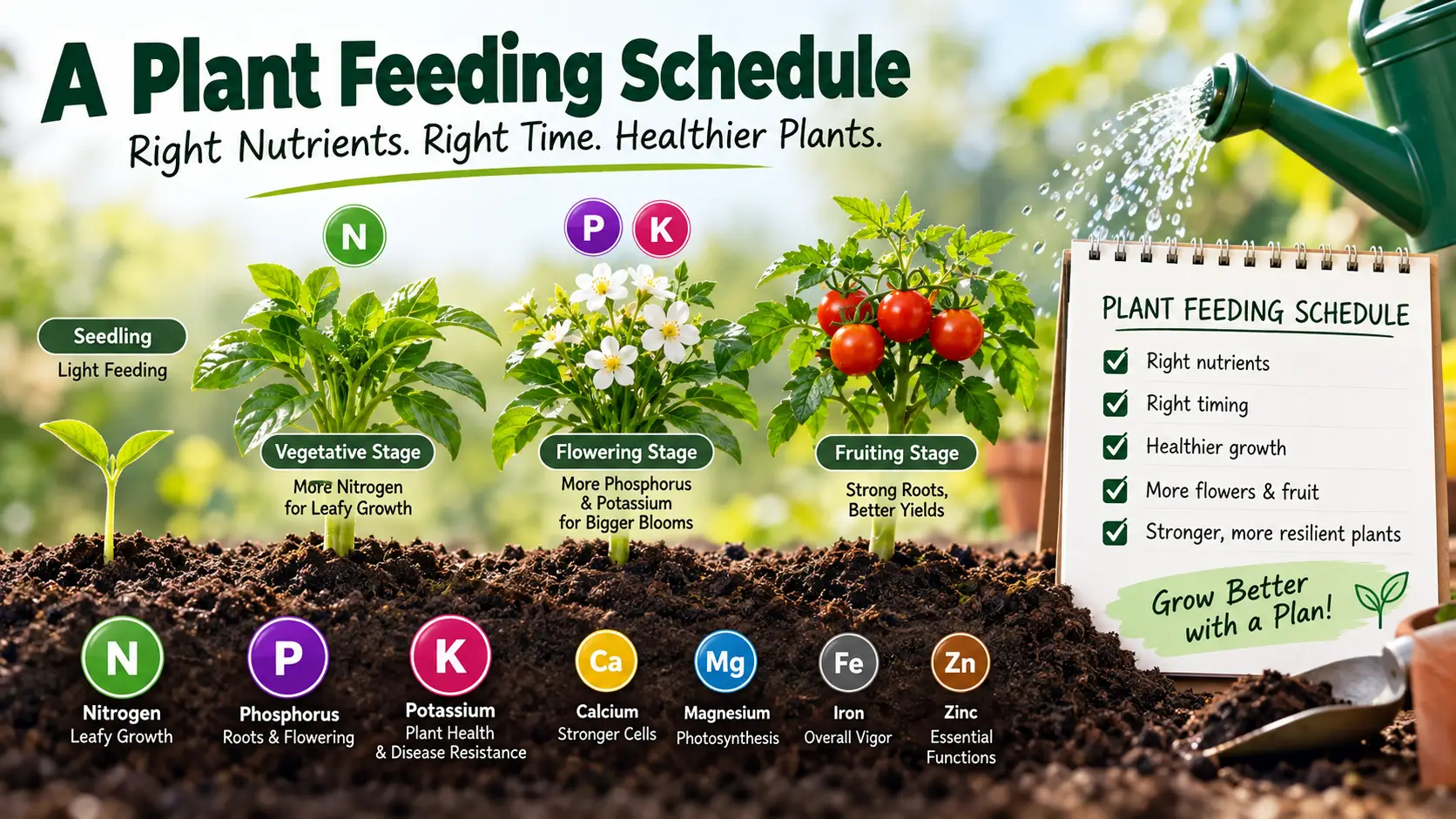
Do you know a plant’s nutritional needs change during the growth cycle? For example, a plant requires more nitrogen (N), phosphorus (P), calcium (Ca), and magnesium (Mg) during the vegetative stage. Furthermore, when it begins to flower, it requires much more potassium (K) and phosphorus (P).
Plants need a consistent supply of vital nutrients throughout their life cycle, and providing them at the right time yields better results. A plant feeding schedule helps growers provide the right nutrients at the right time while avoiding problems like poor flowering, slow growth, weak roots, and nutrient deficiencies.
Let’s understand what a plant feeding schedule actually is and why it matters for your plant growth.
What Nutrients Do Plants Need?
Plants require more than just water and sunlight to grow. Plants primarily require three macronutrients:
- Nitrogen (N): Supports leafy growth and overall plant vigor.
- Phosphorus (P): Encourages root development and flowering.
- Potassium (K): Enhances health and resistance to illness in plants.
Beyond these three, plants also require trace elements such as iron, zinc, and manganese, as well as lower levels of calcium, magnesium, and sulfur. They need a consistent supply of nutrients to perform vital biological functions, including photosynthesis, root development, and cell repair. Even if nitrogen, phosphorus, and potassium levels are normal, a lack of just one of them can show up as stunted growth, discolored leaves, or poor flowering.
What Exactly Is a Plant Feeding Schedule?
A plant feeding schedule is a structured plan that outlines when, how often, and what type of nutrients should be given to a plant during different stages of growth.
A schedule considers a plant’s species, growth stage, and season to calculate the right feeding frequency and formula. Feeding schedules usually specify:
- The dosage or ratio of dilution.
- The application frequency (weekly, biweekly, or monthly).
- Modifications for different growth stages, such as vegetative versus flowering.
Plant requirements change throughout the year and are easy to forget without a system. This is why many gardeners rely on published schedules or apps to stay consistent. Resources like Feedschedules.com compile nutritional schedules for different plants to help growers plan feeding schedules, understand nutrient timing, and maintain regularity throughout a plant’s growth cycle.
Why Plant Feeding Schedule Matters
A systematic feeding schedule offers multiple benefits for both beginner and experienced gardeners. Here is why it matters for a plant’s nutrients and growth:
Prevents Overfeeding and Underfeeding
Without a timetable, it is easy to overcompensate by feeding too much, too regularly, or to forget to feed completely. Underfeeding leads to weak growth and low crop production, while overfeeding can lead to nitrogen toxicity, root damage, and fertilizer burn. A feeding schedule ensures that feeding is regular and appropriate for the plant’s real needs at each stage.
Supports Healthy Growth Stages
Plants require different nutrients depending on where they are in their life cycle.
- Seedling stage: Light feeding with diluted nutrients to prevent young roots from being overburdened.
- Vegetative stage: Increased nitrogen level to boost the growth of leaves and stems.
- Flowering or fruiting stage: Increased potassium and phosphorus to support fruit growth and blooming.
Ignoring these stages when feeding may delay development or lower chances of flowering and fruiting.
Improves Plant Resilience
Properly fed plants are more resilient to environmental stress, disease, and pests. A consistent feeding schedule gradually increases the plant’s overall strength instead of leaving a plant to struggle for nutrients during key growth stages.
Saves Time, Money, and Guesswork
Using fertilizer without a strategy usually results in waste, either from misuse or from using the wrong product for the needs of a plant. A feeding schedule makes it easier for growers to buy only what they need and use it efficiently. This reduces time, money, and the environmental impact of runoff or excess product.
Prevents Nutrient Deficiencies
Nutrient deficiencies in plants can lead to symptoms such as yellowing leaves, poor flowering, stunted growth, weak stems, and reduced yields. A feeding schedule removes these problems by providing nutrients before deficiencies become severe.
How to Create an Effective Plant Feeding Schedule?
Creating a plant feeding schedule doesn’t have to be difficult. All it takes is understanding your plant’s particular needs. Here is a step-by-step process for creating a simple yet effective feeding schedule:
Step 1: Identify Your Plant’s Needs
Find out what your plant species needs in terms of nutrients. For example, Succulents often need less fertilizer, vegetables require regular feeding during the growth stage, and houseplants require seasonal feeding adjustments.
Step 2: Choose the Right Fertilizer Type
Fertilizers come in multiple forms, such as:
- Liquid fertilizers: These have quick effects and are easy to dose.
- Granular fertilizers: They are slow-release and require less application.
- Organic options: These include compost, worm castings, and fish emulsion, which release nutrients gradually.
Each option offers different advantages depending on the type of plant and growing conditions.
Step 3: Set a Realistic Frequency
Feeding every 1-4 weeks during the growing season benefits actively growing plants. However, feeding should be reduced or stopped during fall and winter dormancy.
Step 4: Track and Adjust
To keep track of feeding dates, use a basic calendar or journal. Adjust the schedule as per signs of excess or deficiency, such as slower growth or discolored leaves. Adjust the feeding schedule if any problems arise.
The Long-Term Impact of Proper Feeding
Consistent nutrition supports more than short-term growth. Plants that get balanced feeding tend to grow stronger root systems, have higher stress tolerance, and improved resistance to pests and diseases.
A feeding schedule supports effective fertilizer use, cuts waste, and helps growers make the right plant care decisions. Whether you are growing a few houseplants or managing a large garden, an organized approach to plant nutrition lays the groundwork for healthier and more productive plants.
Final Thoughts!
With a feeding schedule, plant nutrition becomes a predictable, repeatable process rather than a guessing game. By understanding when and what nutrients a plant needs, growers can avoid common problems like nutrient burn or deficiency and give their plants the best chance to grow healthy, flower completely, and resist stress.