Most people picture a storm as rain and noise. The real damage comes from pressure, and pressure works in ways that are not obvious from inside a living room. Wind does not simply push on a building. It pulls at the roof, presses hard against one wall while sucking at another, and hunts for any weak point that will let it inside.
Understanding how that process unfolds makes it much easier to see which parts of a house deserve attention and which ones will hold up on their own.
The Weakest Point in Most Homes
Wind does not need to bring a wall down to ruin a house. It only needs one opening. Standard glass fails at a fraction of the wind speed a major storm carries, and a branch or roof tile traveling at speed will pass straight through it. Once a single pane is gone, rain and pressure move freely into the room, and the damage spreads outward from there.
Fitting hurricane resistant windows stops debris at the opening instead of allowing it into the house. Products like these are tested against sustained wind loads and impact before they are ever installed, which is what separates them from ordinary glass.
Garage Doors and Their Role in Storm Damage
The garage door is the largest single surface on most houses, and it is often the least reinforced. When wind pushes against that much flat area, the panels bow inward, and the track can pull loose from its mounting. Once the door gives way, the garage fills with air under pressure, and that force has nowhere to go except upward and outward.
Reinforcement kits exist for many standard doors and can be fitted without replacing the whole assembly. Braces run vertically across the panels and lock into anchors at the floor and header. Older doors sometimes cannot be reinforced adequately, in which case replacement with a rated unit is the more sensible route. Either way, it is a check worth doing early, because the garage failing tends to take the roof with it.
Roofing Details That Matter Under Pressure
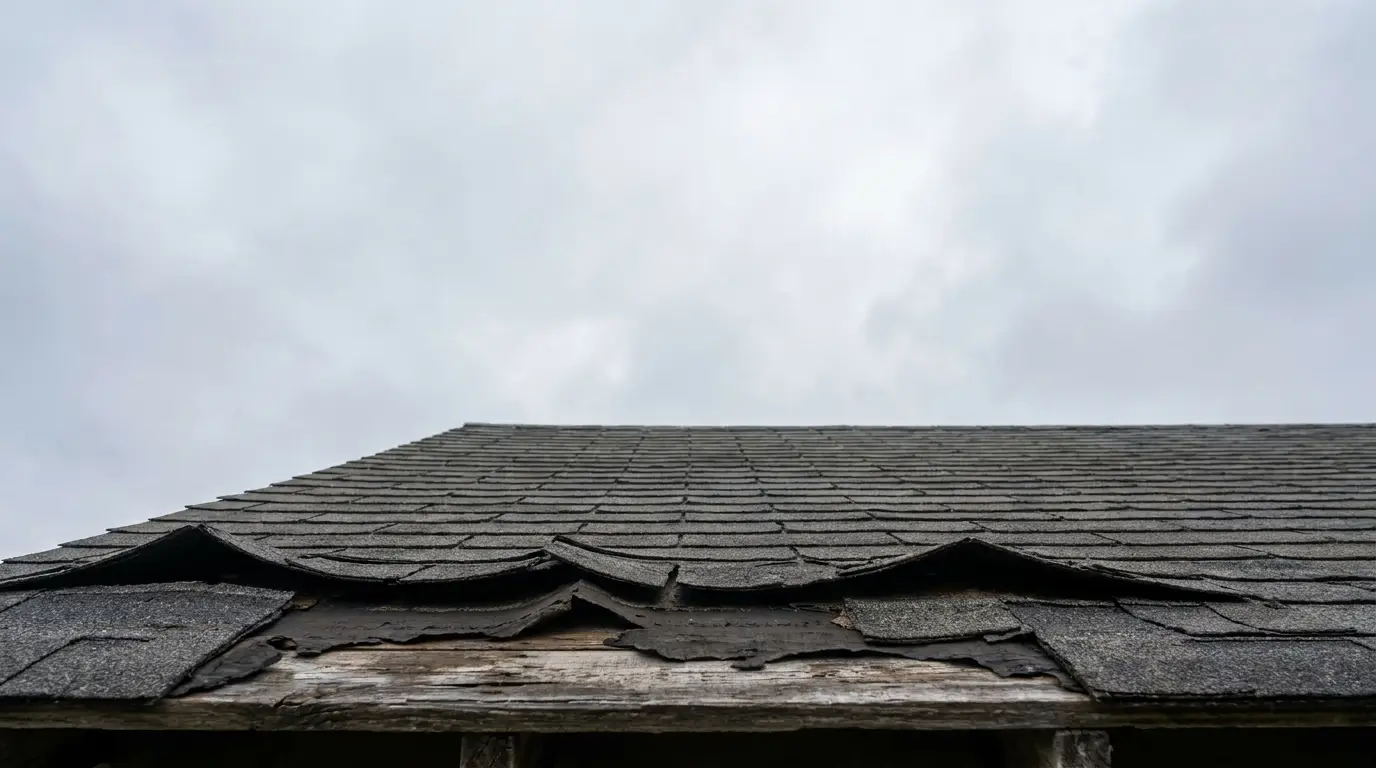
Roofs rarely fail all at once. They fail one piece at a time, starting with whichever edge is already loose. Wind lifts the leading edge of a shingle, gets underneath it, and peels it back. The gap that leaves gives the next shingle the same opportunity, and the process repeats until a stretch of decking is exposed.
The edges and corners take the worst of it, which is why properly fastened drip edge and starter strips matter so much. Attention also belongs on the connection between the roof structure and the walls below. Older homes were often built with nailed connections that offer limited resistance to uplift, and metal straps can be retrofitted in many cases. An inspection from someone who knows what to look for will tell you quickly whether that work is worth pursuing.
Water Intrusion After the Wind Passes
Rain during a major storm does not fall in a predictable direction. It moves sideways, gets forced under overhangs, and finds gaps that never see moisture during ordinary weather. Small openings around vents, soffits, and exterior fixtures suddenly become entry points, and water travels a long way inside a wall cavity before it shows up anywhere visible.
Sealant around exterior penetrations dries out and cracks over the years, so it needs periodic replacement. Attic vents deserve inspection as well, since a screen or baffle that has come loose lets water straight into the insulation. Anything that channels water away from the structure should be cleared and tested before the season, because a blockage that seems minor in light rain becomes a significant problem under a heavy sustained downpour.
Keeping the Yard From Becoming a Hazard
Almost everything that damages a house during a storm started somewhere else in the neighborhood. Loose objects get picked up and thrown, and the list is longer than most people assume. Trash bins, potted plants, lawn ornaments, hoses, ladders, and bicycles all belong inside once a warning is issued.
Trees are the larger concern. Dead branches, split trunks, and limbs hanging over the roof should be dealt with well ahead of time, and a professional should handle anything substantial. Fences deserve a look too. A section with rotted posts will give way and take out whatever is downwind of it. Clearing these hazards protects your own home and cuts down on the debris field that ends up affecting everyone nearby.
What to Do Once the Storm Clears
The hours after conditions improve are more dangerous than people expect. Downed power lines may still be live, standing water hides damage underfoot, and structures weakened during the night can shift without warning. Wait until conditions are genuinely safe before walking the property, and keep well clear of anything electrical.
When you do inspect, work methodically and photograph everything before touching it. Start with the exterior and note anything displaced, cracked, or missing. Move to the attic next, since that is where water shows up first. Then check ceilings, upper walls, and any interior corner that feels damp or smells musty. Documentation collected in the first day supports a claim far better than anything gathered later.
Temporary repairs are worth making quickly to stop further water from entering, but keep receipts and take photographs before and after. Contractors get booked solid immediately after a storm, so contact yours early even if the work will not begin for weeks. Understanding how the damage happens in the first place is what turns all of this from a scramble into a routine.