Last-minute packing has a way of making even a simple trip feel messy. I have stood over an open suitcase, added random extras, and still missed the one thing I needed first.
The best travel necessities are not the things that fill your bag. They are the items that help you move through delays, long rides, hotel check-ins, weather shifts, and tired travel days with less stress.
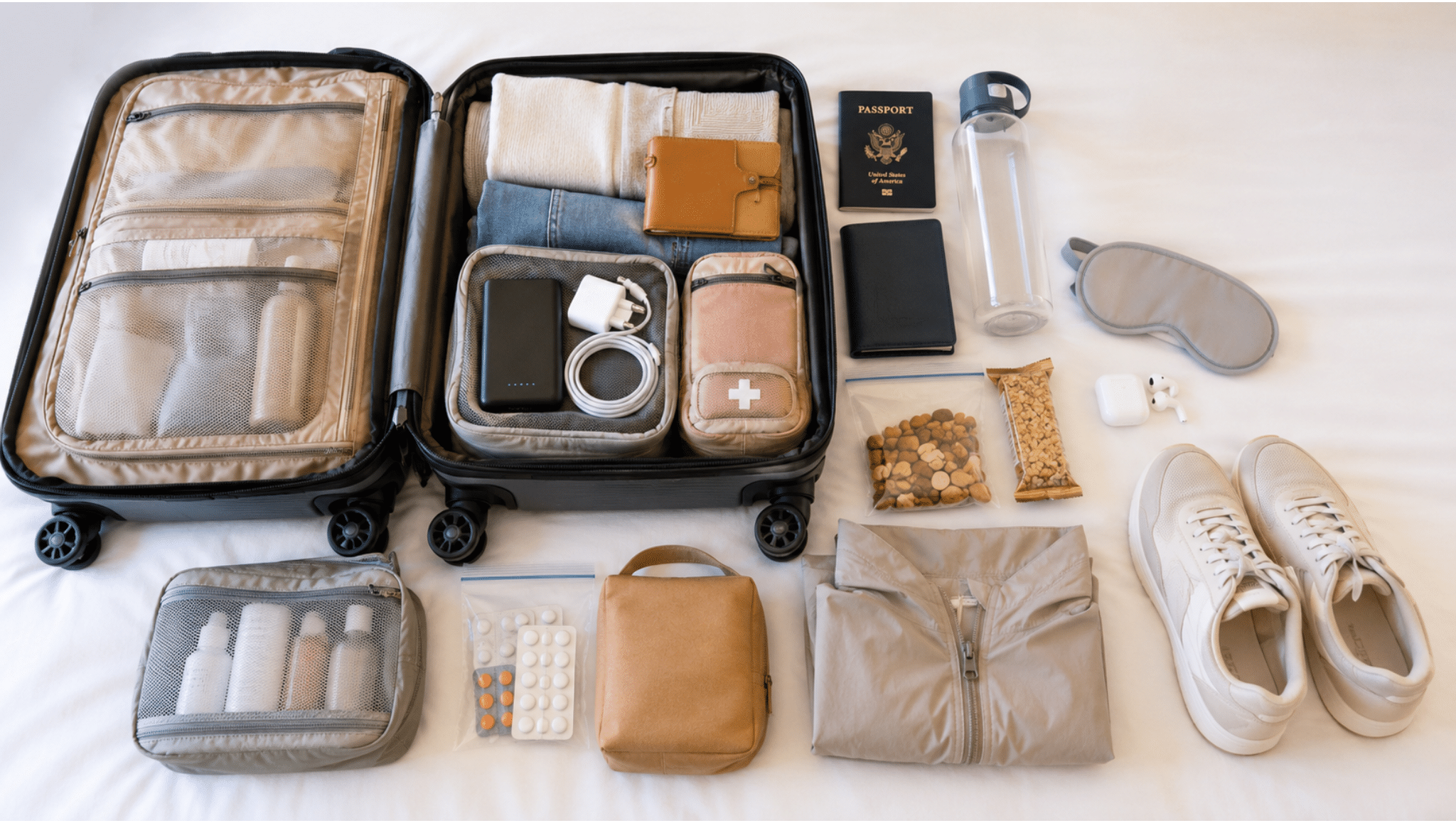
I start with papers, money, medicine, charging items, hygiene basics, and comfort pieces that I know I will use. Then I add only what fits the trip. Use this list to pack with purpose, not panic, so your bag feels useful from the start.
Packing Based on Real Travel Problems
A good travel bag should help you handle real problems, not imagined ones. Think about what can slow you down on any trip.
A dead phone, delayed luggage, sore feet, or a missing paper at check-in cause most of the stress. Plan around these instead of random extras.
The smartest packing starts with access. Items you may need quickly should sit in your personal bag, not buried deep inside.
Items that can wait belong in your carry-on or checked bag. Before adding anything else, run it through three quick questions.
- Will I use this more than once?
- Would forgetting it create stress?
- Is there a smaller version that works just as well?
If an item does not pass at least one of those questions, it may not need space in your bag.
Download the quick checklist for easier access and to keep it handy during your travel.
Travel Documents to Sort Before Anything Else
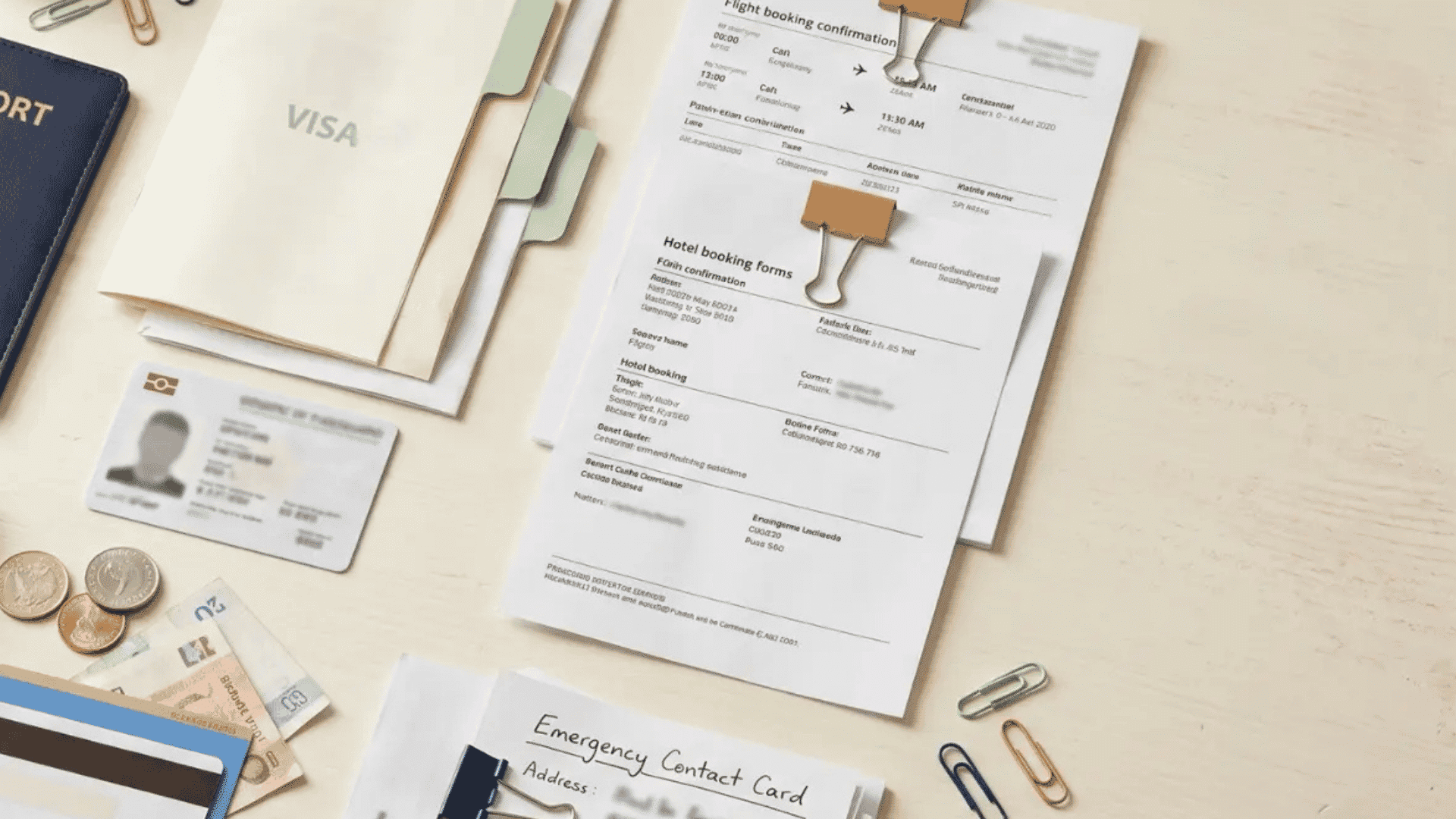
These items protect your plans before the trip even starts, so keep them easy to find and backed up. A missing paper can slow down check-in fast.
I would pack these first before adding anything else. They form the starting point of any solid list of travel necessities.
1. Passport or Government ID
Your passport or government ID should be the first item you confirm. Keep it in your personal bag, not in checked luggage.
For foreign trips, check the expiry date early, as some places require additional validity beyond your stay.
2. Visa and Entry Paper
If your destination needs a visa, keep digital and printed copies. Save any entry approval, return ticket, health form, or hotel proof in one offline folder. It is easier to answer questions when all papers sit in one place.
3. Tickets and Booking Details
Download your flight, train, bus, hotel, rental car, and tour confirmations before leaving. Apps can log out, Wi-Fi can fail, and mobile data may not work right away. A screenshot can save you during a rushed check-in.
4. Emergency Contact Card
Write down one family contact, one travel partner, your hotel, insurance contact, and the local emergency number. Keep this card away from your phone. If your battery dies or your phone gets lost, paper still works.
5. Travel Wallet
A travel wallet keeps your passport, ID, tickets, cards, cash, and booking papers together. I prefer one slim pouch instead of checking every pocket at the airport. The best one is light, flat, and easy to reach.
6. Main Card, Backup Card, and Small Cash
Carry one main payment card, one backup card, and a small amount of cash. Small notes help with taxis, tips, carts, kiosks, or shops that do not take cards. Keep backup money in a separate spot.
7. Copies of Important Papers
Copies of your passport, visa, insurance, ID, and hotel booking can help if the originals go missing. Keep one paper copy apart from the originals and one digital copy saved offline. It takes little space.
Tech Gear That Keeps the Trip Running
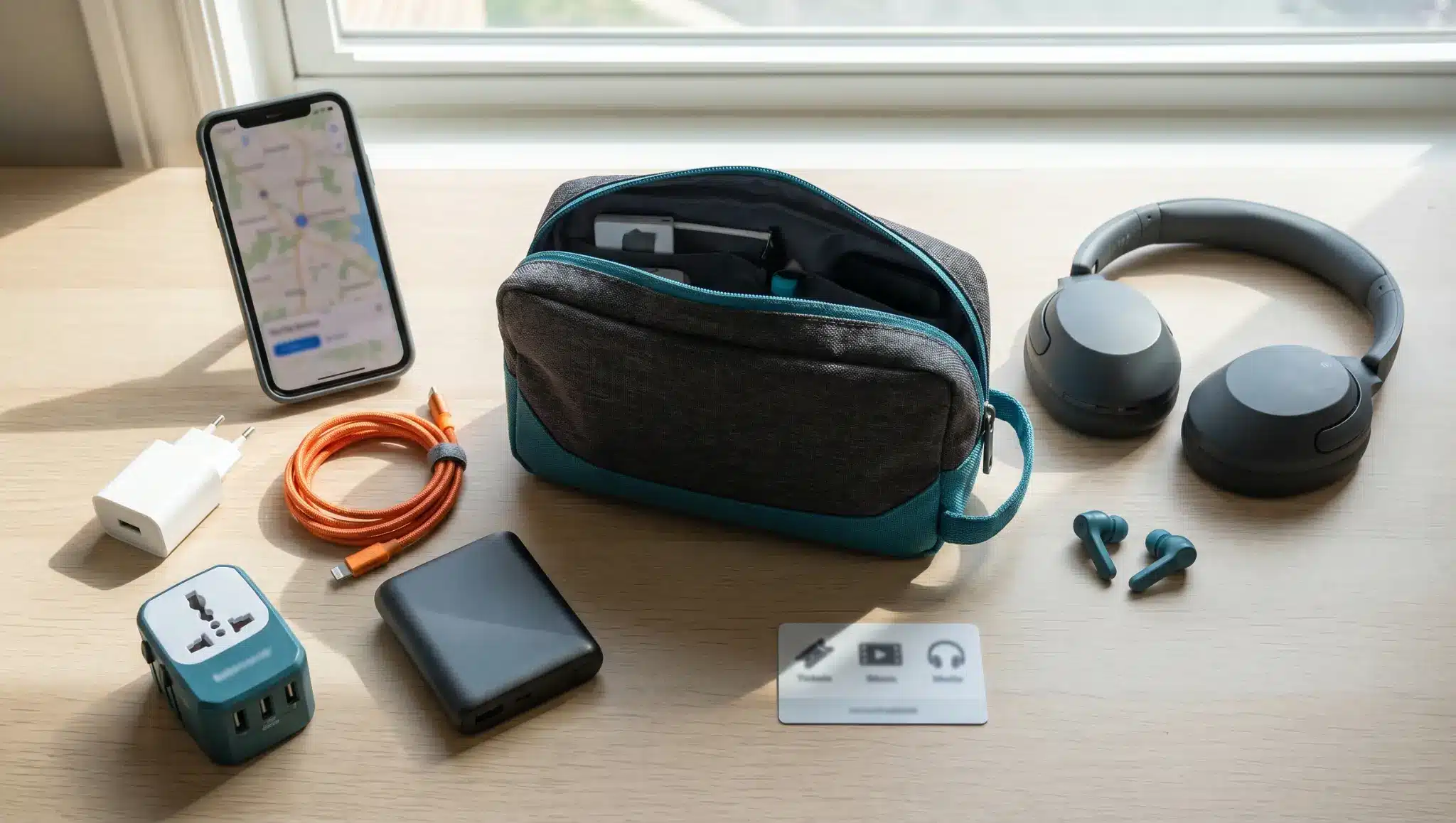
Your phone and charging setup matter because tickets, maps, bookings, and emergency contacts often live on your screen. A dead battery can turn a small delay into a real problem.
These picks keep your devices working through long days and short layovers alike. They round out the tech side of your travel necessities.
8. Phone
Your phone works as your map, camera, ticket holder, payment tool, translator, and contact device. Before leaving, clear space, charge it fully, update key apps, and save details offline so you are not stuck without access.
9. Wall Charger
A working wall charger is easy to forget because it often stays plugged in at home. Pack one reliable charger that fits your phone and other small devices. Avoid weak old chargers that waste time during short stops.
10. Charging Cable
A strong charging cable matters as much as the charger. Frayed cables can stop working mid-trip. If your phone is central to your plans, add one spare cable and keep it in your tech pouch.
11. Power Bank
A power bank helps during delays, full sightseeing days, road trips, and long routes where outlets are rare. Pick one that fits your daily phone use without adding too much weight. Keep it in your carry-on when flying.
12. Universal Travel Adapter
A universal adapter is useful outside your home country because plug types change. Choose one with both USB-A and USB-C ports if you carry multiple devices. A compact adapter can replace several separate plugs.
13. Headphones or Earbuds
Headphones help with flights, buses, trains, calls, shows, and noisy rooms. Noise-canceling models are worth it for frequent flyers, while basic earbuds are fine for short trips. Keep them near you, not buried under clothes.
14. Offline Maps and Saved Media
Download maps, hotel addresses, tickets, music, shows, books, and podcasts before leaving. This helps when the signal is weak, data is costly, or a flight has no good screen options. Screenshots are useful too.
Health and Hygiene Basics for Long Travel Days
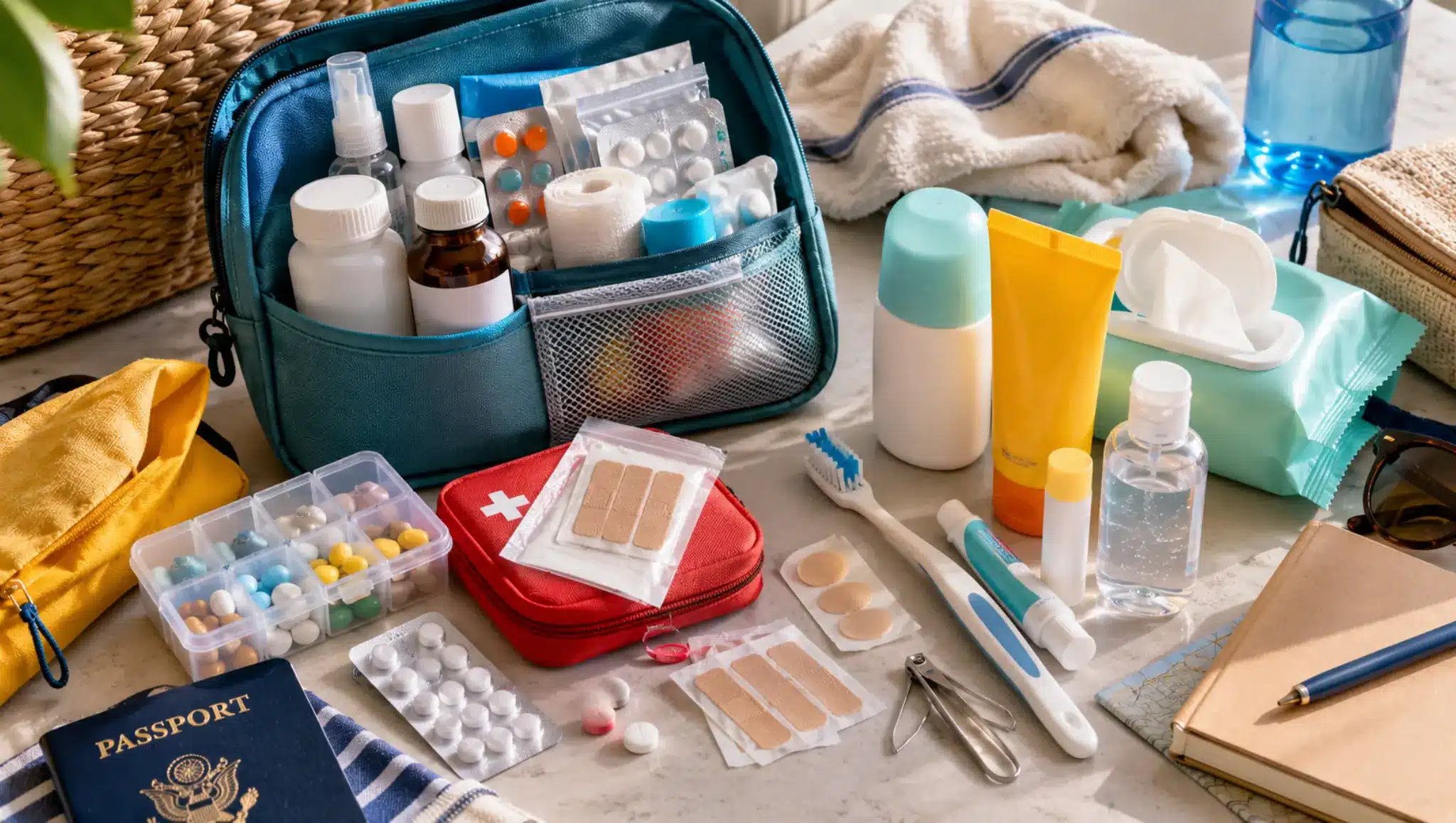
These items help you stay clean, comfortable, and prepared when shops are closed or hard to find. A few small picks can fix most problems before they start.
Keep these basics in reach rather than buried at the bottom of your bag. They belong on any list of travel necessities.
15. Prescription Medicines
Keep prescription medicines in your personal bag with enough for the full trip and a small buffer. Original packaging can make checks easier. If your medicine is important, do not place it in checked luggage.
16. Small Medicine Pouch
A small medicine pouch saves you from searching for a pharmacy in an unfamiliar area. Pack trusted basics such as pain relief, antacid, allergy medicine, motion sickness tablets, and stomach medicine based on what you use safely.
17. Bandages and Blister Pads
Bandages and blister pads are tiny but useful on walking-heavy days. Airports, city streets, stations, and new shoes can cause sore spots fast. Keep a few with your medicine pouch so you can fix the issue early.
18. Toothbrush and Toothpaste
A toothbrush and small toothpaste help you feel fresh after long rides, early flights, and late arrivals. Keep them in a toiletry pouch you can access quickly, especially if you have an overnight route or long layover.
19. Deodorant
A travel-size deodorant helps after flights, warm transfers, train rides, and full days outside. A solid option can reduce liquid packing. Keep the cap secure and place it in your toiletry pouch to prevent mess.
20. Sunscreen
Sunscreen is useful for beaches, hikes, city walks, cruises, and sunny road stops. Travel-size bottles save space, while stick sunscreen is less messy. Pack it where you can reach it before a full day outside.
21. Lip Balm
Lip balm is small but helpful on planes, in dry weather, and during outdoor plans. I like keeping one in my personal bag rather than inside the suitcase. SPF lip balm is a smart choice for sunny places.
22. Hand Sanitizer
Hand sanitizer helps before eating, after public transport, and when sinks are not nearby. Choose a small bottle that fits your personal bag. It is most useful during flights, road trips, market visits, and station waits.
23. Wet Wipes
Wet wipes help with spills, sticky hands, dusty bags, public seats, and quick cleanups. A small pack is enough for most trips. They are also useful if you travel with kids or eat on the move.
Clothing and Comfort Picks That Save Space
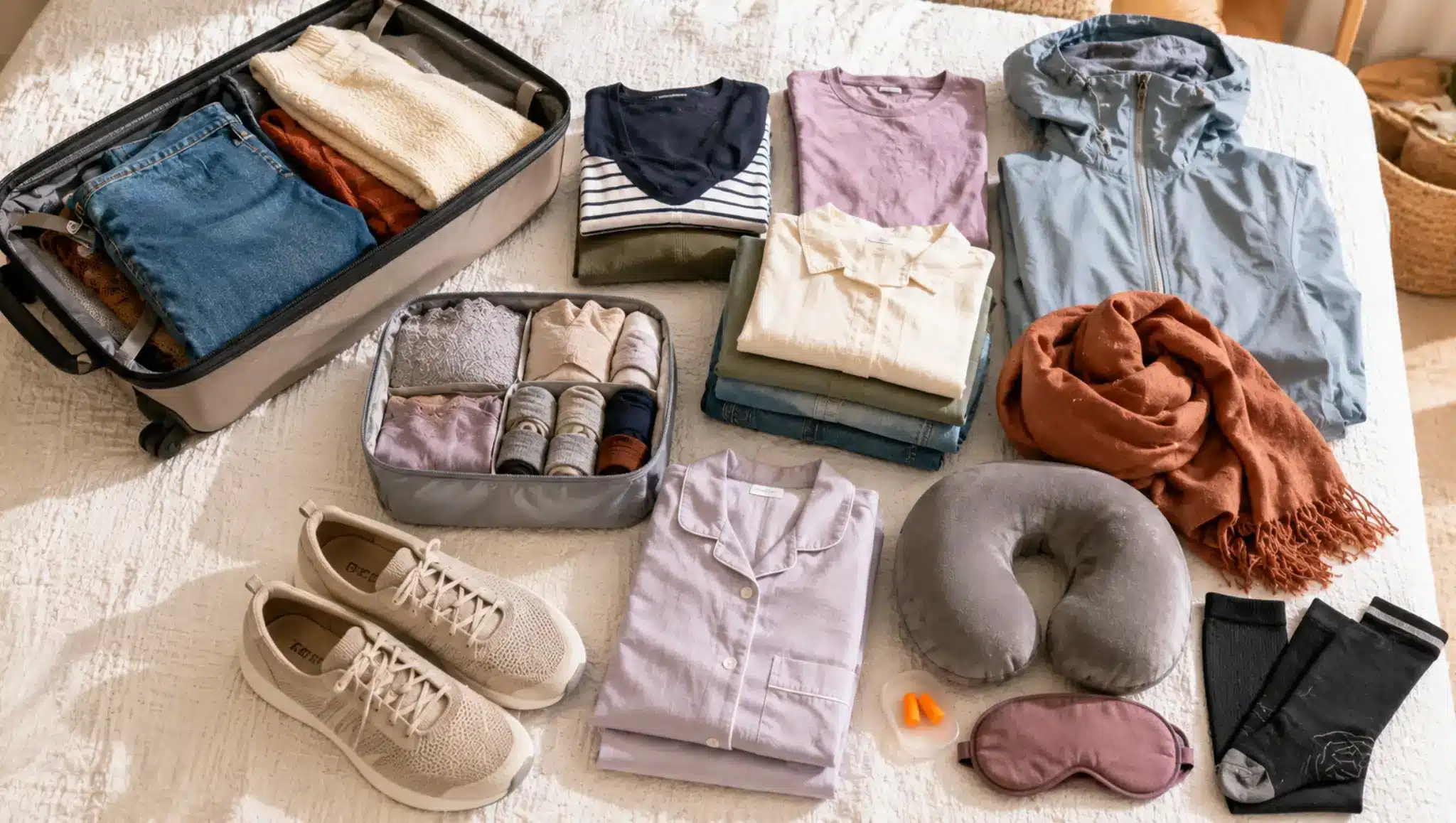
The best clothes and comfort items work more than once, pack small, and help you handle long days. Simple choices here can make every ride, flight, and hotel stay easier.
From outfits to sleep aids, these picks round out your travel necessities without adding bulk. Choose items that solve real problems, not ones that just fill space.
24. Mix-and-Match Clothes
Pack clothes that work together instead of separate outfits for every plan. Repeatable basics, easy-care fabrics, and simple layers give you more choices with less weight. I would rather repeat a good outfit than carry a heavy bag.
25. Undergarments and Socks
Pack enough underwear and socks for the trip length, then add one extra pair if space allows. If laundry is available, you can carry less. Keep one clean set in your carry-on in case luggage is delayed.
26. Sleepwear
Sleepwear is easy to miss when packing clothing. Choose something light, comfortable, and right for the room temperature. If you share a room or stay with others, pack something you feel fine wearing outside the bedroom.
27. Comfortable Walking Shoes
Comfortable shoes can change the whole trip. Airports, stations, museums, markets, and city streets add more steps than expected. Do not pack brand-new shoes unless you have worn them for a full day first.
28. Light Jacket or Scarf
A light jacket or scarf helps in cold planes, buses, airports, restaurants, and evenings. Pick one that works with most outfits. A scarf can also work as a cover when you need a little warmth.
29. Eye Mask
An eye mask helps on planes, trains, buses, and in rooms with bright curtains or hallway light. It takes little space and makes rest easier. Choose one that feels soft and does not press too hard.
30. Earplugs
Earplugs help in noisy hotels, shared rooms, flights, stations, and busy streets. Even if you pack headphones, earplugs are a useful backup. They weigh almost nothing and can help you sleep when noise is out of your control.
31. Neck Pillow
A neck pillow helps during long flights, overnight buses, train rides, and airport waits. If space is tight, choose an inflatable one. If comfort matters more, choose a style with better support.
32. Compression Socks
Compression socks can feel helpful during long seated travel, especially on flights or bus rides. Choose a pair that fits well and does not feel too tight. If you have health concerns, ask a doctor before using them.
Small Organizers That Keep Your Bag Easy to Use
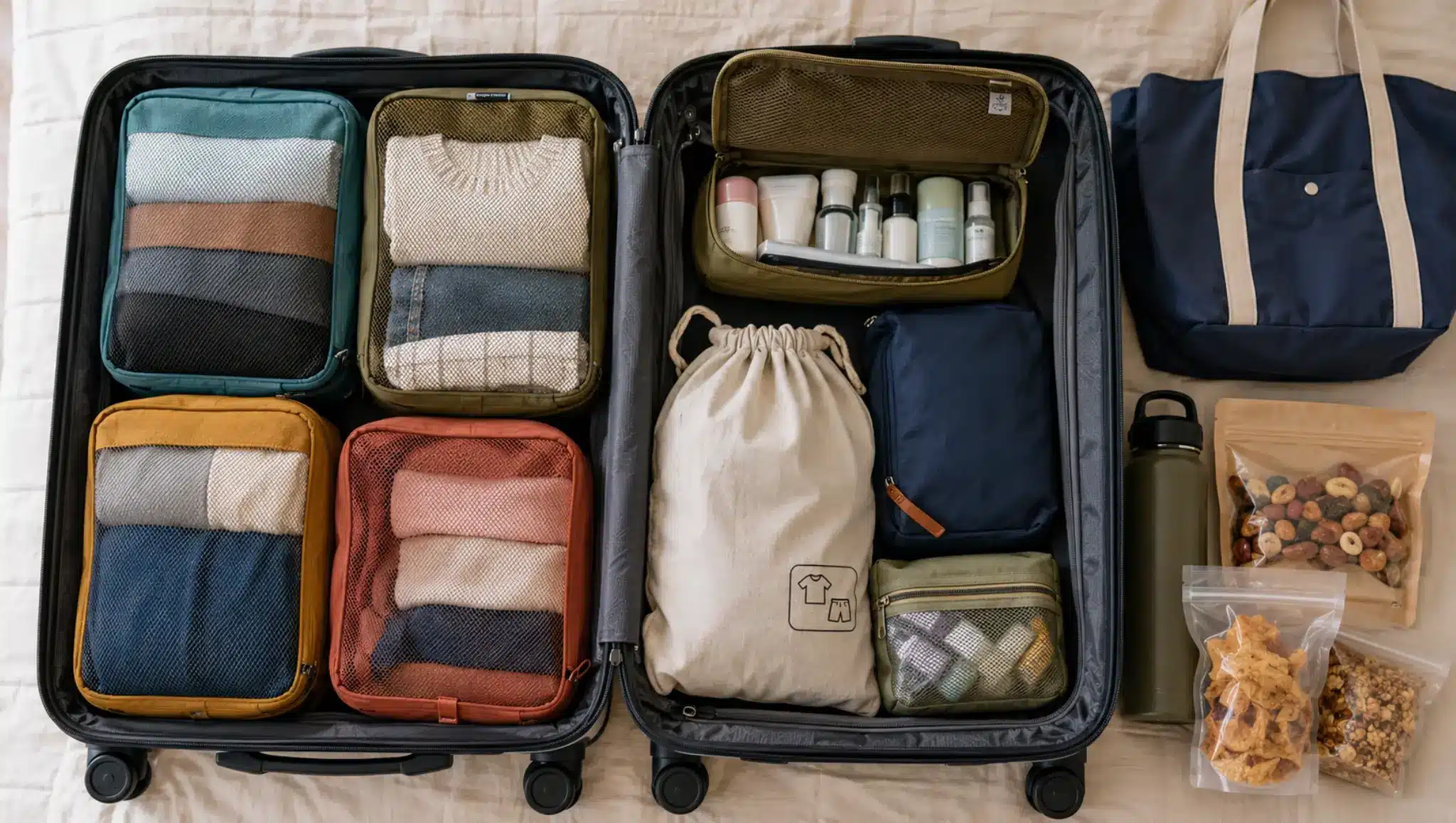
Small organizers stop your bag from turning into a pile of loose items when you need something fast. They also save time during checks, laundry days, and quick repacking.
A few simple pouches and bags can keep every category sorted, from clothes to snacks. Here are the picks worth adding to your travel necessities.
33. Packing Cubes or Pouches
Packing cubes separate clothes by type, day, or person. Small pouches work well for tech, medicine, toiletries, and comfort items. Compression cubes are useful when space is tight, but simple fabric pouches also do the job.
34. Toiletry Pouch
A toiletry pouch keeps hygiene, grooming, and skincare items in one place. Choose one that closes well and wipes clean. If you fly often, a clear pouch can make airport checks easier.
35. Laundry Bag
A laundry bag keeps worn clothes away from clean ones. It also helps with damp swimwear, used socks, and items that need washing. A simple cloth bag, dry bag, or reusable pouch can work.
36. Foldable Tote or Day Bag
A foldable tote or day bag is ideal for shopping, laundry, beach items, snacks, and light layers. Choose one that folds flat and weighs little. It should help you carry extras without becoming another bulky item.
37. Reusable Water Bottle and Dry Snacks
A reusable water bottle and dry snacks help during delays, late arrivals, road trips, and long walks. Carry the empty bottle through airport security when required. Nuts, crackers, dried fruit, or protein bars are easy options.
Packing Mistakes That Make Travel Harder
A solid list of travel necessities can still fail if you pack too much or place key items in the wrong bag. Small errors like this often cause the most stress once you reach the airport or your hotel.
- Too many backups or shoes: One spare item helps, but extra pairs and duplicates only add weight and mess.
- Key items in checked luggage: Keep papers, medicine, chargers, and one clean outfit in your personal bag at all times.
- Full-size toiletries: Switch to travel-size bottles or solid products to save space and avoid liquid limits.
- Skipping checks: Look up weather, baggage rules, and liquid or battery limits before you pack anything else.
- No categories or return space: Group items by type, and leave a little room for laundry or small purchases.
Before you zip your bag, take out anything that does not solve a real travel problem. A lighter, well-sorted bag always beats one packed out of panic.
Quick Travel Necessities Checklist
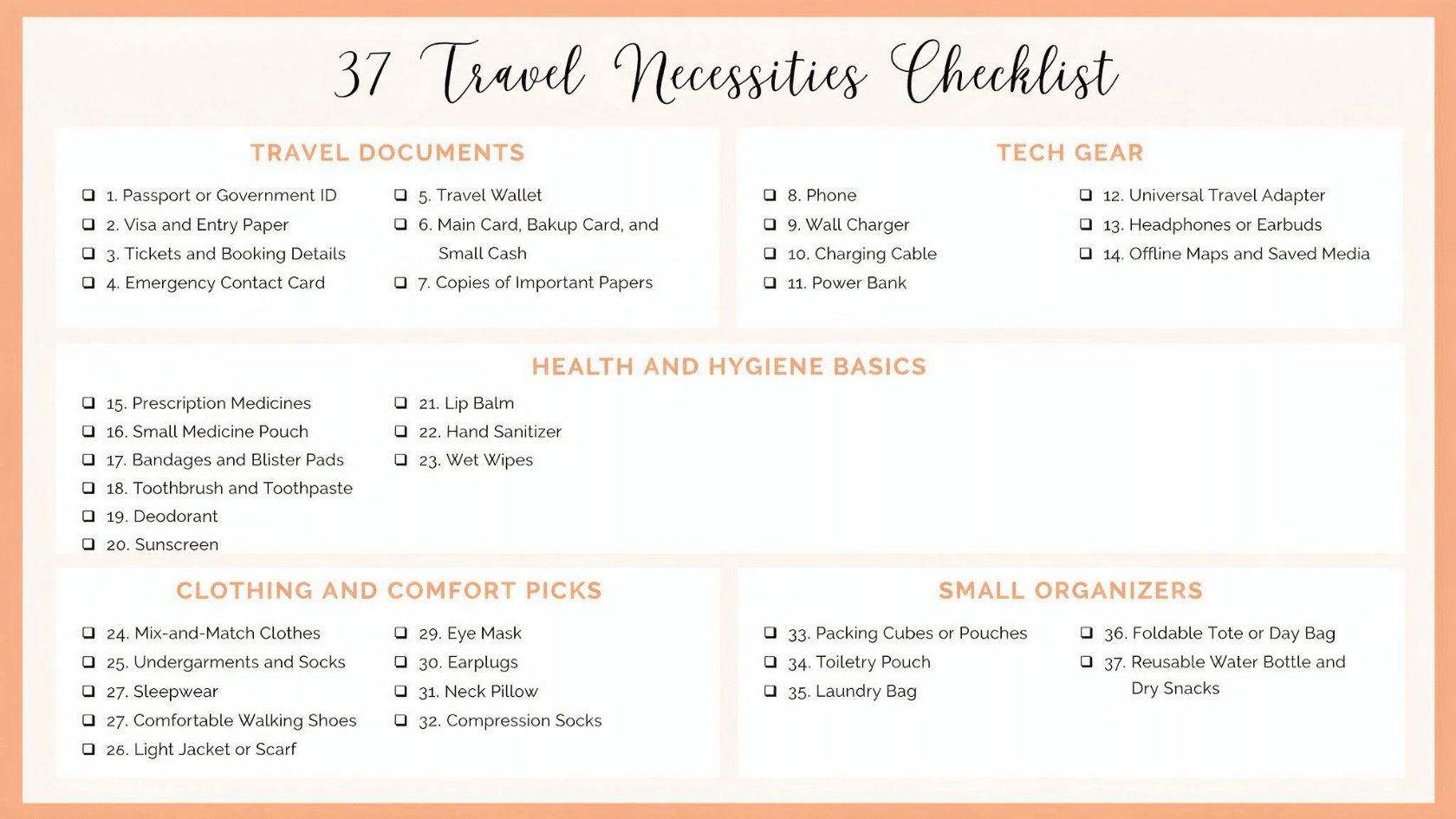
Travel Documents☐ Passport or Government ID Tech Gear☐ Phone Health and Hygiene Basics☐ Prescription Medicines Clothing and Comfort Picks☐ Mix-and-Match Clothes Small Organizers☐ Packing Cubes or Pouches |
Conclusion
The best travel necessities are the items that help when plans shift, bags get delayed, or the day runs longer than expected.
Start with papers, money, medicine, charging items, and hygiene basics. Add only what fits your destination, weather, and trip length.
Before you leave, scan the checklist once and remove anything packed out of panic. A lighter, well-sorted bag makes every part of the trip smoother.
Save this list for your next trip, and pack smarter, not heavier, from day one.
Which item from this list do you always forget to pack? Share it in the comments below.
Frequently Asked Questions
What Is the 5-4-3-2-1 Method for Packing Clothes?
This formula limits overpacking with five tops, four bottoms, three accessories, two shoes, and one outer layer. Adjust for weather and trip length.
How Can I Stop Liquids from Leaking Inside My Bag?
Tighten caps, keep bottles upright, and pack them in a sealed pouch. Plastic wrap under the cap adds extra safety.
What Is the Best Way to Pack for Changing Weather on a Trip?
Choose layers over bulky clothes. Pack a light jacket, one warm piece, and quick-drying items for rain.