Have you ever planted flowers and still wondered why butterflies never show up? The answer is usually more straightforward than it seems. Butterflies aren’t drawn to just any colorful bloom.
They look for specific flowers that attract butterflies at different stages of life. So how do you choose the right ones? And how do you turn a regular garden into a place butterflies want to visit again and again?
That’s exactly what this guide covers. I’ll walk you through flowers that butterflies actually use, not just pass by. You’ll also learn how to plant them in a way that supports butterflies through the entire season, not just for a few weeks.
What Butterflies Look for in a Garden
Butterflies don’t appear in gardens by accident. They arrive when specific needs are met. They look for nectar-rich flowers to fuel daily feeding, along with host plants where caterpillars can eat and grow.
Sunlight plays an important role too, since butterflies need warmth to fly and stay active, while sheltered areas help protect them from strong winds and harsh weather.
When these elements work together, a garden becomes more than a stopover. It becomes a place butterflies can use from spring through fall.
Gardens built with these basics in mind tend to see more frequent visits, longer stays, and a greater variety of butterfly species throughout the growing season.
Top Flowers That Attract Butterflies
These butterfly magnets combine reliable nectar sources with varied bloom times to keep your garden buzzing from spring through fall.
Mix early, mid, and late bloomers for continuous color and a steady stream of winged visitors throughout the growing season.
1. Milkweed
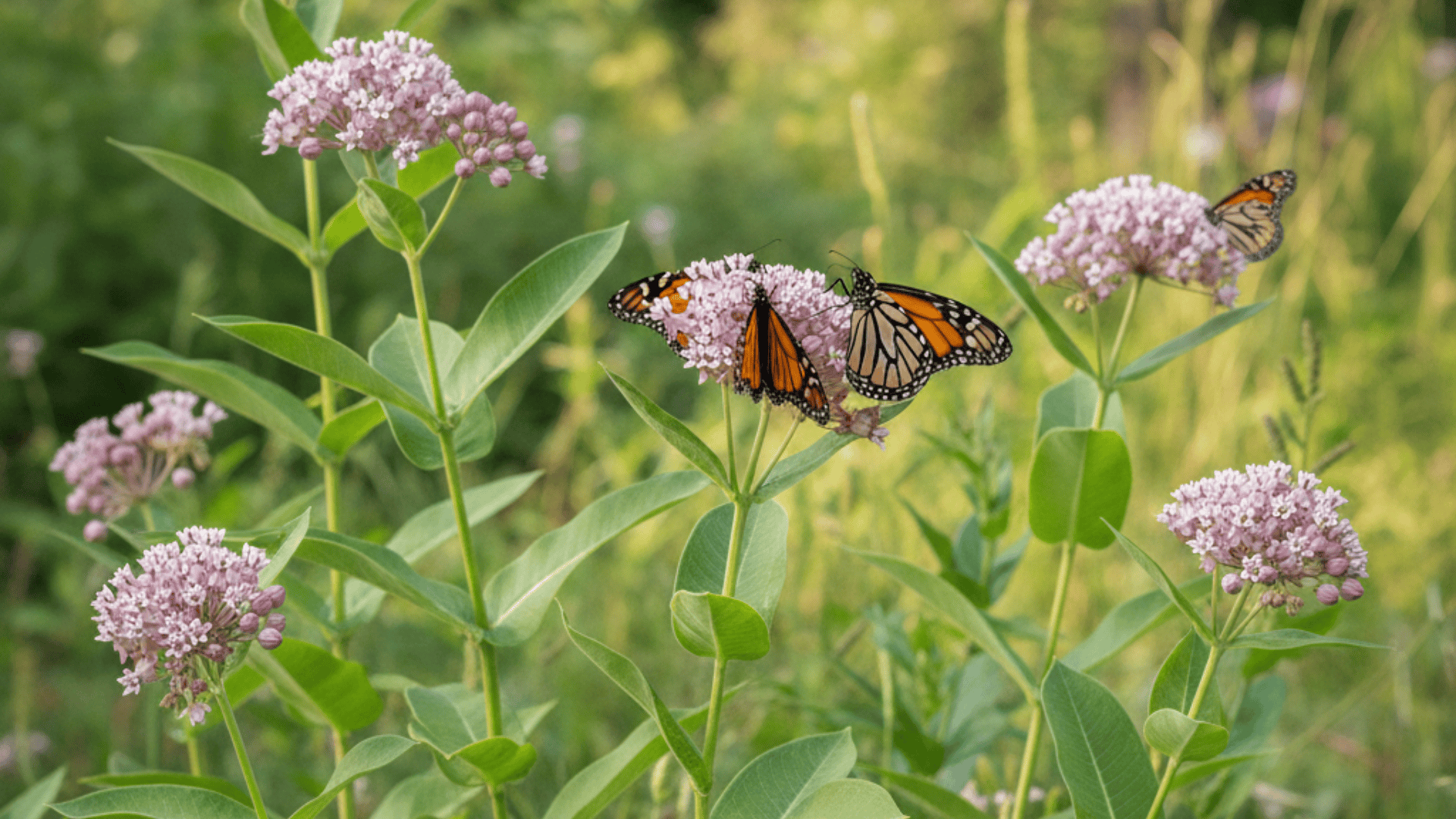
The undisputed champion of butterfly plants, milkweed is the only host plant for monarchs. Beyond monarchs, its fragrant clusters attract dozens of butterfly species for nectar. Native varieties thrive with minimal care once established.
- Why butterflies like it: Essential monarch host plant; nectar-rich blooms attract swallowtails, fritillaries, and many others
- Sun needs: Full sun
- Bloom season: Late spring through summer (varies by species)
- Quick care tip: Start from seed or small plants; avoid cutting back in fall to protect overwintering eggs
2. Asters (Symphyotrichum)
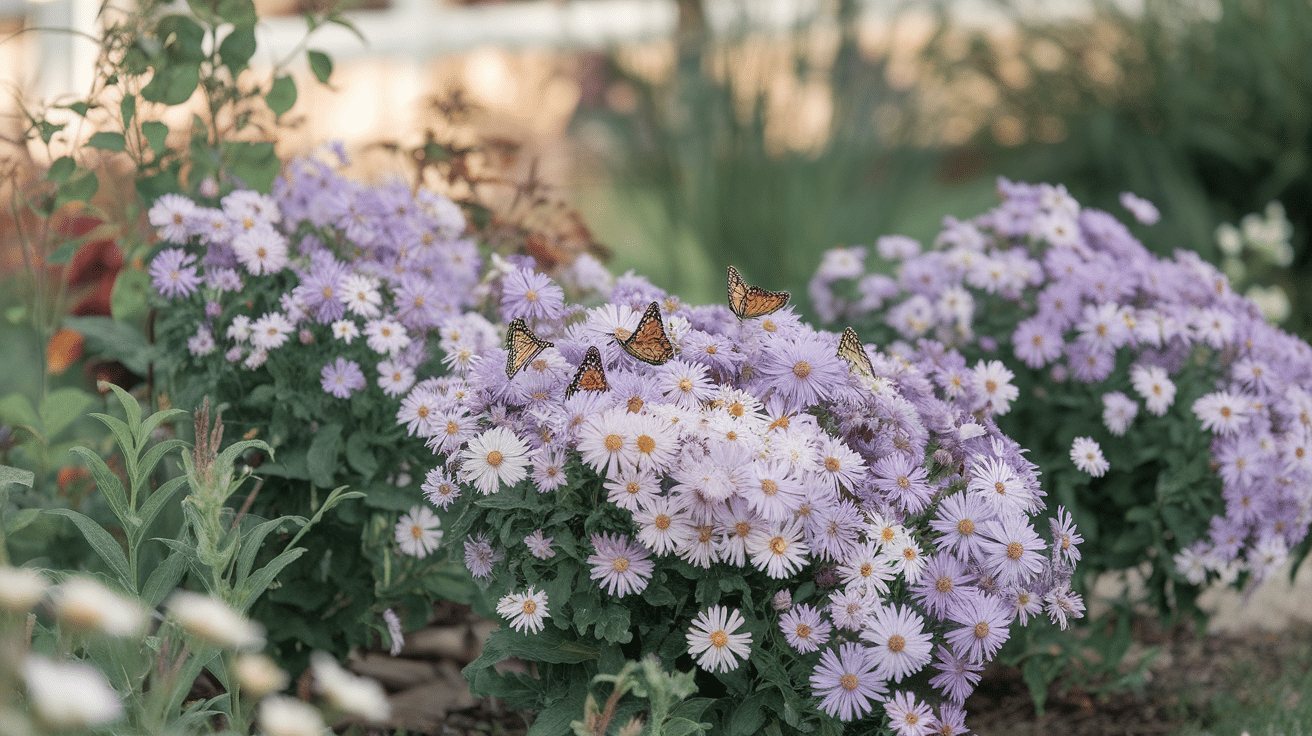
These late-season stars save the day when most flowers have finished blooming. Asters provide crucial nectar for monarchs during fall migration and for other species preparing for winter. Their daisy-like blooms come in purples, pinks, and whites.
- Why butterflies like it: Critical late-season nectar source when butterflies need fuel for migration
- Sun needs: Full sun to partial shade
- Bloom season: Late summer through fall
- Quick care tip: Pinch back in early summer for bushier plants and more flowers
3. Purple Coneflower (Echinacea)
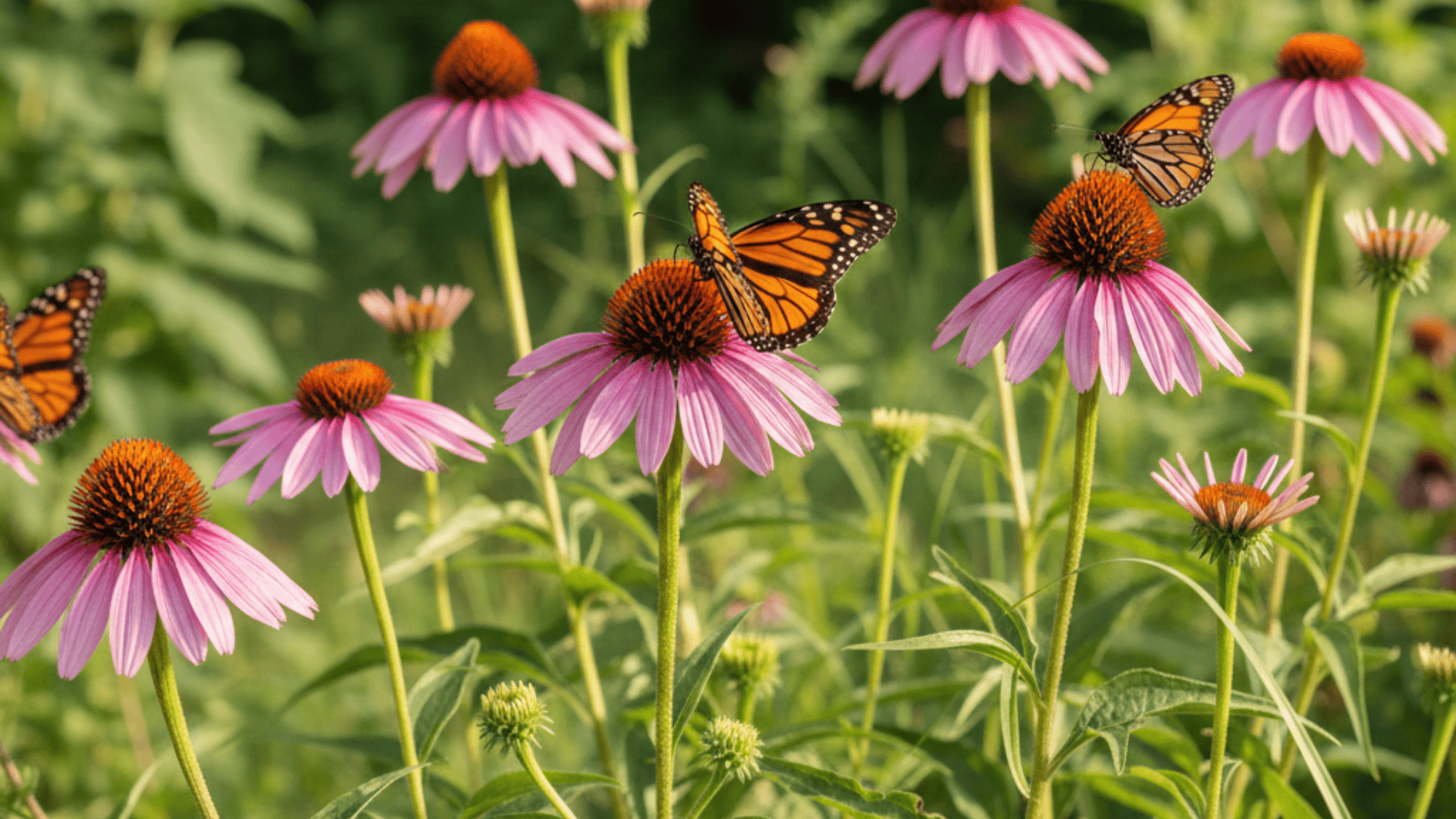
Tough, drought-tolerant, and beloved by butterflies, coneflowers are garden workhorses. Their prominent central cones provide easy landing pads while butterflies sip nectar. They’re also low-maintenance perennials that return reliably year after year.
- Why butterflies like it: Large, accessible flower heads; long bloom period provides consistent nectar
- Sun needs: Full sun
- Bloom season: Early summer through early fall
- Quick care tip: Deadhead for continuous blooms, or leave seedheads for winter bird food
4. Black-Eyed Susan (Rudbeckia)
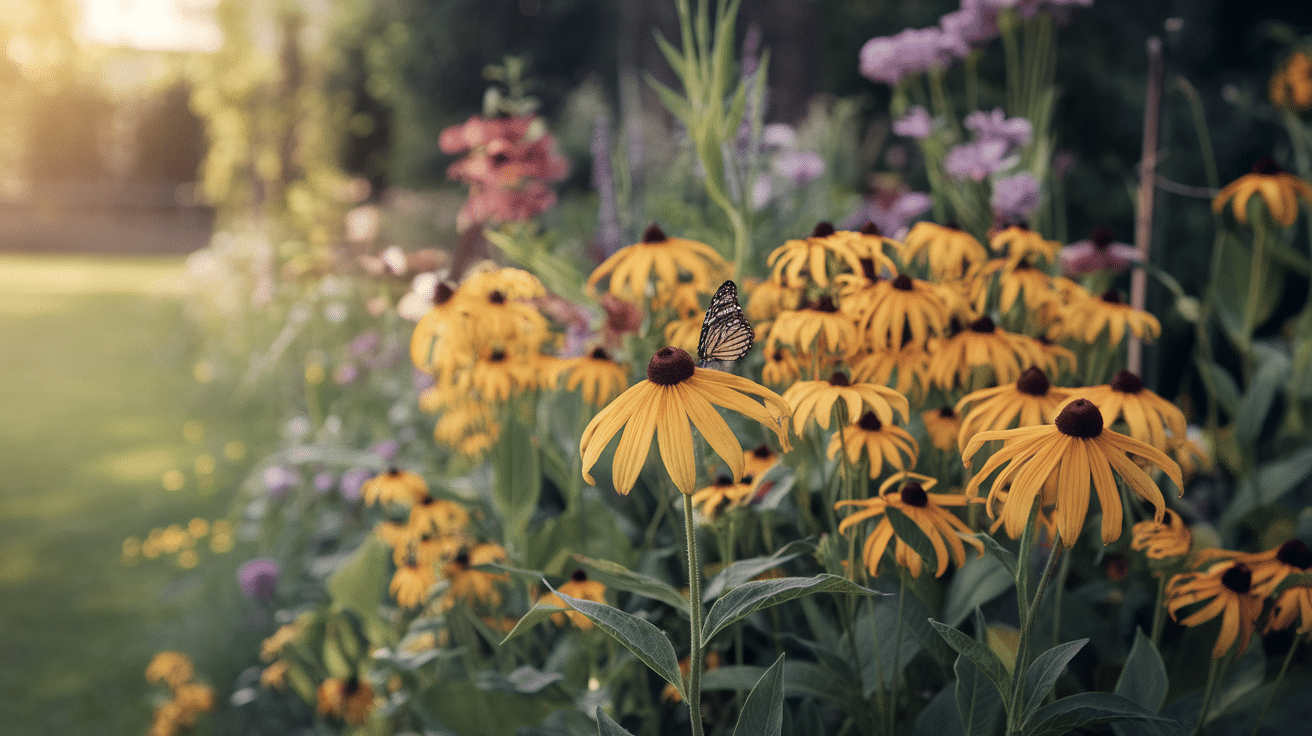
These cheerful yellow blooms are butterfly favorites that spread enthusiastically to fill gaps in your garden. Black-eyed Susans tolerate heat, drought, and poor soil while still producing abundant flowers that butterflies can’t resist.
- Why butterflies like it: Abundant nectar; bright colors attract butterflies from a distance
- Sun needs: Full sun to partial shade
- Bloom season: Mid-summer through fall
- Quick care tip: Divide clumps every 3-4 years to maintain vigor; they self-seed readily
5. Bee Balm / Wild Bergamot (Monarda)
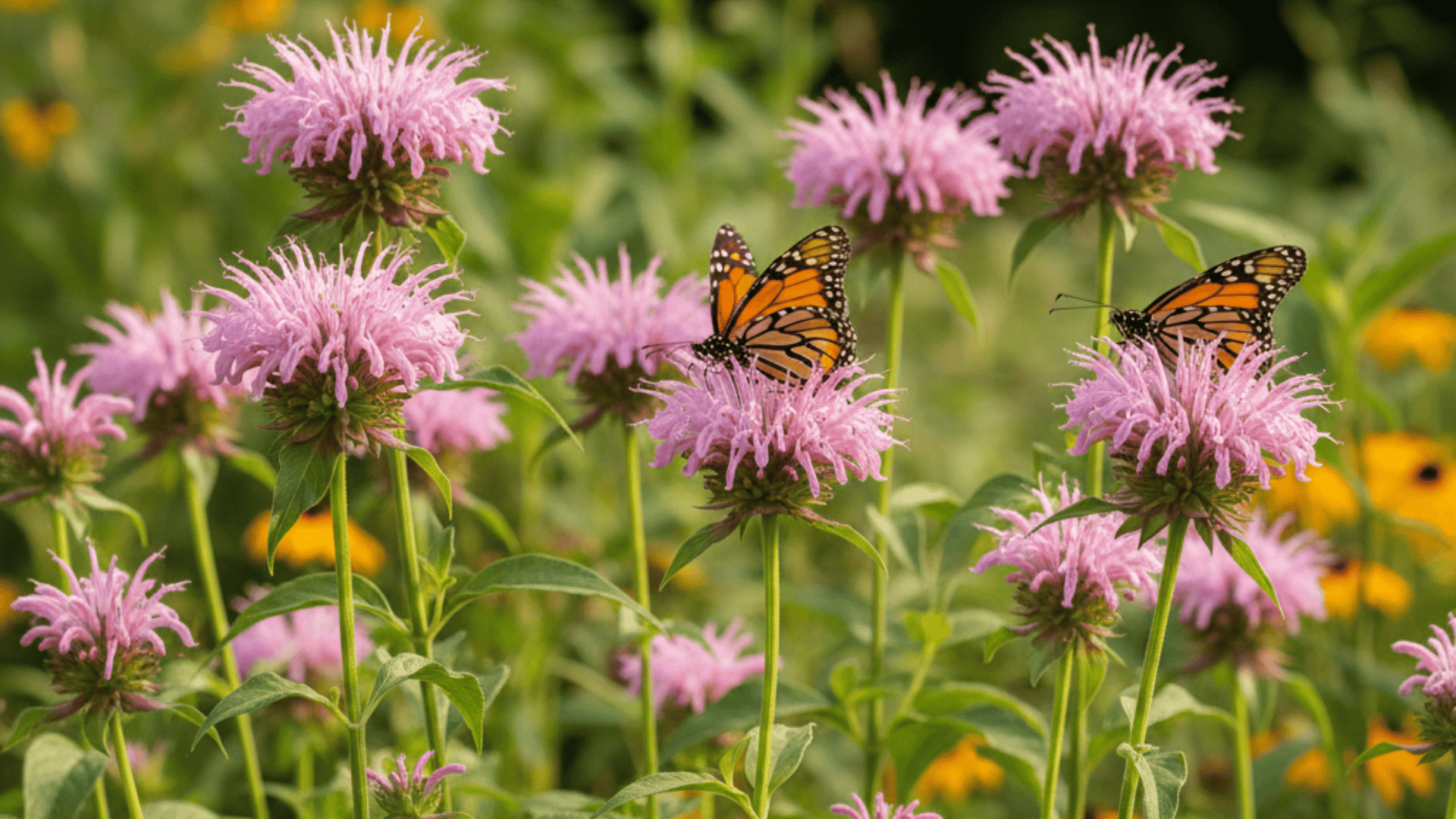
With tubular flowers perfect for butterfly tongues, bee balm creates stunning drifts of color. Hummingbirds and bees love it too. Native species resist powdery mildew better than older cultivars and spread to form robust colonies.
- Why butterflies like it: Tubular flowers rich in nectar; strong fragrance guides butterflies to blooms
- Sun needs: Full sun to partial shade
- Bloom season: Mid to late summer
- Quick care tip: Plant in areas with good air circulation to minimize powdery mildew
6. Tickseed (Coreopsis)
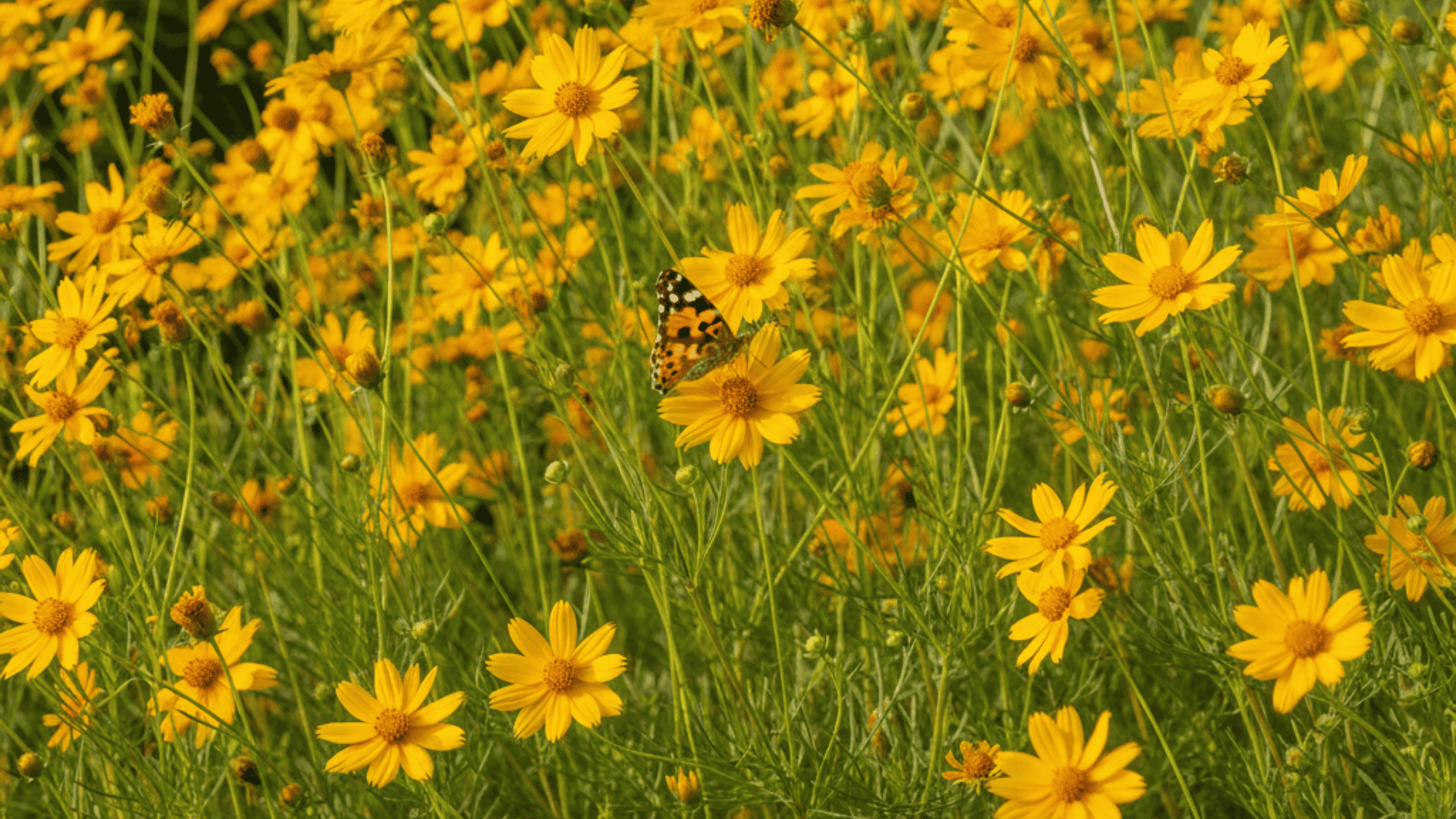
These low-maintenance perennials produce masses of cheerful flowers on slender stems. Coreopsis blooms tirelessly with minimal deadheading and tolerates heat and humidity. Their fine foliage provides textural contrast in butterfly borders.
- Why butterflies like it: Profuse, long-lasting blooms provide reliable nectar over many weeks
- Sun needs: Full sun
- Bloom season: Late spring through summer (rebloom with deadheading)
- Quick care tip: Shear back after first flush for a second round of flowers
7. Blazing Star (Liatris)
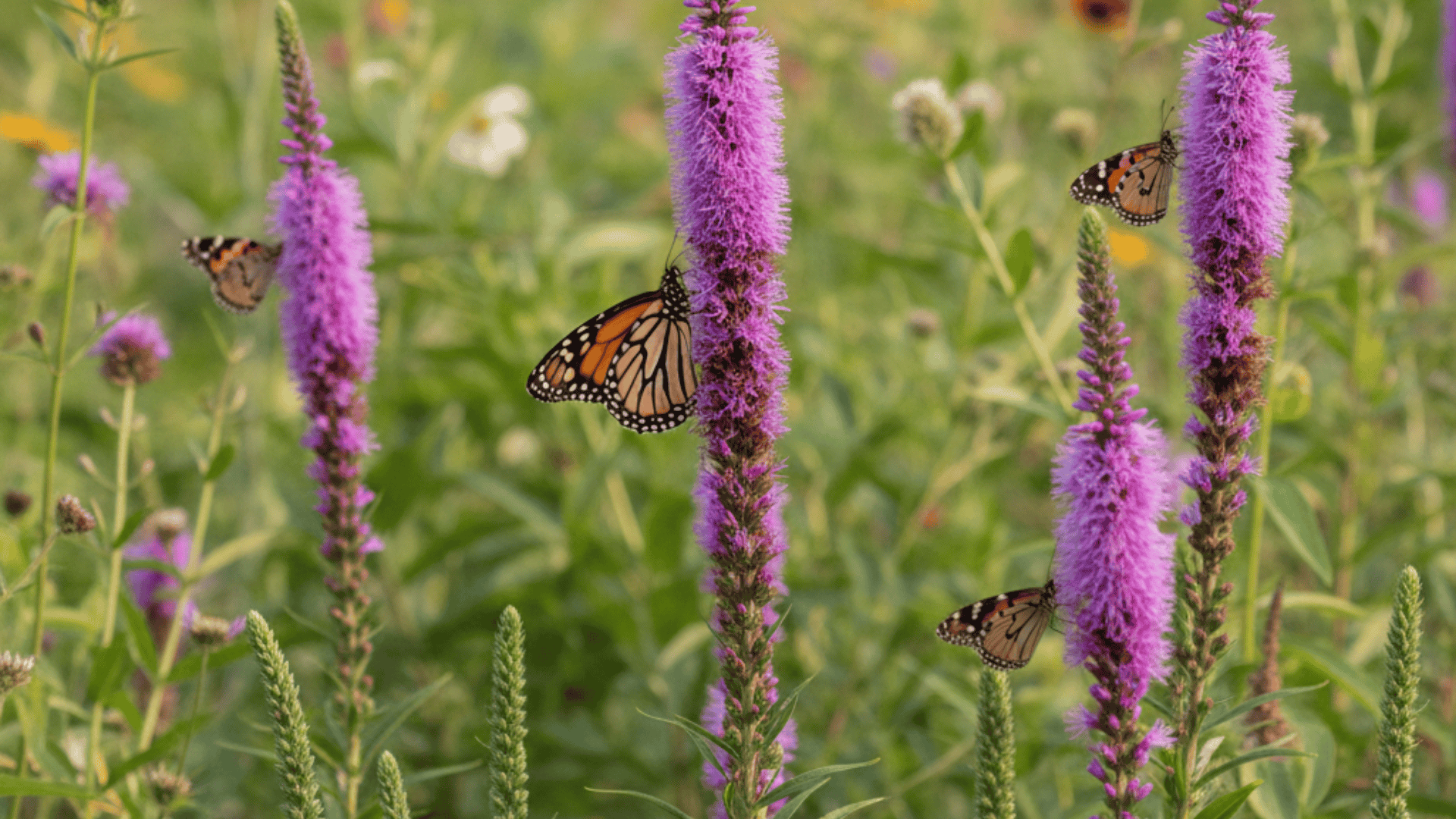
Distinctive purple spikes bloom from top to bottom, creating a unique spectacle. Butterflies work their way down the flower spike, making blazing star a buffet and perch in one. This prairie native thrives in well-drained soil.
- Why butterflies like it: Dense flower spikes packed with nectar; unique top-down blooming pattern
- Sun needs: Full sun
- Bloom season: Mid to late summer
- Quick care tip: Plant bulbs in fall or divisions in spring; ensure good drainage to prevent rot
8. Joe Pye Weed (Eutrochium)
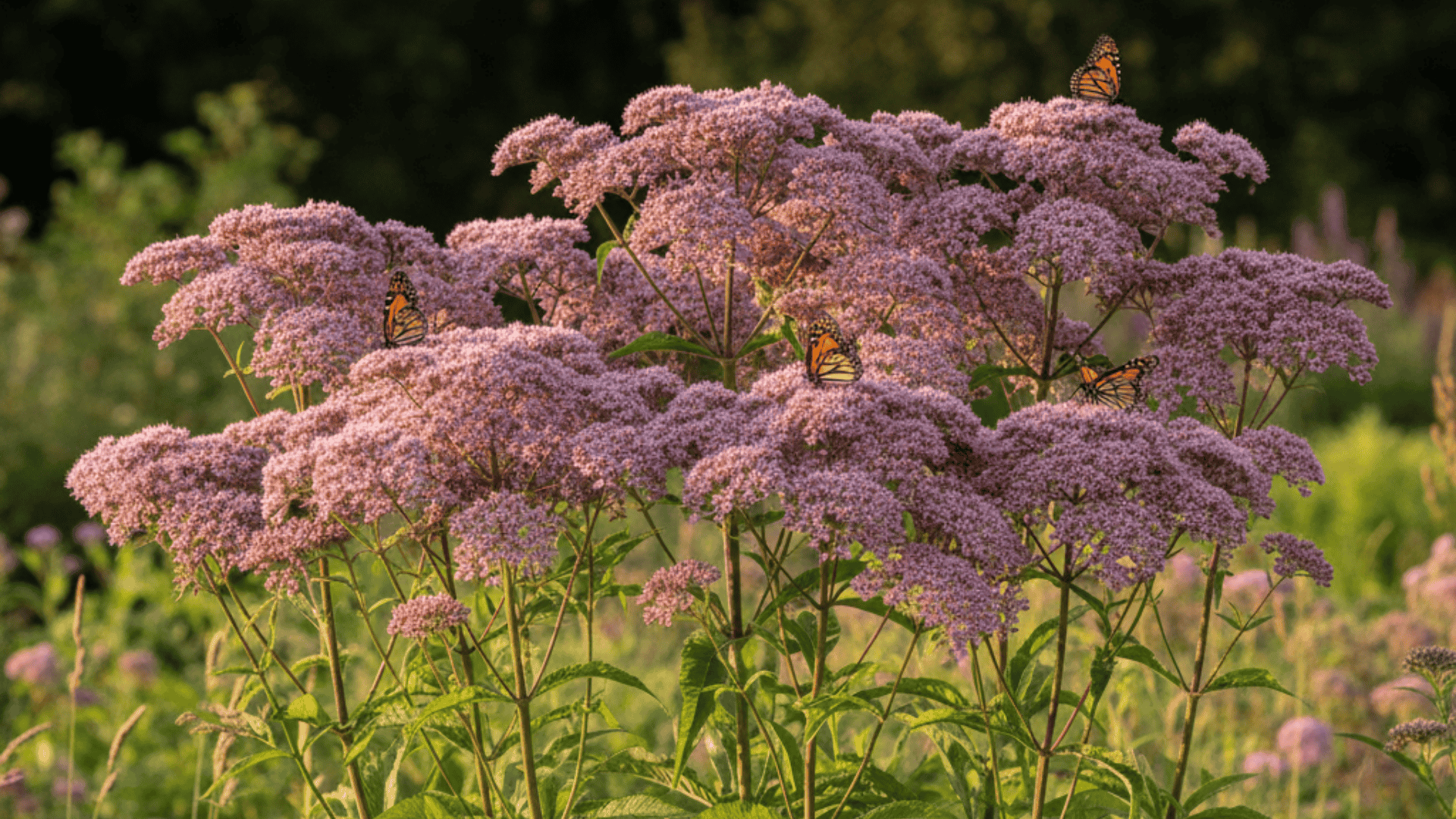
This towering native creates an impressive backdrop with massive flower clusters that butterflies adore. Joe Pye weed handles moisture better than most butterfly plants, making it perfect for lower-lying garden areas or rain gardens.
- Why butterflies like it: Large, flat flower clusters provide landing platforms; sweet vanilla scent attracts from afar
- Sun needs: Full sun to partial shade
- Bloom season: Late summer through early fall
- Bloom season: Late summer through early fall
- Quick care tip: Give it room, plants can reach 5-7 feet tall and equally wide
9. Goldenrod (Solidago)
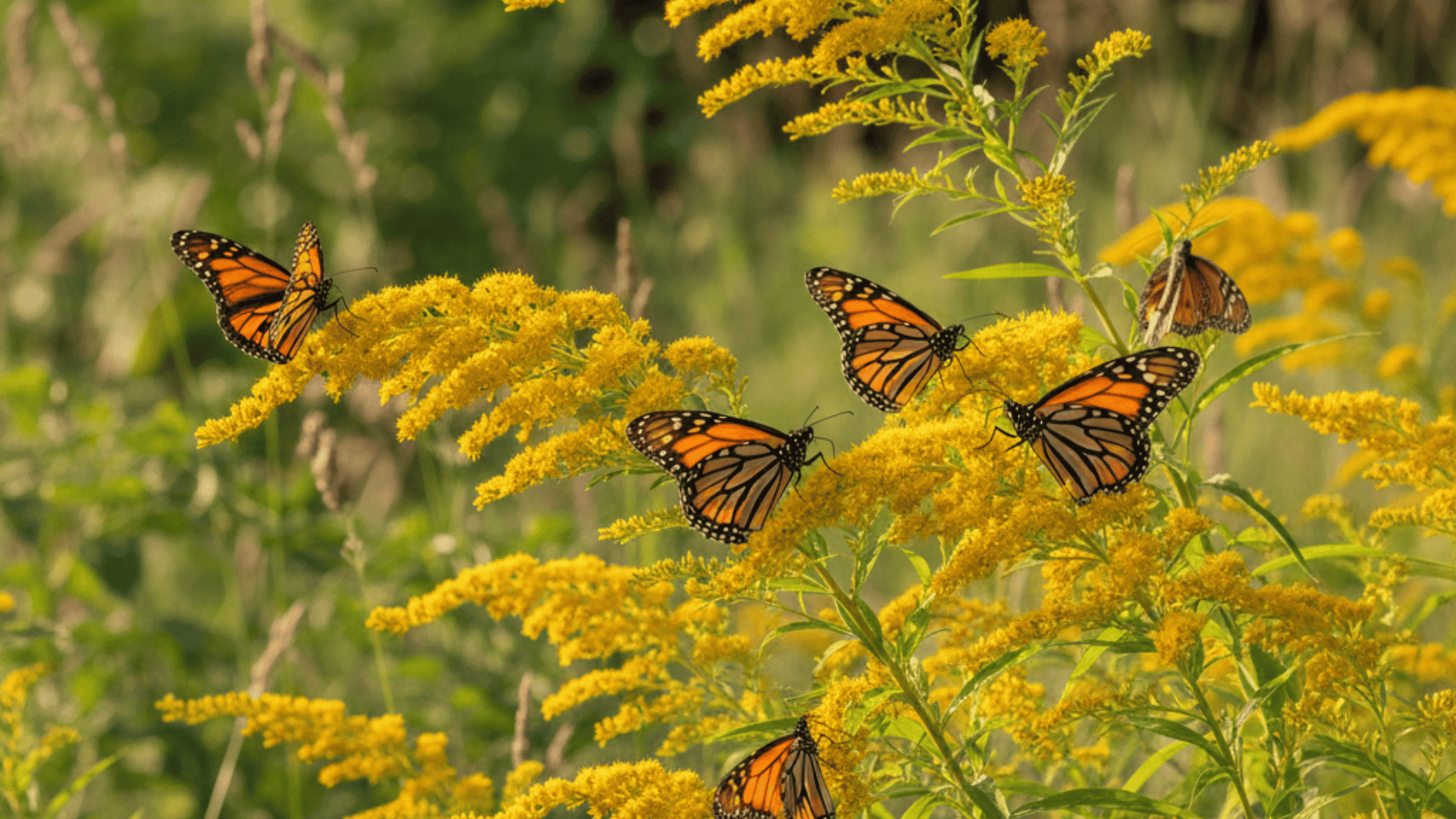
Despite its undeserved reputation, goldenrod doesn’t cause allergies and is a late-season lifesaver for butterflies. Its plumes of golden flowers light up the fall garden while providing essential nectar before frost.
- Why butterflies like it: Abundant late-season nectar when few other flowers remain
- Sun needs: Full sun to partial shade
- Bloom season: Late summer through fall
- Quick care tip: Choose compact cultivars if space is limited; goldenrod can spread aggressively
10. Sunflowers (Helianthus)
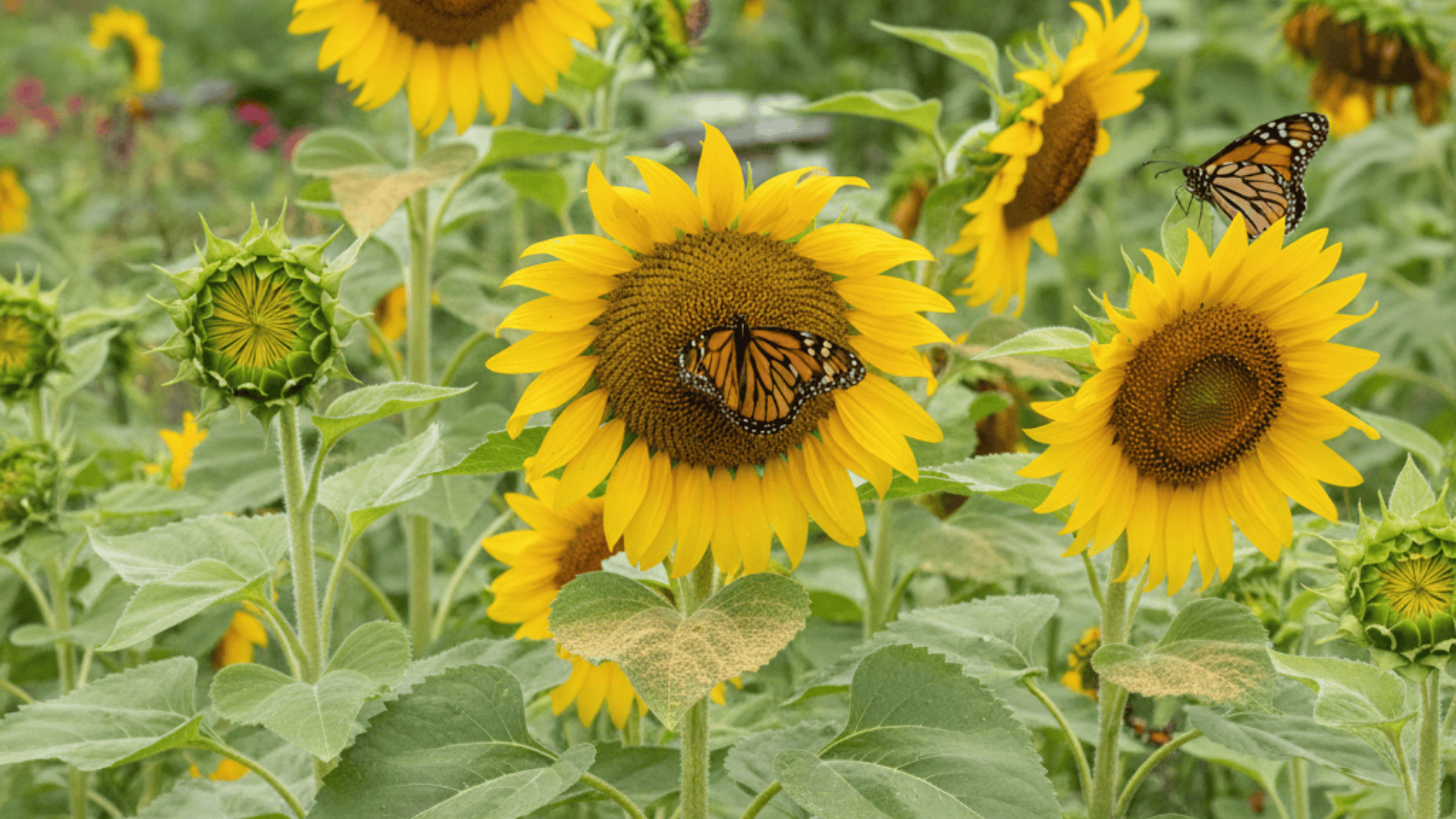
Both annual and perennial sunflowers attract butterflies, with perennial varieties providing multiple years of blooms. Their large flower heads offer stable landing zones, and smaller-flowered varieties produce more nectar-rich blooms than giant cultivars.
- Why butterflies like it: Easy-access nectar on large, stable flowers; seeds attract birds later
- Sun needs: Full sun
- Bloom season: Mid-summer through fall (varies by type)
- Quick care tip: Plant perennial varieties for less work; stake tall annuals in windy areas
11. Yarrow (Achillea)
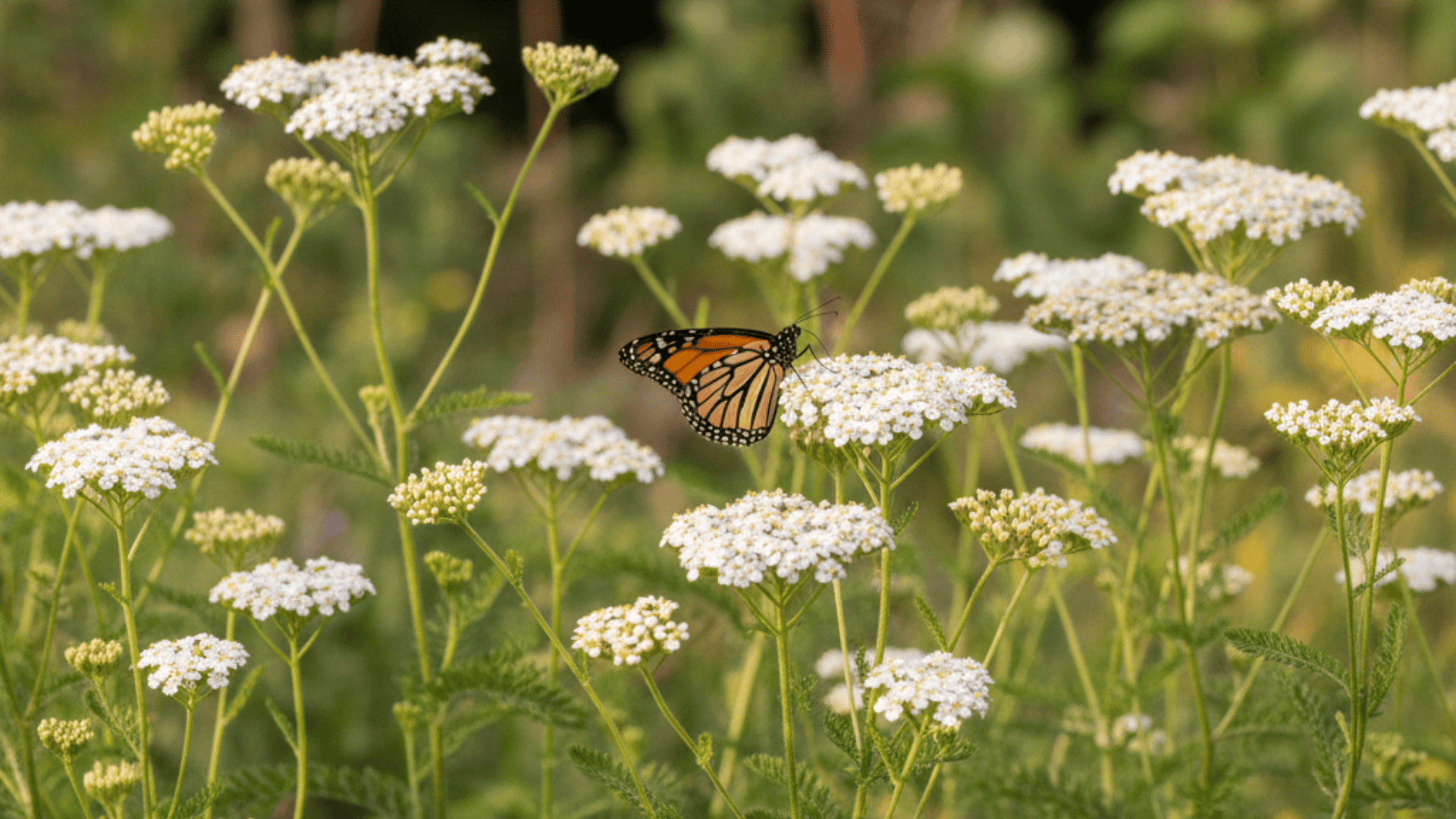
Flat-topped flower clusters create perfect butterfly landing pads on these tough perennials. Yarrow’s ferny foliage and varied colors (white, yellow, pink, red) add long-season interest. It thrives in poor soil where other plants struggle.
- Why butterflies like it: Flat flower heads provide easy access to clustered nectar-rich flowers
- Sun needs: Full sun
- Bloom season: Early summer through early fall
- Quick care tip: Avoid overwatering and fertilizing; yarrow prefers lean, dry conditions
12. Helenium (Sneezeweed)
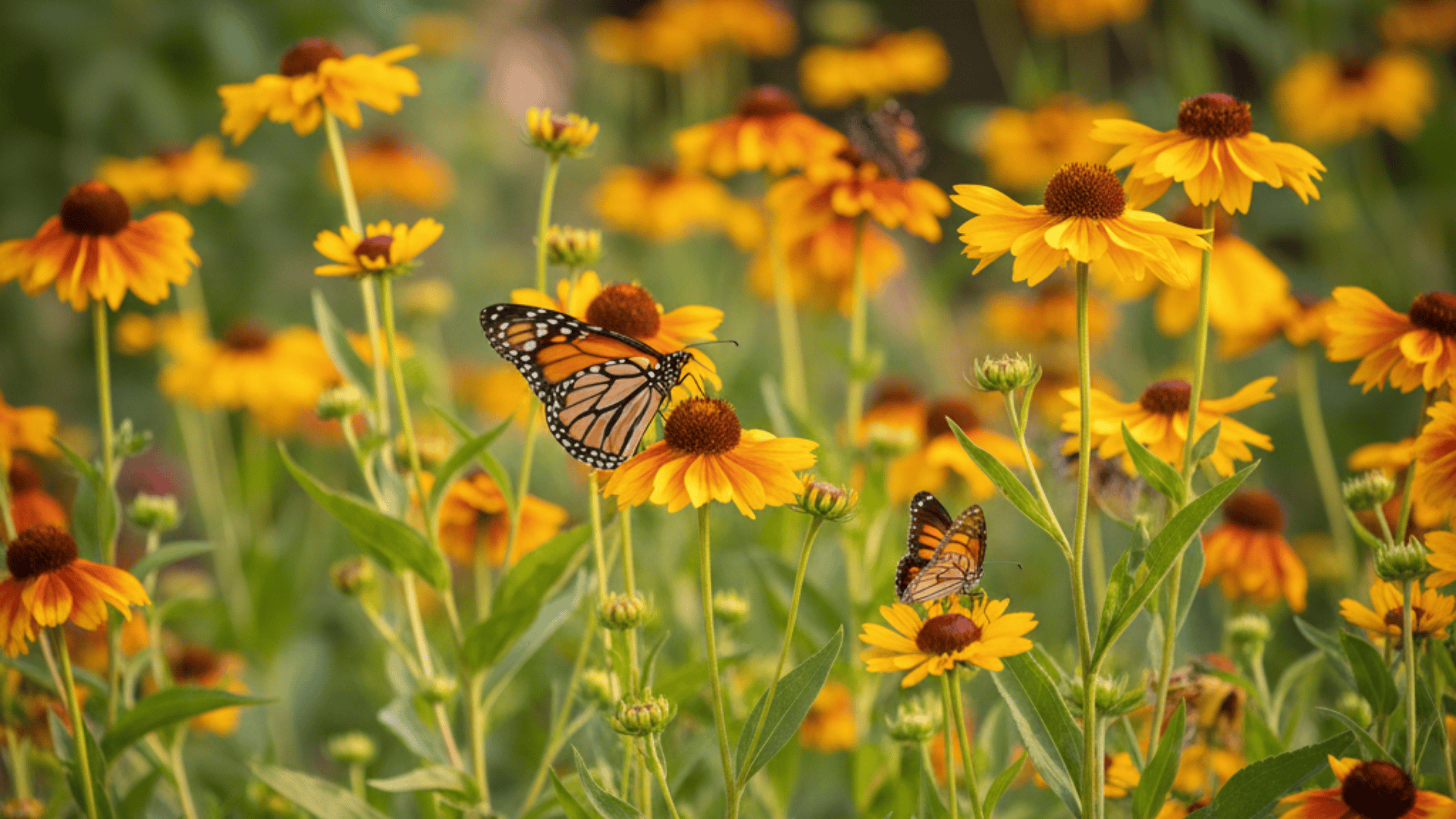
Don’t let the common name fool you, helenium creates stunning fall displays with warm-toned daisy-like flowers. The prominent central cones give butterflies sturdy perches while they feed. Helenium handles clay soil better than many butterfly plants.
- Why butterflies like it: Late-season nectar source; raised central discs provide easy feeding access
- Sun needs: Full sun
- Bloom season: Late summer through fall
- Quick care tip: Pinch stems in late spring for bushier plants and more flowers
13. Phlox (Garden Phlox)
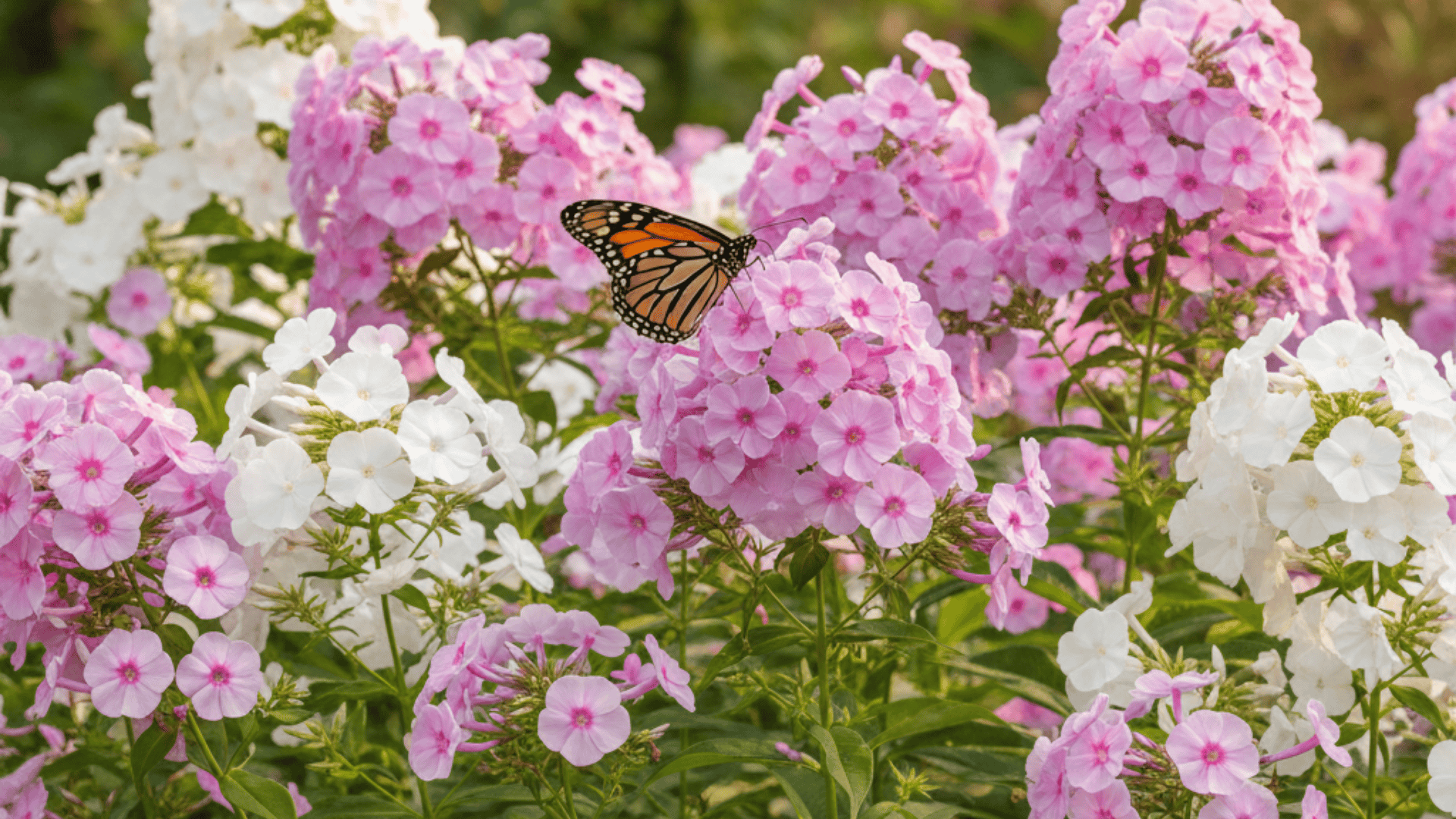
Fragrant clusters of tubular flowers in pinks, purples, and whites create cottage garden charm. Butterflies probe deep into phlox’s sweet-scented blooms. Choose mildew-resistant varieties and site them where air circulates freely.
- Why butterflies like it: Fragrant tubular flowers rich in nectar; blooms at peak butterfly season
- Sun needs: Full sun to partial shade
- Bloom season: Mid to late summer
- Quick care tip: Thin stems in spring for better air flow and healthier plants
14. Salvia
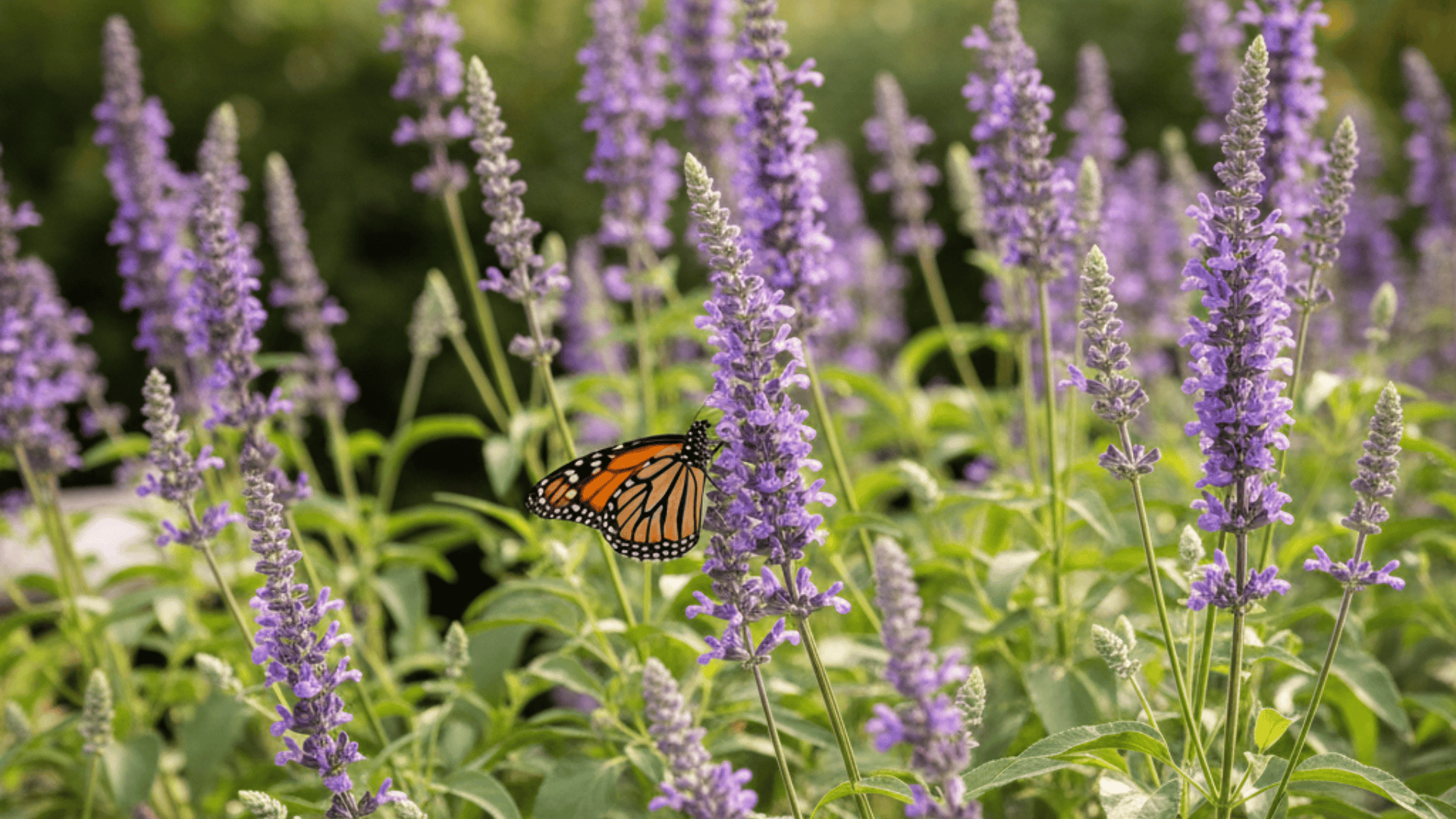
With tubular flowers butterflies love, salvias bloom prolifically in sunny spots. Both annual and perennial types work well, with many providing months of continuous color. Deer and rabbits usually avoid them, making salvias reliable performers.
- Why butterflies like it: Tubular flowers perfect for butterfly tongues; long bloom period
- Sun needs: Full sun
- Bloom season: Late spring through frost (varies by species)
- Quick care tip: Deadhead spent blooms regularly to encourage continuous flowering
15. Zinnia
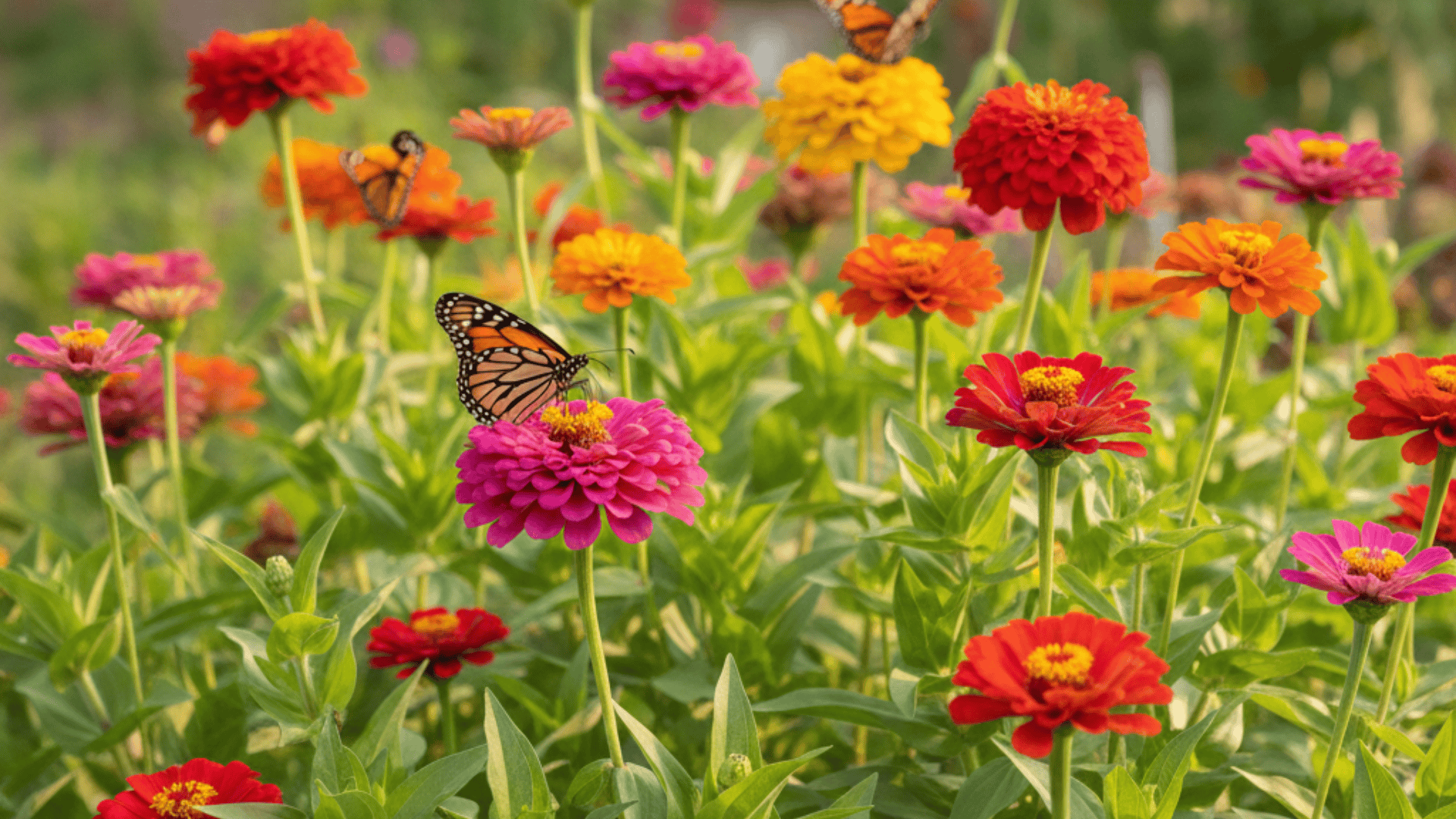
These easy annuals provide non-stop blooms from summer until frost, making them perfect for butterfly gardens. Butterflies especially love single-flowered varieties with accessible nectar. Zinnias fill gaps quickly while perennials establish.
- Why butterflies like it: Abundant, accessible nectar; continuous bloom provides reliable food source
- Sun needs: Full sun
- Bloom season: Summer through frost
- Quick care tip: Choose single-flowered varieties over doubles for better butterfly access
How to Set Up a Butterfly-Friendly Garden That Actually Works
Creating a thriving butterfly haven goes beyond just planting pretty flowers. Success comes from understanding what butterflies need throughout their lifecycle: sun, shelter, water, and most importantly, a pesticide-free environment where caterpillars can safely grow into the butterflies you want to attract.
Step 1: Pick the Right Spot
Location makes or breaks your butterfly garden. Butterflies are cold-blooded creatures that need warmth to fly and feed actively. Choose a spot with at least six hours of full sun daily and some wind protection from fences, hedges, or shrubs to maximize butterfly activity.
Step 2: Plan Blooms Across the Whole Season
A beautiful July garden won’t help butterflies in May or September. Strategic planning ensures nectar is available from spring’s first warm days through fall’s last butterflies. Plant early bloomers like phlox, mid-summer workhorses like coneflowers and zinnias, and late-season stars like asters and goldenrod for continuous coverage.
Step 3: Add Water and Resting Areas
Butterflies need more than nectar to thrive. They require shallow water sources for drinking and extracting minerals, plus warm spots for rest and temperature regulation. Create a simple butterfly puddling station with a shallow dish filled with sand or pebbles and water, and place flat rocks in sunny spots for basking.
Step 4: Skip Insecticides That Harm Butterflies and Caterpillars
This is non-negotiable: you cannot have a butterfly garden while using most pesticides. Caterpillars are insects, and broad-spectrum sprays kill them along with pests. Tolerate some leaf damage; those chewed leaves mean caterpillars are present. Use targeted pest control methods like hand-picking or water sprays instead.
Follow these simple steps to transform your garden into a true butterfly haven that attracts and supports these beautiful pollinators all season long.
Common Mistakes That Keep Butterflies Away
Even well-intentioned gardeners make simple errors that turn butterflies away. Avoid these five common pitfalls to transform your garden into a true butterfly magnet that attracts and sustains populations.
| Mistake | Why It’s a Problem | The Fix |
|---|---|---|
| Planting double or hybridized flowers | Showy double blooms block butterfly tongues from reaching nectar. | Choose single-flowered varieties with open, accessible centers. |
| Keeping the garden too tidy | Cutting back plants in fall removes overwintering sites. Raking eliminates shelter. | Leave dead stems standing until spring. Keep some leaf litter. |
| Forgetting caterpillar food (host plants) | Without host plants, you’ll only attract passing visitors—not residents. | Add milkweed, parsley, native grasses, and violets for larvae. |
| Using treated mulch or landscape fabric | Chemicals deter butterflies. Fabric blocks ground access for puddling. | Use untreated wood chips and leave bare soil patches exposed. |
| Planting only non-native ornamentals | Exotic plants may lack chemical signatures local butterflies recognize. | Prioritize native plants. Mix in non-native nectar sources sparingly. |
Fix these mistakes, and you’ll see more butterflies visiting and staying in your garden all season long.
Bottom Line
Creating a garden that butterflies love doesn’t require complicated plans or rare plants. When you focus on flowers that attract butterflies, add sunlight, and leave space for caterpillars to grow, the results come naturally.
A few thoughtful choices can turn your garden into a place butterflies return to throughout the season, not just pass through once. I hope this guide helped you feel more confident about what to plant and why it works.
If you enjoyed this, you might also like my other garden posts where I share simple planting tips, pollinator-friendly ideas, and easy ways to support wildlife at home. Take a look around and keep building a garden that feels alive, active, and welcoming all season long.