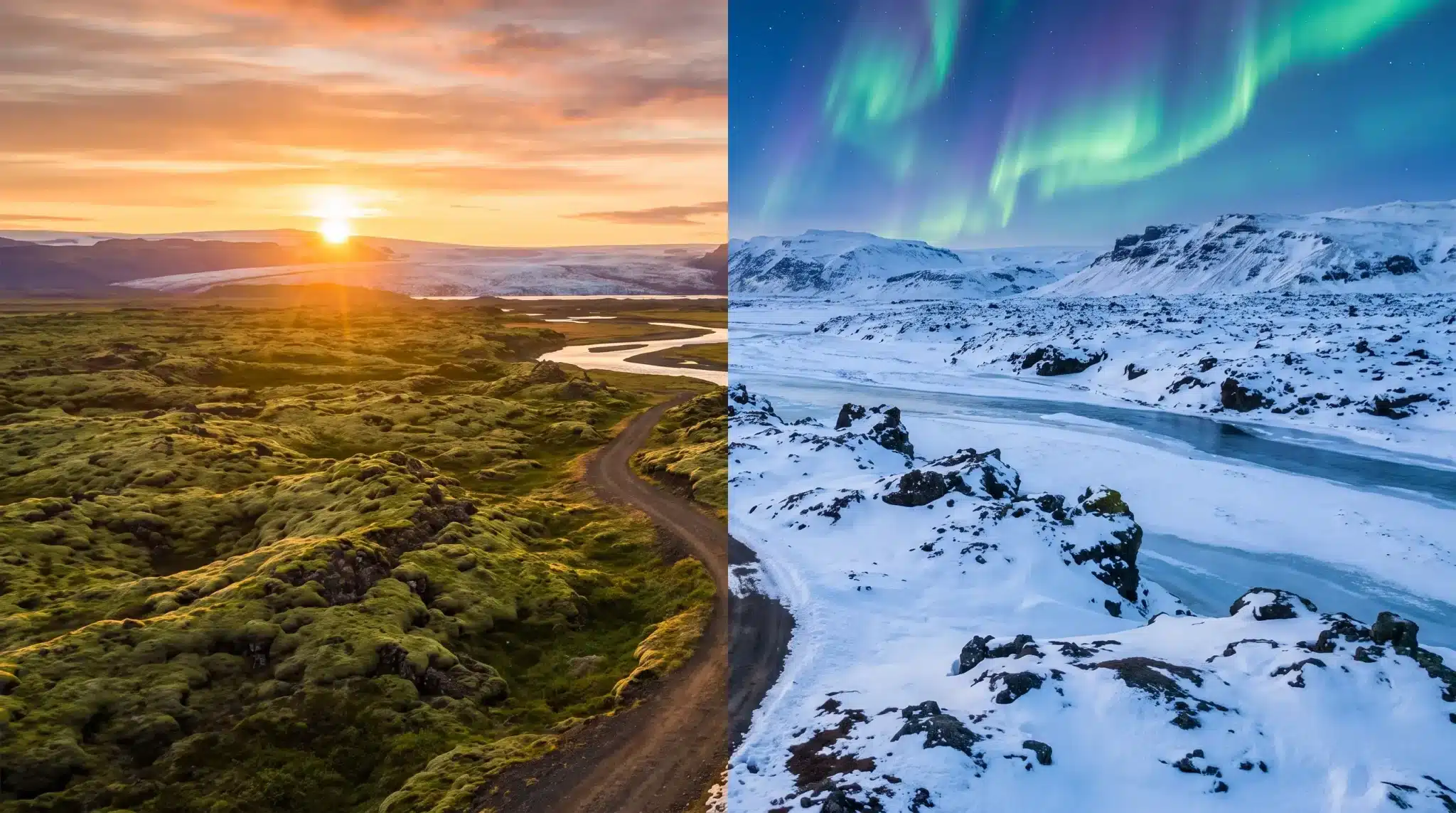
Iceland’s weather doesn’t follow a script, and neither should your travel plans. A trip booked around July’s midnight sun will look nothing like one built around February’s polar darkness, and both can be spectacular for entirely different reasons. The real question isn’t which season is “better” — it’s which experience you’re after.
What Summer Actually Offers
From late May through August, Iceland gets close to 24 hours of daylight, with the summer solstice bringing barely any darkness at all. That means you can drive the Ring Road at 10 p.m. with full visibility, or hike a glacier trail at midnight if you’re feeling ambitious.
Temperatures hover between 50-60°F (10-15°C), which sounds modest but feels comfortable given the constant wind and shifting weather.
This is also when the Highlands open up. Roads like F208 and F225, impassable most of the year due to snow and river crossings, become accessible to 4×4 vehicles starting in June.
That unlocks interior destinations like Landmannalaugar and Þórsmörk, with their rhyolite mountains and volcanic terrain, that simply don’t exist as options in winter.
Puffins are another summer draw. They nest along coastal cliffs from May to mid-August, particularly around Vík and the Westman Islands, then head back out to sea. If seeing them is on your list, the window is narrow and worth planning around.
Why Winter Draws Its Own Crowd
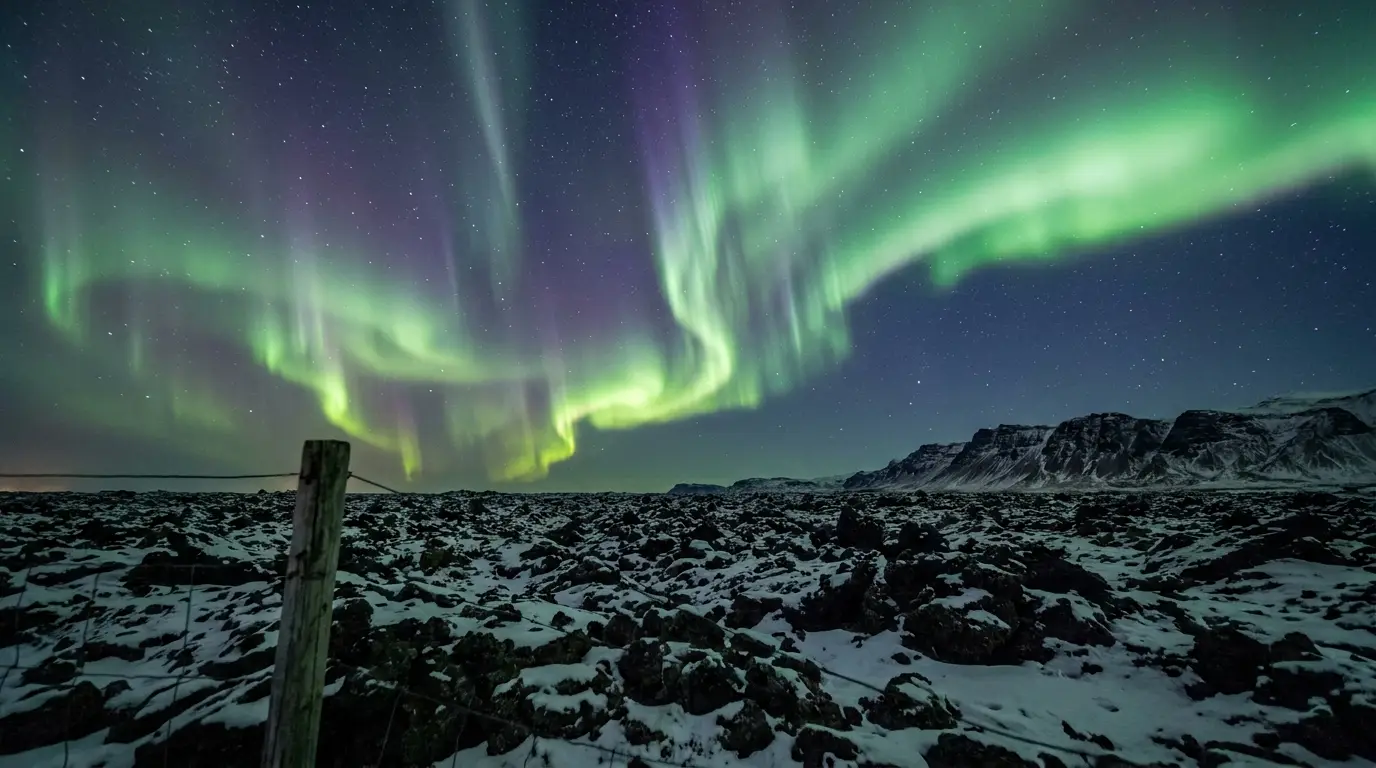
Winter in Iceland runs roughly November through March, and the main event is the aurora borealis. You need dark skies for that, which is exactly what winter provides — up to 19 hours of darkness in December.
Clear nights away from Reykjavík’s light pollution give you a real shot at seeing the lights, especially during periods of high solar activity.
Temperatures in winter typically sit between 25-35°F (-3 to 2°C), colder than many expect but rarely brutal by Nordic standards.
Snow transforms the landscape, and glacier ice caves become accessible for tours, something that only happens when conditions are cold enough to stabilize the ice. Vatnajökull’s blue ice caves, for instance, are strictly a winter activity.
Daylight is short, but it’s not nonexistent. Even in December, you get a soft blue-hour light for several hours around midday that photographers specifically travel for. It’s moody, low-angle light that summer’s harsh midnight sun can’t replicate.
The Trade-Offs You Should Know About
Summer means more accessible roads but also more tourists, especially at popular stops like the Golden Circle and Jökulsárlón glacier lagoon. Expect fuller parking lots and less solitude at marquee sites.
Winter driving requires more caution. Roads can ice over, and sudden storms sometimes close routes with little warning. Renting a car and self-driving is riskier this time of year, which is part of why guided travel becomes more appealing.
Small group tours to Iceland handle winter logistics well, since drivers know how to read local conditions and reroute around weather that would otherwise strand independent travelers.
Cost is another factor. Summer is peak season, so flights and accommodations run higher, particularly in July. Winter, aside from the December holidays, tends to be cheaper and easier to book last-minute.
The Shoulder Seasons Worth Considering
September and October, along with April and May, split the difference. You still get a reasonable amount of daylight, fewer crowds than peak summer, and a decent chance at auroras once the skies get dark enough in early autumn.
Fall also brings dramatic color changes across the moss-covered lava fields and birch forests, particularly in the south. Spring, meanwhile, is when waterfalls run at full force from snowmelt, making stops like Gullfoss and Skógafoss especially powerful to see.
These shoulder months won’t give you the extremes of either peak season, but that’s often the appeal. You trade the Highlands access and puffins of summer, or the deep aurora darkness of winter, for a calmer, more flexible trip.
Matching the Season to Your Priorities
If auroras are the priority, aim for late September through March, and build in at least three or four nights to improve your odds against cloud cover. If you want Highland access, puffins, and long days for exploring, summer is non-negotiable. If ice caves matter to you, winter is the only real option, since most operators only run those tours when the ice is stable enough to enter safely.
Think about your tolerance for cold and darkness too. Some travelers find short winter days claustrophobic; others find the quiet and snow genuinely restorative. There’s no wrong answer here, just a mismatch to avoid.
The most useful thing you can do before booking is decide what single experience matters most, whether that’s a specific landscape, a natural phenomenon, or a type of light, and then let the season follow from that. Iceland rewards intention more than it rewards guesswork.