Trees have great beauty and add value to the property by providing shade. However, tree maintenance includes much more than just occasional branch trimming.
The process of pruning makes the trees more attractive while removing all dangerous branches, thus reducing risk factors. According to the International Society of Arboriculture, tree pruning must be done only for specific reasons to increase the tree’s life expectancy. It’s important to know when to do tree pruning on your own and when to hire tree pruning services to avoid expensive problems.
Tree Pruning Is More Important Than Homeowners Understand
Pruning isn’t only done for looks. The removal of dying, rotten, or intersecting limbs is important for ventilation and growth, reducing branch breakage in inclement weather. Nevertheless, poor pruning can lead to harm. Wounds, poor pruning practices, or excessive crown loss will leave the tree prone to diseases, insect attacks, and stress.
Large trees are a vital part of the home landscape of North Dallas, TX, and Collin County. Organizations like CitiTurf always highlight the importance of maintaining a healthy and safe outdoors.
When DIY Tree Pruning Is a Reasonable Option
Some tree-pruning jobs don’t require any special equipment or experience. Many homeowners can safely manage small jobs if they understand proper techniques.
Practicing DIY pruning is usually OK when:
- Pruning small twigs or branches that can be accessed from the ground.
- Trimming young ornamental trees to encourage balanced growth.
- Eliminating branches rubbing against each other.
- Cleaning up minor storm damage that doesn’t involve large limbs.
- Using clean, sharp pruning tools while following proper cutting methods.
It is important that you know your limitations, even about these tasks. Consider the size, location, and health of the tree before you decide on hiring an arborist for tree trimming.
Common DIY Tree Pruning Mistakes That Can Cost You
There are various ways homeowners can inadvertently harm otherwise healthy trees through improper pruning. One of the major errors is “topping,” in which large sections of the tree’s canopy are removed. Topping is often done to shorten the tree, but it weakens the tree and often leads to rapid, unstable regrowth.
Another common error is making flush cuts, which can cut the branch collar. The branch collar is a swelling containing specialized tissue that facilitates tree healing. Blunt or dirty cutting equipment can also spread infections among trees, while heavy pruning can shock them with excessive defoliation.
The main difference in DIY tree pruning vs professional work is knowing what not to cut. With experience, the trained arborist can make decisions that will ensure the long-term health of the tree, rather than provide only aesthetic enhancement.
When Hiring a Professional Arborist Is the Smarter Choice
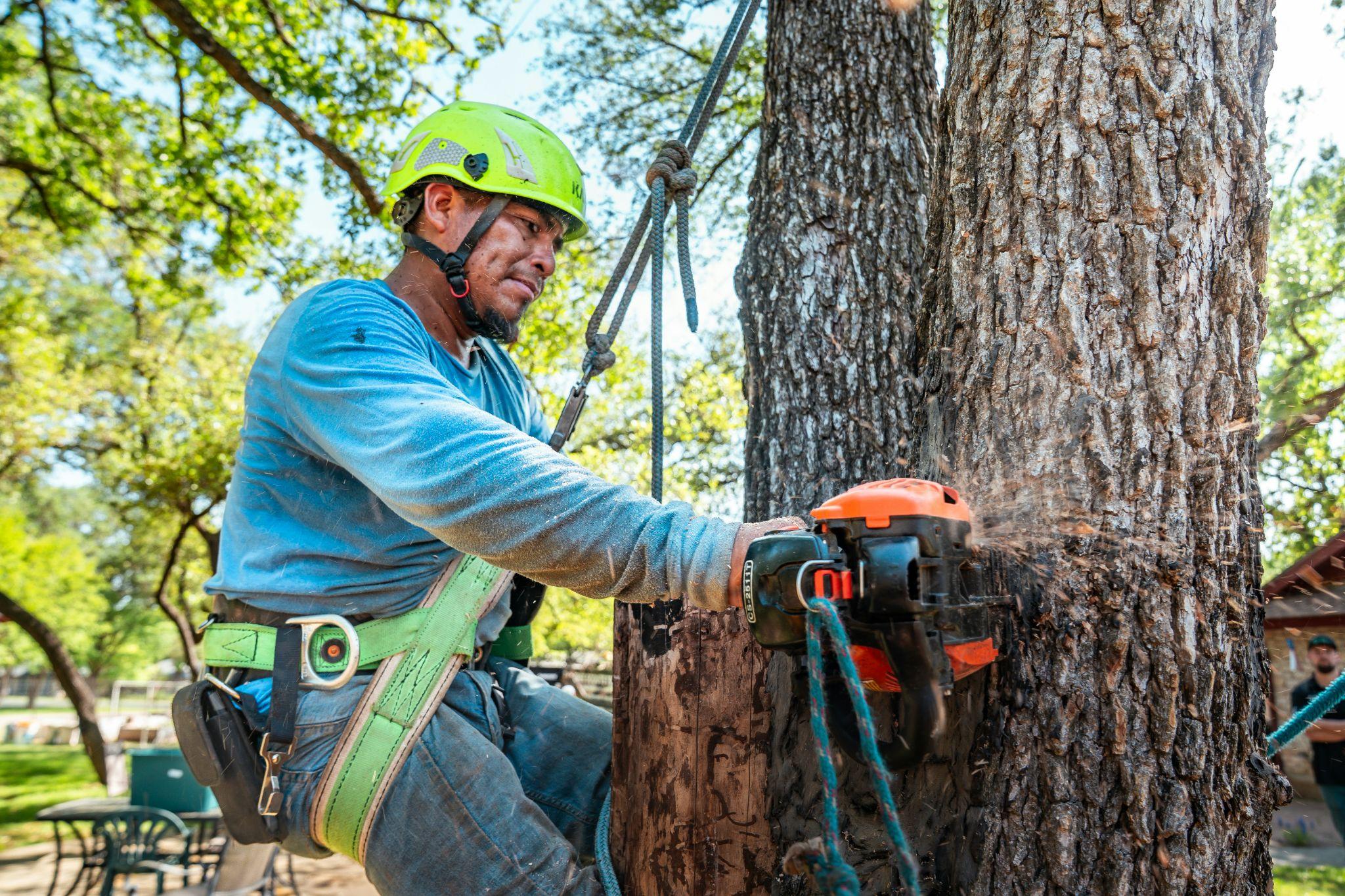
Some situations simply call for professional expertise. Big trees found around homes, wires, driveways, and other property features will always pose some danger to people. Such operations can be performed without endangering anyone if one uses climbing gear, rigging, and biological information about trees.
In the event of a decaying, rotting, unhealthy, or storm-damaged tree, you may also need a certified arborist’s services. The specialist can diagnose things that the eye can’t detect right away.
Even though people tend to worry about professional tree pruning costs from the very beginning, the high price may actually be due to safety precautions.
DIY vs. Hiring a Pro: Comparing the Real Costs
At first glance, doing things yourself seems less costly. But there could be a lot of costs incurred from doing it yourself.
The cost of ladders, pole saws, safety equipment, and parts to replace those that wear out should not be overlooked. More importantly, if an accident injures the tree, its restoration could be costly and, in some cases, result in its complete removal.
Overall, professional tree trimming would cost more initially; however, it would benefit you in the future by maintaining the trees’ condition and reducing the risk of property damage.
Finally, the most important factors to keep in mind are safety, the trees’ condition, and your comfort zone, not just the price.
In Conclusion
There is no overall answer to tree pruning. Homeowners can carry out some small projects, but others are too big or too perilous to do themselves. It is wise to consider factors beyond the cost of hiring a professional for a tree-trimming project.
Are you familiar with tree trimming or working with an arborist? Let us know all about your experience.