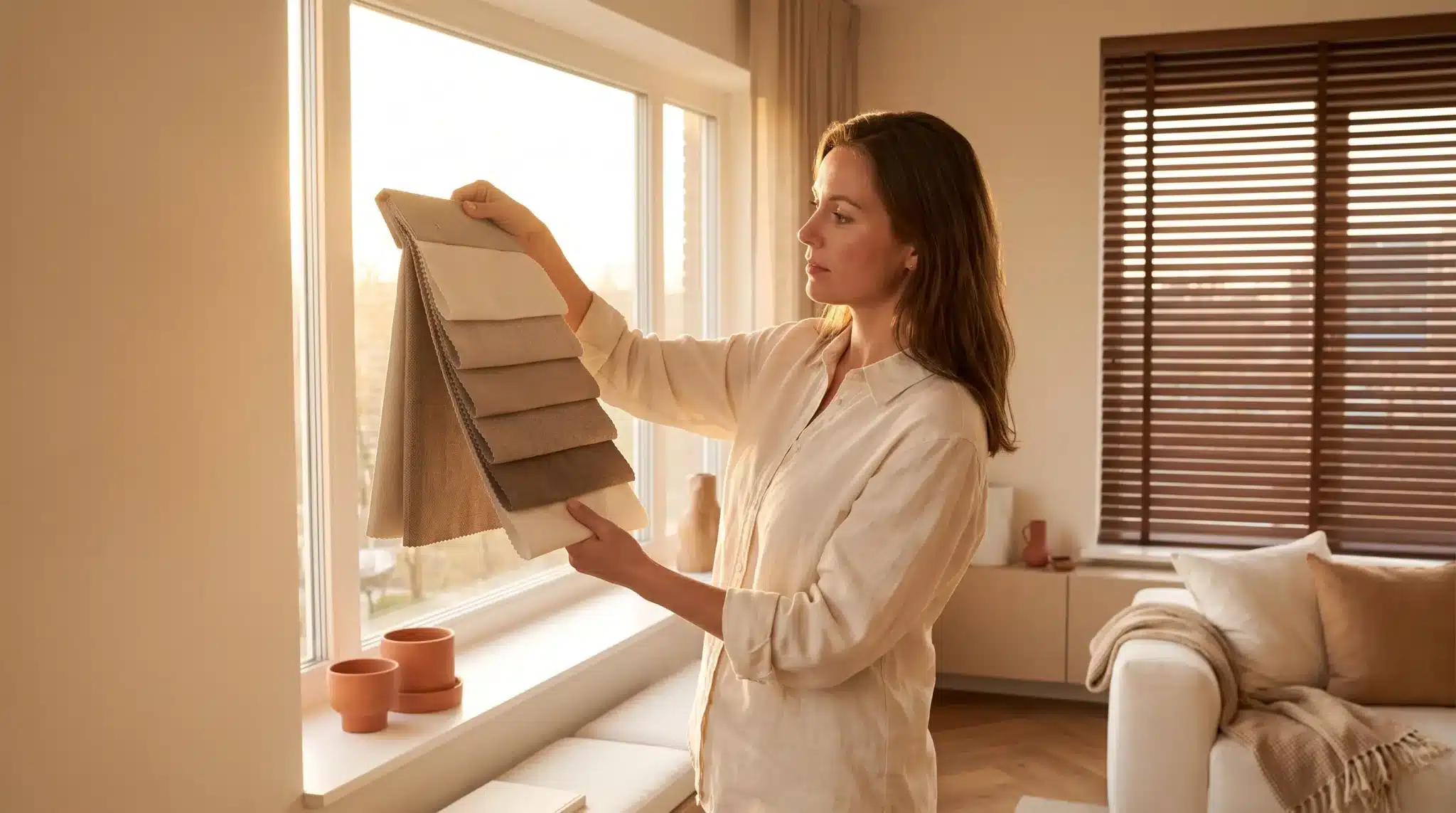
The window treatment purchase is one of those home decisions that looks simpler than it is from the outside. You know roughly what you want, you have a sense of the style you are going for, and you assume the process is mostly a matter of picking something you like and having it installed. Then you discover the measuring requirements, the fabric options that look nothing like the online photos in your actual room, the fitting issues with standard sizes on non-standard windows, and the installation that is more involved than you anticipated.
The buyers who end up happiest with their window treatments are those who understood what the process actually involves before they started rather than discovering it along the way. Here is what that looks like in practice.
The Problem With Shopping for Blinds the Traditional Way
The conventional approach to buying blinds involves visiting a home improvement store, looking at samples under the store’s lighting conditions, estimating whether they will work in your room, taking your best measurements, and hoping the finished product looks the way you imagined it would when it arrives.
This approach has a structural problem that produces a predictable rate of disappointment. The lighting in a home improvement store is not the lighting in your home. The samples are displayed against neutral backgrounds rather than your specific wall color, flooring, and furniture. The measurements you take are subject to human error in ways that professional measurements are not. And the installation, which you either do yourself or coordinate with a separate contractor, introduces another variable that affects the finished result.
The gap between what the sample looked like in the store and what the finished treatment looks like in your room is where most window treatment regret originates, and it is almost entirely avoidable with the right buying process.
Why Seeing Samples in Your Own Space Changes Everything
The shop-at-home model for window treatments solves the lighting and context problem at its source by bringing the sample to the space where it will actually live rather than asking you to imagine how it will look there. Evaluating a fabric against your actual wall color, in your actual light, with your actual furniture visible, produces a completely different and considerably more reliable basis for a decision than evaluating the same fabric in a store environment.
This is not a minor difference in convenience. It is a qualitative difference in the reliability of the purchase decision. A fabric you choose in your own room, in your own light, with your own eyes on your own walls, is a fabric you know will look right. A fabric you choose in a showroom is a fabric you hope will look right, and the gap between those two situations is where regret lives.
What Full-Service Window Treatment Buying Actually Looks Like
For homeowners in San Jose and surrounding communities including Campbell, Cupertino, Fremont, Milpitas, Santa Clara, and Saratoga searching for blinds near me, Stoneside brings a curated showroom directly to your home with a free design consultation that covers every window in the space. Their design consultants bring samples across the full product range including wood and faux wood blinds, roller, solar, cellular, roman, and zebra shades, custom drapery, and motorized options, and work through each window individually based on its function, light exposure, privacy requirements, and the aesthetic direction of the room.
Ranked number one in America for customer service with Best of Houzz Service Awards from 2023 through 2026 and over 40,000 satisfied customers nationally, Stoneside handles professional measuring and installation through their own in-house team rather than contracted third parties. The free design consultation is available seven days a week with no obligation, and 0% financing for 18 months is currently available for qualifying purchases.
The Questions That Produce Better Buying Decisions
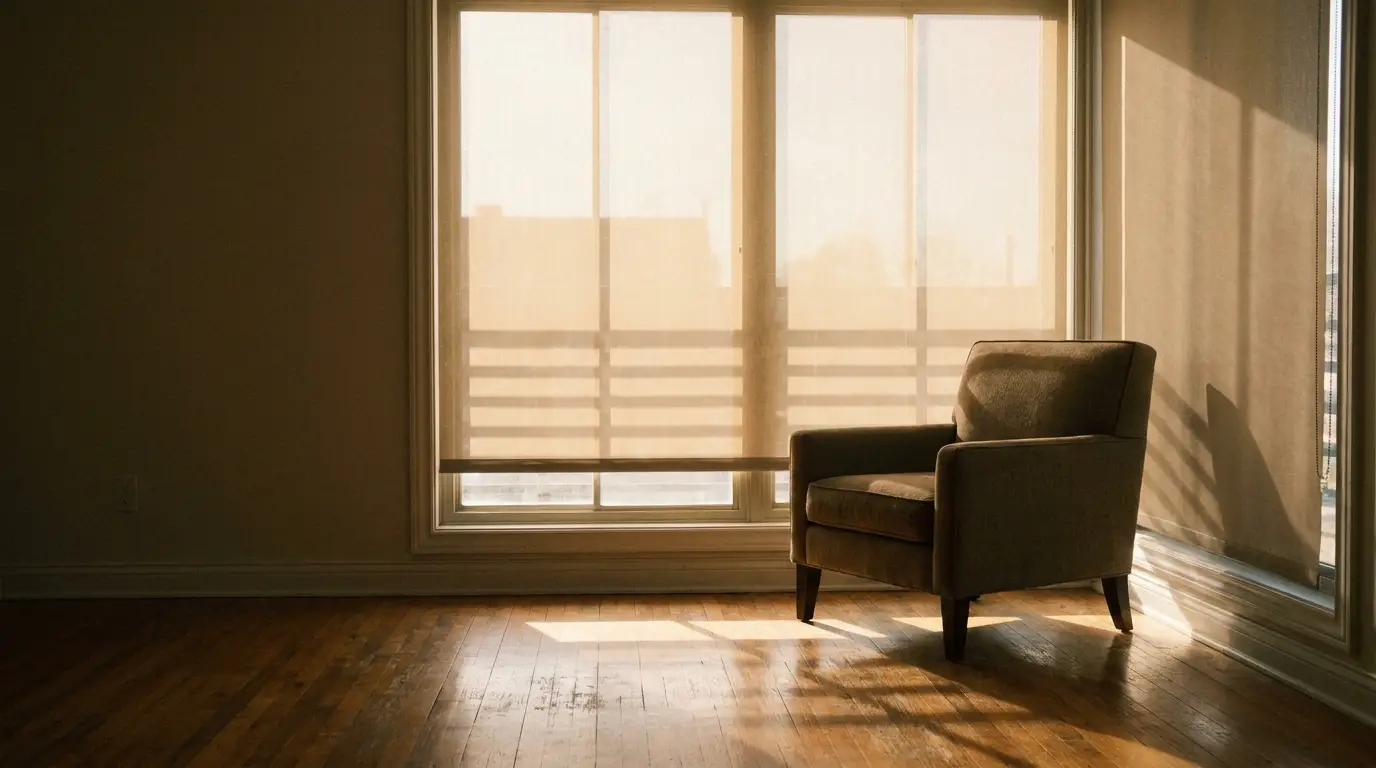
Most buyers approach window treatment shopping with aesthetic questions. What style do I like? What color works with my walls? These are valid questions but they are not the complete picture. The functional questions are where the decisions that determine daily satisfaction actually live.
How much light control does this room need at different times of day? A bedroom used for sleeping during daylight hours by shift workers or young children needs a fundamentally different treatment than a bedroom used only at night. The same room needs different light control at different hours, and the treatment needs to provide the full range rather than optimizing for one scenario at the expense of another.
How important is privacy versus view in this room? Solar shades provide excellent daytime privacy by making it difficult to see in from outside while preserving the outward view and filtering harsh light. They provide no privacy at night when interior lighting reverses the dynamic. Blackout roller shades provide complete privacy and light control but eliminate the view entirely when closed. Understanding what the priority is for each specific window produces better decisions than defaulting to one solution for all windows regardless of their different situations.
Does the window face a direction that creates specific challenges? South and west-facing windows in California receive intense afternoon sun that can cause furniture fading, screen glare, and uncomfortable heat gain. East-facing windows create harsh morning light that affects bedrooms and home offices differently. The treatment appropriate for a south-facing living room window may be entirely different from the right choice for a north-facing bedroom window even within the same home.
The Measurement Problem and Why It Matters
Custom window treatments are manufactured to the exact dimensions they are ordered in. A measurement error of half an inch in either direction produces a treatment that either leaves a gap that compromises light control and privacy or overlaps in a way that prevents proper operation. The precision required for accurate window treatment measurements is the reason professional measurement by an experienced installer produces significantly better results than self-measurement by a homeowner doing it for the first time.
Window frames are not always perfectly square, and walls are not always perfectly plumb. The measurements that matter for a properly fitting window treatment account for these real-world variations rather than assuming the window is a perfect rectangle. Professional measurement at the outset is the most cost-effective step in the entire process because the cost of a remedy and reorder from an error is several times the cost of getting it right the first time.
Motorization: The Upgrade That Changes How Rooms Work
Motorized window treatments have moved into practical consideration for a broader range of installations than the luxury-only category they once occupied. The situations where motorization solves a genuine functional problem rather than simply adding technology include windows that are high or physically difficult to reach, large panels like sliding door treatments where the manual operation of multiple panels is cumbersome, rooms where all treatments need to be adjusted simultaneously, and households where any member has a mobility limitation that makes manual operation difficult.
The ability to adjust an entire room’s worth of window treatments from a single button press or a voice command genuinely changes how the room is used, particularly for bedrooms where the morning light transition and the evening privacy transition both happen daily. Motorization is considerably easier to add during the initial installation than to retrofit afterward, which makes it worth considering during the consultation rather than as a later addition.