The conversation around collagen tends to arrive in women’s lives somewhere around the mid-thirties, usually prompted by a moment in the mirror, a joint that is taking longer to recover, or a friend who mentions it in passing. By that point, the body’s natural collagen production has already been declining for a decade.
Collagen loss begins gradually in the mid-twenties and accelerates through the thirties and beyond, with the skin, joints, hair and connective tissue all quietly reflecting the shift. Understanding why this happens and what supplementation actually does about it makes it easier to decide whether products like Vida Glow collagen supplements belong in a daily routine.
This piece covers the science honestly, the benefits that have the strongest evidence, and how to get the most out of supplementation if you choose to start.
What Collagen Is and Why It Matters
Collagen is the most abundant protein in the human body, making up roughly thirty percent of total protein content. It is the structural scaffolding that holds skin firm, gives joints their cushioning, keeps connective tissue elastic and provides the foundation from which hair and nails grow. There are several types of collagen in the body, but Types I and III are the ones most relevant to skin, and Type II is the primary collagen of cartilage.
The body synthesises collagen from amino acids, primarily glycine, proline and hydroxyproline, using vitamin C as a co-factor in the process. When collagen production is running well and diet provides the necessary building blocks, the system is self-sustaining. The problem is that production begins declining from around the mid-twenties at a rate of approximately one to two percent per year, with the rate accelerating during and after menopause due to the role that oestrogen plays in stimulating collagen synthesis. By the time a woman is in her forties, she may have lost a significant proportion of the skin collagen she had at twenty.
This is not simply a cosmetic issue. Collagen is structural. Its loss affects skin thickness and elasticity, yes, but also joint function, gut lining integrity, bone density support and wound healing. The visible signs, fine lines, loss of firmness, thinner skin, are expressions of a physiological process with broader implications than appearance alone.
The Skin Case: What the Research Shows
The evidence for collagen supplementation and skin health has strengthened considerably over the past decade. Several randomised controlled trials have found that daily oral collagen supplementation, typically in the range of 2.5 to 10 grams of hydrolysed collagen peptides, produces measurable improvements in skin elasticity, hydration and the reduction of fine lines over periods of eight to twelve weeks.
The mechanism is indirect but well understood. Hydrolysed collagen, broken down into shorter peptide chains during processing, is absorbed through the gut and transported to the dermis, where it stimulates fibroblasts, the skin cells responsible for collagen and elastin production, to increase their output. The supplement does not become skin collagen directly; it signals the body to produce more of its own. This is the reason consistency matters: the benefit is cumulative and depends on sustained signalling rather than a one-time dose.
Marine collagen, derived from fish, is the most studied and bioavailable form. Its peptides are smaller than bovine collagen peptides and are absorbed more efficiently across the gut wall. For women in their thirties and beyond whose natural production is declining, the combination of direct amino acid provision and fibroblast stimulation represents a meaningful support for the skin changes that are already underway.
A comprehensive review of the clinical evidence for collagen supplementation and skin health, published in the Journal of Drugs in Dermatology, found consistent improvements in skin elasticity, hydration and wrinkle reduction across multiple trials, concluding that oral collagen supplementation is a promising, evidence-supported intervention for age-related skin changes.
Joint Health: The Less Visible But Equally Important Benefit
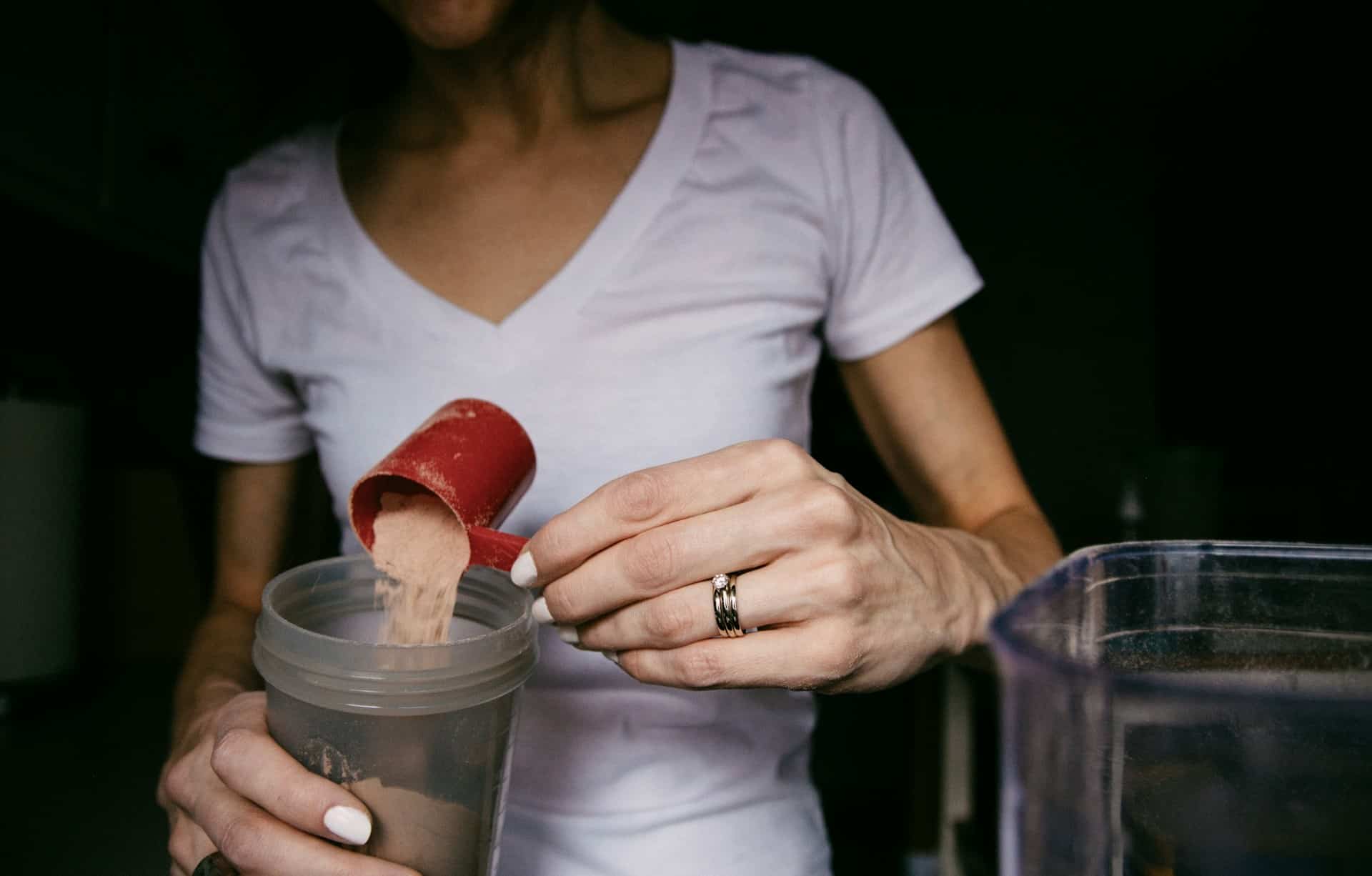
Joint discomfort in the thirties and forties, particularly in the knees, hips and small joints of the hands, is often attributed to ageing and left unaddressed. The cartilage that cushions joints is primarily collagen, and its gradual thinning and degradation is part of the same decline in collagen production that affects the skin. Women are at higher risk of joint cartilage loss than men, particularly around perimenopause when falling oestrogen levels reduce the collagen synthesis that helps maintain cartilage.
Clinical trials involving athletes and people with mild to moderate joint discomfort have found that daily collagen supplementation reduces joint pain and stiffness over periods of several months. The mechanism is similar to the skin pathway: hydrolysed collagen peptides absorbed through the gut accumulate in cartilage tissue and appear to stimulate chondrocytes, the cells responsible for cartilage maintenance, to increase their activity. For women who exercise regularly and want to support the longevity of their joint health, this is a compelling reason to supplement beyond the aesthetic motivation.
Hair and Nails: The Consistency Signals
Hair and nails are often the first places women notice the effects of consistent collagen supplementation, probably because changes are easily visible and relatively rapid. Nails grow faster, break less readily and show improved structural integrity. Hair, at the same time, tends to feel denser and less prone to the brittleness and shedding that many women experience through their thirties.
These effects are partly direct, from the amino acids collagen provides for keratin synthesis, and partly indirect, from the improved scalp and nail bed circulation and cellular activity that collagen supports. They are also the easiest to track as a personal measure of whether supplementation is having an effect, which is one reason the hair and nail observations are so consistently reported by women who take marine collagen regularly.
The Harvard T.H. Chan School of Public Health’s overview of collagen: what is it and what is it good for provides an evidence-based summary of what collagen is, how it functions in the body, the research on supplementation, and the honest caveats around what the science does and does not yet confirm. It is one of the most reliable independent references on the subject.
How to Get the Most From Collagen Supplementation
The form matters. Hydrolysed collagen peptides, sometimes labelled as collagen hydrolysate, are the most bioavailable format because the protein has already been broken down into smaller peptide chains that the gut can absorb efficiently. Non-hydrolysed collagen and gelatin are absorbed less efficiently and produce smaller effects at equivalent doses.
The dose in most clinical trials that showed meaningful skin effects was in the range of 2.5 to 10 grams daily. Higher doses are sometimes used for joint-focused protocols. Consistency over a period of at least eight to twelve weeks is necessary to see the cumulative benefits, particularly for skin elasticity and fine line reduction.
Vitamin C taken alongside collagen supplementation supports the conversion of the provided amino acids into collagen in the body. Most quality marine collagen supplements include vitamin C for this reason, but if yours does not, adding a vitamin C supplement or taking collagen alongside a meal containing vitamin C rich foods enhances the benefit.
The best time to take it is the time that becomes a reliable daily habit. Morning coffee or a smoothie are the two most common and consistent contexts. Collagen powder dissolves easily in both without affecting flavour in any meaningful way. The habit is more important than the timing.
A Decision Worth Making in Your Thirties
The case for starting collagen supplementation in your thirties rather than waiting until the changes are more pronounced is essentially the same as the case for any preventive health measure: the earlier the support is in place, the more of the foundation there is to maintain.
Collagen loss is a normal physiological process that cannot be stopped, but its rate and its visible and functional consequences can be meaningfully influenced by consistent supplementation alongside the other habits, good sleep, UV protection, adequate protein, that support collagen synthesis.
For women who want to feel as good in their bodies at forty and fifty as they do now, this is a practice worth building into the daily routine sooner rather than later.