So you love the idea of selling your own tees and hoodies through print on demand, but a monthly Shopify bill before you’ve made a single sale? Not so much. I get it.
Here’s the good news: you don’t need Shopify at all. Some options cost nothing until you sell, some charge small per-listing or per-sale fees, and a couple give you a full website for less than you’d expect.
I’ve split this into two groups. First, storefronts where you build your own shop. Then, marketplaces where the shoppers are already waiting.
Quick Answer
Yes, you can start a print-on-demand store without paying for Shopify.
- Want a free, ready-made shop? Try the Printify Pop-Up Store.
- Comfortable with WordPress? WooCommerce is a free plugin, though you’ll pay for hosting.
- Want built-in buyers? Etsy and TikTok Shop have no monthly fee, just per-listing or per-sale charges.
How Print on Demand Works Without Shopify
Print on demand means nothing gets printed until someone orders. A print provider makes the garment, packs it and ships it to your customer, so you never sit on a pile of unsold stock.
Printify is the bit in the middle. You design products in its free Product Creator, and Printify routes each order to a print provider in its network. The free plan lets you connect up to five stores to one account, and it plugs into far more than just Shopify, including Etsy, Amazon, TikTok Shop, Wix, WooCommerce, eBay and Squarespace.
That’s why skipping Shopify is so doable. Your supplier stays the same, and only the place you sell changes.
Shopify Alternatives for Print on Demand
1. Printify Pop-Up Store
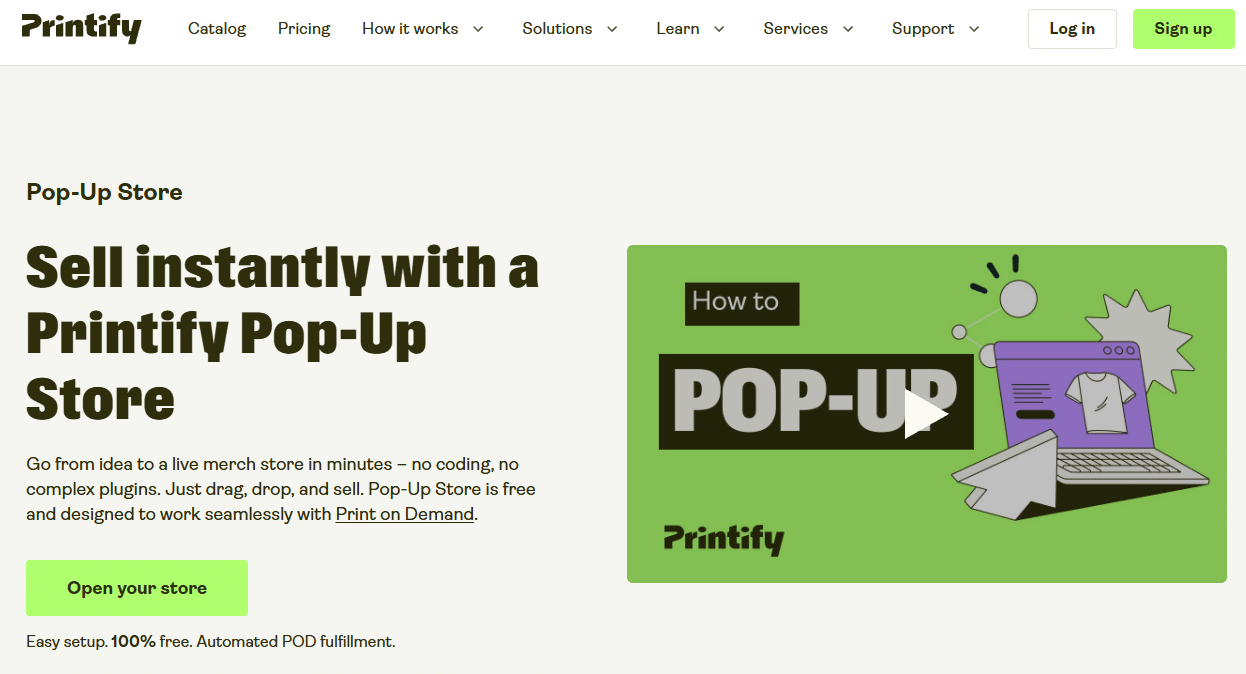
This is my favourite no-cost way to start. The Pop-Up Store is a free storefront hosted by Printify, the POD supplier that also handles your printing and shipping, with no subscription or listing fees.
Customers pay Printify directly, so you aren’t charged for the products upfront like you would be with other sales channels. Your shop gets a printify.me web address, or you can connect your own custom domain. Payouts arrive by bank transfer on the 15th of each month.
Pros and cons
Pros:
- Zero subscription or listing fees
- Setup takes minutes, with no separate platform to learn
- Option to use your own domain
Cons:
- Only open to sellers in eligible countries
- Fewer design and layout options than a full website builder
- You’re the merchant of record, so taxes are your responsibility
2. WooCommerce
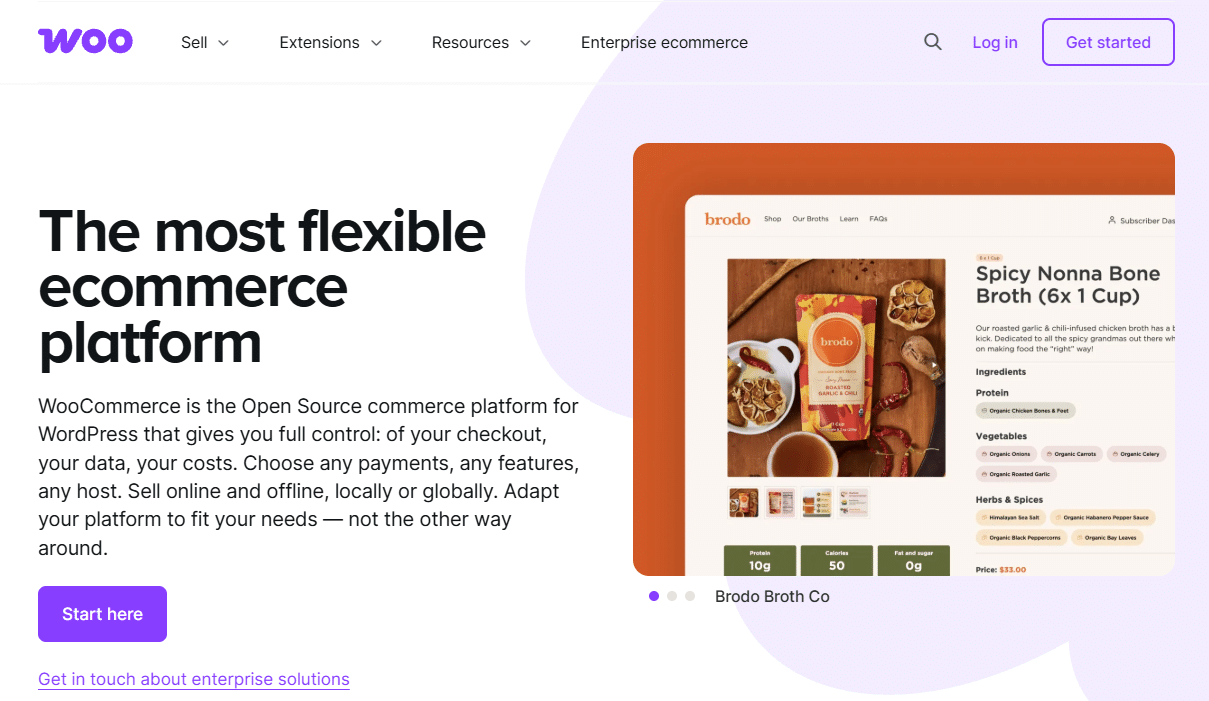
If you already have a WordPress site, WooCommerce turns it into a shop. The plugin itself is free, and so is the Printify integration.
The catch is that you’ll need web hosting and a domain, so it isn’t completely free. In return, you get full control over your store’s design and checkout.
Pros and cons
Pros:
- Free plugin and free Printify connection
- Total control over design and features
- No platform taking a cut of your sales
Cons:
- Hosting and domain costs
- More technical setup and upkeep
- Paid extensions can add up
3. Wix
Wix is great if you want a pretty website without touching code. You can design your store on the free plan, but you’ll need to upgrade to a paid plan before you can accept online payments.
So it’s not free once you’re selling, but it does give you an all-in-one website, blog and shop in one place.
Pros and cons
Pros:
- Drag-and-drop design that’s beginner-friendly
- Website, blog and shop in one dashboard
- Connects with Printify
Cons:
- Payments require a paid plan
- Less flexible than WooCommerce for heavy customisation
4. Squarespace
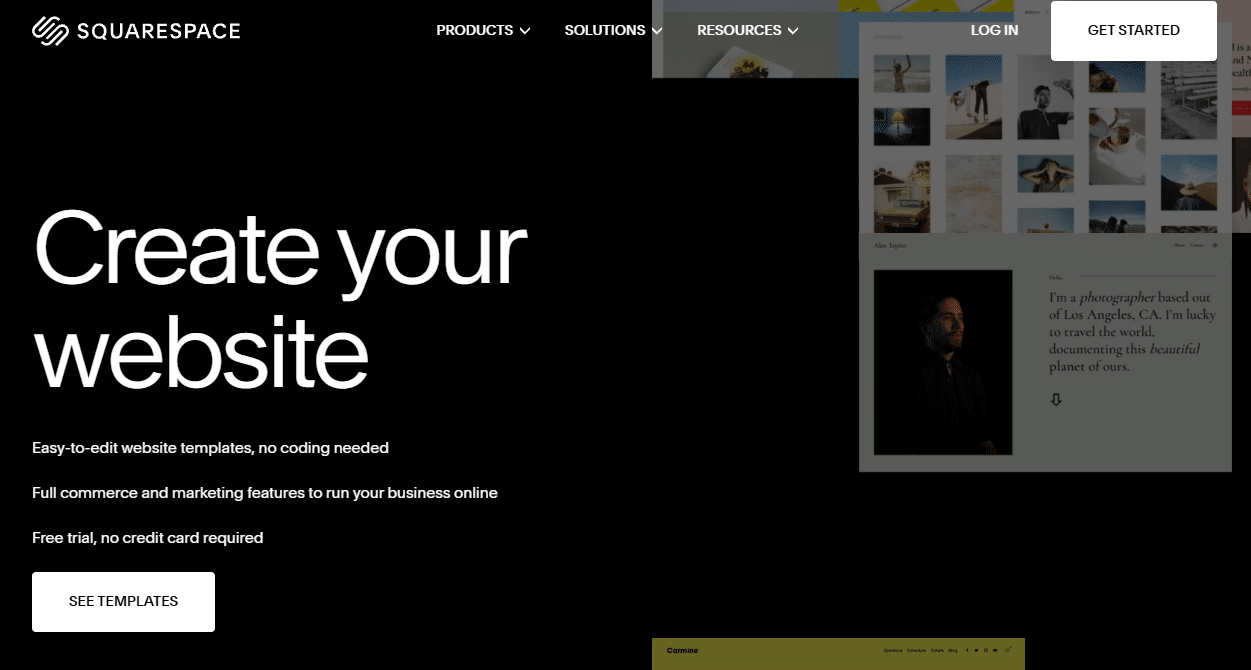
Squarespace is known for polished, design-led templates, which suit fashion brands nicely. There’s no free plan, only a free trial, so expect a monthly subscription once you launch.
It’s a good pick if visuals matter most and you’d rather not fiddle with plugins.
Pros and cons
Pros:
- Beautiful, fashion-friendly templates
- Simple, tidy dashboard
- Connects with Printify
Cons:
- No free plan
- Fewer integrations than WooCommerce
When Shopify Still Makes Sense
To be fair to Shopify, it does a lot. It handles your storefront, checkout, payments and order records, but it doesn’t print or ship anything itself. That’s still the job of your print provider.
If you outgrow a free option later, Printify’s Shopify integration uses a dedicated app, and most merchants finish connecting it in under half an hour. Because the same Printify account can run several stores, you can add Shopify alongside your Pop-Up Store or Etsy shop rather than starting over.
Using Marketplaces Instead of Shopify
Storefronts give you control, but you have to bring the traffic yourself. Marketplaces flip that around:
- Storefronts: Your brand, your prices, your customers, but you do all the marketing.
- Marketplaces: Millions of shoppers already browsing, but more fees and more competition.
5. Etsy
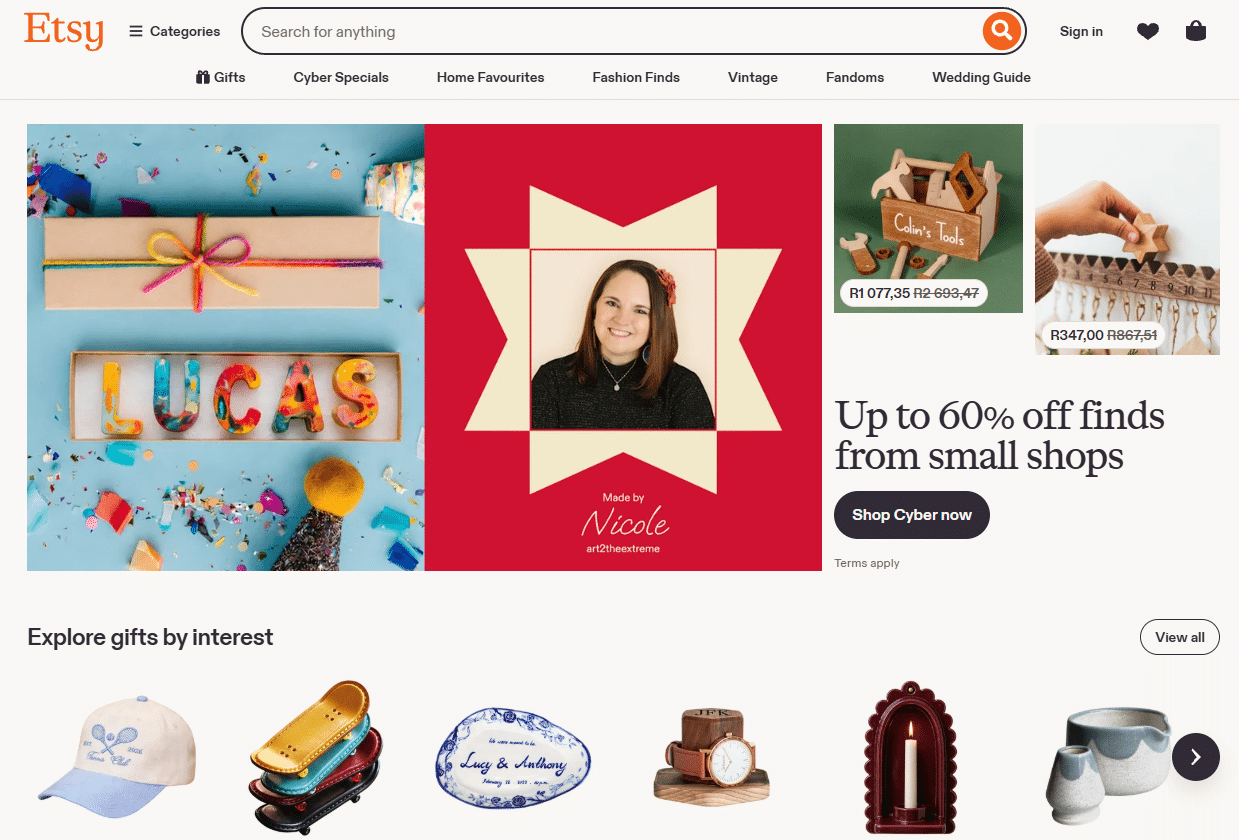
Etsy is the classic home for creative, one-of-a-kind products, and there’s no monthly fee to open a shop.
You’ll pay a USD 0.20 listing fee per item, a 6.5% transaction fee on each sale (including shipping), and payment processing, which is 3% plus USD 0.25 per order in the US.
Pros and cons
Pros:
- Shoppers actively looking for unique designs
- No monthly subscription
- Connects with Printify
Cons:
- Fees add up on every sale
- Crowded with similar designs, so originality matters
6. TikTok Shop
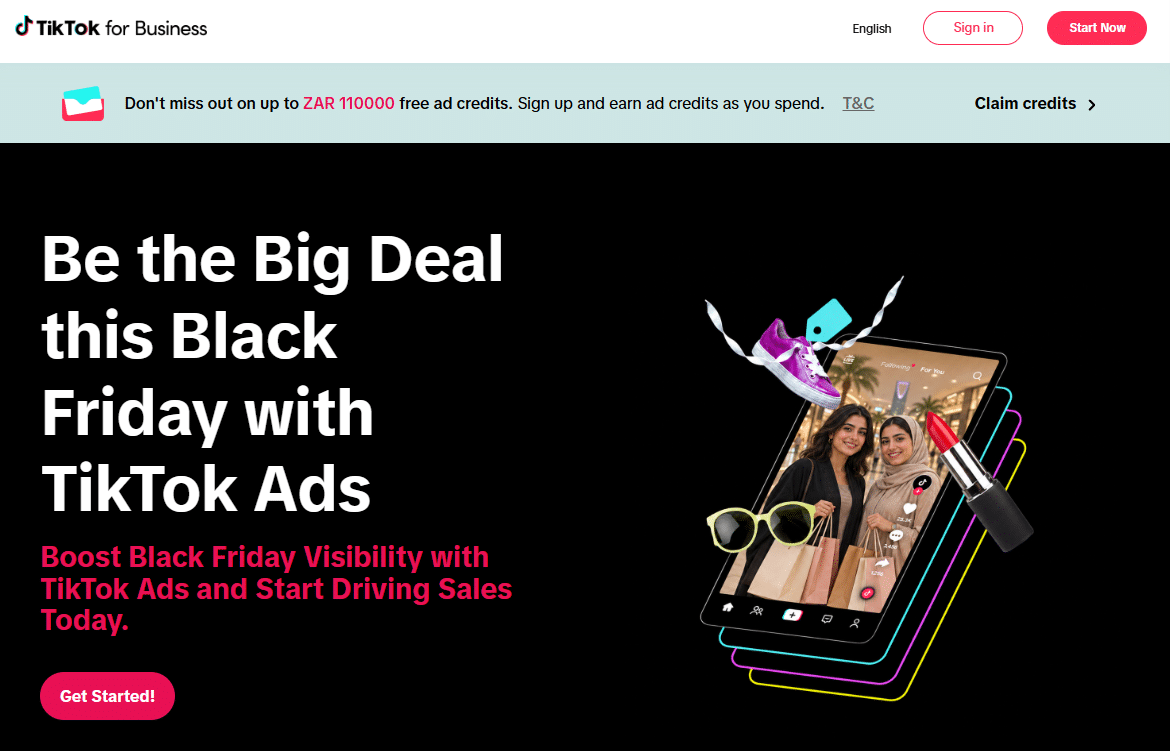
If you’re already making videos, TikTok Shop lets people buy straight from your content. There’s no monthly subscription or listing fee. Instead, TikTok takes a category-based referral fee on each completed order.
It’s ideal for showing your clothes being worn, styled and moving in real life.
Pros and cons
Pros:
- No monthly or listing fees
- Products sell straight from your videos
- Connects with Printify
Cons:
- You need to create content consistently
- Check the current referral rate in Seller Center before pricing
7. eBay
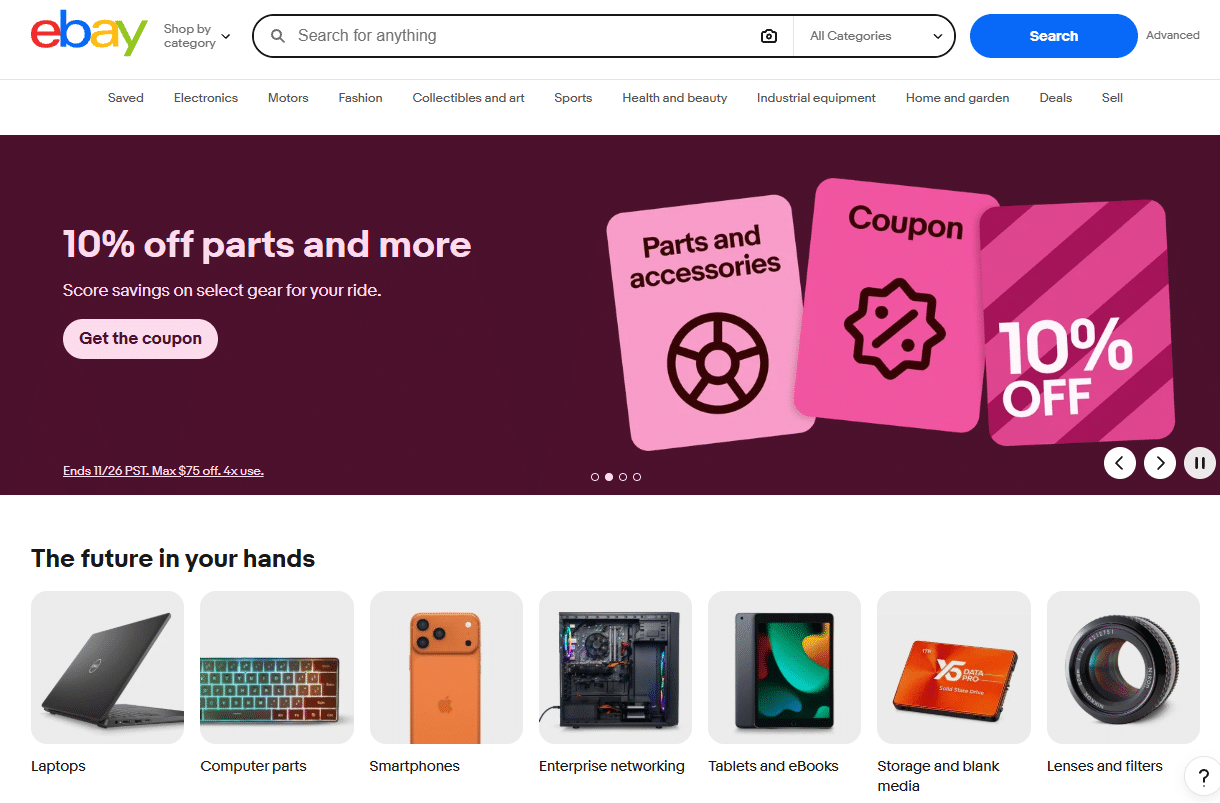
eBay isn’t the first place people think of for print on demand, but it works. Most sellers get up to 250 free listings a month, then pay USD 0.35 per listing.
When an item sells, eBay charges a final value fee that varies by category, plus a small per-order fee.
Pros and cons
Pros:
- Generous free listing allowance
- Huge, established buyer base
- Connects with Printify
Cons:
- Less of a “brand” feel than Etsy
- Final value fees vary by category
8. Amazon
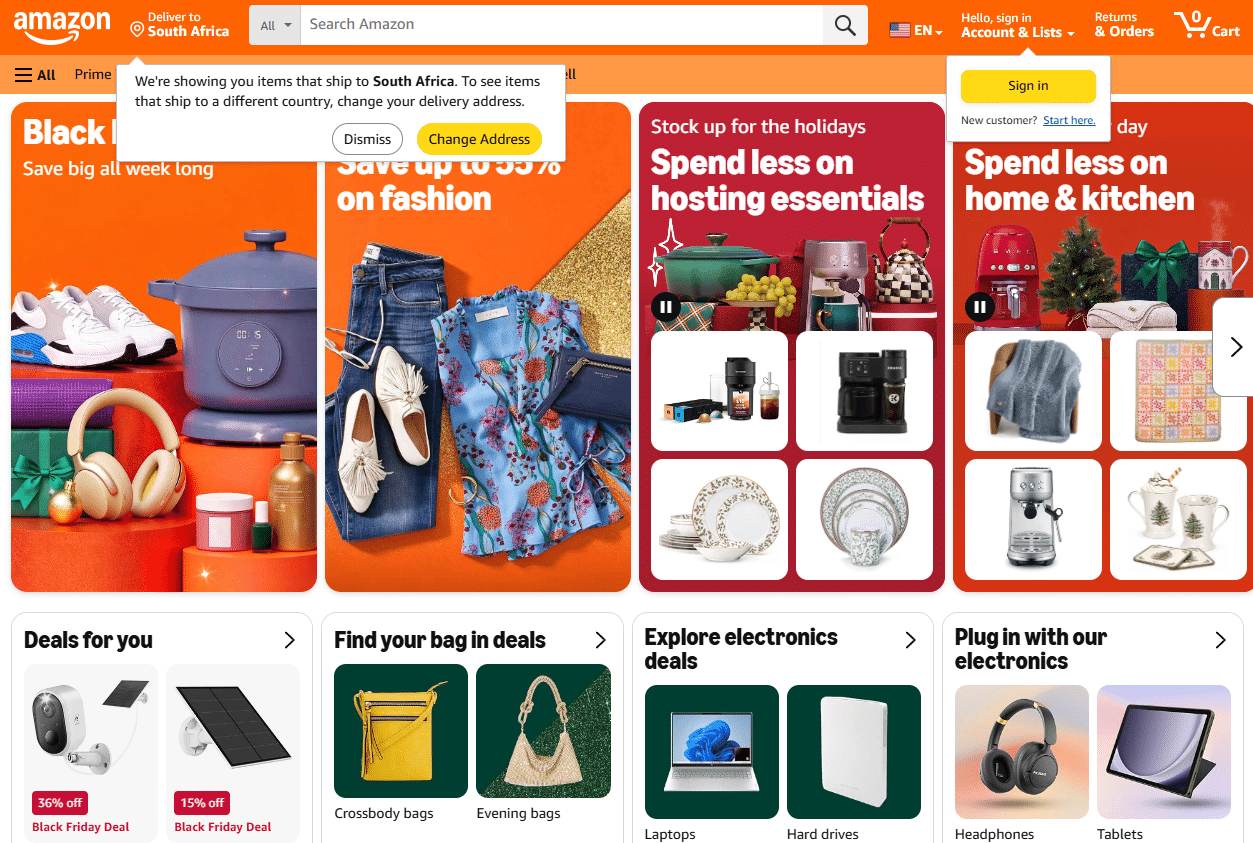
Amazon has the biggest audience of the lot, but it’s the one option on this list with a guaranteed monthly cost. To connect Printify, you need Amazon’s Professional selling plan at USD 39.99 a month, plus referral fees on each sale.
Save this one for when you have proven designs and steady orders.
Pros and cons
Pros:
- Massive customer base
- Printify automates order fulfilment
Cons:
- USD 39.99 monthly plan required
- Referral fees on every sale
Storefronts Vs Marketplaces at a Glance
| Option | Type | Monthly fee to start | Main costs |
|---|---|---|---|
| Printify Pop-Up Store | Storefront | None | Product and shipping costs |
| WooCommerce | Storefront | None for the plugin | Hosting and domain |
| Wix | Storefront | Paid plan to accept payments | Wix plan |
| Squarespace | Storefront | Paid plan | Squarespace plan |
| Etsy | Marketplace | None | USD 0.20 listing, 6.5% transaction, processing |
| TikTok Shop | Marketplace | None | Referral fee per order |
| eBay | Marketplace | None | Listing fees after 250, final value fee |
| Amazon | Marketplace | USD 39.99 | Plan plus referral fees |
What It Really Costs to Start
Printify’s free plan has no monthly fee. On most sales channels, you pay for production and shipping when an order comes in, then keep the difference between that and your retail price.
A few costs are worth budgeting for from day one:
- Samples: Order one of each design so you can check fabric, fit and print quality.
- Platform fees: Listing, transaction or referral fees, depending on where you sell.
- Returns: Printify offers a free reprint or refund for damaged items or manufacturing errors reported within 30 days of delivery, but not when a customer simply ordered the wrong size or changed their mind.
That last point is why clear sizing matters so much. Add real garment measurements to every listing, and think about how your designs flatter different shapes. If you want a refresher on fit, this guide on how to dress for your body type is a handy way to think about proportions when you style your product photos.
Printful is another print-on-demand option that works with many of the same platforms, so it’s worth comparing the two on product range and pricing before you commit.
Conclusion
You absolutely can start print on demand without paying for Shopify. If you want something free and quick, start with the Printify Pop-Up Store. If you’re comfortable with WordPress, WooCommerce gives you the most control for the least money. And if you’d rather go where the shoppers already are, Etsy and TikTok Shop let you start with no monthly fee.
My advice? Pick one channel, order your samples, and get your first few sales before adding more. You can always connect another store later. Got a favourite way to sell your designs? I’d love to hear about it.