Online dance classes make it possible to develop rhythm, coordination, fitness, and choreography skills without travelling to a studio. The best way to learn dance online is to choose structured lessons suited to your current ability, practise consistently, repeat difficult sections, and use video feedback to review your technique.
Digital lessons also offer flexibility, privacy, access to multiple dance styles, and control over the pace of instruction. However, progress still requires discipline. A screen cannot always identify poor alignment or correct a movement immediately. The following nine methods will help you select suitable classes, create an effective routine, and manage the most common challenges of home dance practice.
For learners who prefer guided instruction, Everdance — a dance app for home workouts offers structured routines that can support regular practice while still allowing users to explore different teaching styles and learning options.
Why Online Dance Classes Are Effective for Home Learning
The Main Benefits of Online Dance Classes
Virtual dance lessons allow you to practice when your schedule permits. Recorded instruction can be paused, slowed down, replayed, or divided into smaller sections, making it particularly useful for beginners who need more time to process new movements.
Other advantages include:
- Access to different instructors and dance styles
- Lower travel and studio-related costs
- Private, beginner-friendly practice
- Short and full-length lesson options
- Freedom to repeat a class several times
- The ability to progress at an individual pace
Limitations Beginners Should Understand
Online learning does not provide the immediate physical correction available in a studio. You may repeat a mistake without realizing it, especially when learning posture, weight transfer, turns, or detailed footwork.
Motivation can also decline without a scheduled class or dance community. Limited floor space, poor internet quality, small screens, and household distractions may affect concentration. These limitations do not make digital lessons ineffective, but they do make careful class selection and self-review essential.
1. Define What You Want to Achieve
Choose Between Skills, Choreography, and Fitness
Your goal should determine the type of class you select. Some learners want basic movement technique, while others are interested in dance fitness, social dancing, coordination, or complete choreography.
Detailed instruction is usually more useful for beginners. Experienced dancers may prefer faster choreography-focused sessions with fewer explanations.
Set a Realistic Short-Term Goal
Replace a vague objective such as “become a good dancer” with a measurable target:
- Complete one beginner routine within two weeks
- Practice three times each week
- Learn one basic step combination
- Improve balance during weight transfers
- Finish a progressive beginner program
A specific goal gives each practice session a clear purpose.
2. Choose a Beginner-Friendly Dance Style
Good Styles for Home Practice
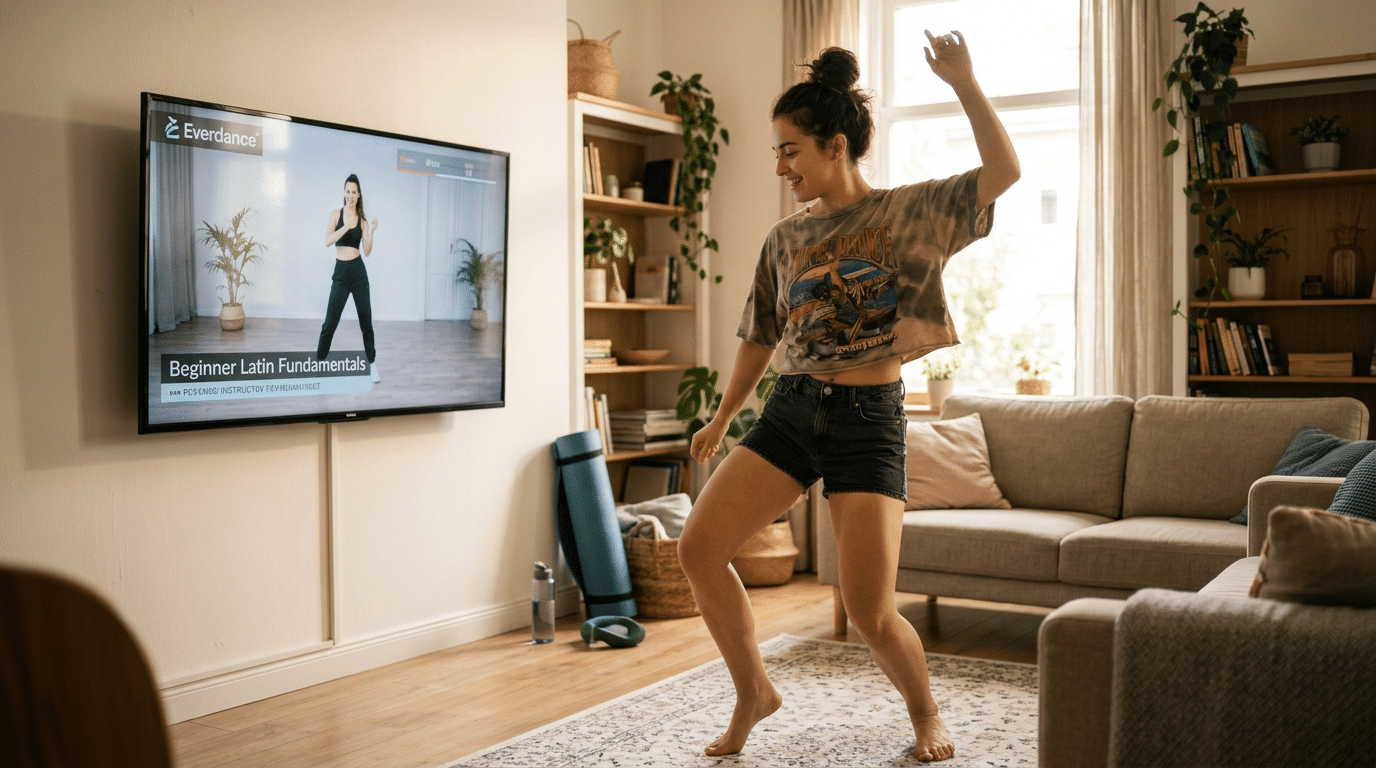
Dance fitness, hip-hop basics, Latin fundamentals, jazz-inspired movement, contemporary basics, low-impact dance, and beginner choreography can work well at home.
Look for routines with repetitive steps, moderate tempos, limited travelling movement, and clear demonstrations. These features make a lesson easier to follow in a smaller space.
Match the Style to Your Space and Fitness
Select low-impact routines when you are new to exercise or returning after a break. Slower classes can support coordination, while higher-energy sessions may provide a more demanding cardio workout.
Avoid complicated jumps, turns, or floor combinations when your surface or available space is unsuitable.
3. Select Classes That Match Your Current Level
How to Evaluate Beginner Online Dance Classes
A suitable beginner lesson should include:
- A clear difficulty label
- Warm-up and cool-down guidance
- Slow step breakdowns
- Verbal movement cues
- Repeated demonstrations
- Easier modifications
- Progressive lesson sequences
Structured classes that build one skill upon another are generally more effective than unrelated tutorials.
Signs a Class Is Too Difficult
Move to an easier lesson when choreography begins without explanation, terminology is not defined, or the movements remain impossible to follow after reducing the playback speed.
Pain, unsafe jumps, insufficient space, and the absence of modifications are also warning signs. Choosing a simpler class is a practical adjustment, not a failure.
4. Learn Dance Online Through a Structured Program
What Is the Best Way to Learn Dance Online?
The best approach is to follow a progressive program that matches your level, practice regularly, repeat difficult movements, and use visual feedback to check your technique.
A logical learning sequence usually begins with:
- Posture and alignment
- Rhythm and counting
- Weight transfer
- Basic steps
- Short combinations
- Complete routines
This progression prevents beginners from attempting complex choreography without understanding its foundations.
Repeat Lessons Instead of Constantly Changing Them
One viewing is rarely enough to create reliable movement patterns. Repeat the same lesson, divide choreography into short sections, and review difficult transitions separately.
Returning to basic classes can also reveal improvements that were difficult to notice during the first attempt.
5. Use an Online Dance App to Support Progress
How Does an Online Dance App Help Beginners Improve?
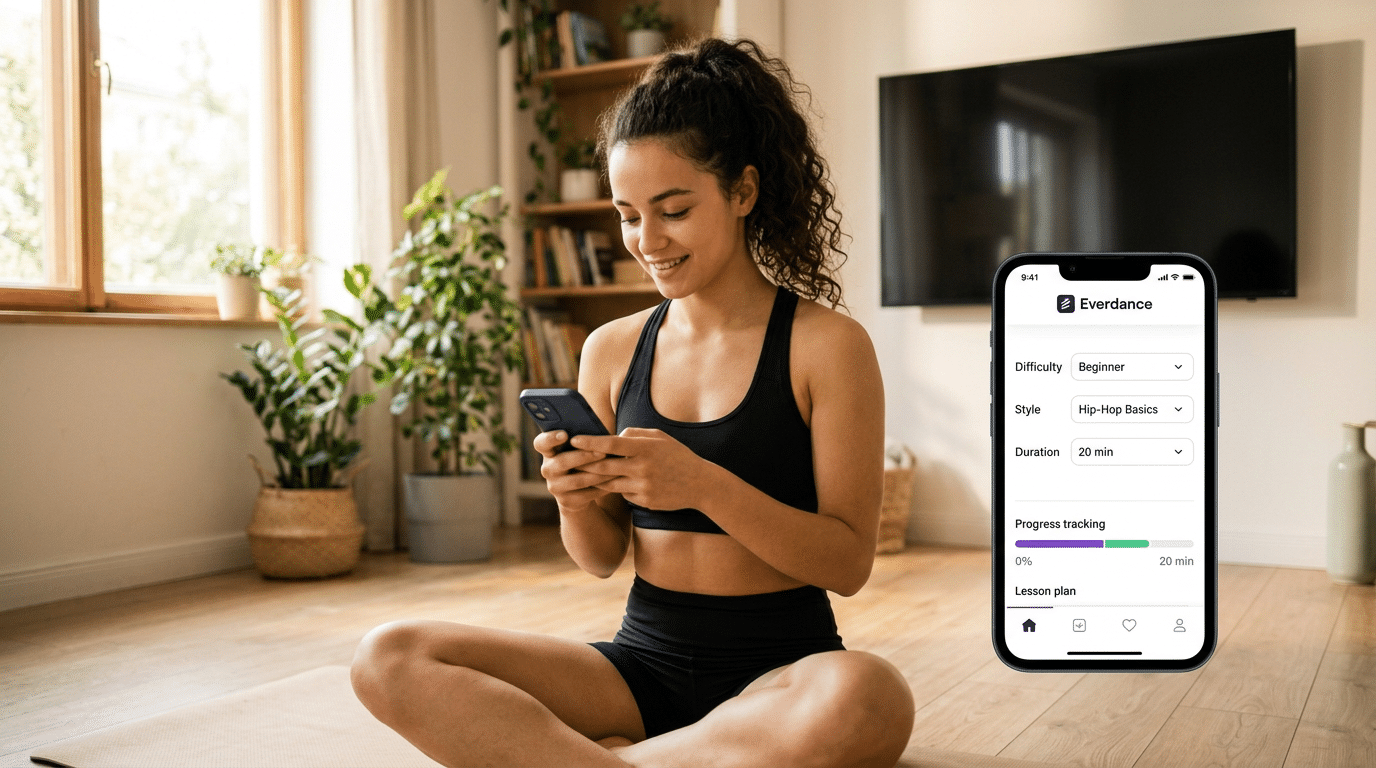
An online dance app can organize lessons, create a logical progression, save favorite classes, track completed sessions, and provide replay or speed-control tools. These features reduce the effort required to plan each practice.
Features to Check Before Choosing an App
| Feature | Why It Matters |
|---|---|
| Difficulty filters | Prevents beginners from choosing unsuitable lessons |
| Playback controls | Makes complex movements easier to review |
| Progressive programs | Creates a logical learning path |
| Duration filters | Helps lessons fit different schedules |
| Style selection | Supports exploration of dance types |
| Progress tracking | Encourages consistency and motivation |
6. Prepare a Safe, Distraction-Free Space
How Much Space Do Online Dance Classes Require?
A large studio is not always necessary. You need enough room to extend your arms, step in several directions, and move without contacting furniture.
Remove cables, loose objects, and unstable rugs. Position the screen near eye level, improve lighting, and test the internet connection before starting.
Choose Safe Flooring and Clothing
Wear comfortable clothing and appropriate footwear for the selected style. Avoid jumps on hard, slippery, or unstable surfaces, and keep water nearby.
Stop exercising if you experience sharp pain, dizziness, or unusual discomfort. Modify the movement rather than forcing your body through an unsafe range.
7. Build a Consistent Practice Routine
How Often Should Beginners Practise?
Most beginners can start with two or three 20–40-minute sessions per week. Include several minutes for warming up, technique review, and cooling down.
Consistency is more productive than completing one exhausting session and then avoiding practice for several weeks.
Use Short Sessions When Time Is Limited
A focused 30-minute routine might include:
- Five minutes of warming up
- Ten minutes of step practice
- Ten minutes of choreography
- Five minutes of repetition and cooling down
Schedule sessions in your calendar and use reminders to reduce motivation-related interruptions.
8. Record Yourself and Review Your Technique
Use a Mirror or Camera for Visual Feedback
A recording can reveal posture problems, incorrect arm placement, timing differences, incomplete movements, and unbalanced weight transfer.
Review one short section and identify only one or two corrections. Trying to fix every detail simultaneously can make practice frustrating and unfocused.
Compare Your Movement Carefully
Watch the instructor, record yourself performing the same section, and compare timing, direction, and body position. Repeat the movement slowly before recording it again.
Video review is valuable, but it cannot fully replace personalized feedback from a qualified instructor.
9. Adapt Online Dance Courses to Your Fitness Level
Are Online Dance Courses Suitable for All Fitness Levels?
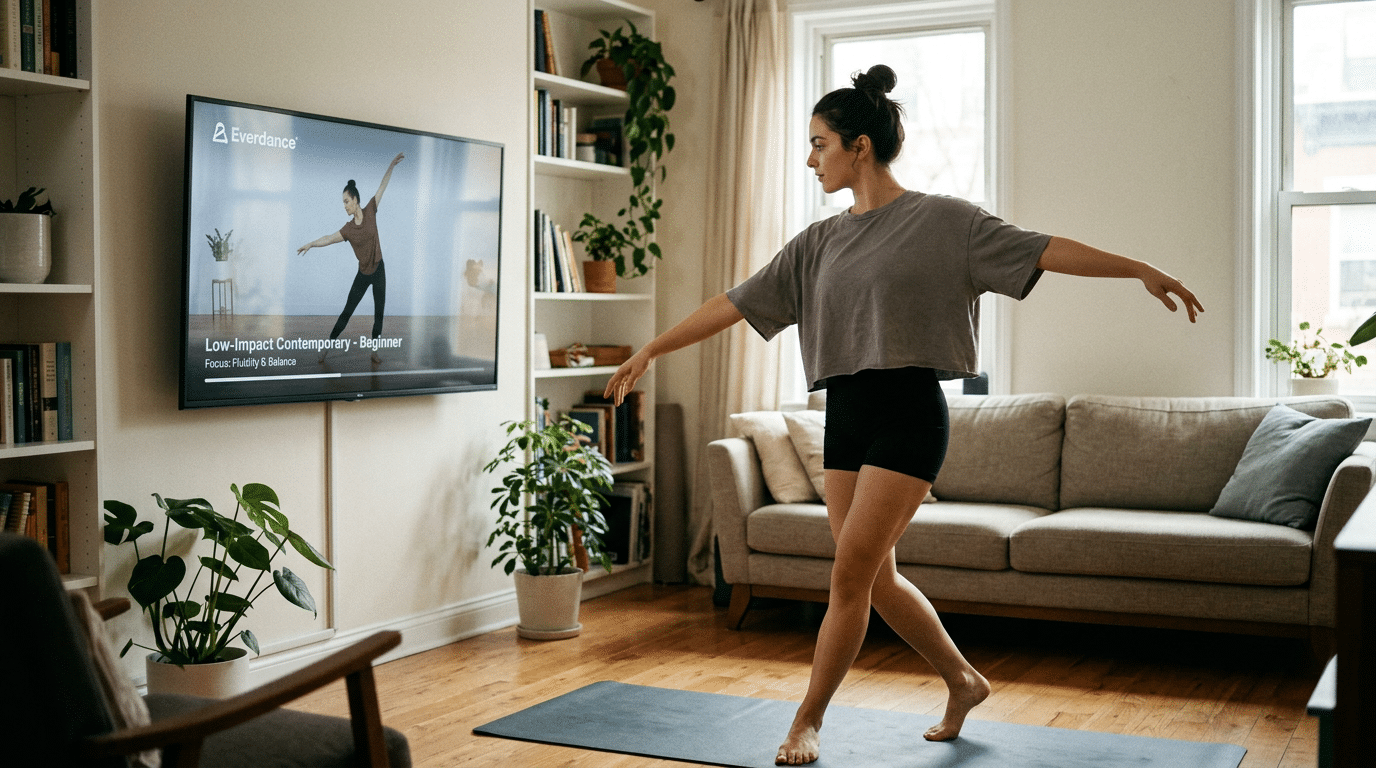
Online dance courses can suit most fitness levels when learners select an appropriate difficulty, intensity, duration, and range of motion. Beginner programs, low-impact lessons, seated routines, technique classes, and high-intensity dance workouts serve different needs.
How to Modify Difficult Movements
Replace jumps with steps, reduce arm range, slow the playback speed, practise without music, or complete fewer repetitions. You can also pause between combinations and select shorter lessons.
Learners seeking accessible home exercise options may explore a dance workout app for women with routines organized around different goals and experience levels.
How to Choose Between Online Dance Courses
Compare Structure, Level, and Teaching Style
Evaluate whether the course offers progressive instruction, clear demonstrations, useful technique explanations, suitable class durations, multiple difficulty levels, and reliable device compatibility.
The instructor’s teaching style should match how you learn. Some people need detailed verbal cues, while others respond better to repeated visual demonstrations.
Test the Platform Before Committing
Watch sample lessons, try a beginner routine, test the playback tools, and confirm that the choreography fits your available space. Review the lesson library and determine whether the program offers enough material for continued progress.
Available plans and access options can be reviewed at https://everdance.app/en/pricing before selecting a format that matches your intended practice schedule.
Common Mistakes When Learning Dance Online
Moving to Advanced Choreography Too Quickly
Do not skip rhythm, posture, weight transfer, basic footwork, or coordination exercises. These foundations make advanced movement safer and easier to understand.
Watching Without Practising
Passive viewing does not develop physical skill. Stand up, repeat the movement, isolate difficult transitions, and revisit earlier lessons.
Other common mistakes include choosing classes only for the music, ignoring difficulty labels, practising without warming up, changing programs too frequently, comparing yourself with advanced dancers, and continuing through pain.
Final Thoughts on Online Dance Classes
Online dance classes provide a practical way to build rhythm, coordination, fitness, and choreography skills from home. Strong results come from choosing the correct level and style, following progressive instruction, practising consistently, and reviewing your movement instead of rushing through multiple programs.
An app can support organization and repetition, but occasional instructor feedback may still be helpful for alignment or complex technique. Treat each lesson as active practice rather than entertainment, and allow progress to develop gradually.
Frequently Asked Questions About Online Dance Classes
Can complete beginners take online dance classes?
Yes. Complete beginners can start with lessons that clearly identify their difficulty and explain movements slowly. Suitable classes include warm-ups, repeated demonstrations, simple combinations, and basic rhythm exercises. Short sessions can prevent fatigue while learners develop coordination. Advanced choreography should be delayed until posture, weight transfer, and foundational steps feel more comfortable.
What is the best way to learn dance online?
Follow a progressive course instead of relying on unrelated tutorials. Practise two or three times per week, repeat difficult sections, and record short combinations for review. Begin with basic steps and movement technique before attempting complete choreography. Choosing an instructor whose explanations match your learning style can also make movements easier to understand and remember.
Do I need a large room for online dance classes?
Not necessarily. Many beginner and low-impact classes require only enough space to extend your arms and take a few safe steps. Remove loose rugs, cables, and nearby furniture before beginning. Select small-space choreography when necessary, as complex turns, jumps, travelling combinations, and floor exercises may require a larger or more suitable practice area.
Can an online dance app replace an instructor?
An app can provide structured lessons, flexible scheduling, repetition, progress tools, and adjustable playback. However, it may not identify subtle alignment or technique problems. Mirrors and recordings can help learners notice basic mistakes, while occasional personalized feedback may be useful for complex movements. Digital and in-person instruction can therefore complement each other.
How long does it take to learn dance online?
Progress depends on your goals, previous experience, class difficulty, and practice frequency. A beginner may become comfortable with basic steps after several weeks, while refined technique and complex choreography usually require longer practice. Two or three focused weekly sessions are generally more useful than irregular, lengthy workouts because consistent repetition strengthens coordination and movement recall.