A home can feel rich with history without looking stuck in the past. Modern Victorian Interior Design brings together ornate architectural details, rich colors, classic furniture, and layered textures with the comfort of contemporary living.
The result is a space that feels elegant, warm, and personal rather than overly formal.
I’ve found that even one vintage-inspired piece, paired with clean lines and simple furnishings, can add character without overwhelming a room.
These Modern Victorian Interior Design Ideas show how to balance traditional charm with modern simplicity through thoughtful colors, materials, furniture, and decorative accents.
What Is Modern Victorian Interior Design?
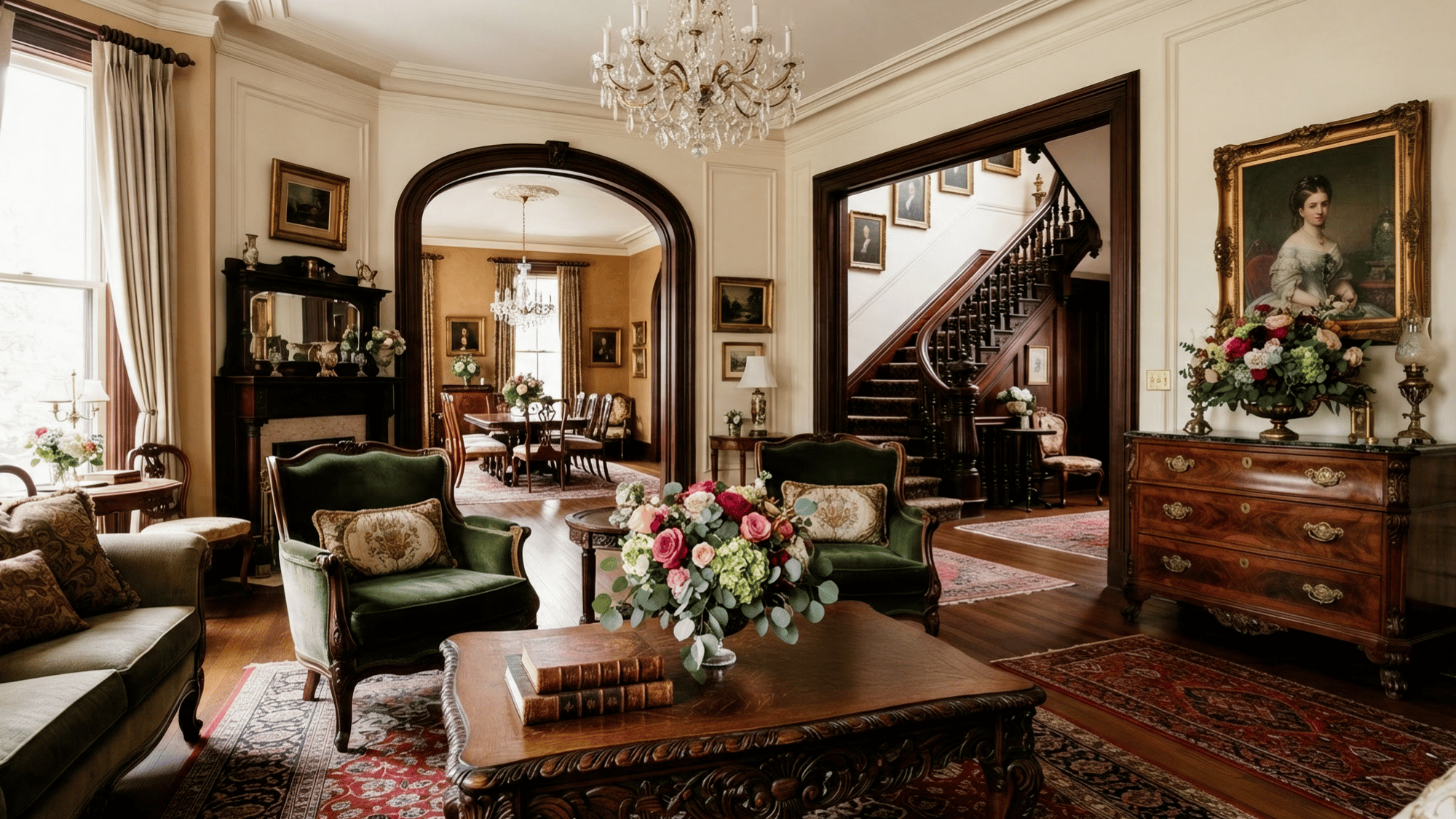
Modern Victorian interior design blends the ornate character of the Victorian era with the simplicity and practicality of contemporary homes.
Traditional Victorian interiors often feature elaborate decoration, heavier furnishings, and richly layered rooms, while the modern approach uses these elements more selectively.
Think classic furniture paired with clean-lined pieces, decorative molding balanced by open space, and rich colors softened with lighter neutrals.
The result is a comfortable, lived-in interior that preserves Victorian elegance without feeling overly formal or dated.
Modern Victorian Interior Design Ideas
1. Start With Rich Victorian-Inspired Colors

Use deep, expressive shades such as navy, forest green, burgundy, charcoal, or muted mustard to bring Victorian warmth into a room.
These colors work especially well on walls, cabinetry, upholstery, or smaller accent pieces.
Balance darker tones with cream, warm white, taupe, or soft gray so the space feels inviting, not heavy. Gold, brass, and natural wood details can add subtle richness.
2. Balance Bold Shades With Neutral Backdrops

A neutral background gives ornate Victorian elements room to stand out. Choose shades such as ivory, greige, dove gray, beige, or warm white for walls and larger surfaces.
Then introduce darker colors through furniture, artwork, rugs, and accessories.
This approach keeps the room visually calm while allowing decorative details to create interest. It also makes the style easier to adapt in smaller or modern homes.
3. Preserve Architectural Features

If your home has original molding, ceiling roses, fireplaces, woodwork, paneling, arches, or decorative trim, treat these features as part of the design rather than covering them up.
The U.S. Department of the Interior National Park Service’s guidance on historic interior features explains that elements such as mantels, crown molding, ceiling medallions, staircases, and window trim can contribute to a building’s historic character.
4. Pair Ornate Details With Clean Lines

Modern Victorian style works through contrast. Place an ornate mirror above a simple console, combine decorative molding with streamlined furniture, or use intricate wallpaper behind a clean-lined sofa.
The traditional element adds character, while the contemporary piece prevents the room from feeling dated.
Avoid filling every surface with decoration. A few carefully chosen details often create more impact than an overly decorated room.
5. Mix Antique Pieces With Modern Furniture

Combine one or two antique or vintage-inspired pieces with contemporary furniture for a balanced look. An antique desk can sit beside a modern chair, while a carved wooden table can work with a simple sofa or sleek lighting.
Mix curved and straight shapes. This keeps the room connected to Victorian design without making every item look like it’s from the same period.
6. Choose Comfortable Statement Upholstery

Victorian interiors are known for dramatic furniture, but comfort should remain important in a modern home. Consider a tufted sofa, curved armchair, velvet bench, or fringed accent chair as a focal point.
Keep the remaining furniture streamlined so the statement piece doesn’t overwhelm the room.
Upholstery in jewel tones, warm neutrals, or textured fabrics can add depth while maintaining a relaxed atmosphere.
7. Add Luxurious Fabrics in Moderation

Introduce velvet, linen, brocade, silk-like fabrics, woven textiles, or heavy cotton through curtains, cushions, throws, and upholstered furniture.
Cotton and linen fabrics can add softness and texture while keeping the room comfortable and practical.
Cornell University’s materials and well-being research examines how colors, textures, and materials can affect comfort and productivity. Mix textures, then pair luxurious fabrics with plain surfaces, simple shapes, and uncluttered arrangements.
8. Use Dramatic Lighting as a Focal Point

Lighting can give a modern Victorian room its sense of drama. Choose a chandelier, sculptural pendant, antique-style wall sconces, or a brass table lamp with an interesting silhouette.
Keep the fixture decorative but practical, and avoid using too many competing statement lights.
Layer overhead lighting with lamps and candles to create a warm glow that highlights architectural details, artwork, and rich materials.
9. Make the Floor Part of the Design

Victorian-inspired flooring can add strong visual character to a room. Consider patterned tiles, dark wood, checkerboard flooring, encaustic-style designs, or a richly colored area rug.
If replacing the floor is not practical, use a dramatic rug to create a similar effect.
Keep nearby furniture and accessories relatively restrained when the flooring has a bold pattern, so the room doesn’t feel visually crowded.
10. Choose Decorative or Patterned Wall Treatments

Wallpaper, wall paneling, color blocking, and board-and-batten details can introduce Victorian character without requiring major renovations.
Floral prints, botanical patterns, damask-inspired designs, and textured finishes work well when used thoughtfully.
For a contemporary result, apply a bold treatment to one wall or use it in a smaller space such as an entryway or powder room. Pair patterned walls with simpler furnishings.
11. Update Window Treatments

Modern Victorian windows should feel elegant but not overly complicated. Use full-length curtains in velvet, linen, cotton, or another softly textured fabric.
Simple panels can preserve a sense of grandeur without the heavy layers associated with traditional Victorian rooms.
For a cleaner look, consider roller shades, Roman blinds, or interior shutters. If the windows have attractive shapes or frames, use minimal coverings to keep them visible.
12. Create an Ornate Gallery Wall
A gallery wall is an effective way to bring Victorian personality into a modern space. Combine antique-style frames with family photographs, botanical prints, portraits, sketches, or contemporary artwork.
The frames can be ornate while the artwork remains personal and current.
To avoid a chaotic look, tie the collection together with a shared color palette, repeated materials, or consistent spacing.
13. Use Mirrors to Reflect Light and Detail

Decorative mirrors can brighten a room while adding Victorian-inspired elegance.
Look for arched, oval, carved, brass, or distressed frames, then place the mirror above a mantel, console, dresser, or fireplace.
A simpler mirror can also create a useful contrast against patterned wallpaper or ornate molding. Position it where it reflects natural light, artwork, or an attractive architectural feature.
14. Style With Botanical-Inspired Decor
Victorian interiors often draw from botanical and natural influences. Bring this quality into a modern room with dried flowers, leafy plants, botanical artwork, floral ceramics, natural wood, woven baskets, or accessories made from rattan and other fibers.
Choose a few meaningful pieces rather than decorating every surface. Nature-inspired accents soften dark colors and ornate furniture, helping the room feel more relaxed and lived-in.
Rooms that hold onto natural, well-worn pieces tend to age well too, which is really the same idea behind decorating habits that let a space develop its character over years instead of one shopping trip.
15. Leave Space for Modern Simplicity

Negative space is essential when combining several decorative influences. Keep some walls, shelves, and tabletops open so the eye has places to rest.
Use closed storage for everyday clutter and reserve open shelving for carefully selected objects. A modern Victorian room should feel layered, but not crowded. Give each important piece room to be noticed, especially in smaller spaces.
Modern Victorian Style in Small Spaces
Choose a few Victorian-inspired details, then use smart furniture placement, reflective surfaces, and open floor space to keep the room comfortable and balanced.
- Choose one standout feature, such as patterned wallpaper or a decorative mirror.
- Use furniture with slim frames or exposed legs to keep the space feeling open.
- Select lighter wall colors to prevent the space from feeling enclosed.
- Place mirrors near windows to reflect natural light and add depth.
- Use vertical shelving or tall storage to save floor space.
- Keep pathways clear and avoid oversized accessories.
Building a Modern Victorian Color Palette
A modern Victorian color palette works best when rich shades are balanced with softer tones. Start with warm white, cream, taupe, or muted gray as the foundation, then add deeper colors through walls, furniture, textiles, or smaller accents.
Deep teal, forest green, burgundy, navy, and mustard can add the dramatic character associated with Victorian interiors.
Choose one main color, one supporting shade, and a smaller accent to keep the room cohesive.
Natural wood, pale flooring, and contemporary furniture can help soften darker colors. Always test paint samples in different lighting before settling on your final palette.
Common Modern Victorian Decorating Mistakes to Avoid
- Overloading the Room: Avoid filling every surface with decorative objects.
- Matching Every Element: Mix periods instead of recreating one historical era.
- Removing Original Features: Preserve details that give the home character.
- Ignoring Furniture Scale: Choose pieces that suit the room’s proportions.
- Competing Patterns: Limit busy prints and finishes for visual balance.
- Forgetting Functionality: Make sure decorative choices support everyday living.
Conclusion
Modern Victorian interior design blends historic character with contemporary comfort through thoughtful colors, architectural details, classic furniture, and layered textures.
The key is to use these elements selectively, balancing ornate features with clean lines, open space, and practical furnishings.
Rich colors, decorative lighting, patterned walls, elegant fabrics, mirrors, and nature-inspired accents can add warmth without making a room feel dated.
I’ve found that even a few carefully chosen pieces can give a home personality while keeping it comfortable for everyday living. With the right balance, Modern Victorian Interior Design feels timeless, welcoming, and distinctly your own.
Frequently Asked Questions
Is Modern Victorian Interior Design Expensive?
Not necessarily. Start with affordable paint, secondhand furniture, vintage-style frames, and small decorative accents before investing in larger statement pieces.
How Can I Find Authentic Victorian Furniture?
Look at antique shops, estate sales, auctions, and secondhand marketplaces. Check the furniture’s condition, construction, proportions, and measurements before buying.
Can Modern Victorian Interior Design Work in A Rental Home?
Yes. Use removable wallpaper, freestanding furniture, decorative mirrors, vintage-style lighting, textiles, and framed artwork to add Victorian character without making permanent changes.
How Can You Make Modern Victorian Interior Design More Sustainable?
Choose durable furniture, reuse existing pieces, shop secondhand, repair damaged items, and select timeless materials that can remain useful for years.
How Do You Add Modern Victorian Style to A Bedroom?
Use an upholstered headboard, layered bedding, vintage-style bedside tables, decorative lamps, framed artwork, and soft curtains to create a comfortable bedroom with Victorian character.