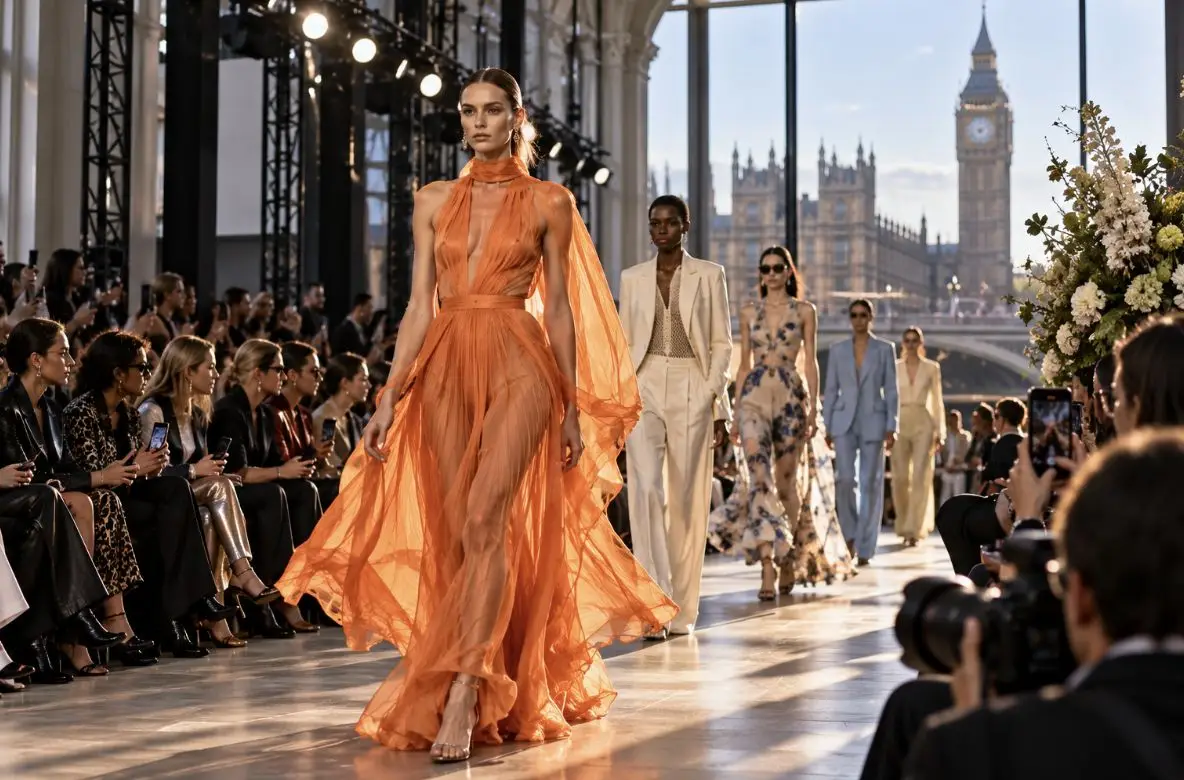
London Fashion Week returns from 17 to 21 September 2026 with a Spring/Summer 2027 schedule that combines major British fashion houses, younger labels, presentations, exhibitions and cultural events. The programme arrives at an interesting point for British fashion. Several established names return to the London calendar, while the organisers have expanded support for younger designers and placed more attention on physical shows and creative presentations.
The event also sits inside a much broader entertainment culture. People who follow runway coverage now move between livestreams, short-form video, shopping platforms and online games throughout the day. Adult users may also visit casino-style gaming services such as afkspin casino, where slots and other online games use digital interfaces and short play sessions. Searches for the best online сasino form another part of that online gaming activity. Fashion operates in a completely different field, but both examples show how digital habits compete with physical events for attention. London Fashion Week responds by giving the physical runway, presentation and exhibition a stronger role in its September programme.
Since the shows have not yet taken place as of 14 September, nobody can state the final London trends as established facts. However, the confirmed schedule, recent fashion direction and early Spring/Summer 2027 signals give a clear idea of what to watch when the collections arrive.
London Is Putting the Runway Back at the Centre
One of the strongest signals for September does not concern a particular colour or garment. It concerns the runway itself.
The 2026 schedule gives physical presentations considerable weight. The official programme includes catwalk shows, appointments, exhibitions, public showcases, presentations and other events across five days. The British Fashion Council has also described the season as one that will place substantial attention on physical experiences and interdisciplinary presentations.
That approach matters after several years in which fashion experimented heavily with films, digital presentations and social-first formats.
Digital coverage will remain important. The official London Fashion Week platform operates throughout the year and gives consumers, retailers and media access to fashion content. Yet September’s programme suggests that designers still see physical shows as an important way to communicate clothes.
The shift could affect styling as much as event production. Garments that move clearly on a runway, create recognisable silhouettes and show texture under direct lighting may receive particular attention.
Spring/Summer 2027 may therefore favour clothes with a strong physical presence rather than collections designed mainly around social-media images.
Expressive Dressing Looks Ready to Replace Strict Minimalism
Early Spring/Summer 2027 forecasting points toward a move away from highly controlled minimalist styling.
Recent trend analysis has identified clashing colours, mixed prints, handmade-looking details and less polished combinations as likely directions for the season. It also points toward styling that allows individual garments to look less coordinated in the conventional sense.
London has a natural connection with this type of dressing because its fashion scene regularly supports experimental styling and independent labels.
The key point does not involve wearing as many decorative elements as possible. Instead, Spring/Summer 2027 may loosen the rules that have shaped recent minimalist wardrobes.
Expect editors and buyers to watch for:
- contrasting prints within one outfit;
- irregular layering;
- visible handmade details;
- strong accessories against simple clothing;
- unexpected colour combinations;
- garments that use unfinished or distressed effects.
Recent fashion has already moved toward deliberately worn, creased and imperfect surfaces. Autumn/Winter 2026 collections across the international circuit used distressed denim, damaged-looking lace, wrinkled materials and clothing designed to appear worn.
London could carry parts of that attitude into warmer-weather clothing.
Orange Could Become an Important Seasonal Colour
Spring collections always bring colour discussions, but early SS27 forecasting has already identified orange as one shade worth monitoring.
The colour has gained visibility across entertainment, sport and fashion during 2026. Forecasts now suggest that designers may carry it into Spring/Summer 2027 clothing and accessories.
London will reveal whether that prediction reaches the runway in a substantial way.
Orange offers designers several options. Bright versions suit small accessories and statement garments. Burnt and earthy tones can work with brown, cream, khaki and muted green. Softer shades can appear in lightweight summer materials.
The more useful question will concern application rather than frequency.
If several London collections use orange for full dresses, suits or coats, the colour could become one of the season’s defining visual signals. If designers restrict it mainly to bags, shoes and small details, it may function more as an accent.
Other strong shades may also appear. Recent Autumn/Winter 2026 collections have already shown significant interest in saturated red, while designers continue to experiment with colour combinations that move away from neutral wardrobes.
Practical Clothing Is Moving Into Fashion Collections
Utility references could form another important part of Spring/Summer 2027.
Early forecasting has identified what some fashion publications call “gardening-core”: clothing that takes practical references from outdoor work and domestic gardening. The direction includes aprons, cargo shapes, raffia accessories, pockets and utility belts.
The label itself may disappear quickly, but the clothing ideas behind it have more staying power.
Designers have spent several seasons reconsidering workwear. For spring, they can make those references lighter through cotton, linen, technical fabrics and open construction.
The resulting garments may include loose trousers, overshirts, functional dresses and jackets with visible pockets.
This direction also suits current consumer expectations. People increasingly want clothing that can work across several parts of a normal day rather than garments that require highly specific occasions.
London designers may approach practicality through proportion and construction rather than literal work uniforms.
That could make utility one of the quieter but more commercially relevant SS27 directions.
Draping Could Bring Softer Shapes Back
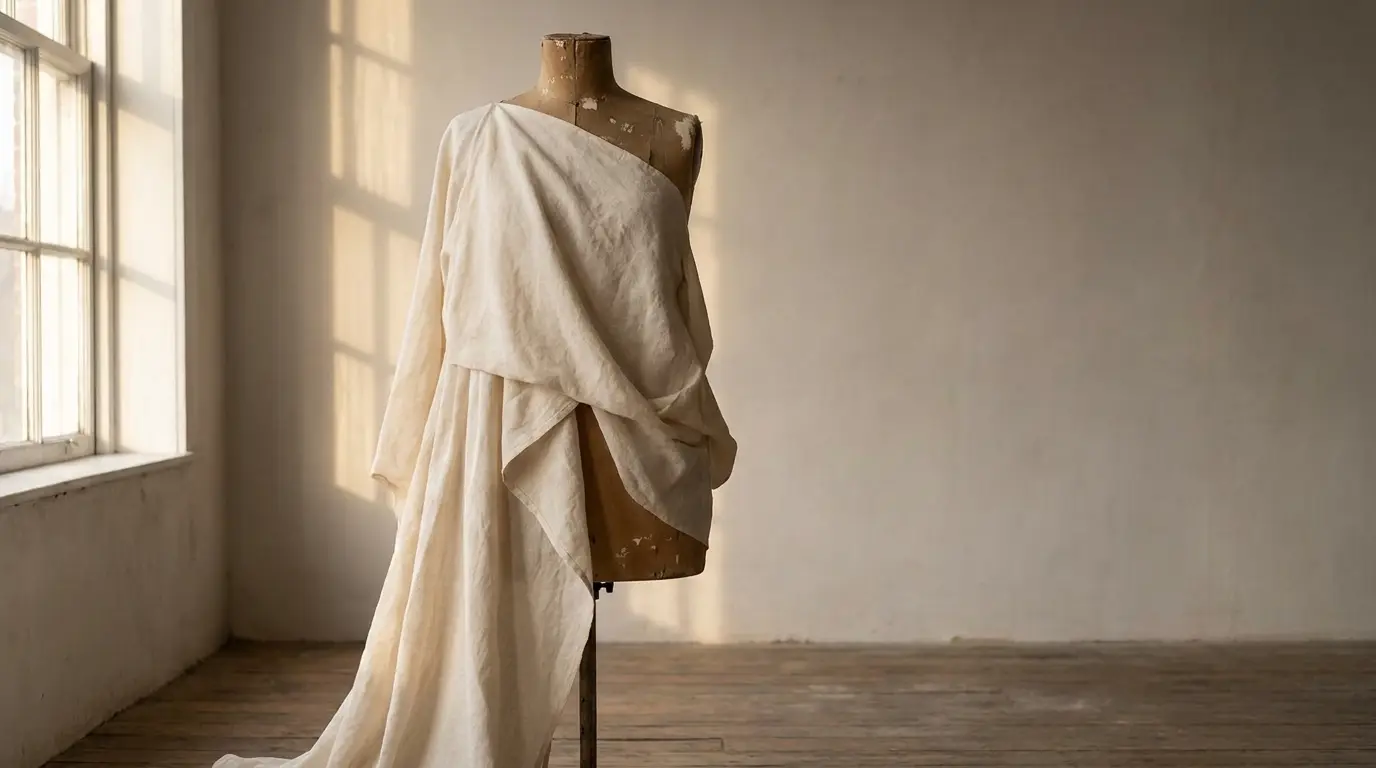
Another early Spring/Summer 2027 signal concerns draped clothing.
Forecasts have linked renewed interest in classical references with flowing dresses, gathered fabrics and asymmetric shapes. For London, this could create an interesting contrast with structured tailoring.
Draping works particularly well for spring and summer because designers can use lightweight materials to create movement without adding heavy construction.
Possible forms include long dresses, wrapped skirts, asymmetric tops and fabric gathered around the waist or shoulder.
The direction does not necessarily mean formal eveningwear.
Designers can apply the same construction ideas to jersey, cotton and other everyday fabrics. That makes draping relevant across several price categories and types of clothing.
London Fashion Week often brings contrasting approaches into the same schedule. One show may concentrate on precise tailoring, while another uses softer construction.
Spring/Summer 2027 could make that contrast especially visible.
Sheer Fabrics Are Likely to Continue
Transparency has appeared across several recent seasons, and early SS27 forecasts suggest that sheer materials will remain relevant.
The question now concerns how designers develop them.
Simply showing a transparent dress no longer feels new. Designers need to use transparency as part of construction or layering.
That can mean a sheer skirt over shorts, translucent panels inside tailoring, lightweight dresses over bodysuits or transparent outer layers over simple separates.
For spring and summer, the technique also serves a practical purpose. Lightweight fabrics suit warmer conditions and allow designers to build layered outfits without creating excessive weight.
London could push this idea toward less formal styling.
Sheer pieces paired with workwear, knitwear or structured jackets would connect several of the season’s expected directions within a single outfit.
The Peplum Is Returning Again
Fashion has revisited the peplum several times, and Spring/Summer 2027 may give the shape another significant run.
Current forecasts identify it as one of the silhouettes likely to gain attention during the season.
The modern version does not need to copy the highly fitted peplum tops associated with the early 2010s.
Designers can create volume around the waist through tailoring, gathered fabric, detachable panels or extended jacket construction. Some may use subtle shapes; others may make the waistline the central feature of an outfit.
The development fits a broader move toward clearer silhouettes.
After seasons of loose oversized clothing and straightforward minimalism, designers have started paying more attention to where garments sit on the body.
The waist offers an obvious place to experiment.
| SS27 direction | What to watch in London |
| Expressive styling | Mixed prints, irregular combinations and strong accessories |
| Orange | Full looks, dresses, tailoring and accessories |
| Utility clothing | Pockets, cargo shapes, aprons and practical fabrics |
| Draping | Wrapped skirts, gathered dresses and asymmetric construction |
| Transparency | Sheer layers and translucent panels |
| Peplum shapes | Defined waists and structured volume |
| Distressed surfaces | Creasing, raw edges and worn-looking finishes |
These remain signals rather than confirmed London trends until designers present their collections.
Tailoring Is Unlikely to Disappear
Even if SS27 moves toward more expressive dressing, tailoring should retain a substantial place in London.
Recent collections have continued to examine jackets, suits and trousers through altered proportions, lower waistlines and modified shapes. The coming spring season gives designers another chance to adjust those ideas for warmer weather.
Expect lighter fabrics and less rigid construction.
Oversized blazers may remain, but designers could pair them with shorter skirts, sheer layers or relaxed trousers. Waist definition may also become stronger if the expected peplum direction develops across London.
The return of several established British houses increases the relevance of tailoring during this edition.
The September schedule includes major returning names as well as labels that regularly work with structured clothing.
That combination makes tailoring one of the areas worth watching closely, even if SS27 produces louder headlines around colour and transparency.
Major Returns Give the 2026 Edition Extra Weight
The schedule itself makes September 2026 notable.
McQueen returns to London Fashion Week and will present both menswear and womenswear for Spring/Summer 2027. The show marks the house’s return to the London schedule after more than two decades of showing its main collections in Paris.
Mulberry also returns to the runway after a long absence, with Christopher Kane presenting his first collection for the house. Other established British labels appear alongside younger designers and NEWGEN recipients.
These returns matter because they increase the range of design approaches on the schedule.
London has sometimes faced questions about whether major labels would continue to treat the city as an essential fashion-week destination. The September programme gives a clear answer for this season: several significant British names have chosen London.
The event also continues to make space for new designers.
NEWGEN recipients Francesca Lake, Gui Rosa and Petra Fagerström will make their London Fashion Week debuts, while several returning recipients will present new work. Fashion East also remains on the schedule after receiving further support for its designer programme.
Younger Designers Could Shape the Most Practical Trends
Major houses generate attention, but smaller labels often introduce ideas that later appear across the wider market.
London’s support structure gives younger designers formal places on the schedule. The organisers also changed application criteria so that designers no longer need a minimum number of wholesale stockists to qualify. Applicants still need to meet other requirements, and the selection process considers creative merit.
That change reflects how fashion businesses now operate.
A young label may sell directly to customers, work through limited production runs or use several sales channels instead of depending heavily on traditional wholesale.
Those business models can affect design.
Smaller production quantities may encourage designers to focus on adaptable pieces, strong construction and garments that consumers can style in several ways. They may also experiment with reused materials, limited fabric stocks and unusual manufacturing methods.
As a result, some of the most relevant SS27 ideas may emerge outside the largest shows.
Accessories Will Help Define the Season
Spring/Summer trends rarely depend on clothing alone.
Accessories can turn a relatively simple outfit into a clear seasonal look, and current forecasts point toward raffia, decorative pieces and less restrained styling.
The official London schedule also includes dedicated accessory activity, including a jewellery showcase.
Bags may move between practical utility and decorative forms. Footwear could follow the recent interest in worn surfaces and unusual finishes. Jewellery may grow larger as styling becomes more expressive.
The expected move away from strict minimalism creates room for accessories because people can add them without replacing an entire wardrobe.
That practical factor often determines which runway trends survive beyond fashion week.
SS27 May Favour Personal Styling Over a Single Look
The clearest early signal for Spring/Summer 2027 concerns variety rather than one dominant uniform.
Minimal dressing has not disappeared, and it probably will not. Yet current forecasts suggest that fashion will allow more contrast, decoration and personal combinations during the coming season.
London provides a suitable setting for that development.
Its September schedule combines established houses, young designers, menswear, womenswear, accessories and several presentation formats. The programme also brings several major British names back to the city at the same time.
Orange, utility references, sheer materials, draping, defined waists and expressive layering all deserve attention. None of them can claim official London trend status before the shows begin.
That distinction matters.
Fashion forecasting can identify early signals, but the collections themselves determine whether designers share those ideas across multiple runways. From 17 September, London will supply the evidence.
Spring/Summer 2027 already looks likely to move away from strict visual restraint. The more important question concerns how London designers interpret that shift. Some may use stronger colour. Others may focus on construction, transparency, distressed surfaces or practical clothing. Younger labels may introduce approaches that established houses do not use at all.
By the time London Fashion Week closes on 21 September, the industry will have a much clearer picture of which ideas will shape wardrobes in spring and summer 2027.