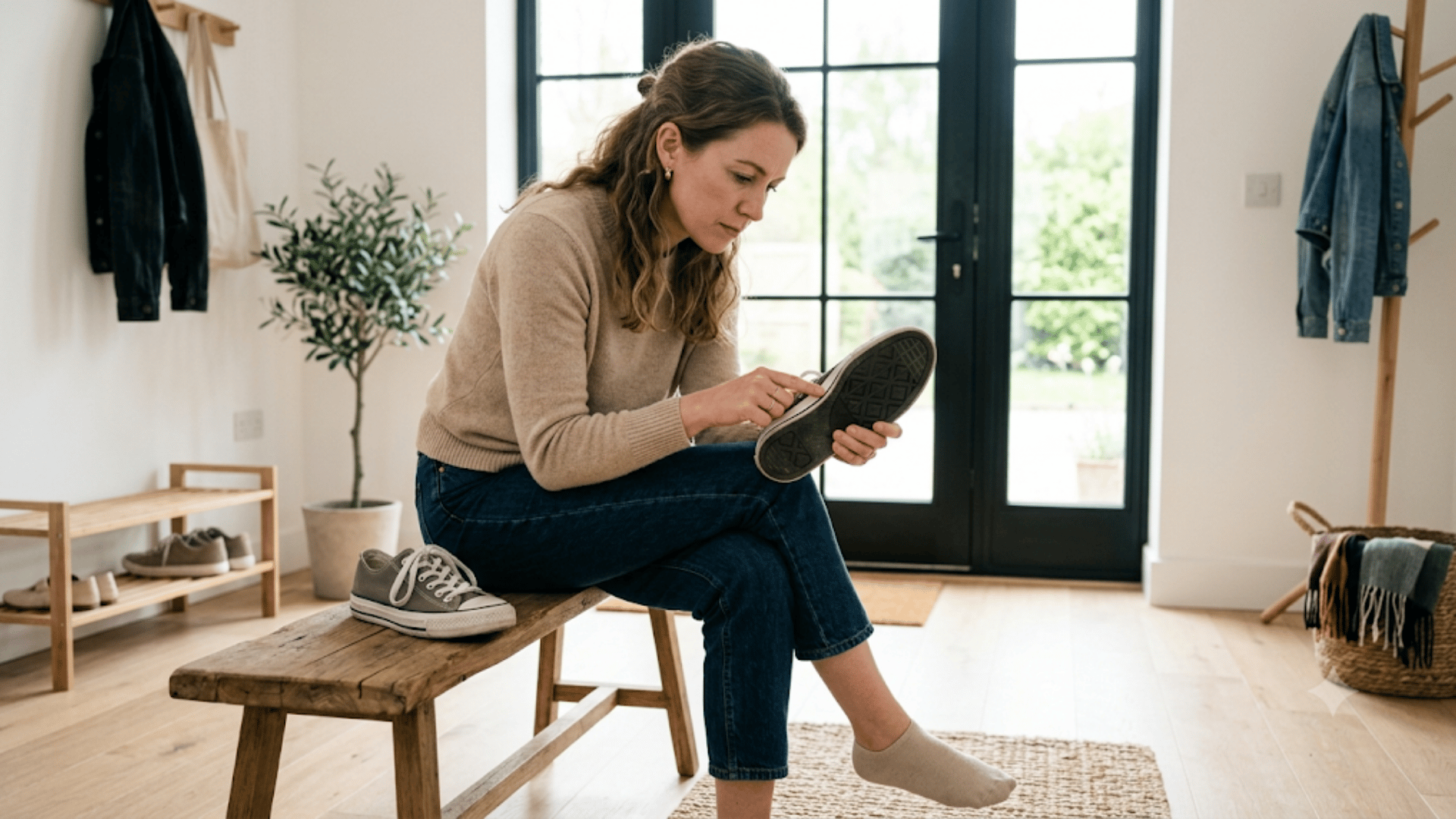
Few things make me more self-conscious than a pair of shoes that squeaks with every step. The shoes may fit perfectly and look great, but suddenly every quiet hallway feels a little too quiet.
I’ve also found that squeaking can be tricky because the sound doesn’t always come from the place you expect.
It might start inside the shoe, around the sole, or where different materials rub together.
Before figuring out how to stop shoes from squeaking, it helps to pay attention to when and where the noise happens. Once you pinpoint the source, finding the right fix becomes much easier.
Why Do Shoes Squeak?

- Trapped moisture: Sweat or water beneath the insole can create noise as damp surfaces move against each other.
- Insole movement: A loose or poorly fitted insole may shift and rub against the footbed with every step.
- Stiff materials: New shoes may squeak because their materials have not yet softened or flexed through regular wear.
- Dry leather: Leather can stiffen and creak or squeak as the shoe bends.
- Upper friction: The tongue, laces, or nearby panels may rub together as your foot moves.
- Outsole friction: Smooth rubber soles can squeak when they grip polished surfaces such as tile or hardwood.
- Loose construction: A separating sole, loose heel, or other shifting component can make noise as you apply pressure.
- Poor fit: Shoes that are too loose can let the foot or insole move excessively, creating extra friction and noise.
How to Find Where Your Shoes Are Squeaking

Before reaching for a quick fix, figure out exactly where the sound is coming from. Put the shoes on, take a few steps, and notice when the squeak appears. Then check each area separately.
|
Area to Check |
How to Test It |
What the Squeak May Mean |
|---|---|---|
|
Inside the Shoe |
Remove the insole and press or flex the footbed. |
Noise may come from the insole rubbing against the shoe. |
|
Outsole |
Walk on carpet, tile, and other hard surfaces. |
Squeaking only on smooth floors may come from outsole friction. |
|
Tongue and Laces |
Move the tongue and laces separately while flexing the shoe. |
Friction around the tongue, laces, or eyelets may cause the sound. |
|
Heel and Sole |
Gently press and bend the heel and sole. |
Gaps, loose parts, or sole separation may be causing the squeak. |
How to Stop Shoes From Squeaking

Once you know where the squeak is coming from, match the fix to the cause rather than treating the entire shoe. Start with the simplest option and check whether the noise improves before moving to another method.
1. Dry Out Your Shoes
If the squeaking started after rain, washing, or heavy sweating, remove the insoles and let the shoes dry completely in a well-ventilated area. Stuffing them loosely with newspaper or another absorbent material can help draw out moisture.
Avoid placing shoes directly against strong heat, which may damage certain materials.
2. Apply Powder Under the Insoles
If a dry removable insole rubs against the footbed, sprinkle a light layer of baby powder, cornstarch, or foot powder underneath it. The powder can create a barrier between the surfaces and reduce the friction responsible for the noise.
Use only a small amount to avoid unnecessary buildup inside the shoe.
3. Adjust or Secure the Insoles
An insole that slides slightly as you walk can create its own squeak. Take it out, reposition it so it sits flat, and make sure the edges aren’t folded or bunched.
If it keeps shifting, a small piece of double-sided, shoe-safe tape can help hold a removable insole in place.
4. Reduce Friction Between Shoe Parts
If the squeak comes from the tongue, eyelets, seams, or overlapping panels, identify the two surfaces rubbing together. Check that the tongue sits properly and that the laces aren’t too tight or pulling the upper out of position.
For delicate or specialty materials, avoid experimenting with household lubricants that could leave stains or affect the finish.
5. Break In New Shoes Gradually
Brand-new shoes can squeak simply because the materials are still stiff. Wear them for short periods around the house or during brief outings so the upper, sole, and seams can begin flexing naturally.
Avoid aggressively bending or twisting the shoes, as this can weaken their construction rather than speed up the process.
6. Condition Dry Leather
If leather creaks as it bends, apply a leather conditioner designed for that particular type of finished leather. Work a small amount into the noisy area according to the product directions, then let it absorb.
Avoid using oils or conditioners on suede, nubuck, or other materials unless the product specifically states they are suitable.
The same care principle applies to other leather goods around the house, like the upkeep steps in this leather card holder maintenance guide, since dry leather stiffens the same way whether it’s a shoe or an accessory.
7. Reduce Squeaking From the Outsole
When shoes squeak only on smooth floors, the outsole may be gripping the surface too strongly. For suitable rubber soles, gently scuffing the contact area with fine-grit sandpaper can reduce excessive smoothness.
Keep the treatment light so you add a little texture without noticeably wearing down or damaging the tread.
8. Wear Socks to Reduce Foot Friction
If the noise comes from bare skin rubbing against the inside of the shoe, wearing socks may be enough to reduce it. Choose a pair that fits comfortably without tightening the shoes.
Socks can also absorb perspiration, making this particularly useful for sneakers, loafers, and other shoes commonly worn without them.
9. Try a Dryer Sheet Under the Insole
If the insole rubs against the shoe and causes squeaking, place a small piece of dryer sheet underneath it. This creates a thin barrier that may reduce friction and noise.
Make sure the sheet lies flat so it does not affect comfort while walking. Replace it if it shifts, bunches up, or stops helping.
Quick caution: Avoid applying oils, lubricants, conditioners, or sprays unless you’ve confirmed they are suitable for the shoe material. Products that work on rubber or finished leather may stain or damage suede, nubuck, mesh, or untreated leather.
Quick Prevention Habits to Keep Squeaks from Coming Back
Simple shoe-care habits can help prevent moisture, friction, and everyday wear from bringing that annoying squeak back.
- Rotate your shoes: Give each pair enough time to dry completely between wears, especially after long or sweaty days.
- Keep laces secure: Properly tied laces reduce unnecessary movement between the tongue, upper, and your foot.
- Dry damp insoles: Remove wet or sweaty insoles and allow them to air-dry before wearing the shoes again.
- Store shoes in a dry place: Keep footwear away from damp closets, wet floors, and other moisture-prone areas.
- Check worn areas regularly: Look for loose soles, shifting insoles, or rubbing materials before they develop into noticeable squeaks.
Match the Fix to Your Shoe Type
|
Shoe Type |
Likely Squeak Source |
Most Relevant Fix |
|---|---|---|
|
Leather Shoes |
Dry leather or tongue friction |
See Condition; Dry Leather or Reduce Friction Between Shoe Parts. |
|
Sneakers |
Moving insoles, moisture, or rubber outsoles |
Match the sound to the insole, drying, or outsole methods above. |
|
Boots |
Insole, tongue, eyelets, upper, or outsole |
Locate the sound first, then use the corresponding internal, friction, leather, or outsole fix. |
|
Sandals |
Footbed moisture, bare-foot friction, or straps |
Use the drying or friction method based on where the noise occurs. |
|
Dress Shoes |
Stiff leather, smooth soles, or heel movement |
Use the leather or outsole method, or consider repair if the heel itself moves. |
When to Repair or Replace Squeaky Shoes?
Repair squeaky shoes when the problem comes from a loose or damaged part that a cobbler can reasonably fix. Replace them when they are heavily worn, or the repair cost is close to the price of a new pair.
For newer shoes that squeak persistently, check the retailer or manufacturer’s return and warranty policy before applying products or making permanent changes.
If simple fixes have failed, a professional shoe repair specialist can inspect hidden construction issues, loose soles, or damaged components. Avoid repeatedly testing different treatments, as they may damage the material.
Replacement is usually more practical when several parts are already worn.
Frequently Asked Questions
Does WD-40 Stop Shoes From Squeaking?
WD-40 may reduce some friction-related squeaks, but it can damage or stain certain materials. A shoe-care product suitable for the specific material is usually a safer option.
Can You Stop Shoes From Squeaking Without Baby Powder?
Yes. You can dry damp shoes, reposition loose insoles, condition suitable leather, wear socks, or address outsole friction depending on where the squeak originates.
Can You Fix Squeaky Shoes With Non-Removable Insoles?
Yes. First, check for moisture, outsole friction, or rubbing elsewhere. If the squeak comes from beneath a fixed insole, consider professional repair rather than forcing the insole out.
Conclusion
Squeaky shoes can turn every quiet step into an unwanted announcement, but that does not always mean your favorite pair needs replacing. I’d start by finding the source of the noise, then use the gentlest fix that matches the problem.
Sometimes a little moisture control or reduced friction is enough, while loose or damaged parts may need professional repair.
We also need to know when a well-worn pair has simply reached the end of its useful life.
My favorite approach is to fix what is worth saving without risking further damage. Have you managed to silence a stubborn pair? Share your experience and what worked for you in the comments below.