
Every day a rental unit sits empty between tenants costs the owner rent, and the cleanout is what controls how long that gap lasts. A planned cleanout, scoped before anyone lifts a box, keeps the whole make-ready on schedule.
Walk the Unit Before You Touch Anything
Before anything leaves the unit, walk every room with a camera and a written list of what is cleared for removal. Photograph each space and note the items to go. That way the removal list is settled before cleaners or contractors are scheduled and their work overlaps with the hauling.
Photograph each wall, floor, appliance, and fixture. Then label what you find by where it goes next: items to retain get marked so nothing useful leaves with the haulers, items already cleared for removal go on the written list, and repairs get recorded separately for the crew that handles them. A working appliance stays tagged in place; a garage full of broken furniture goes on the removal list. Each group takes a different path, and mixing them up costs money in both directions.
Sort the Pile Into Streams Before You Book Removal
Once the scope is set, sort everything cleared for removal into donation, recycling, landfill trash, and special-handling bulky items. Mattresses, appliances, and electronics carry their own drop-off rules at most facilities. Confirm what your local sites accept before you load anything.
Check the municipal bulk-trash schedule before you count on it. If the pickup date falls after your target lease-back date, the pile sits while the unit earns nothing. Line up another option early.
Book donation pickup first, because charities often schedule days out and usable furniture that leaves for donation never reaches the truck. A smaller truckload means a smaller invoice, and anything usable left in the trash stream is something you pay to dump that a charity would have collected free.
Price DIY Hauling Against a Professional Crew
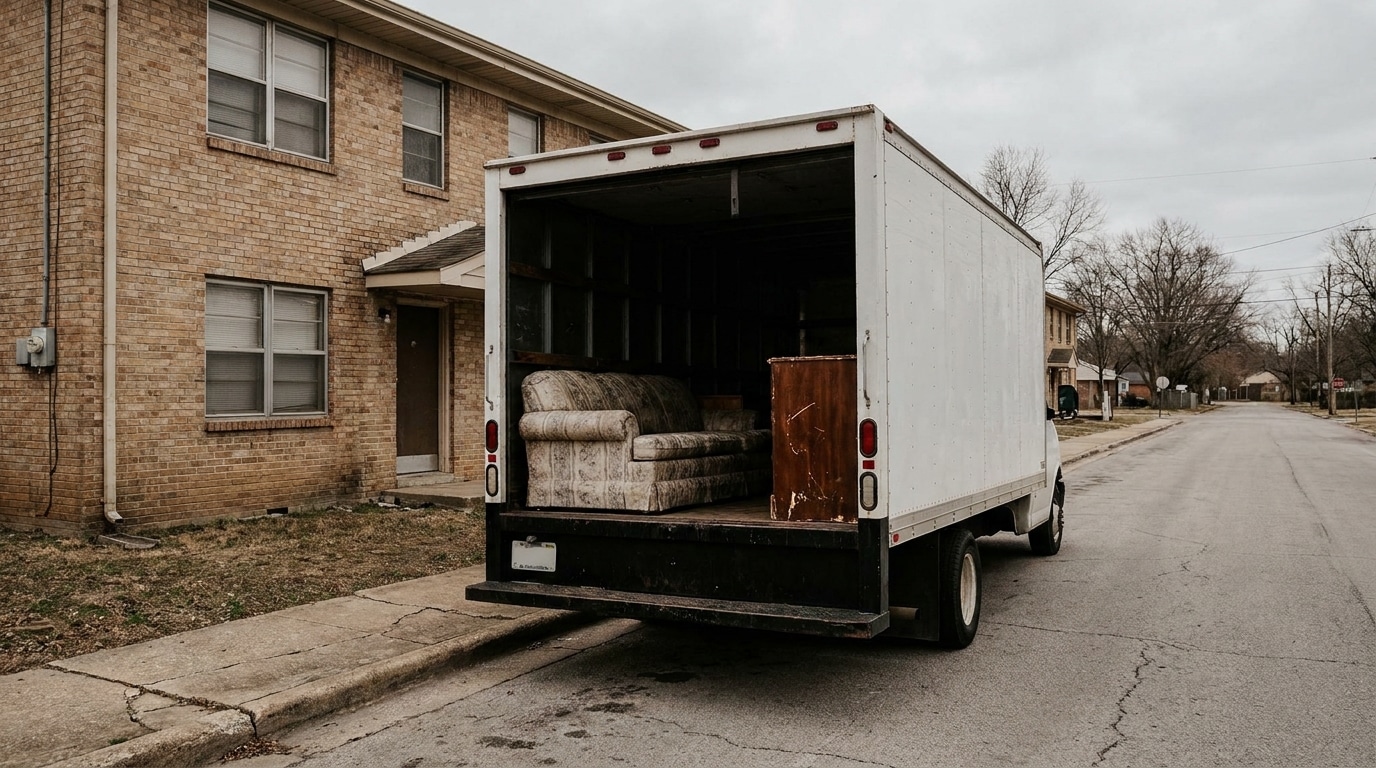
DIY can look cheap on the surface. Add your labor hours, the truck rental, mileage, and dump fees, then weigh the injury risk of moving a sleeper sofa down a stairwell. A full unit of abandoned furniture rarely fits in one run; multiply the trip.
For comparison, junk removal and cleanout services typically run $200 to $400 per half-load and $600 to $800 for a full truckload (This Old House). When your DIY total climbs near those figures, the crew wins on time alone, and time is what a vacancy costs most.
Once your DIY math is on paper, compare it against a quote from a full-service provider such as Site Masters Junk Removal before you commit either way. Settle four points with any provider first: whether the price includes labor and disposal fees, whether a minimum charge applies, how fast they can schedule, and what happens to donatable items. Ask also whether the crew loads from inside the unit or only from the curb, because that decides how much of the labor stays with you.
A flat per-load rate favors you when the pile is dense and heavy. A minimum charge favors the provider on small jobs. Ask how partial loads are billed.
Sequence the Work in Strict Order
The cleanout comes first, because no other trade can work around a pile. A painter can’t cut in around a sofa, and floors, walls, and appliances have to be exposed before repairs or cleaning can start. A cleaning crew that arrives at a full unit either reschedules or bills for the wait.
If the walkthrough uncovered tenant-built sheds, fencing, decking, or a concrete pad, schedule light demolition right after the junk leaves. Repairs slot in next, small fixes first to keep nothing wet or unfinished blocking the cleaners. Deep cleaning follows last, once every surface is reachable and the dust has settled.
End with a photo-verified walkthrough. The standard is broom-clean: swept floors and no debris, with nothing left that the next tenant’s inspection would flag.
Budget for the Surprises
Treat turnover cleanout as a recurring line item in every lease-end budget. Abandoned furniture, yard debris, and storm leftovers show up often enough that assuming a clear unit is the optimistic case, and owners who carry an allowance re-list faster than owners who improvise. One skipped allowance can erase a month of careful budgeting on a single turnover.
Whether the junk sits for three days or three weeks, the unit earns nothing. The removal option that gets the space rent-ready soonest is usually the cheapest one overall, even when its invoice is the largest.
The Start-the-Clock Checklist

Before the next lease ends, have four things ready:
- A move-out inspection template with photo fields for every room
- Current drop-off rules for mattresses, appliances, and electronics
- A standing rate sheet from at least one hauling provider
- A turnover budget line that assumes some abandoned items
With those in place, the cleanout becomes the first scheduled task in a short make-ready week, and the unit is back on the market on your schedule.