Want to know how to layer rugs like a designer without spending a fortune on expensive home decor? Learning how to layer rugs changes boring floors into interesting focal points that make any room feel complete.
I know it sounds complicated at first, but the process is actually easier than you might imagine right now. Layering rugs adds texture, defines spaces, and lets you use pieces you already own instead of buying everything new.
The trick is understanding which rugs work together and how to arrange them so everything looks intentional.
Mastering the layering of rugs gives you that collected, designer look without hiring anyone or spending thousands. Let me show you the simple secrets that make rug layering work every single time.
The Art of Layering Rugs in Any Home
Layering rugs might sound complicated, but I promise it’s actually one of the simplest decorating tricks you’ll ever try. Placing one rug on top of another instantly breaks up boring flat floors and adds dimension to any room.
It helps separate different areas in open layouts, studios, or shared spaces where you need to create distinct zones. The doubled-up rugs make everything feel softer and cozier underfoot, especially in rooms that feel too big or empty.
You don’t need to buy expensive new rugs because you can layer ones you already have at home. Mixing patterns, textures, and sizes creates that designer look without spending a fortune on matching sets or replacements.
Basic Rules for Layering Rugs
I know layering rugs can feel intimidating if you’ve never tried it before, but these simple rules make it foolproof. Here’s what I’ve learned works every single time:
- Rule 1: Always start with a large base rug that’s bigger than the top one and anchors your entire space.
- Rule 2: Keep one rug simple and neutral while letting the other have more pattern or visual interest throughout.
- Rule 3: Create a clear size contrast between your rugs so the top one sits comfortably on the base without crowding.
- Rule 4: Tie both rugs together visually by choosing at least one color that appears in both pieces for cohesion.
Follow these rules and your layered rugs will look intentional instead of like a decorating mistake gone wrong.
How to Layer Rugs: Step-by-Step Guide
I’ll walk you through each step so you can create a perfectly layered look that changes your space completely. Here’s exactly what to do:
Step 1: Choose the Bottom Rug
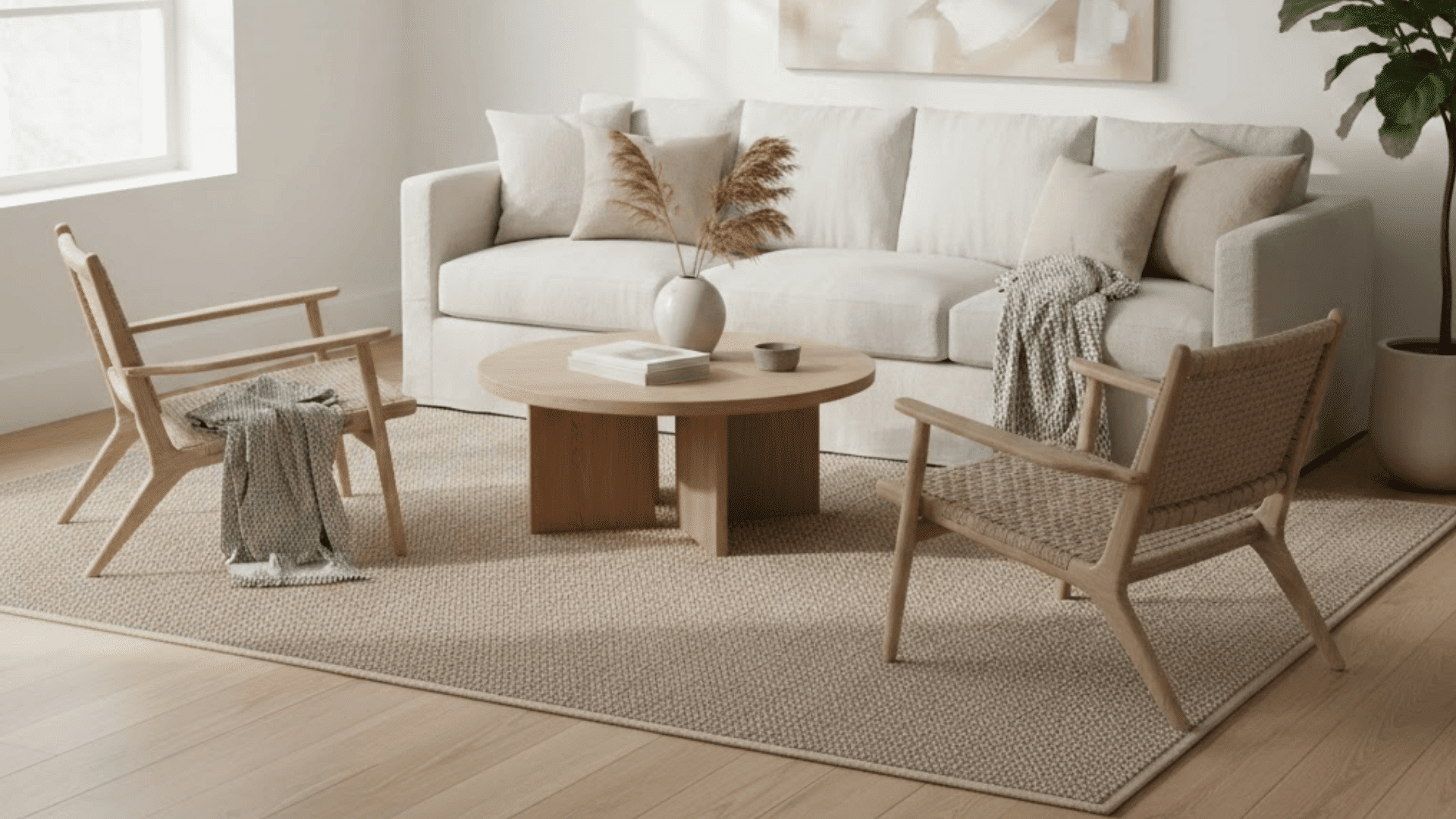
I always start with a large, neutral base rug in jute, sisal, or flatweave material that creates a solid foundation. Your base should be big enough to fit under all your main furniture pieces, like the sofa and chairs.
Most living rooms need a base rug that’s at least eight by ten feet or larger for proper coverage. Natural fiber rugs work best because they’re durable, affordable, and neutral enough to support whatever top rug you choose.
Step 2: Pick the Top Rug
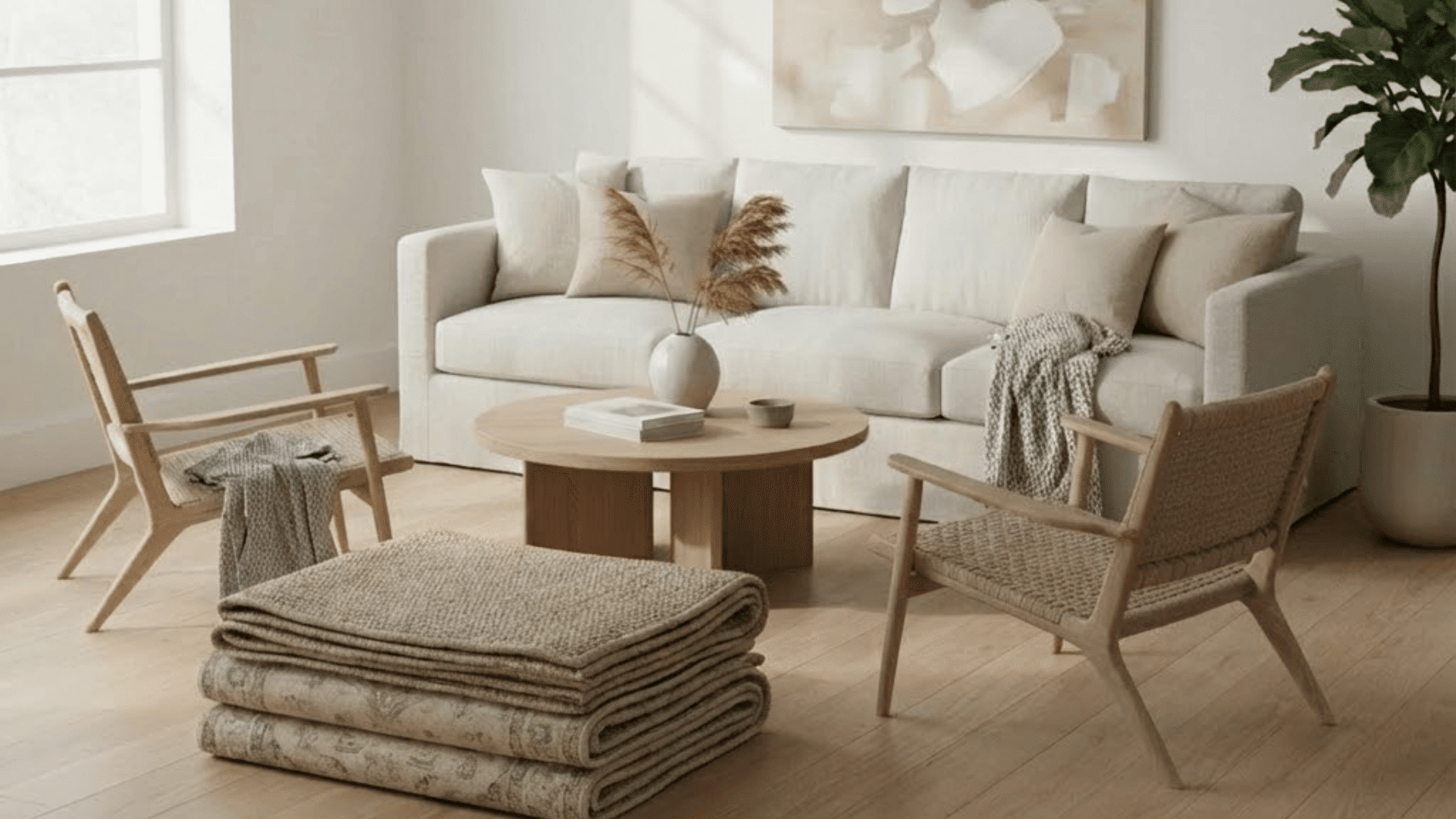
This is my favorite part because the top rug is where you get to show your personality with color or pattern. Choose something noticeably smaller than your base rug that draws the eye and becomes the room’s focal point instantly.
The top rug can be any shape, but rectangles or runners typically work best for most spaces I’ve styled. Look for patterns, vintage designs, or textures that contrast with your simple base to create that interesting layered look.
Step 3: Place the Base Rug Correctly
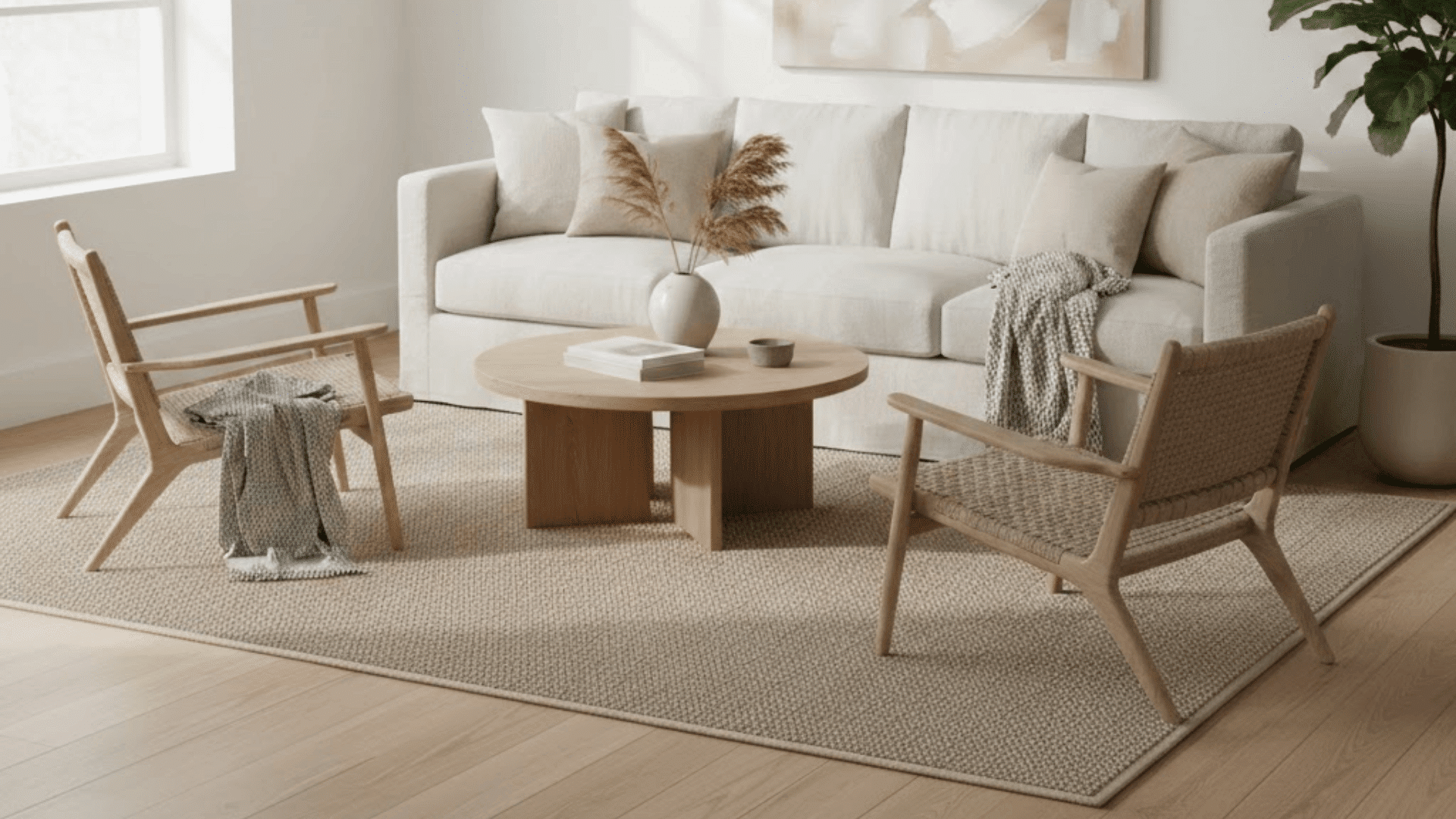
I recommend starting by centering your large base rug under your main seating area so all furniture legs rest on it. The rug should extend beyond your furniture on all sides to create that grounded, balanced look you’re after.
Make sure the base rug sits parallel to your walls and doesn’t bunch up or slide around when you walk. Stand back and check that everything feels centered and intentional before you move on to adding the top layer.
Step 4: Angle or Center the Top Rug
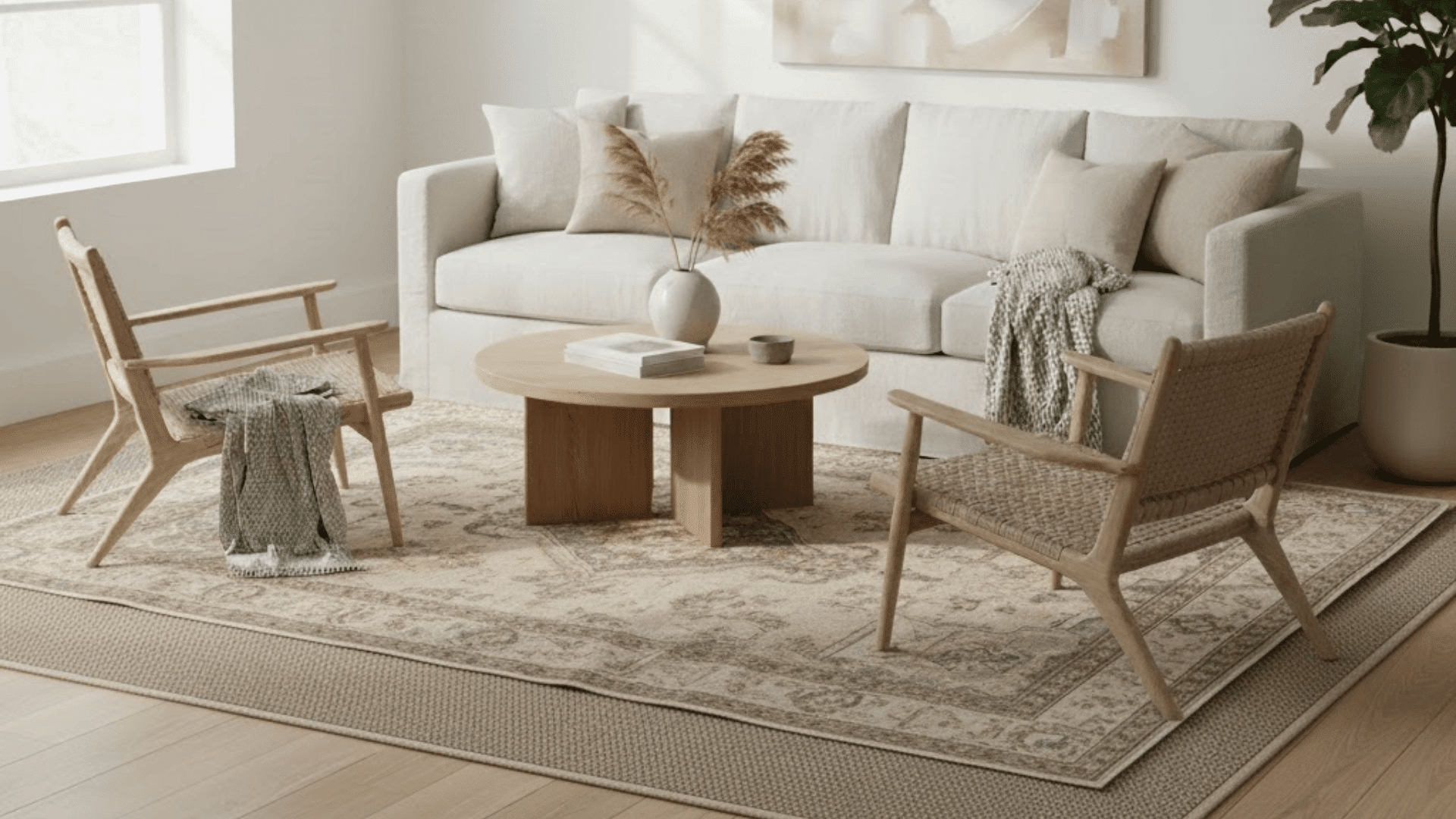
Here’s where you decide if to center your top rug or angle it for a more relaxed, casual vibe. Centering works perfectly in formal spaces or under coffee tables where you want everything aligned and neat-looking.
I love angling the top rug for a collected, bohemian feel that makes spaces look less stuffy and more lived-in. Try both placements and see which one feels right for your room’s style and the overall atmosphere you want.
Step 5: Adjust Until It Feels Balanced
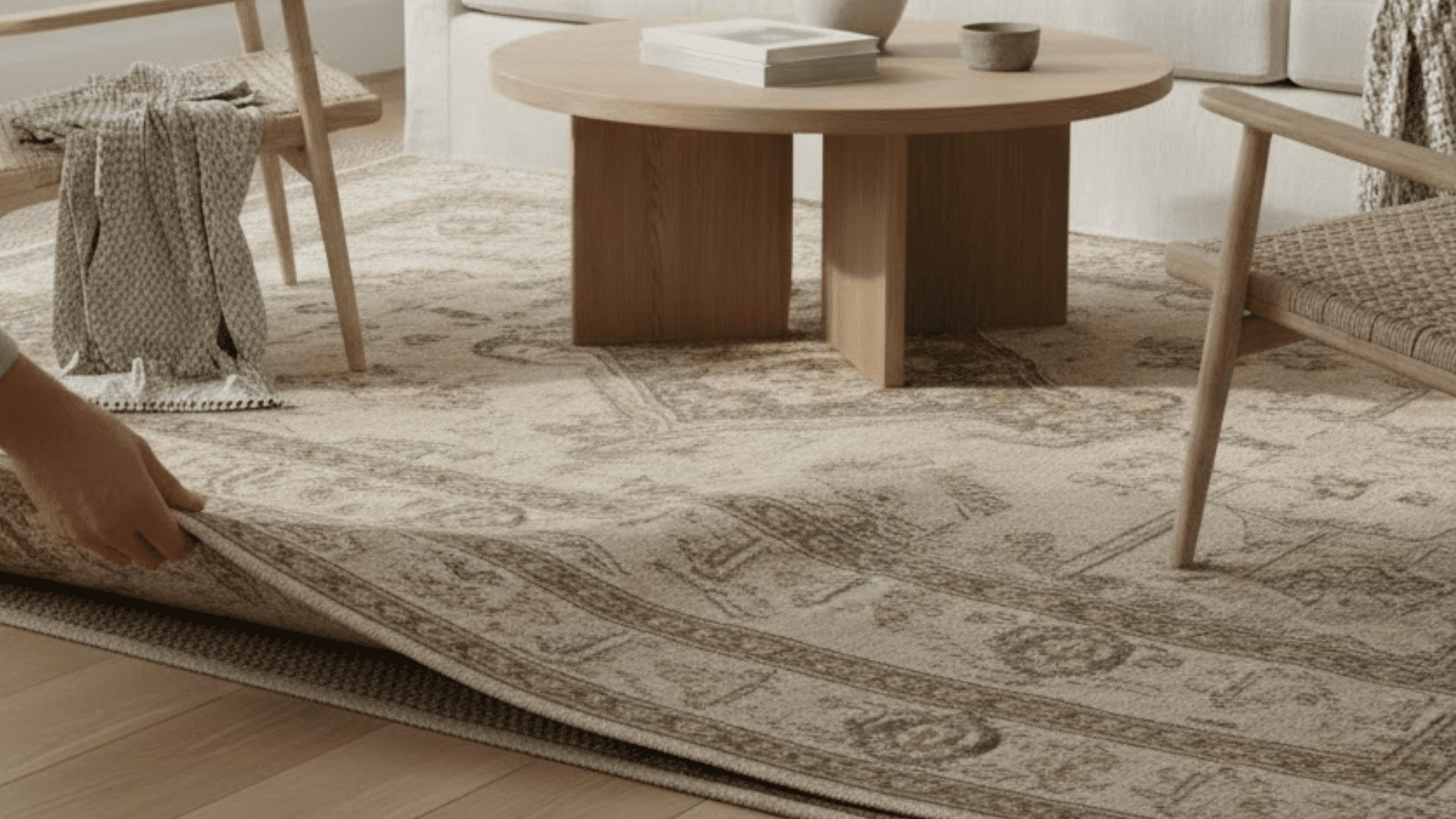
I always step back and look at my layered rugs from different angles to make sure nothing feels off. Move the top rug slightly in any direction until it looks intentional rather than like you just dropped it.
Check that enough of the base rug shows around all edges so both rugs are clearly visible and balanced. Trust your instincts and keep tweaking until the arrangement feels natural and like it truly belongs in your space.
Best Rug Combinations for Layering
Certain rug combinations work better together than others when you’re layering for the first time or trying something new. Here are the most foolproof pairings that always look great:
| Rug Combination | Base Rug | Top Rug | Why It Works | Best For |
|---|---|---|---|---|
| Jute Rug With Patterned Area Rug | Large jute or sisal | Patterned area rug | Neutral base lets bold patterns shine while adding natural texture | Living rooms, dining rooms, bedrooms |
| Flatweave With Plush Rug | Thin flatweave | Thick plush or shag | Texture contrast creates depth and softness without bunching | Living rooms, bedrooms, cozy spaces |
| Neutral Rug With Vintage Rug | Plain beige or cream | Vintage Persian or Oriental | Simple base makes vintage colors, and patterns pop | Eclectic spaces, bohemian rooms |
| Carpet With Area Rug | Existing wall-to-wall carpet | Any area rug | Defines zones without removing permanent carpet | Rentals, apartments, open floor plans |
I’ve used all of these combinations in different spaces and can confirm they work beautifully every single time. Start with one of these proven pairings, and you’ll avoid the trial-and-error phase that wastes time and money.
Choosing the Right Rug Sizes for Layering
I’ve made the mistake of buying rugs that were too small or too big, so I know how frustrating sizing can be. Getting the sizes right from the start saves you money and prevents having to return rugs that don’t work together.
For living rooms, I always recommend starting with a large base rug that’s at least 8′ x 10′ underneath. Add a smaller 5′ x 7′ or 6′ x 9′ top rug that sits comfortably on top without crowding the base.
In bedrooms, your base rug should extend beyond the bed on all sides with a smaller runner layered over it.
Small apartments need careful planning where the base rug fits your room without making everything feel cramped and tight. Always measure your space before shopping so you don’t end up with rugs that look awkward together.
How to Keep Layered Rugs From Sliding?
I’ve dealt with rugs that constantly slide around, and it’s not just annoying but also dangerous for anyone walking through. Keeping your layered rugs in place is essential for safety and maintaining that polished look you worked hard to create. Here are the best ways to stop rug slippage:
- Rug Pads: Place a thin rug pad between your base rug and floor, then another between the base and top rug for maximum grip.
- Double-Sided Carpet Tape: Use carpet tape along the edges of both rugs to secure them without damaging your floors underneath.
- Rubber Grip Mats: Cut rubber grip shelf liner to size and place it between rug layers for affordable, effective non-slip protection.
- Floor-Specific Solutions: Hardwood floors need felt pads, while tile or laminate work better with rubber backing that grips smooth surfaces.
Taking these simple steps ensures your beautiful layered rugs stay exactly where you want them without constant adjusting. Nobody wants to trip over bunched rugs or spend time straightening them every single day throughout the week.
Final Thoughts
Now you understand how to layer rugs and can confidently create beautiful spaces that look professionally designed. I hope these tips save you time, money, and the frustration of making common mistakes that ruin everything.
Your floors deserve more than just one boring rug sitting there doing nothing interesting or special anymore. Remember that learning how to layer rugs is a skill you’ll use repeatedly as you refresh different rooms.
Start small with rugs you already have before investing in new pieces that might not work perfectly together. Got questions about layering rugs? Drop them in the comments below!