I’ve learned how to get rid of gnats in plants through a three-pronged approach: let the soil dry between waterings to kill larvae, use yellow sticky traps to catch adults, and apply diluted hydrogen peroxide weekly for three weeks.
Those tiny black flies hovering around your houseplants are fungus gnats breeding in moist soil right now. Most people fail because they only kill visible adults while hundreds of larvae develop underground, creating endless new generations.
I’m breaking down their complete lifecycle in this guide and showing you why targeting both stages simultaneously matters more than any single product.
You’ll find natural methods, learn which commercial products deliver real results, and understand the watering mistakes that invite infestations. I’m also sharing prevention strategies that stop future problems before they start.
Why Gnats in Plants are so Hard to Get Rid of
Fungus gnats have a four-stage lifecycle that most home remedies miss. Adults live for only a week, but each female lays up to 300 eggs in moist soil. Those eggs hatch within three days.
The larvae then spend two weeks feeding on organic matter and roots before becoming new adults. Killing visible adults does almost nothing if hundreds of larvae are developing underground.
Most people see fewer flies after using traps and think they’ve won. Days later, a new wave emerges.
You need to target both adults and larvae at the same time. Keep that pressure going for at least three weeks to break the cycle completely.
How to Identify Gnats in Your Plants Correctly
Misidentifying the pest leads to ineffective treatments that waste time and money while infestations continue to grow unchecked.
Fungus Gnats vs Fruit Flies
These two pests look similar at first glance, but require completely different elimination strategies and originate from distinct sources.
| Feature | Fungus Gnats | Fruit Flies |
|---|---|---|
| Where they gather | Soil surface | Fruit and drains |
| Appearance | Thin black bodies | Brown rounded bodies |
| Root cause | Moist soil | Rotting food |
Signs Your Plant Soil is Infested
Visible adult flies represent only a fraction of the problem since most of the population lives underground as larvae.
- Small flies emerge when the soil is disturbed
- Larvae visible in topsoil (clear bodies, black heads)
- Slowed growth or yellowing leaves despite proper care
- Wilting that doesn’t improve with watering
What Causes Gnats in Indoor Plants
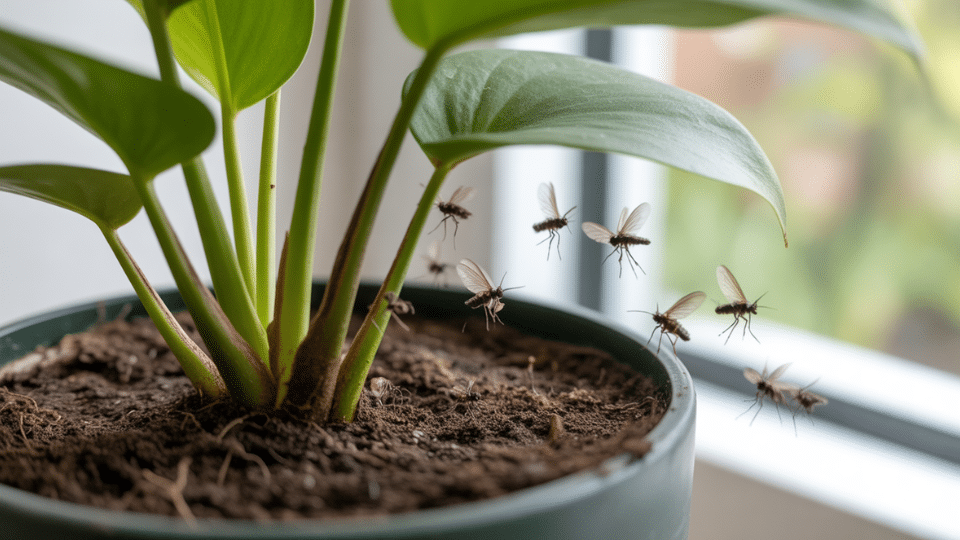
Understanding the root causes helps you eliminate conditions that allow fungus gnats to establish and multiply in your houseplants.
Overwatering and Constant Moisture
Fungus gnats need moisture to survive and reproduce. Wet soil creates the perfect breeding ground for them. The top two inches of soil should dry completely between waterings.
Most people water on schedules instead of checking if the soil is actually dry. Even moisture-loving plants don’t need constantly wet soil.
They need steady moisture at the root level, not at the surface. Gnats lay eggs only in the damp top layer where organic matter breaks down.
Keep this zone dry, and you disrupt their breeding cycle without hurting plant roots below.
Poor Drainage and Organic Soil
Soil composition determines how long moisture lingers and how much organic material is available for larvae.
- No drainage holes trap water at the bottom
- Heavy peat-based soil retains moisture for days
- Reused contaminated potting mix carries eggs and larvae
- Dense, compacted soil prevents air circulation
- Saucers left full of water under pots
- Organic mulch or decorative moss holding surface moisture
- Garden soil instead of a proper potting mix
How to Get Rid of Gnats in Plants Naturally

Letting the soil dry between waterings kills eggs and larvae by removing the moisture they need. Yellow sticky traps capture adults before they can lay new eggs.
The hydrogen peroxide method works fastest. Mix one part 3% hydrogen peroxide with four parts water. Pour it onto dry soil until it drains through.
The solution fizzes as it kills larvae on contact. It then breaks down into harmless water and oxygen within hours. This kills the current generation but doesn’t stop future ones.
Repeat weekly for three weeks while keeping the soil drier. Sticky traps catch egg-laying adults and reduce the population.
The real breakthrough happens when the top two inches of soil stay dry enough that eggs can’t survive. This breaks the cycle permanently without needing any products at all.
Best Products to Get Rid of Gnats in Plants
Commercial solutions offer stronger control for severe infestations but require proper understanding to use effectively.
| Product | Targets | Effectiveness | Important Note |
|---|---|---|---|
| Mosquito Bits | Larvae | High | Takes 2–3 weeks |
| Yellow Sticky Traps | Adults | High | Immediate results |
| Hydrogen Peroxide 3% | Larvae | High | Repeat weekly |
| Neem Oil | Adults | Medium | Often overused |
| Diatomaceous Earth | Both | Medium | Useless when wet |
The most reliable approach combines Mosquito Bits for larvae control with sticky traps for adults, giving you both underground and above-ground coverage.
How to Prevent Gnats From Coming Back
Long-term prevention requires changing the environmental conditions that allow fungus gnats to establish and breed in the first place.
Smarter Watering Habits
Prevention centers entirely on moisture management rather than reactive treatments applied after infestations develop.
- Bottom watering keeps the soil surface dry while hydrating the roots
- Moisture meters eliminate guesswork and prevent overwatering
- Allowing soil to dry properly between waterings kills eggs before hatching
Bottom watering forces roots to grow deeper and eliminates the perpetually damp surface layer gnats require.
Soil and Pot Choices
The right soil and pot choices prevent conditions that gnats need to thrive. Choose pots with multiple drainage holes. Use well-draining soil mixes with perlite or coarse sand that don’t stay waterlogged.
Avoid soil mixes with too much peat or compost. These retain moisture and give larvae plenty of food. Consider adding a half-inch layer of sand on top of the soil.
Sand dries quickly and blocks adults from reaching the soil to lay eggs. Water still penetrates through the sand when you water your plants.
Community Tips and Shared Experiences on Gnats
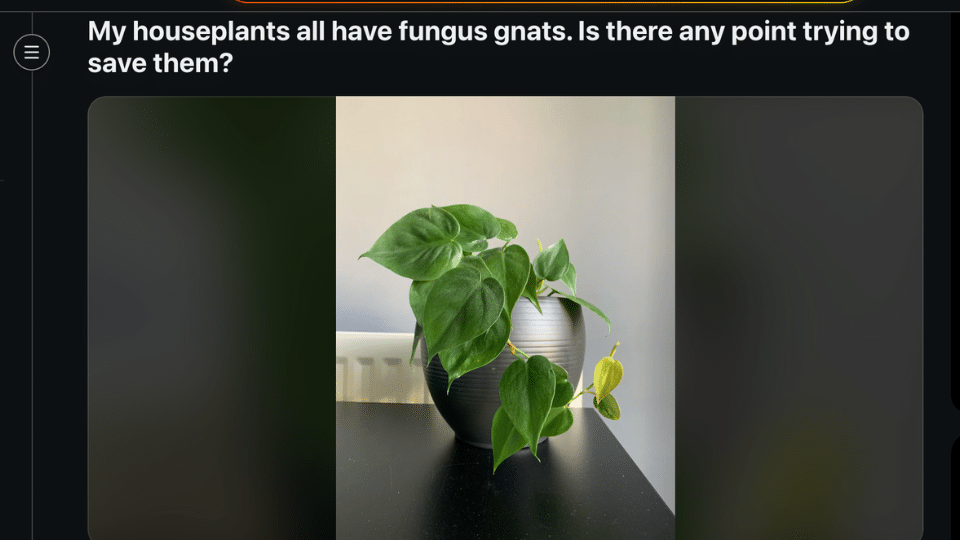
In the Reddit thread “My houseplants all have fungus gnats. Is there any point trying to save them?”, a frustrated gardener asked if they should give up on their infested collection after trying soil changes, drying periods, and bug sprays with no success.
The community overwhelmingly said not to throw plants away, with the top-voted response recommending Mosquito Bits applied weekly for 2-3 weeks to break the larvae cycle.
Other popular solutions included bottom watering to keep soil surfaces dry, yellow sticky traps to catch adults, hydrogen peroxide drenches, and topping soil with sharp sand.
Several commenters emphasized that fungus gnats signal overwatering rather than doomed plants. These are the exact methods covered in this guide, proving they work when applied together consistently.
The pattern is clear: people who succeeded combined multiple methods and maintained them for the full lifecycle, while those still struggling tried approaches individually or quit after one week. Consistency and patience matter more than any single product.
Conclusion
I’ve shown you how to get rid of gnats in plants by targeting both larvae and adults simultaneously over a three-week cycle.
The hydrogen peroxide method kills current larvae, Mosquito Bits prevent new generations, and sticky traps capture egg-laying adults.
But here’s what matters most: every successful solution traced back to fixing overwatering habits and letting soil dry between waterings.
Bottom watering, proper drainage, and moisture monitoring prevent the damp conditions gnats need to survive. I’ve included community experiences proving these methods work when applied consistently rather than as one-time fixes.
Your plants will actually thrive with less water than you think. Check your soil moisture today and let me know in the comments which method worked best for you.