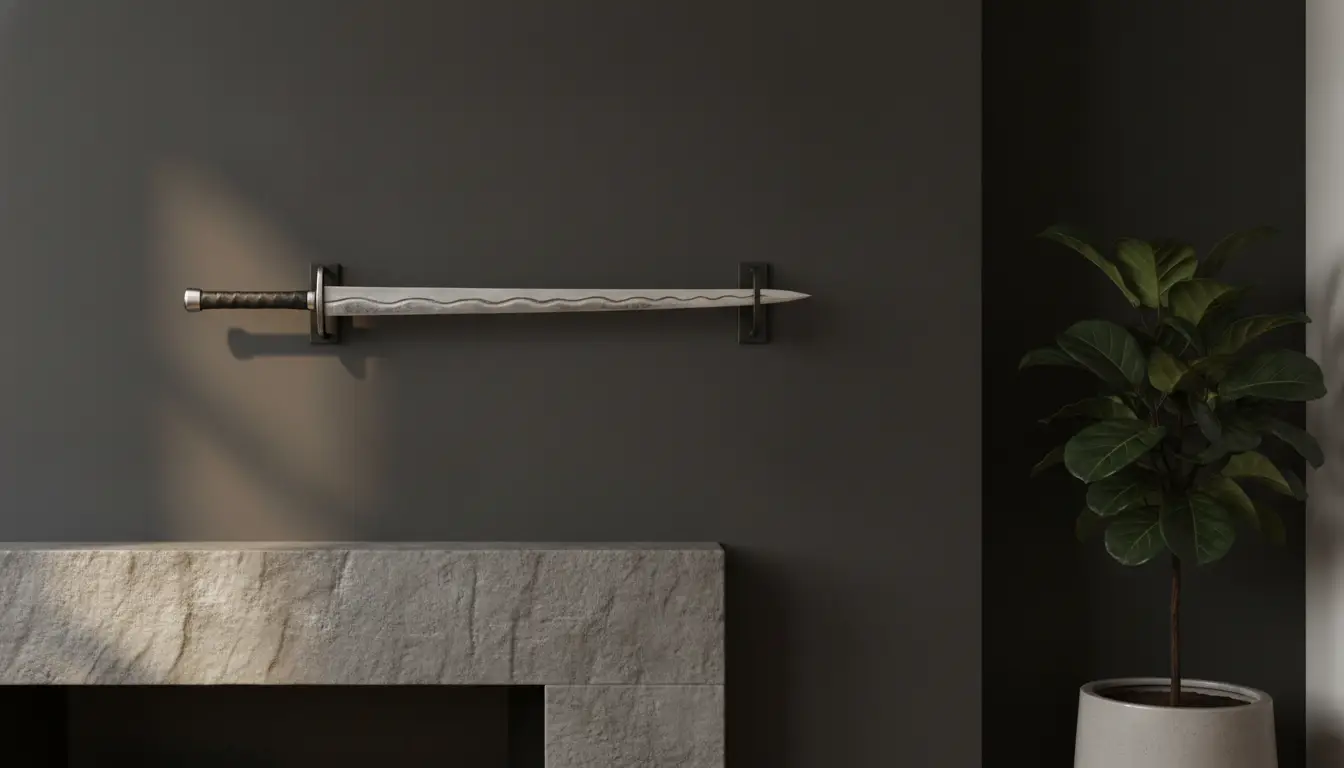
My friend hung a sword over her fireplace last year and I’ll admit, my first reaction was “please tell me this isn’t going to look like a Renaissance fair booth.” It didn’t. Not even close. It looked like sculpture, and honestly it kind of stopped me mid-sentence when I walked in. That’s when the whole idea clicked for me a sword, hung right, does the exact same job a great piece of art does.
So if you’ve got one shoved in a closet corner, or you’re thinking about picking one up, here’s what actually makes it work.
Give It Room to Breathe
Don’t crowd it. A sword on a mostly empty wall looks deliberate. The same sword wedged between picture frames and a mirror just gets swallowed up it stops being a statement and starts being clutter. Natural light helps a lot too, though I’d skip direct sun if you can; it’ll dull the finish faster than you’d think.
Horizontal, or Vertical?
Honestly, this is mostly a gut call. Horizontal reads formal, kind of museum-ish, and it works nicely over a mantel or a long console. Vertical is more dramatic better for a narrow wall or a stairwell where you want the eye pulled upward. Neither is “more correct.” It’s just whichever your wall is asking for.
Please Don’t Cheap Out on the Mount
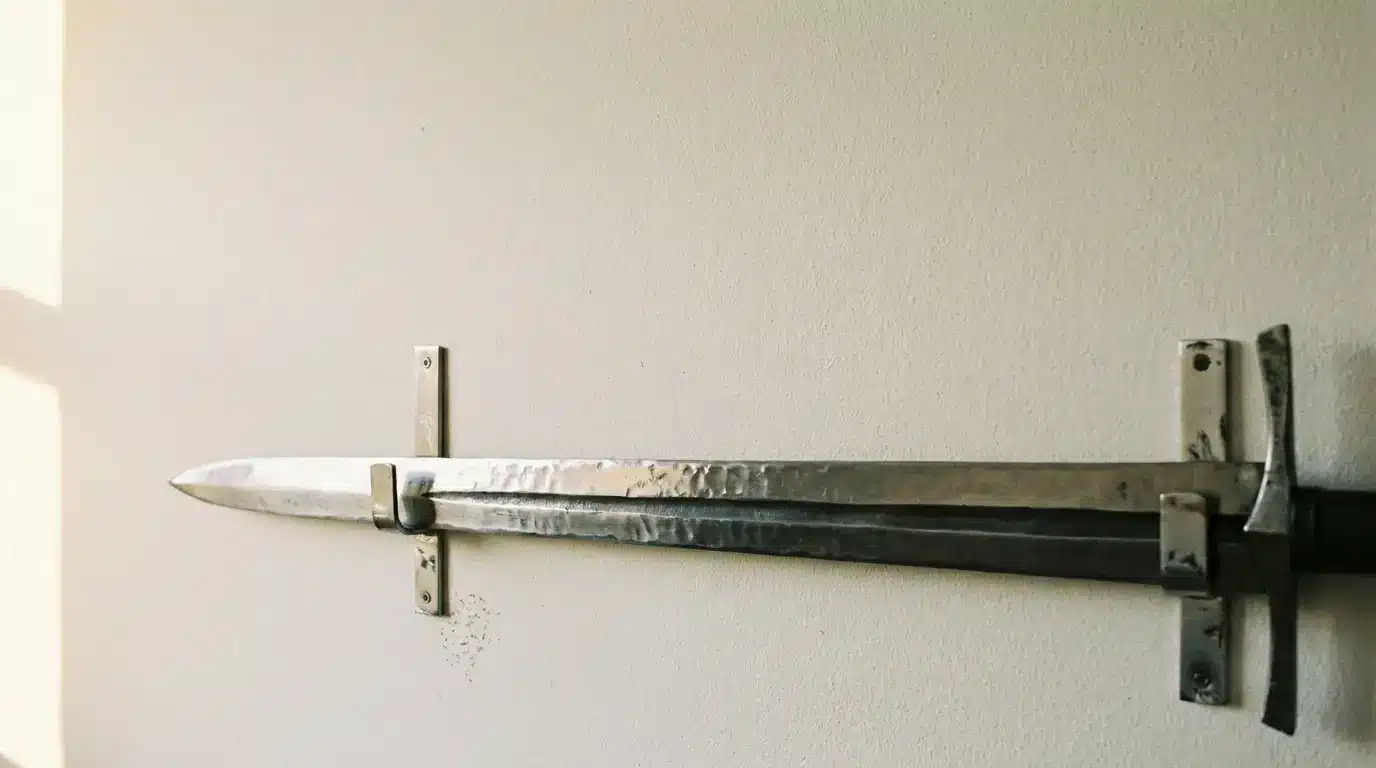
This is where I see people go wrong constantly. Two nails and a prayer might technically hold the thing up, but it’ll sit flat against the wall with zero depth, and flat is exactly what kills the effect. A real wall stand or a set of low-profile brackets holds the blade off the surface by an inch or two, just enough for light to catch the edge and throw a little shadow underneath. That tiny gap is basically the whole trick it’s the difference between “art” and “poster.”
It matters even more if the piece is the real thing. Hand-forged swords have actual texture in them, hammer marks, temper lines, that kind of detail and none of it reads if you mount the blade flat against drywall.
Let It Be the Loudest Thing Around
A sword’s already doing a lot visually, so don’t fight it with more visual noise. I’ve seen people surround a genuinely striking piece with a busy gallery wall and somehow the sword just… disappears into it. Keep things around it minimal. One small print. Maybe a narrow shelf. That’s it.
Match the Room’s Mood
Dark, moody rooms make the finish really pop there’s more contrast to work with. Minimalist spaces let a sword act almost like pure sculpture, clean lines against clean walls. Even a busier, eclectic room can pull it off, but only if the sword gets its own dedicated stretch of wall instead of getting folded into everything else.
If You’re Starting From Zero
Buying rather than displaying something you already have? Go for quality over looks. A properly tempered, well-balanced blade keeps its detail for years, and it just sits differently on a wall than something mass-produced ever will. If you want a starting point, hand-forged swords are a solid place to look real craftsmanship behind them, not just something shaped to resemble the real thing.
Bottom Line
Treat it like you’d treat any serious art piece decent placement, real mounting hardware, and some restraint in what you put around it. Nail those three things and it stops being “that sword on the wall” and becomes the first thing anyone mentions when they walk in.