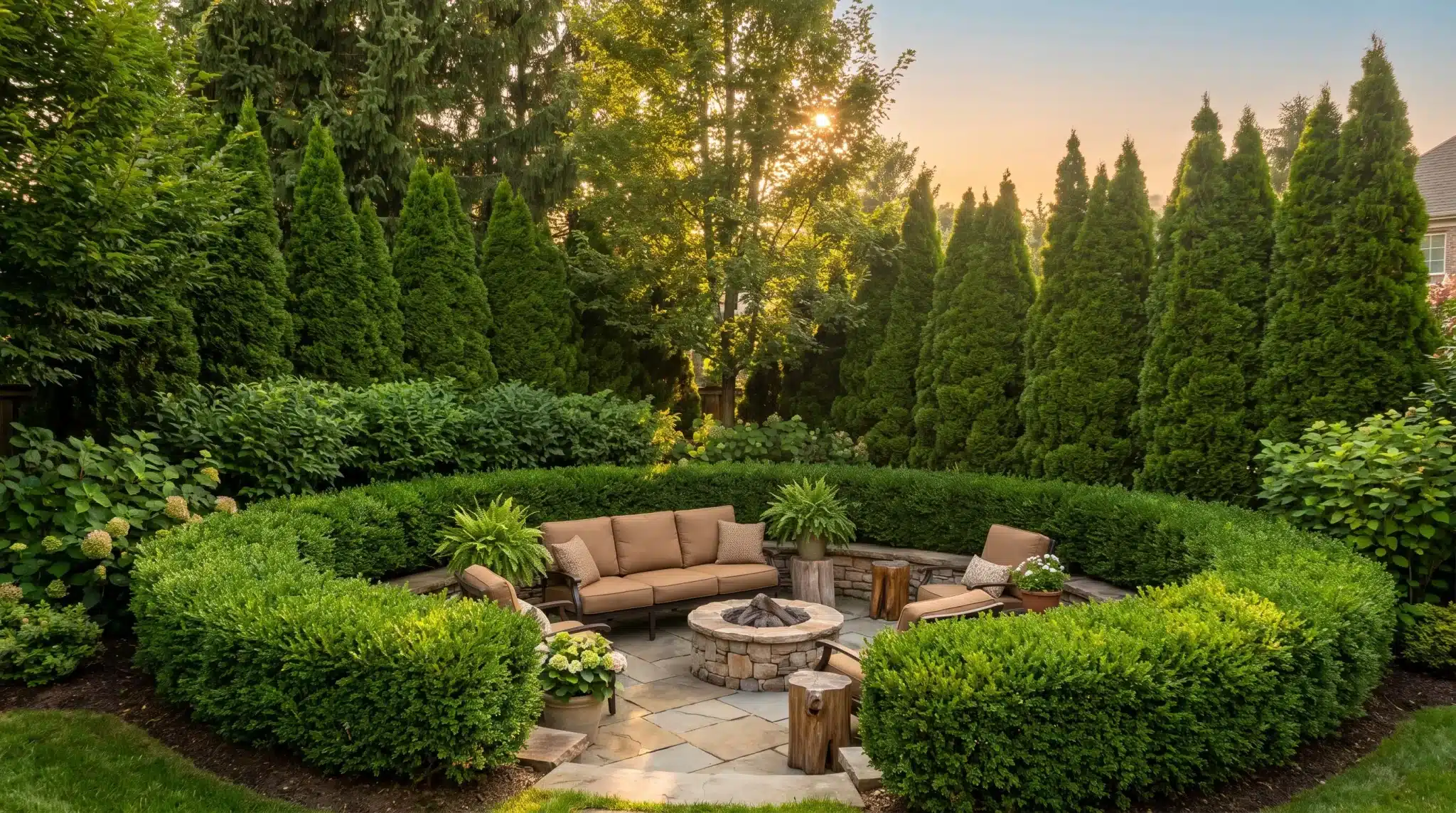
A private backyard starts with understanding where unwanted views actually enter. Many homeowners plant an entire boundary before checking the real sightlines.
You may only need coverage beside a patio or deck. Another yard may need taller screening against second-story windows nearby.
Map Every Unwanted View Before Buying Plants
Walk through your backyard during the times you use it. Check views from seating areas, doors, pools, and dining spaces.
Then mark each problem area on a simple sketch. Note the direction and approximate height of every unwanted view.
These checks give you better backyard privacy ideas immediately. You can spend money only where screening actually improves daily use.
Decide How Much Height You Really Need
Privacy plants should match the height of the view. Taller plants are unnecessary when six feet already blocks the problem.
For high sightlines, trees provide coverage above standard fences. Lower areas can use shrubs, trellises, or planted panels instead.
Green Giant Arborvitae can grow three to four feet yearly under optimal conditions. NC State reports mature heights around 40 to 60 feet and widths around 12 to 18 feet.
Choose Trees by Mature Width, Not Nursery Size
A young privacy tree can seem surprisingly small at purchase. Mature width tells you much more about its long-term fit.
Simply Trees currently groups Arborvitae, Juniper, Cypress, Spruce, Holly, and other screening plants in its evergreen privacy collection.
Many people searching for everygreen privacy trees actually need narrow plants. Correct plant width can matter more than maximum growth speed.
Taylor Juniper is useful for especially tight planting spaces. NC State reports mature dimensions around 20 to 25 feet tall and three to four feet wide.
That shape can work beside driveways or narrow property boundaries. Taylor Juniper also needs well-drained soil rather than persistently wet ground.
Climate suitability deserves the same attention as mature width and height. Check your USDA hardiness zone before ordering any permanent screening plants.
Local Extension guidance can also flag disease concerns common in your region. Sun exposure and drainage can change how densely those plants develop.
Use Privacy Hedges Around Outdoor Living Areas
Tall trees are not required around every seating space. Privacy hedges can work better beside patios and outdoor dining areas.
Place the hedge close enough to block eye-level views. Leave enough room for the plant’s mature width and maintenance access.
Combine Plants With Outdoor Privacy Screens
Trees need time before they provide complete visual coverage. Outdoor privacy screens can solve immediate gaps during those early years.
A slatted panel works well beside one exposed seating area. Trellis panels can also provide support for suitable climbing plants.
This mixed approach gives you useful yard privacy ideas. It also avoids planting oversized trees simply for faster short-term coverage.
Layer Plants Instead of Building One Green Wall
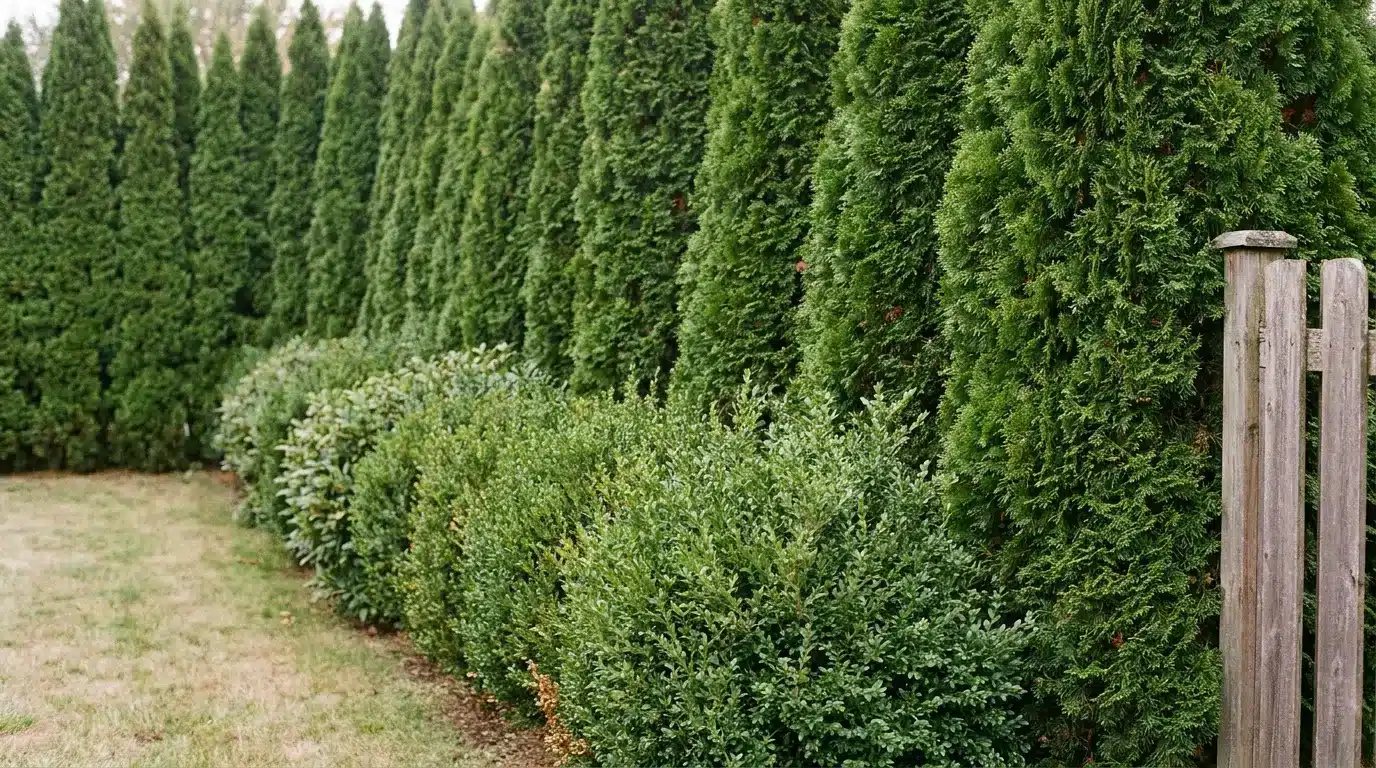
One row of matching trees can provide effective screening. A layered design gives you more options for different viewing heights.
Place taller evergreens toward the outer property boundary. Add medium shrubs where lower branches leave visible gaps.
Some backyard privacy designs also mix evergreen and deciduous species. This approach can provide winter structure alongside seasonal flowers.
Plan Narrow Side Yards Differently
Small side yards can become unusable after broad trees mature. Select narrow plants when every foot of ground space counts.
Measure the complete planting strip before visiting a nursery. Subtract space needed for walking access and future fence maintenance.
These measurements make privacy trees for backyard boundaries easier to choose. They also reduce the chance of heavy pruning later.
Keep Trees Away From Fences and Structures
Planting directly against a fence may give faster coverage. The same choice can make repairs and pruning difficult later.
Check the expected mature spread before placing each tree. Leave enough room for branches to develop without pressing against structures.
Design Privacy Around How You Use the Yard
Your entire property does not need identical screening everywhere. Prioritize the areas where you spend the most time outdoors.
Practical privacy for backyard spaces should support normal movement. Do not narrow paths or block useful sunlight without a clear reason.
Use Faster Trees Only When Their Mature Size Fits
Fast growth can help when the property has enough room. Green Giant Arborvitae can gain three to four feet yearly under favorable conditions.
Arbor Day Foundation recommends spacing Green Giant plants about five to six feet apart for a hedge or screen.
Do not reduce spacing dramatically just for instant coverage. Crowded trees can become harder to manage as their branches expand.
Try These Ideas for Privacy Backyard Planning
Start with targeted screening before covering the entire property line. This approach makes ideas for privacy backyard projects easier to budget.
Follow these five steps before purchasing your main plants:
- Mark every direct view from spaces you use regularly.
- Measure available height and width around each screening location carefully.
- Select plants according to mature size and local climate conditions.
- Add temporary screens where young plants cannot provide coverage yet.
- Recheck spacing before digging permanent holes along your property boundary.
FAQ
What are good privacy trees for larger yards?
Green Giant Arborvitae can provide tall evergreen screening in suitable climates. Its substantial mature width requires generous planting space around each tree.
What works for a very narrow backyard boundary?
Taylor Juniper can provide tall coverage with limited horizontal spread. Always confirm your climate and drainage conditions before planting it.
How can I get privacy near a patio quickly?
Use a screen for immediate coverage beside the patio. Add shrubs nearby when you want living coverage to develop later.
Should every boundary use the same privacy plant?
Using one species everywhere is unnecessary for most homes. Match each plant to available space and the specific viewing problem.
Build Privacy Around Your Actual Sightlines
The best backyard plan starts with views rather than plants. Map every unwanted sightline before deciding where screening belongs.
Choose taller trees only where height solves a real problem. Use shrubs or screens where lower coverage already works.
Well-planned privacy can protect outdoor spaces without enclosing everything. Your yard can stay useful while gaining the separation you actually need.