Ever noticed your quartz countertops looking dull even after a thorough wipe-down? It’s frustrating when a surface meant to stay shiny starts losing its clean finish. I’ve run into the same issue, and most people end up using the wrong products without realizing it.
If you’re trying to figure out how to clean quartz countertops without damaging them, the confusion around safe cleaners and proper methods can make it worse.
From daily soap-and-water cleaning to tackling dried-on wine stains, each step below is broken down so quartz stays streak-free, scratch-free, and glossy without any guesswork.
Why Quartz Countertops Need Proper Care?
Quartz countertops are popular for their elegant look and easy maintenance, but they still require proper care to remain in good condition over time. Even though quartz is non-porous and does not absorb liquids, it is not completely maintenance-free.
Everyday cooking spills, grease, soap residue, and hard water deposits can slowly build up on the surface, making it look dull or cloudy.
The resin that holds quartz together can also react poorly with harsh chemicals such as bleach, vinegar, or ammonia, leading to discoloration or loss of shine. Heat and abrasive scrubbing can cause further damage to the polished finish.
With regular, gentle cleaning using mild soap and a soft cloth, you can protect the surface and preserve its natural shine. Proper care ensures your quartz countertops stay hygienic, stain-resistant, and visually appealing for years without losing their smooth, glossy appearance.
How to Clean Quartz Countertops?
Quartz countertops are popular for their clean look and low maintenance, but many people still damage them without realizing it.
Knowing the right cleaning method helps protect shine, prevent stains, and extend surface life.
Step 1: Immediate Spill Cleanup
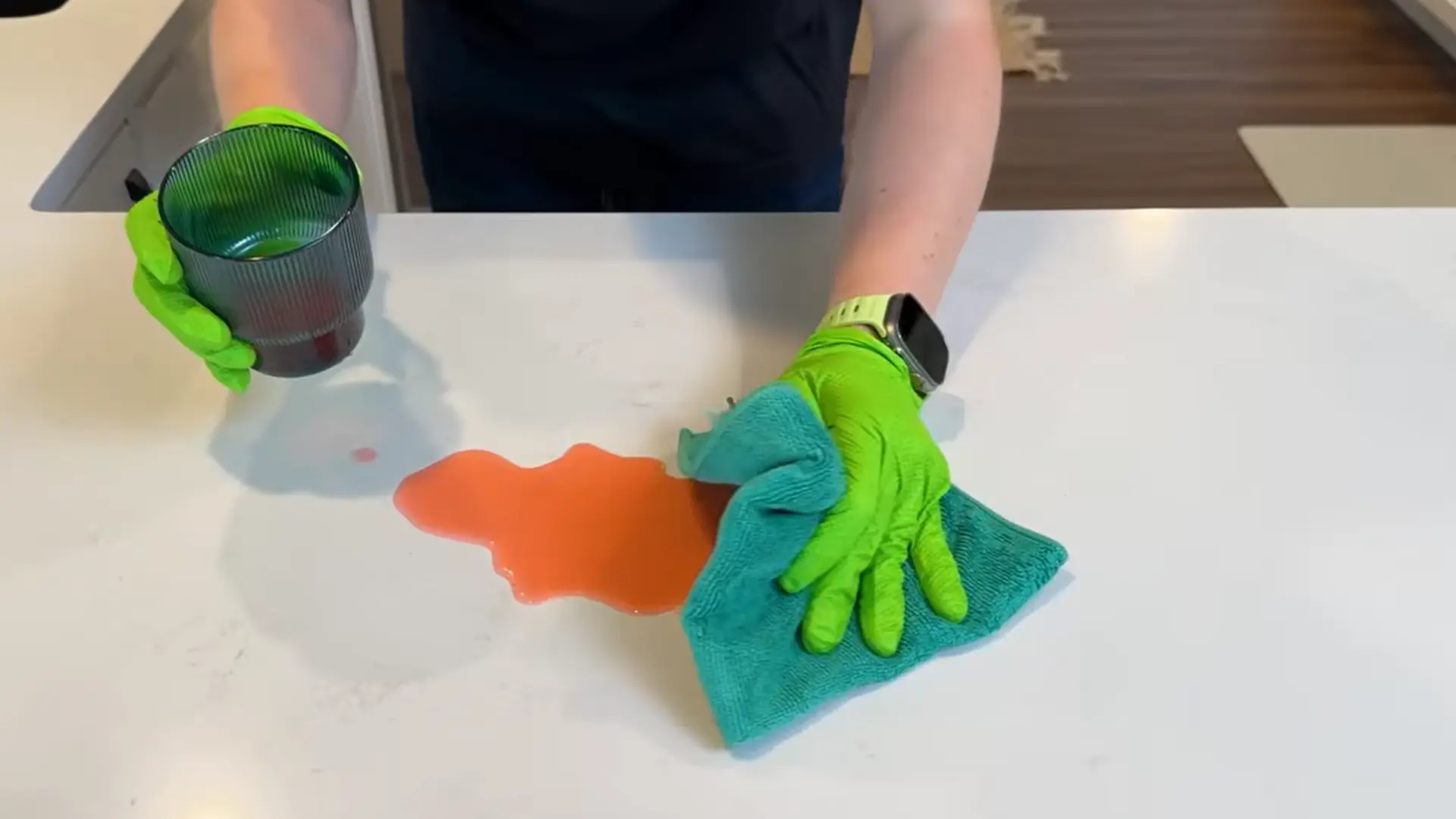
Clean spills immediately with a damp paper towel or soft cloth to prevent staining.
Quartz resists stains but is not stain-proof, so liquids like coffee, tea, wine, or juice can leave marks if ignored. The longer spills sit, the higher the chance of discoloration or buildup.
Quick action keeps the surface clean, reduces the need for deeper scrubbing later, and protects the countertop’s finish and long-term appearance.
Step 2: Daily Soap Cleaning
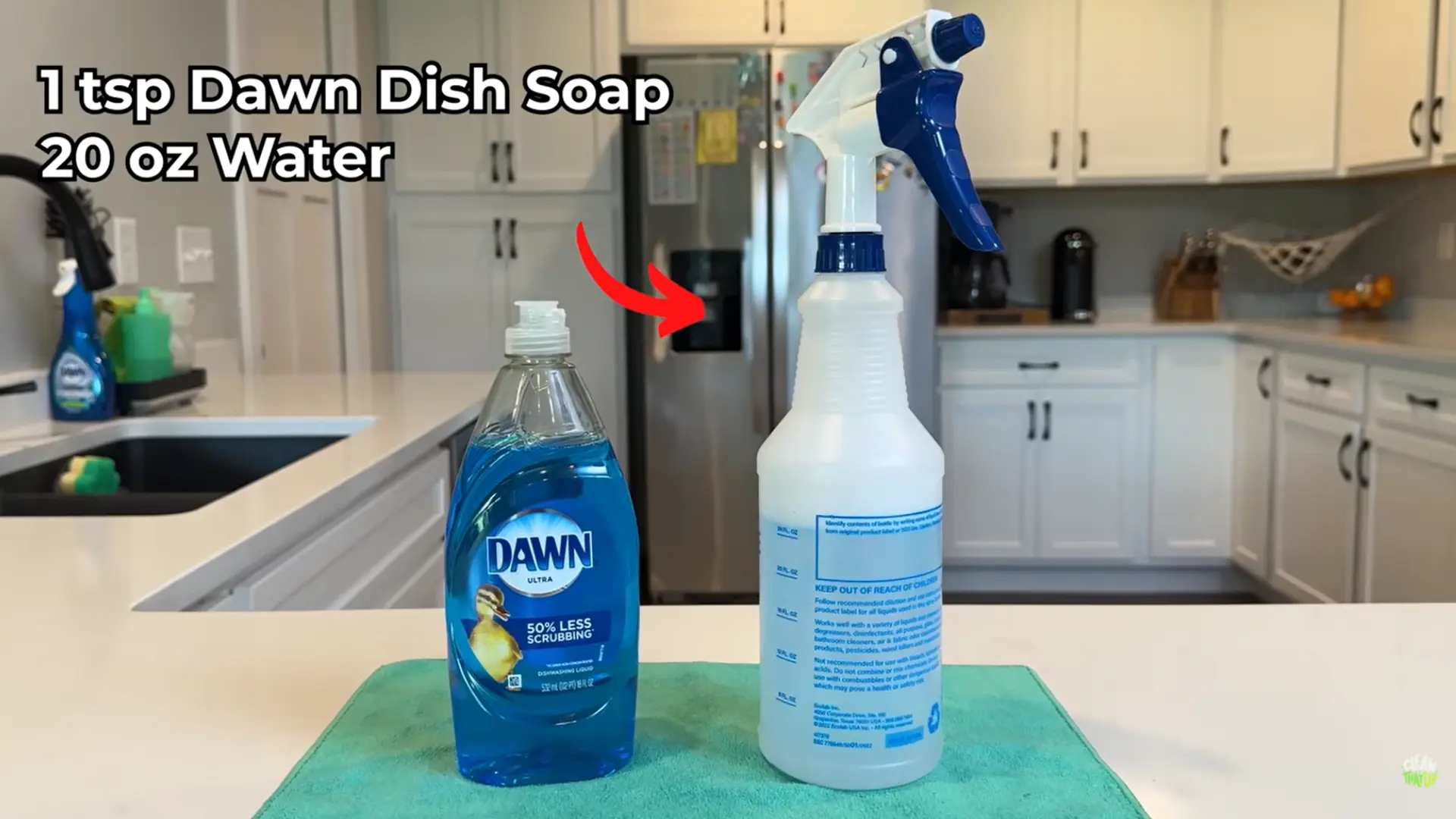
Mix mild dish soap with warm water in a spray bottle, then apply lightly to the countertop.
Wipe using a microfiber cloth to remove grease, crumbs, and everyday residue. This gentle solution cleans effectively without harming the quartz surface or resin.
Avoid harsh cleaners like bleach, vinegar, or ammonia-based products, as they gradually damage the finish and reduce shine over time. Daily use of this method keeps the surface safe and fresh.
Step 3: Dry Buff Finish
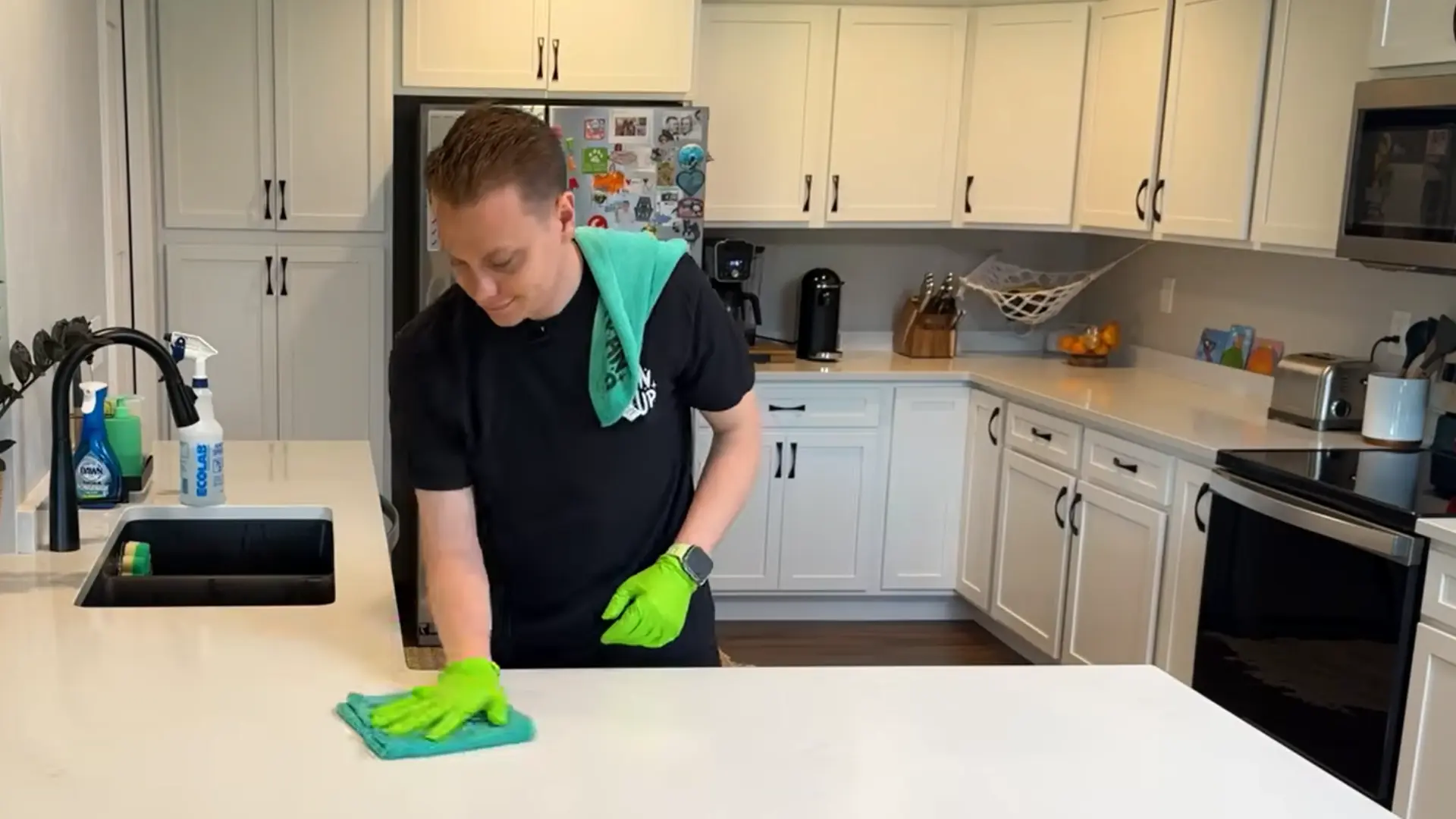
After cleaning with soap solution, wipe the entire surface evenly using a microfiber cloth to remove loosened dirt and residue. Then use a second dry microfiber cloth to buff the surface until it is completely dry.
This two-cloth method prevents streaks, removes leftover moisture, and restores a polished shine. It also helps maintain a smooth finish and prevents water marks or dull patches from forming on the quartz countertop.
Step 4: Disinfect and Remove Stubborn Stains
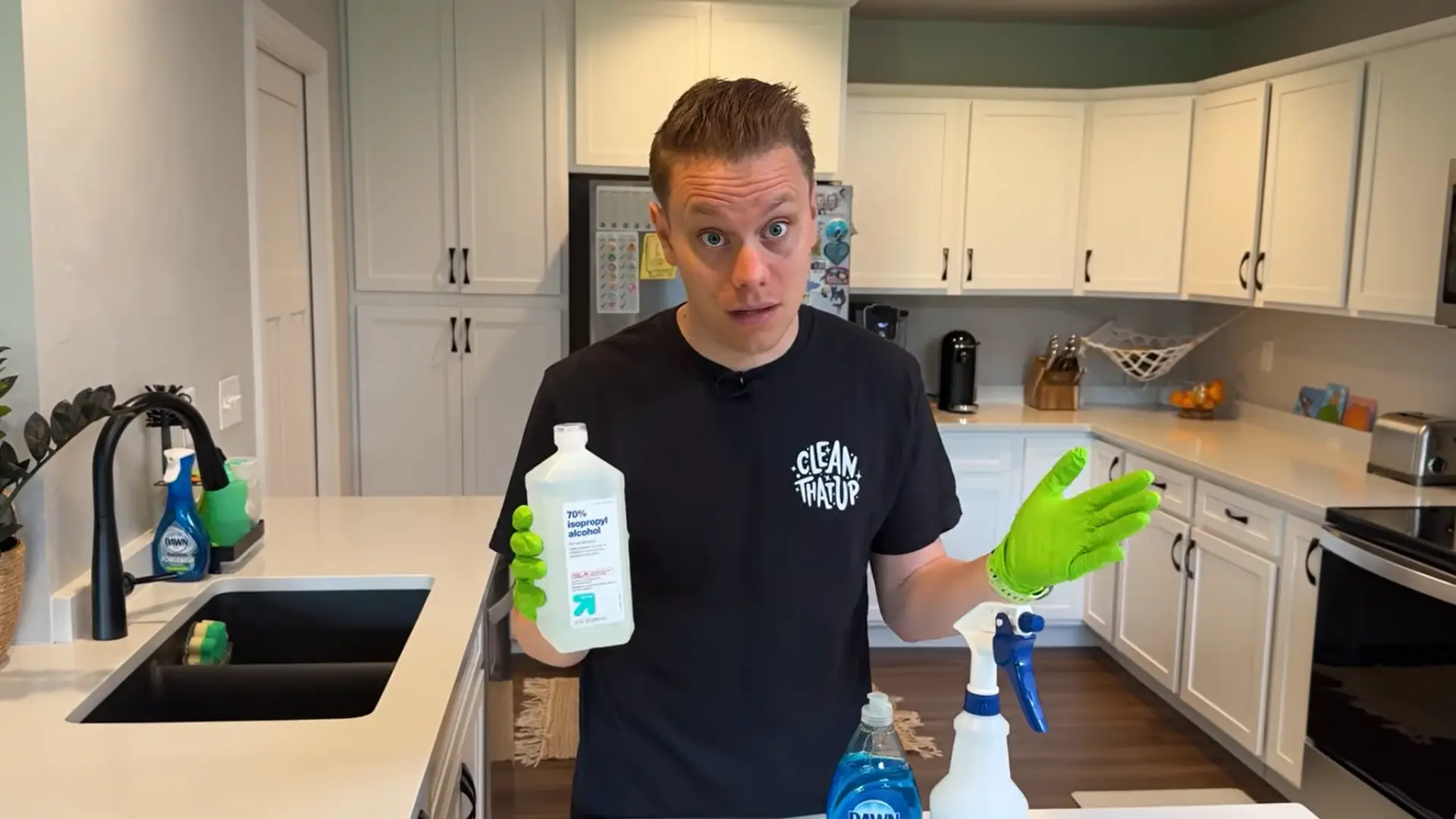
Use 70% isopropyl alcohol in a spray bottle to safely disinfect quartz surfaces. Spray lightly across the countertop and let it sit briefly before wiping with a soft cloth. This helps kill germs effectively and is especially useful after handling raw food or frequent kitchen use.
For tougher stains like coffee, tea, or wine, start by applying isopropyl alcohol to the affected area and gently wipe it away.
If the stain persists, apply a baking soda and water paste, then rub lightly in circular motions with a soft cloth. Rinse thoroughly and dry completely to prevent streaks or residue.
Step 5: Last-Resort Cleaning
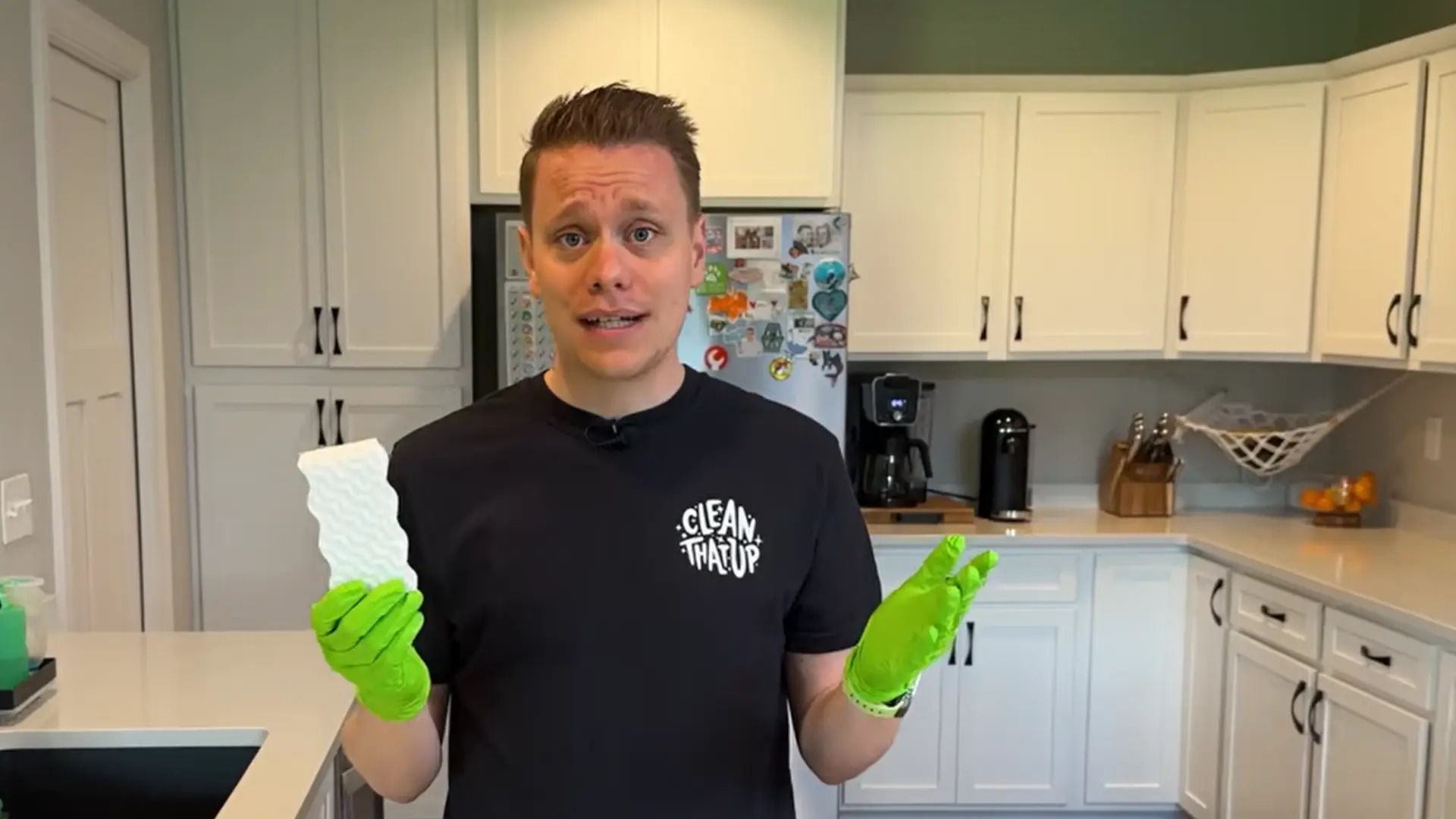
If stains do not respond to alcohol or baking soda treatment, a Magic Eraser can be used very gently. Apply minimal pressure and avoid scrubbing the same area repeatedly, as this may dull the quartz surface over time.
This method should only be used for difficult stains that resist safer cleaning techniques. It serves as a last resort when regular cleaning methods fail to restore the countertop’s clean appearance.
Step 6: Safe Scraping Method
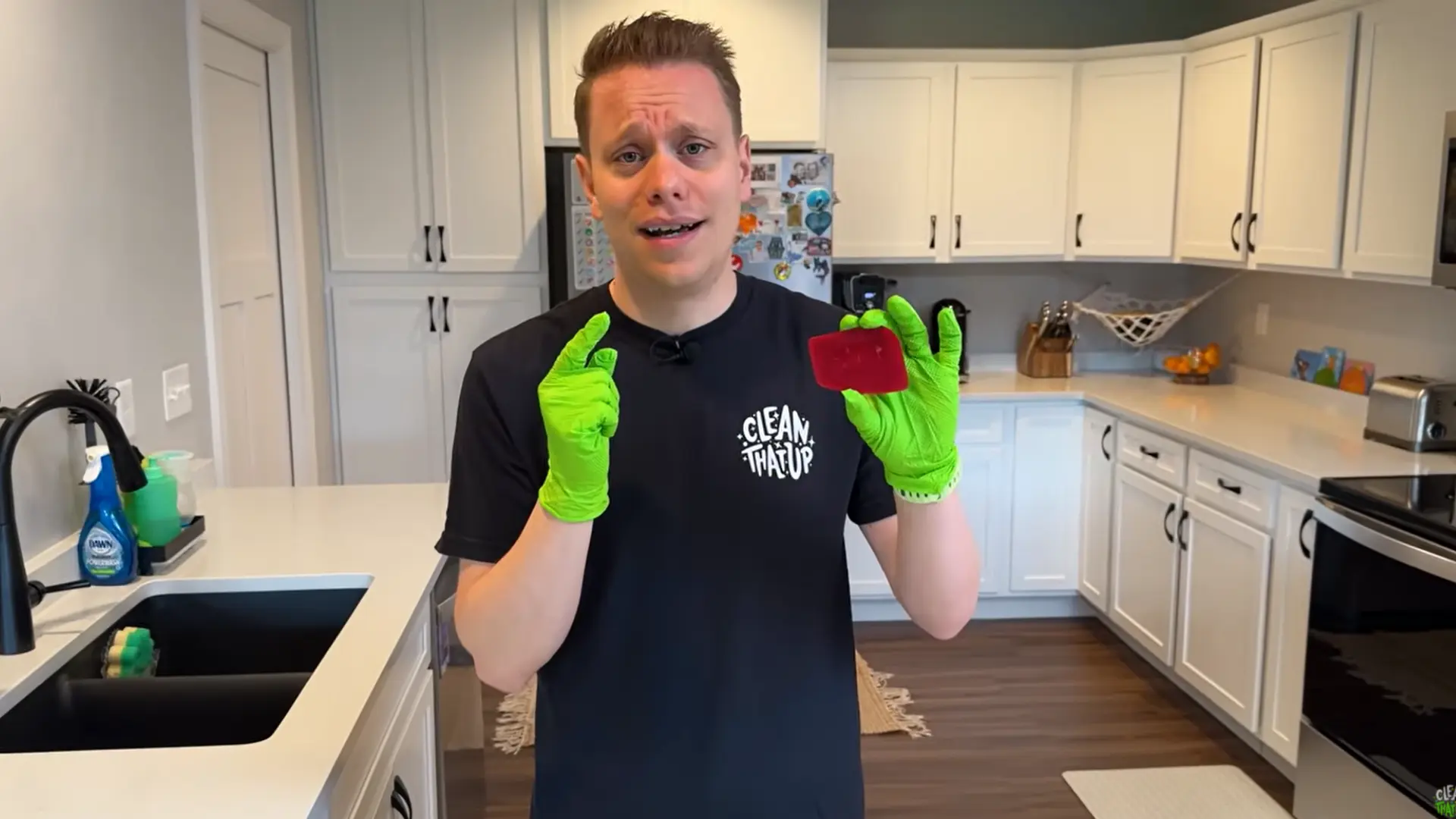
For dried food or hardened residue, gently lift it using a plastic scraper or plastic spatula. Avoid using metal knives, blades, or sharp tools, as they can permanently scratch the quartz surface.
Once the debris is removed, clean the area again with mild soap and warm water to remove remaining residue. This ensures the surface is smooth, clean, and free from buildup while protecting the countertop’s polished finish.
Step 7: Surface Protection Habits
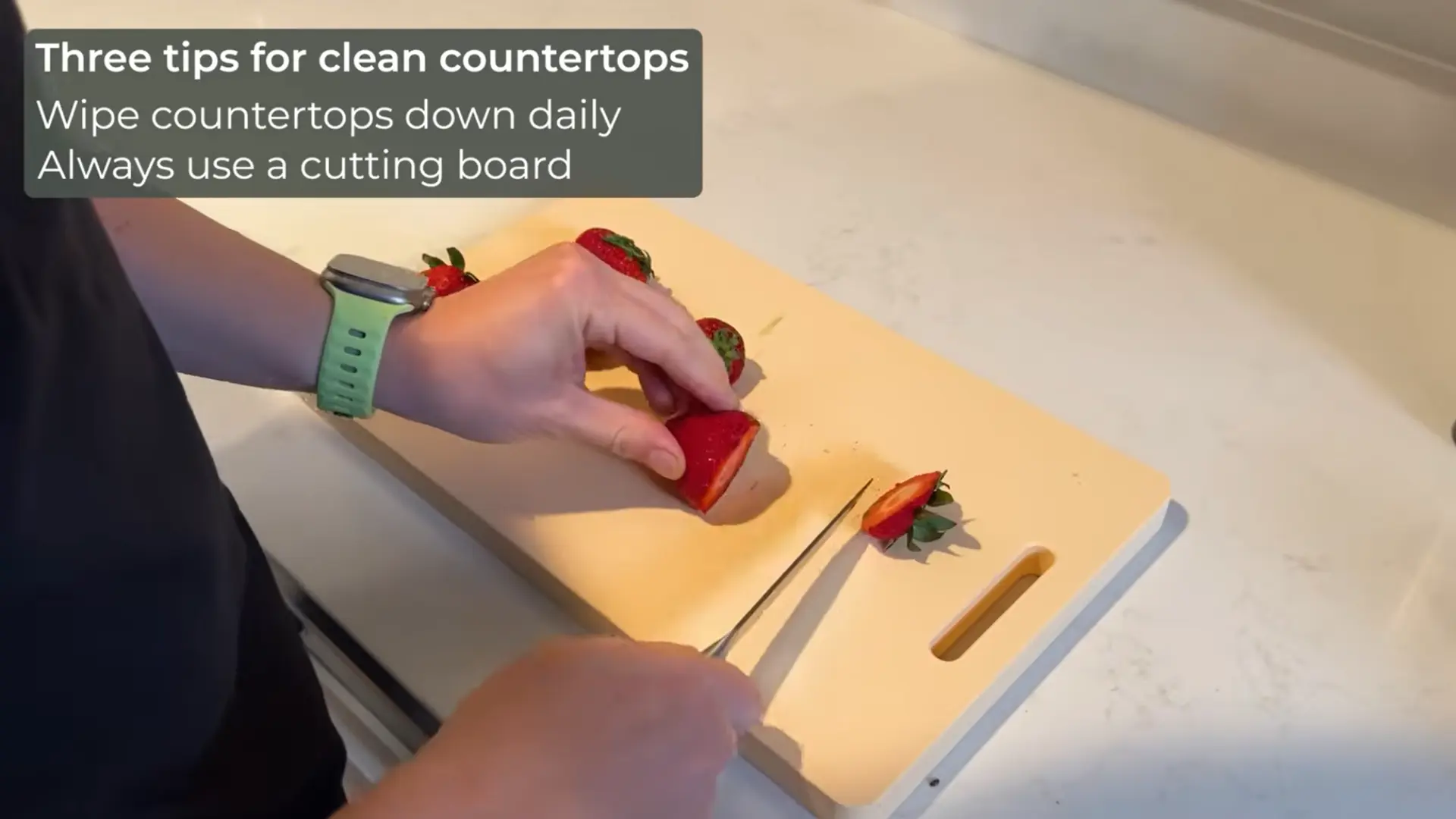
Avoid abrasive tools such as steel wool, scouring pads, or rough scrubbers, as they can damage the surface finish. Always use a cutting board instead of cutting directly on quartz since it is scratch-resistant but not scratch-proof.
Keep hot pans or cookware off the surface and use trivets or heat pads to prevent thermal shock. Sudden temperature changes can cause cracks or discoloration, so proper protection helps maintain durability and long-term appearance.
Watch this video for a safe cleaning method by Clean That Up for a better visual reference:
Best Safe Cleaning Products for Quartz
The right cleaning products keep quartz safe, shiny, and damage-free. Harsh chemicals can dull the surface over time, so it’s best to stick with gentle, proven options.
- Mild Dish Soap: Mild dish soap is the safest everyday cleaner for quartz, cutting through grease and dirt without harming the resin.
- Warm Water: Warm water helps loosen light grime and soap residue, making cleaning easier while ensuring no harsh chemicals are needed for regular quartz countertop maintenance.
- Microfiber Cloth: A microfiber cloth gently lifts dirt and prevents scratches, helping maintain a streak-free finish while evenly spreading cleaner without leaving lint or surface marks.
- pH-Neutral Cleaners (Optional): pH-neutral cleaners are a safe option for deeper cleaning, breaking down residue without causing discoloration.
- 70% Isopropyl Alcohol (Disinfecting): 70% isopropyl alcohol is ideal for occasional disinfecting. It kills germs effectively, evaporates quickly, and leaves no streaks or residue.
Removing Different Types of Stains
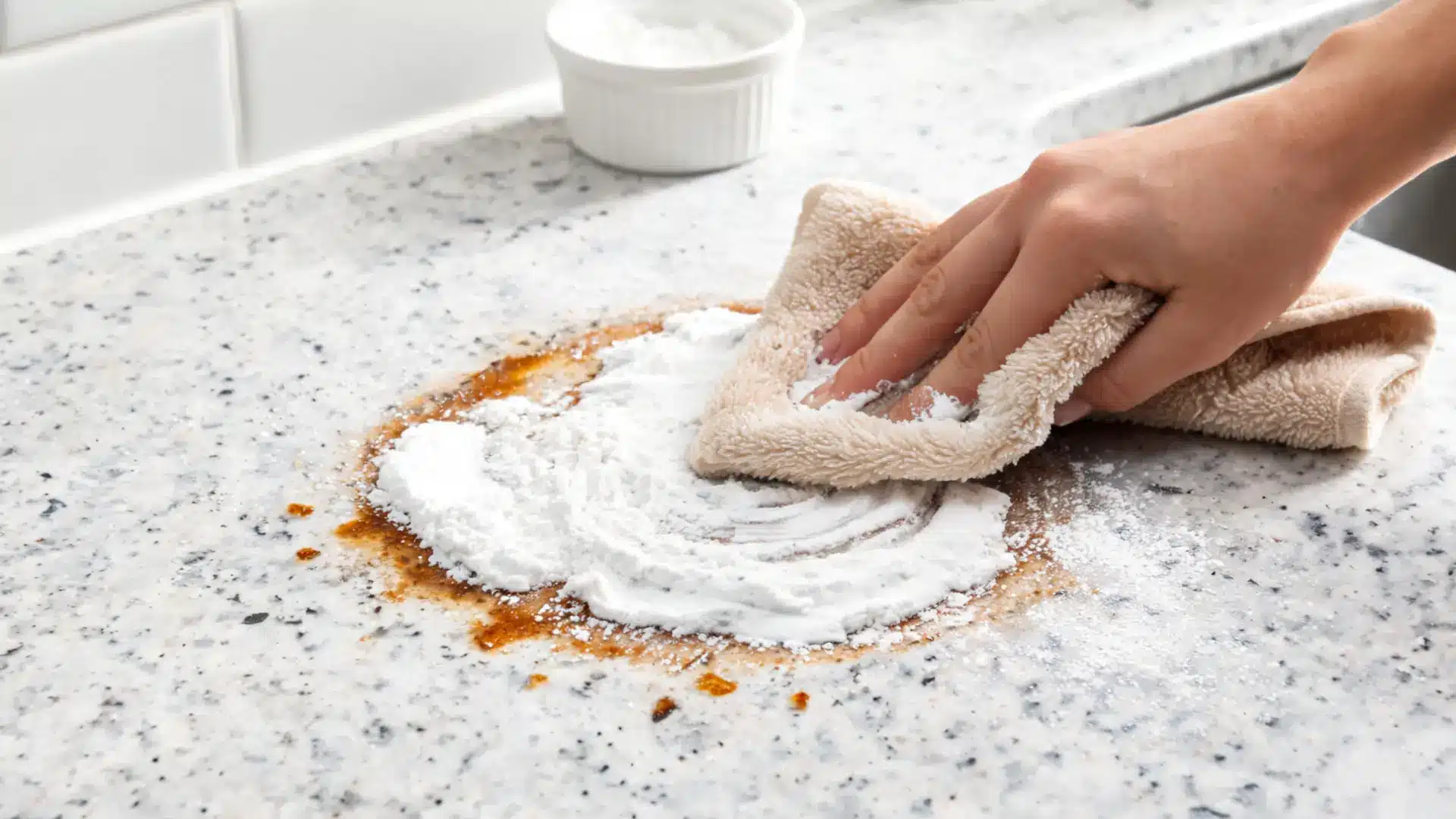
Quartz is highly stain-resistant, but spills can still leave marks if not cleaned quickly. Light stains usually wipe away easily, while tougher ones need a stronger yet gentle approach.
Acting quickly and using the right method helps prevent discoloration and keep the surface looking clean and well-maintained.
1. Light Stains
Clean light stains right away with warm water and mild dish soap, gently wiping with a microfiber cloth to lift the spill before it sets.
This simple method works well for everyday messes like juice, coffee, or food residue. Just don’t let it sit too long, as spills get harder to remove once they dry and bond with the surface.
2. Stubborn Stains
For stubborn stains, mix hydrogen peroxide with water and apply it to the affected area. Let it sit for a few minutes, then gently wipe clean with a soft cloth.
This works well for deeper discoloration from coffee, tea, or wine. Avoid scrubbing too hard, and always rinse and dry afterward to prevent residue.
3. Deep Stains
For deep stains, apply a baking soda and water paste, rub gently in circular motions with a soft cloth, then let it sit briefly before rinsing and drying.
This lifts persistent stains without damaging the finish. Avoid aggressive scrubbing or abrasive tools, as they can reduce shine over time.
Quartz Cleaning Do’s and Don’ts
The table below highlights simple do’s and don’ts to help you protect shine, prevent stains, and maintain long-term durability.
| Do’s (Safe Cleaning Habits) | Don’ts (Avoid These Mistakes) |
|---|---|
| Clean spills immediately to prevent stains and buildup on the quartz surface | Do not use vinegar, as its acidity can damage the resin and dull the finish |
| Use soft microfiber cloths for gentle, scratch-free cleaning and polishing | Do not use bleach or ammonia-based cleaners, as they weaken the surface over time |
| Use trivets for hot items and cutting boards for food prep safety | Do not use steel wool or abrasive scrubbers that can permanently scratch quartz |
| Dry the surface after cleaning to prevent streaks, spots, and residue buildup | Do not place hot pans directly on quartz, as sudden heat can cause cracks or discoloration |
Following these simple do’s and don’ts helps maintain the natural shine of quartz countertops while preventing common cleaning mistakes that can dull or damage them over time.
Quartz Maintenance Tips
Simple daily practices help preserve shine, prevent dullness, and extend the surface’s lifespan while avoiding common damage from heat, scratches, and buildup.
- Daily Surface Wiping: Wipe the surface daily after use to remove crumbs, grease, and spills before they settle. This keeps the countertop looking fresh and reduces the need for heavy cleaning later.
- Prevent Product Buildup: Don’t let soaps or cleaners sit too long. Leftover residue can create a cloudy layer, so regular rinsing keeps the surface clear and polished.
- Dry After Cleaning: Dry the countertop with a microfiber cloth immediately after cleaning to prevent water spots, streaks, and haze caused by mineral deposits.
- Use Cutting Boards: Cut on a board, not directly on quartz. It’s scratch-resistant, not scratch-proof, and this habit helps prevent micro-scratches over time.
- Heat Protection: Use trivets or heat pads for hot cookware rather than placing it directly on the surface, as sudden heat can cause cracks or discoloration.
Keeping quartz countertops in good condition doesn’t require complex care, but consistent habits make a big difference.
Conclusion
Quartz earns its reputation as a low-fuss surface. But “low-maintenance” and “no-maintenance” aren’t the same thing, and that small gap is usually where problems start.
The countertop doesn’t ask for much. Just a little consistency and the right habits in place before something goes wrong.
Give it that, and it will look the same five years from now as it did on day one. Skip it, and even a durable material starts to show wear that’s hard to undo.
Try putting one or two of these habits into your routine this week and see the difference for yourself.
Have a quartz cleaning tip or a stain that just won’t budge? Drop your experience in the comments.
Frequently Asked Questions
Can Quartz Countertops Permanently Lose Their Shine?
Yes, in rare cases, quartz can lose its shine permanently due to repeated exposure to harsh chemicals, abrasive scrubbing, or long-term residue buildup that was never properly cleaned or maintained.
Can Baking Soda Damage Quartz Countertops?
Baking soda is safe when used gently as a paste for stain removal, but excessive scrubbing can dull the finish and reduce shine over time.
Can Quartz Countertops Handle Daily Cooking Heat Exposure?
Quartz can handle moderate heat, but repeated exposure to hot pans or appliances can damage the resin, leading to cracks or discoloration over time.