When picking shoes, it’s usually an either/or choice between great-looking shoes and comfort. Those killer heels are a sight for sore eyes, but are they truly worth the blisters and arch pain? Many women face this dilemma.
However, understanding the science and craftsmanship that make heels truly comfortable would save us all a lot of regretful purchases. This guide gives you expert know-how, taking the fuss out of buying heels that will not only look fabulous but feel fabulous too, from the first step to the last.
The myth that we must suffer to look beautiful is no longer valid.
Master the Art of Buying Heels That Look and Feel Fantastic
Fashion has long made women feel that style equals sacrifice. This old belief causes many women to suffer in pain, yet the latest shoe styles show that this is not necessary. Confidence does not come from grinding through any movement but moving easily.
The Actual Expense of Poor Footwear
It’s not just a bad night out that ignores your foot aches. If you have gotten used to wearing heels that are not perfectly comfortable, you might face grave issues in the long run. You become subject to bunions, hammer toes, nerve damage, and chronic back pain. Every year, millions of women suffer from foot problems due to the pair of shoes they wear. They’re not just irritants; they can affect your health and general wellbeing.
Assurance Starts in Good Times
Imagine someone in a hurry, uncertainly swaying with hunched shoulders to take a seat. Picture a lady gliding elegantly and standing tall, engaging seamlessly. It’s not just the frock; it’s the footwear. When your feet feel good, your posture generally improves. You emanate confidence that attracts attention for all the right reasons. Feeling at ease brings natural confidence.
The Construction of a Comfy Heel Beyond the Cushion
To find comfortable heels, it is crucial to know how a heel is constructed. It goes beyond just cushioning; it is about designing that assists the inherent mechanics of your foot.
The Importance of Pitch and Heel Placement in Stability
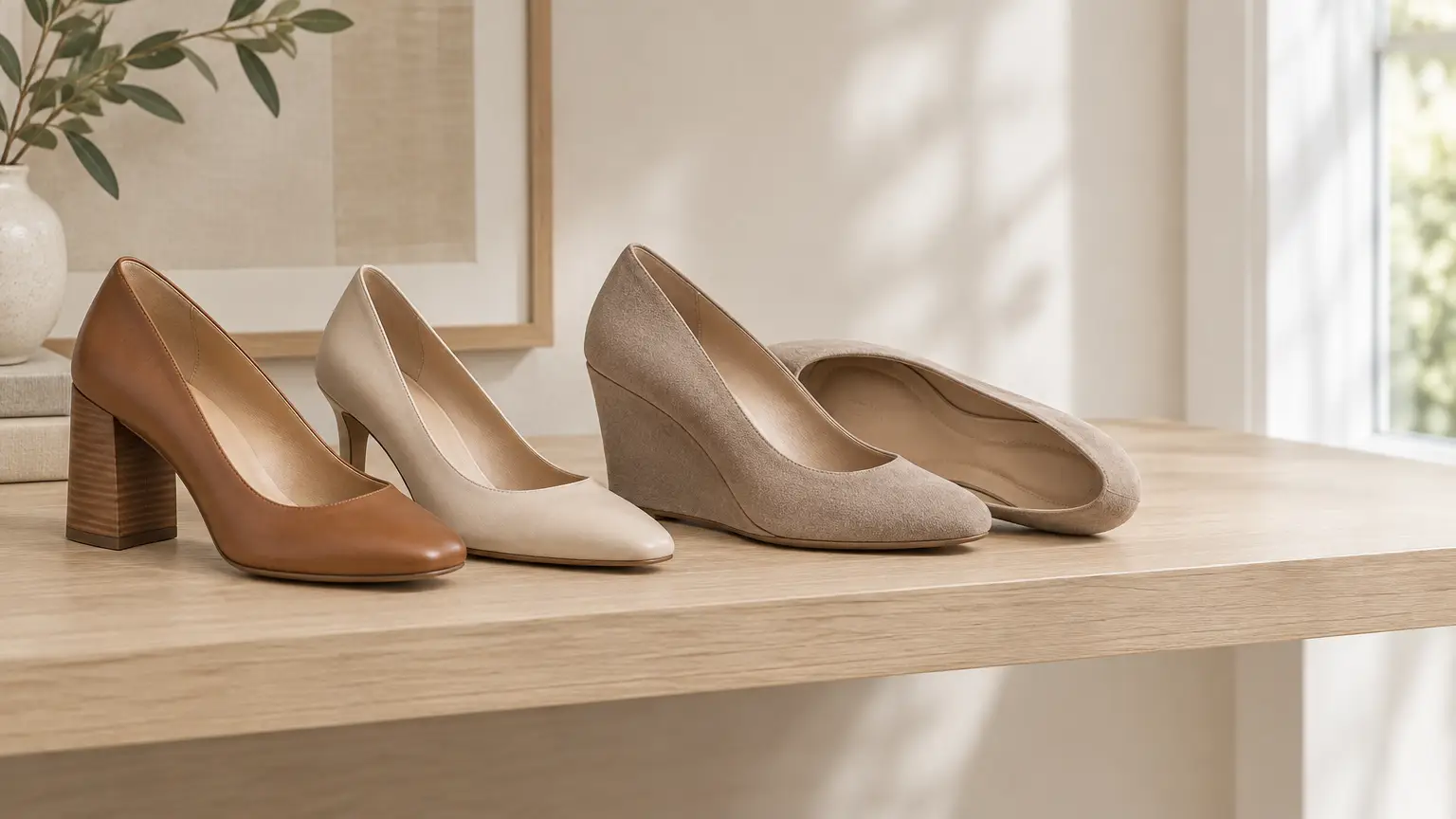
The ground and your foot form an angle called the heel pitch. When the pitch is steep, the pressure is at the forefront of the ball. Search for a heel that is well-balanced and directly beneath your own heel bone. The stability of a centered block or wedge heel is often better than that of a thin stiletto, placed far back on the sole. The central alignment makes it easier to place weight more evenly to limit strain on the forefoot.
Why the Toe Box Is Crucial?
The toe box, where your toes rest, is very important for comfort. Make sure your toes are never pinched or overlapping. Pointy toe boxes look sleek but can cramp the toes of some wearers. Almond or round toe shapes usually provide enough space for natural toe splay. When you try on the shoes, trace your foot and compare its outline to that of the shoe’s outsole. If the above outline looks narrower, it means you will feel too restricted in it.
Things to Look For in Insoles and Arch Support
Forget the flimsy, flat insoles. The right arch support and targeted cushioning bring real comfort. Quality high heels contain materials like Poron or memory foam in key pressure areas but not as an all-over layer. A contoured insole simulating your foot’s natural arch provides support and comfort throughout the day while preventing fatigue.
Choosing Flexible and Forgiving Fabrics
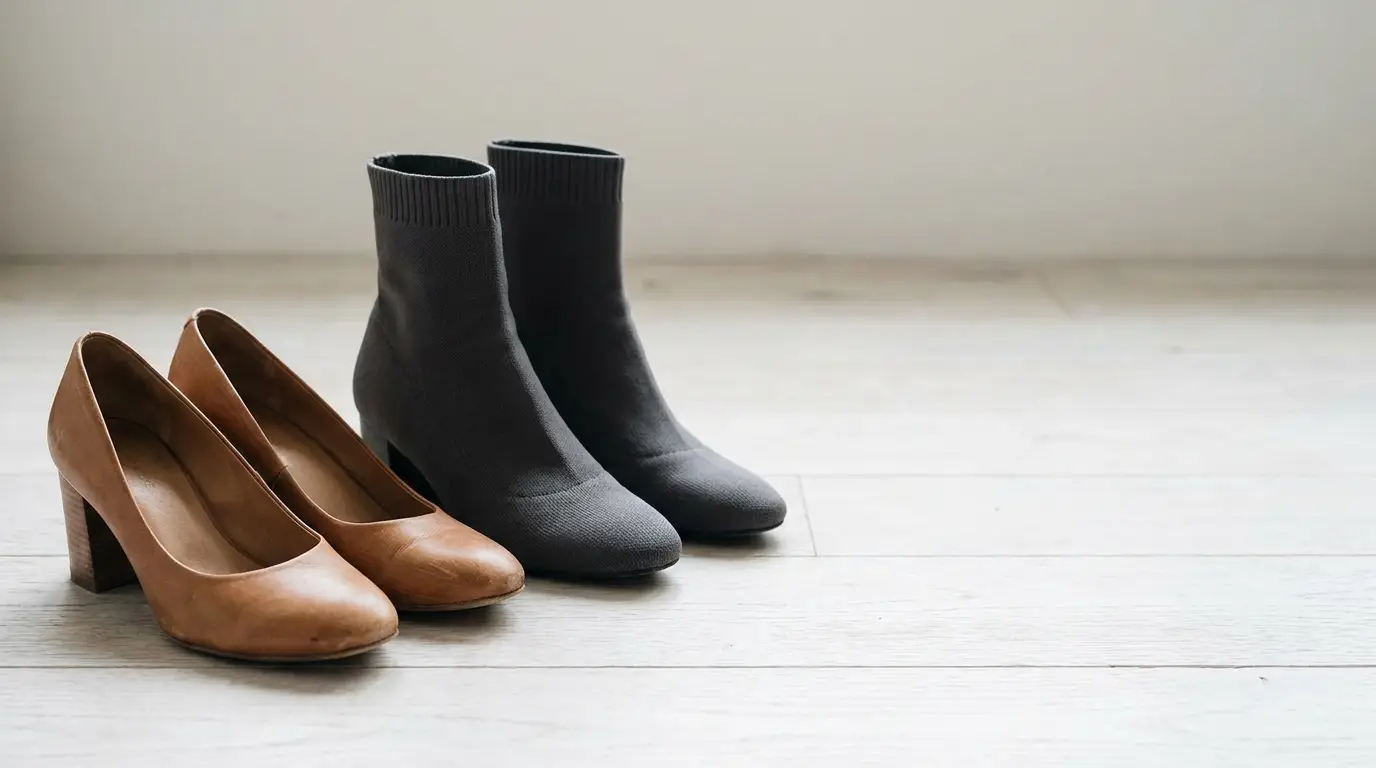
It is very important to select a comfortable material for the shoe. The shoe’s ability to conform to your foot, breathe, and last over time.
Full-Grain Leather is the Best Choice
Full-grain leather’s initial rigidity gives way to a form-fitting stance as you wear it. It also allows the moisture to evaporate naturally. Consider soft nappa, a material that offers cushioning and supple suede that gives slightly with wear. Leather is quite flexible and becomes better with age. It becomes like a second skin for the wearer.
Growing Popularity of Performance Synthetics
With the introduction of comfort from innovative synthetic materials, modern shoemakers are changing the game. Models with inseam and mitered yoke provide a close fit that flexes with your every move. Top-notch vegan leathers have also come a long way, providing flexibility and breathability similar to real leather.
Quick Comparison: Full-Grain Leather vs. Stretch Knit Fabrics
| Feature | Full-Grain Leather | Stretch Knit Fabrics |
|---|---|---|
| Initial Fit | Molds to the foot over time, becomes like a second skin. | Instant flexibility and sock-like fit. |
| Breathability | Allows moisture to evaporate naturally. | Often provides good breathability. |
| Durability | High durability, improves with age. | Prone to stretching out, potentially less long-term shape retention. |
| Comfort Timeline | Takes some time to break in, then offers superior comfort. | Immediate and adaptive comfort from first wear. |
| Aesthetic | Often perceived as more formal and classic. | Generally has a less formal look. |
Materials to Consider Carefully
Although they look great, some materials can be uncomfortable. Stiff patent leather or rigid, non-breathable plastics tend to be unyielding and can therefore cause blisters and pressure points. If the material feels stiff and unyielding to the touch, it will most likely feel the same on your feet. Always choose materials that have some flexibility.
A Guide to Finding the Perfect Fit for Your Foot Shape
Every foot is different, and knowing the shape of your foot can help you find the perfect fit. This piece of information is particularly important in your search for comfortable women’s wide-width shoes.
Recognize Your Foot Type (Wide, Narrow, and Flat)
Self-assessment helps significantly. To assess the type, try the “wet test” by stepping onto concrete after wetting feet. If the full footprint appears on all surfaces of the paper, it indicates flat feet. If only the heel and ball of the foot appear, it indicates high-arched feet. The widest part of your foot is the measurement for width. If your measurements exceed the standard for your length, you probably need a wider fit.
Looking for Comfortable Shoes in Women’s Wide Width
If you have wider feet, just sizing up is a common mistake, as it gives you length but not width, leading to slippage and blisters. Look for brands that allow you to choose W or WW. Seek out shoes with adjustable features, like buckles or laces. You can also select forgiving materials such as soft leather and stretch knits that provide wiggle room without pinching. Many brands are now focusing on making fashionable yet comfortable women’s wide-width shoes.
Solutions for High Arches and Flat Feet
Seek heel options with significant built-in arch support to prevent strain if you have high arches. A steady platform or block heel also aids in better weight distribution. For flat feet, consider styles that have a low, stable heel, and a reasonably subtle, supportive arch that is not overly aggressive so that it does not cause pain. The heel counter (back of the shoe) stability is also very important.
Modern Dress Footwear with Innovative Comfort Technologies
The world of footwear is always evolving. Modern technology, once exclusive to sports equipment, makes dress shoes unexpectedly comfortable.
The Growing Popularity of Stretch Knits as Uppers
People’s need for all-day comfort has brought about innovations. The technology that makes a women’s stretch knit loafer feel so good is now being put to use in dressy pumps and heels. With a stretchy design, these uppers allow your foot to move freely while creating little to no friction or pressure points. These versatile fabrics in dress shoes will be seen in no time.
Shoe Soles Inspired by Sports
Although traditional hard leather soles are elegant, they don’t absorb shock well. Modern heels are becoming increasingly more flexible as they use rubber or TPU. These materials will provide you with a better grip, lessen the impact on your joints, and result in a bouncier step. Because of this, you’ll find extended use much more enjoyable. Choose shoes that have slightly flexible soles for easy walking.
Cushioning Pods Designed for Use
Insoles are no longer just flat pieces of material. Today’s sophisticated brands offer insoles that contain pressure-relieving pods in the right places. You will often find these on the ball of the foot (metatarsal area) and under the heel. This is the area that takes the brunt of impact and pressure. Brands leading in comfort tech devise these pods using specialized foams that give personalized cushioning while absorbing shock and returning energy with every step.
How to Try Heels in Store (Checklist Before Purchase)
When buying smart heels, it takes more than a glance in the mirror. Use this checklist to make sure you are making a comfortable choice.
It’s Best to Do Your Shopping in the Afternoon
The feet typically swell during the day. When you try on shoes in the afternoon or evening, when your feet are at their biggest, you will get a better fit. If the morning starts well, the rest of the day is likely to follow suit.
The Finger Test to Measure Size
When trying on shoes, you should have about a thumb’s width of space between your longest toe and the end of the shoe. Apply pressure on the toe box. If your toes feel cramped, the shoe is too small. If you have too much space, your foot will slide and cause friction.
The Test for Walking and Standing
Take action and move. It is advisable to walk around the shop on the hard surface. Not just the area that is carpeted, but other areas too. Stand for a few minutes to mimic real-life wear. Are you experiencing cramped toes? Do you find your heel slipping out? Can you feel the arch supported or is there a gap? Notice any immediate areas of tension and discomfort.
Ways to Make Your Existing Heels More Comfortable
With a few pairs of uncomfortable shoes in your closet, you can still fix them up. More often than not, you don’t need to buy new.
Moleskin and Gel Inserts Strategy
Focus on specific problem areas. To prevent blisters, apply a small piece of moleskin to the area inside the shoe that rubs (like the heel counter or strap). To relieve pressure on the forefoot, a metatarsal pad placed just behind your foot can help. Silicone heel grips provide a no-slip grip, and arch supports can be added anywhere you need.
When Should You Visit a Cobbler
A skilled cobbler is nothing to sneeze at. Tweaking strap lengths, adding a rubber half-sole for grip and shock absorption, or stretching leather shoes to combat tightness – they can do wonders! Your cobbler can help extend the life of your favorite heels. Plus, they can make them more comfortable.
To Sum Up
Searching for a comfortable pair of heels doesn’t mean sacrificing your style. Knowing some vital aspects of shoe design – a stable pitch, a wide toe box, quality material, and advanced comfort technology – will help you make informed choices. Before buying a new pair of heels, use our pre-purchase checklist, and know that you can always work your existing collection into your design with a little ingenuity. You can finally end your search for stylish, pain-free footwear. Now, strut into any room with confidence and style.
Frequently Asked Questions About Comfortable Heels
What makes a heel comfortable beyond just cushioning?
Comfort in heels goes beyond simple cushioning; it involves the overall design, including heel pitch, placement, and toe box shape. A well-balanced heel directly beneath the heel bone, a spacious toe box, and contoured insoles with targeted arch support are crucial for assisting the foot’s natural mechanics and distributing pressure evenly.
How can I find comfortable heels if I have wide feet?
For wide feet, avoid simply sizing up, as this adds length but not width, leading to slippage. Instead, look for brands offering specific wide (W) or extra-wide (WW) options. Seek out shoes with adjustable features like buckles or laces, and choose forgiving materials such as soft leather or stretch knits that accommodate your foot shape without pinching.
What materials are best for comfortable heels?
Full-grain leather is highly recommended due to its ability to mold to your foot over time, breathability, and durability. Soft nappa and supple suede also offer comfort and flexibility. Innovative performance synthetics and high-quality vegan leathers are also emerging, providing flexibility and breathability similar to natural leather, offering immediate comfort.
How do modern technologies make dress shoes more comfortable?
Modern dress footwear incorporates innovations like stretch knit uppers for a flexible, friction-free fit, and sports-inspired soles made of rubber or TPU for better grip and shock absorption. Additionally, advanced insoles feature pressure-relieving cushioning pods strategically placed under the ball of the foot and heel to absorb impact and return energy.
What should I do when trying on heels in a store to ensure comfort?
Always shop for heels in the afternoon or evening when your feet are slightly swollen for the most accurate fit. Perform the “finger test” to ensure a thumb’s width of space at the toe. Crucially, walk around on hard surfaces and stand for several minutes to identify any immediate pressure points, slipping, or lack of arch support before purchasing.
Can I make my existing uncomfortable heels more comfortable?
Yes, you can often improve existing heels. Utilize moleskin to prevent blisters in rubbing areas, metatarsal pads for forefoot pressure relief, and silicone heel grips to prevent slipping. For more significant adjustments like stretching leather, tweaking strap lengths, or adding shock-absorbing half-soles, consult a skilled cobbler.