I used to think picking a coffee table was easy, until I realized mine was making my living room feel… off. If you’ve ever wondered how tall a coffee table should be, you’re not alone.
The right height can completely change how your space feels and functions.
In this blog, I’ll share the simple rule designers swear by (hint: it involves your sofa’s seat height), my coffee table height cheat sheet, and the 2/3 rule for perfect proportions.
You’ll also learn how to measure your space in under a minute, match table heights to different sofa styles, and avoid common mistakes that throw off your living room’s balance.
Let’s get your setup looking and feeling just right.
How Tall Should a Coffee Table Be?
I’ll be honest, I spent way too long staring at my living room last year, convinced something felt off. The sofa was right, the rug worked, but every time I sat down with my coffee, I had to do this awkward lean-forward thing that made my back hurt.
Turns out, my coffee table was about three inches too low for my sofa. Once I fixed that one thing, the whole room clicked into place.
The rule I wish someone had told me from the start: your coffee table should match your sofa’s seat height or sit 1–2 inches lower.
For most homes, the standard coffee table heightfalls between 16–18 inches, which pairs perfectly with typical 17–19-inch sofa seats.
If you’ve got a low-profile modern sofa, you’ll want to go lower (14–16 inches). If your sofa has tall, firm cushions or you actually work and eat at your coffee table, aim higher (19–21 inches).
Here’s what really matters when you’re picking the right height:
- Match the table to your sofa seat height, give or take two inches
- Leave 16–18 inches of legroom between your sofa and the table
- Keep the length around two-thirds of your sofa length for balance
Standard Coffee Table Height: Cheat Sheet
I made this chart after measuring every sofa in three different furniture stores because I was tired of guessing. These numbers actually work in real rooms with real sofas.
Sofa Seat Height vs. Table Height
| Your Sofa Seat Height | Your Table Should Be |
|---|---|
| 17 inches | 16–17 inches |
| 18 inches | 16–18 inches |
| 19 inches | 17–18 inches |
| Soft, plush cushions | 2–3 inches lower than measured |
| Firm cushions | Same height to 1 inch lower |
The cushion firmness thing caught me off guard. My parents have this super-soft sectional, and when you sit, you sink down about three inches.
I measured their table at 18 inches, thinking it matched their sofa, but once they sat down, the table felt way too high. We dropped the table to 15 inches, and suddenly they could reach their drinks without sitting forward.
Match Height to Sofa Style

Different sofas need different table heights. I learned this the hard way when I tried to use the same coffee table from my old apartment with a completely different sofa style.
- Low-Profile or Modern Sofas: Go with 14–16 inches. These sleek, low-to-the-ground sofas look weird with taller tables.
- Standard Sofas with 17–19-Inch Seats: Stick to 16–18 inches; this is your standard coffee table height that works in most homes.
- High-Back Sofas, Sectionals, Firmer Seats: Try 19–21 inches. The extra height makes reaching easier and feels more natural.
- Nesting Tables or Cluster Arrangements: Keep your tallest piece within 3 inches above your sofa seat. I love nesting tables because I can adjust them based on what I’m doing.
My sister has a deep, modern sofa that sits really low, maybe 15 inches from the floor. She bought a standard 18-inch coffee table, and it looked like a dining table in front of her sofa.
We swapped it for a 14-inch table and suddenly her whole room felt calmer and more put-together.
The “2/3 Rule” (Proportion That Looks Right)
This rule saved me from buying a coffee table that would’ve looked ridiculous. I had my eye on this beautiful 48-inch table for my 96-inch sofa.
I took one look at the measurements and said, “That’s going to look like a side table in front of that sofa.”
I was right. Here’s what actually works:
- Length: Pick a coffee table that’s about two-thirds of your sofa length. For my 96-inch sofa, I needed something around 64 inches.
- Height: Stick to your sofa seat height or go 1–2 inches lower for comfort.
- Space around it: Keep 16–18 inches between your sofa and table. Leave 24–42 inches between your table and TV stand or console (bigger TVs need more space to balance the look).
I tested this rule in my own living room and three friends’ homes. Every time we followed the two-thirds length guideline, the room felt complete. Every time we ignored it, something looked off, even if we couldn’t name what.
How to Measure in 60 Seconds
I promise this takes less time than scrolling through coffee table options online. Grab a tape measure and follow these steps.
Step 1: Measure Your Sofa Seat

Put your tape measure on the floor and stretch it up to the top of your sofa seat. Don’t push down on the cushion; measure it uncompressed. Write this number down.
I keep a small notepad nearby when I’m doing this because I always forget the measurement by the time I walk to my laptop. Most sofa seats fall somewhere between 16 and 20 inches, but yours might be different.
This first measurement gives you your baseline to work from for everything else.
Step 2: Sit and Check the Sink
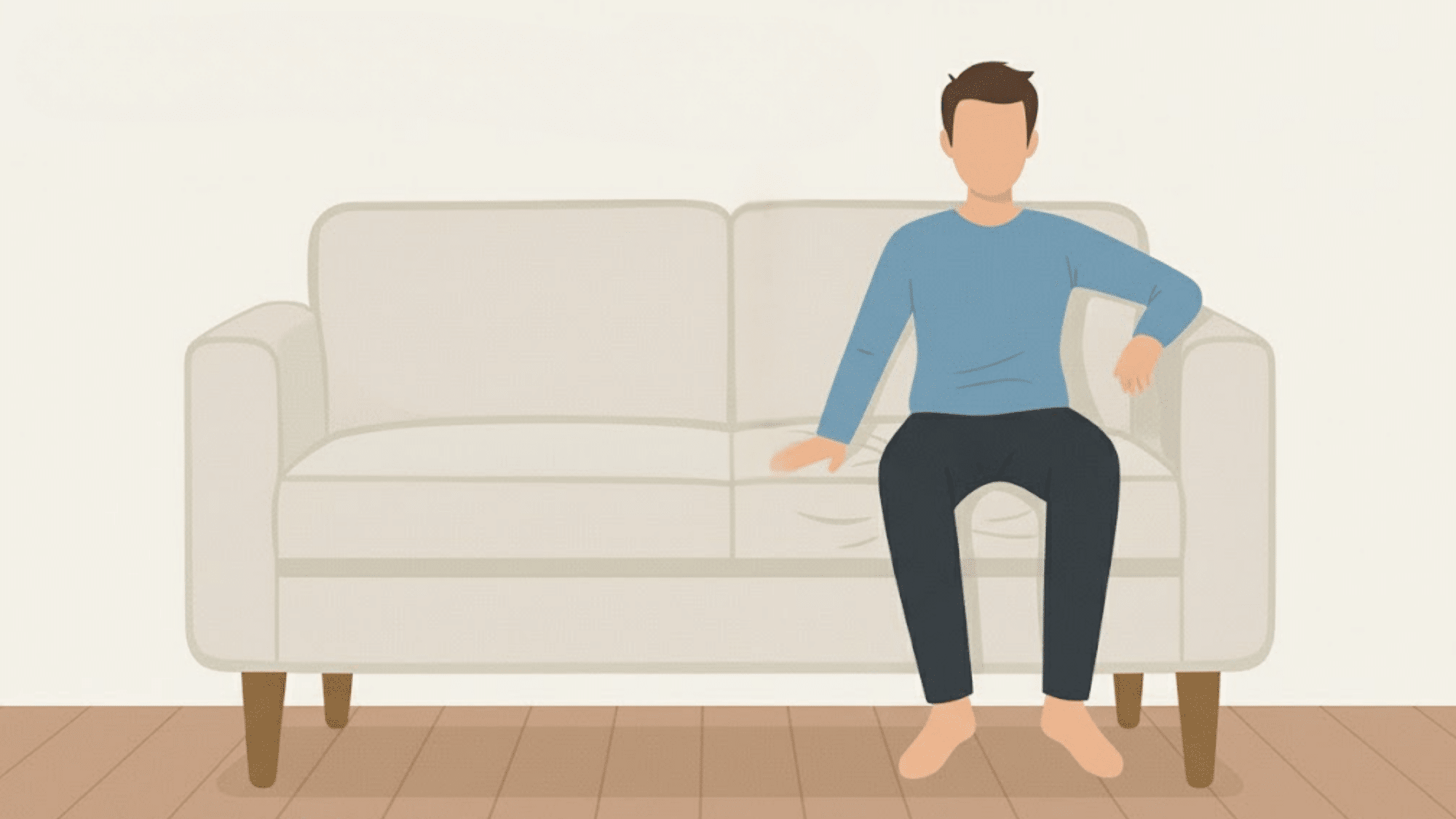
Actually, sit on your sofa like you normally would. Notice how much the cushion sinks down under your weight.
- Soft, plush cushions: Subtract 2–3 inches from your measurement
- Firm cushions: Subtract 0–1 inch from your measurement
This step matters more than you’d think. I skipped it the first time and ended up with a table that felt too high once I actually sat down to use it.
Step 3: Pick Your Table Height

Take the number from Step 2. That’s your target coffee table height. Round to the nearest inch because most furniture doesn’t come in half-inch increments anyway.
If you landed on something like 16.5 inches, I’d go with 16 inches for easier shopping. Some people prefer going slightly lower rather than higher because reaching down feels more natural than reaching up when you’re relaxed on the sofa.
Trust your gut on this one, you know how you sit and what feels comfortable.
Step 4: Check Your Legroom
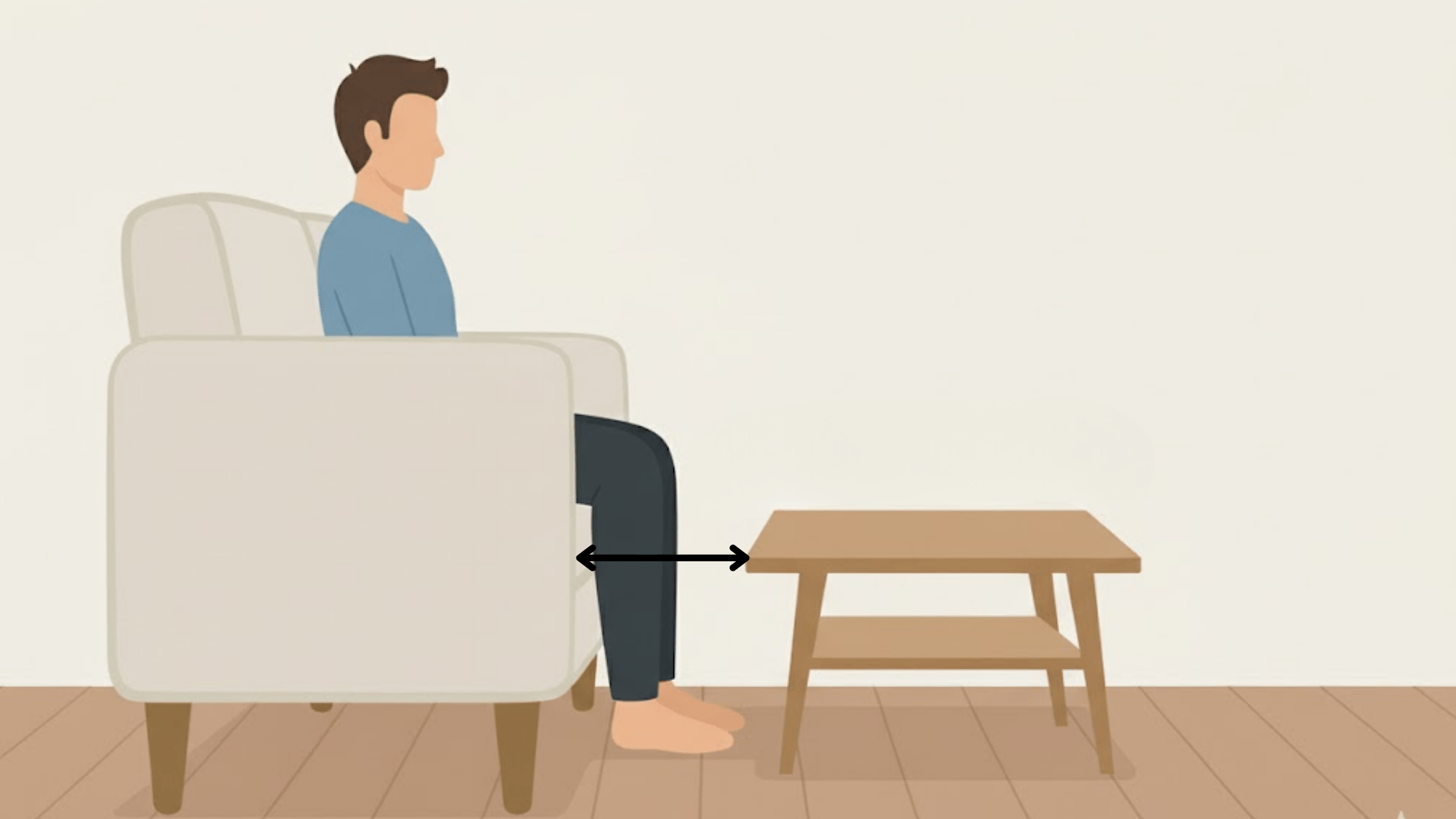
Measure the distance from the front of your sofa to where your coffee table would sit. You want 16–18 inches of space here.
Less than 16 inches feels cramped. More than 18 inches and you’ll be doing that awkward lean-forward thing I mentioned earlier.
Step 5: Verify the Proportion
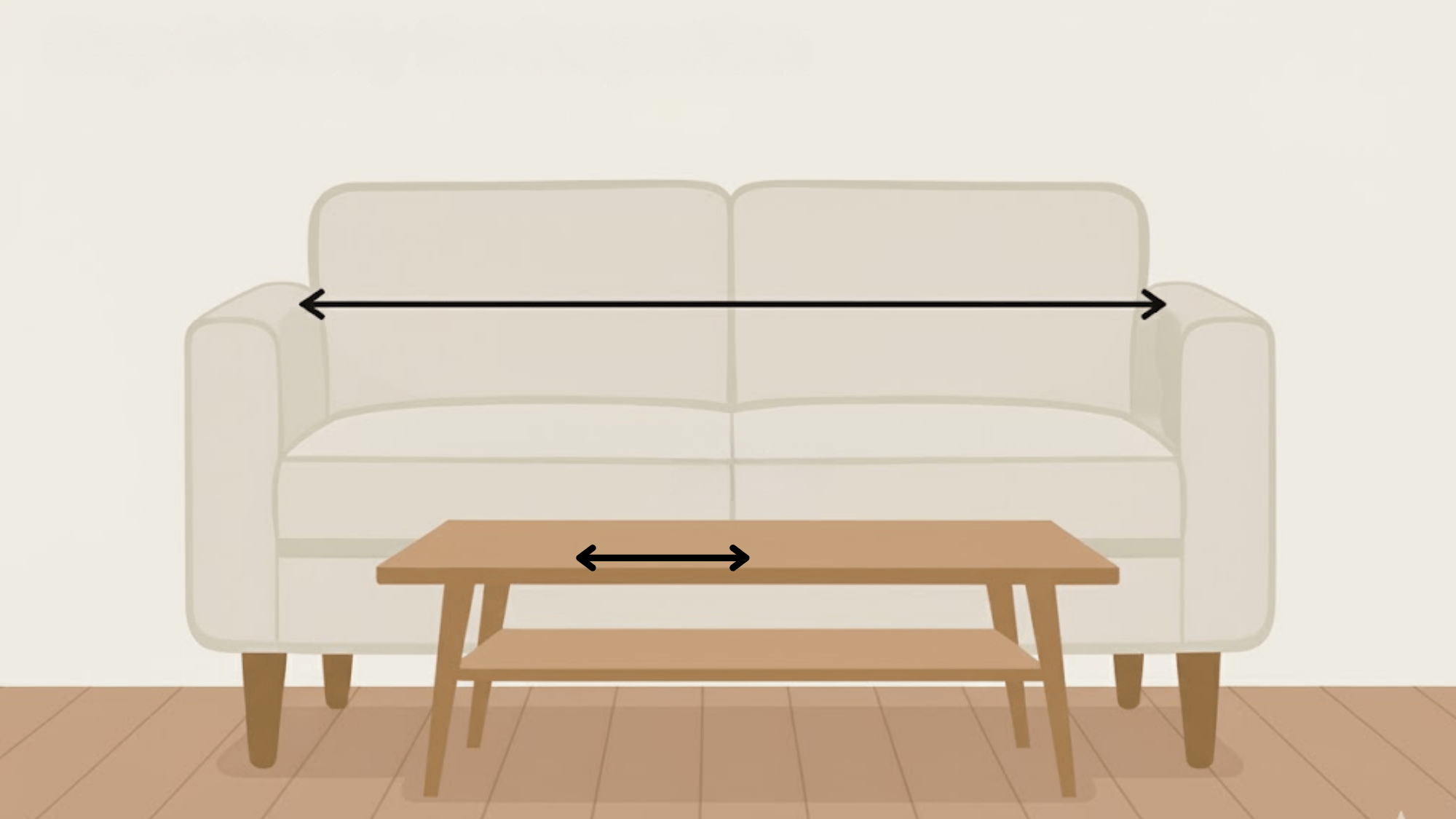
Measure your sofa length from arm to arm. Multiply by 0.67 (which is roughly two-thirds). That’s your ideal coffee table length. You can go a few inches shorter or longer, but this gives you a starting point.
I use my phone calculator for this because math isn’t my strong suit. So if your sofa is 84 inches long, you’d want a coffee table around 56 inches.
This proportion keeps everything balanced and makes sure your table doesn’t look like a toy or overwhelm your sofa.
Height by Room Goals (Comfort vs. Style)
The right height depends on how you live in your space. I have different coffee tables in different rooms because I use them differently.
- For a Light, Open Feeling or Small Rooms: Lower tables (14–16 inches) take up less visual space. I did this in my reading nook, and it made the whole area feel bigger and less cluttered.
- For Meals, Laptop Work, and Board Games: Taller tables (18–21 inches) save your back. I work from my living room sometimes, and having an 18-inch table means I’m not hunched over my laptop like some kind of typing goblin.
- For Rooms with High Ceilings: Go slightly taller with your coffee table. In my friend’s loft with 12-foot ceilings, a 14-inch coffee table looked lost. We went up to 19 inches, and suddenly the furniture felt grounded instead of floating awkwardly in all that space.
- For Kid-Safe Flow: This is more about shape than height, but round or oval tables remove those sharp corners. My cousin switched to a round coffee table when her toddler started walking, and it saved everyone a lot of tears.
Common Mistakes (and Fast Fixes)
I’ve made most of these mistakes myself. Here’s what went wrong and how I fixed it.
| Problem | Why It’s an Issue | Example | Fix |
|---|---|---|---|
| Table Too High | Looks bulky and feels awkward to use; you end up reaching upward. | 20″ table with an 18″ sofa. | Lower table height by 1–3 inches or choose a table with thinner, lighter-looking legs. |
| Table Too Low with a Tall Sofa | Forces you to lean forward uncomfortably, straining on your back. | — | Add risers to table legs or choose an 18–21″ table. |
| Ignoring Cushion Firmness | Soft cushions make you sit lower, making the table feel taller. | 18″ table felt chest-height on a very soft sofa. | Opt for a slightly lower table if your cushions are soft. |
| No Clearance Space | Sitting too close leads to banging shins and awkward movement. | — | Maintain a 16–18″ gap; if space is tight, choose a smaller table or rearrange furniture. |
Wrapping It Up
After fixing my coffee table height, I finally understood how much that one detail can change a room. It’s not just about looks, it’s about comfort, balance, and how easily you move around your space.
When your table matches your sofa height (or sits just a bit lower), everything feels natural and cozy.
The right coffee table height helps you relax, enjoy your coffee, and actually use your living room the way it’s meant to be used.
If you’re still unsure, grab a tape measure and try the steps I shared; you’ll see the difference instantly. Ready to upgrade your space? Start by finding a coffee table that fits your sofa and your lifestyle perfectly.