Confused about how often to aerate the lawn for the best results and healthiest grass possible? I understand that figuring out the right aeration schedule can feel overwhelming when you just want a beautiful yard.
Your lawn’s needs depend on several factors, such as grass type, soil condition, and traffic. Aerating too often wastes time and money, while skipping it can slowly damage your grass through compaction.
Getting the timing right makes the difference between okay grass and a thick, lush lawn everyone admires.
I’m going to break down exactly when and how often your specific lawn needs aeration. Let’s get your lawn looking its absolute best.
Getting to Know Lawn Aeration
Lawn aeration is the process of poking small holes in your soil so air, water, and nutrients reach the grass roots easily.
I’ve watched my own lawn struggle with compacted soil that made the grass weak and patchy everywhere.
Aeration breaks up that hard, dense soil and gives your lawn room to breathe and grow stronger. It helps water soak deep into the ground instead of running off the surface wastefully.
I’ve noticed that nutrients can actually reach the roots where they’re needed most for healthy growth and color.
Aeration also prevents thatch buildup, which is that thick layer of dead grass that suffocates your lawn. Regular aeration has kept my grass green, thick, and healthy all year long.
How Often Should You Aerate Your Lawn?
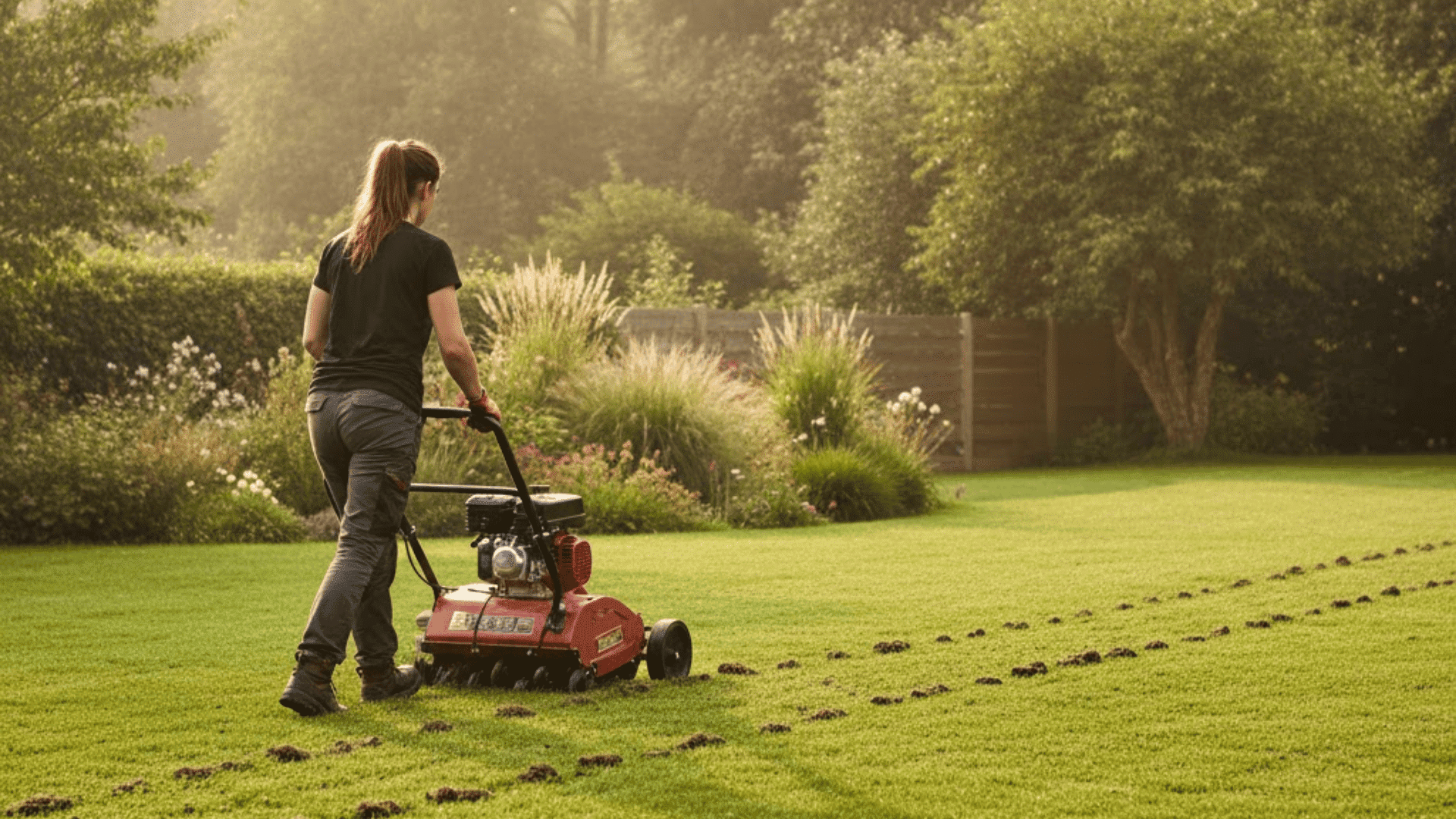
I’ve learned that the right aeration frequency depends on your grass type, soil condition, and lawn usage. Here’s what you need to know about creating the perfect schedule:
1. General Guidelines for Lawn Aeration Frequency
Most lawns benefit from aeration once or twice per year, but your specific needs may vary. Several important factors affect your aeration schedule:
- Standard aeration schedule: Most healthy lawns need aeration once a year in spring or fall for optimal results.
- High-traffic areas: Lawns with heavy foot traffic, kids playing, or pets running need aeration twice yearly to prevent compaction.
- Low-use lawns: If your yard gets minimal use and has healthy soil, aerating once every two years works fine.
Pay attention to how your grass responds after aeration to adjust your schedule accordingly.
2. Lawn Type and Aeration Frequency
Different grass types have different growing seasons, which affects the best time and frequency for aeration. Your grass type determines the best timing:
- Cool-season grasses (fescue, bluegrass, ryegrass): Aerate in early spring or fall when grass grows actively, typically once per year.
- Warm-season grasses (Bermuda, zoysia, St. Augustine): Aerate in late spring or early summer during peak growth, usually once yearly.
- Mixed grass lawns: Combine both grass types, so aerate in late spring when both are growing for best results.
Timing your aeration with active growth periods helps grass recover quickly and fill in bare spots.
3. Soil Conditions That Affect Aeration Needs
Your soil type plays a huge role in determining how often you should aerate your lawn. Here’s how different soil types affect your aeration needs:
- Clay soil: Dense and compact, clay soil needs aeration twice yearly because it holds water and compacts easily.
- Sandy soil: Drains quickly and stays loose, so sandy soil only needs aeration once every two years, typically.
- Loamy soil: Balanced mix of sand, silt, and clay means loamy soil needs standard once-yearly aeration schedules.
Test your soil by pushing a screwdriver into the ground to check compaction levels for proper assessment.
How to Tell If Your Lawn Needs Aeration?
Your lawn shows clear warning signs when it desperately needs aeration to stay healthy and green. Watch for these common indicators that tell you it’s time to aerate:
P-Pooling water: Puddles forming on your lawn after rain or watering mean water can’t soak into compacted soil properly.
A-Appears stressed: Yellowing patches, thinning areas, or grass that won’t green up despite watering signals underlying soil issues clearly.
T-Thatch buildup: A thick layer of dead grass and roots over half an inch deep prevents water and nutrients from reaching the soil.
C-Compacted soil: Dense, hard soil that’s difficult to penetrate with a screwdriver or garden tool indicates serious compaction problems.
H-Hard to penetrate: Push a screwdriver into your lawn; if it’s hard to insert six inches deep, your soil needs aeration immediately.
I’ve learned that testing my soil regularly helps me catch compaction problems before they seriously damage my lawn. Early aeration has prevented bigger problems and kept my grass thick, green, and healthy all season long.
Best Time of Year to Aerate Your Lawn
I’ve learned that timing your aeration correctly makes a huge difference in how well your lawn recovers. The best season depends entirely on your grass type and growing patterns:
| Grass Type | Best Season | Optimal Timing | Why This Time Works | Secondary Option |
|---|---|---|---|---|
| Cool-season grasses | Fall | Early September through November | Grass actively grows in the fall, recovers quickly before winter dormancy | Early spring, when the soil reaches 55°F, for growing season prep |
| Warm-season grasses | Late Spring/Early Summer | May through June during peak growth | Grass grows vigorously, recovers fast, and strengthens before summer heat | Avoid falls; grass enters dormancy and won’t recover properly |
Aerating during active growth periods gives your grass the best chance to recover quickly. Avoid aerating when the grass is dormant or stressed by extreme heat or cold.
How to Aerate Your Lawn: Stepwise Guide
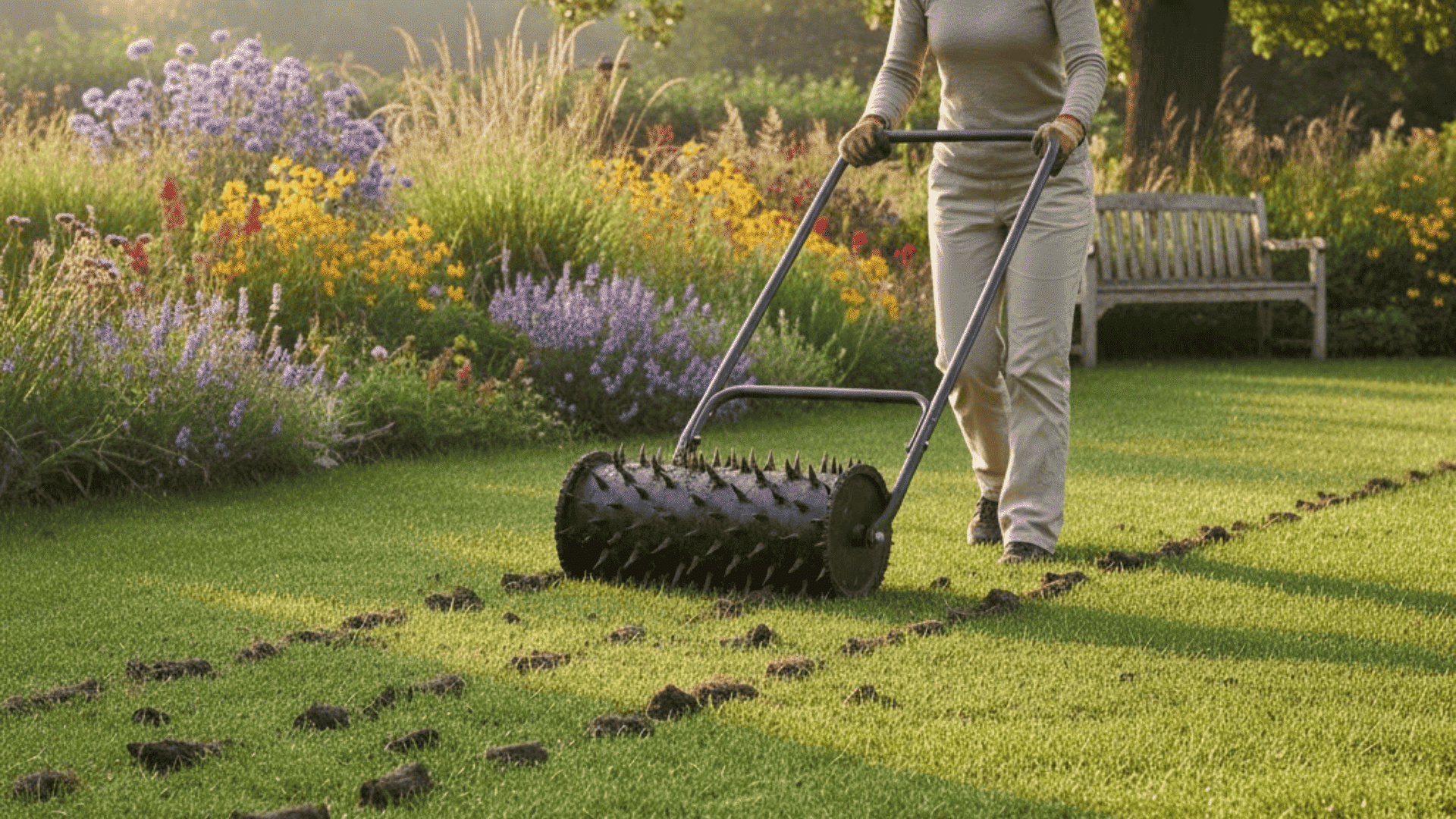
I’ve found that aerating your lawn correctly makes all the difference between okay results and an excellent conversion. Let me walk you through the tools you’ll need and the exact process I follow:
Tools and Equipment for Lawn Aeration
Having the right tools makes lawn aeration much easier and more effective for your yard. Here are the main equipment options you can choose from:
- Aerator (Manual, Gas-Powered, Electric, or Tow-Behind)
- Lawn Mower
- Garden Hose or Sprinkler
- Flags or Markers
You can rent aerators from home improvement stores or hire professionals if you prefer expert results. Choose the option that fits your budget, lawn size, and how much physical work you want.
The Aeration Process: Step-by-Step Instructions
Following the proper aeration process ensures you get the best results without damaging your lawn. Here’s exactly how to aerate your lawn correctly:
- Step 1: Mow your lawn to about two inches tall the day before aerating, so the aerator can reach the soil easily.
- Step 2: Water your lawn thoroughly one or two days before aeration to soften hard soil for easier penetration.
- Step 3: Mark sprinkler heads, shallow utilities, or other obstacles with flags so you don’t damage them while aerating.
- Step 4: Run the aerator across your lawn in one direction, making passes that slightly overlap for complete coverage everywhere.
- Step 5: Make a second pass in a perpendicular direction to ensure thorough aeration and maximum soil penetration throughout.
Leave the soil plugs on your lawn after aerating instead of raking them up immediately. They break down naturally within a few weeks and return valuable nutrients to your soil.
Common Mistakes to Avoid During Lawn Aeration
I’ve made some of these mistakes myself and learned valuable lessons about what not to do. Avoiding these common errors has helped me get much better results from my aeration efforts:
| Mistake | Why It’s a Problem | How to Avoid It |
|---|---|---|
| Over-aerating | Damages the grass roots, weakens the lawn structure | Aerate only once or twice per year |
| Under-aerating | Doesn’t relieve compaction, blocks water absorption | Check soil regularly, aerate when needed |
| Aerating wrong time | Stresses dormant grass, prevents recovery | Aerate in the fall for cool-season grass, spring for warm-season grass |
| Not watering beforehand | Hard soil resists penetration, ineffective aeration | Water the lawn one to two days before aerating |
| Skipping equipment maintenance | Dull tines don’t penetrate, spread disease | Clean and sharpen equipment after each use |
| Ignoring obstacles | Damages sprinkler heads, utility lines | Mark all obstacles with flags before starting |
Taking time to prepare properly and follow correct procedures saves you money and protects your lawn. Smart aeration practices lead to healthier grass with fewer problems down the road.
Lawn Maintenance Tips After Aeration
Proper care after aeration helps your lawn recover quickly and take full advantage of improved soil conditions. Following these post-aeration steps maximizes the benefits and strengthens your grass:
- Fertilize immediately: Apply fertilizer right after aeration so nutrients reach deep into the soil through fresh holes for maximum absorption.
- Water thoroughly and consistently: Keep soil moist for two to three weeks after aerating to help grass recover and roots grow deeper.
- Overseed for thicker grass: Spread grass seed immediately after aeration while holes are open, giving seeds perfect contact with soil for germination.
- Avoid heavy traffic: Stay off your lawn for at least two weeks after aeration to let grass recover and new seeds establish properly.
Your lawn needs extra attention during the recovery period to heal and strengthen effectively. With proper post-aeration care, you’ll see greener, thicker grass within just a few weeks of treatment.
Wrapping It Up
So there you have it; knowing how often to aerate the lawn isn’t complicated once you understand your grass type.
I hope this information helps you create a smart aeration schedule that keeps your yard thriving year-round. Remember that paying attention to your lawn’s signals, like pooling water or thin patches, guides your timing.
Most lawns do great with yearly aeration, but high-traffic areas or clay soil need more frequent attention. Don’t stress about getting everything perfect because even basic aeration helps your grass tremendously over time.
The key is staying consistent and aerating during your grass’s active growing season. What’s been your biggest challenge with lawn aeration? Share your experience in the comments below.