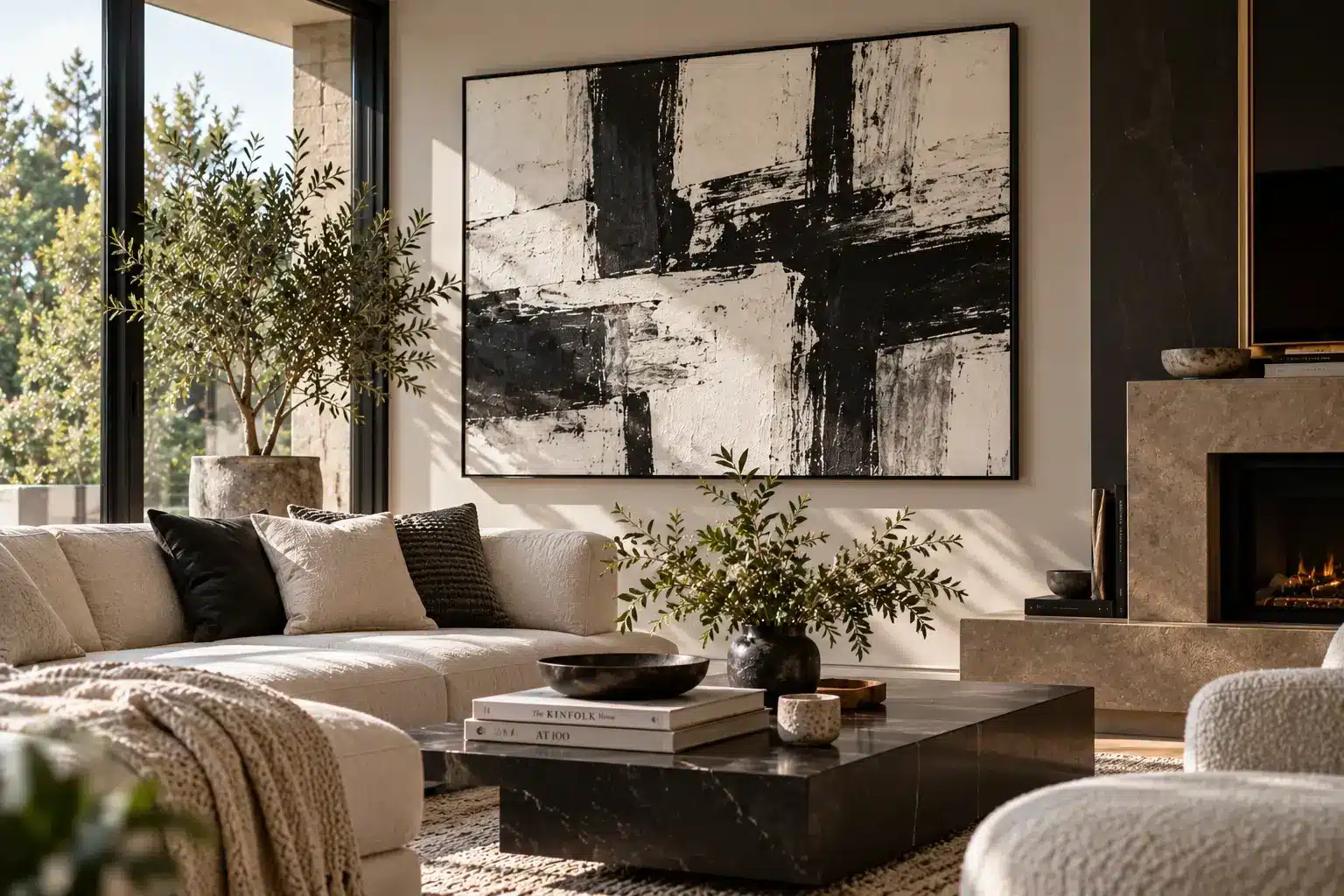
Interior style does not always need bright colours or bold patterns to make an impression. Sometimes, the most effective approach is also one of the simplest: a restrained palette, carefully chosen materials, and a few details that give the room personality. Black and white artwork fits naturally into this approach because it can add contrast and visual interest without introducing another dominant colour.
Black & white wall art can work with many different interiors, from contemporary and minimalist rooms to more traditional homes. The combination of black and white is visually clear, easy to coordinate, and less dependent on changing colour trends. This makes it a practical option for homeowners who want decoration that can remain relevant as their interiors evolve.
Why Black and White Works So Well in Interior Design
Black and white create a strong visual contrast. Black can add depth and definition, while white provides openness and allows other elements of the room to remain visible. Together, they can create a balanced composition without relying on a wide range of colours.
This simplicity is particularly useful in rooms where furniture, flooring, lighting, or architectural details already provide plenty of visual information. A black and white artwork can add character while maintaining a controlled overall appearance.
The combination also works with a wide range of materials. Wood, stone, metal, glass, linen, and leather can all be paired with monochrome artwork. Because the artwork does not introduce a complicated colour palette, attention can remain on the textures and forms already present in the room.
A Flexible Choice for Different Interior Styles
One of the practical advantages of black and white artwork is its adaptability. A monochrome piece can look very different depending on its surroundings.
In a minimalist interior, a simple black and white composition can reinforce the clean lines and uncluttered character of the room. In a traditional space, a monochrome painting can provide contrast against classic furniture and decorative details. In an industrial-style interior, black and white artwork can complement exposed brick, concrete, metal, and darker finishes.
The same principle applies to transitional interiors, where contemporary and traditional elements are combined. Because black and white are neutral choices, artwork in this palette can help connect different design elements without forcing them to look identical.
How to Choose the Right Piece for Your Space
Choosing artwork is not only about finding an image that looks attractive. The size, composition, placement, and relationship with the rest of the room can have a significant effect on the final result.
Before choosing a piece, consider:
- The size of the wall and how much empty space is available around the artwork.
- The size and shape of nearby furniture, especially sofas, beds, consoles, or dining tables.
- The amount of natural light in the room and how it changes throughout the day.
- The existing balance between light and dark surfaces.
- The texture and materials used in the surrounding interior.
- Whether the artwork should become a focal point or provide a quieter decorative detail.
Using Contrast Without Making a Room Feel Harsh
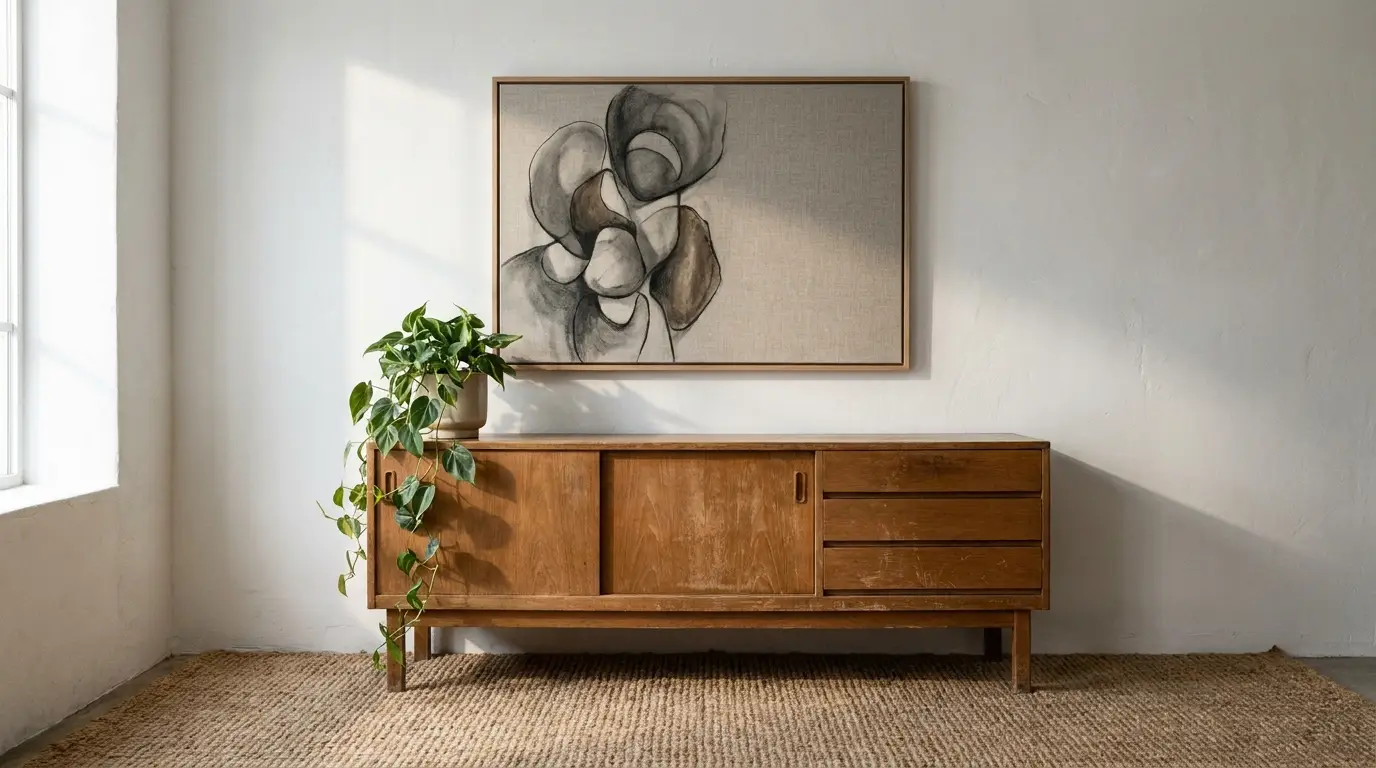
Black and white can create a dramatic effect, but a monochrome interior does not have to feel cold or severe. The surrounding materials and textures can make a major difference.
Soft textiles, natural wood, plants, rugs, and warm lighting can introduce visual softness around a black and white artwork. A room with white walls and dark artwork, for example, can feel warm when combined with wooden furniture, woven materials, and comfortable fabrics.
Another option is to use artwork with different shades rather than relying exclusively on pure black and pure white. Grey tones, subtle gradients, and variations in texture can create a more layered appearance while preserving the monochrome character.
Where to Place Black and White Artwork
The right location can make a significant difference. A large empty wall can provide enough space for a statement piece, while smaller artworks may be better suited to narrow walls, shelves, hallways, or smaller rooms.
Living rooms are a common place for large artwork because the wall behind a sofa can naturally become a focal area. In a bedroom, artwork above the bed can create a visual centre, provided that the size and proportions are appropriate for the furniture.
Hallways and entryways also offer useful opportunities. These spaces often have fewer decorative elements, so a carefully selected monochrome work can add personality without taking up valuable floor space.
Creating a Gallery Wall With a Monochrome Palette
A single artwork is not the only way to use black and white decoration. Several smaller pieces can be arranged as a gallery wall, creating a more varied composition while keeping the overall palette consistent.
A monochrome gallery wall can combine different subjects, artistic techniques, or frame styles. The consistent colour palette helps connect the individual pieces even when their compositions are different.
For a more structured appearance, frames can follow a common style and be arranged with similar spacing. A more relaxed gallery can mix sizes and orientations while maintaining a visual connection through the black and white palette.
How Monochrome Artwork Fits Into a Changing Home
One reason neutral artwork can be useful is that it does not require the rest of the interior to remain unchanged. Furniture, textiles, accessories, and accent colours can be updated without necessarily requiring the artwork to be replaced.
For example, a room may use beige and natural wood tones today and introduce green or terracotta accents later. A black and white artwork can continue to work because its limited palette does not compete with these changes.
This flexibility can be especially useful for people who enjoy refreshing their interiors from time to time. Instead of choosing decoration that only works with one specific colour scheme, monochrome artwork can provide a stable visual element around which other details can change.
Balancing Black and White With Personal Style
Although black and white are neutral, the artwork itself can still communicate a strong sense of personality. Abstract compositions, photography, graphic designs, botanical subjects, portraits, and other artistic approaches can all use a monochrome palette while creating very different moods.
The most important consideration is therefore not simply whether a piece is black and white, but whether its style works with the atmosphere you want to create. A bold graphic composition can give a room a more energetic character, while a delicate monochrome image can create a quieter and more understated effect.
There is also no requirement to create a completely black and white interior. In many homes, monochrome artwork works best as one element within a warmer or more colourful environment. The contrast can make both the artwork and the surrounding furnishings more noticeable.
A Timeless Approach to Home Decoration
Interior trends change, but the combination of black and white remains a reliable design choice because it is based on contrast rather than a particular seasonal colour palette. This does not mean every black and white artwork will suit every home. The composition, scale, subject, frame, and placement still matter.
When these elements are considered together, monochrome artwork can become a practical and expressive part of a home. It can define a focal point, connect different materials, or simply add visual interest to an otherwise empty wall.
For homeowners who prefer interiors that can evolve over time, black and white artwork offers a useful balance between character and flexibility. It provides enough contrast to make a statement while remaining neutral enough to work alongside changing furniture, textures, and decorative accents.