Since October 1, 2025, GIA no longer gives lab grown diamonds a color or clarity grade. It sorts them into two groups, Premium and Standard, while IGI still grades lab grown stones on the full 4Cs. So two rings that look identical can arrive with a one-word verdict from one lab and a whole line of grades from the other.
Shoppers comparing lab grown engagement rings now often meet both kinds of paperwork on the same day. Both are honest documents, and the difference lies in how much detail each lab chooses to print.
What GIA Changed, and Why
GIA announced the switch in June 2025 and gave a simple reason: more than 95 percent of the lab grown diamonds entering the market fall into a very narrow range of color and clarity. In GIA’s words, it was no longer relevant to describe a manufactured product with the nomenclature created for the full range of natural diamonds. Instead of the color scale and clarity scale used for mined diamonds, a lab grown stone now gets a quality assessment that places it in one of two tiers.
In practice, a GIA report for a lab grown stone now tells you which tier it reached instead of listing separate color and clarity grades.
What Premium and Standard Actually Mean
Premium is the top tier: color D, clarity VVS or better, excellent polish and symmetry, and, for round stones, an excellent cut.
Standard covers stones that reach at least J color and VS clarity, with very good polish, very good symmetry (good symmetry is accepted on fancy shapes) and a very good cut on rounds. A D color stone that misses one Premium requirement also lands here, so Standard effectively spans D to J. Diamonds that fall below Standard don’t receive a GIA assessment at all.
What an IGI Report Still Shows
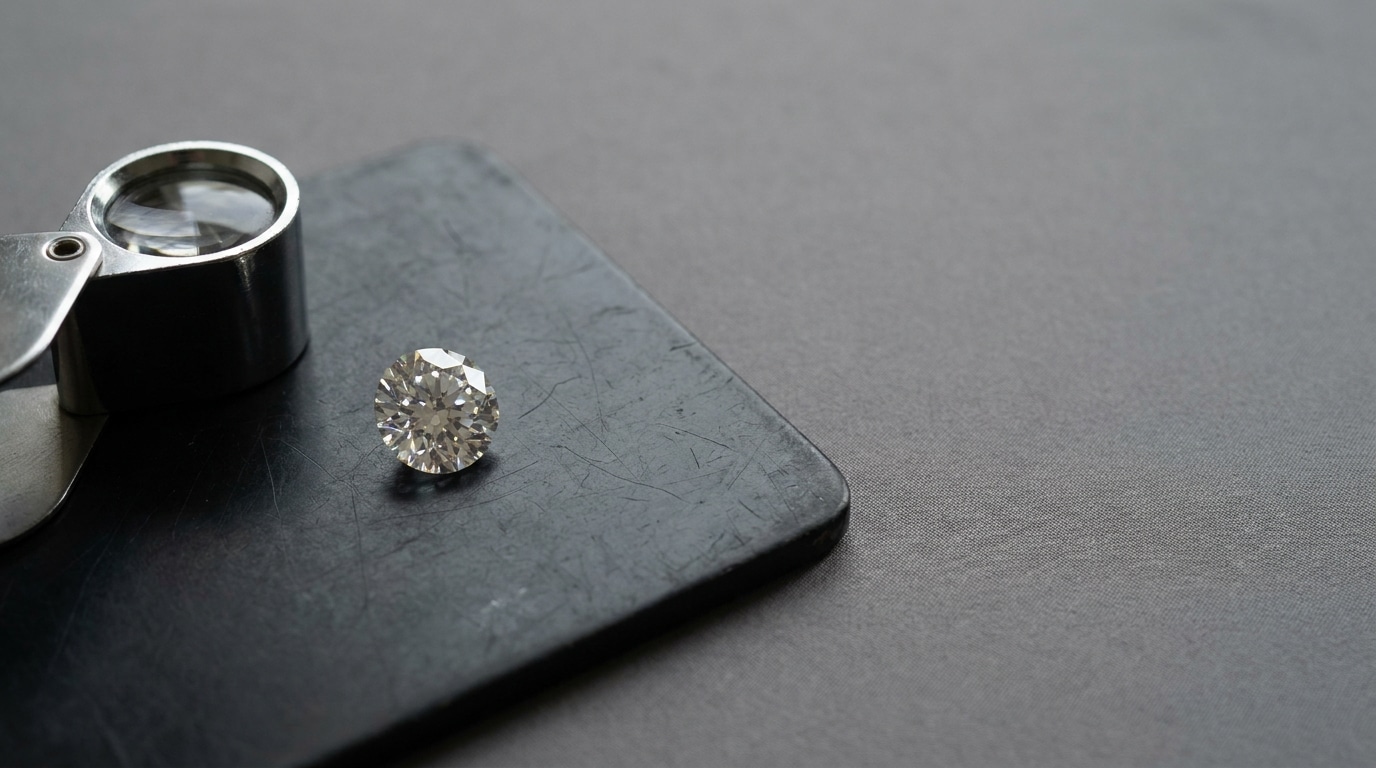
An IGI lab grown report reads much like a classic diamond report. You’ll find the carat weight, the exact color and clarity grades, polish, symmetry and fluorescence, plus measurements in millimeters, depth and table percentages, girdle and culet.
It also names the growth method, CVD or HPHT, and states whether the stone was treated after growth. That extra detail is useful when you’re choosing between two stones that GIA would put in the same tier.
Are Older GIA Lab Grown Reports Still Valid?
Yes. GIA has confirmed that its existing reports for laboratory-grown diamonds remain valid, so a ring certified before October 2025 with a color and clarity grade doesn’t need a new document. If you’re buying a ring made before the change, the older report is still the one to keep with your receipt.
How To Compare a GIA Stone with An IGI Stone
Start by translating the GIA tier. A Premium stone is a D color with VVS clarity or better; a Standard stone could be anywhere from D to J with VS clarity or better. Then look at the IGI grades for the stone you’re comparing and see where it falls inside that range. An IGI stone graded F color and VS1 clarity, for example, would land in GIA’s Standard tier, because Premium asks for a D.
Next, compare the measurements, not just the carat weight. Two stones of the same weight can face up at different sizes, and the IGI report prints the millimeters for exactly this comparison. Once you know how to read the report, comparing lab grown engagement ring and band sets becomes much easier, because you can judge the center stone on paper before you think about the band that sits beside it.
GIA or IGI for A Lab Grown Diamond?
It depends on what you want the paper to do. If you’d like every grade spelled out so you can trade a step of color for a bigger stone, IGI gives you that detail. If you’d rather have a simple quality floor from the lab that wrote the 4Cs, a GIA Premium or Standard assessment does the job, and the GIA announcement sets out exactly what each tier requires.
GIA Premium vs. GIA Standard vs. IGI
|
GIA Premium |
GIA Standard |
IGI |
|
|
Color |
D |
D to J |
Exact grade |
|
Clarity |
VVS or better |
VS or better |
Exact grade |
|
Polish and symmetry |
Excellent |
Very good (symmetry good for fancy shapes) |
Graded individually |
|
Cut on rounds |
Excellent |
Very good |
Reported |
|
Laser inscription |
“Laboratory-Grown” plus number |
“Laboratory-Grown” plus number |
“LG” plus report number |
What to Check on Any Report
Whichever lab you’re reading, check three things. The measurements tell you the real face-up size. The cut, or polish and symmetry on fancy shapes, tells you how well the stone handles light.
And the laser inscription on the girdle should match the number on the paper: GIA inscribes “Laboratory-Grown” with the assessment number, as its lab grown service page shows, and IGI inscribes “LG” with the report number.
Final Thoughts
A GIA Premium stone and an IGI-graded stone can both make a beautiful engagement ring. The certificate helps you compare, and the final call is still yours.
Best Brilliance lists IGI certification on its lab grown bridal sets, so every grade in the IGI column of the table is there to read. Request the report for the center stone you like before you choose the band that goes with it.
FAQ
Is GIA better than IGI for lab grown diamonds?
Neither is better across the board. GIA gives a simple two-tier assessment, while IGI grades the full 4Cs.
Does GIA still grade lab grown diamond color and clarity?
Not since October 1, 2025. Stones are now rated Premium or Standard.
Can I insure a ring with a GIA Premium assessment?
Insurers usually ask for a valuation alongside the lab document, so ask your jeweler for both.
Does Best Brilliance use IGI or GIA?
Best Brilliance product pages list IGI certification for its lab grown diamonds, so the IGI column of the table above is the one that applies. You can ask the team for the full report on any stone you shortlist.
What does “LG” mean on a laser inscription?
It stands for lab grown. IGI inscribes it on the girdle together with the report number, so you can match the stone to its paper under a 10x loupe.