A vegetable garden should feel useful the moment you look at it. Garden productivity is not only about packing in more plants; it is about shaping a space that looks clear, feels easy to move through, and gives you food you actually want to harvest.
You may be picturing raised beds, neat paths, climbing vines, colorful herbs, or a small patio setup that still works hard. I get why that matters. A garden should not feel like a messy chore every time you step outside.
The right layout can help you use sunlight, corners, containers, flowers, and trellises with more purpose. Once those pieces fit together, the whole garden starts to feel planned, practical, and worth spending time in.
What Does Garden Productivity Mean?
Garden productivity is about making the most of the space you already have. It means your garden gives you useful food without feeling crowded, messy, or hard to manage.
You do not need a huge backyard to make that happen. A small space can still work beautifully when you use trellises, quick-growing crops, repeat-harvest plants, and a layout that makes sense.
A better way to think about it is that each part of the garden should make the space easier to use, not harder. You should be able to water, weed, and harvest without fighting the layout.
In simple terms, garden productivity means your vegetable garden looks planned, works well, and gives you food you actually want to use.
Starting With a Simple Garden Layout
A good vegetable garden starts with the layout, long before you think about plants or decor. The right structure makes every task easier later on.
- Check the sunlight: Most vegetables need at least 6 hours of direct sun each day. Keep tomatoes, peppers, cucumbers, beans, and squash in the sunniest spots. Use softer light areas for lettuce, spinach, kale, and herbs.
- Keep beds easy to reach: Beds should be narrow enough to reach from both sides. This makes watering, weeding, and harvesting easier.
- Make paths wide enough: Paths should give you enough room to move, water, and harvest without stepping into the beds.
- Place tall crops carefully: Put tall crops and trellises where they will not shade smaller plants.
A solid layout makes every other decision in the garden simpler down the line. Once these basics are set, the design choices come together naturally.
Design Styles That Make a Vegetable Garden Look Planned
Once the basic layout is clear, choose a garden style that fits your space and daily routine. Some styles look neat and modern, while others feel soft and colorful.
Small areas, families, and kitchen harvests all work better with the right structure. Pick a style below and build your garden around it.
1. Raised Bed Garden
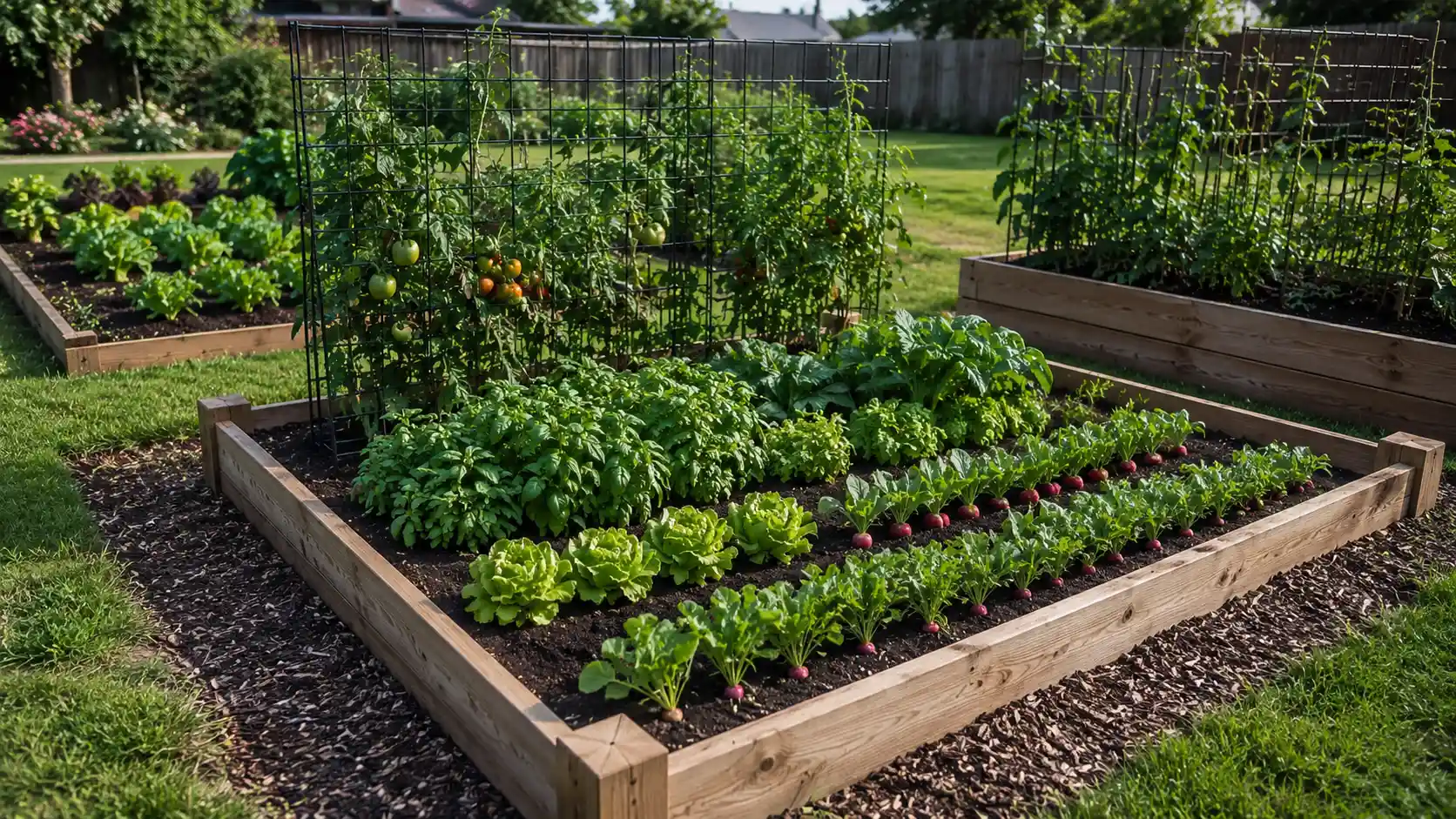
Raised beds are one of the easiest ways to make a vegetable garden look organized. A 4×8 raised bed can hold tomatoes or cucumbers on a back trellis, basil or parsley in the middle, and lettuce, carrots, or radishes along the front.
If you have more room, use three beds with separate roles for greens, fruiting crops, and climbing plants. Clean edges and mulched paths make the setup look finished.
2. Small Vegetable Garden Layout
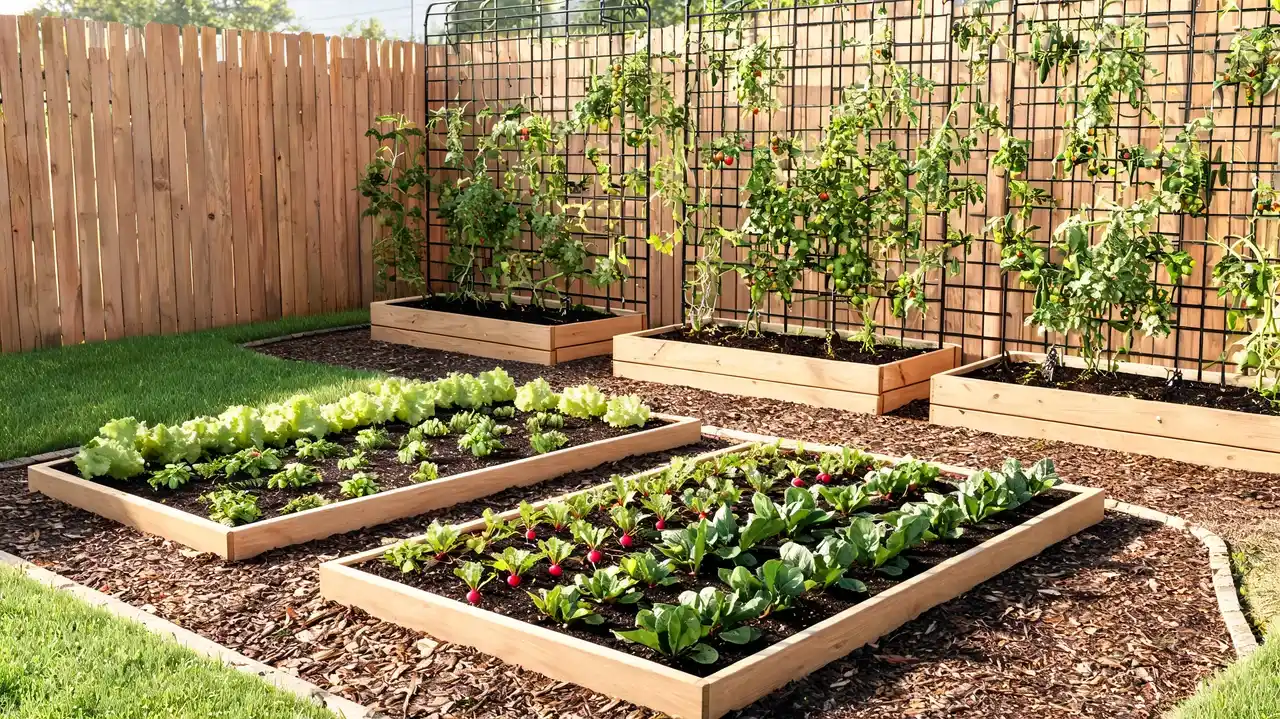
Small gardens need careful design because every inch matters. Use fences, walls, corners, and containers instead of spreading plants across the ground. A fence can hold peas, cucumbers, or pole beans, while lettuce and herbs grow below.
A narrow side yard can hold one long bed with a trellis at the back. Keep the plant list simple, repeat crops, and leave enough room to reach everything.
3. Trellis and Vertical Garden
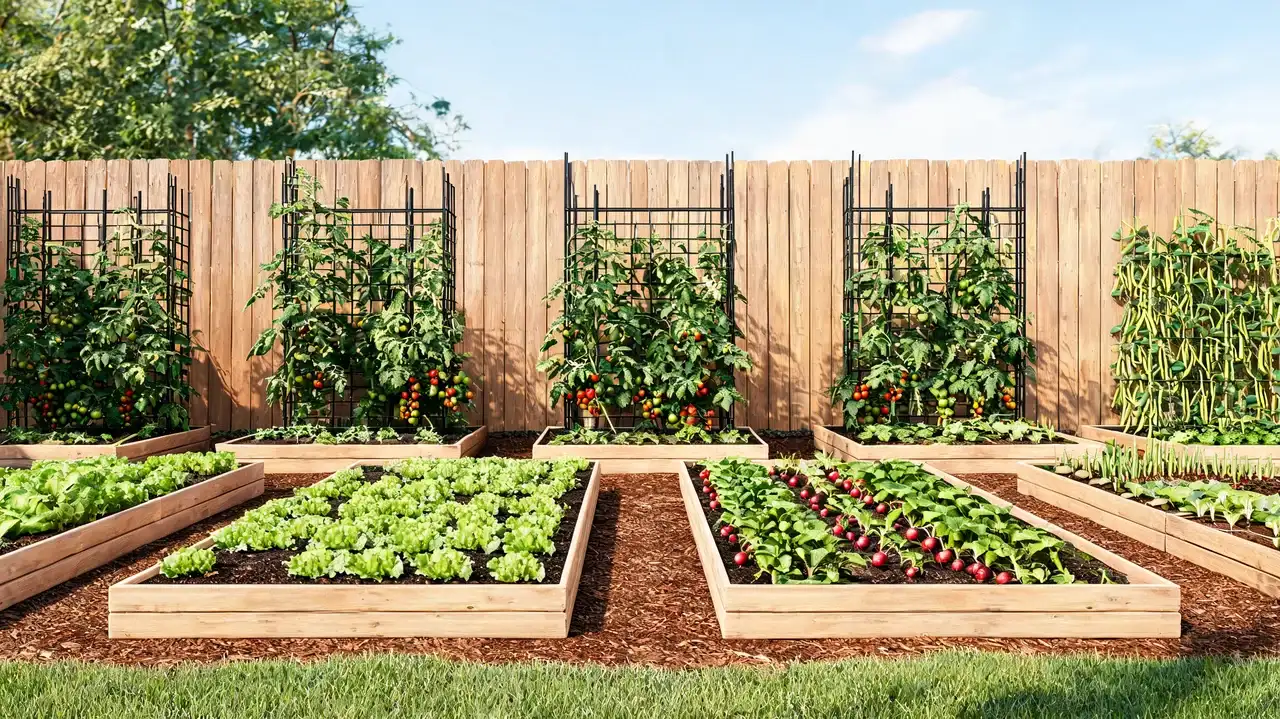
Trellises add height, structure, and more growing room. They work well for pole beans, peas, cucumbers, indeterminate tomatoes, and small melons with strong support.
You can use a flat trellis along a fence, an A-frame trellis in a raised bed, or an arch between two beds. Add supports before plants get large so vines are easier to train and the garden looks planned from the start.
4. Kitchen Garden Design Ideas
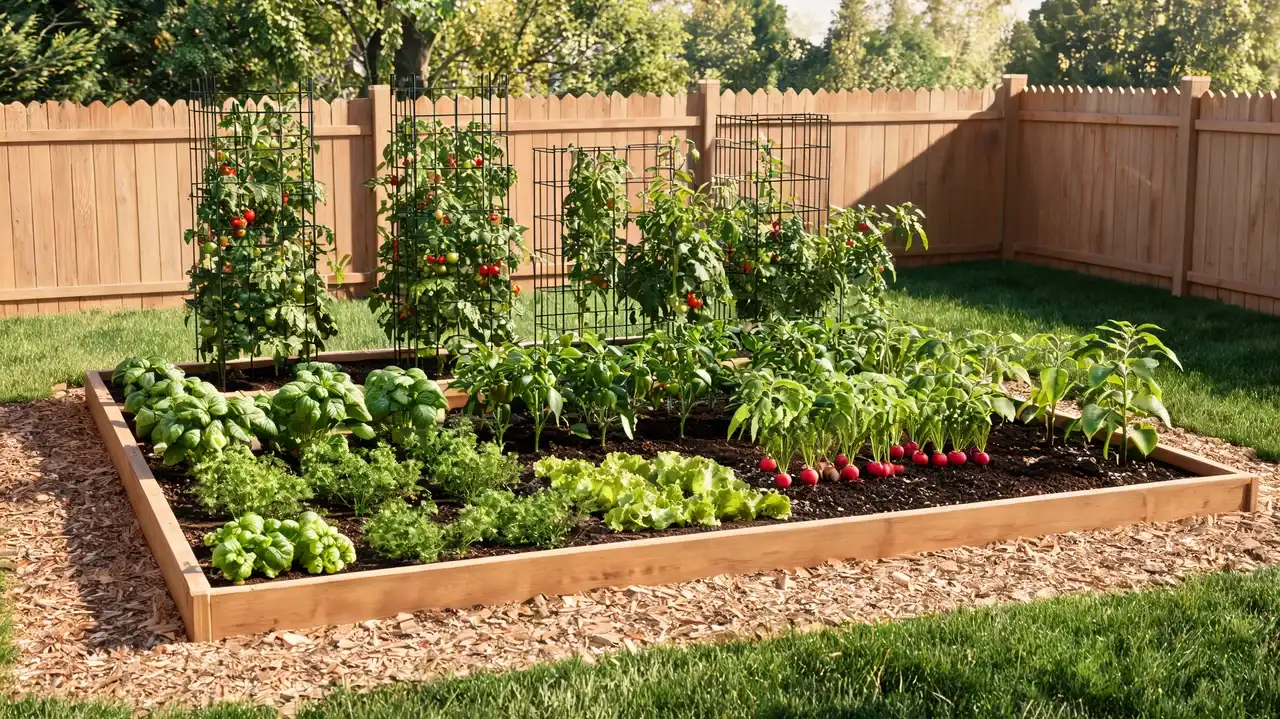
A kitchen garden is built around food you use often. It works well near a back door, patio, walkway, or outdoor cooking area. Keep herbs, salad greens, peppers, and tomatoes close to the path so you can harvest them quickly.
Put taller crops toward the back and smaller plants near the front. A kitchen garden does not need many crops. It works best when it grows what you reach for every week.
5. Cottage-Style Vegetable Garden Ideas
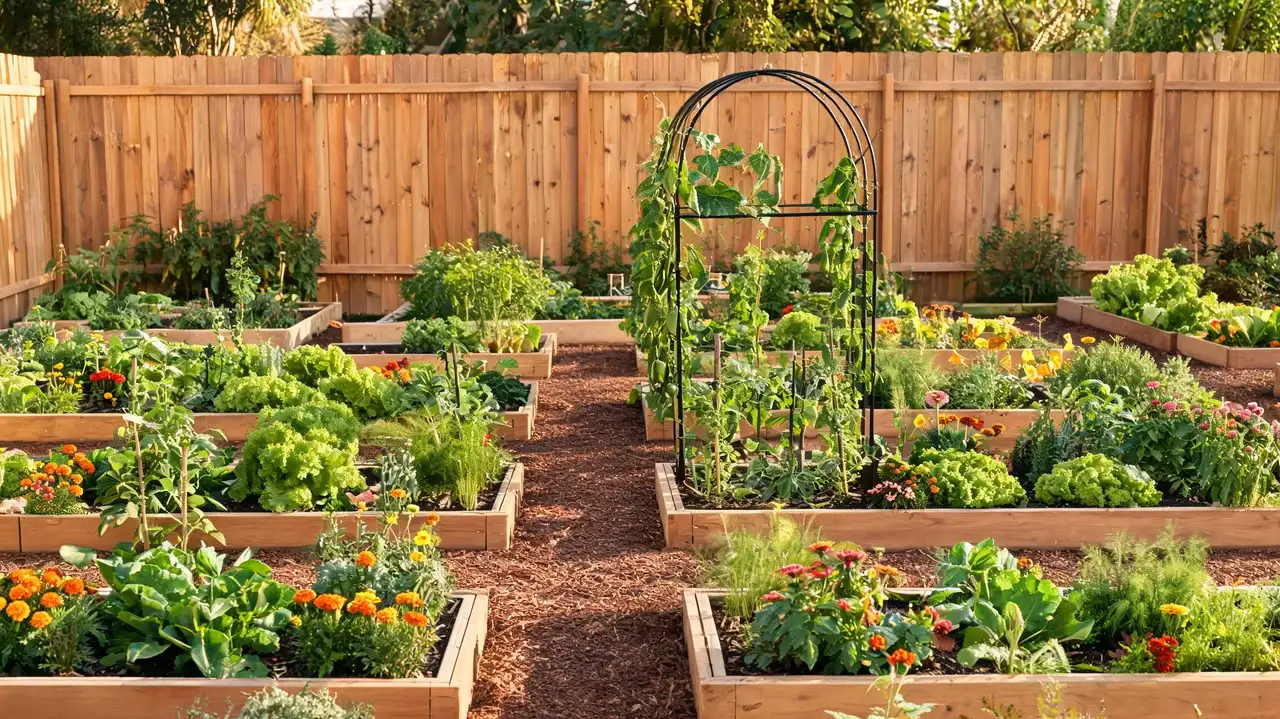
A cottage-style vegetable garden feels relaxed, colorful, and full. It mixes vegetables, herbs, and flowers in a softer way than straight-row gardens. Try tomatoes with basil and marigolds, beans on an arch with flowers below, or cucumbers near dill and nasturtium.
The key is to keep the garden full yet still reachable. Use paths, edging, and repeated plant groups so the space does not look messy.
6. Modern Vegetable Garden Ideas
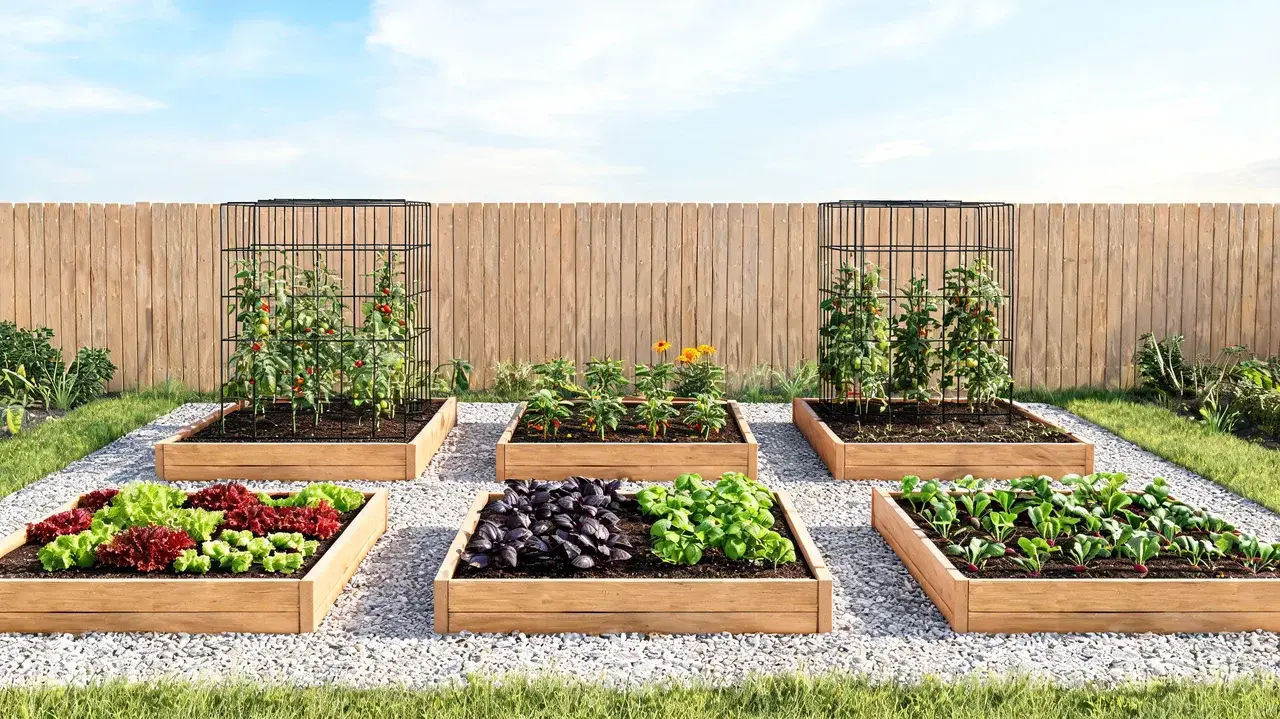
A modern vegetable garden usually has clean lines, simple materials, and a neat layout. Use matching raised beds, straight paths, simple trellises, and a smaller plant mix.
Long rectangular beds, gravel paths, black metal supports, grouped herbs, and trained tomatoes all fit this style. To keep it from looking too plain, add small color touches with red lettuce, purple basil, peppers, calendula, or matching flower pots.
7. Family-Friendly Vegetable Garden Ideas
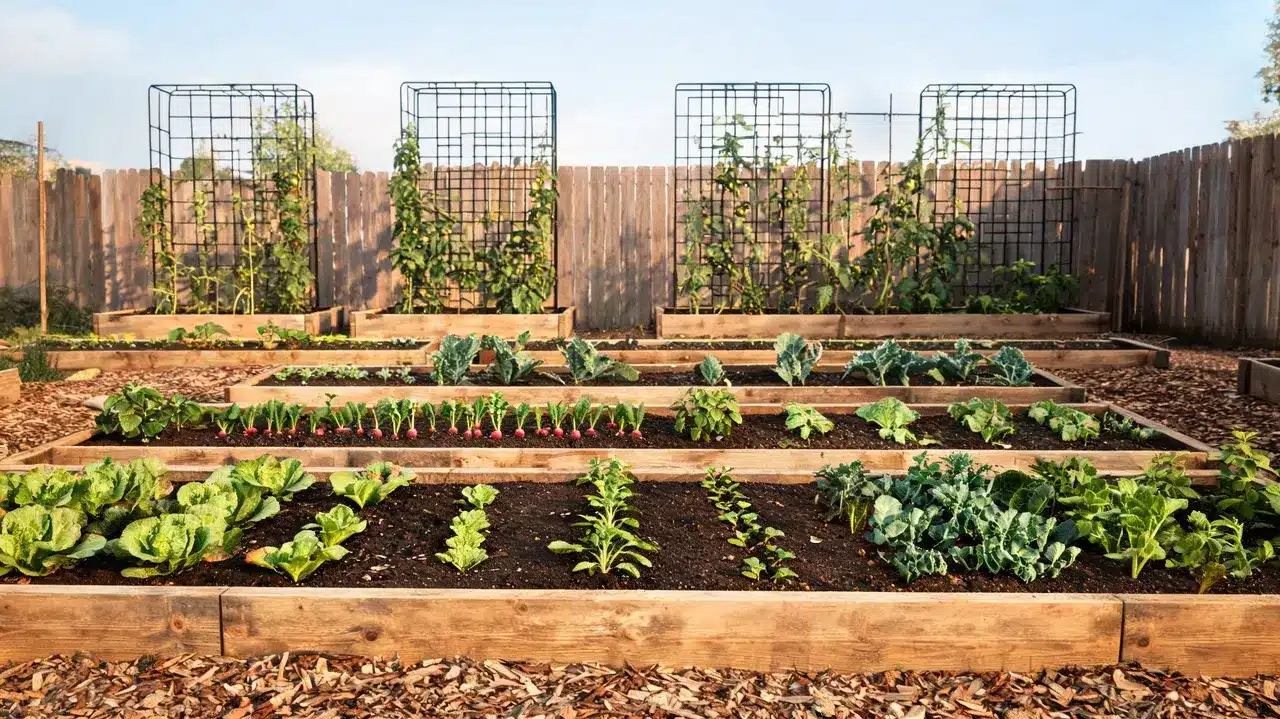
A family-friendly vegetable garden should be easy to walk through and fun to harvest. Keep paths wide enough for kids or family members to move safely. Use raised beds or clear borders so growing areas are easy to see.
Plant crops that are easy to reach, like cherry tomatoes, peas, carrots, strawberries, lettuce, and herbs. A small pick-and-taste corner can make the garden more fun without taking up much space.
8. Container Vegetable Garden Ideas
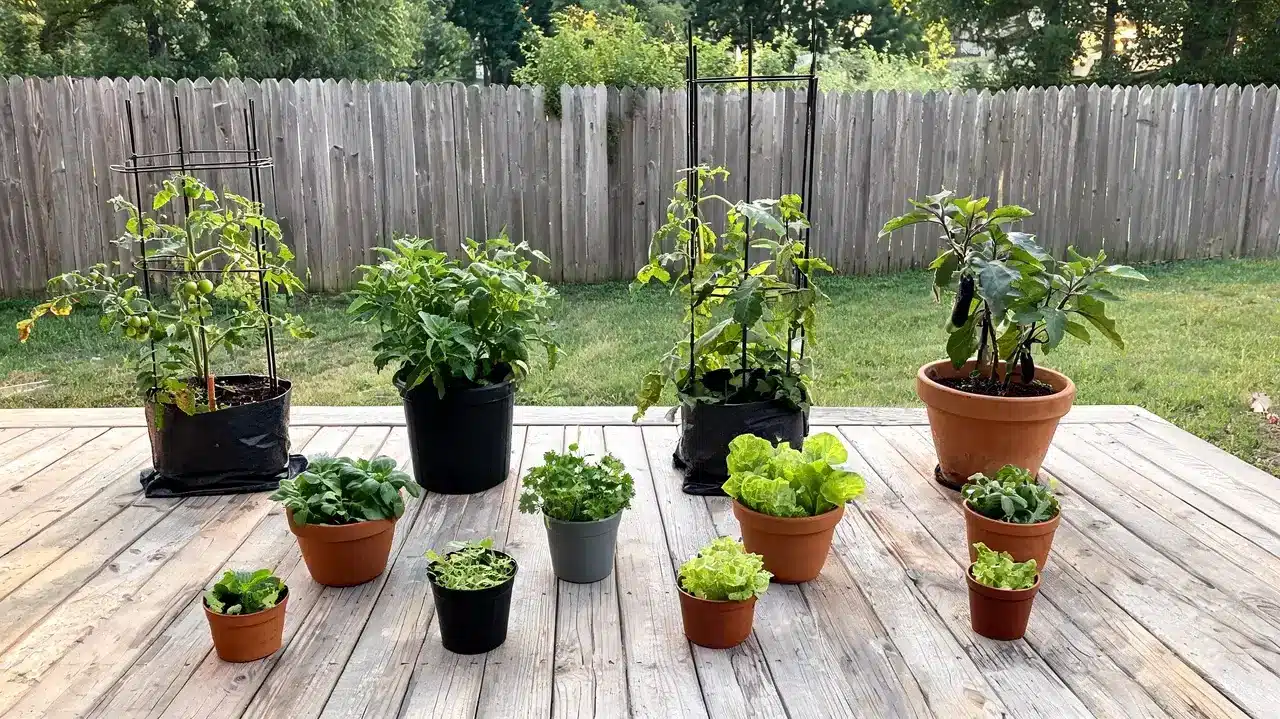
Containers work well on patios, balconies, decks, and small sunny corners. Use large pots for tomatoes, peppers, cucumbers, eggplant, or compact squash. Use smaller pots for herbs, lettuce, spinach, and baby greens.
Group containers by height, with tall plants in the back and low plants in front. Matching pot colors or materials can make the setup look cleaner, even when you grow different vegetables.
9. Flower and Herb Borders for Vegetable Gardens
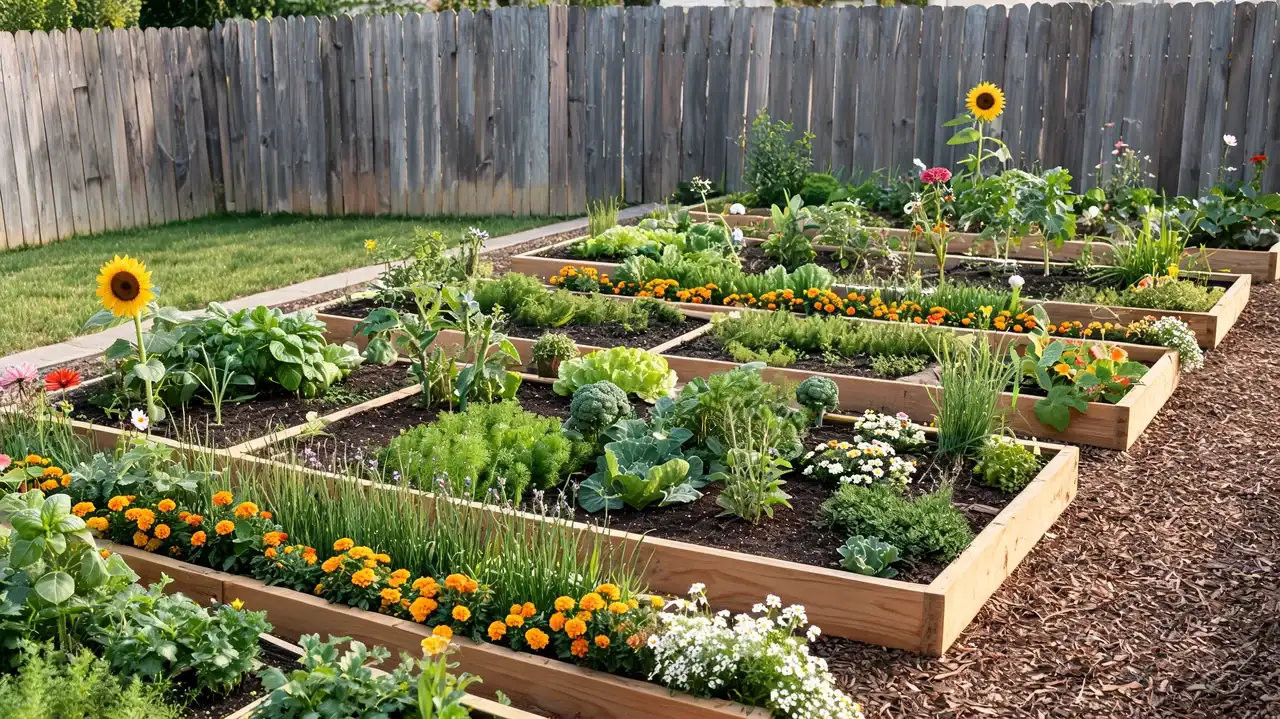
Flowers can be placed along bed edges, near trellises, beside paths, or at the corners of raised beds. Good choices include marigold, calendula, nasturtium, zinnia, cosmos, sweet alyssum, borage, and sunflower.
Herbs also work well as borders. Basil, parsley, chives, thyme, oregano, cilantro, and dill can fill gaps while staying useful in the kitchen.
For a clean design, choose two or three flowers and repeat them through the garden. This keeps the space colorful without making it look cluttered.
Seasonal Vegetable Garden Design Ideas
A garden can look good in more than one season when you plan for change. Each season brings its own colors, crops, and structure.
Rotating plants keeps the space active instead of bare after one harvest. Use this table as a simple guide.
| Season | Design ideas |
|---|---|
| Spring | Use greens, peas, herbs, and flowers. |
| Summer | Add tomatoes, beans, basil, and sunflowers. |
| Fall | Use kale, chard, carrots, and calendula. |
| Off-season | Keep paths clean and beds composted. |
Seasonal design helps your garden feel alive rather than empty after a single harvest. Small changes each season keep the space fresh year-round.
Plan ahead for what comes next instead of waiting until beds go empty. A little prep between seasons keeps the garden looking finished.
Tips for a Productive Vegetable Garden
A productive garden comes down to a few steady habits repeated through the season. Focus on these essentials to keep plants healthy and beds working hard:
- Sunlight and soil: Pick a spot with 6–8 hours of direct sun.
- Feed the soil: Add compost regularly to keep roots strong and nourished.
- Mulch your beds: Mulch around plants to lock in moisture and block weeds.
- Water deeply: Water at the roots to encourage deeper, sturdier growth.
- Harvest often: Frequent picking keeps beans, cucumbers, and tomatoes producing longer.
- Rotate and invite pollinators: Rotate crops yearly and add flowers to draw beneficial insects.
Pro tip: Walk your beds once a week. Catching small problems early saves much bigger headaches later in the season.
Garden Productivity Mistakes To Avoid
A productive vegetable garden depends on more than good soil and sunlight. Small planning or maintenance mistakes can reduce harvests, make plants less healthy, and create extra work throughout the season.
- Planting too closely: Crowded vegetables compete for sunlight, water, and nutrients while poor airflow increases the risk of fungal diseases.
- Ignoring soil and watering: Skipping compost, using poor-quality soil, or watering inconsistently can weaken roots and limit plant growth.
- Poor garden layout: Narrow paths, oversized beds, or placing tall crops where they block sunlight can make watering, weeding, and harvesting more difficult.
- Neglecting weeds and crop rotation: Weeds steal moisture and nutrients, while growing the same crops in the same spot each year encourages pests and diseases.
- Harvesting too late: Picking vegetables regularly keeps many crops, including beans, cucumbers, zucchini, and tomatoes, producing for longer.
Avoiding these common mistakes helps keep your vegetable garden healthier, easier to maintain, and more productive throughout the growing season.
Conclusion
A good vegetable garden starts with a layout that makes sense for real life. I like to think of garden productivity as making each bed, path, pot, and trellis easier to use, not just fuller.
You can start with sunlight, clear walkways, reachable beds, and smart plant height. Then you can add flowers, herbs, containers, and climbing crops in a way that feels planned.
This matters because a garden should not feel like a chore to manage every time you step outside. A clear design helps you water, harvest, and enjoy the space with less stress.
Try one idea first, then build from there. Share your favorite layout idea in the comments or check out more garden tips next.
Frequently Asked Questions
Can I Use Recycled Items In a Vegetable Garden Design?
Yes, as long as they are safe and clean. Old crates, buckets, bricks, ladders, or shelves can work as planters, borders, or supports. Avoid anything that holds chemicals, fuel, or paint.
How Can I make a Vegetable Garden Feel More Private?
Use tall plants, trellises, screens, or large containers along open sides. Sunflowers, pole beans, tomatoes, cucumbers, and climbing flowers can help soften the view.
What Should I Do If My Garden Area Is Uneven?
Use raised beds, containers, or terraced rows to create level planting areas. Keep paths safe and follow the natural slope when possible, rather than forcing straight rows.