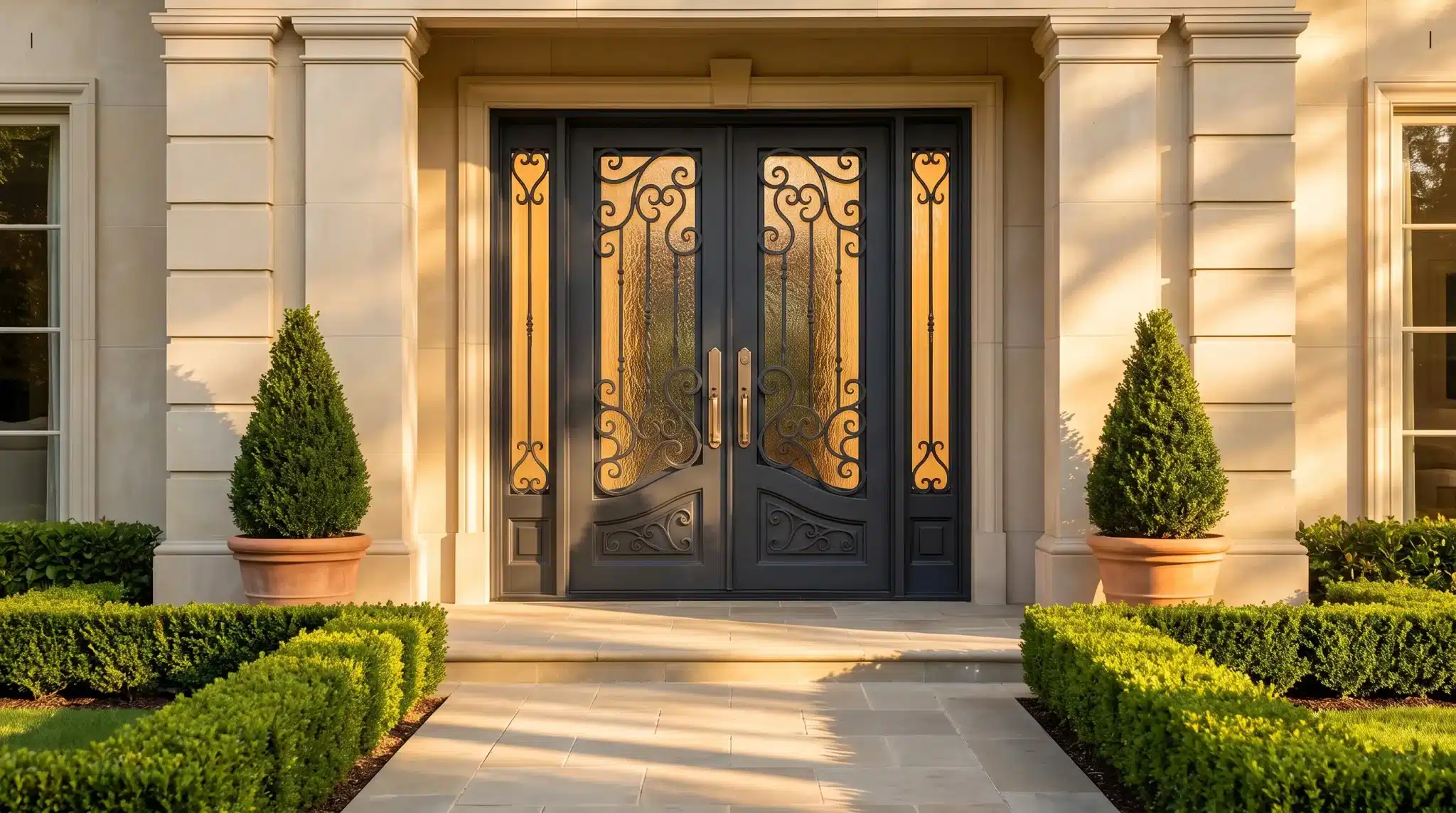
I once pulled up to a house that sold a week after it hit the market. It wasn’t the kitchen. It was the door. While the neighbors argued about lawns, the owners had quietly won the street with a slab that stopped you cold from thirty feet away. If your entry is doing nothing for your house, you don’t need a remodel. You need one smart focal point.
First, the honest part. Most doors fail for one of two reasons: they’re bland, or they’re worn out. Both cost you money and pride. The good news is you already know what your entry should feel like; you just haven’t made it real. In this piece you’ll get the dimensions, the design rules, the weather math, and the upkeep that make a front door work every day.
Why the Front Door Decides the Whole First Impression
Guests read a facade in about three seconds. Your door is the one element that speaks directly to them, which makes it the highest-value square footage you own. That’s true for resale and it’s true every single evening when you come home. Consider how often real estate listings lean on entry imagery. The home’s front elevation carries a lot of the story before anyone crosses the threshold, and state agencies treat that same threshold as a design standard rather than an afterthought.
According to the U.S. General Services Administration, entries in public buildings are held to strict design standards precisely because they shape how a building reads from the street. Your house deserves the same respect on a smaller scale.
Here’s my stance: pick a door with presence, then keep it simple everywhere else. A strong focal point beats five competing accents every time.
Iron vs. Wood: What Actually Affects Longevity
Weigh two things: texture and wear. Wood brings warmth and its grain needs attention; over the first couple of years it can breathe, crack, or fade unless you seal it. Iron gives you density and structural rigidity. A well-built iron door with a solid core can hold shape and hardware far longer when it’s properly sealed and painted, and that’s why I lean that way for exposed entries.
Once you’ve picked your material, the door still has to earn its keep beyond a first glance. It has to swing well for years, stand up to weather, and feel secure at night. That longer view is exactly why coastal and humidity-prone homes tend to favor luxury iron doors over organic alternatives: less swelling, less warping, and hardware that stays aligned.
Proportions, Swing, and Light
Get the Measurements Right
Before you spend the next five years staring at this thing, you need to get the numbers right. Some ratio mistakes start early. I’ve watched visitors step into what looked like a grand entry and, after one or two steps, poke at walls that felt packed in. Try these tips:
Sizing Guide
- Width: a single 36-inch door suits most homes; a 42-inch slab earns its keep if you host often.
- Height: 80 inches is standard, 96 inches reads grander in tall foyers.
- Handle height: roughly 36 inches from the ground.
Match the door to your house’s proportions. A look that works in a bungalow could look like a cheap knockoff on a taller facade, and vice versa.
Which Way Should It Open?
Check local code before you get attached to a direction. Most jurisdictions require the door to swing inward for safety and weather reasons, and many want it out of the way of stairs and landings. Policies vary by city, which is why your local permit office should have the last word.
Zoning and building rules in most towns follow a similar logic: entries need to swing inward so egress and access are never blocked. Local code requirements exist for good reason, and running your final choice past your builder or inspector before ordering will save you a costly surprise.
Hardware, Color, and Glass That Hunt You Down
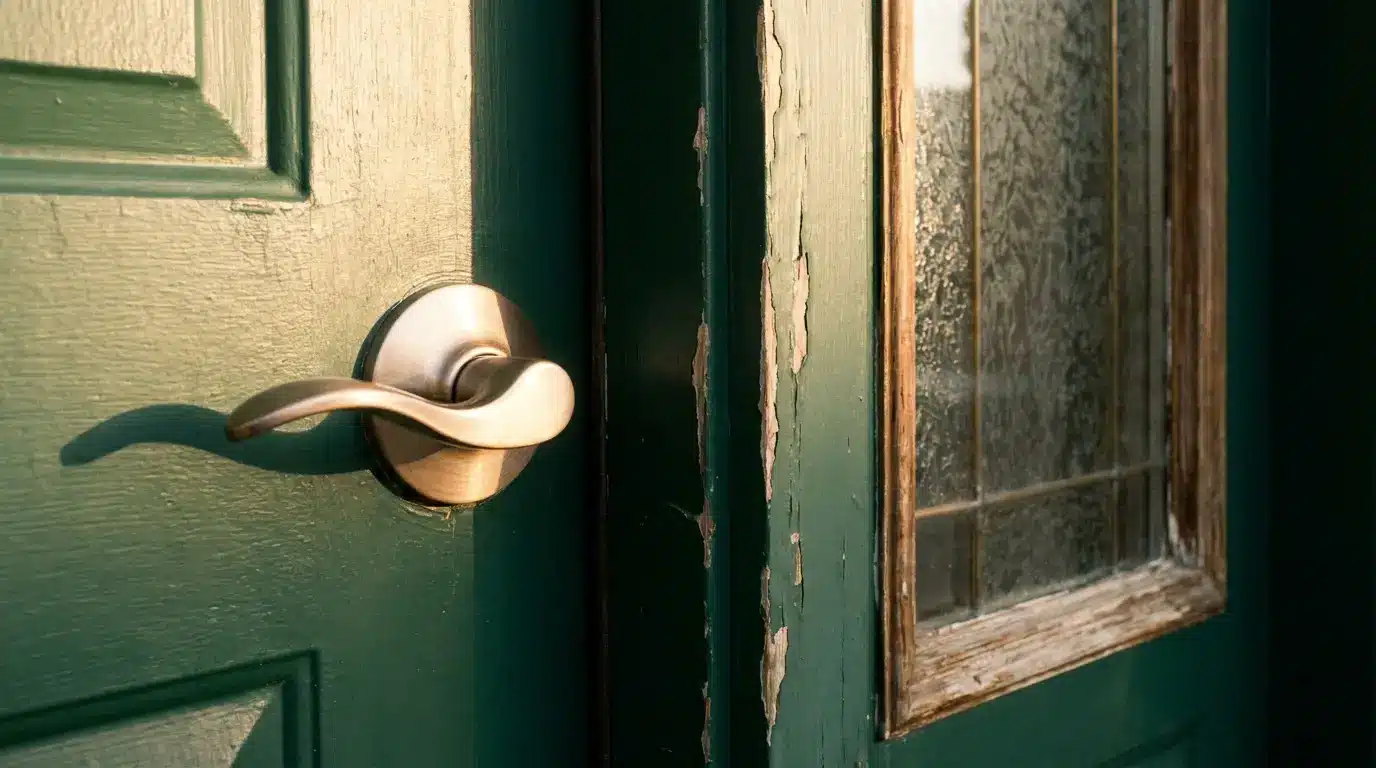
I want to tell you about a client who spent three weeks obsessing over a red door, then lost the argument inside five seconds thanks to one glint of the wrong handle. Satin brass, satin nickel, or oil-rubbed bronze; that’s where most people land after a disappointing first purchase. Pick the finish before the paint, not after.
Choose a color that works with the brick, siding, or trim rather than the season’s trend. Warm hues flatter cool stone; deeper greens and blues hold their own against brick. If you want glass, decide how much. A narrow sidelight or full-lite panels pull in daylight, but check what the glass does for privacy at night.
| Factor | What to choose | Why it matters |
|---|---|---|
| Finish | Satin or oil-rubbed bronze | Hides fingerprints and daily wear |
| Color | Match trim, brick, or siding | Reads intentional rather than trendy |
| Glass | Sidelight or full-lite | Adds light, cuts privacy at night |
Weather, Energy, and Security
Here’s the part that never shows up in the pretty photos. Air leaks around a door cost you money every month, and the fix is cheaper than you think. Start with the seal: a tight threshold and proper weatherstrippingkeep conditioned air inside where you want it. The Department of Energy notes that doors and windows are among the first places to check when you’re trying to cut heating and cooling costs, which makes the humble threshold a smart place to start.
Then think about security. A solid iron slab resists forced entry, but the frame and lock matter just as much. Add a deadbolt rated for the job, a reinforced strike plate, and a viewer so you can see who’s outside before you open.
Maintenance is the boring part that protects everything else. A yearly clean, a spot touch-up on scratches, and a light re-paint or re-seal every few years keeps iron doors looking sharp and wood doors from drying out. Skip it and you’ll pay for the repair later.
Trust Your Own Eyes
Design decisions are personal, but they shouldn’t be careless. Stand at the curb and look at your house through your own front door. If it makes you smile, you’re onto something. If it makes you wince, you already know why. Trust that instinct over any trend list.
So what’s your next move? Walk outside, look at your entry with fresh eyes, and decide whether it needs a coat of paint, a new handle, or a full replacement. Your house has been waiting on that choice a long time.