As soon as feeding your baby starts to feel routine, things change again. Bottles get bigger, feeding times shift, your baby watches you eat, and suddenly you’re thinking about purees, finger foods, allergens, and whether half the meal on the floor still counts as progress. The first year is full of big changes, and feeding changes along with them. Knowing what to expect can make the transition feel less overwhelming and more like what it is: your baby slowly learning a whole new way to eat.
The Early Months Are All About Milk
In the first months, babies get all the nutrition they need from breast milk or infant formula. Newborns usually eat often because their stomachs are tiny and they need a lot of nutrients for their size.
Parents soon learn to spot hunger cues. Rooting, bringing hands to the mouth, becoming more alert, or making sucking motions can all mean a baby is ready to eat. Over time, babies often start eating more at each feeding and settle into a more regular routine.
But that routine might not be the same every day. Growth spurts and changes in development can make babies hungrier or change how often they want to eat for a while.
Feeding Guides Are Helpful, but They Aren’t a Scorecard
It’s normal for parents to want clear answers. How many ounces should a baby drink? How often should they eat? When should you give more?
A baby feeding chart can provide useful age-based reference points when parents are trying to understand how feeding may evolve. The important word, however, is reference. Babies aren’t expected to follow a chart with mathematical precision.
How much a baby eats depends on their growth, appetite, feeding method, and health needs. A pediatrician can help you look at feeding patterns along with weight gain, development, and overall health, instead of just focusing on one number.
Solids Begin With Readiness, Not Just Age
Starting complementary foods is one of the biggest changes in the first year. Many babies start around the middle of the year, but being developmentally ready is what matters most.
Babies should have good head and neck control and show other signs of readiness before starting new foods. Talk with your pediatrician about timing, especially if you have medical, developmental, or allergy concerns.
Starting solids doesn’t mean bottles go away right away. Breast milk or formula is still important all through the first year, even as solid foods slowly become a bigger part of your baby’s diet.
Early Meals Are Really Practice Sessions
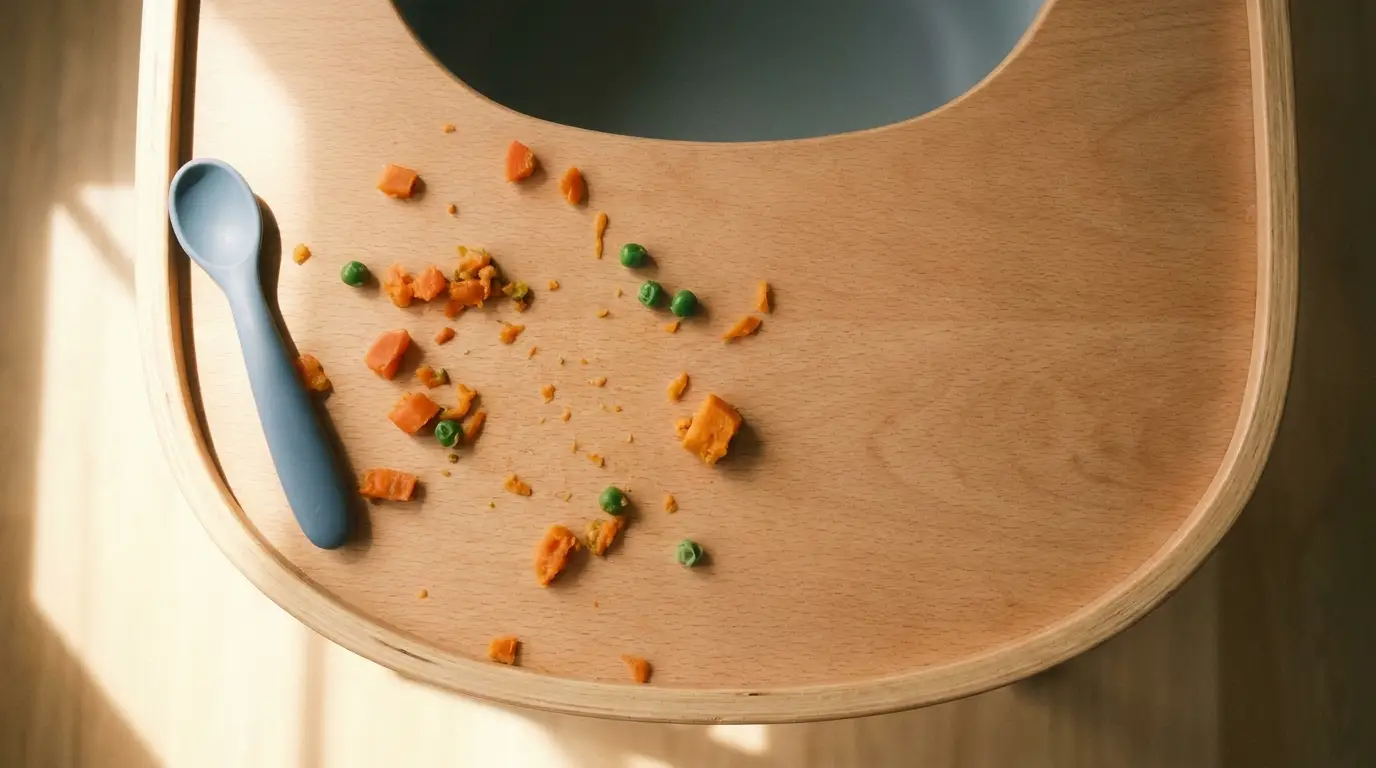
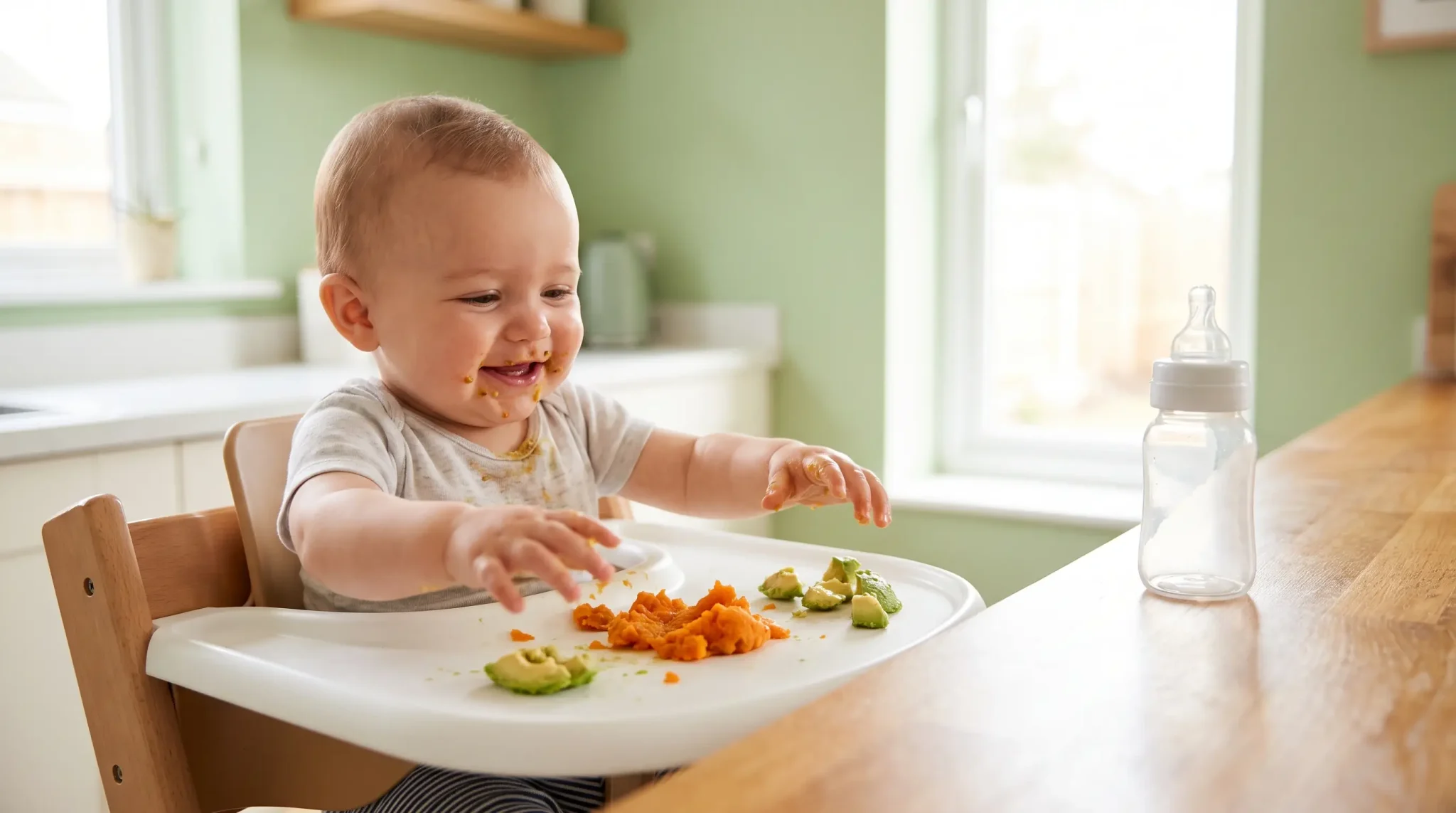
The first meals with food can be messy and funny. Your baby might taste one spoonful, smear another on the tray, and drop most of it on the floor.
But that’s all part of learning. Babies explore new flavors and textures and build the skills they need to eat. If you only focus on how much food is eaten, this stage can feel more stressful than it needs to be.
Instead, parents can focus on giving their baby chances to explore age-appropriate foods while still offering regular breast milk or formula. Progress usually happens slowly, not all at once.
Variety Becomes More Important Over Time
As babies get better at eating, parents can slowly add more types of foods and textures. This helps babies get used to new tastes and gives them more nutrients from different foods.
Parents should also ask their pediatrician when to introduce common allergens and nutrient-rich foods like iron. Advice may differ now from what it was in the past, so it helps to get up-to-date guidance instead of relying only on family tradition.
How you prepare food is important too. The texture, shape, and size should fit your baby’s abilities and help lower the risk of choking.
Formula Can Remain Part of a Changing Routine
For formula-feeding or combination-feeding families, introducing food doesn’t make formula unnecessary right away. Brands such as Bobbie provide infant formula options for families who use formula, while parents continue adjusting feeding routines as complementary foods become more established.
This stage can be confusing since your baby is both eating and drinking. Instead of expecting solid foods to replace bottles quickly, think of the change as a gradual process. The balance shifts over time as your baby’s skills, appetite, and needs grow.
Keep preparing formula as directed, and don’t change the powder-to-water ratio unless your healthcare provider tells you to.
Babies Become Better at Telling You What They Want
One nice thing about the later months is that babies usually become much more expressive. They might lean toward food, open their mouths, reach out, or get excited when they’re hungry.
They can also make it very clear when they’re done. Turning their head, closing their mouth, pushing food away, or losing interest can all mean they’re full.
Responsive feeding means paying attention to these signals instead of making your baby finish every bottle or serving. Babies’ appetites change, and respecting their hunger and fullness cues can make mealtimes work better for everyone.
Safety Changes as Food Changes
Starting new foods brings new safety concerns. Parents need to know about choking hazards and prepare foods safely for their baby’s stage of development.
Gagging and choking are not the same. Gagging can happen as babies get used to new textures, but choking means the airway is blocked and needs immediate help. Parents and caregivers should learn how to respond to choking and know infant CPR.