I’ve always believed that the smallest details make the biggest difference in a kitchen, and countertop edge profiles are the perfect example.
When I started renovating my own space, I realized these edges aren’t just about looks; they affect everything from how easy your counters are to clean to whether you’re bumping your hips every time you cook.
The right profile can make your kitchen feel custom and intentional, while the wrong one might leave you with chips, cracks, or that nagging feeling that something’s just off.
With so many online visualizers popping up lately, choosing has gotten easier, but knowing what actually works for your lifestyle? That’s where things get interesting.
What Exactly are Countertop Edge Profiles?
Countertop edge profiles are basically the finishing touches along the perimeter of your counters. You know, the part your hand naturally lands on when you’re chopping vegetables or where your kids lean during homework time.
I see them everywhere: kitchen islands, bathroom vanities, even those trendy coffee bars in commercial spaces. Here’s what gets me: different materials handle these edges completely differently.
Granite and quartz can pull off those fancy bevels and ogees without breaking a sweat, while marble looks absolutely gorgeous with simpler profiles that let the veining do the talking.
Butcher block? It loves rounded edges for that cozy, lived-in vibe. Laminate keeps things pretty no-nonsense.
Your material really does call the shots on which profiles will actually work.
Things to Think About When Picking Your Countertop Edge
Choosing the right edge really comes down to how you live. I always tell people to think beyond the Pinterest-perfect kitchen and consider their actual day-to-day.
Do you have toddlers running around? Are you someone who meal preps every Sunday? These little details matter way more than you’d think.
- Durability & Daily Usage: If your kitchen sees constant action with kids, guests, or serious cooking, you need an edge that won’t chip the first time someone sets down a cast-iron pan.
- Style & Appeal Goals: Your edge should feel like it belongs in your home, matching the vibe you want, from modern to farmhouse to traditional.
- Material Compatibility: Some materials are more forgiving than others; quartz lets you get creative with details, while laminate works best when you keep things simple.
- Budget: Basic edges won’t break the bank, but if you’re dreaming of curves and custom details, just know your fabricator’s going to charge extra.
- Safety & Maintenance: Rounded edges save you from bruised hips and give you peace of mind with little ones, plus some profiles are better at hiding the nicks and wear.
At the end of the day, the best edge is one that works for your lifestyle without forcing you to change how you live.
The Most Popular Countertop Edge Profiles
This is where things get visual. I’m breaking down the edges you’ll actually see in showrooms and real kitchens, from the simple and budget-friendly to the ones that make a statement.
1. Straight / Square Edge
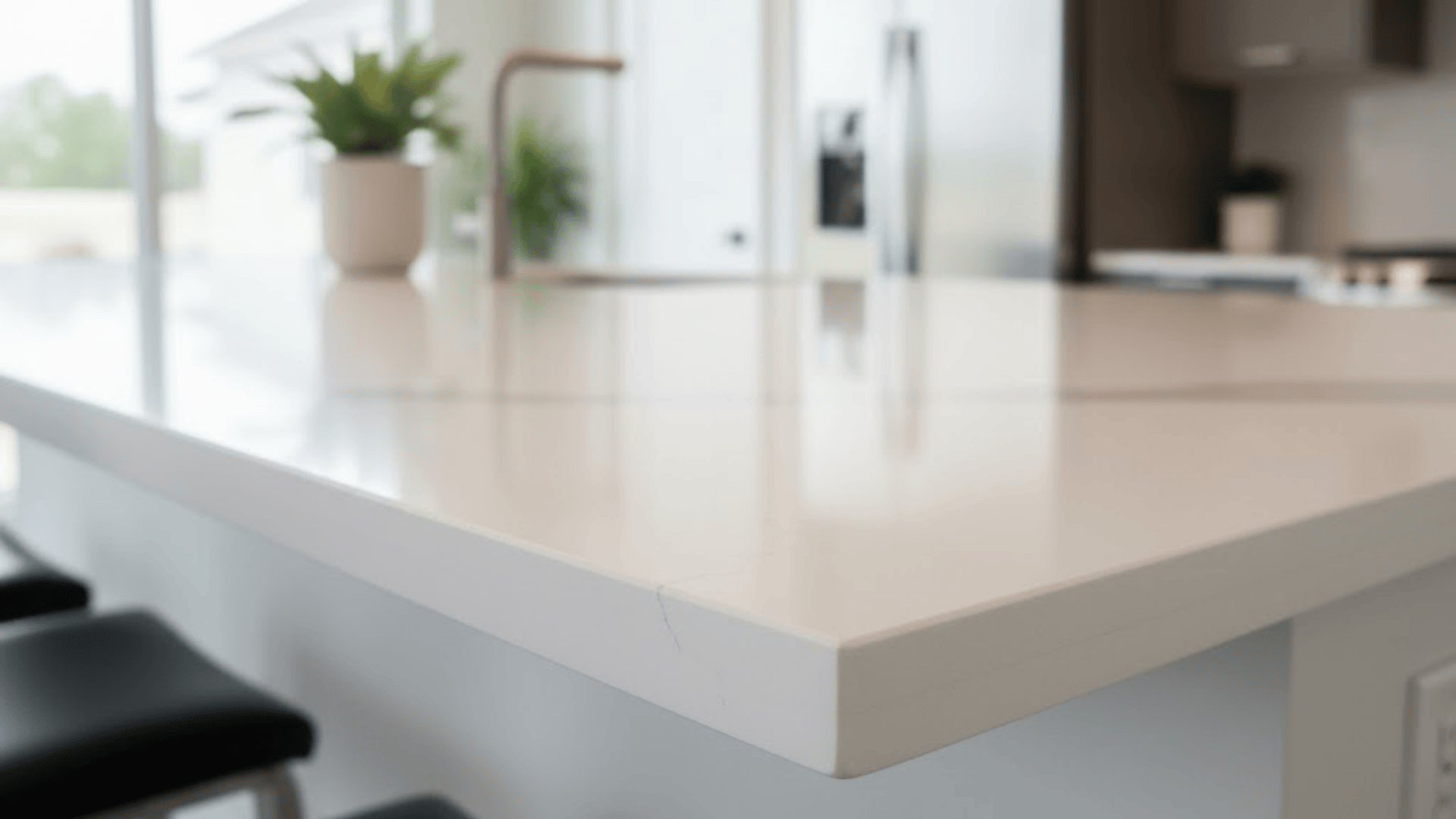
This is your no-nonsense, clean-cut option. The edge comes down at a perfect 90-degree angle with sharp corners that give you that modern, streamlined look. It’s one of the most affordable profiles out there, which is why you see it everywhere.
The downside? Those sharp corners can chip more easily, especially if you’re rough with pots and pans or have active kids around.
2. Eased Edge

Think of this as the straight edge’s softer sibling. It still keeps that clean, contemporary vibe, but with just a hint of rounding on the top and bottom corners.
The softening is so subtle you might not even notice it at first glance, but your hands definitely will. It’s safer than a full square edge and hides minor wear better over time.
3. Beveled Edge
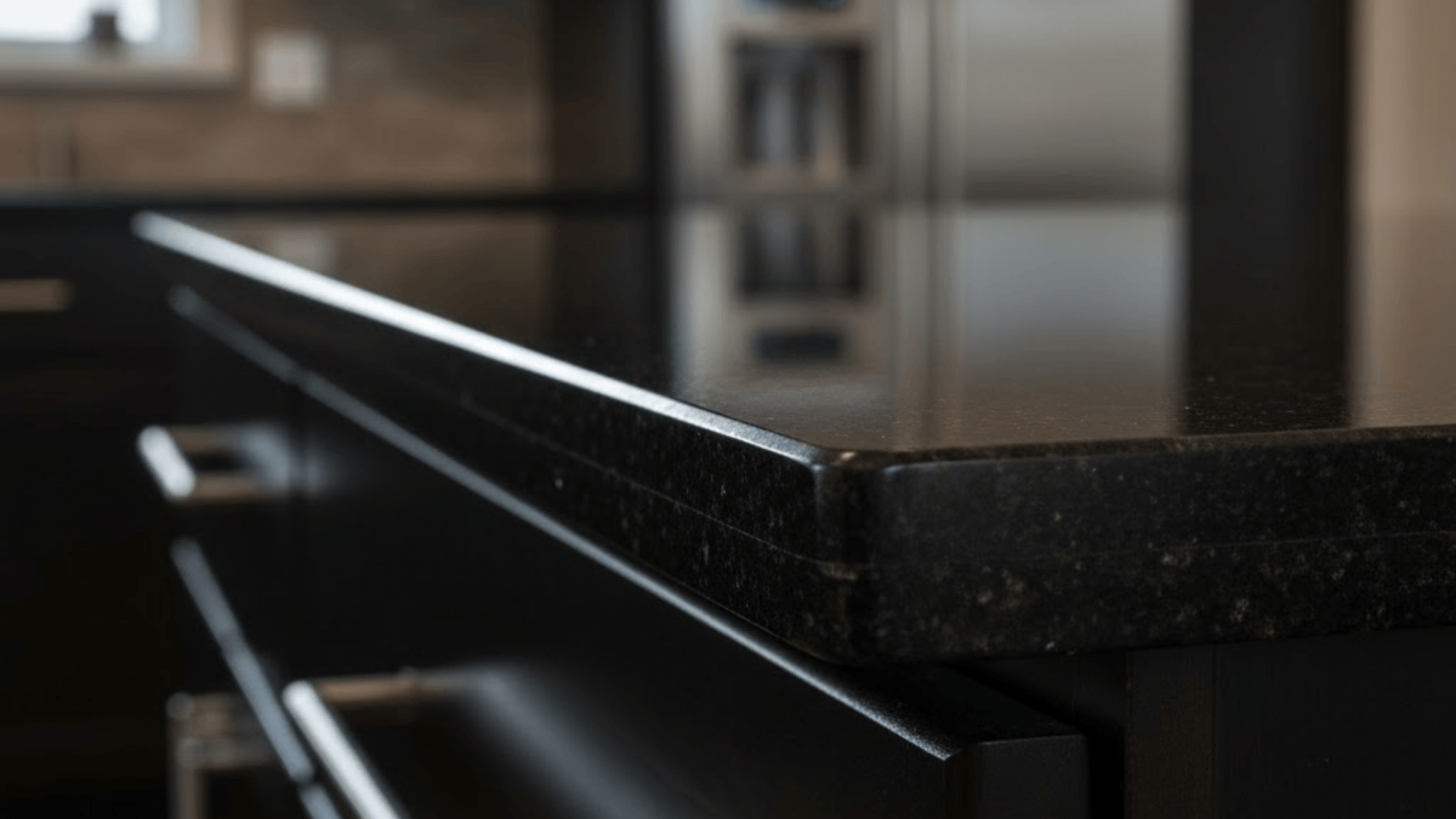
This one’s all about angles. The top edge gets cut at a slant, usually around 45 degrees, creating a crisp geometric line that catches the light beautifully.
I love how it adds dimension without being too fancy. It works in both traditional kitchens and more industrial spaces, though you’ll want to be careful because that angled edge can still chip if you’re not gentle.
4. Quarter Round / Half Round
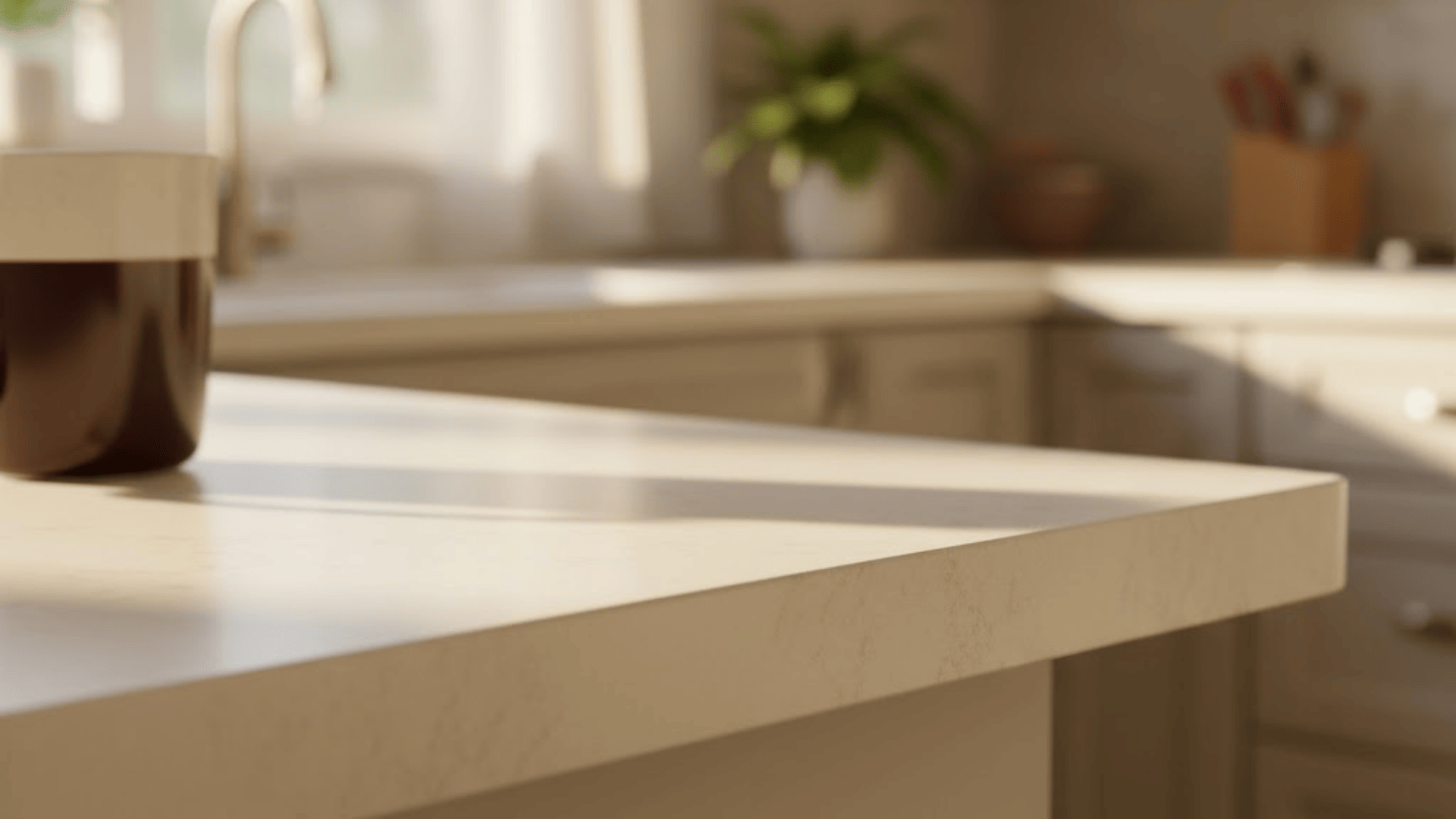
Here’s where we start getting into genuinely rounded territory. The top edge curves smoothly in a gentle arc, kind of like a quarter circle.
It’s forgiving on the elbows and hips, resists chipping way better than sharp edges, and still looks clean enough for contemporary spaces. Families with kids really appreciate this one.
5. Bullnose Edge
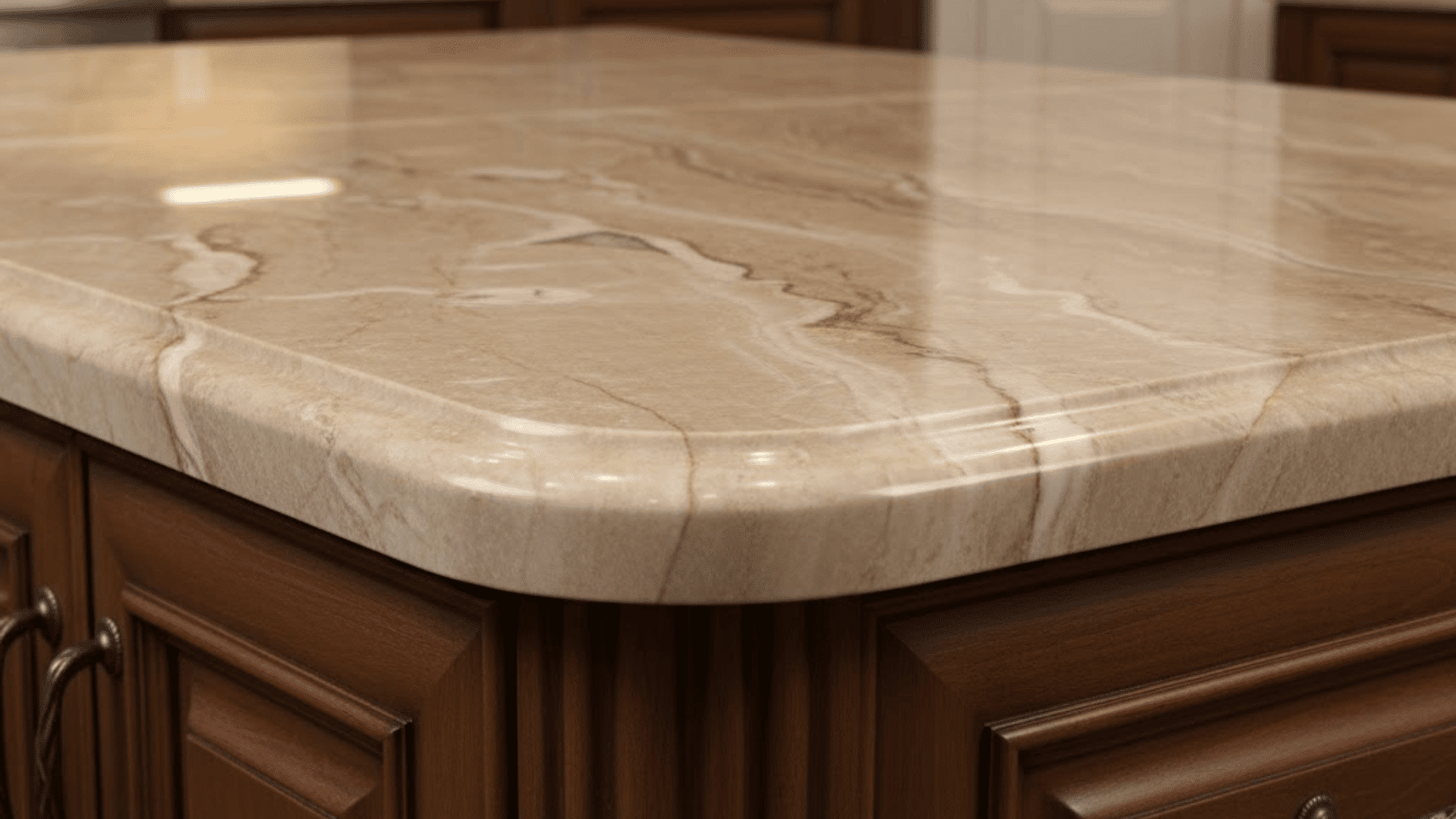
This is the fully committed, rounded edge. Both the top and bottom get smoothed into one continuous curve, giving you that soft, approachable look.
It’s a favorite in classic and Mediterranean-style kitchens, and honestly, it’s probably the safest edge you can get if you have little ones constantly bumping into things. The rounded shape also handles wear incredibly well.
6. Ogee Edge
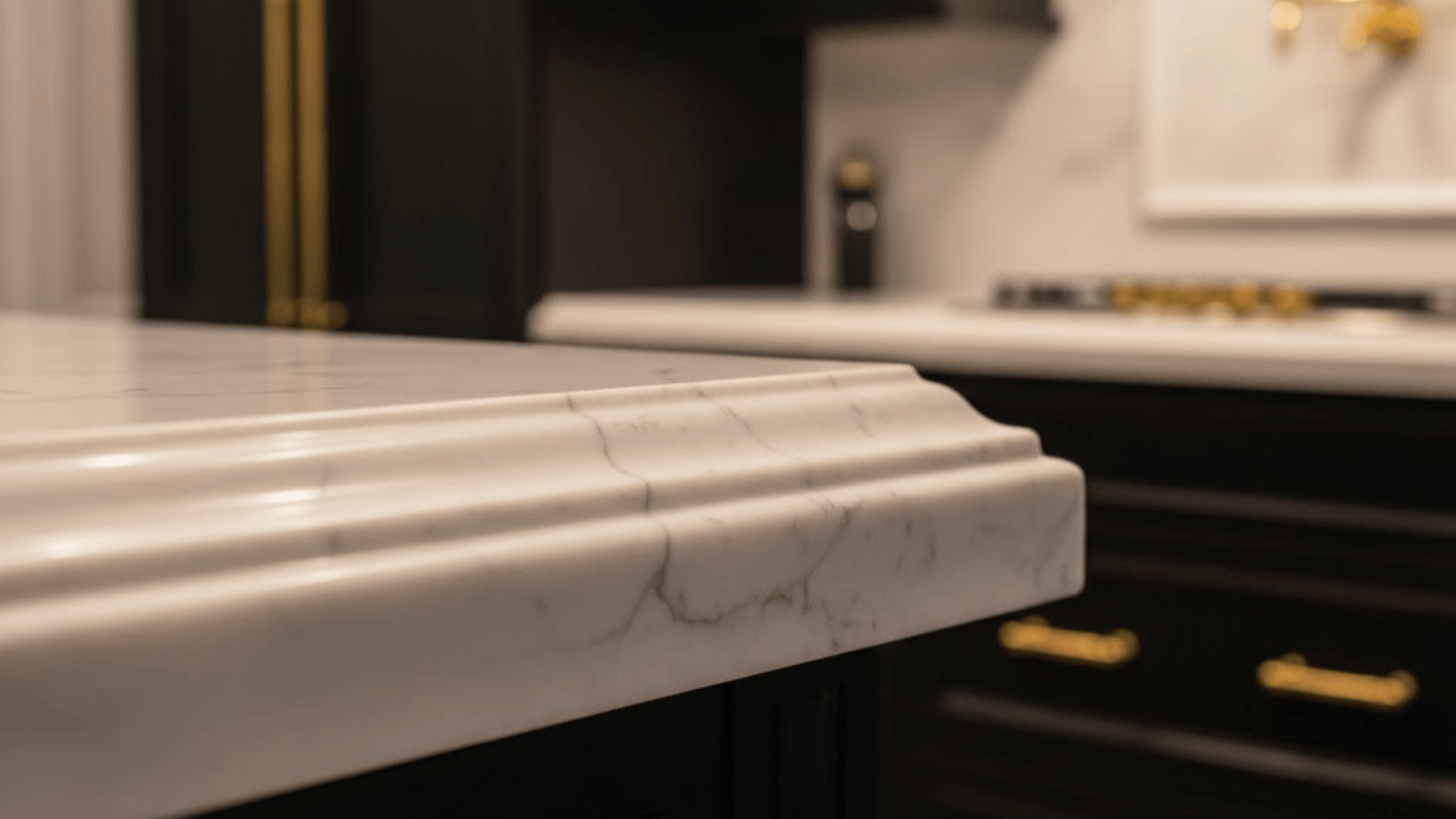
Now we’re getting fancy. This profile features an elegant S-curve that dips and rises, creating visual interest and refinement. You’ll see this in high-end traditional kitchens and formal spaces.
It’s gorgeous but definitely comes with a premium price tag because of the extra fabrication work. Plus, that detailed curve means more surface area where chips could potentially happen.
7. Dupont Edge
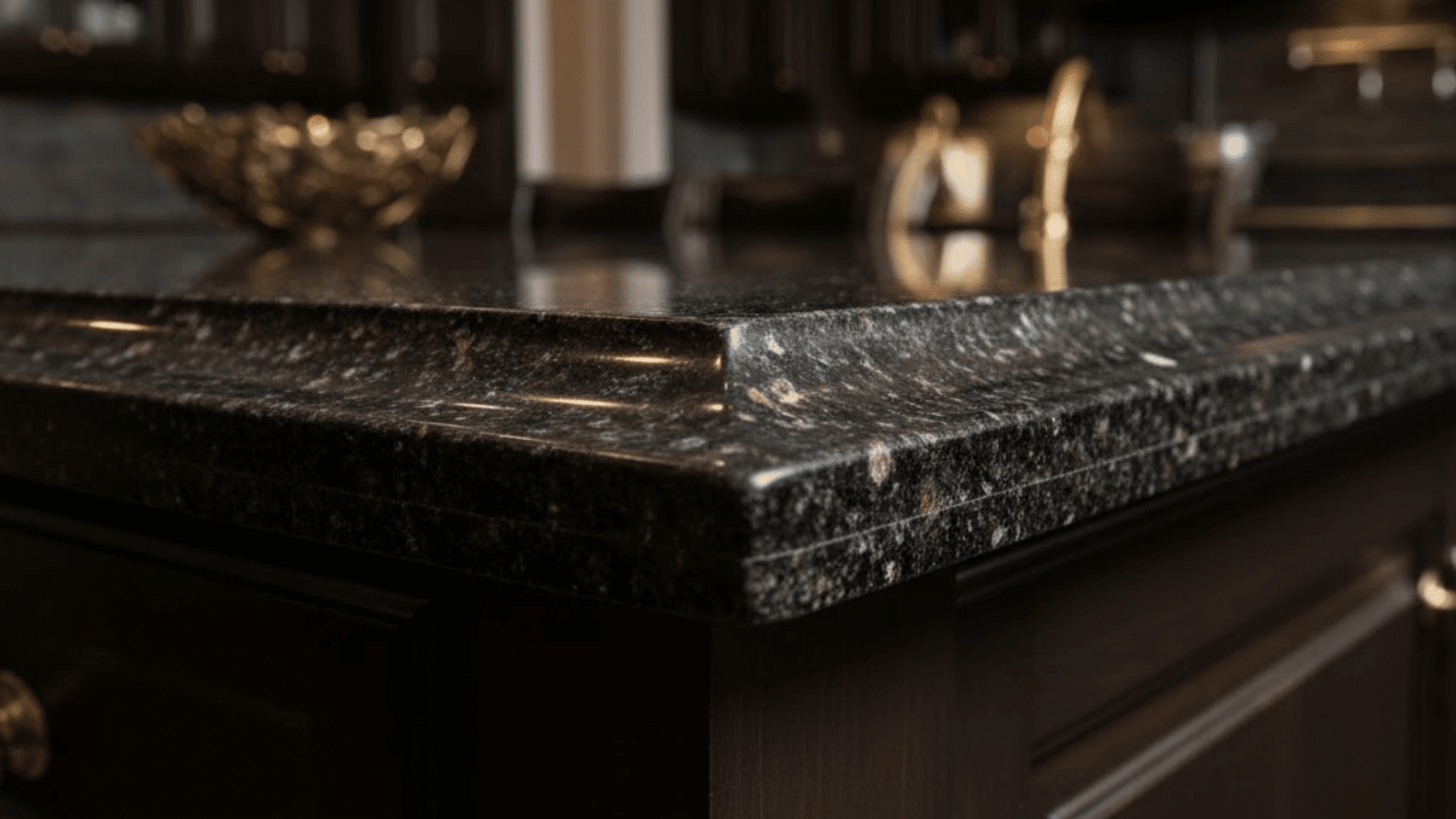
This edge makes a statement with its dramatic dip-down shape. It’s bold, decorative, and definitely not for everyone. I usually see this in really high-end installations where the homeowner wants something unique.
The profile drops down before coming back up, creating that eye-catching silhouette. It’s all about visual drama and craftsmanship.
8. Mitered Edge
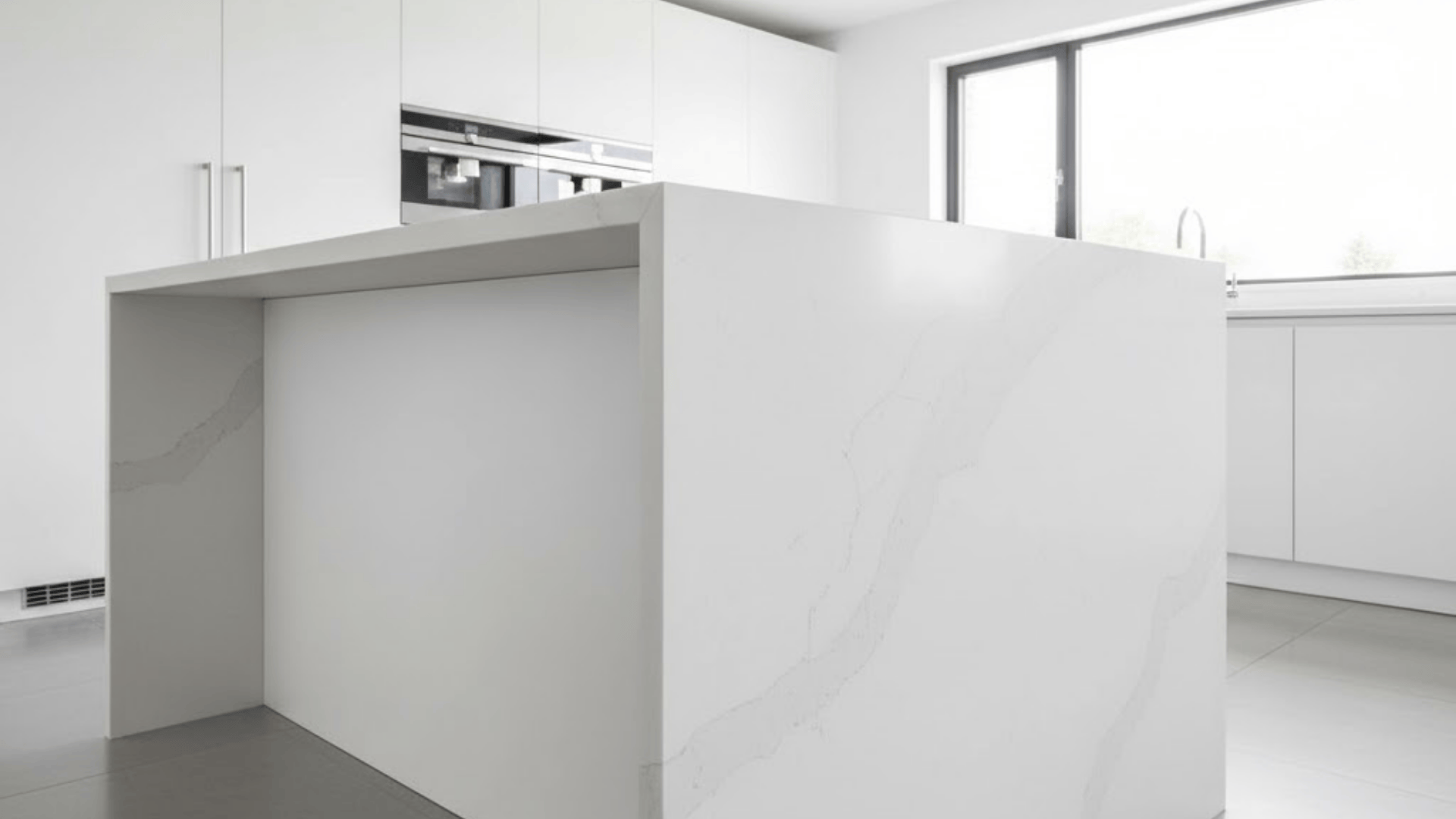
This is how you get that thick, substantial look without actually using a super thick slab. Two pieces of stone are cut at angles and joined together seamlessly to create what looks like one chunky edge.
It’s perfect for waterfall islands and gives you that modern, high-end aesthetic. When done right, you can barely see the seam.
9. Waterfall Edge
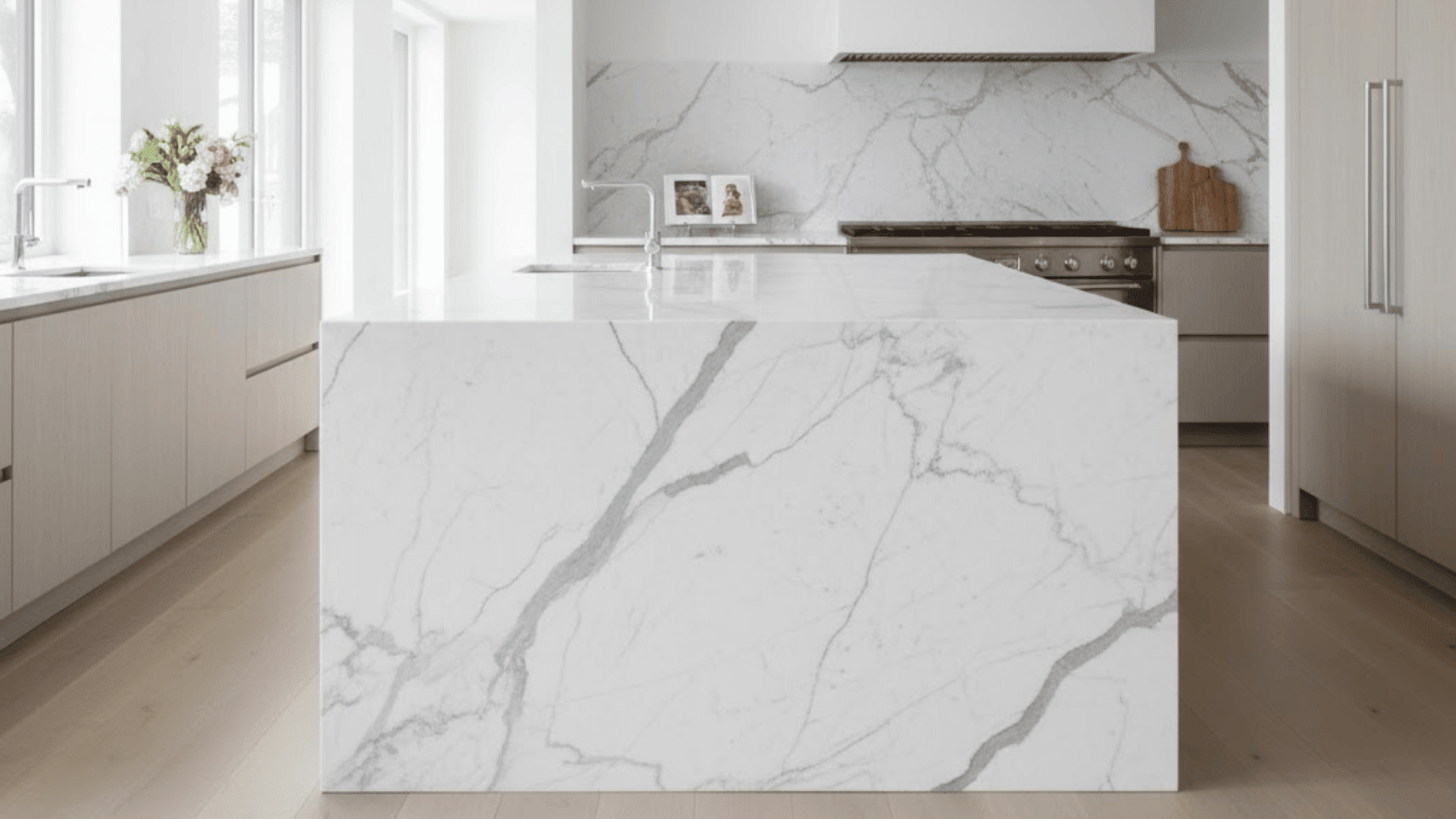
This isn’t just an edge, it’s a whole design moment. The countertop slab continues down the side of the island or cabinet, flowing from horizontal to vertical in one continuous piece.
It’s striking, contemporary, and definitely a conversation starter. You’ll pay more for the extra material and fabrication, but the impact is worth it if you want that showstopper effect.
10. Laminated Edge (Built-Up Edges)
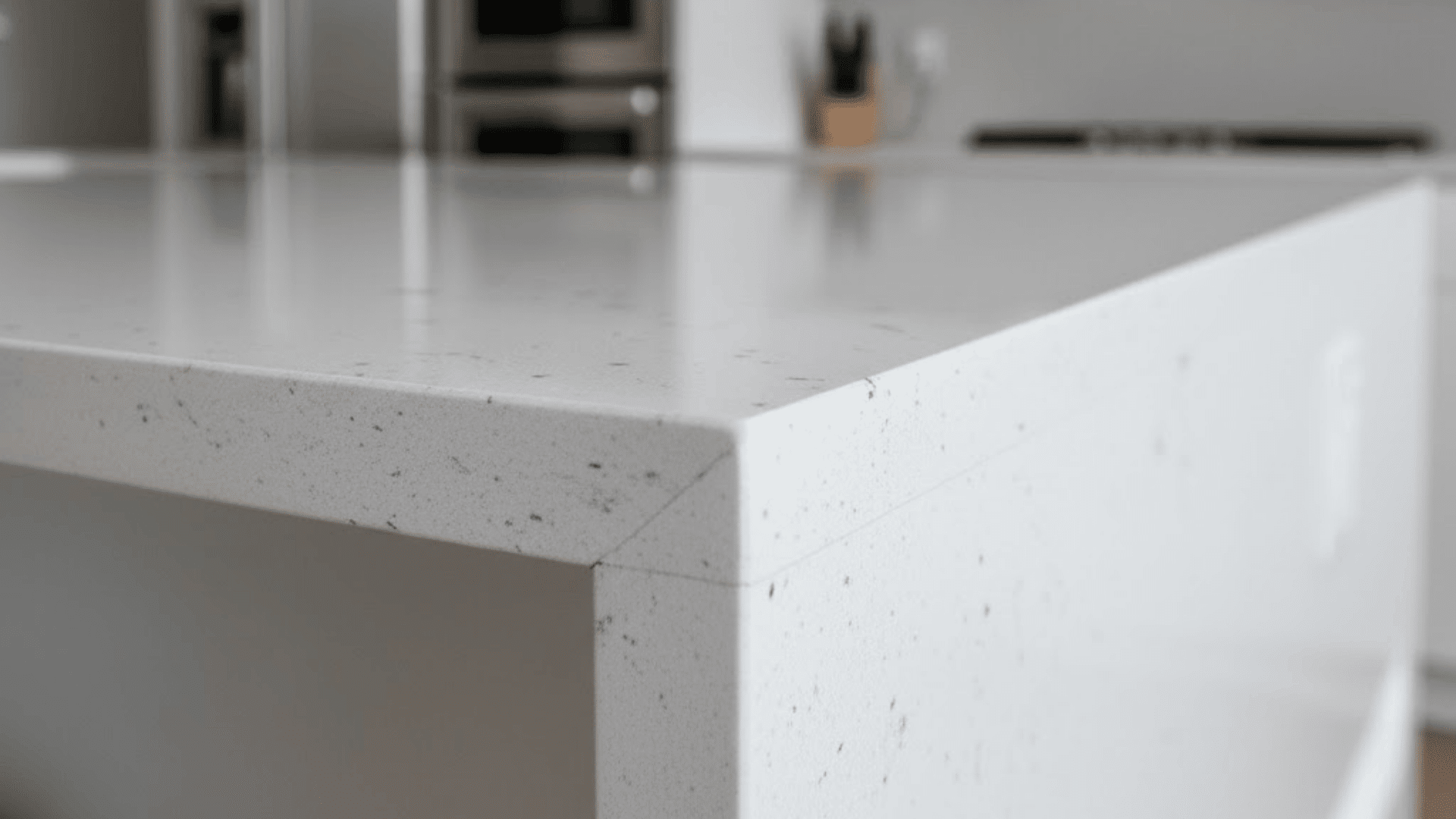
This technique layers multiple pieces of material to create a thicker, more substantial look. You can stack them to get creative with different edge combinations or just make your counter look beefier than it actually is.
It’s popular with quartz and laminate because it lets you achieve custom looks without the cost of genuinely thick slabs.
11. Chiseled / Rock Face Edge
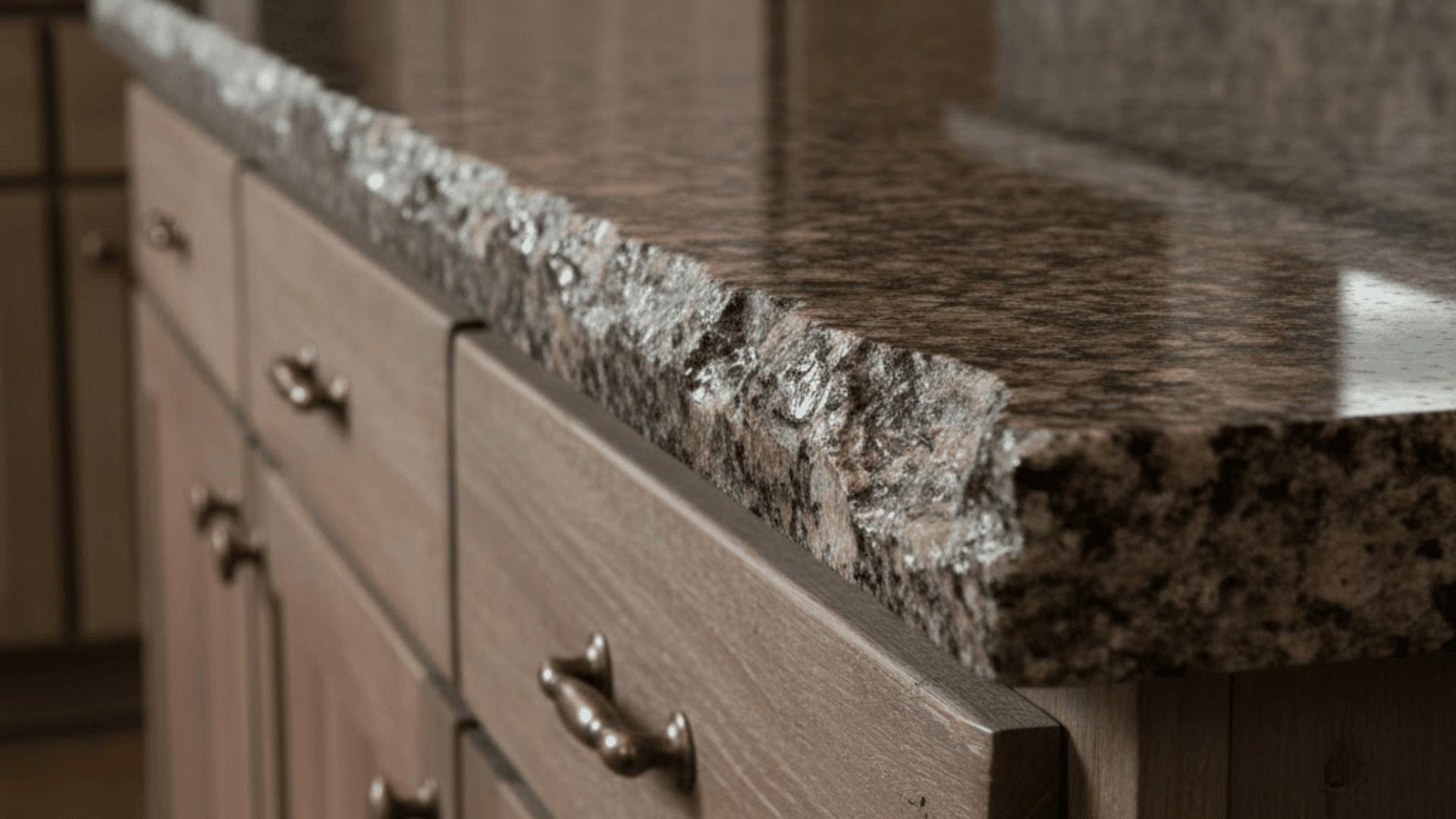
For when you want that raw, just-quarried look. The edge is left rough and textured instead of being polished smooth, giving you an organic, natural appearance.
This works beautifully in rustic kitchens, outdoor spaces, or anywhere you want to emphasize the natural beauty of stone. It’s unique but definitely not for everyone.
12. Knife Edge
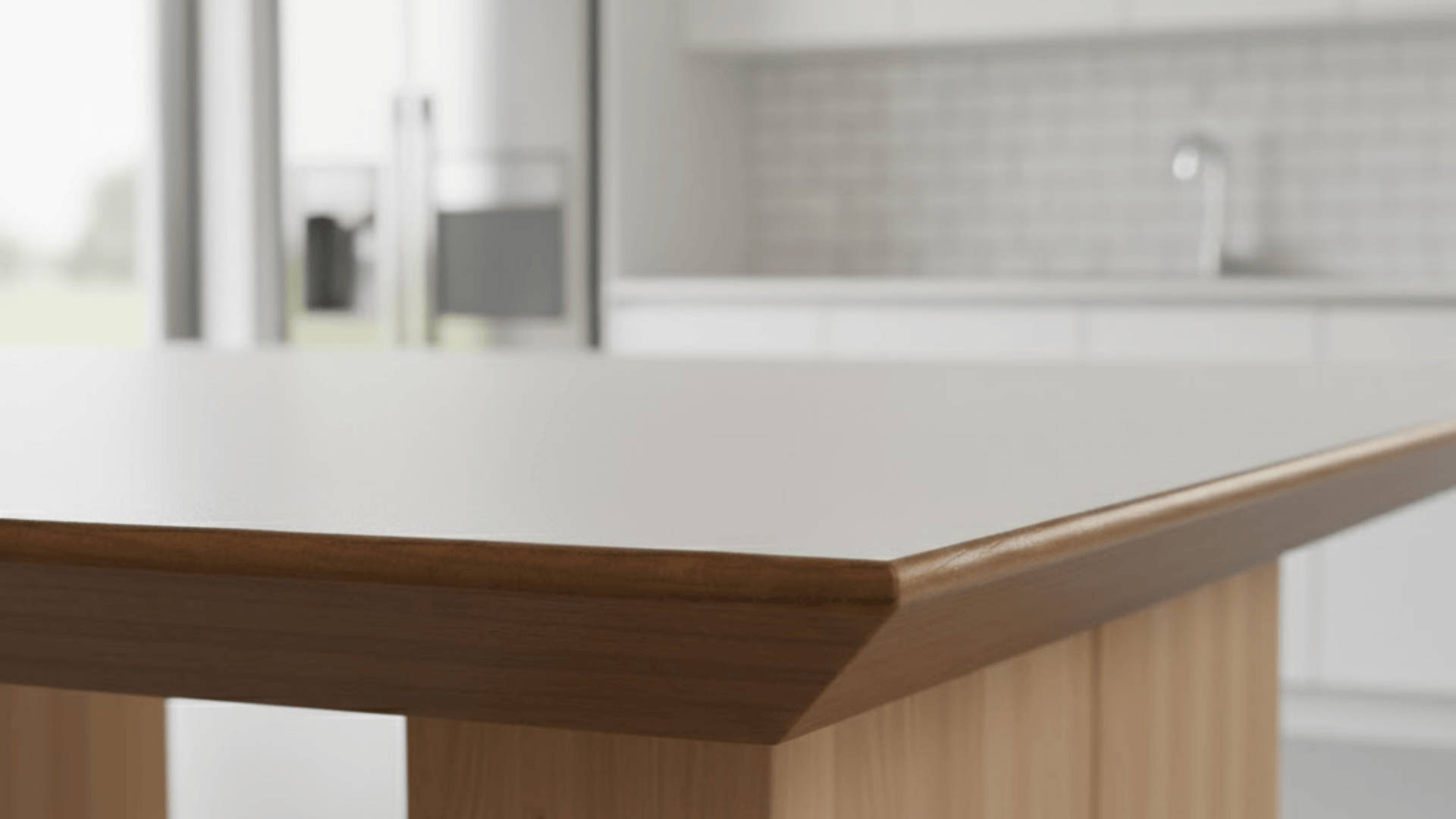
Ultra-thin and sleek, this edge tapers down to almost nothing, creating that light, floating appearance. It’s all about minimalism and making your countertop look less heavy and more refined.
You’ll see this in very modern, design-forward spaces. Just know that the thin profile can be more delicate and might require extra care.
Matching Countertop Edges to Your Material
Not every edge works with every material. I’ve seen people fall in love with a profile only to find out their chosen material can’t handle it.
Here’s how different materials play with edge options so you can plan accordingly:
| Material | Best Edge Options | Why It Works | Avoid |
|---|---|---|---|
| Quartz | Eased, beveled, bullnose, ogee, mitered, waterfall, straight | Engineered consistency allows intricate cuts and sharp details | None, very versatile |
| Granite | Eased, bullnose, ogee, half round, beveled, straight | Natural durability handles most profiles well | Overly complex edges near veining or mineral deposits |
| Marble | Eased, bullnose, half round, straight, gentle bevels | Softer stone needs rounded edges to resist chips | Sharp corners, delicate ogee details |
| Laminate | Postform, beveled, straight, eased, self-edge | Flexible edge treatments and integrated options | Intricate stone-style profiles |
| Butcher Block | Rounded, chamfered, eased, straight | Wood needs gentle edges to prevent splintering | Sharp square corners |
Keep in Mind: Your fabricator knows your material best. If they’re hesitant about a certain edge with your chosen slab, listen to them. They’ve seen what holds up and what cracks during installation.
Countertop Edge Visualizers Worth Using
Choosing an edge from a tiny sample chip? That’s asking for regret. Online visualizers let you see how different profiles look with your actual material choice before committing.
Start with your real material and test at least three edge options in a setting that matches your kitchen. But don’t stop there.
Request physical samples from your fabricator and look at them in your space under your actual lighting. That’s when you’ll really know.
Notable Visualizers to Try:
- Caesarstone Design Tool: Lets you place their quartz in virtual kitchens with different edge profiles and lighting scenarios.
- MSI Visualizer Tools: Good for seeing edges across their granite, quartz, and marble collections in realistic room settings.
- Cambria Visualizer: Clean interface for testing their quartz designs with various edge options in different kitchen styles.
- Silestone Kitchen Visualizer: Helps you preview edges with their quartz colors in multiple cabinet and backsplash combinations.
- Formica Visualizer: Specifically useful for seeing postform and laminate edge options in context.
Which Countertop Edge Profiles Work Best for Your Style?
Your edge should match the vibe you’re going for. I’ve seen too many kitchens where the edge feels like an afterthought, clashing with the rest of the design.
Here’s what actually works with different styles.
1. Modern / Contemporary Kitchens
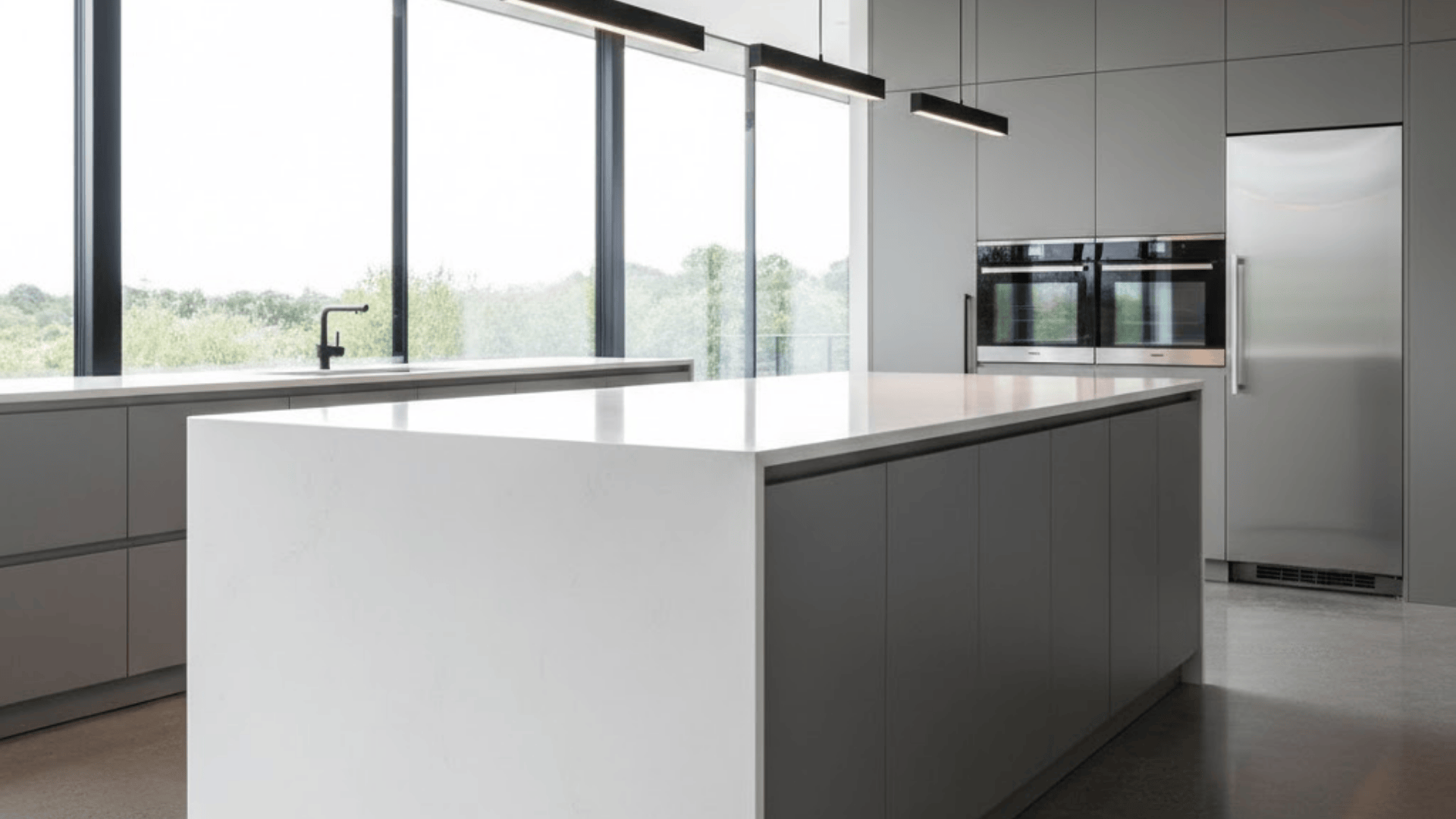
Modern spaces are all about clean lines and intentional geometry. The right edge should feel architectural, not decorative.
- Mitered Edge: Creates that thick, substantial look with clean lines that feel intentional and architectural
- Straight Edge: Sharp 90-degree angles keep everything streamlined and no-nonsense for that sleek aesthetic
- Eased Edge: Softens the straight edge just enough to stay contemporary while being slightly more forgiving
These profiles let your material and overall design do the talking. No fussy details, just crisp execution.
2. Traditional Kitchens
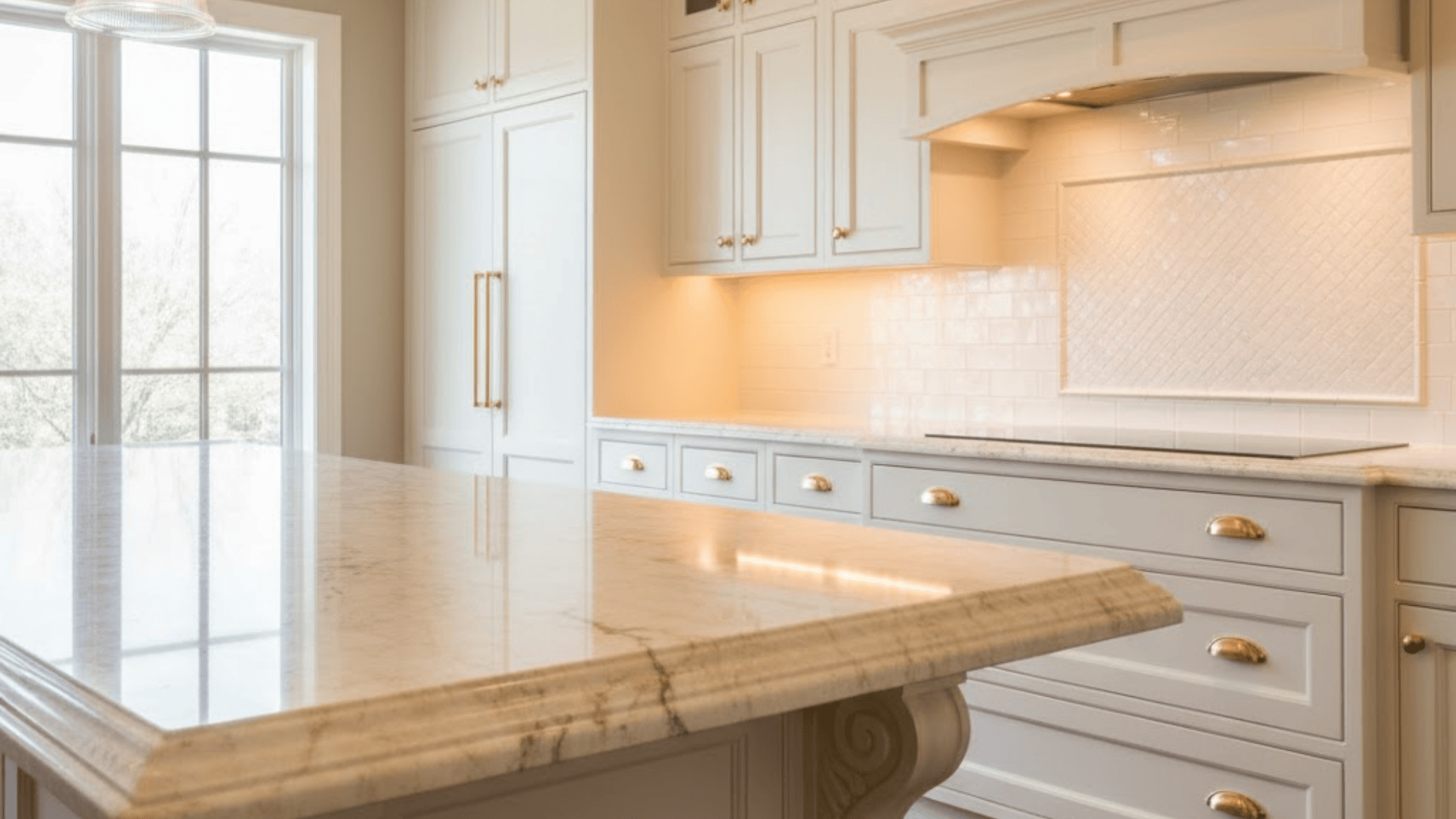
Traditional design loves detail and craftsmanship. Your edge should add that layer of refinement without feeling overdone.
- Ogee Edge: That signature S-curve adds the elegance and detail traditional spaces thrive on
- Beveled Edge: Angled top edge brings geometric interest without going overboard on ornamentation
- Bullnose Edge: Full rounded profile gives you that classic, timeless look that never goes out of style
Pick an edge that feels substantial and considered. Traditional kitchens earn their charm through thoughtful details like these.
3. Farmhouse / Rustic Kitchens
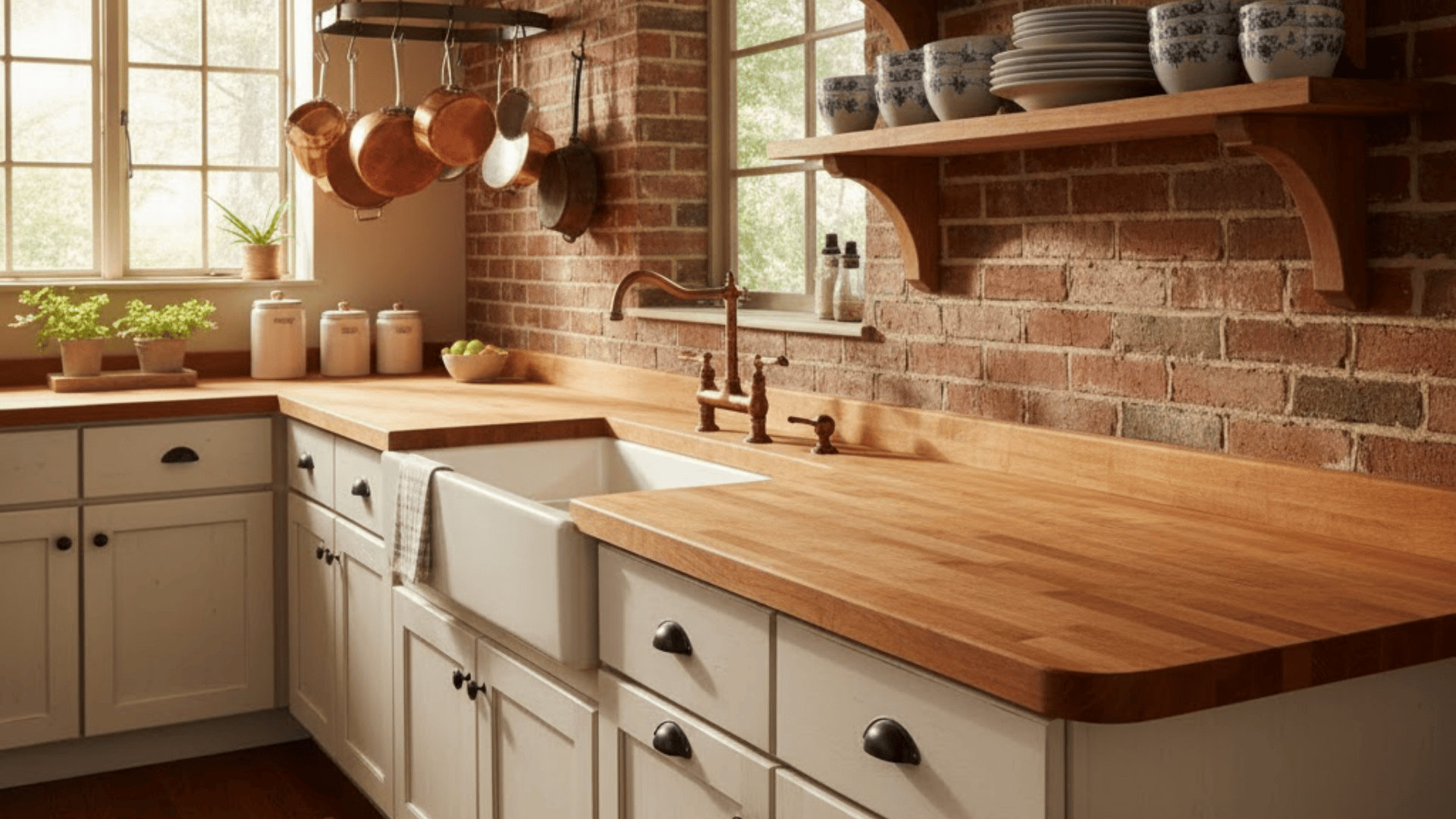
Farmhouse style is about warmth and authenticity. The edge should feel natural, not precious or overly polished.
- Chiseled Edge: Raw, unpolished texture brings that authentic just-from-the-quarry character to your space
- Half Round Edge: Gentle curve feels warm and approachable, perfect for that lived-in farmhouse vibe
- Eased Edge: Simple and unfussy, letting natural materials like butcher block shine without competing
Keep it honest and straightforward. Farmhouse design doesn’t need to try too hard, and neither should your edge.
4. Luxury / Premium Designs
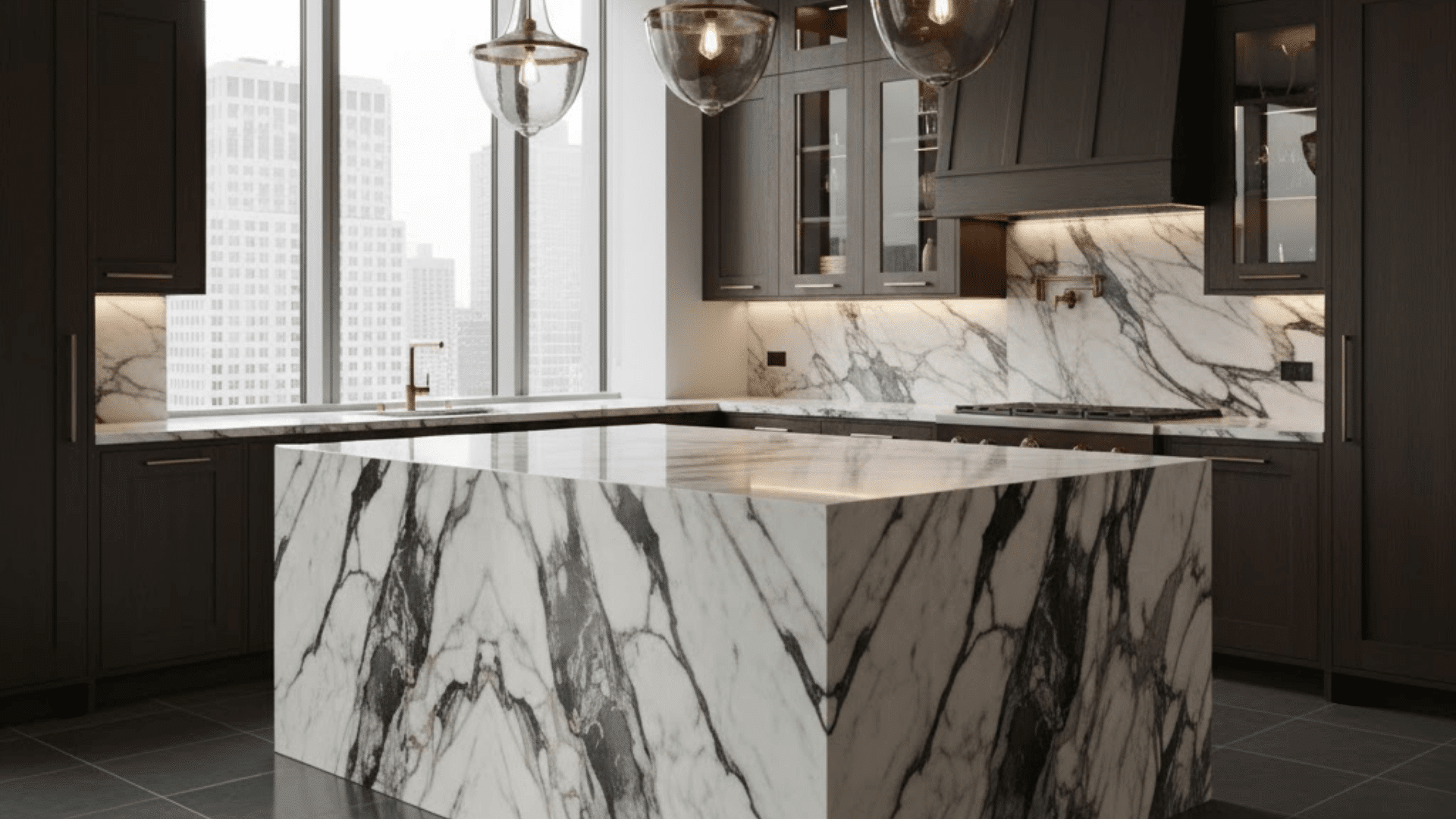
Luxury is about making a statement and showcasing craftsmanship. Your edge should be a conversation piece, not background noise.
- Waterfall Edge: Dramatic continuous flow from countertop to floor makes an unmistakable statement
- Ogee Edge: Intricate S-curve screams craftsmanship and attention to detail in high-end installations
- Dupont Edge: Bold drop-down profile is pure visual drama for spaces that demand uniqueness
Go bold here. Luxury design is your chance to show off what’s possible with skilled fabrication and premium materials.
What You’ll Actually Pay for Different Countertop Edges
Not all edges cost the same, and honestly, the price jump can surprise you. Understanding what drives these costs helps you decide where to splurge and where to save without feeling like you’re compromising.
| Edge Category | Typical Cost Range | Examples | What Drives the Price |
|---|---|---|---|
| Standard Edges | Included in base price or $5-$10/linear foot | Straight, eased | Simple cuts with minimal fabrication time, usually included in standard quotes |
| Mid-Range Edges | $10-$20/linear foot | Beveled, half round, quarter round | Requires more precision and slightly more labor, but still straightforward |
| Premium Edges | $20-$40/linear foot | Bullnose, ogee, dupont | Complex curves and detailed profiles need skilled craftsmanship and extra time |
| Specialty Edges | $40-$100+/linear foot | Waterfall, mitered, custom profiles | Extensive fabrication, additional material, specialized skills, and installation complexity |
When the Upgrade Makes Sense: Splurge on premium edges for focal points like islands or when using high-end materials that deserve the detail. Thicker 3cm slabs offer more edge options, while laminated edges can bulk up thinner slabs at additional cost.
Countertop Edge Profiles That Won’t Hurt Your Kids
If you have kids running around or manage a rental, your edge matters way more than appeal. Sharp corners on straight or beveled edges are basically shin magnets and show every chip.
Rounded profiles like bullnose, half round, and quarter round distribute impact better, making them safer and more forgiving when someone inevitably bumps into them.
The curved surface also resists chipping because there’s no vulnerable 90-degree corner to crack off.
For rentals and Airbnbs with constant turnover, pair rounded edges with quartz instead of marble. Quartz handles abuse better and won’t stain when guests forget to wipe up wine spills at midnight.
Keeping Your Countertop Edges Looking Good for Years
Some edges need constant babying while others just keep going with minimal effort. I’ve learned that choosing the right profile from the start saves you so much headache down the road.
- Prevent Chipping: Keep rounded edges like bullnose or eased profiles away from the dishwasher and high-traffic zones where pots and pans get slammed down regularly.
- Skip the Dust Traps: Intricate profiles like ogee collect grime in all those curves, while straight and eased edges wipe clean in one pass.
- Seal Properly: Natural stone edges need sealing just like the top surface, especially porous materials like marble that can darken along the edge from hand oils.
- Mind the Corners: Sharp corners on straight and beveled edges are most vulnerable to chips, so avoid setting heavy cast iron or cutting boards down hard near the edge.
- Clean Smart: Use a damp microfiber cloth for daily cleaning and skip abrasive scrubbers that can dull polished edges over time, especially on softer stones.
The edges that need the least fussing are the ones with gentle curves and non-porous materials. Pick smart at the start, and your counters will look good with way less work.
That’s a Wrap
Honestly, picking countertop edge profiles felt overwhelming when I first started, but breaking it down by lifestyle and design made everything click.
Your edge isn’t just decoration; it affects how your kitchen functions, how safe it is, and how much maintenance you’ll deal with years from now.
Test those visualizers, request samples, and don’t let a fabricator rush you into something that doesn’t feel right. Your counters are a big investment, so the edge deserves real thought.
What edge profile are you leaning toward for your space? Drop a comment below and let me know what’s working for your kitchen.