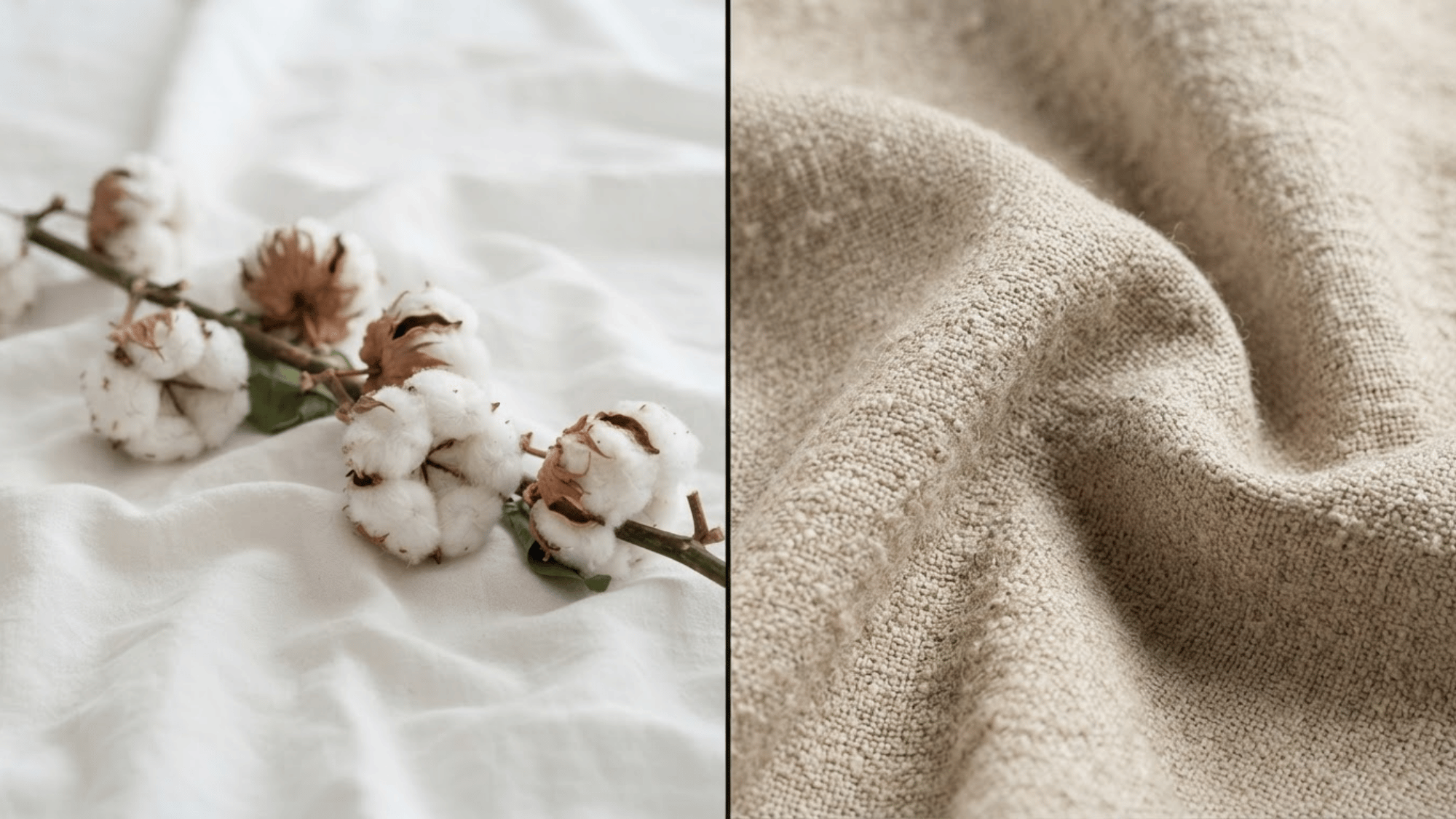
Some fabrics simply feel right the moment you put them on, while others win you over after a few wears.
I’ve often noticed how much fabric choice can change the comfort, look, and feel of an outfit or even a set of bedsheets.
When comparing cotton vs. linen, the differences go beyond their appearance and texture. Each fabric behaves differently when it comes to daily wear, changing temperatures, washing, and long-term use.
Knowing what sets these natural fabrics apart can make that decision feel much less confusing.
Which Is Better: Cotton or Linen?
Cotton is often preferred for its soft feel and everyday practicality, while linen is known for its airy texture and durability.
Both are natural fabrics, but they differ in how they feel, wear, and perform over time.
Factors such as climate, intended use, budget, fabric construction, and personal preference can influence which one suits you better.
Looking beyond appearance can make it easier to choose the right fabric for your clothing, bedding, or home textiles.
What Is Cotton Fabric?
Cotton fabric is a natural textile made from the cellulose fibers surrounding the seeds of the cotton plant.
After harvesting, the fibers are ginned, spun into yarn, and woven or knitted into cloth.
Cotton is prized for being soft, breathable, absorbent, and easy to dye, and it’s the most widely used natural fiber in the world — found everywhere from T-shirts to bedsheets to quilting cottons.
What Is Linen Fabric?
Linen is a natural fabric made from the long fibers inside the stems of the flax plant. The U.S. Department of Agriculture’s Agricultural Research Service identifies flax as the plant source of textile linen.
These fibers are separated, processed, spun into yarn, and woven into cloth. Linen is known for its airy feel, natural texture, and ability to handle warm weather comfortably. It is also a strong, durable fabric that can become softer with use and washing.
Its relaxed appearance and long-lasting quality make it a popular choice for summer clothing, bedding, and other everyday textiles.
Pros and Cons of Cotton
|
Pros |
Cons |
|---|---|
|
Soft and comfortable from the start |
Can hold moisture longer than linen |
|
Breathable in lightweight weaves |
Heavy weaves may feel warmer |
|
Easy to wash and maintain |
May shrink with excessive heat |
|
Widely available |
Durability varies by quality and weave |
|
Usually more affordable |
Can wrinkle depending on fabric construction |
|
Suitable for clothing, bedding, and home textiles |
May wear out faster than high-quality linen |
Pros and Cons of Linen
|
Pros |
Cons |
|---|---|
|
Highly breathable and airy |
Often feels crisp when new |
|
Comfortable in hot and humid weather |
Wrinkles easily |
|
Strong and durable |
Usually more expensive |
|
Softens with repeated washing |
May need gentler care |
|
Releases moisture relatively quickly |
Can shrink with excessive heat |
|
Offers a natural textured appearance |
Texture may not suit everyone |
Cotton vs Linen: Softness, Breathability and Comfort

1. Softness and Feel
Cotton usually feels soft and smooth when new, making it a comfortable choice for T-shirts, baby clothes, and bedding. Linen often starts with a crisper, more textured feel.
Although this may seem less gentle at first, linen typically softens through washing and regular use.
Cotton is a better choice if immediate softness matters most, while linen suits those who enjoy a more natural texture.
2. Breathability and Airflow
Both fabrics can be breathable, but linen generally allows more airflow, especially in a lightweight or loose weave. Cotton’s breathability depends more heavily on its construction.
Thin cotton fabrics can feel cool, while dense cotton may hold more heat. When comparing the two, focus on the fabric’s weight and weave rather than only the fiber type.
3. Hot-Weather Comfort
Linen is often preferred in hot, humid conditions because it lets air move freely and releases moisture relatively quickly. This can help it feel less clingy against the skin.
Lightweight cotton also works well in warm weather, but it may remain damp longer after absorbing sweat. Linen is a strong option for very hot days, while cotton offers practical comfort and versatility at a lower cost.
4. Skin Feel and Texture
Cotton has a familiar, smooth surface that works well for people who prefer soft fabrics with minimal texture. Linen has a slightly uneven, natural surface that may feel crisp when new and gentler over time.
The final skin feel also depends on the fabric’s quality, finish, and weave.
A lightweight, well-finished fabric will usually feel more comfortable than a heavy or poorly constructed one.
5. Fabric Weight and Weave
Fabric weight and weave can change how a material feels and performs. Lightweight cotton voile, jersey, or muslin may feel cooler than thick cotton twill or flannel.
Similarly, lightweight linen is generally more breathable than heavy linen canvas. A loose weave often improves airflow, while a dense weave can provide more structure and warmth. Always consider the specific fabric construction before choosing.
6. Everyday Comfort and Versatility
Cotton is a versatile everyday fabric because it is soft, comfortable, widely available, and suitable for many clothing styles, including smart casual attire.
Linen suits warm weather because it offers excellent airflow, moisture release, and natural texture.
Choose cotton for easy styling, everyday comfort, and budget-friendly bedding or clothing, while linen works best when you want coolness and relaxed elegance.
What Reddit People Say About Cotton vs Linen
In a Reddit discussion among beginner and experienced sewists, people often chose between cotton and linen based on the look, feel, and purpose of the garment.
Linen was commonly favored for warm-weather clothing because it feels breathable, has more body, and becomes softer with repeated washing. Many also liked its durability, although it wrinkles easily and usually costs more.
Cotton was described as easier to find in different colors, prints, weights, and weaves, making it a practical choice for everyday projects.
Several Reddit users also noted that fabric quality matters just as much as fiber type, so a good cotton-linen blend can offer a useful balance of softness, airflow, and structure.
Cotton vs Linen: Key Differences at a Glance
Cotton and linen differ in feel, breathability, durability, care, and price. This quick comparison highlights their strengths to help you choose the right fabric for everyday use.
|
Factor |
Cotton |
Linen |
|---|---|---|
|
Softness |
Usually soft from the start |
Often crisp or textured initially |
|
Breathability |
Breathable and versatile |
Highly breathable and airy |
|
Durability |
Durable, depending on weave and quality |
Strong and known for long-term wear |
|
Care |
Generally easy to maintain |
Can wrinkle more and needs thoughtful care |
|
Price |
Often more affordable |
Usually more expensive |
|
Best for |
Everyday clothing, bedding, and versatile use |
Warm weather, relaxed clothing, and breathable bedding |
Cotton vs Linen: Durability, Wrinkles & Shrinkage
Cotton and linen can both withstand regular use, but their long-term performance depends on fiber quality, fabric construction, and care.
Linen is generally stronger and becomes softer with washing, while cotton offers reliable durability across everyday textiles.
Linen also wrinkles more noticeably because its fibers have less elasticity, whereas cotton tends to hold a smoother appearance.
Both fabrics can shrink with excessive heat, so follow the care label and avoid high-temperature washing or drying to preserve their fit and shape.
Best Care Practices for Cotton and Linen
Cotton is generally easier to maintain, while linen benefits from gentler washing and drying. For both fabrics, following the care label and avoiding excessive heat can help preserve their fit, texture, and lifespan.
- Washing: Use the recommended water temperature and mild detergent.
- Drying: Avoid high heat, which can cause shrinkage and fiber damage.
- Ironing: Cotton usually needs less attention, while linen can be ironed slightly damp.
- Everyday upkeep: Linen can often be worn with its natural wrinkles, reducing the need for frequent ironing.
Cotton vs Linen: Sustainability and Environmental Impact
Linen is often considered a lower-impact option because flax can generally be grown with less irrigation and fewer agricultural inputs than conventional cotton.
However, the environmental footprint of either fabric depends on farming methods, water use, processing, dyeing, and transportation.
Cotton grown with rainwater or under organic practices may have a different footprint from heavily irrigated conventional cotton. Linen production can also vary depending on how the flax is processed.
When sustainability matters, look beyond the fiber name and consider product quality, durability, production practices, and recognized textile certifications such as GOTS when comparing your options.
When to Choose Cotton vs Linen
- Everyday clothing: Choose cotton for soft T-shirts, underwear, sleepwear, and casual basics.
- Warm-weather outfits: Choose linen for breathable shirts, dresses, trousers, and relaxed summer styles.
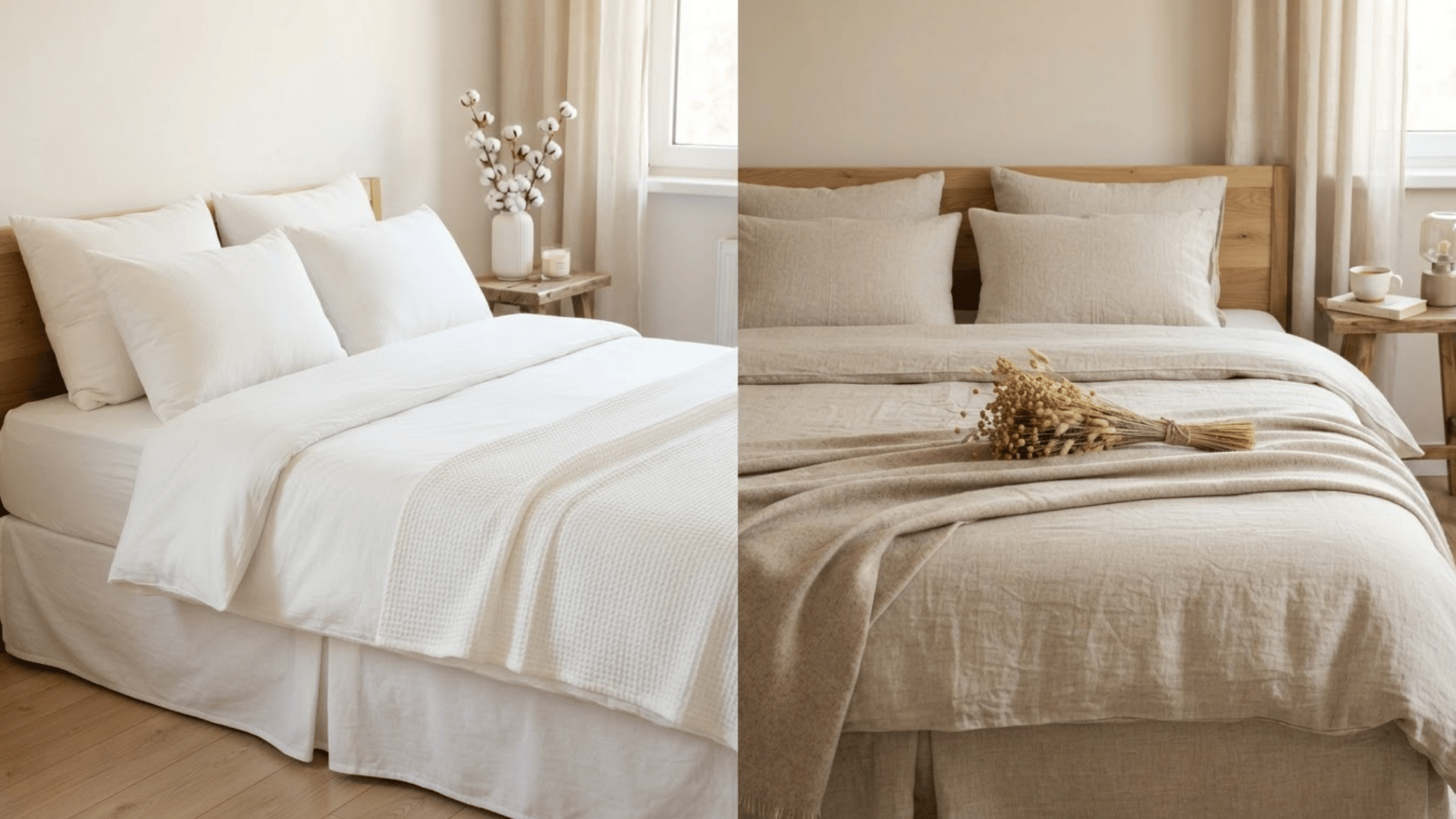
- Bedding: Cotton offers softness and easy care, while linen provides breathability and a textured feel.
- Home textiles: Cotton suits towels and curtains, while linen works well for tablecloths, napkins, and cushion covers.
- Easy maintenance: Choose cotton when you prefer a fabric that generally requires less care.
- Relaxed appearance: Choose linen for its natural texture and casually wrinkled look.
- Long-term use: Linen is durable and tends to soften with repeated washing and wear.
Final Thoughts
Cotton and linen can both earn a place in your wardrobe and home, just for different reasons. Cotton makes sense when softness, easy washing, and affordability matter most, while linen is worth considering for its airflow, durability, and comfortable feel in warmer weather.
I would not choose between them based on the fabric name alone. Weight, weave, quality, and intended use can change how either material actually feels and performs.
A lightweight cotton shirt, for example, may suit your needs better than heavy linen, and the opposite can also be true.
Which fabric do you reach for more often? Share your experience in the comments below.
Frequently Asked Questions
Does Linen Lose Its Shape Over Time?
Quality linen can retain its shape with proper care, although excessive heat, stretching, or improper drying may affect its fit.
Does Cotton or Linen Fade Faster?
Both fabrics can fade with repeated washing, strong sunlight, and harsh detergents. Colorfastness depends on dye quality, fabric treatment, and care.
Can Cotton and Linen Be Blended Together?
Yes, cotton-linen blends combine cotton’s softness and affordability with some of linen’s airflow, texture, and durability.
Is Linen Suitable for Formal Clothing?
Linen can work for relaxed formal settings, especially in tailored shirts, trousers, and suits. Its natural wrinkles give it a less structured appearance.
Can Cotton and Linen Be Used for Curtains?
Yes, both fabrics work for curtains. Cotton offers affordability and softness, while linen provides natural texture, light filtering, and a relaxed appearance.