Building a skincare routine can feel overwhelming when every product promises faster results.
Too many exfoliants, retinoids, and strong actives can leave skin tight, red, and reactive, which often points to barrier stress.
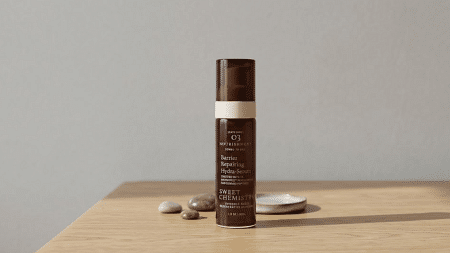
A barrier repair water-based serum fits naturally into the hydration and repair step because it supports moisture without adding heaviness.
This article takes a barrier-first, science-backed, minimalist approach.
Instead of adding more products, the focus is on helping skin recover, stay hydrated, and tolerate actives only when it is ready.

Why Modern Skincare Routines Often Fail the Skin Barrier
Modern routines often fail because they treat the skin before supporting it.
The skin barrier relies on lipids, proteins, and water to lock in moisture and block irritants.
When too many acids, retinoids, or strong treatments are used together, that balance starts to break down.
Over-exfoliation, skipped hydration, and active-heavy layering can leave skin tight, reactive, dehydrated, and breakout-prone.
A barrier-first routine repairs first, then treats only when the skin is stable.
Step 1: Rethink Your Skin: Focus on Barrier Health, Not Just Skin Type
Look beyond dry or oily labels. Check for tightness, stinging, redness, flaky shine, or sudden sensitivity.
These signs can point to dehydration, weak barrier integrity, or irritation patterns that need repair first.
Build around stability before adding stronger treatments.
Step 2: Build a Minimal Routine Around Repair
Morning should hydrate and protect. Night should repair and restore.
Use a cleanser to reduce stress, a serum to drive hydration, a cream to seal the barrier, and SPF to prevent daily damage.
Step 3: Why Water-Based Serums Are Central to Barrier Repair
Water-based serums deliver hydration without heaviness. Their light texture layers well under creams and supports a deeper moisture balance.
In barrier repair, serum is essential because it helps skin stay hydrated enough to recover.
Step 4: Choosing Ingredients That Actively Repair Skin
Choose ingredients that support repair, not just surface glow.
Peptides help improve resilience and density, hydration actives restore water balance, and barrier lipids help rebuild comfort, softness, and strength.
Step 5: Adapt Your Routine to Real-Life Conditions
Your routine should shift with your environment. Dry weather may need richer sealing creams, while humid weather may need lighter layers.
Pollution, travel, stress, and busy schedules can also affect the barrier.
Keep the core routine simple, then adjust texture and frequency.
Step 6: Realistic Timeline for Barrier Repair
Hydration may feel better within days, but barrier stability takes weeks.
Visible texture, redness, and resilience improvements often take months. Stay consistent before switching products or adding stronger actives.
Common Mistakes That Disrupt Barrier Repair
Small routine mistakes can slow down repair and keep skin reactive.
- Over-exfoliation: Using acids or scrubs too often weakens the barrier and increases dryness.
- Mixing incompatible actives: Pairing strong ingredients can trigger redness, stinging, and irritation.
- Skipping hydration layers: Without water-based hydration, the barrier lacks the moisture needed for repair.
Where Advanced Skincare Science Fits in
Regenerative skincare goes beyond surface hydration.
It uses bioactive peptide sequences and advanced emulsion technology to support how skin repairs itself at a structural level.
Sweet Chemistry’s Barrier Repair Water-Based Serum sits in this category, developed for skin that needs more than moisture.
The formulation is built around cellular support rather than temporary relief.
Conclusion
A barrier-first routine works best when it is simple, steady, and focused on repair.
Start with gentle cleansing, a water-based serum for hydration, a moisturizer to seal the barrier, and daily SPF.
Give your skin enough time to respond before changing products, since real repair depends on consistency, not constant switching.
Have you tried simplifying your routine to support barrier repair? Share your experience in the comments below.